9 Small Living Room Ideas: Legs Under It, a Big Rug Over

Add us as a preferred source to see more stories on Google.
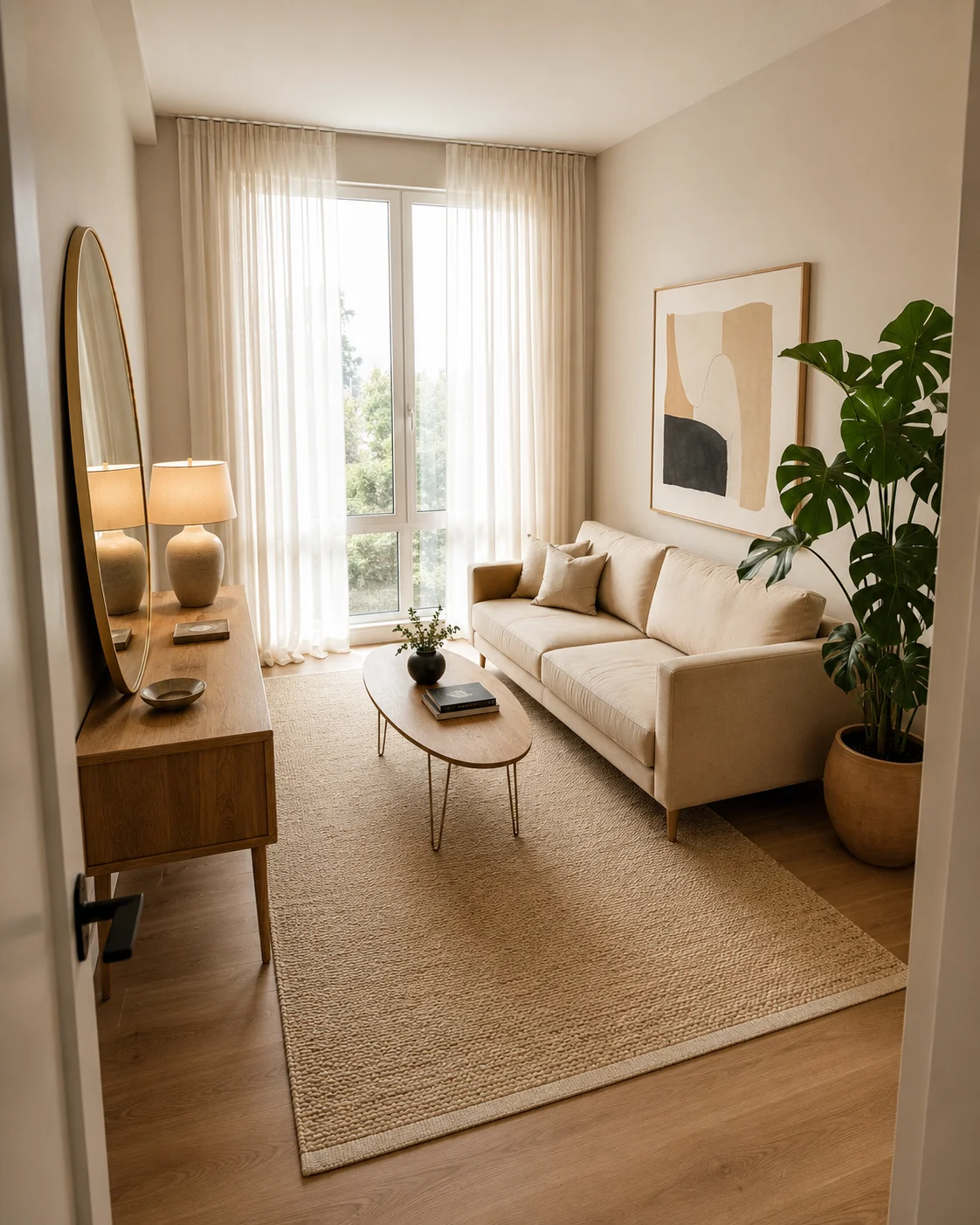
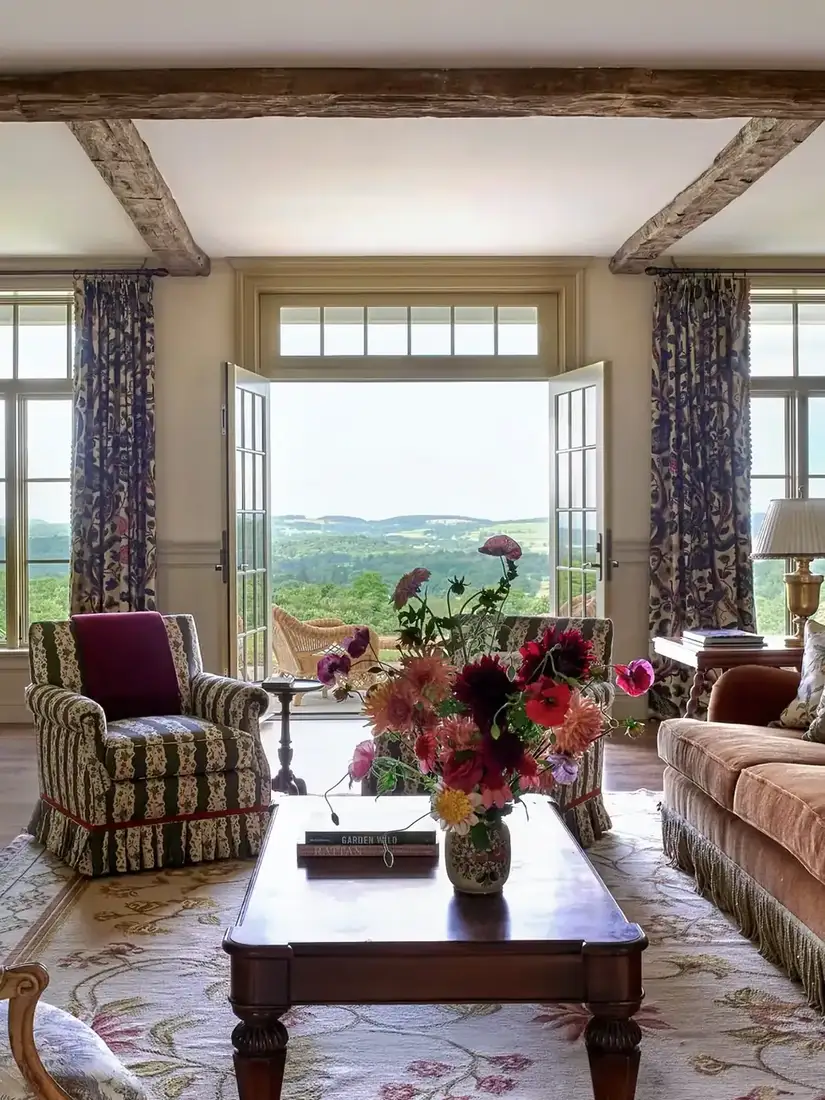
Everything in the room below is standing on legs, and the rug is bigger than the room appears to need. Look at the shadow gaps under each piece in this image: those two decisions are carrying most of the effect, because boards left visible read as extra floor area.
Follow the floor with your eye. It runs under the sofa, under the console, under the coffee table, past the raised planter, and out to the edges of the rug. There is no point where a solid base cuts it off, which is why the boards read as one run to the window.
A room reads as large or small partly by how much continuous floor you can see. Furniture that meets the ground stops that; furniture on legs lets it carry on.
The rug is almost always too small
This is the most common and most expensive mistake in a small sitting room, because rugs are not cheap to replace.
A rug that sits in the middle of the floor with a border of bare boards around it draws a smaller rectangle inside an already small room, and the eye reads the rectangle. A rug that runs close to the walls and passes under the furniture reads as the floor itself.
The working rule: the front legs of every seat should stand on it. In a very small room, going wall to wall with a border of 15 to 20cm is better than the reverse.
| Room | Sensible rug |
|---|---|
| Up to 3m x 3m | 160 x 230cm, or wall to wall |
| 3 x 4m | 200 x 290cm |
| 3.5 x 4.5m | 240 x 330cm |
If the right size is out of budget, a large natural-fibre rug costs far less than a small wool one and does the job better here. IKEA LOHALS and similar sit around £60 to £120 in 2026; Weaver Green and Armadillo occupy the middle and top, roughly £200 to £400 and £900 and above in 2026.
Curtains, hung properly
The curtains in that photograph start near the ceiling and extend well past the glass on both sides. Notice how the curtain run, not the glass, sets the width in that room, so the window looks considerably larger than its frame.
Hung inside the reveal, or just above the frame, the same window would look like a hole in the wall with fabric either side.
Full length, always, in a small room. Curtains stopping at the sill cut the wall in half horizontally and lower the apparent ceiling.
Sheer or light fabric if the room needs the daylight; heavier if it needs warmth and quiet. Either works, so long as the width is generous. A curtain that is barely wider than the window looks mean when closed and does not stack back properly when open.
One large thing, not several small ones
A single large artwork instead of a gallery wall. One substantial plant instead of five small pots. A low-backed sofa instead of two chairs, since two chairs add four more legs and several more edges to negotiate.
Small rooms are made busy by quantity, not by size. Each additional object adds an edge the eye has to negotiate, and a dozen small things read as clutter where two large ones read as calm.
The mirror in that photograph is doing this job as well. Leaned, large, reflecting the lamp and the window light back into the room. One big mirror on a side wall is worth more than any amount of pale paint.
Legs let the floor run through
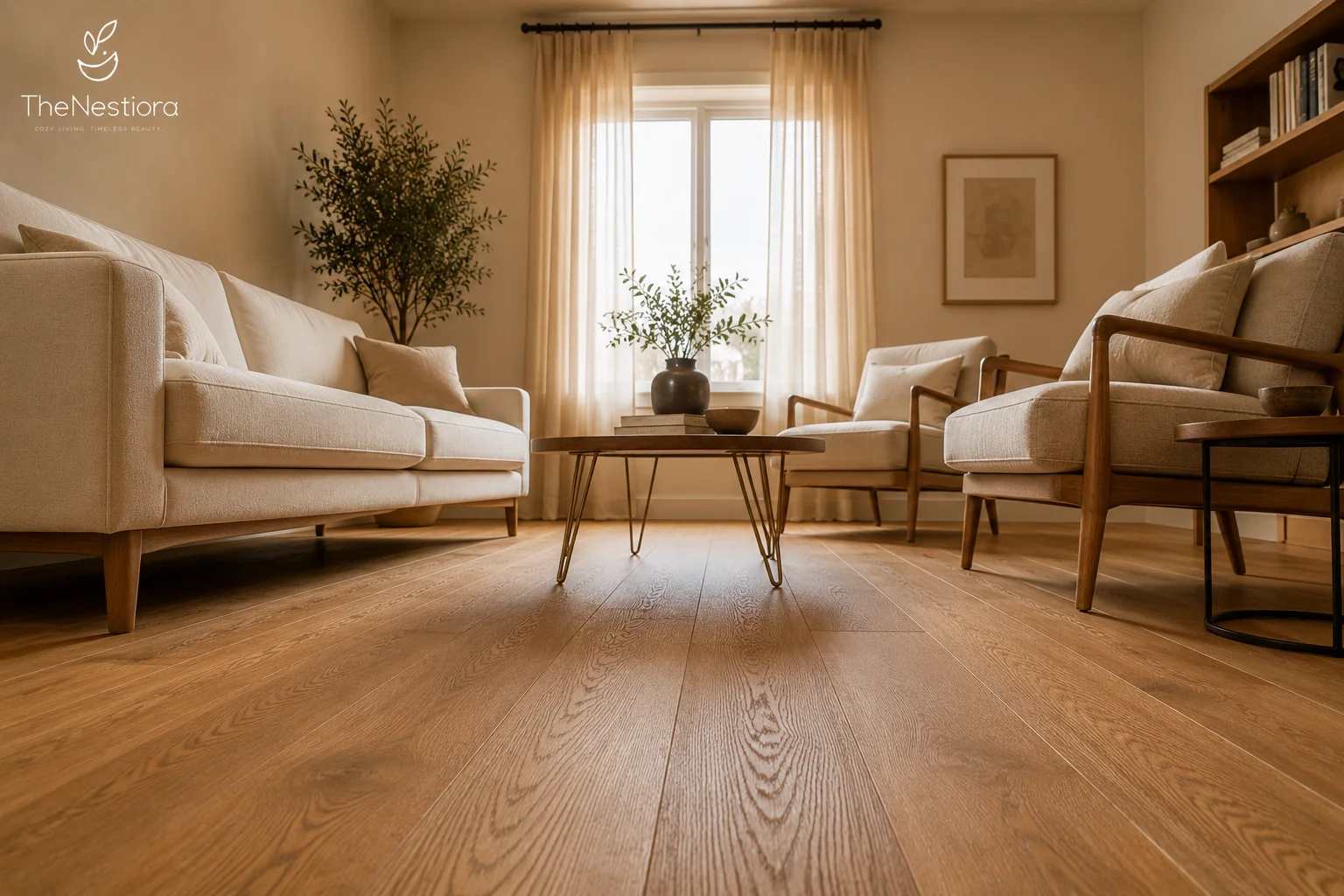
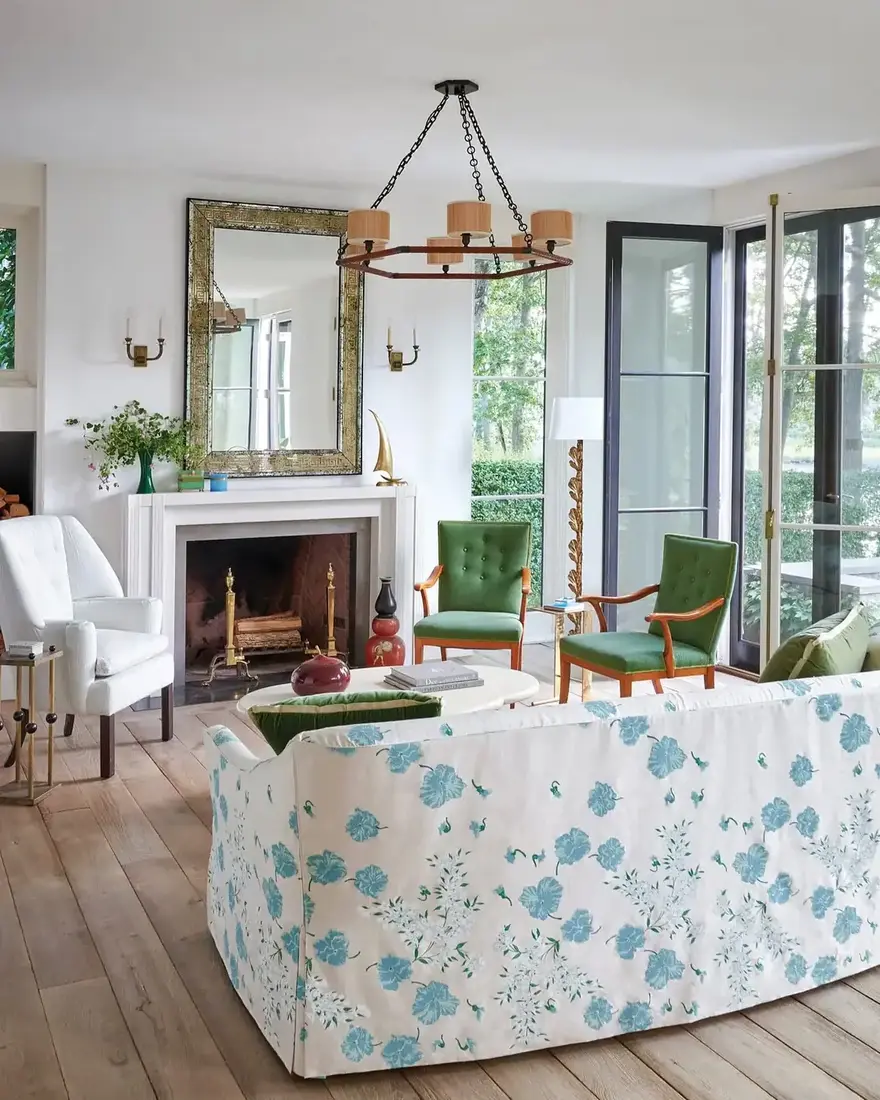
The camera sits almost on the boards here, which is the correct height to judge the idea. Look at the oak boards in this image: they run from the foreground to the sheer curtains without interruption, and every seat stands clear of them.
The sofa on the left shows it most clearly. Chunky square oak legs lift a deep cream upholstered base high enough for daylight to pass beneath, so the shadow line reads as part of the floor. Opposite, two armchairs with exposed timber frames do the same work with less bulk, because the eye passes between the seat rails and the side stretchers. Between them, an oval top on hairpin rods almost disappears, which is why a table of that construction suits a tight plan even when the top itself is generous.
The principle is continuity. A small room is measured by the eye in floor area, not in furniture volume, and anything that touches down across its full footprint subtracts from that measurement. Legs return most of that lost area for the price of four screw in feet.
Replacement hairpin sets run £20 to £40 for four in 2026, while turned oak sets from suppliers such as Pretty Pegs sit around £35 to £70 in 2026. The wall colour here is a warm chalky white with yellow in it, for which Farrow and Ball School House White No.291 or Little Greene Slaked Lime 105 get close.
A rug that joins instead of dividing
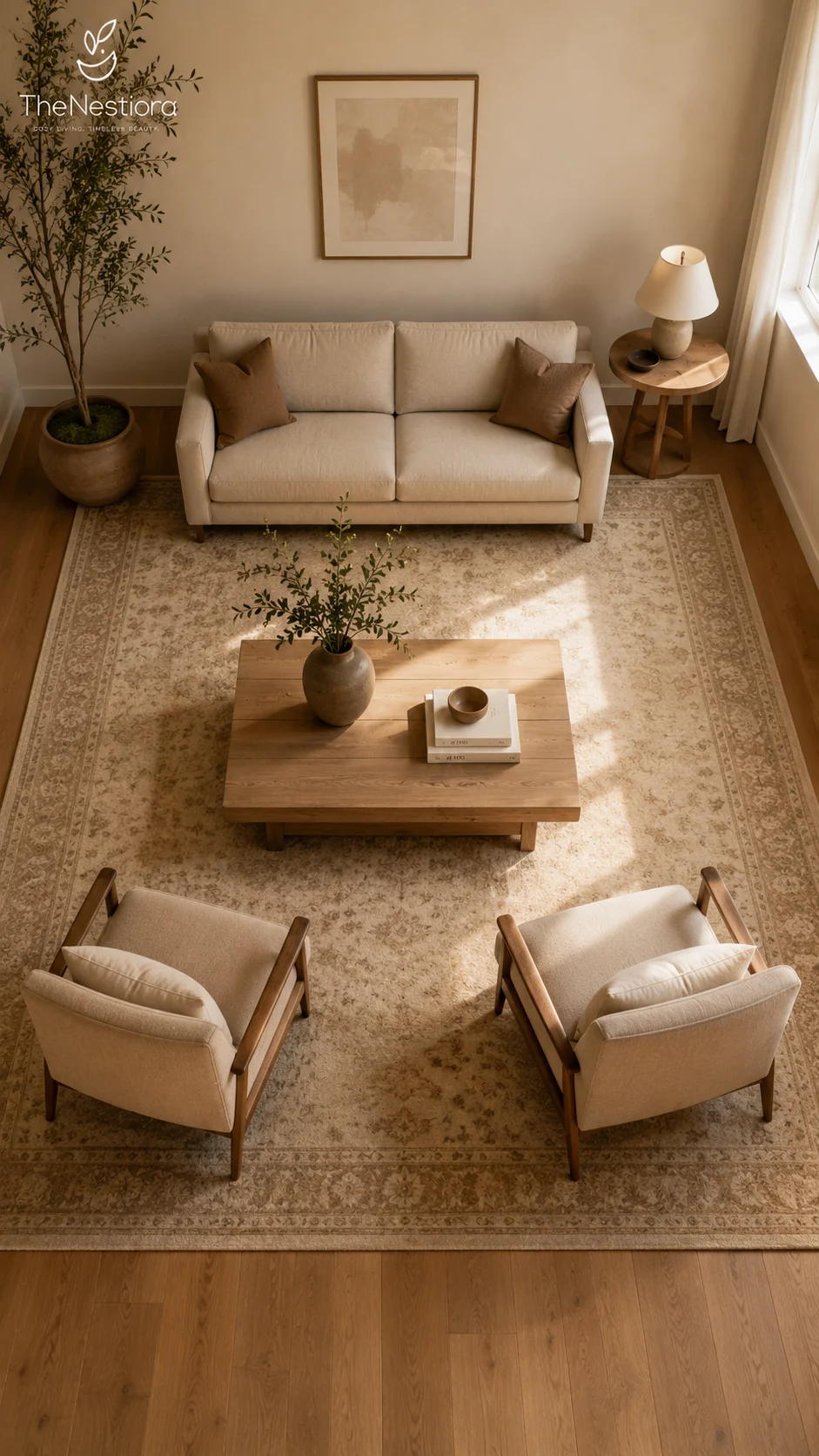
Seen from above, the rug is doing the joining. Look at that rug in this overhead shot: a large faded field with a narrow border runs under the two seater, under the low oak table, and under the front rails of both facing chairs, so four separate pieces sit on one textile plane.
That plane is the reason the arrangement reads as settled. Without it, each leg would land on bare boards and the group would read as four items parked near each other. With it, the eye takes in a single island of pattern and treats the seating as one composition, which matters in a compact plan where there is no hallway distance to compose the view.
The table lamp on the small round side table underlines the point, because its base sits off the rug on timber while its light falls across it. Mixed edges like that keep a large rug from reading as wall to wall carpet.
Large cotton flatweaves in this scale run £150 to £350 in 2026 from suppliers such as Benuta and Ruggable, while wool vintage style pieces of similar size run £400 to £900 in 2026. Keep the pile low, since a deep pile against oak boards makes chair legs rock and collects crumbs along the border.
A tall mirror that doubles the floor
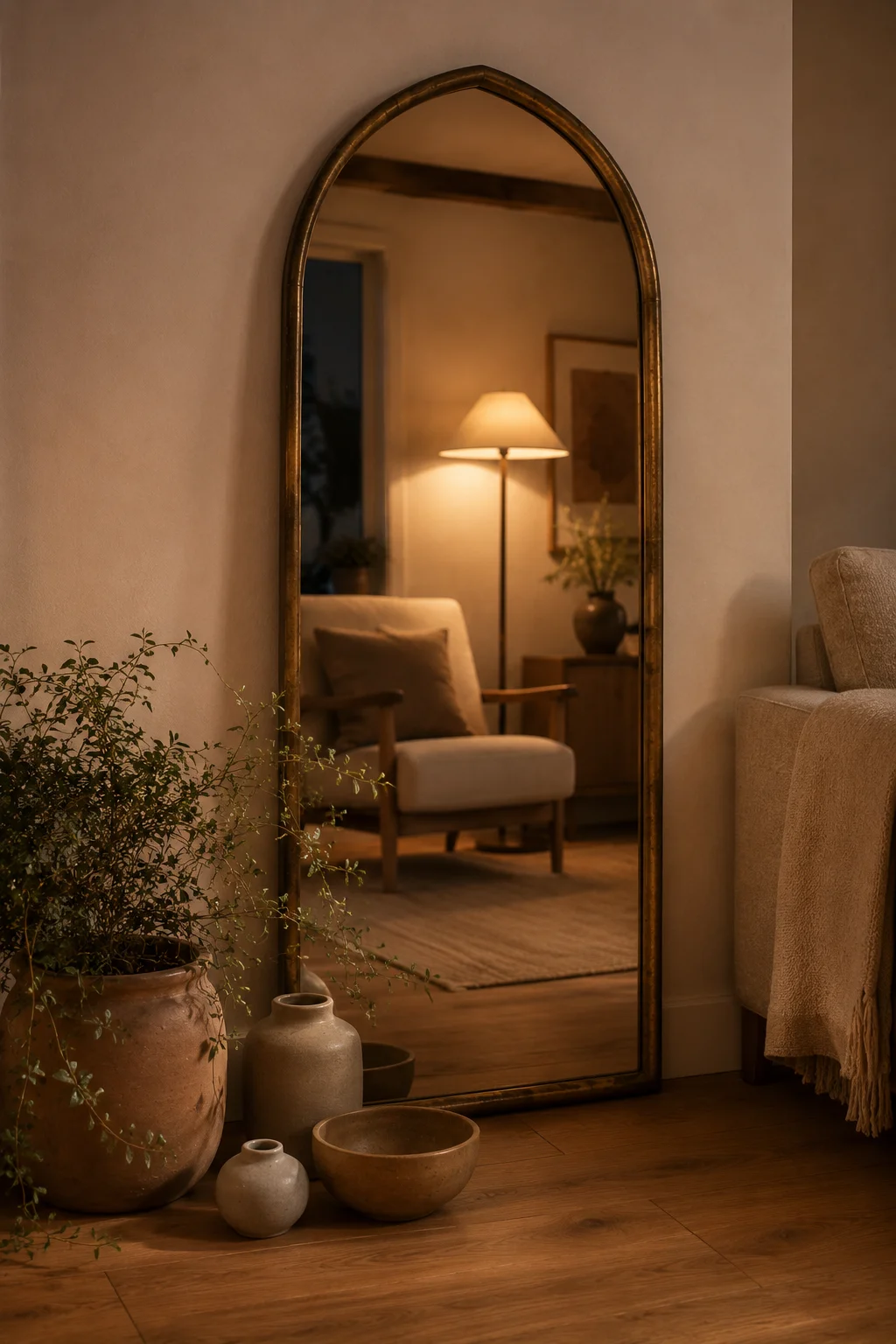
This mirror is standing on the floor instead of hanging on it, and that distinction carries the section. Notice how the glass shown here carries a second view of the room: an armchair, a glowing floor lamp, and the edge of the rug continuing past the frame, with terracotta pots grouped at its foot.
The reflection does two kinds of work. It returns lamplight from a second direction, which softens evening shadows, and it extends the boards visually past the wall line, which is the same mechanism as visible legs carried into the vertical plane. Because the glass runs almost to the skirting, the extension starts where the real floor starts, and the join barely registers.
Leaning suits a small room for a practical reason as well as a visual one. No rail, no wire, and no pair of fixings to place in a wall whose studs sit in inconvenient places. The base needs a wall with a slight backward tilt and a floor that does not slope, plus a discreet anti slip pad behind the feet.
Full length arched mirrors of this height run £150 to £400 in 2026, with Dunelm and Zara Home at the lower end and Loaf and Nkuku higher. Skip the leaning arrangement where a narrow passage forces people to brush past it, since a tall glass sheet in a traffic line wants proper wall fixing.
One tall plant for the corner
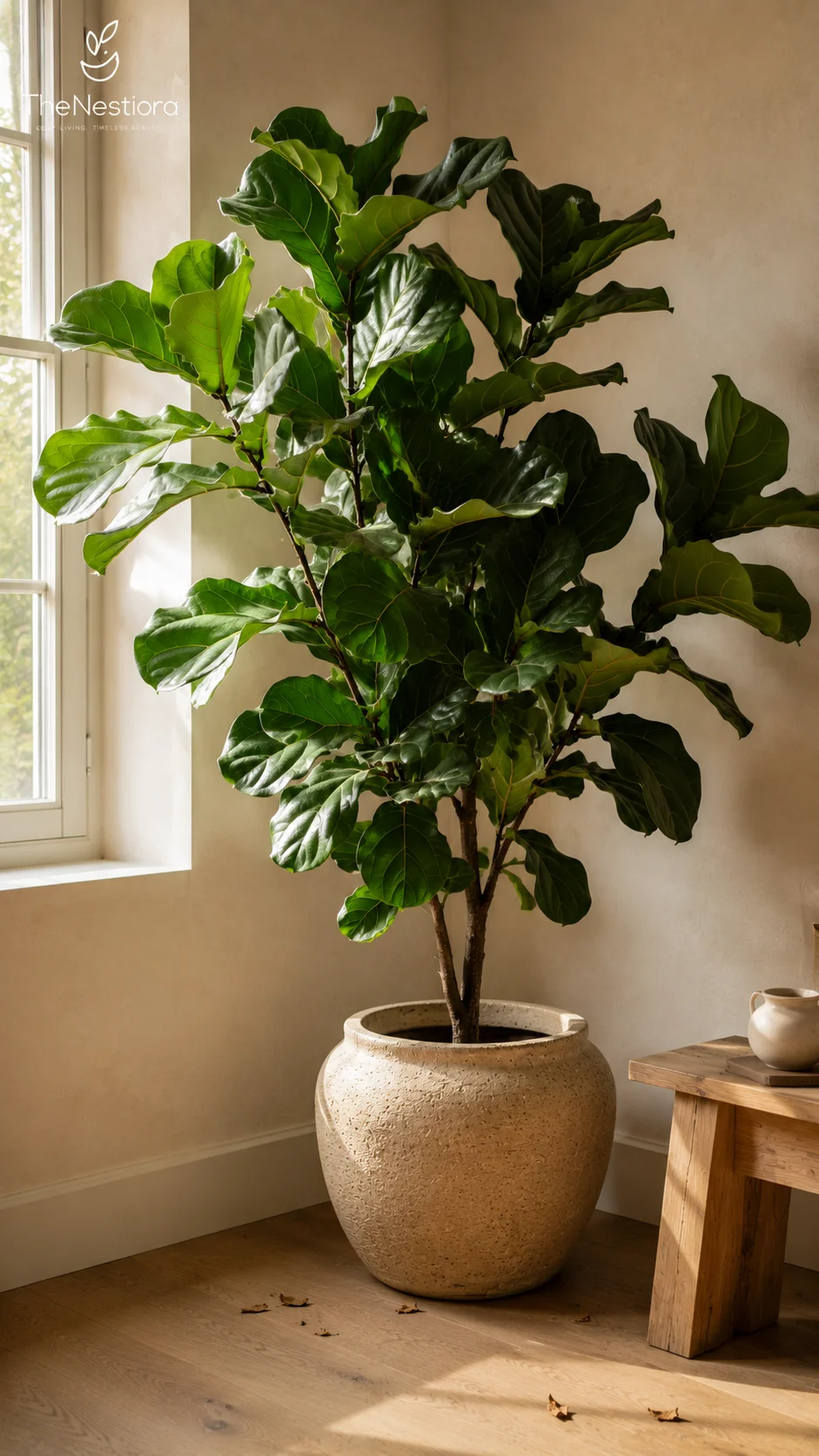
The corner holds one vertical plant and nothing else. See what the stems do in that corner: a fiddle leaf fig rises from a heavy textured pot to well above the sill, its broad leaves catching side light from the window, while a low oak bench beside it stays deliberately below the foliage.
Height without footprint is the argument. The pot occupies less floor than a side table, yet the stems draw the eye upward through almost the full wall height, which gives the ceiling more presence without adding a single shelf. The bare lower stems help here, because visible trunk reads as structure where a bush down to the compost would read as blockage.
Fiddle figs earn their reputation for complaint. Leaves drop after a move, after a cold draught, and after a dark fortnight, and a north facing corner away from glass will thin within months. Buy for a bright position or choose an olive or a false aralia with similar upright habit and lower demands.
Nursery plants at this height run £40 to £120 in 2026, and handmade stoneware pots of this volume run £30 to £80 in 2026 from garden centres and suppliers such as Hortology. A small white jug on the bench is the only companion needed.
Storage that hangs off the floor
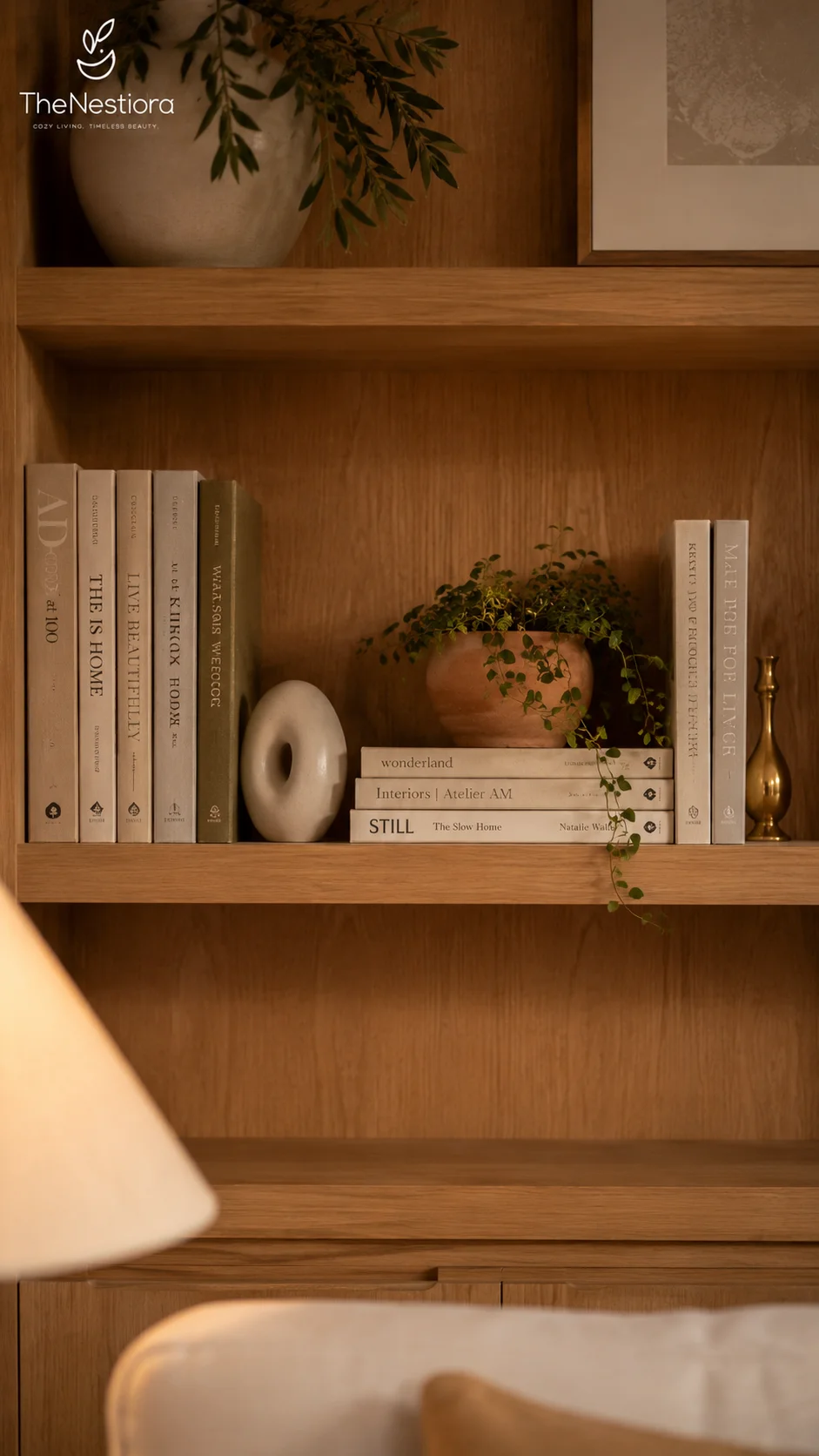
The middle shelf shows the discipline a small room needs from open storage, and the one detail to copy is the empty third. Cream and sage book rows stand at either end like bookends, and the centre holds a stack of three art books carrying a trailing plant in a terracotta pot, a smooth ceramic ring form, and a slim brass bud vase.
Gaps are doing as much as objects. Roughly a third of the shelf length is left as plain oak, so each group reads separately instead of merging into one crowded band. Colour restraint helps for the same reason, since spines in one narrow range of cream and olive with a little stone behave as texture where mixed brights would behave as signage.
Wall storage of this kind protects the floor argument that runs through the whole piece. A fitted oak run with closed cupboards below and open shelves above keeps books, chargers, and games off side tables, which means the legged furniture beneath stays visible. Oak floating shelves run £40 to £110 per length in 2026, while a joiner built run with cupboards below runs £800 to £2,000 in 2026 depending on length and finish.
Keep trailing stems trimmed clear of book tops, since leaves resting on cloth bindings cockle the covers in damp weather.
A tray that makes three things read as one
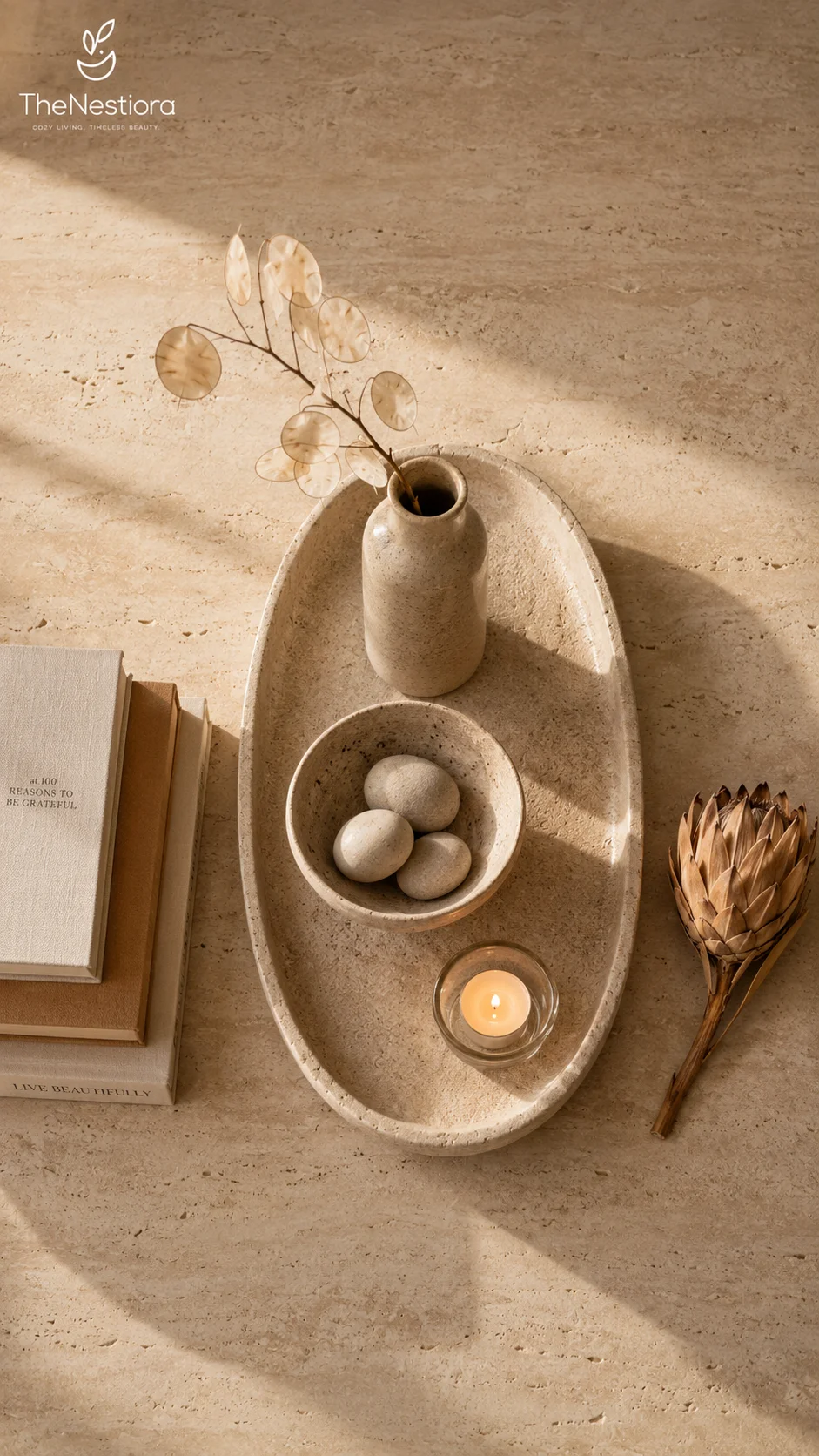
Sunlight shows the surface first. Pale travertine carries an oval stone tray, and the tray carries almost everything: a textured bud vase with a single honesty stem, a low bowl of smooth pebbles, and a small glass tealight, with a stack of linen covered books and a dried protea resting just outside the rim.
Containment is the mechanism. Five small things scattered across stone read as five edges to negotiate, while the same five with three inside one boundary read as two. The tray edge acts as a frame, which lets the stone around it stay empty and lets the eye rest on the field rather than on the items.
Material closeness keeps the grouping calm. Travertine and unglazed stoneware sit with linen and dried seed head inside one dusty palette, so variation arrives through surface rather than colour. The lit tealight adds the single warm point the composition needs after dark.
Travertine or sandstone trays of this size run £25 to £70 in 2026 from Oka and Nkuku, and handmade stoneware bud vases run £15 to £35 in 2026. Avoid polished marble trays here, since reflected glare on a sunlit table competes with the glass and the candle.
Low light in separate pools
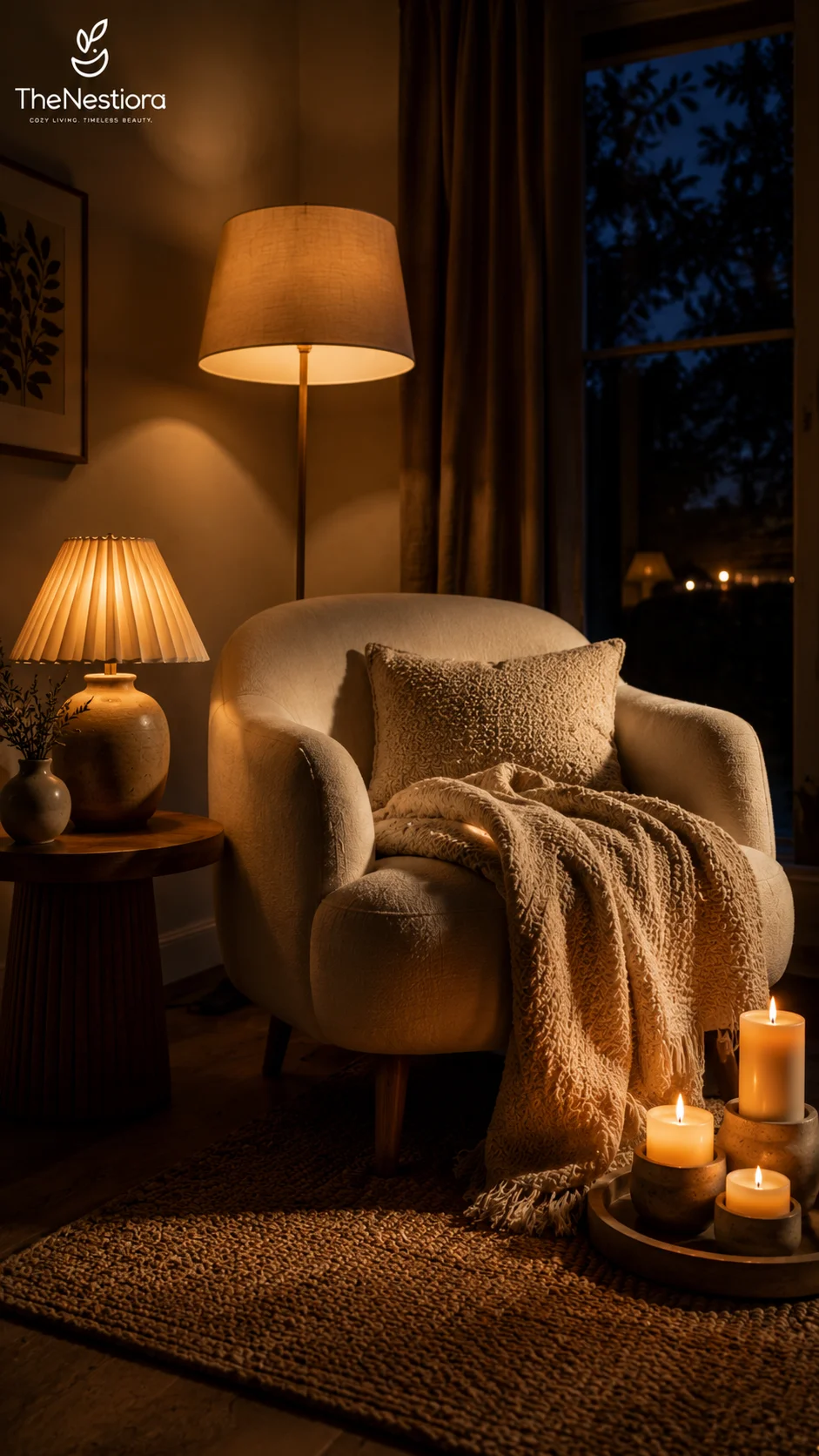
Evening is the test of the whole approach, and this corner passes it without a ceiling fitting. A boucle tub on short legs sits between a slim floor lamp with a tapered linen shade and a pleated table lamp on a dark side table, while three pillar candles burn low on a tray at the rug edge.
Each source makes its own pool. The floor lamp washes the wall and the curtain fold, the table lamp lights the chair arm and the throw for reading, and the candles put movement on the rug fibres. Together they give the small footprint three depths, where a single overhead would give one flat brightness and hard shadows under the seat rails.
Colour temperature governs whether the pools flatter. Lamps at 2700K read as candlelight continuing upward, which suits boucle and jute against oak; cooler daylight bulbs turn the same materials grey after dark. Keep shades in cream linen or pleated cotton, and switch each layer separately so the brightest setting is rarely all three at once.
Pleated linen table lamps run £40 to £120 in 2026, slim floor lamps with linen shades run £80 to £250 in 2026, and dimmable filament bulbs from Tala or Philips WarmGlow run £8 to £18 each in 2026. Candles stay on the tray, away from the throw edge.
Walls and ceiling in one warm tone
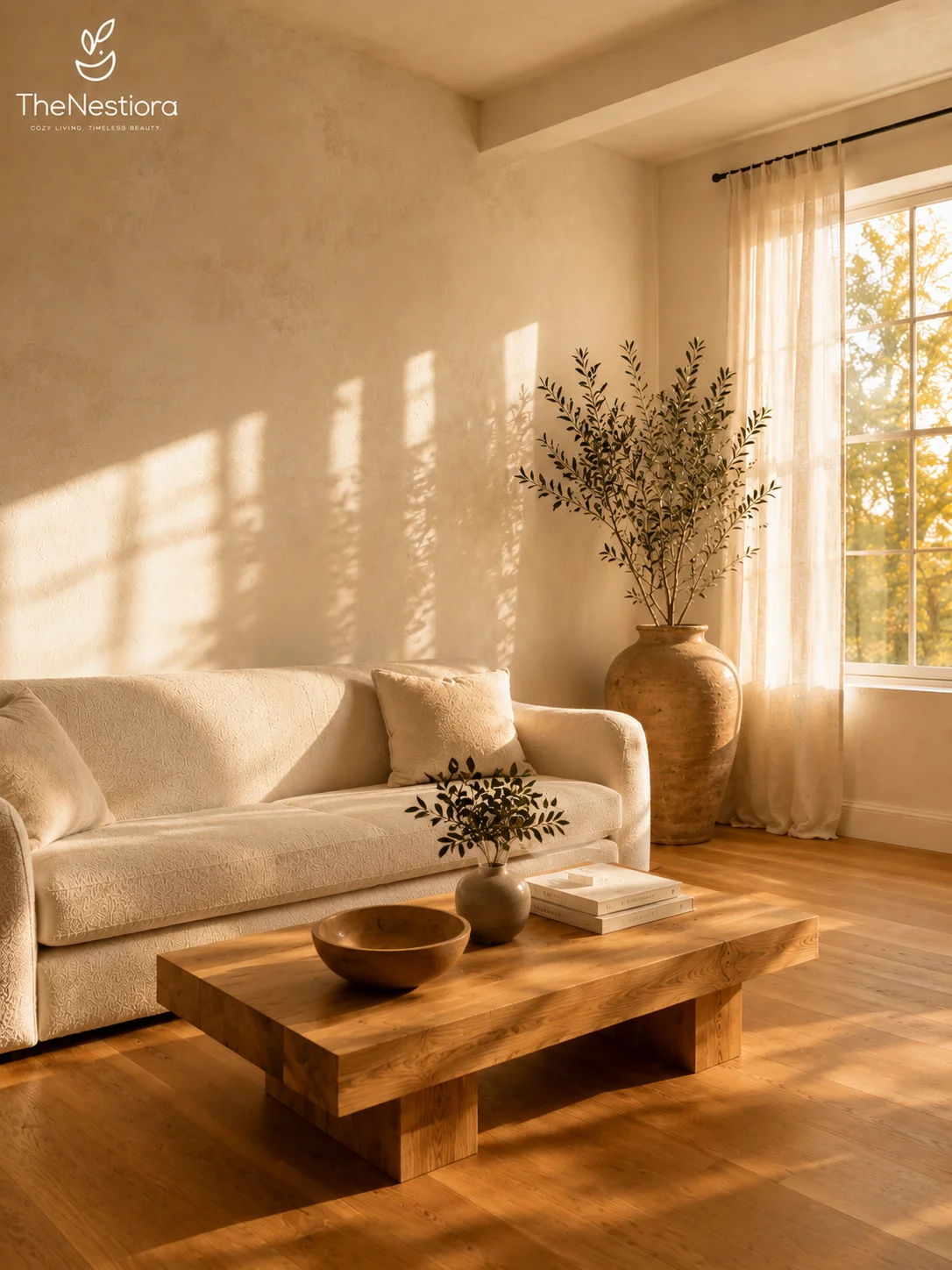
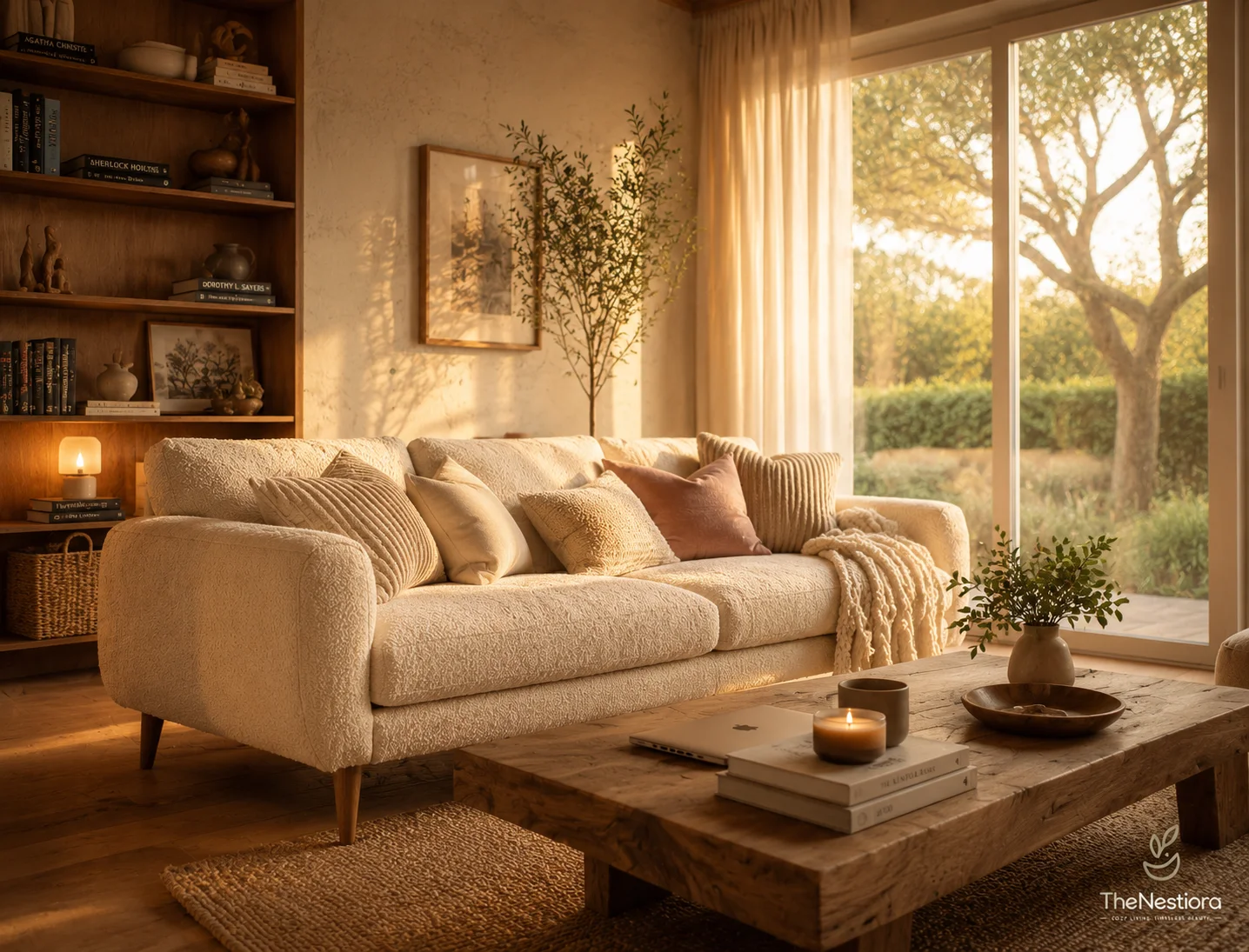
Shadows run up the wall here without meeting a colour change. Limewash or matt emulsion in warm white covers wall and ceiling alike, so morning sun prints window bars and leaf shapes across one continuous field and the junction at the top barely registers.
That continuity is doing the lifting. Where wall and ceiling share tone, the eye finds no line to measure height against, and a modest height reads as sufficient. Linen curtains in matching ecru strengthen the effect, since fabric and wall sit with the boucle sofa inside one narrow band and only the oak table and the huge terracotta urn interrupt it.
The table breaks the legs rule openly. Thick slab supports sit directly on the boards, which removes the floor passage beneath. The room absorbs it because everything else obeys: sofa on concealed short feet with a light skirt of shadow, vast clear boards around, and a single oversized vessel in place of several small pots. One grounded piece steadies a pale scheme; two would anchor it.
Limewash runs £50 to £90 per 5 litres in 2026, and ready made linen curtains run £50 to £90 per pair in 2026 from IKEA AINA, with made to measure from Volga Linen higher. Colours close to this wall include Farrow and Ball Wimborne White No.239 and Pointing No.2003.
The problem with all of this
Legs everywhere means no storage anywhere.
A room styled this way and then lived in for six months fills up, because the remotes, the chargers, the post and the games have nowhere to go. Then it looks worse than it would have with a chunky sideboard in the first place.
Solve it deliberately: make the console a closed one with drawers, put a lidded basket beside the sofa, or choose an ottoman that opens. One honest storage piece protects everything else.
Where the opposite is true
Rooms with a genuinely beautiful floor and almost nothing in them. There, a smaller rug that frames the seating and leaves the boards visible is the better call, because the floor is the feature rather than the background.
And in a very dark room, pale legged furniture floating on a pale rug can read insubstantial. A deeper colour scheme with one grounded piece often suits it better.
Frequently asked
Frequently Asked Questions
Can a compact sitting room feel larger without building work?
Keep boards visible beneath seating, lay one generous textile under the front supports, lean a tall glass to return daylight, and run curtains close to the ceiling and past the frame. One shut cupboard for cables and games protects the openness.
What size textile suits a tight lounge?
Select the format that lets front supports of sofa and chairs rest on cloth, leaving a narrow timber margin at the walls. A floating island of fabric mid floor cuts the plan in two and makes the lounge read smaller.
Where should a tall glass go to lift light?
Lean a full height form where it catches a lamp or a window and throws the view back across the boards. Keep the lower third clear of clutter so the reflected floor joins the real one.
How is wall storage kept calm in a tight space?
Float shelves or fit a run with shut cupboards below and sparse open boards above. Group spines by tone, leave a third of each length empty, and trim trailing stems clear of cloth covers.
Which bulbs give a small room depth after dark?
Warm 2700K filament lamps at low level, shaded in linen, switched separately from any overhead. Add a floor uplight for the wall, a side light for reading, and candles low down for movement.
When does raised seating fail?
Dark north facing plans can look insubstantial on slim supports over a pale field, and households with no shut cupboard soon fill the visible floor with clutter. In both cases add one grounded chest or deepen the palette.
To start
- Keep sofas, consoles, and tables raised on legs so boards stay visible.
- Buy the rug one size up from the one that seems right.
- Hang curtains near the ceiling, wider than the window, floor length.
- Use one large artwork and one large mirror instead of several small pieces.
- Plan one closed storage piece before the room fills up on its own.
This article may contain affiliate links. We may earn a commission at no extra cost to you.