Blame the Stain, Not the Species, for Orange Oak

Add us as a preferred source to see more stories on Google.
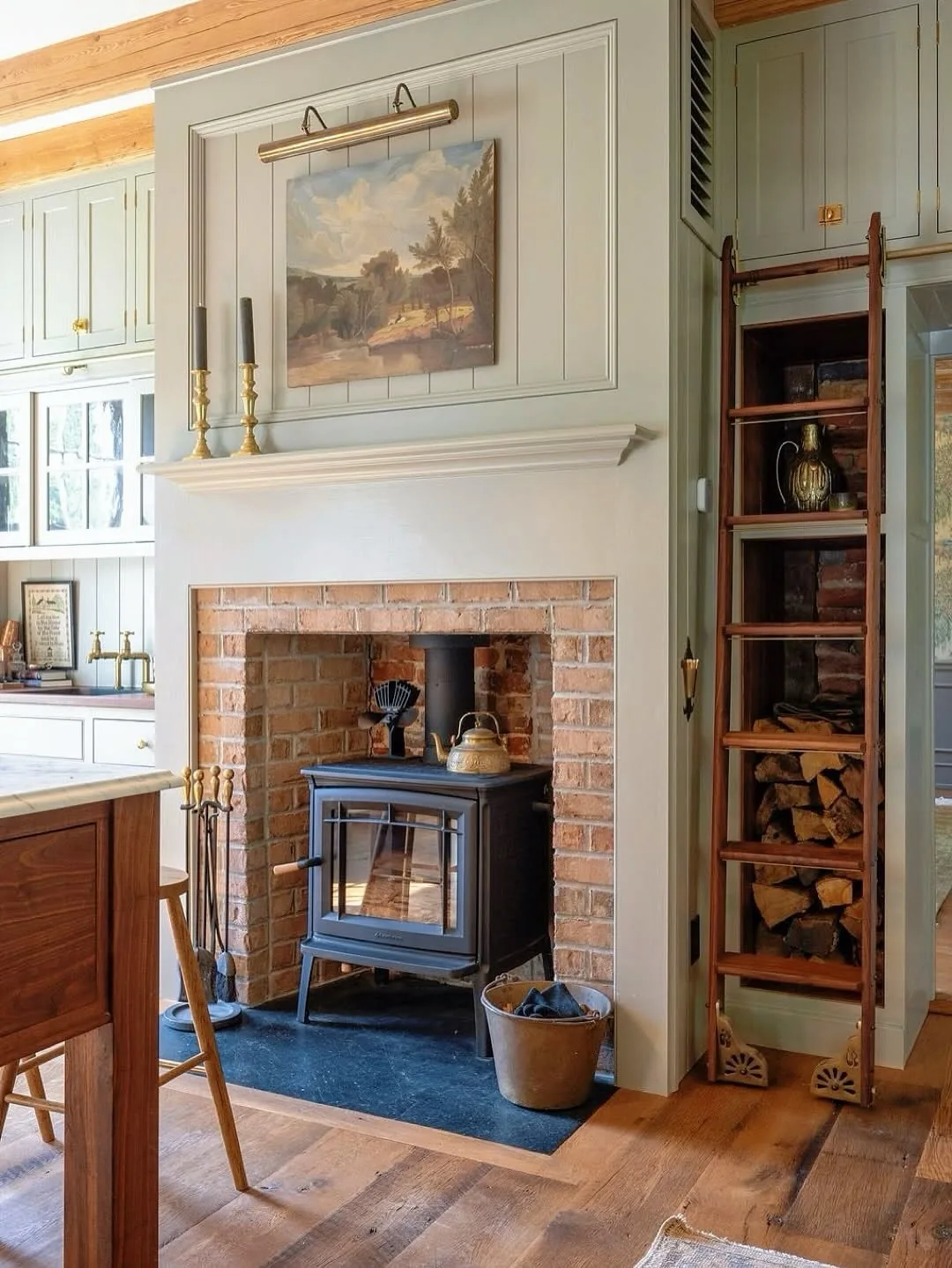
Nobody hates oak. They hate orange.
That 90s honey stain flashing pink under your bulbs was a finish choice, not a species verdict. White oak wears beautifully. Walnut glows. Even pine behaves with the right stain depth. The wood was never the problem.
What fails is undertone blindness plus grain competition: warm cabinets fighting cool floors, two loud grains shouting across the room, gloss varnish turning it all sticky. You’ll fix the choosing here, not the wood, and your kitchen will thank you daily.
Read undertones before species
You’ll shop with samples side by side. Three ideas reveal what single chips hide.
Meet the undertone hiding in your stain
Every wood carries a passenger color. Red oak flashes pink, cherry runs red, maple leans yellow, walnut drifts violet-brown, white oak stays the most neutral of all. You’ll learn your species’ bias before choosing stain depth, because stain deepens undertones rather than erasing them.
You’ll lay candidates flat together on your own floor in your own light. Company reveals casts that solo samples hide. When two woods share an undertone family, they coordinate across species. When they oppose, even expensive materials look accidentally assembled. Undertones first, species second, stain last, and you’ll never blame oak again.
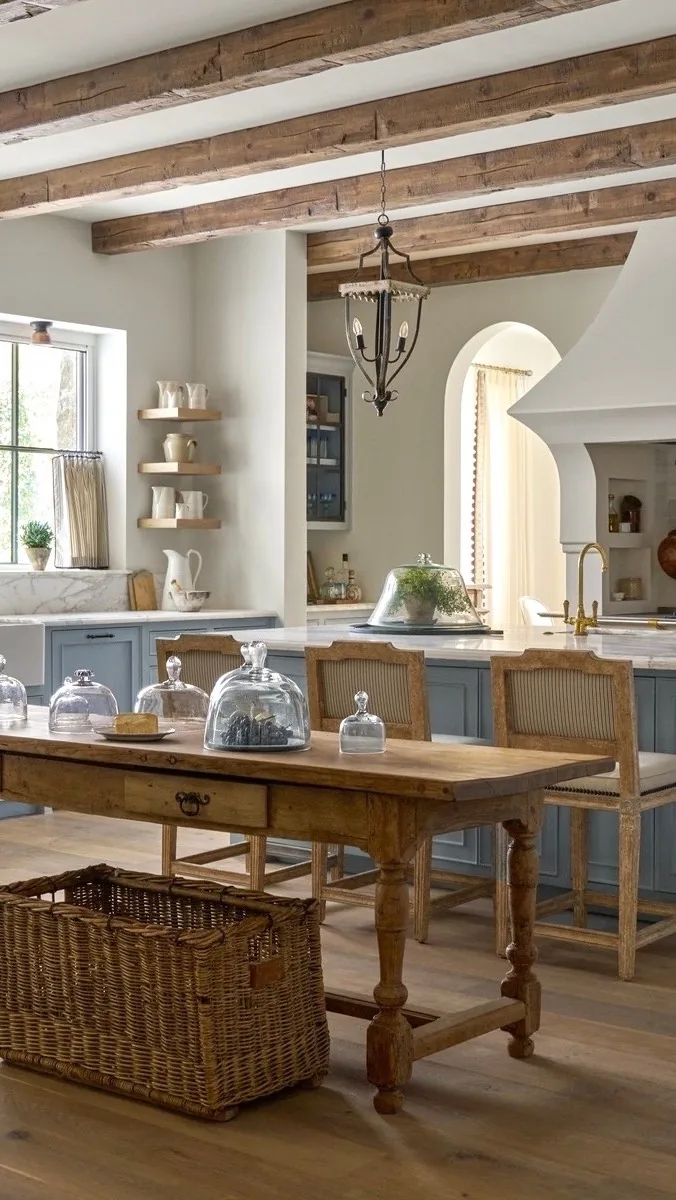
Cap the room at two wood tones
Three wood tones plus floor plus beams equals visual noise no styling fixes. You’ll allow two wood finishes maximum: cabinets plus one more, usually floor or island. Everything else goes painted, stone or metal so the woods read as decisions.
You’ll make the two clearly different depths when coordinating rather than near-matching. Near-matches look like failed matches, while distinct light and dark woods read intentional. When each wood owns its territory, the room calms. When tones multiply, even beautiful species fight for attention you wanted on the cooking.
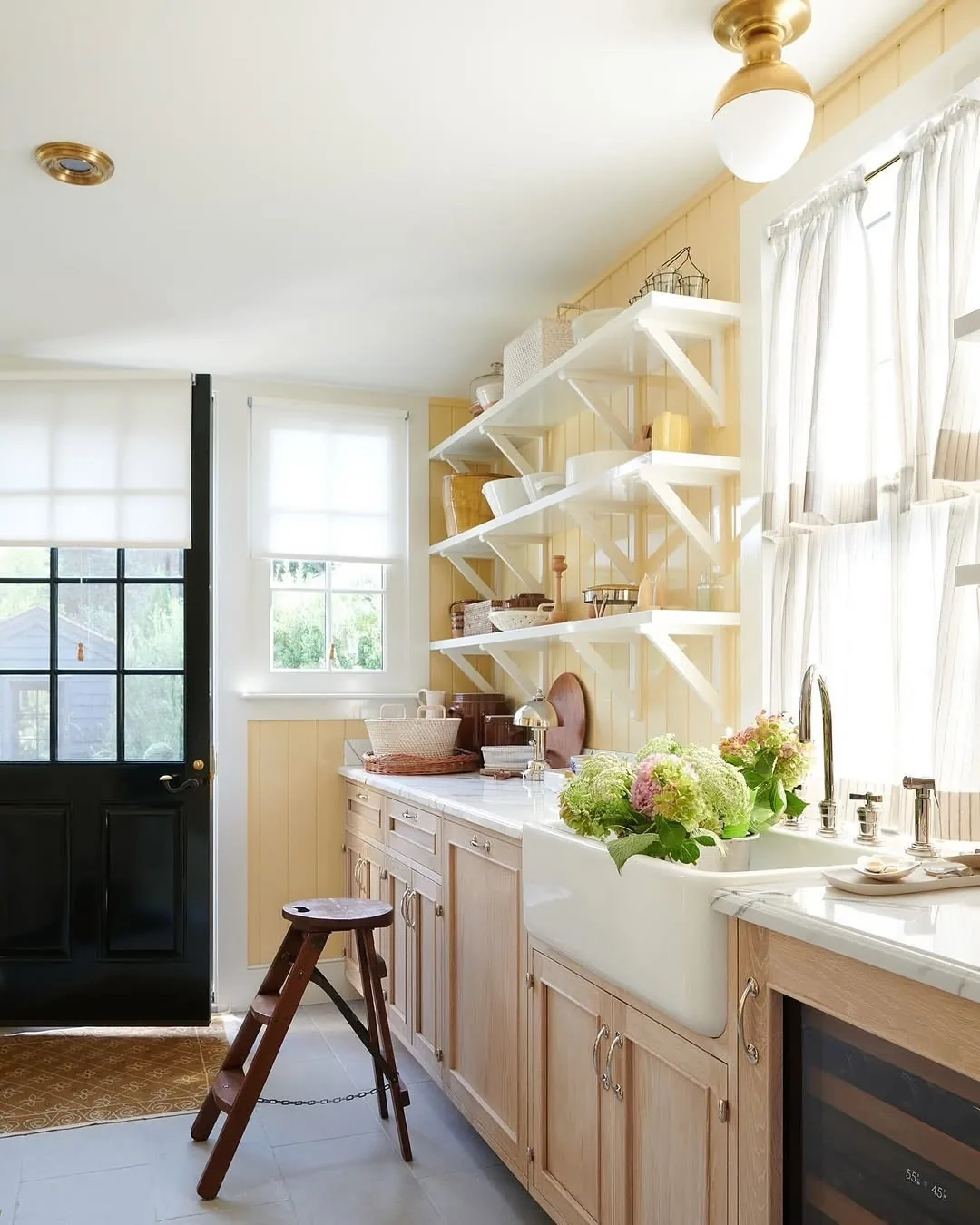
Calm all grains but one
Two loud grains in one sightline compete relentlessly. You’ll grant dramatic grain to one surface, island or floor, and choose quiet rift-cut or subtle species for the other. Oak’s cathedral drama beside rustic hickory’s chaos exhausts the eye within weeks.
You’ll test competition by photographing samples together. Cameras flatten depth and expose grain fights your hopeful eyes forgive. When one grain leads and the other supports, your kitchen reads collected. Two leaders stage a standoff across every meal. Grain, like color, needs hierarchy to rest.
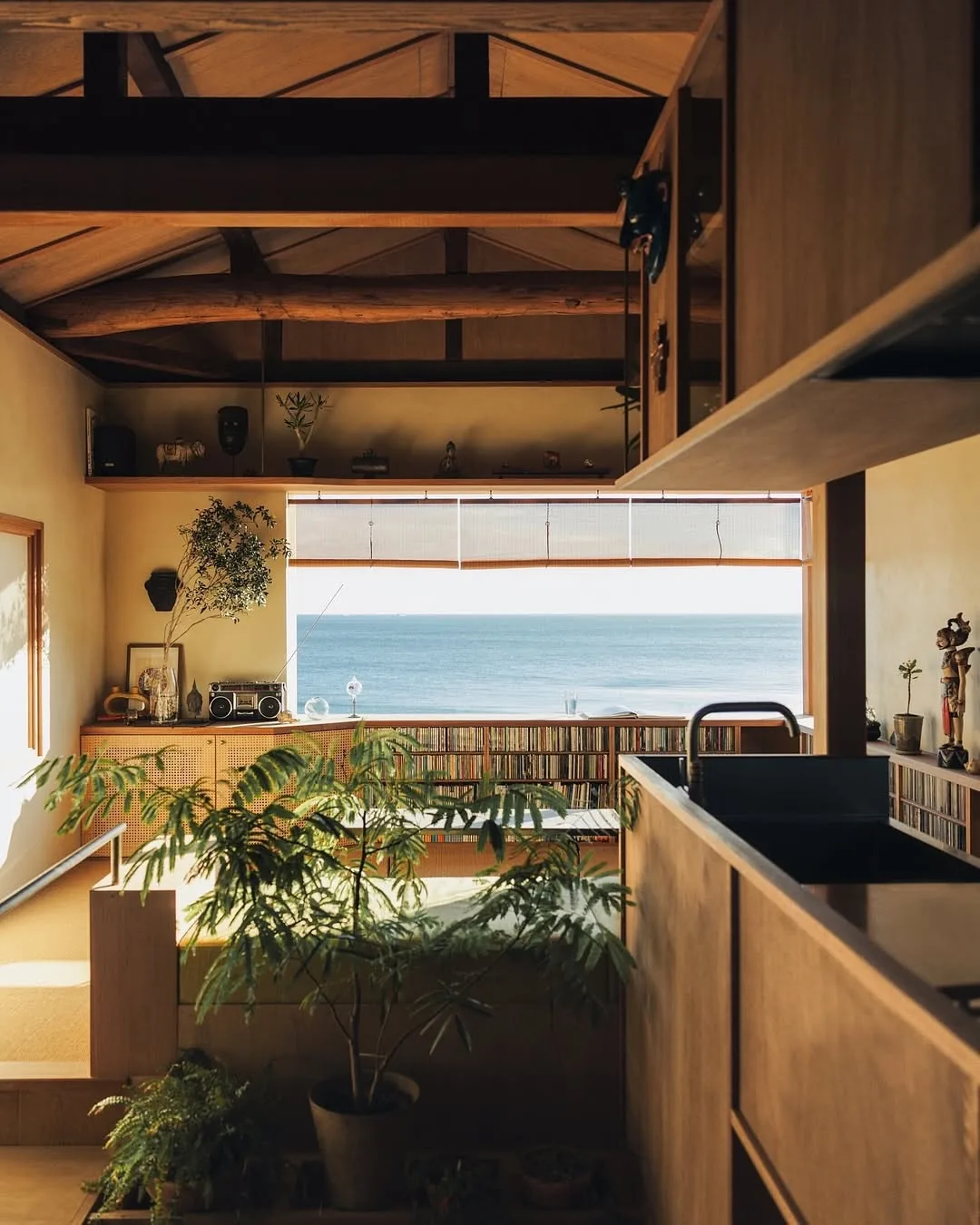
Finish for touch and light
Stain depth and sheen decide daily feel. Three ideas finish honestly.
Matte the finish, skip the gloss
Gloss varnish on oak reads sticky and dated however fine the wood. You’ll choose matte or satin clear finishes that let grain show velvety rather than glassy. Matte reads expensive because it suggests confidence instead of coating.
You’ll test sheen on large boards, since samples mislead badly here. Gloss amplifies every unevenness while matte forgives. When fingers, steam and daily wiping meet matte finish, wear blends invisibly. Gloss records each touch as evidence. Finish for the touching, not the photographing.
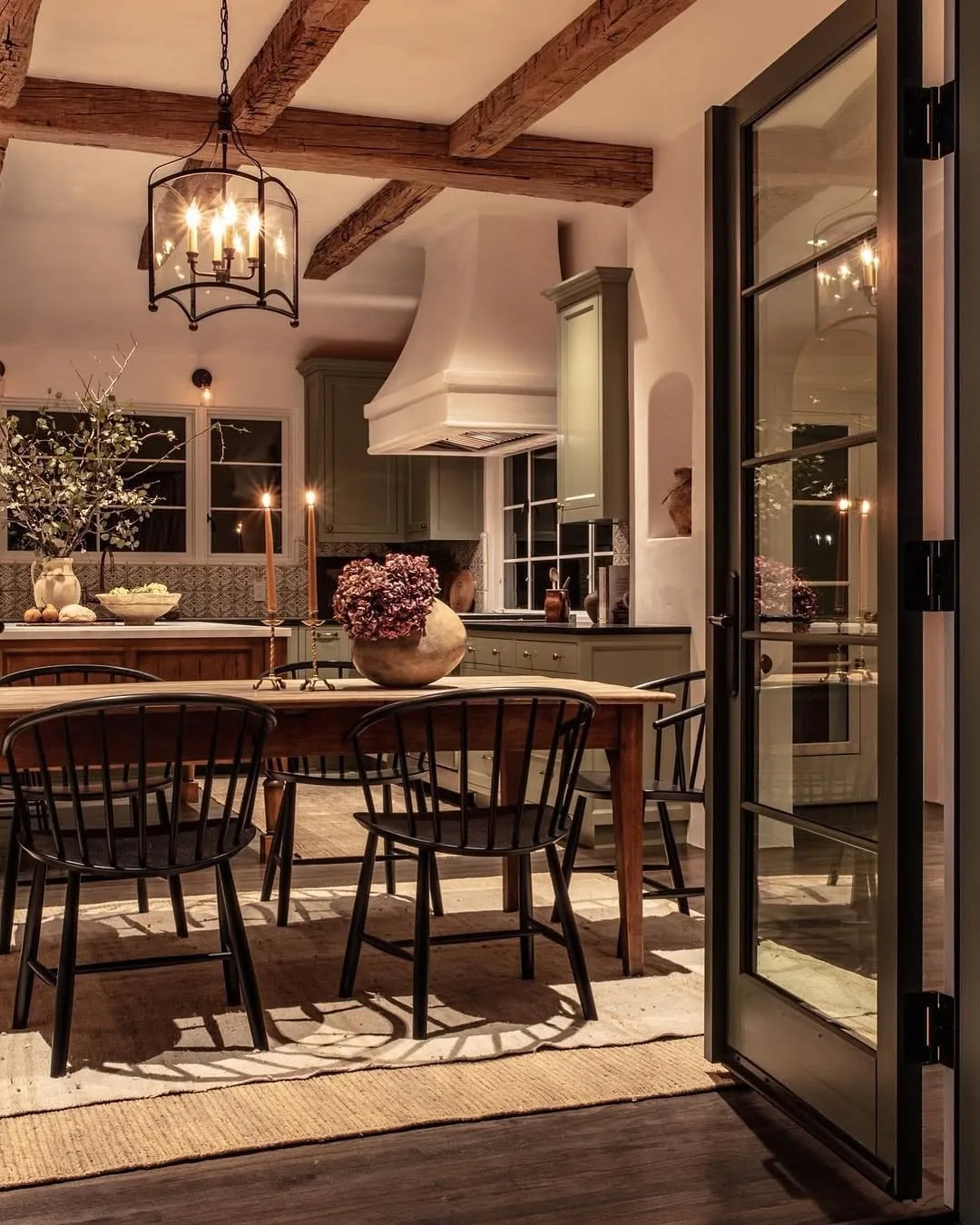
Stain for weight exactly where needed
Dark stain adds gravity wherever it lands. You’ll spend it deliberately: island, range wall or tall pantry bank, while perimeters stay light for air. One heavy note anchors intentionally. Whole rooms of dark stain flatten fast.
You’ll sample stain at full cabinet scale, because small chips read lighter than installed walls. Deep walnut glows on an island and oppresses across twenty doors. When darkness concentrates where eyes rest, the room gains depth. You’ll place dark stain where lamplight hits it, since gloom wastes the richness you paid for. Scattered dark reads as indecision with a brush.
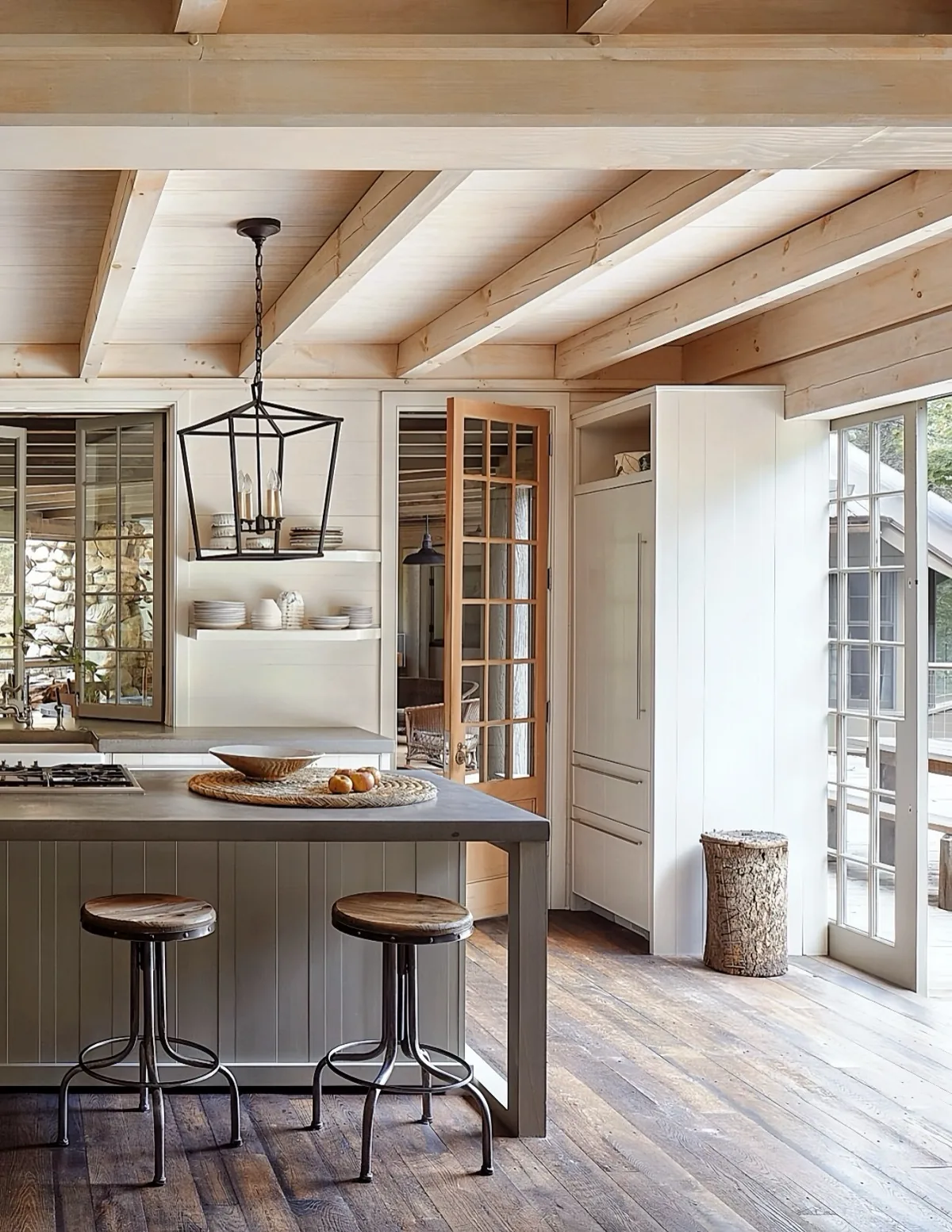
Let pine stay pale or commit dark
Pine’s honey middle ground dates fastest of all woods. You’ll either whitewash or soap it pale for Scandinavian calm, or stain it deep walnut-dark for drama. The amber middle is what reads 1994, whatever the door style around it.
You’ll test pine against your floors ruthlessly, since pine plus pine-toned floors merge into one orange field. Contrast the floor clearly or paint nearby surfaces to break the field. When pine commits to an extreme, it looks deliberate and current. Loitering in the middle looks inherited without the charm.
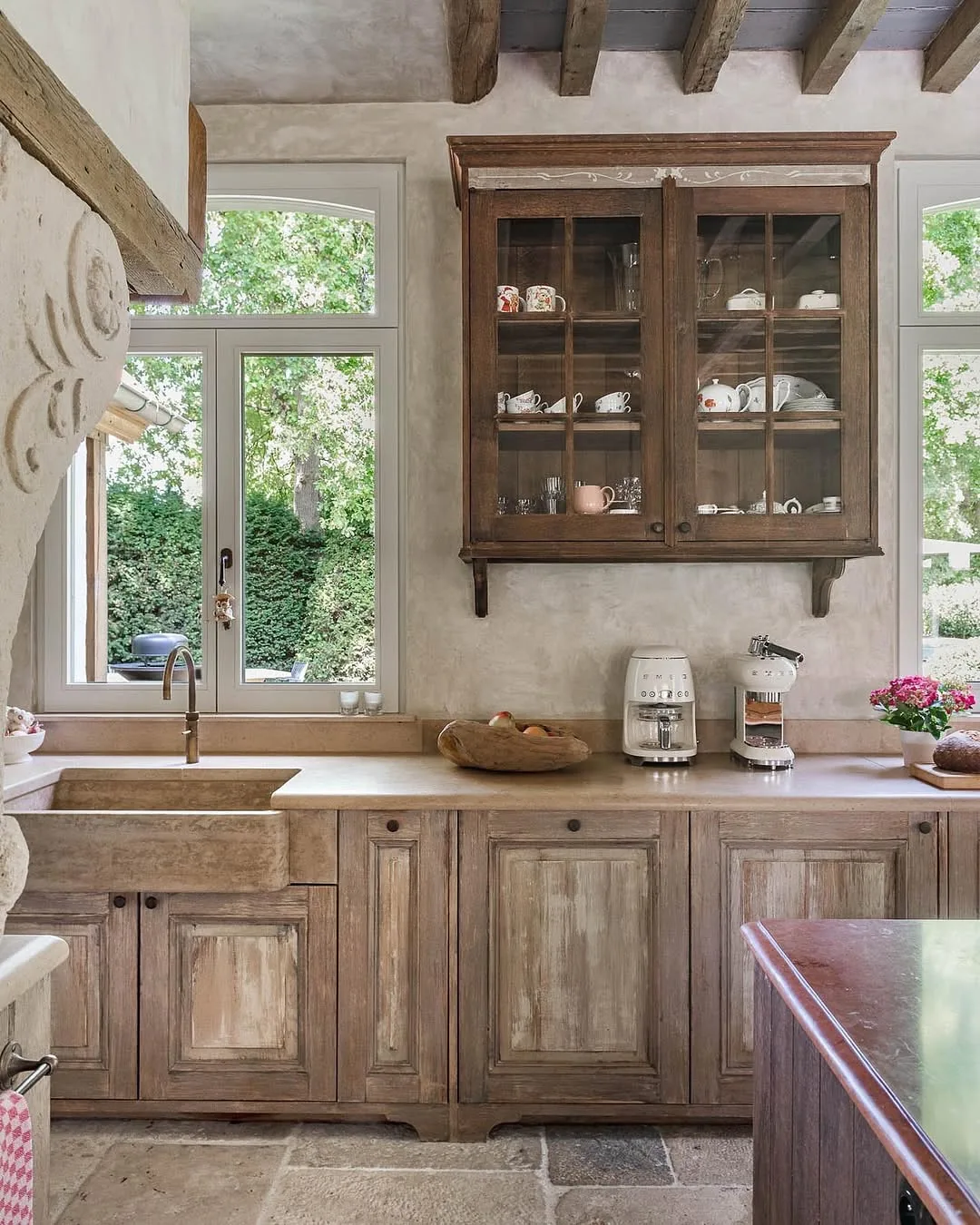
Mix wood with paint deliberately
Two-tone kitchens need assignment logic. Three ideas divide the labor.
Paint where light matters, stain where weight lands
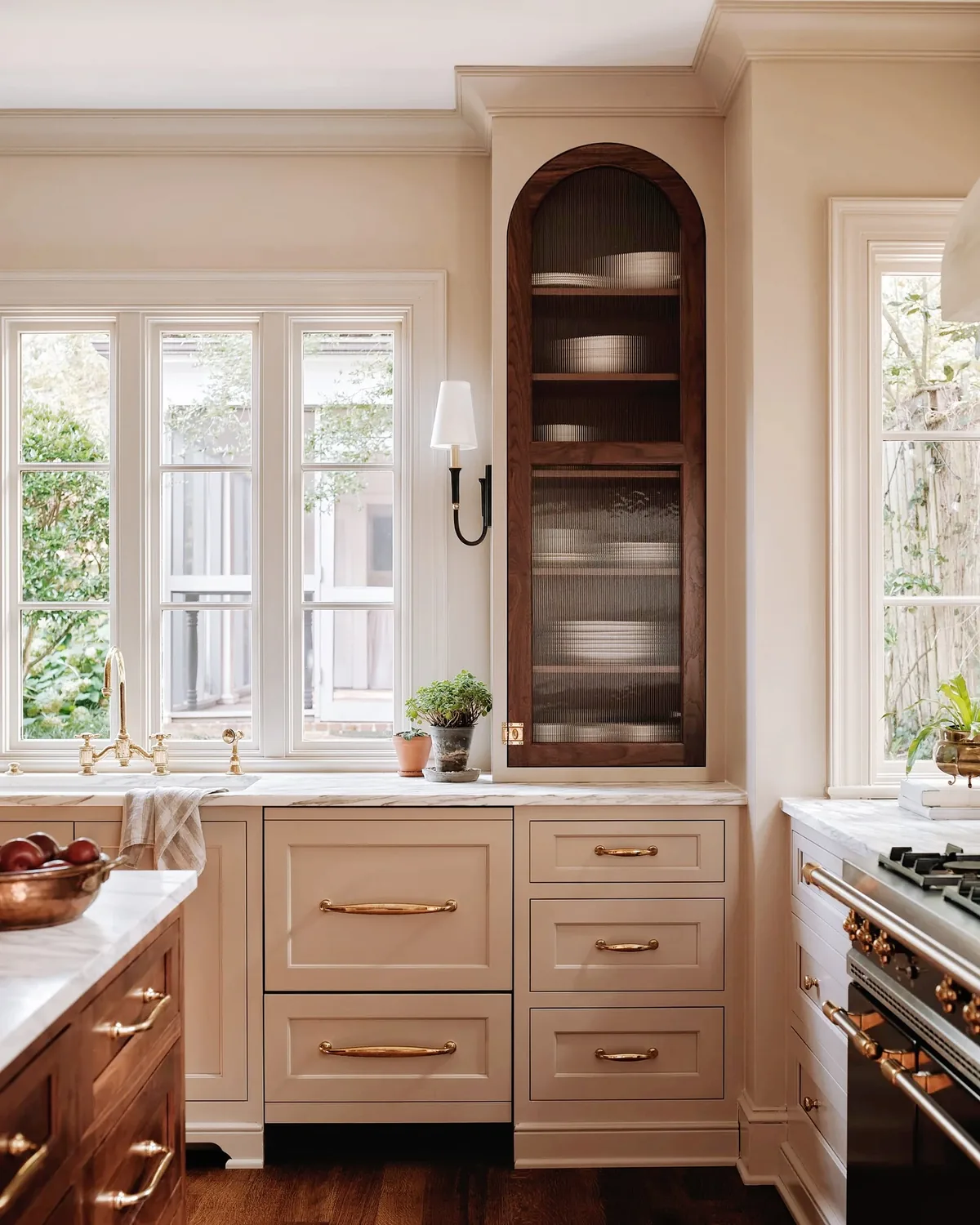
Paint reflects, wood grounds, so you’ll assign by job. Uppers and window walls go painted for brightness. Island, range wall and tall banks go wood for gravity. That division flatters small and large kitchens equally.
You’ll resist scattering both finishes evenly, which reads as indecision rather than design. You’ll cluster each finish into blocks your eye reads as architecture. Concentrated blocks of each finish look architectural. Confetti looks anxious. When paint lifts and wood lands in clear territories, the kitchen organizes itself visually before a single meal cooks.
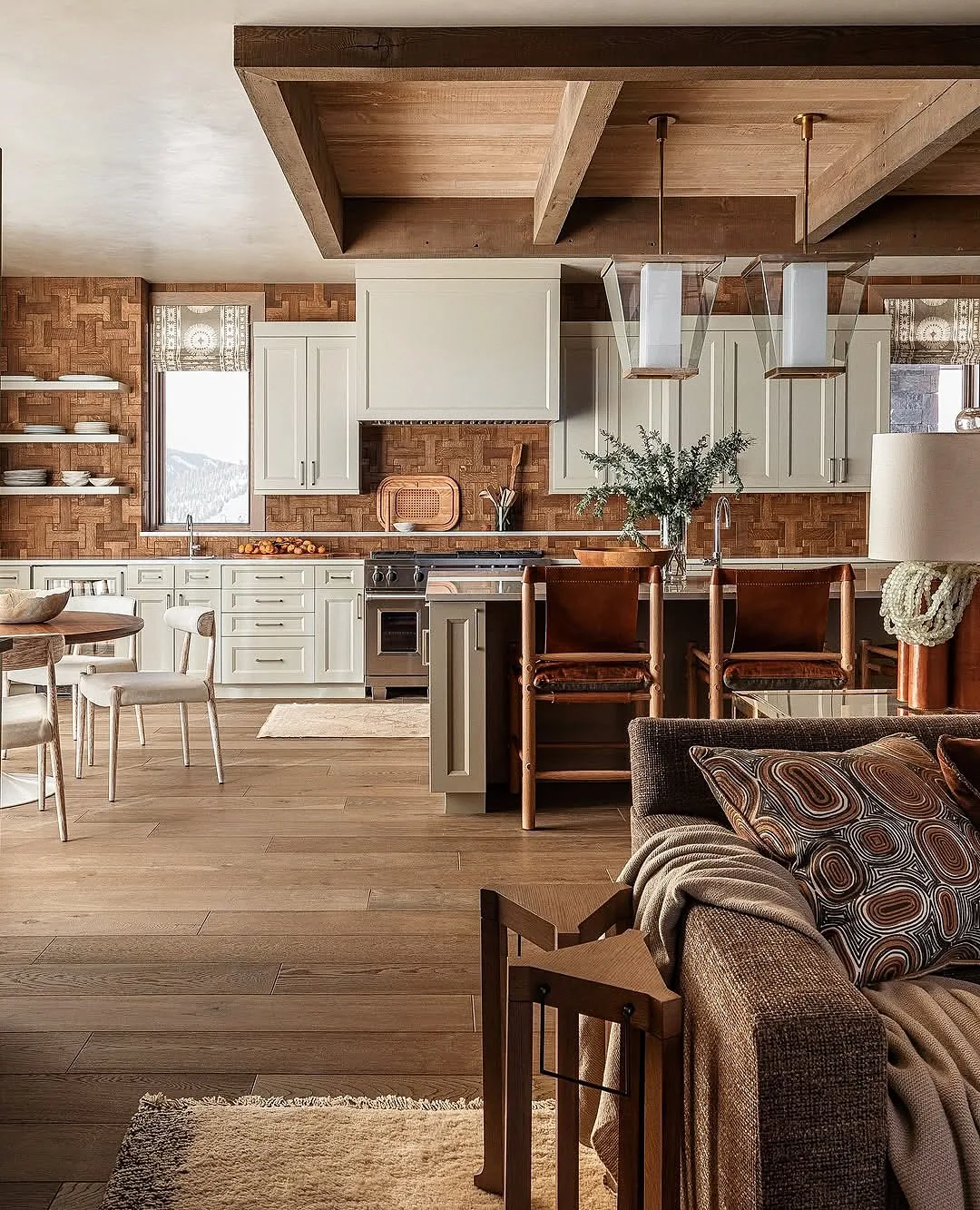
Repeat the island wood once elsewhere
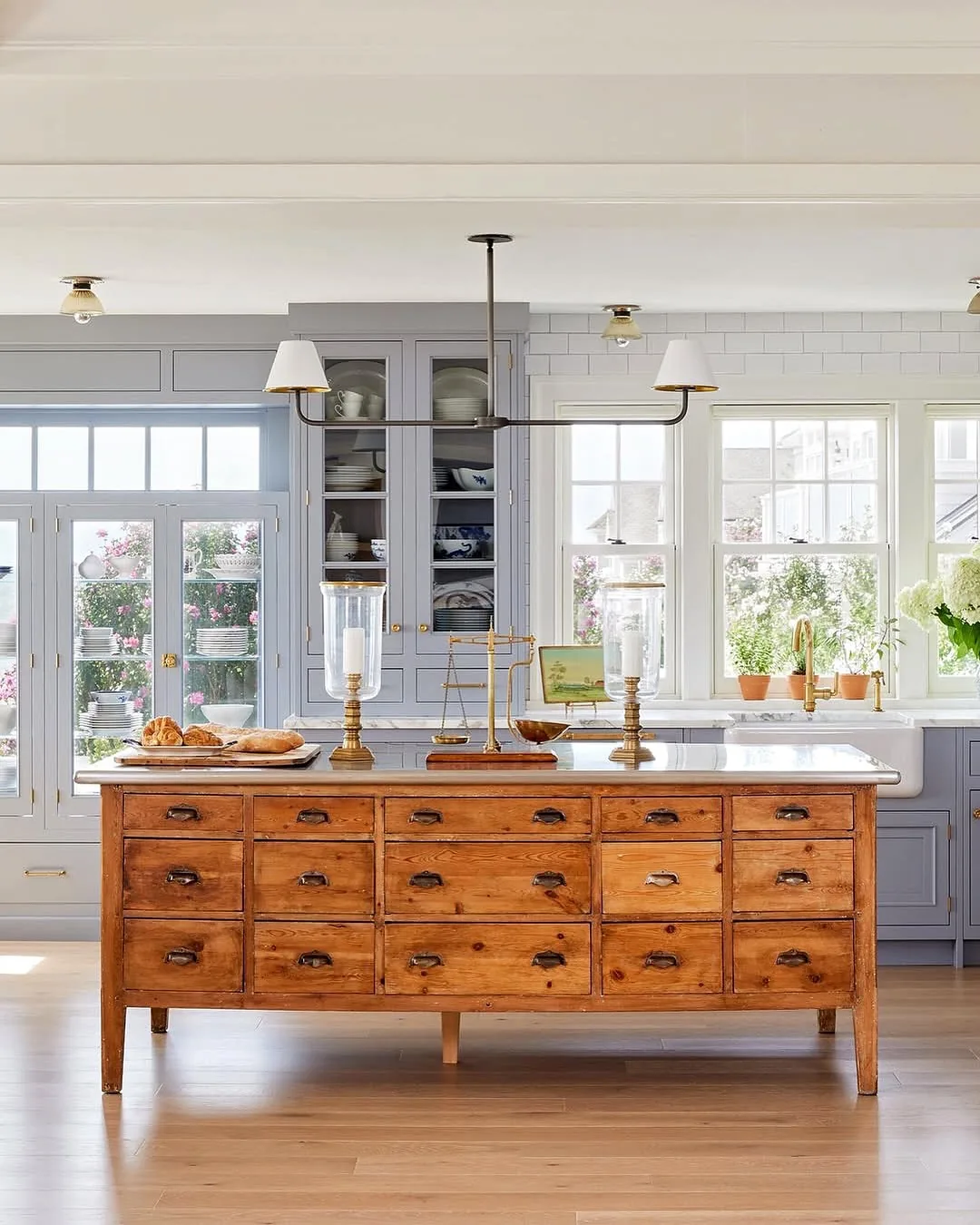
Solo wood islands float disconnected. You’ll echo the island species in open shelves, a hood trim or butcher block section so the tone belongs to the room. One repetition transforms leftover into scheme.
You’ll keep the echo modest: same species, simpler application. Matching exactly everywhere reads as a set. Relating loosely reads as collected. When the island’s wood answers from one other spot, the kitchen feels designed around it. Unanswered wood looks like a delivery error.
Judge wood kitchen cabinet ideas beside floors first
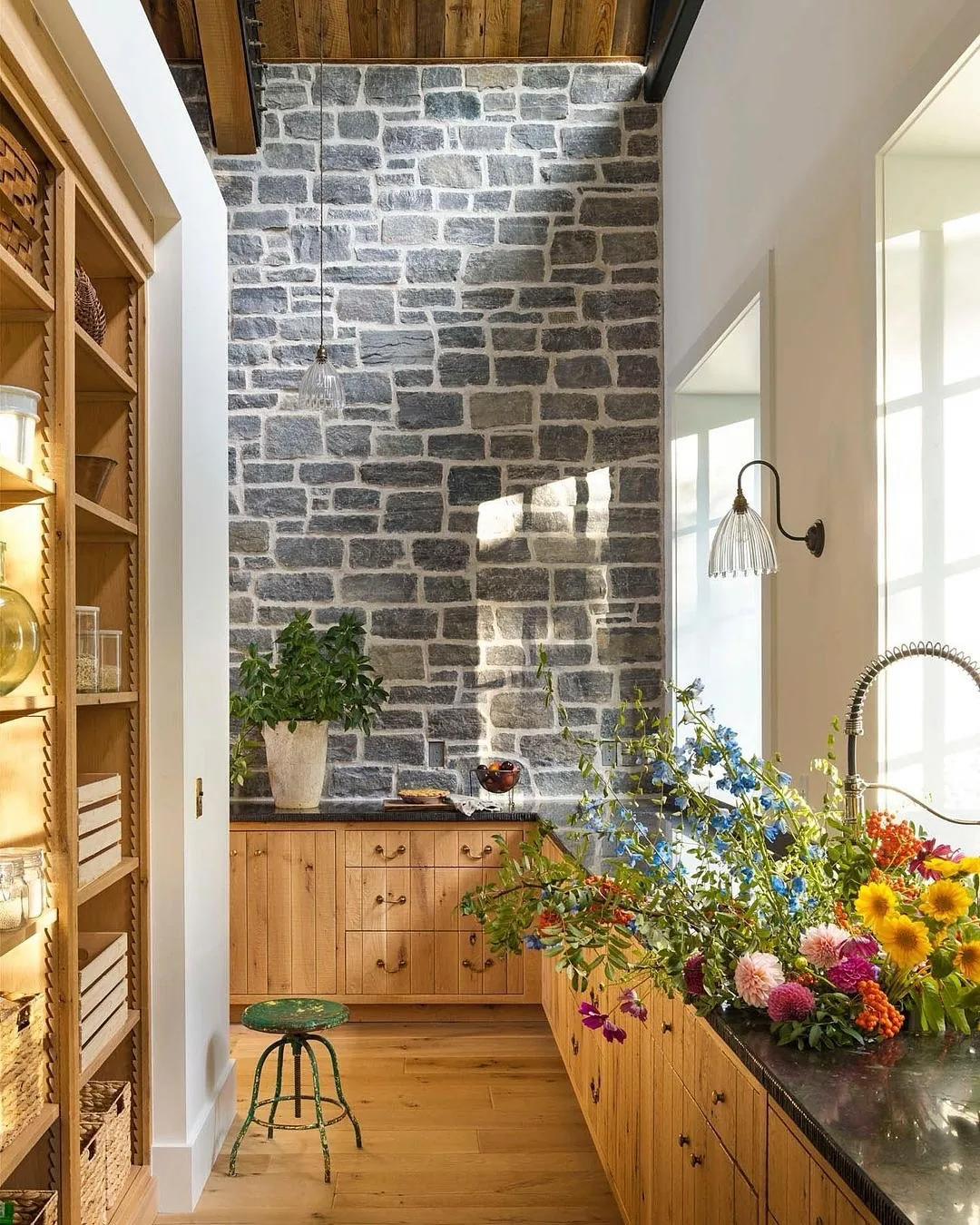
Floors cover the most wood area, so they vote first. You’ll coordinate cabinets to existing floors before choosing anything else, or replace floors knowingly when cabinets lead. Ignoring the biggest wood surface guarantees the loudest clash.
You’ll lay cabinet samples directly on the floor in room light. That meeting previews every morning of ownership. When floor and cabinet relate, through shared undertone or clear depth contrast, the room settles instantly. Showroom pairings made on white tables lie about this relationship completely.
Beams and balance overhead
Wood overhead changes every rule below. Two ideas keep ceilings allies.
Count beams as your second wood tone
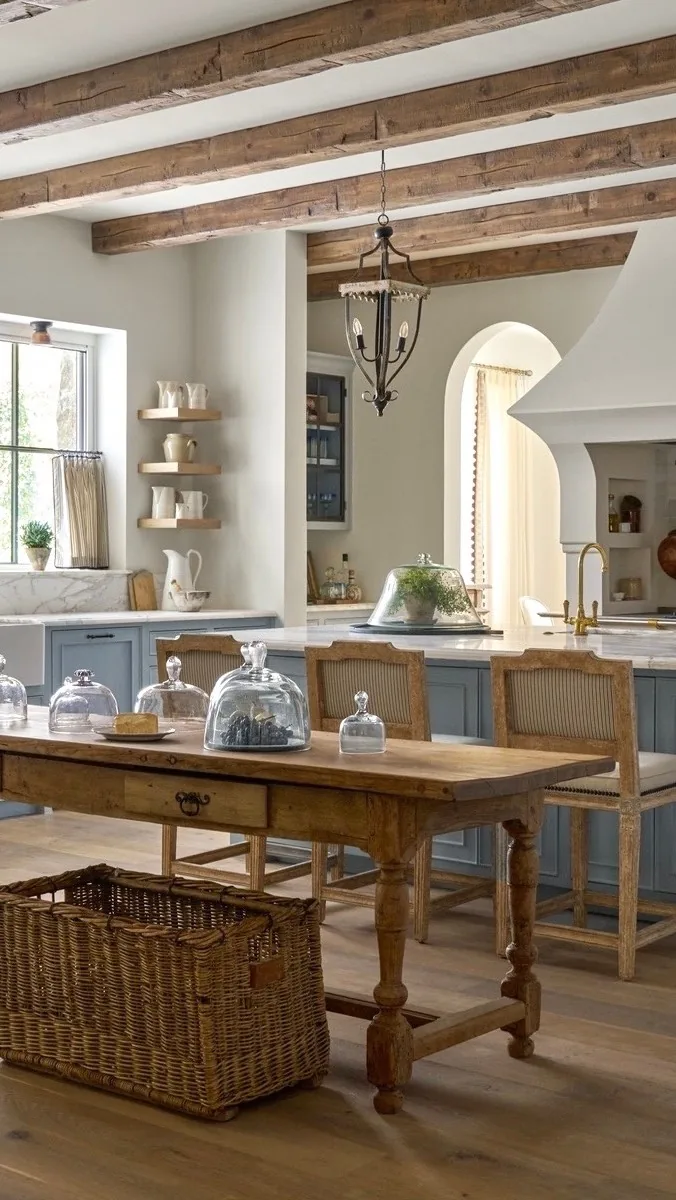
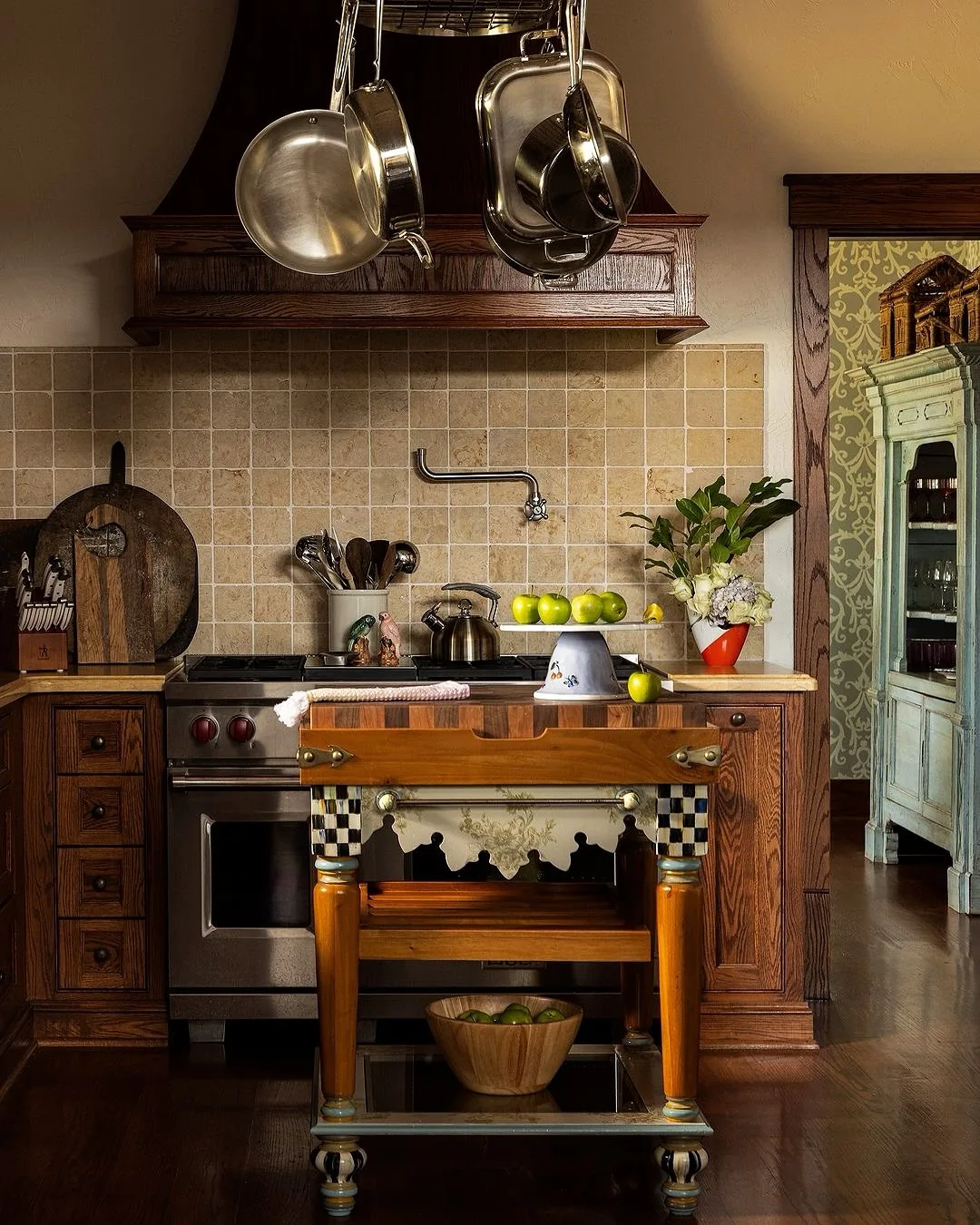
Exposed beams consume your wood budget fast. You’ll treat them as tone two, which usually means cabinets go painted or match the beams exactly. Beamed ceilings plus wood cabinets plus wood floors triple-count and exhaust rooms completely.
You’ll paint before beam installation when possible, since cutting in around timber wastes weekends. You’ll paint perimeter cabinets when beams stay exposed, letting timber own the wood story. For the full logic on beam scale and vaulted volume, see our beamed and vaulted ceiling kitchens guide. When beams lead, everything wooden else follows quietly or goes painted. Ceilings outrank cabinets in the wood hierarchy.
Warm white above wood below in tight rooms
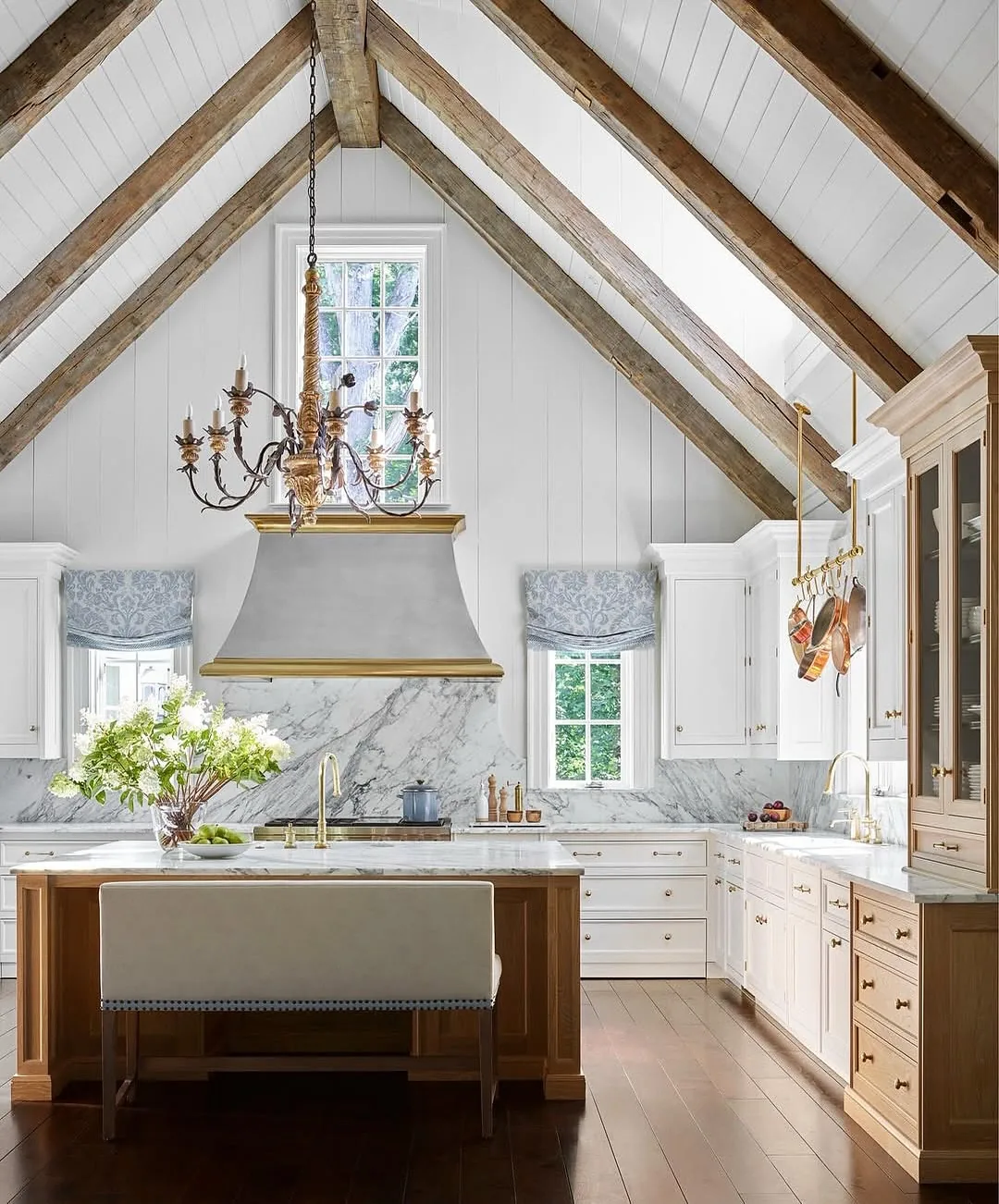
Small kitchens take wood best split vertically. You’ll paint uppers warm white for lift and stain lowers for grounding, gaining brightness without surrendering character. That split flatters galleys and U-shapes especially.
You’ll keep the white warm, never refrigerator stark, beside wood tones. Cool white fights honey cabinets visibly. When warm white floats above and wood anchors below, tight rooms breathe and glow simultaneously. For more small-room placement logic, browse our kitchen ideas hub. Split finishes solve more small kitchens than any single color could.
Wood wisdom at a glance
| White oak | Walnut | Pine | Cherry | |
|---|---|---|---|---|
| Undertone | Neutral golden | Violet brown | Yellow honey | Red amber |
| Best use | Everywhere calmly | Island drama | Pale or deep only | Traditional warmth |
| Grain | Moderate, friendly | Rich, calm | Knotty, busy | Smooth, fine |
| Finish | Matte clear | Matte, oiled feel | Soap pale, stain deep | Satin traditional |
| Pairs with | Sage, cream, black | Navy, brass, marble | White, black accents | Cream, bronze, stone |
| Verdict | Safest species | Richest species | Needs commitment | Warmest species |
The Wood Cabinet Formula
Eleven ideas compress into six workshop rules:
- Undertones agree. Warm with warm across every species in sight.
- Two tones maximum. Cabinets plus one more wood, everything else painted or stone.
- One grain leads. Drama in one place, calm everywhere wooden else.
- Matte clear finish. Confidence reads expensive, gloss reads sticky.
- Paint lifts, stain lands. Brightness above, gravity below or centered.
- Beams count double. Overhead timber spends the wood budget first.
Mill those six into every sample board and the kitchen glows like timber meant it to. Wood rewards the choosers who read it closely and punishes only the hurried.
Frequently Asked Questions
What wood is best for kitchen cabinets?
White oak for versatility, walnut for richness, pine only committed pale or deep. You’ll match undertones across species before falling for grain. Neutral golden oak forgives most pairings while red-toned woods demand careful company.
Can I mix wood cabinets with wood floors?
You’ll coordinate, never match closely. Share an undertone family or separate clearly in depth, and keep only one dominant grain. Near-matches look like failed matches while distinct depths read intentional.
Should kitchen cabinets be painted or stained?
You’ll paint where light matters and stain where weight lands. Uppers and window walls go painted, islands and tall banks go wood. Mixed deliberately, the combination beats either finish alone.
How do I update honey oak cabinets?
You’ll either commit deeper with gel stain toward walnut or paint them properly with bonding primer. Half measures, glaze pens and wishful hardware swaps, read as delay. Test the committed route on one door first.
Is matte or glossy better for wood cabinets?
Matte or satin clear, always in kitchens. You’ll let grain show velvety rather than glassy. Gloss amplifies unevenness and records fingerprints while matte forgives daily touching invisibly.
How many wood tones per kitchen?
Two maximum including floors and beams. You’ll count floors and beams in your two before choosing a single cabinet. You’ll grant drama to one surface and calm to the other. Third tones arrive only as tiny accents, never as cabinetry.
This article may contain affiliate links. We may earn a commission at no extra cost to you.