Fix the Twelve Feet in Front of Your Shingles

Add us as a preferred source to see more stories on Google.
Your shingle cottage looked charming in the listing and a bit flat once you moved in.
You assumed the wall was letting you down.
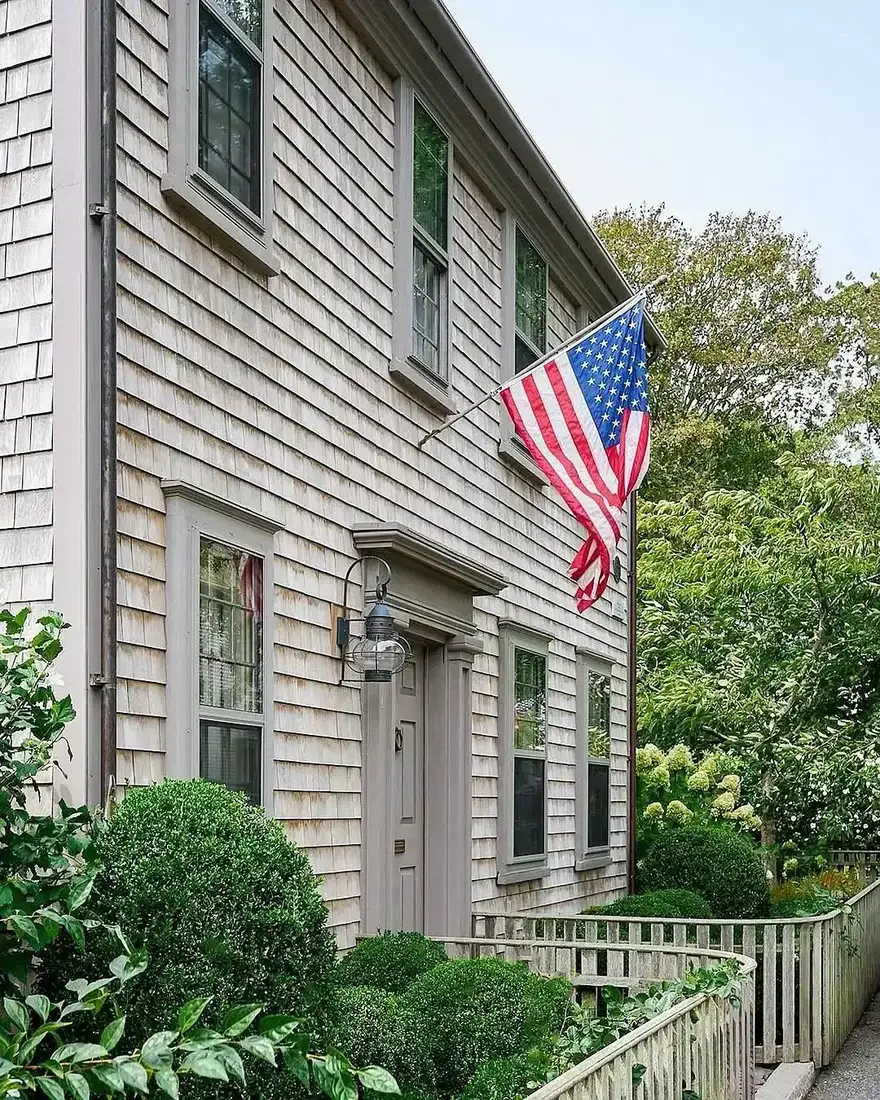
In all of these the cladding is the quiet part. Hydrangeas, the fence, the door colour and the drive are doing the work. If your shingle house looks flat, the problem is the twelve feet in front of it, not the wall.
These eleven cottages show you what to plant, paint, and lay so grey cedar finally sings.
Color and shape that love grey
Grey cedar is a neutral, which gives you permission to be bolder elsewhere. These three use that freedom well.
Push the door colour further than paint allows
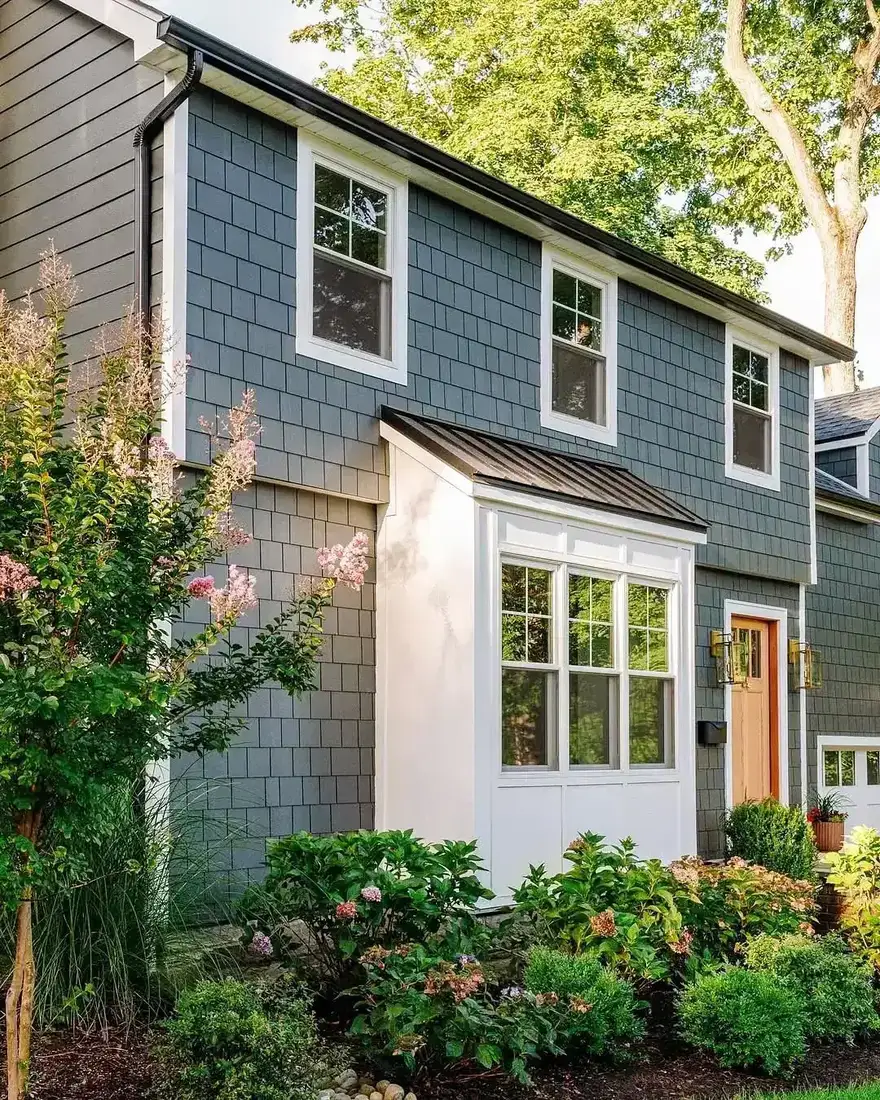
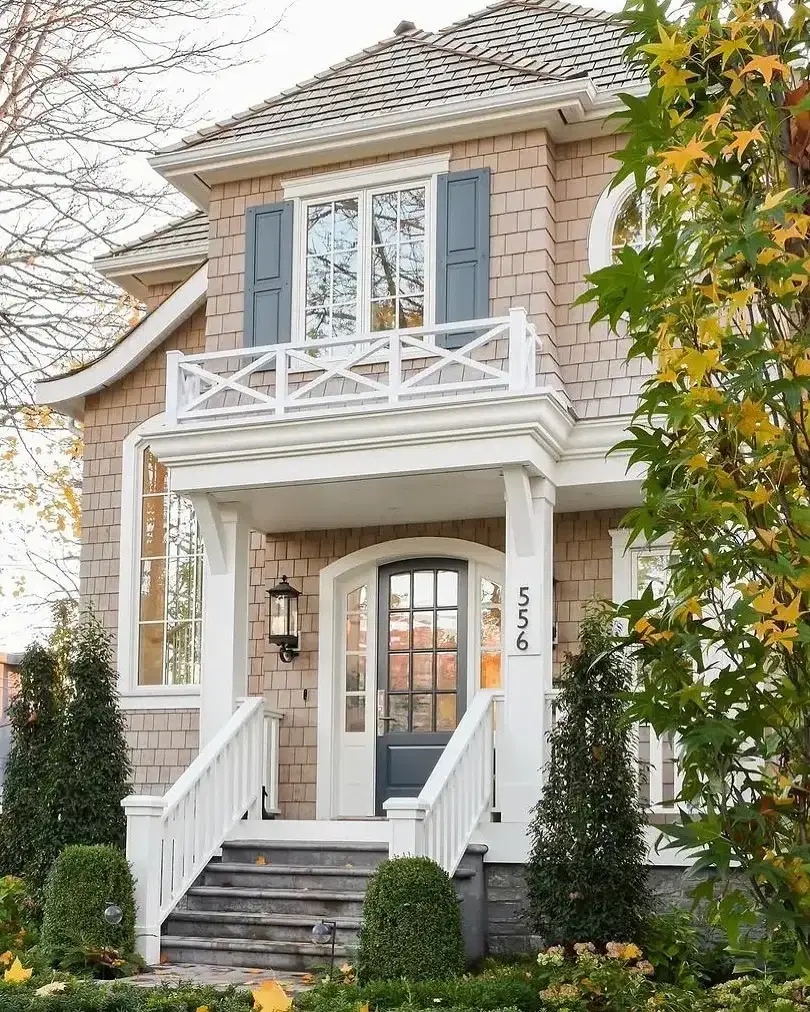
Take the cottage with the dusty blue door. That blue would shout on a white house, yet against warm grey-brown cedar it feels confident and calm. Cedar sits as a neutral, so you can carry a stronger door than paint ever allowed. You should test door samples against your actual shingle, not against a white swatch, and view them morning and evening. When your door feels like a note of jewelry rather than a paint job, you have the depth. Keep the rest of the front quiet so the door stays the one strong color you chose on purpose. Roof and shutter weight follow the same logic on symmetrical fronts, which our colonial house exterior ideas sets out.
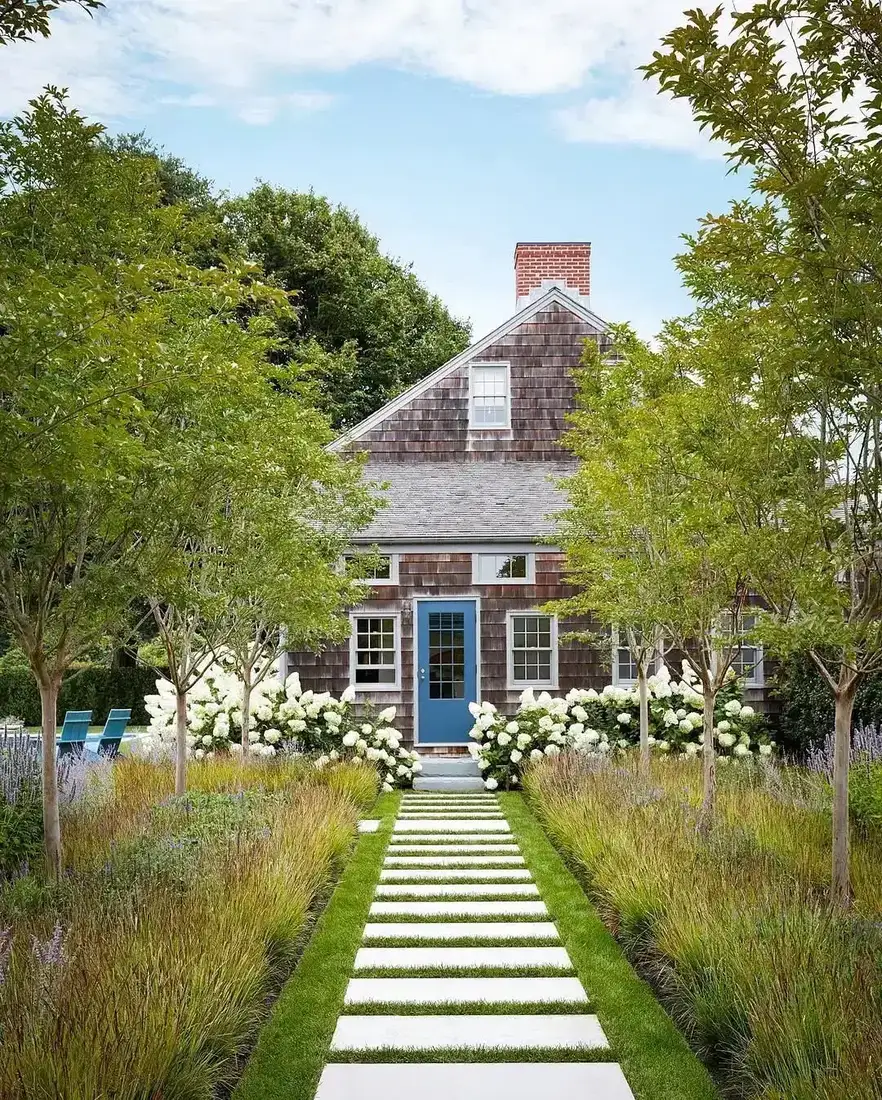
Hold structure into autumn with hydrangeas
Step closer to the cottage with blue shutters and its neat cupola. The border below stays handsome even as summer fades. Hydrangeas suit shingle cottages because they hold structure into autumn and keep their heads, which read as soft mass against grey. You can keep that border low and a little forward of the wall so the cedar still breathes. Cut a few stems for the kitchen and you are also pruning for next year. If you love color, let the hydrangeas be it rather than adding a second bright plant that competes with the door you just chose. One generous drift beats a scatter of many plants.
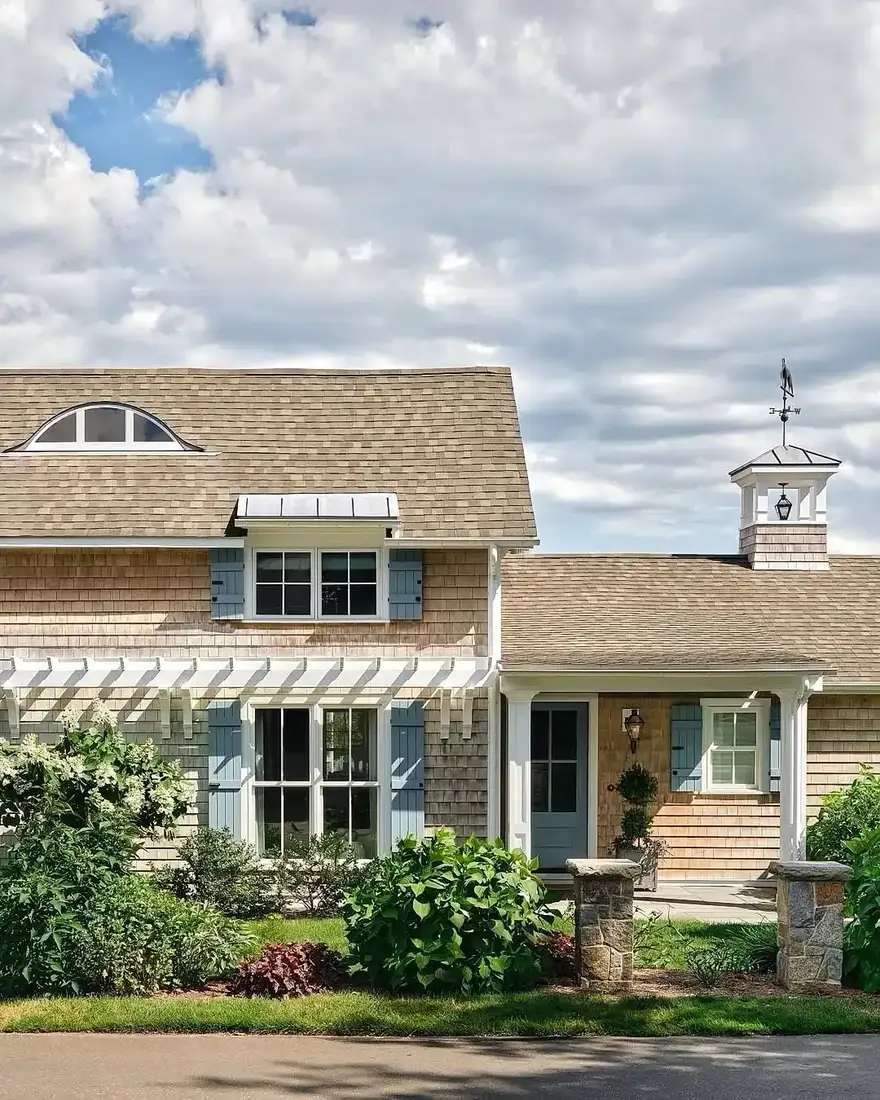
Shape the garden so it frames the house, not hides it
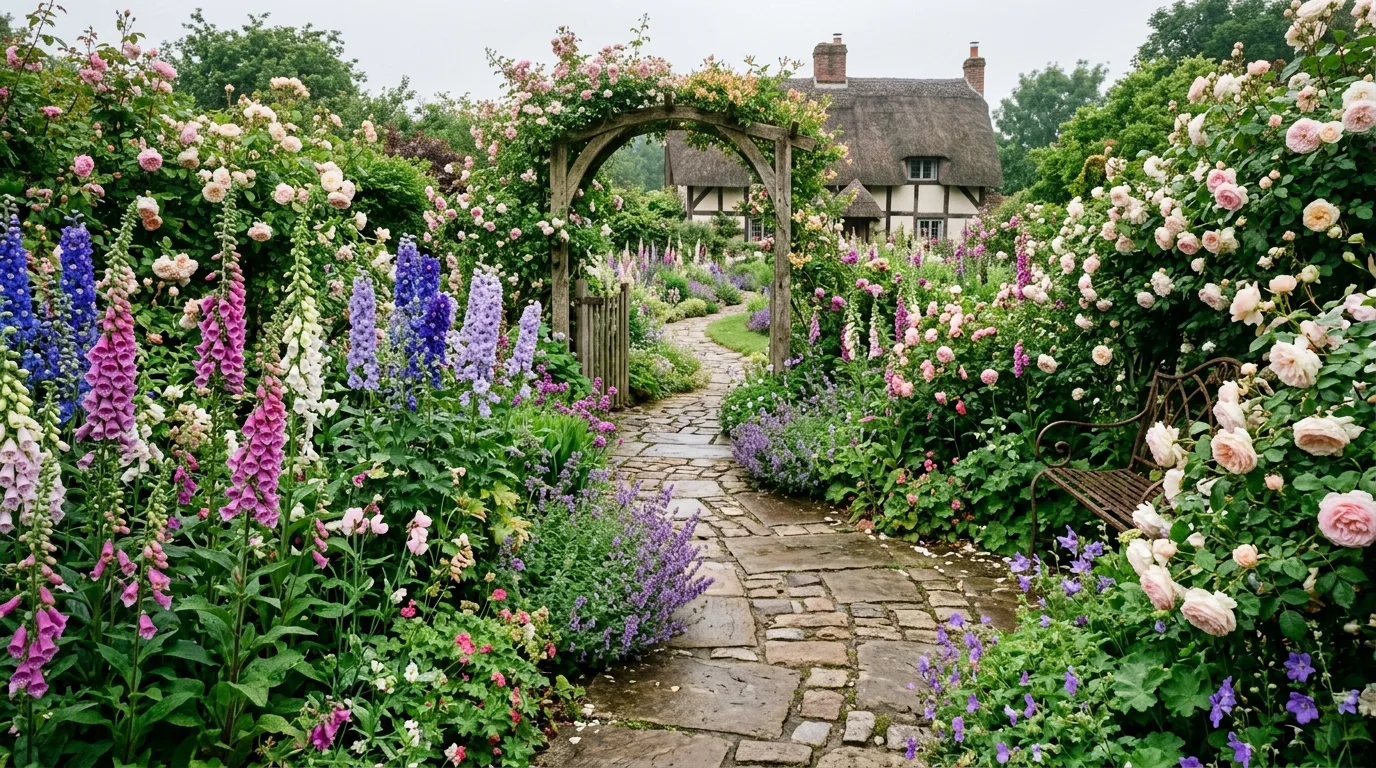
Consider the cottage almost lost in its cottage garden flowers and green lawn. The planting looks abundant, yet the house still reads because the clipped edge near the wall stays low and clear. You should keep the wilder mix further out and hold a simple green frame by the cedar. That frame gives your eye a quiet place to rest before the hydrangeas start. When you stand back, your shingle texture can finally show. When you let flowers crowd the siding, the texture vanishes and the house looks fussy. Edit your border so you see a strip of cedar, a strip of green, then the looser flowers beyond.
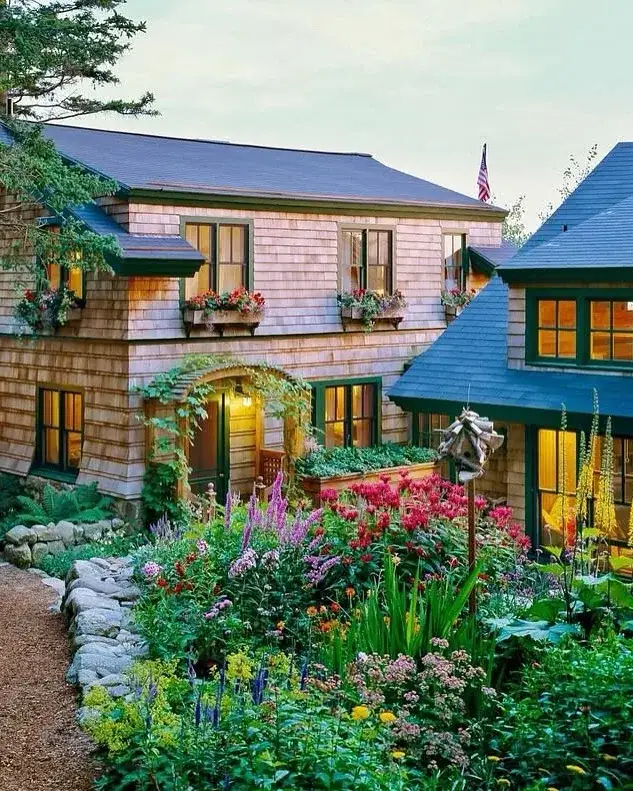
The edge that makes cedar breathe
What happens at the very foot of the wall decides whether cedar ages gracefully.
Pull planting back so air can move
Study the double porch and balcony, where white columns stack cleanly over silver. The bottom course looks dry because nothing touches it. Keep planting off the wall so air can move behind the siding. Shrubs pressed to cedar trap moisture and hold damp against the bottom courses, which darkens and softens the wood where you least want it. You can have a lush garden, just pull it forward a step. That gap lets wind dry the wall after rain and gives you room to step in and wash or inspect without hacking through foliage every time. Your future repairs cost less when the base has been dry from the start.
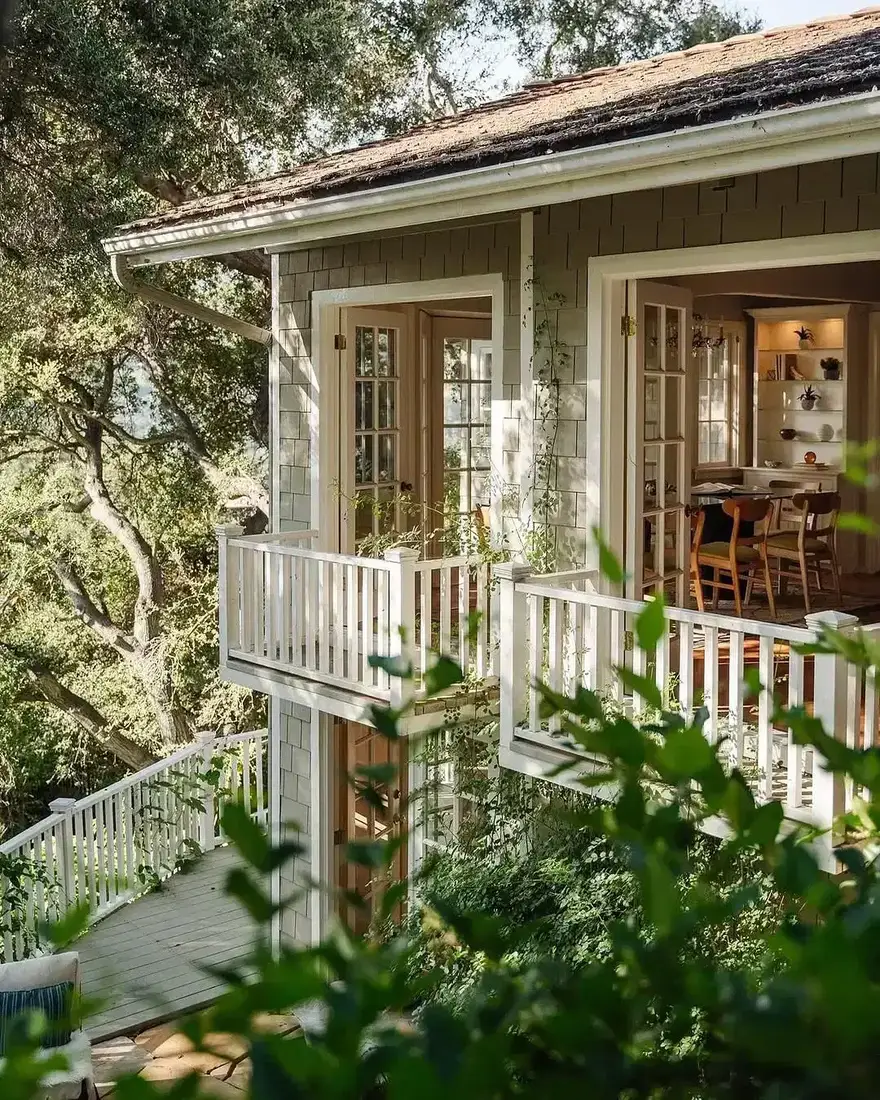
Repeat the trim in a white picket fence
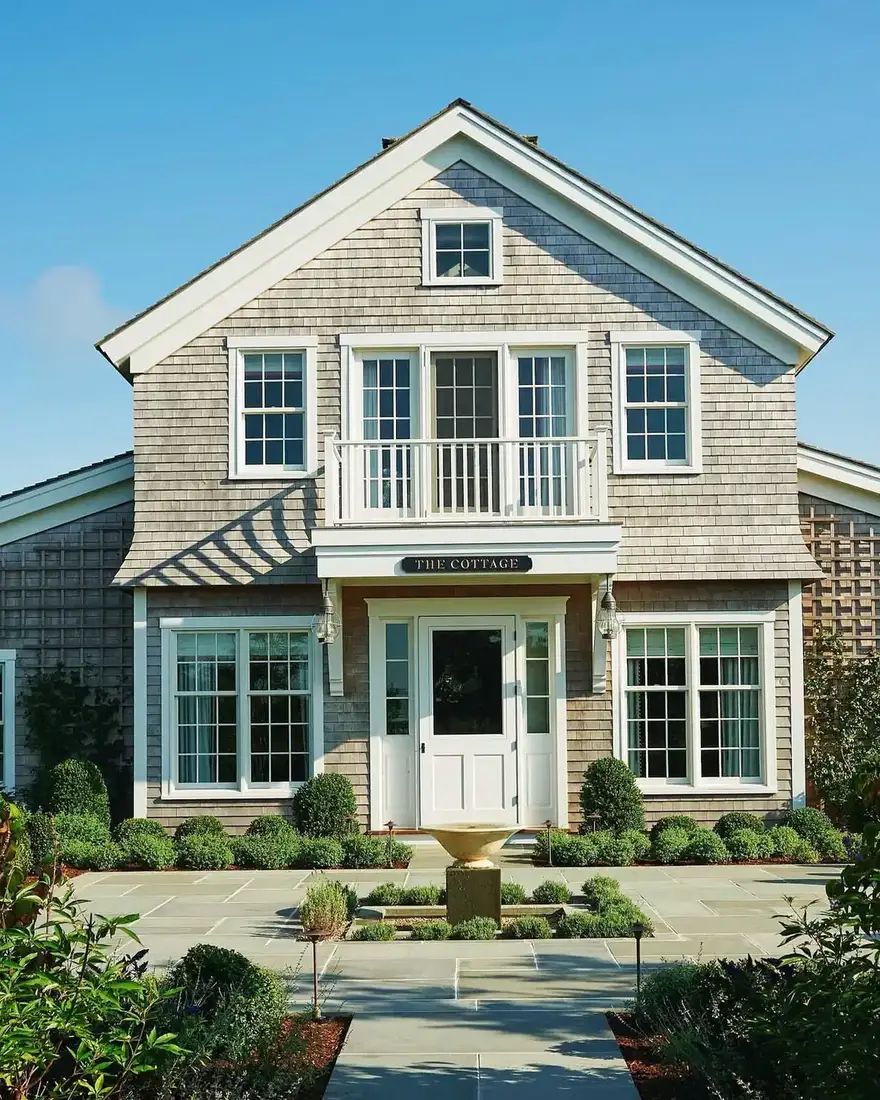
Notice the picket fence edging the hydrangeas in front of silver shingles. The fence works because it repeats the trim colour rather than introducing a new one. White picket fences suit shingle cottages for that reason. You read trim, fence, and window frames as one quiet family, so your door and flowers can be the color. Keep the fence low and simple, with a gate that lines up with your front door. When you photograph the house, the fence draws a clean horizontal that echoes the eaves and frames the planting without stealing texture from the cedar you left bare.
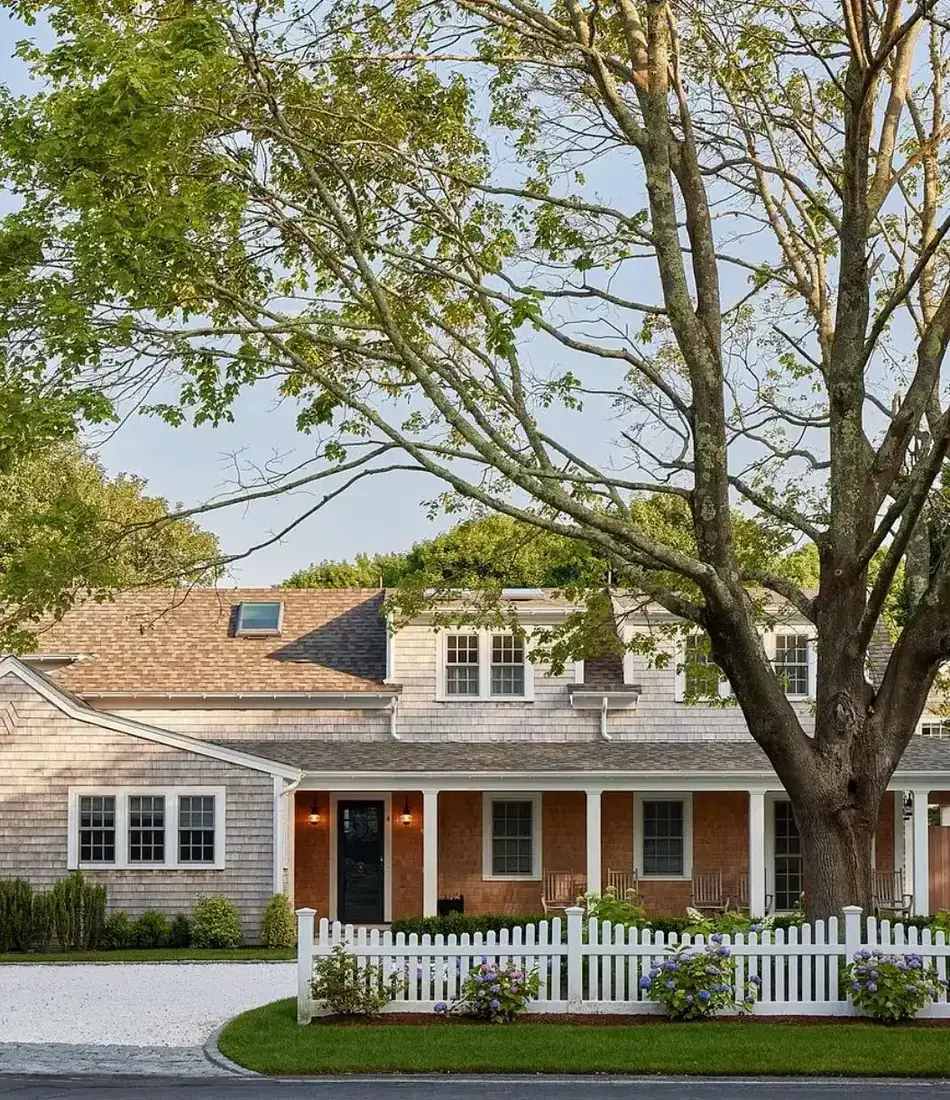
Choose gravel where tarmac would harden the front
Follow the curved drive that meets the cottage with the warm wood door. The surface is pebble and gravel, and it feels softer than tarmac ever could. A gravel or curved drive reads softer than tarmac and costs less to lay, which is a rare win both visually and on budget. You should keep the curve gentle and let planting edge it loosely so the stones do not wander into lawn. When visitors arrive, their tires crunch rather than hiss, and the sound makes the approach feel like a cottage, not a forecourt. That soft ground also echoes the pebble tone in the cedar, tying house to land.
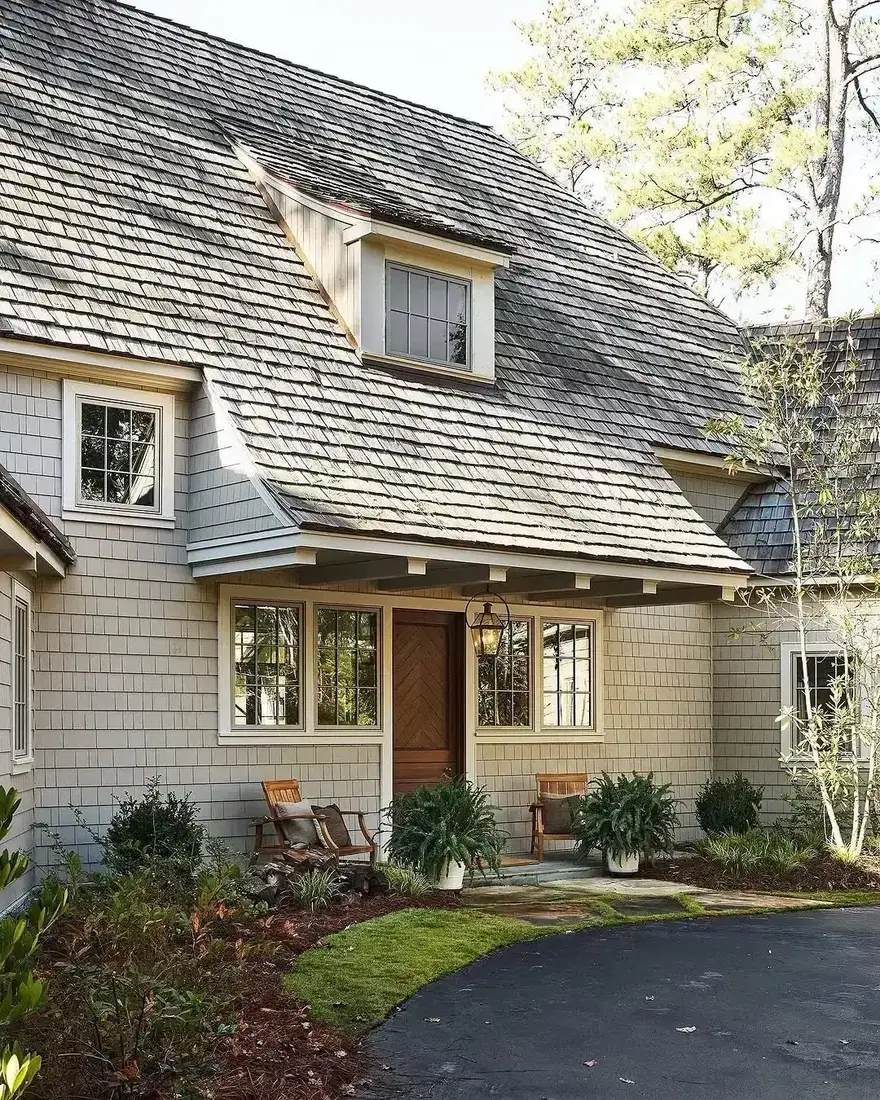
Light, scale and texture that flatter grey
Cedar changes with light. These three show you how to work with that shift instead of fighting it.
Warm the grey with golden light and dark accents
Picture the house with black shutters caught in late sun. The cedar glows warm because the surroundings let it. Dark shutters read best when you test them at dusk as well as midday, and you keep the rest of the trim warm white so the grey never looks blue. You can hold a shutter sample to your shingle at sunset before you decide. If it stays soft and deep rather than blue, you have the pairing. Keep planting a step forward so the evening light can rake the shingle shadow. That long shadow is what makes cedar feel like driftwood rather than flat paint.
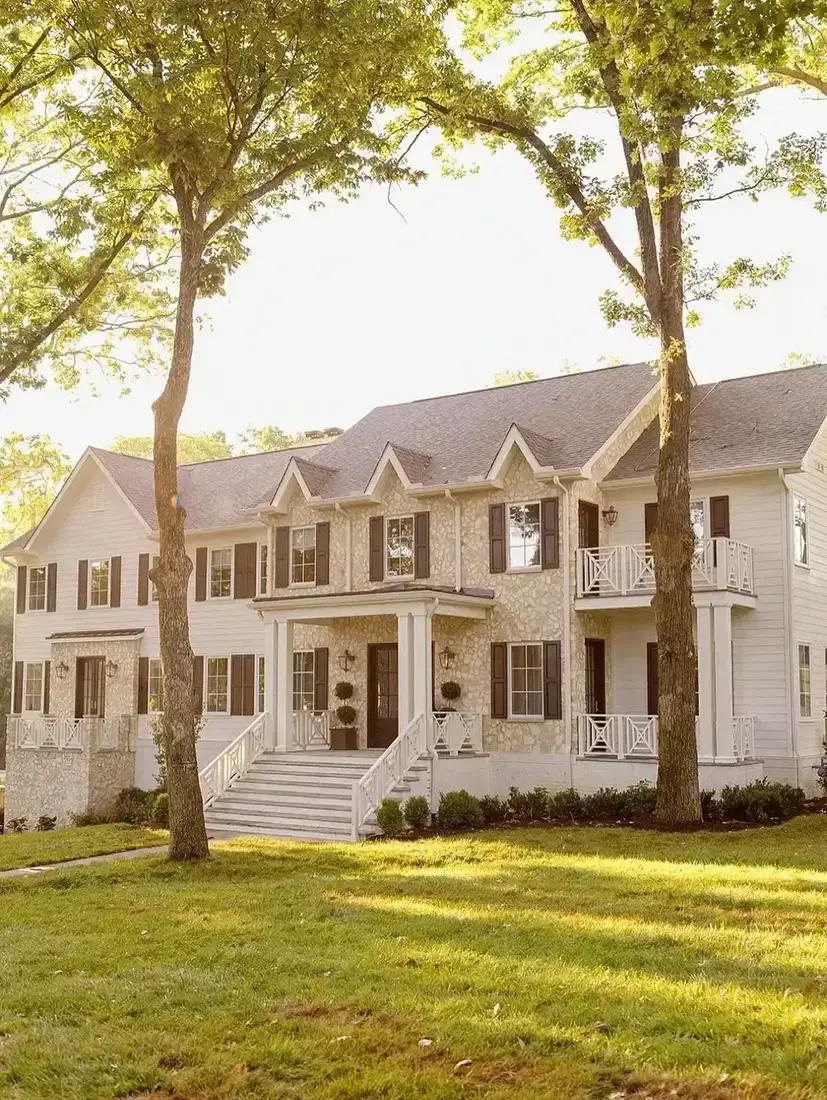
Limit the palette to one strong colour plus grey
View the curved bay window with hydrangeas underneath. The bay is the shape, the cedar is the texture, and only one color does the talking. You should resist the urge to add shutters, door, and window boxes in three different hues. On cedar, one strong note plus grey reads collected, two or three reads busy. Let the bay curve be the event and keep everything else quiet. That restraint lets your morning light show the shingle courses clearly, which is texture you paid for when you chose cedar over paint.
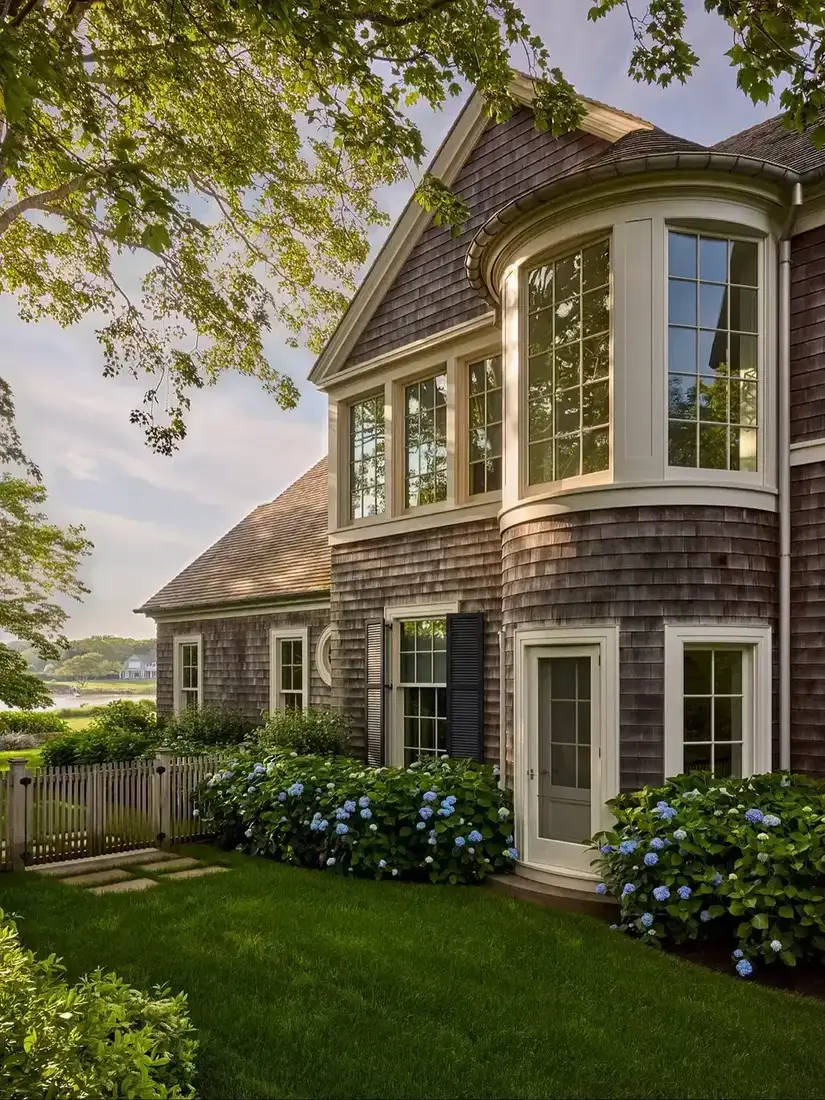
Ground cedar with one honest stone element
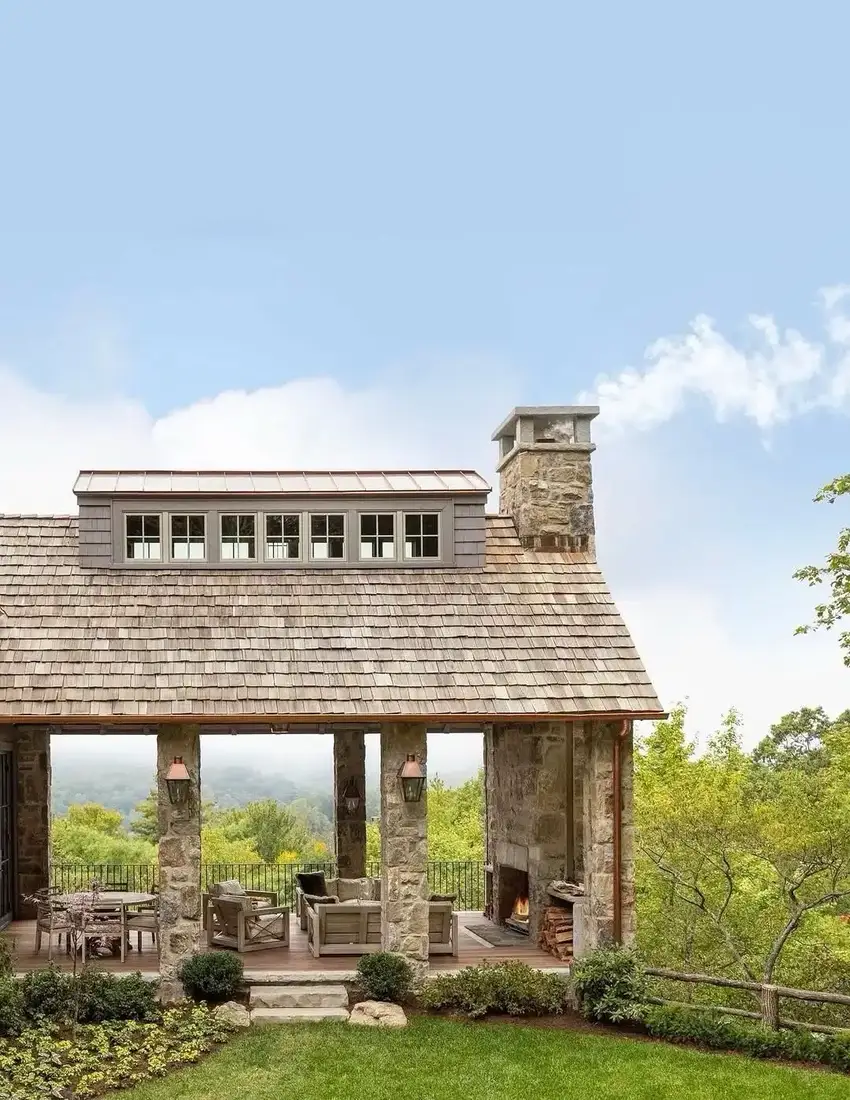
Where stone columns and an outdoor fireplace meet shingle walls, the matte stone makes the cedar beside it read warmer. You do not need a full stone house to get that effect. One honest masonry element grounds a whole shingle façade. Keep the stone joints modest and let the cedar gap breathe where they join. If your site has stone, let the terrace or pier echo that same family. One honest masonry element beats three decorative ones, a theme running through our home exterior guides. Where that masonry sits beside water, our lake house and coastal exteriors guide plans the terraces, fire pits and evening light around it.
The big houses that still feel like cottages
Scale changes nothing here. The same garden logic holds on a much larger house.
Calm a big gable with simple planting
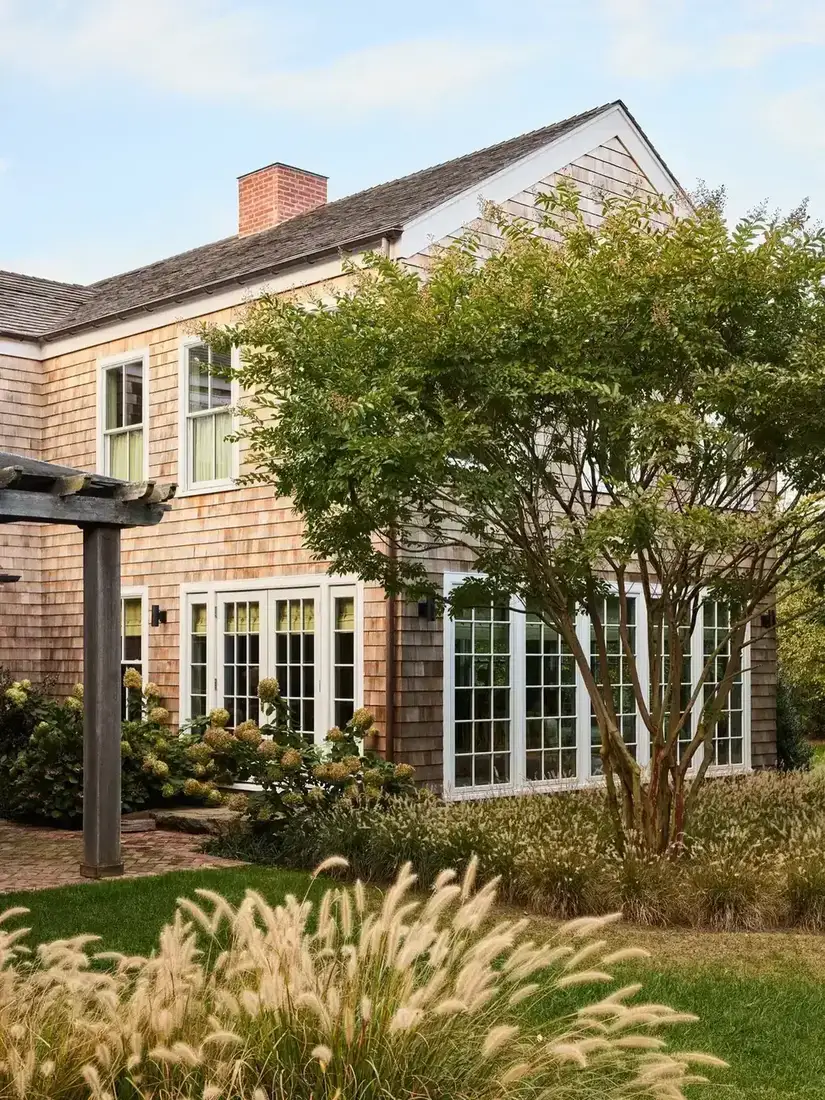
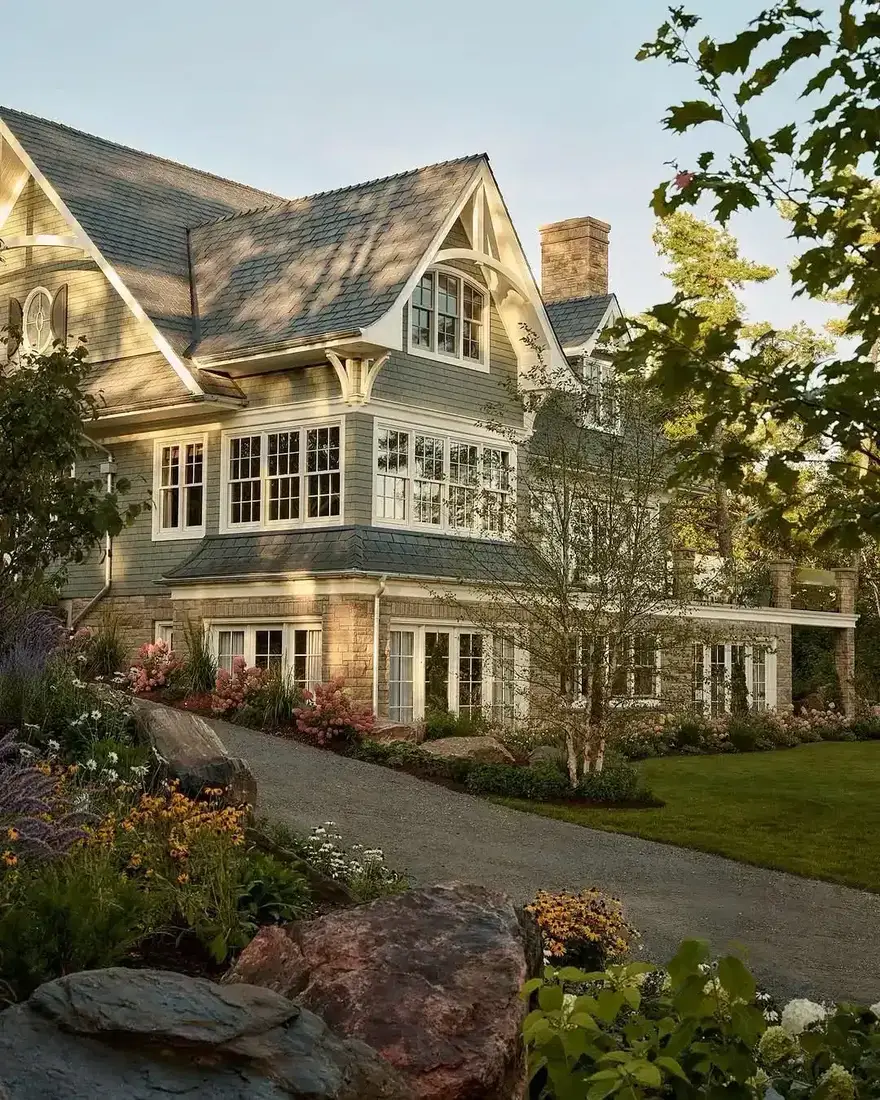
Consider the large gabled home set against lawn. Its shingles stay calm because the ground is simple. A single lawn edge kept true, a few shrubs pulled forward, and no extra color let the texture read even at distance. You can scale hydrangeas and picket fences up for a larger house, but you should not scale their color count. One door color, one flower mass, and the grey field remain the rule. That discipline is what keeps a big shingle house feeling like a cottage rather than a hotel.
Edit twelve feet in front before you repaint
Finally, study the mansion above its limestone terrace and pool. Its grandeur feels settled because the terrace is pale, simple, and lower than the shingle line. Before you repaint or restain anything, edit the twelve feet in front of your house. Clear planting off the base for airflow, repeat trim white in a low fence, choose gravel where you would have poured, and let hydrangeas be your one generous flower. That edit costs less than a paint crew and it is reversible. When you step back, your cedar will finally look like the houses you saved. Planting that frames rather than crowds is covered in our garden decor ideas.

Shingle cottage, planting and drive choices at a glance
| Choice | What it does to cedar | Use it when | Watch for |
|---|---|---|---|
| Bolder door colour | Gives grey a focal point | Any cedar neutral wall | Pale door that vanishes in sun |
| Hydrangeas en masse | Holds shape into autumn | Front border, low hedge | Mixed bright perennials |
| Planting held off wall | Lets air keep base dry | Every shingle cottage | Shrubs pressed to bottom course |
| Gravel or curved drive | Softens approach, costs less | Replacing tarmac | Drive tight to house with no edge |
| White picket repeating trim | Ties fence to house | Cottage with trim white | Dark fence that fights shingle |
| Simple lawn and edge | Lets texture read at distance | Large shingle houses | Many colours competing |
The Shingle Cottage Formula
- Let cedar be the neutral. Choose a bolder door than you would on a painted house.
- Plant hydrangeas where you want mass. They hold into autumn and love grey.
- Hold planting off the wall. Air at the base keeps cedar dry and its color true.
- Lay gravel or a curve, not tarmac. Softer ground flatters shingle and saves budget.
- Repeat trim white in a low picket. The fence then frames rather than competes.
- Edit the twelve feet in front first. Garden and drive decide before cladding does.
Six decisions, and your cottage reads as a cottage again, even if you never touch the wall. For the orange to silver timeline and the build details that keep shingle healthy, see our cedar shingle house exterior ideas.
Frequently Asked Questions
Why does my shingle cottage look flat?
The cladding is rarely the problem. A flat look usually comes from the planting, door, and drive in the first few metres in front of the house. Fix those before you repaint or restain, since cedar is a neutral that depends on its neighbours.
What door colour works best with cedar?
A bolder one than you would use on a painted house. Cedar is a warm grey-brown neutral, so it carries deep blues, warm reds, or sage greens without shouting. Test the chip against your actual shingle in daylight.
Are hydrangeas a good match for shingle houses?
Yes. They hold structure into autumn and their soft mass reads beautifully against grey cedar. Keep them as a single drift rather than a mixed bright bed that competes with your door.
How far should planting sit from a shingle wall?
Pull it forward so air can move behind the siding. Shrubs pressed to cedar hold damp against the bottom courses, which darkens and softens the wood where you least want it.
Should I pick gravel or tarmac for the drive?
Gravel or a gentle curve in plan reads softer than tarmac, suits a cottage, and costs less to lay. Keep the edge crisp and the surface slightly below the shingle line.
Does a white picket fence suit cedar shingles?
Yes, because it repeats the trim colour. A low white picket frames the garden and ties to your window frames without stealing texture from the shingle.
This article may contain affiliate links. We may earn a commission at no extra cost to you.