Open Shelves Show Every Speck You Own

Add us as a preferred source to see more stories on Google.
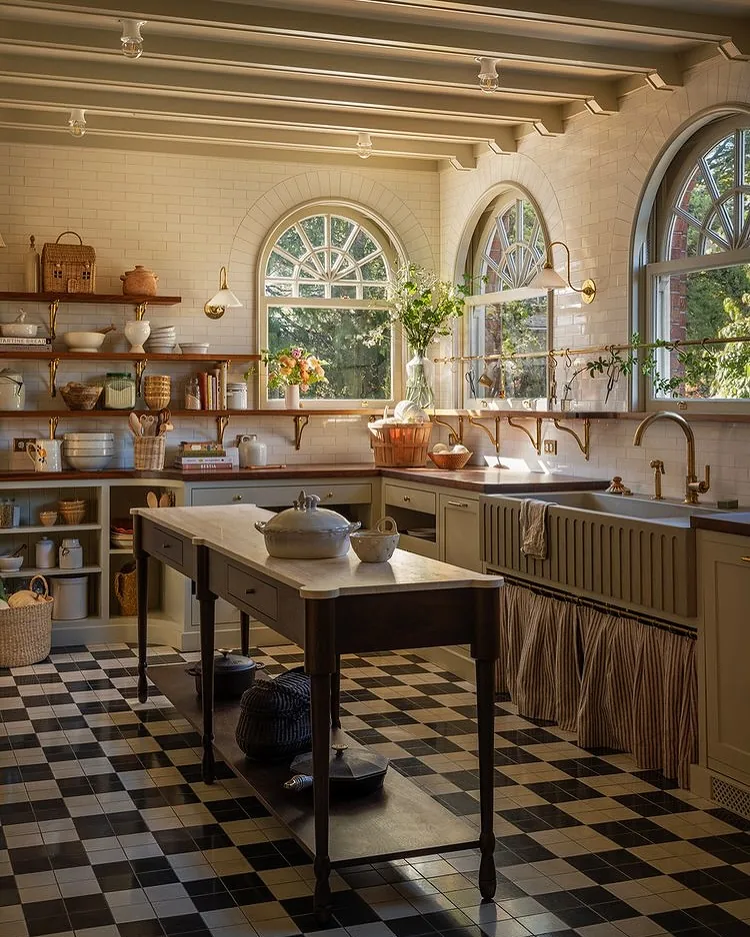
Your shelves look styled today. Talk in a month.
Open shelving photographs as ease and lives as upkeep. Grease films every surface near the range, dust settles on anything unused for a week, and clutter has no door to hide behind when life gets busy. Nobody regrets shelves in week one. Week twelve separates the converts from the removers.
These open shelving kitchen ideas start from that contract: cap them, curate them, wipe them weekly, and they repay you daily. Skip any clause and they become the messiest wall in your house.
Decide like a skeptic first
You’ll interrogate your habits before your walls. Three ideas prevent the six-month removal.
Trial one shelf for a month
Enthusiasm peaks at installation and fades by week six. You’ll mount a single shelf, style it honestly and live with it thirty days before touching your cabinets. That month previews dusting, styling fatigue and the honest state of your dishware.
You’ll track two things: how often you wipe without resentment, and whether the shelf stays styled or slides to storage. Shelf people find the ritual satisfying. Cabinet people find it a chore wearing a costume. When the trial delights you daily, you’ll expand confidently. When it wearies you, cabinets just saved you thousands.
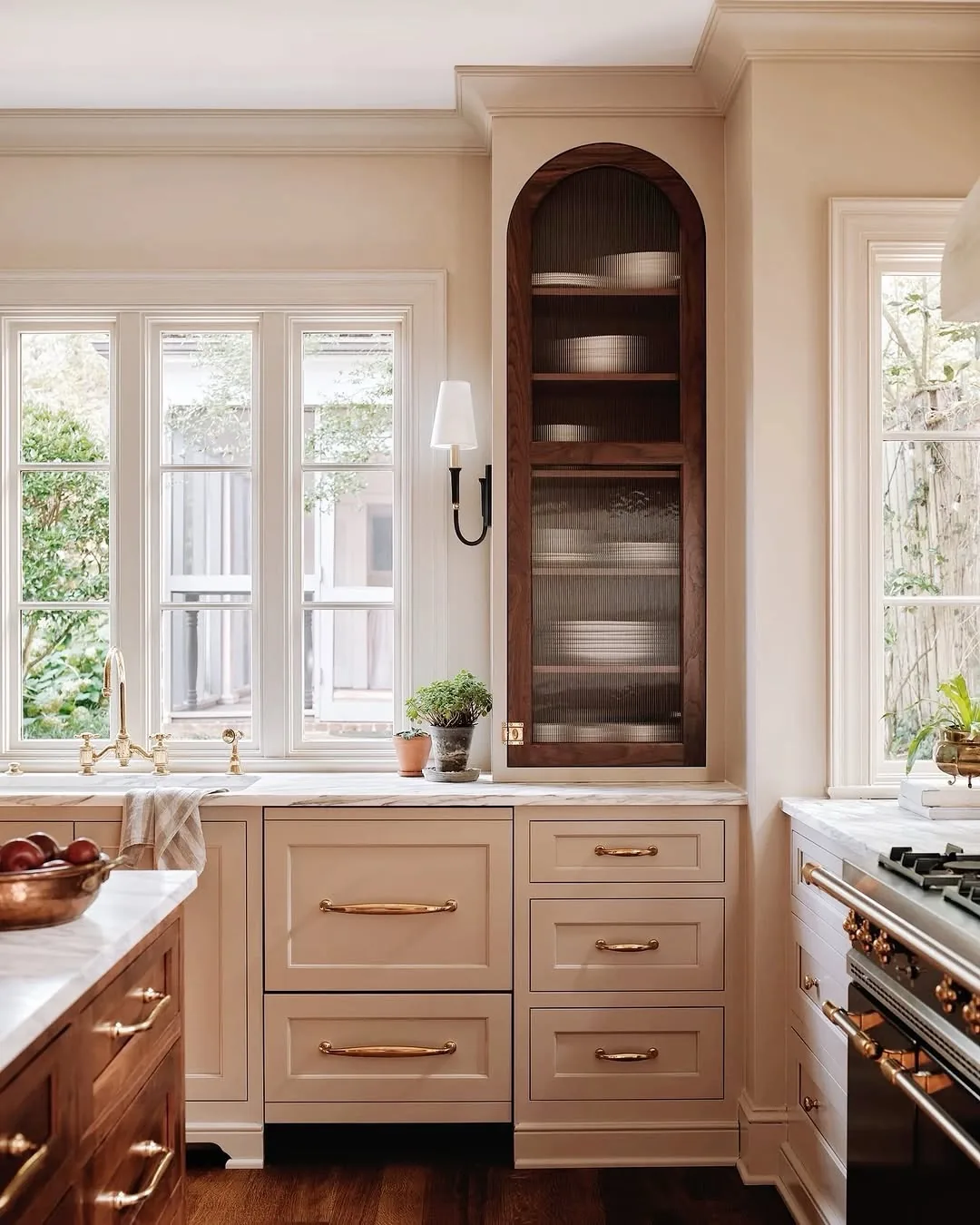
Cap open shelves at a fraction of uppers
All-open kitchens suit stylists, not cooks. You’ll keep open shelves to one or two runs, near the sink or range for daily dishes, with closed cabinets handling bulk everywhere else. The hybrid gives you the airy look where eyes land and real storage where life happens.
You’ll place open sections as features, not leftovers: flanking a window, beside the hood, above the coffee station. Random open gaps among cabinets read as missing doors. When open shelves occupy the photogenic spots and cabinets hold the chaos, the kitchen breathes and functions simultaneously. Fractions, never wholes.
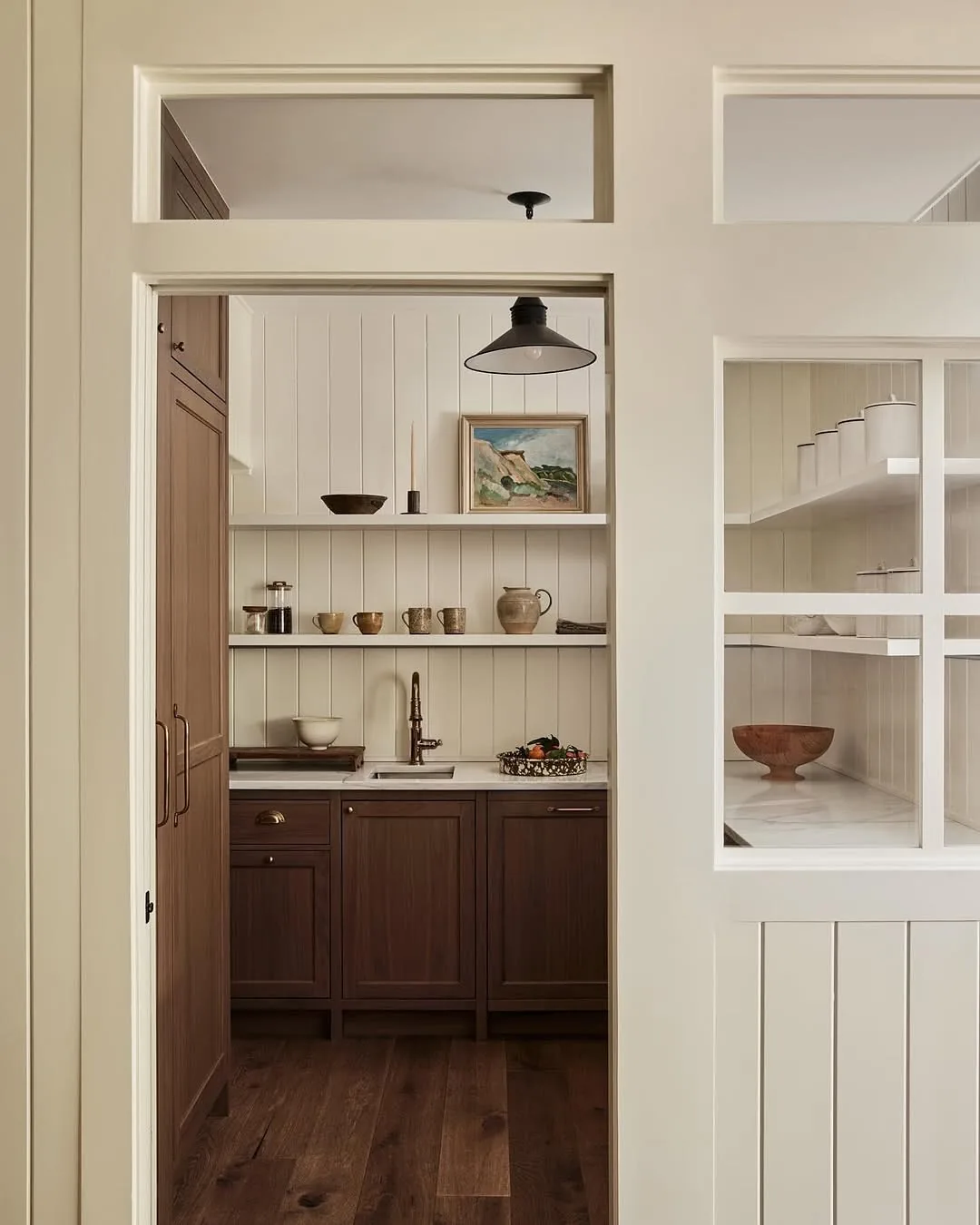
Count storage lost before cabinets go
Removing uppers deletes more storage than shelves replace. You’ll inventory what those cabinets hold today and assign every item a new home first. Bulky appliances, plastic chaos and pantry overflow need closed doors somewhere, or they migrate to counters permanently.
You’ll measure shelf capacity honestly: one item deep, nothing stacked behind, breathing room between groups. A 36-inch cabinet swallows triple what a 36-inch shelf displays. When the math closes with room to spare, you’ll demo confidently. When it doesn’t, you’ll keep the cabinets and add one feature shelf instead.
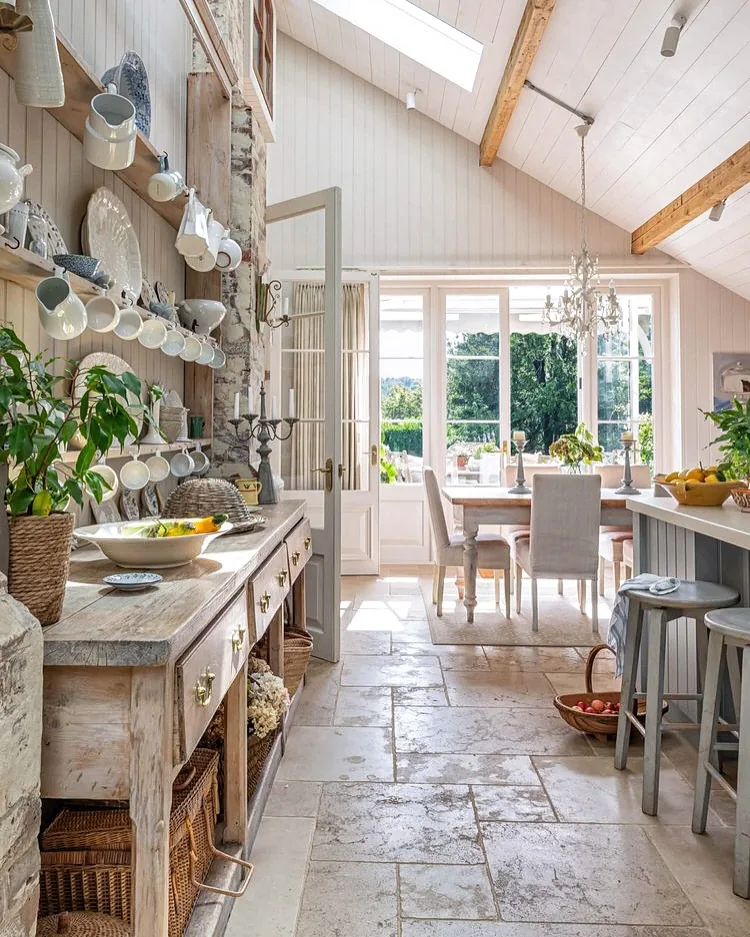
Mount for decades, style for eyes
Shelves hold weight and attention simultaneously. Four ideas engineer both.
Bracket into studs, never drywall hopes
Loaded shelves pull hard on walls. You’ll mount brackets into studs or solid backing with hardware rated beyond your dishes’ weight. Sagging shelves announce themselves slowly, then suddenly, usually at 2am over the coffee maker.
You’ll test with full load plus a margin before styling a single plate. Solid oak spans less than you’d think without center support. When brackets bite structure, shelves stay dead level for decades. Floating looks demand hidden steel engineered properly, never wishful toggle bolts in plasterboard.
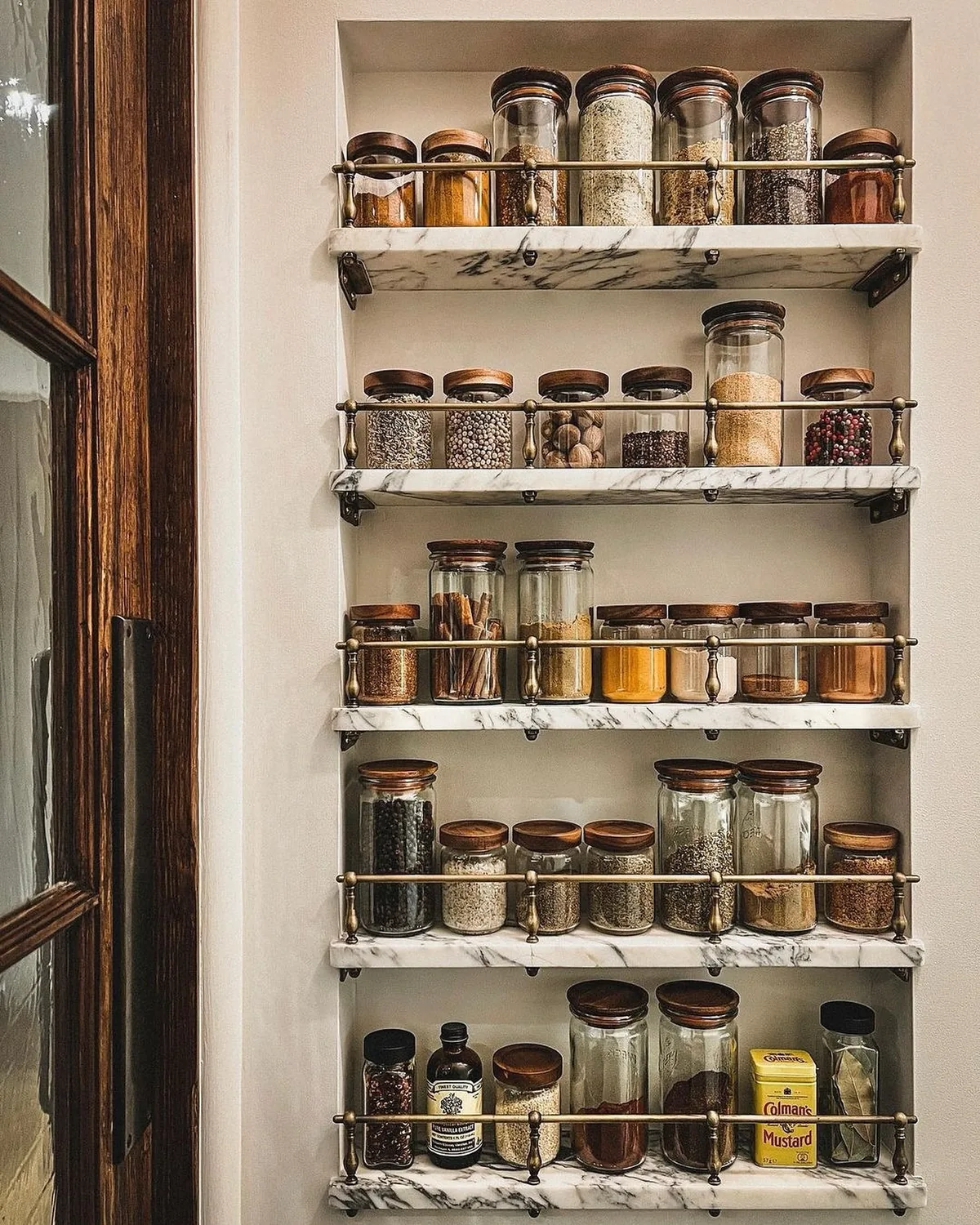
Shelf daily dishes lowest, decor highest
Reach decides arrangement more than looks do. You’ll park everyday plates, bowls and mugs at arm height where grabbing beats opening doors. Decorative pieces and rarely used items rise to the top shelves where dusting matters less than display.
You’ll keep the daily zone tight and the display zone sparse. Dishes in constant rotation stay clean through use alone. Objects that sit months need the weekly wipe most. When frequency matches height, the shelves serve cooking first and styling second. Reverse it and beauty obstructs breakfast.
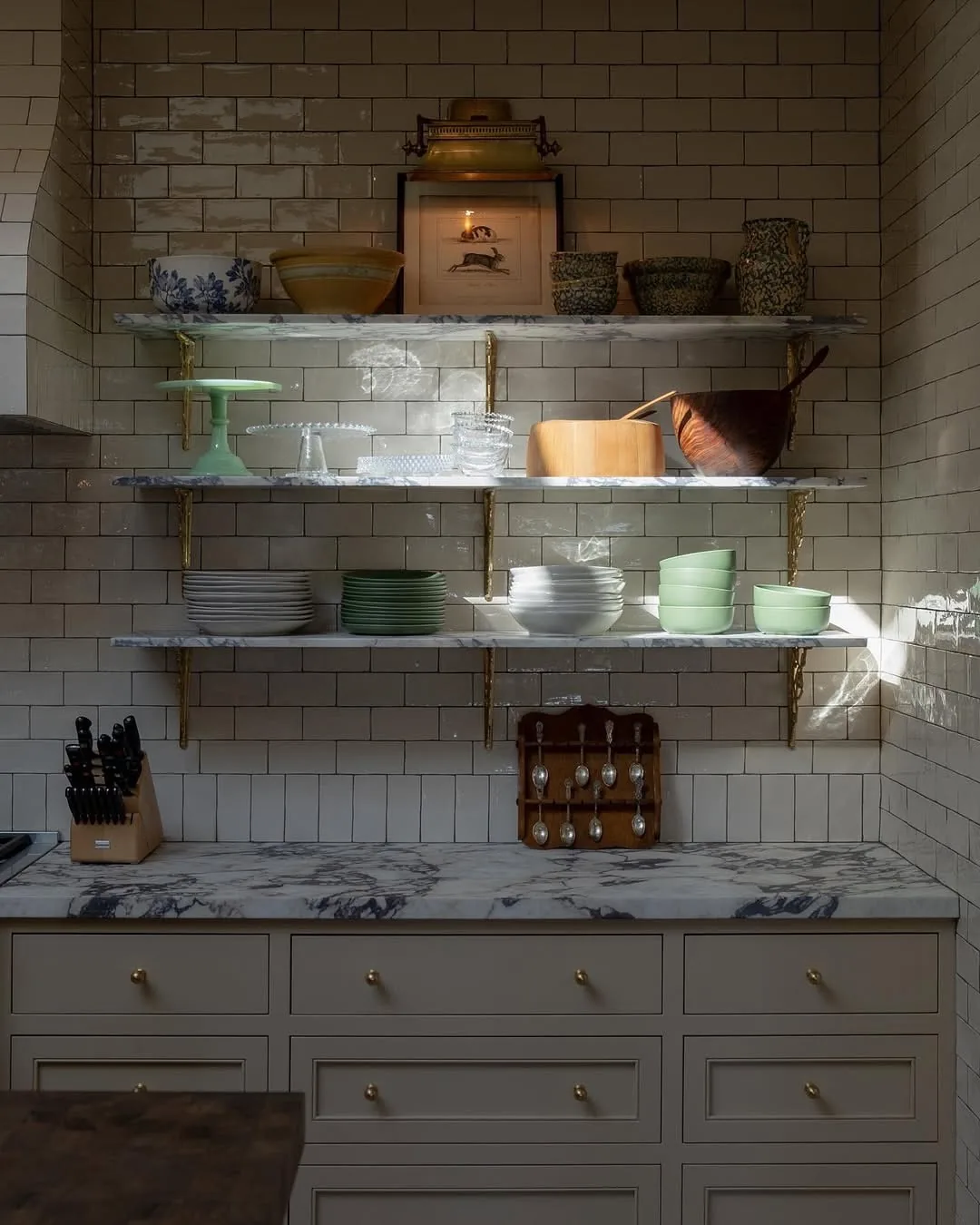
Palette two tones, breathe between groups
Unlimited colors on open shelves read as a yard sale. You’ll limit displayed items to two or three tones, cream dishes, wood boards, clear glass, and leave genuine negative space between groups. Restraint is what separates styled from stored.
You’ll group in threes with varied heights: stack, vessel, plant. Breathing room lets each group read deliberately. When the palette holds and air flows between clusters, shelves look designed whatever the budget. Rainbow shelves exhaust the eye before the coffee brews.
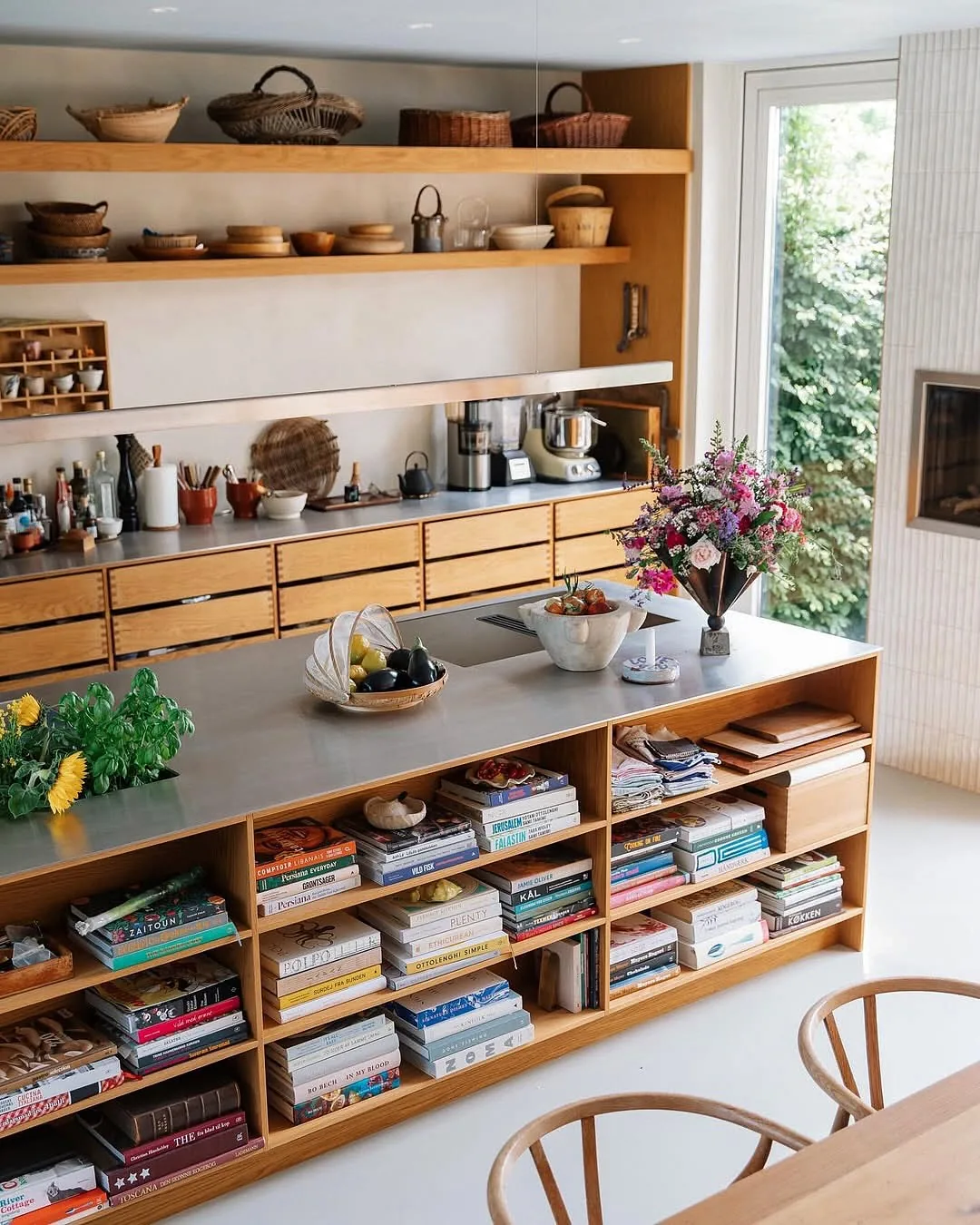
Judge open shelving kitchen ideas by grease distance
Range proximity decides cleaning load more than any styling. You’ll site everyday shelves away from direct splatter zones, reserving near-range walls for closed fronts or easily wiped backsplash. Grease travels farther than optimism admits.
You’ll run the hood vented outside every time you cook, since recirculating fans return grease to your shelves. The single habit separating clean shelves from sticky ones is ventilation discipline. When shelves live outside the splatter radius with air moving correctly, weekly wiping suffices. Inside it, you’ll wipe daily or surrender.
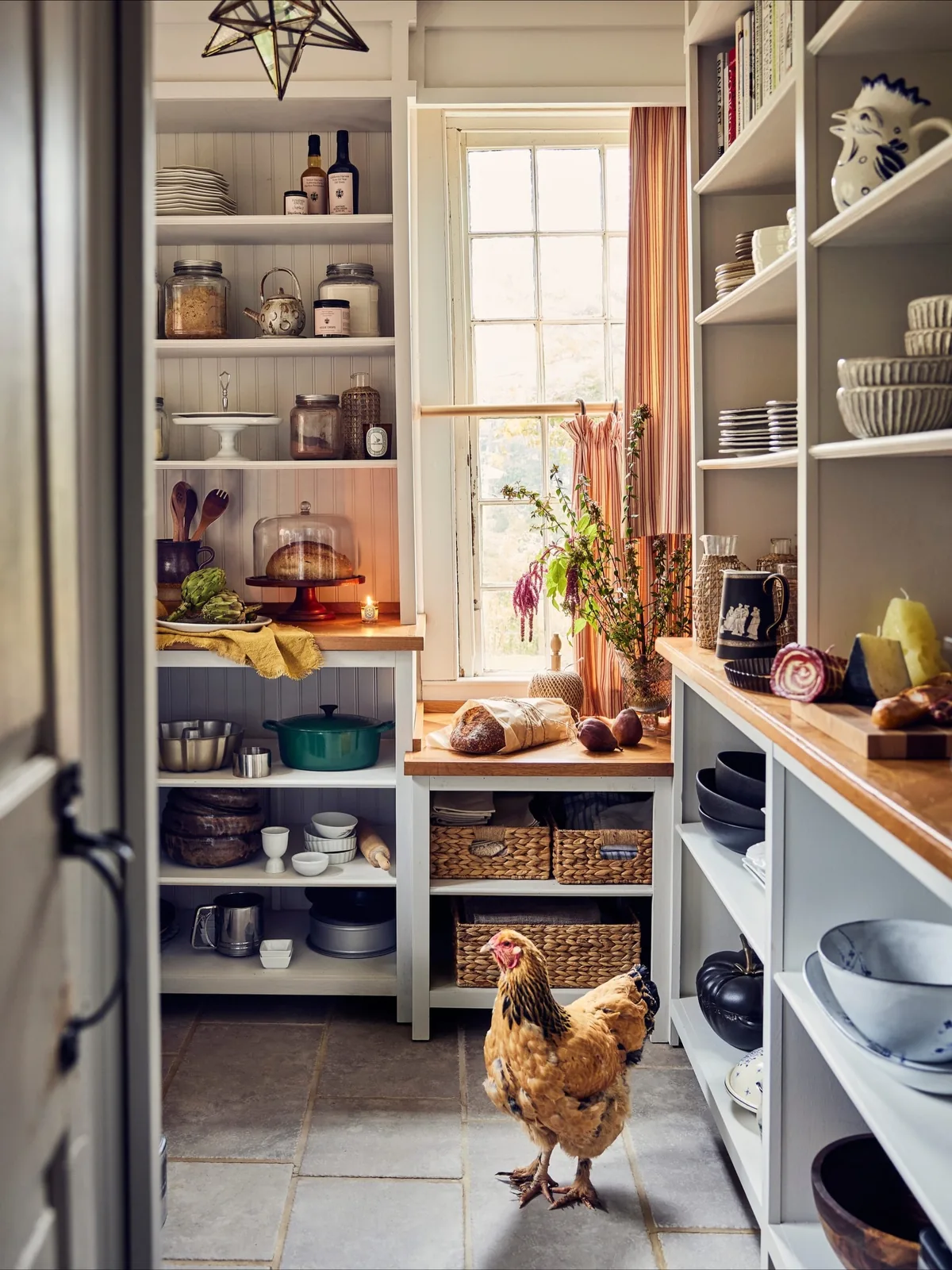
Style materials that age gracefully
Wood, marble and bracket choices outlive trends. Three ideas pick them well.
Choose solid oak shelves for warmth
Oak shelves suit nearly every kitchen dialect, farmhouse to modern. You’ll choose solid boards with presence, thick enough to read as furniture, sealed against moisture and stains. Thin shelves look temporary whatever they hold.
You’ll match bracket metals to your hardware family so shelves join the room’s decisions. Black brackets on oak suit modern kitchens. Brass suits traditional ones. When shelf and bracket both belong, the installation reads original to the house. Floated afterthoughts sag visually before they sag physically.
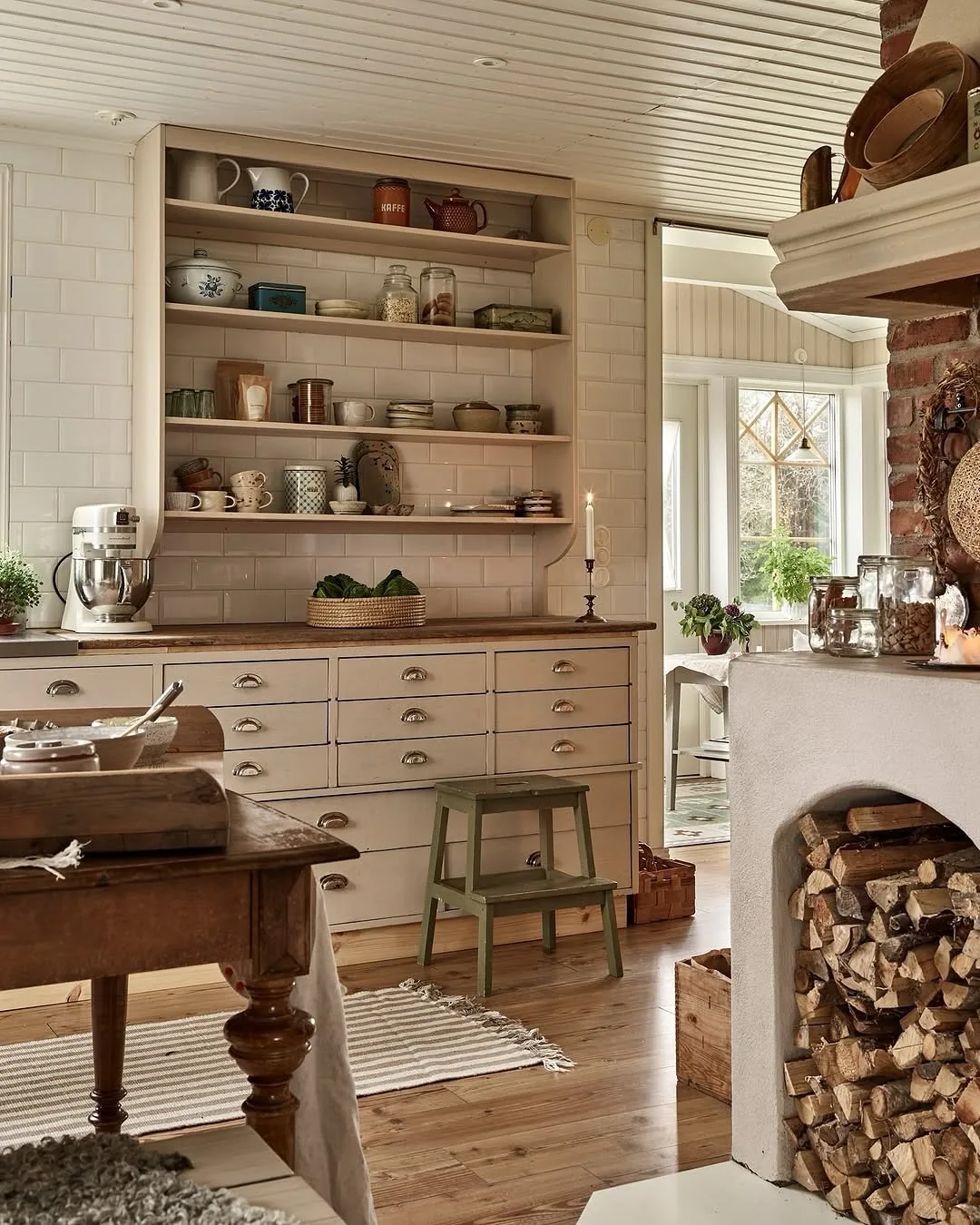
Marble the shelf for a luxe exhale
Stone shelves elevate secondary stations beautifully. You’ll use marble or quartzite for coffee bars and pantry nooks where the material reads as jewelry, not workhorse. Small spans keep costs sane while delivering full luxury effect.
You’ll seal stone against coffee rings and oil from day one. Unsealed marble records every spill permanently. When a short stone shelf glows under a sconce beside morning coffee, the kitchen gains a moment no cabinet provides. Reserve stone for display zones, never above frying pans.
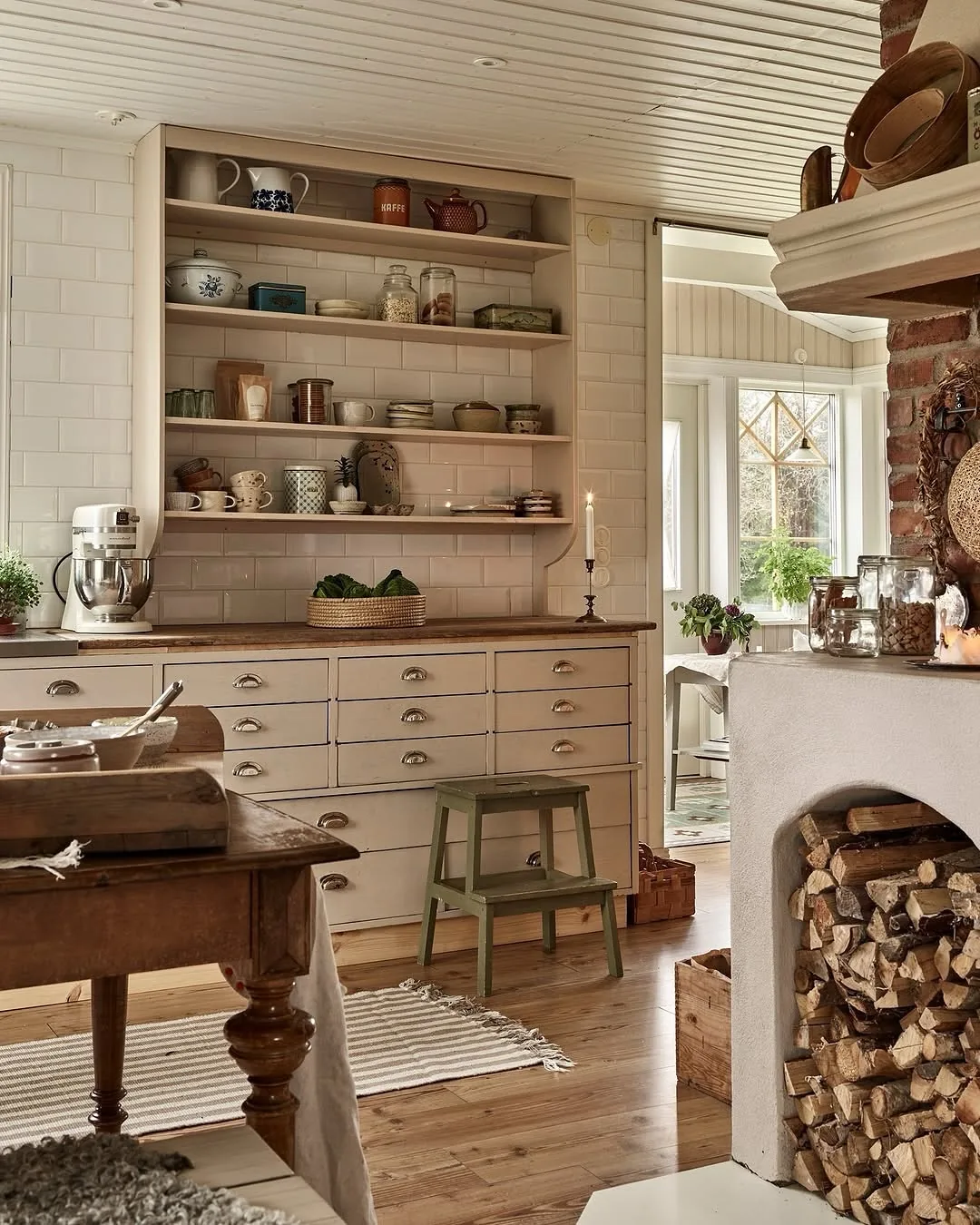
Arch the shelf wall where bones allow
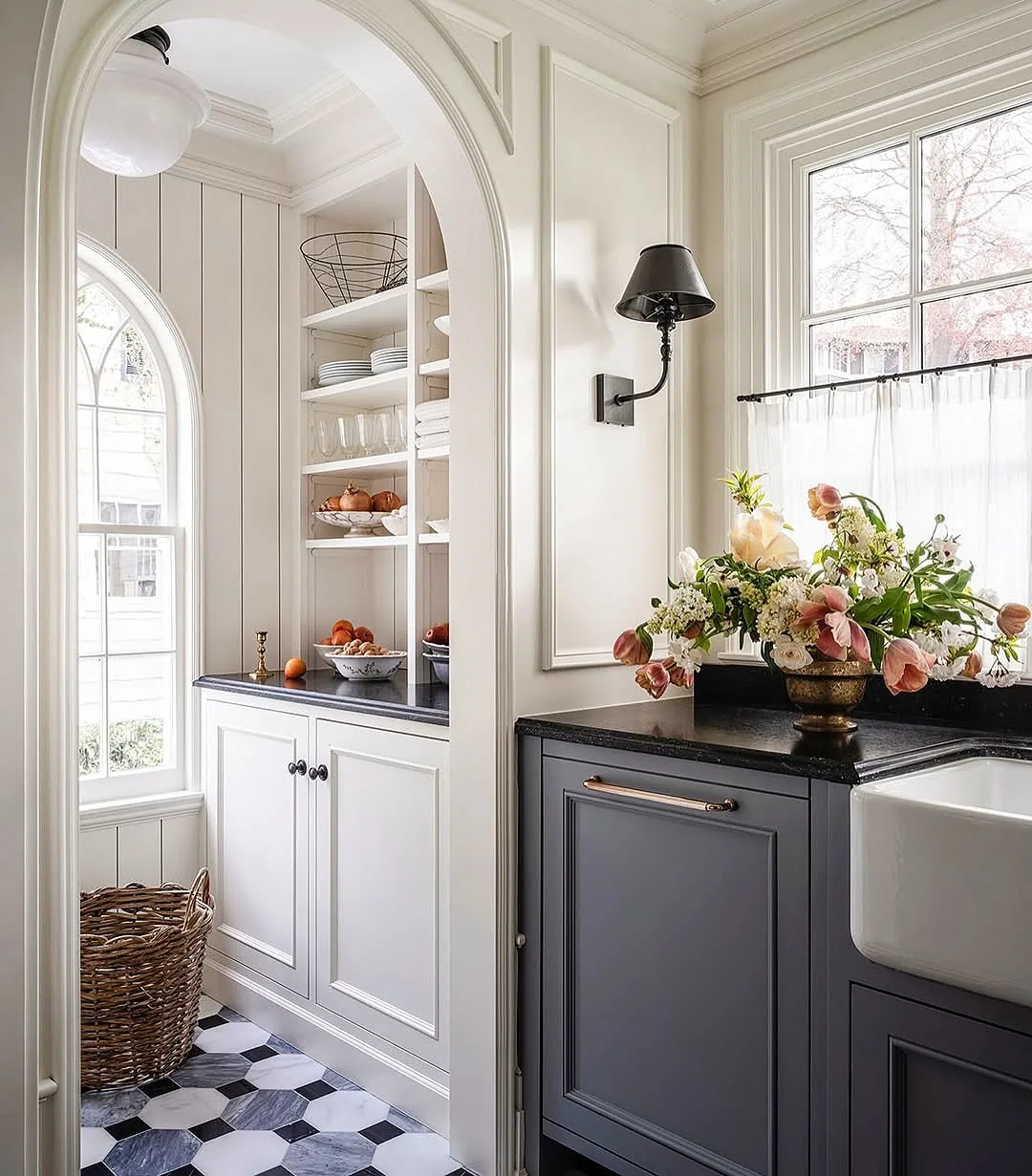
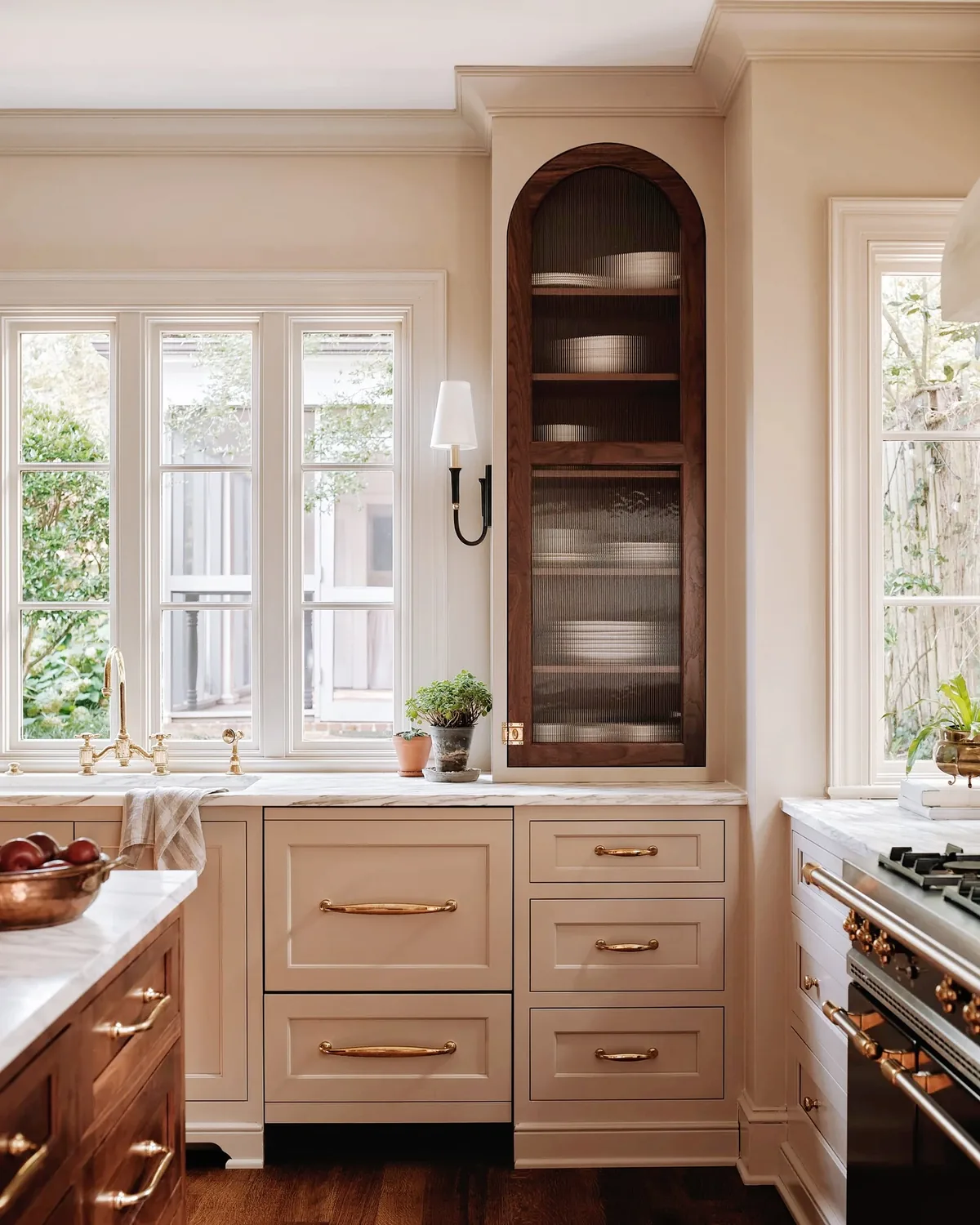
Arched openings and shelf walls flatter kitchens enormously. You’ll work with existing arches rather than cutting new ones, styling the curve with shorter runs that follow its rhythm. Arches soften shelf geometry that reads rigid in rectangles.
You’ll keep arch styling minimal, since the shape already speaks. Three objects per curve maximum, breathing room everywhere. When architecture leads and objects whisper, the wall becomes the kitchen’s portrait. Overfilled arches clutter faster than straight runs because the eye has nowhere neutral to rest.
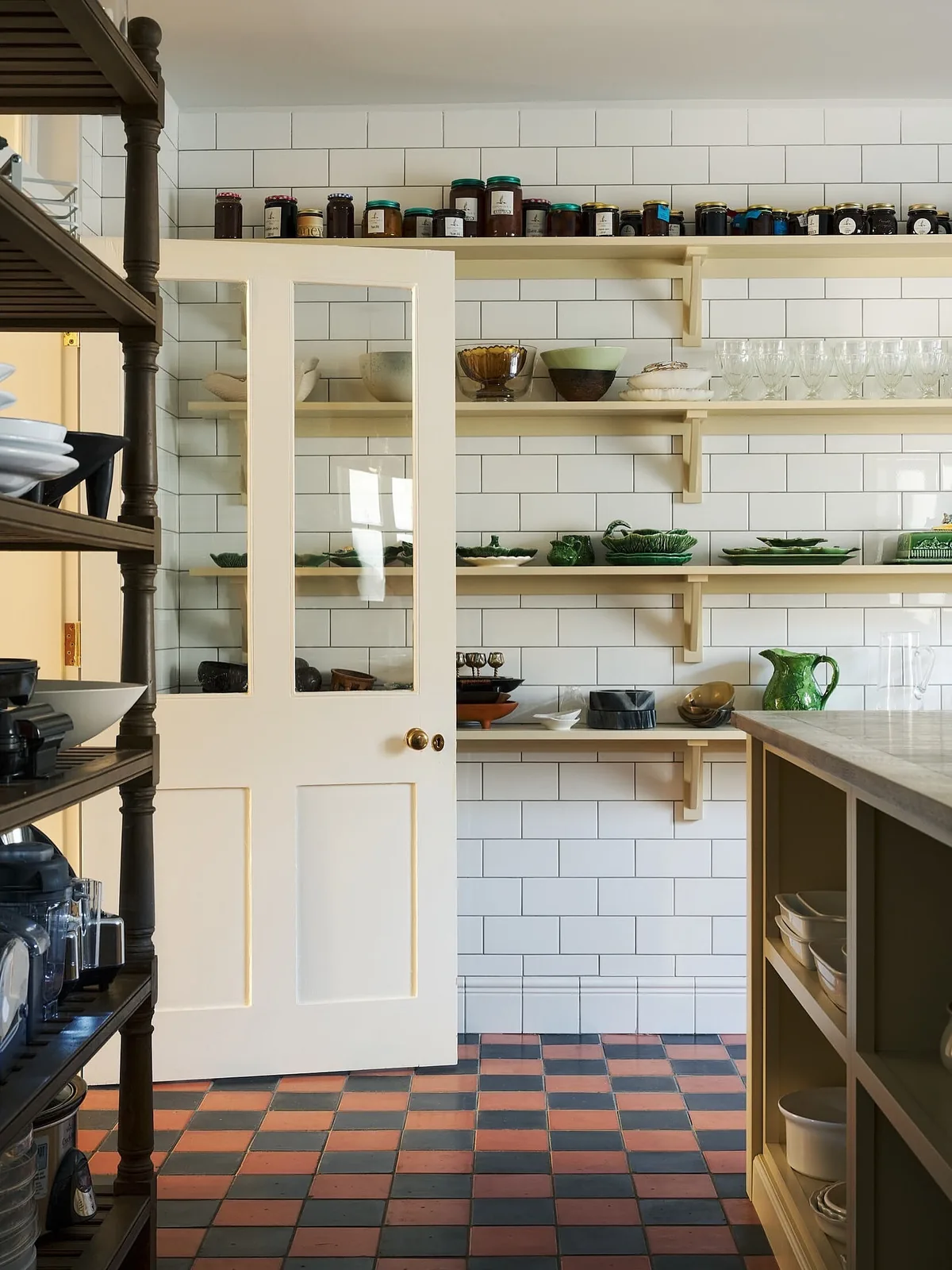
Sign the upkeep contract knowingly
Dust, grease and drift compound weekly. Three ideas keep shelves honest.
Wipe weekly without negotiation
Non-negotiable means non-negotiable. You’ll damp-wipe shelf surfaces and idle objects every week, more often near the range. Grease ignored for a month bonds into varnish requiring real chemistry. Weekly water prevents monthly warfare.
You’ll keep a tray under grouped objects so lifting the whole cluster takes seconds. Friction kills routines faster than laziness does. When wiping takes five minutes, it happens. When it takes twenty with restyling after, it slides until shame intervenes. Design the routine, not just the shelf.
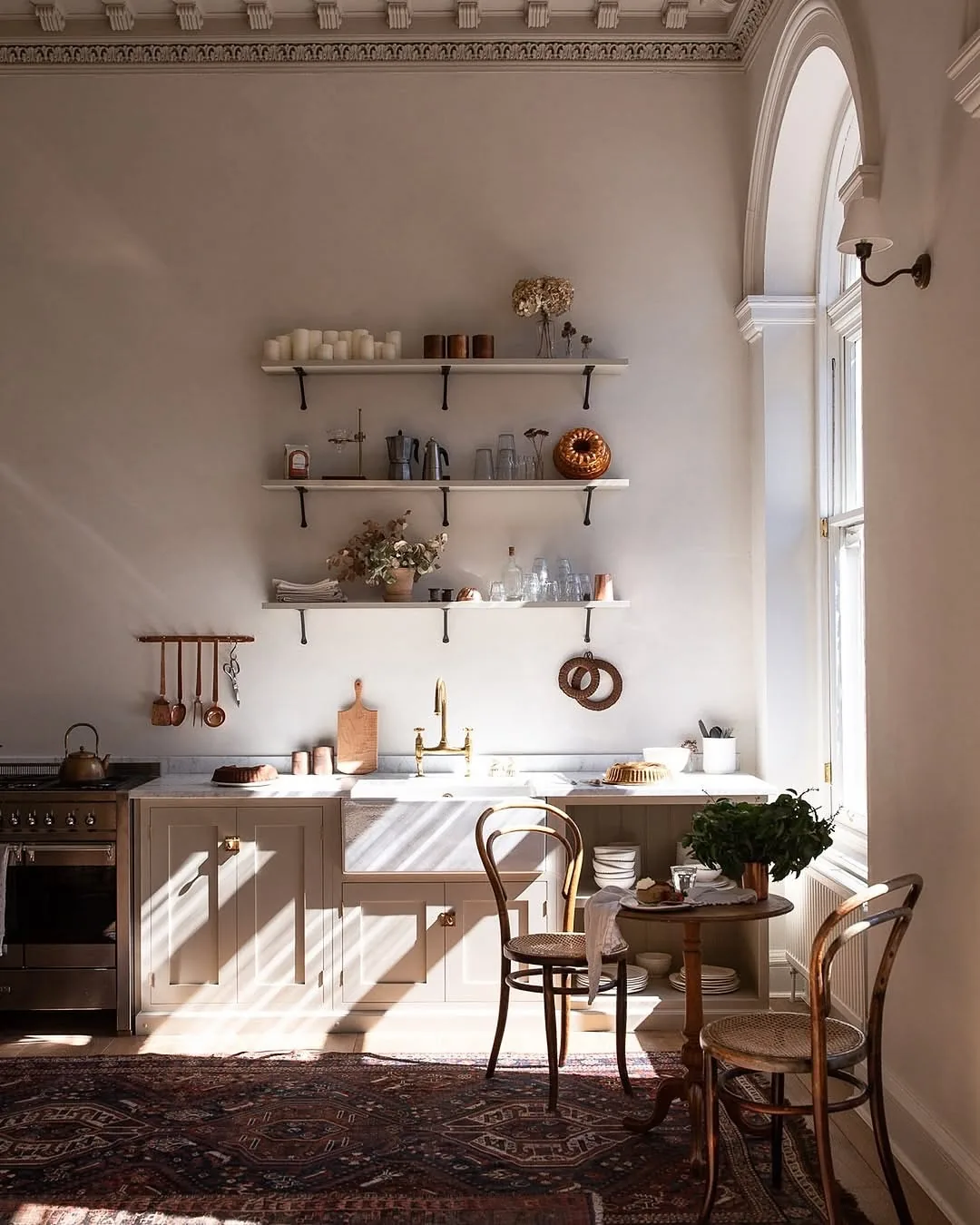
Edit ruthlessly every season
Shelves accrete clutter the way drawers do, visibly. You’ll audit quarterly, removing anything unused, unmatched or unloved to closed storage or donation. The styled shelf you photographed degrades one souvenir at a time without policing.
You’ll enforce one-in-one-out once the look lands. New finds must displace residents, never join them. When editing stays current, shelves look permanently styled with minimal effort. When it lapses, month six photos embarrass month one dreams. Curation is maintenance wearing nicer clothes.
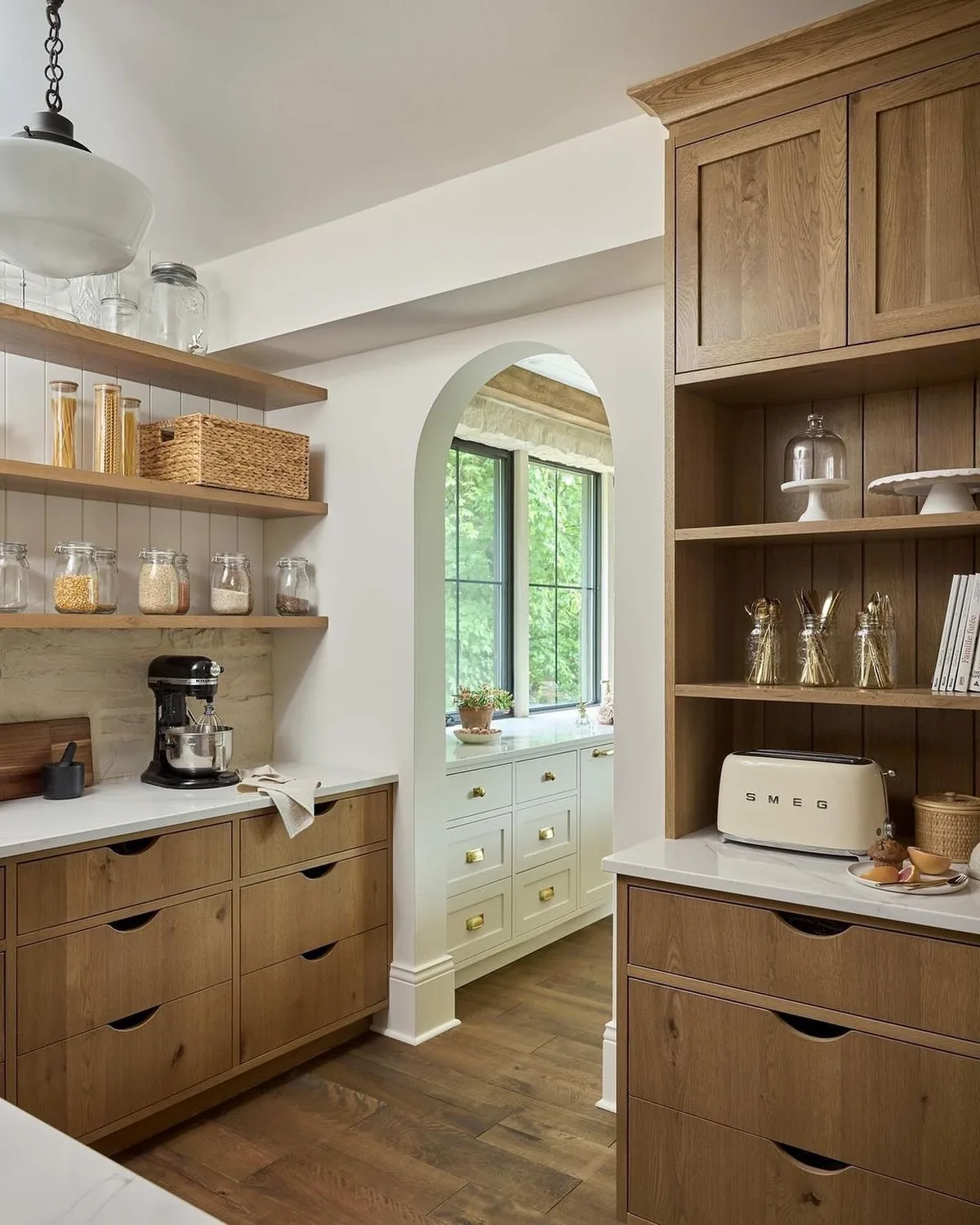
Hide the ugly in closed cabinets always
Cleaning products, plastic chaos and branded packaging live behind doors, no exceptions. You’ll reserve open shelves for items earning display through beauty or daily use. Everything else gets a door between it and your eyes.
You’ll plan closed storage first when designing, placing open sections only after bulk has homes. For closed cabinets that carry the hidden half, browse our kitchen ideas hub alongside this guide. Shelves styled around overflow look like overflow displayed. When ugly has guaranteed housing, beautiful stays beautiful without effort. Doors are the shelving system’s silent partner, doing half the work invisibly.
Shelf people versus cabinet people at a glance
| Shelf people | Cabinet people | |
|---|---|---|
| Wiping | Weekly ritual, enjoyed | Chore resented by week six |
| Styling | Daily dishes, tight palette | Everything owned, visible |
| Storage | Bulk lives behind doors | Bulk needs its cabinets |
| Range | Shelves outside splatter | Cooking heavy near stove |
| Trial month | Delighted daily | Wearied by week three |
| Verdict | Remove cabinets | Keep them |
The Open Shelf Formula
If you strip all thirteen ideas down to a plan, it reads like this:
- Trial one shelf. Thirty days of honest living decides before demolition.
- Fraction, never whole. One or two runs open, bulk behind doors.
- Studs and steel. Brackets engineered beyond the load, tested full.
- Daily low, pretty high. Frequency matches height on every wall.
- Two tones, breathing room. Palette restraint plus negative space.
- Wipe weekly, edit quarterly. The contract that keeps shelves styled.
Get those six right and shelves repay you daily. You’ll own the airy kitchen instead of dusting it resentfully.
Frequently Asked Questions
Are open kitchen shelves hard to keep clean?
Only without routine. You’ll wipe surfaces weekly and site shelves outside splatter zones with the hood vented outside. Daily dishes stay clean through use. Idle objects need the wipe most, so style fewer of them.
Should I replace all my uppers with shelves?
You’ll cap open runs at a fraction, keeping closed cabinets for bulk. All-open suits stylists, not cooks, and these open shelving kitchen ideas assume the hybrid throughout.
What should I put on open kitchen shelves?
Daily dishes in a two-tone palette with breathing room between groups. You’ll group in threes at varied heights and hide everything unphotogenic behind doors. If it doesn’t earn display, it doesn’t earn shelf space.
Do open shelves hold less than cabinets?
Substantially less, since shelves run one item deep while cabinets stack behind doors. You’ll inventory cabinet contents and rehome everything before removing a single box. A 36-inch cabinet swallows triple its shelf equivalent.
How do I style shelves that don't look cluttered?
You’ll limit tones, group in threes, leave negative space and edit quarterly. One-in-one-out keeps the look landed. Cluttered shelves signal missing closed storage more often than bad taste.
Are open shelves cheaper than cabinets?
Far cheaper per run, but you’ll count the styling and upkeep cost honestly. Floating wood costs a fraction of custom uppers. The savings fund the closed storage elsewhere that makes shelves viable.
This article may contain affiliate links. We may earn a commission at no extra cost to you.