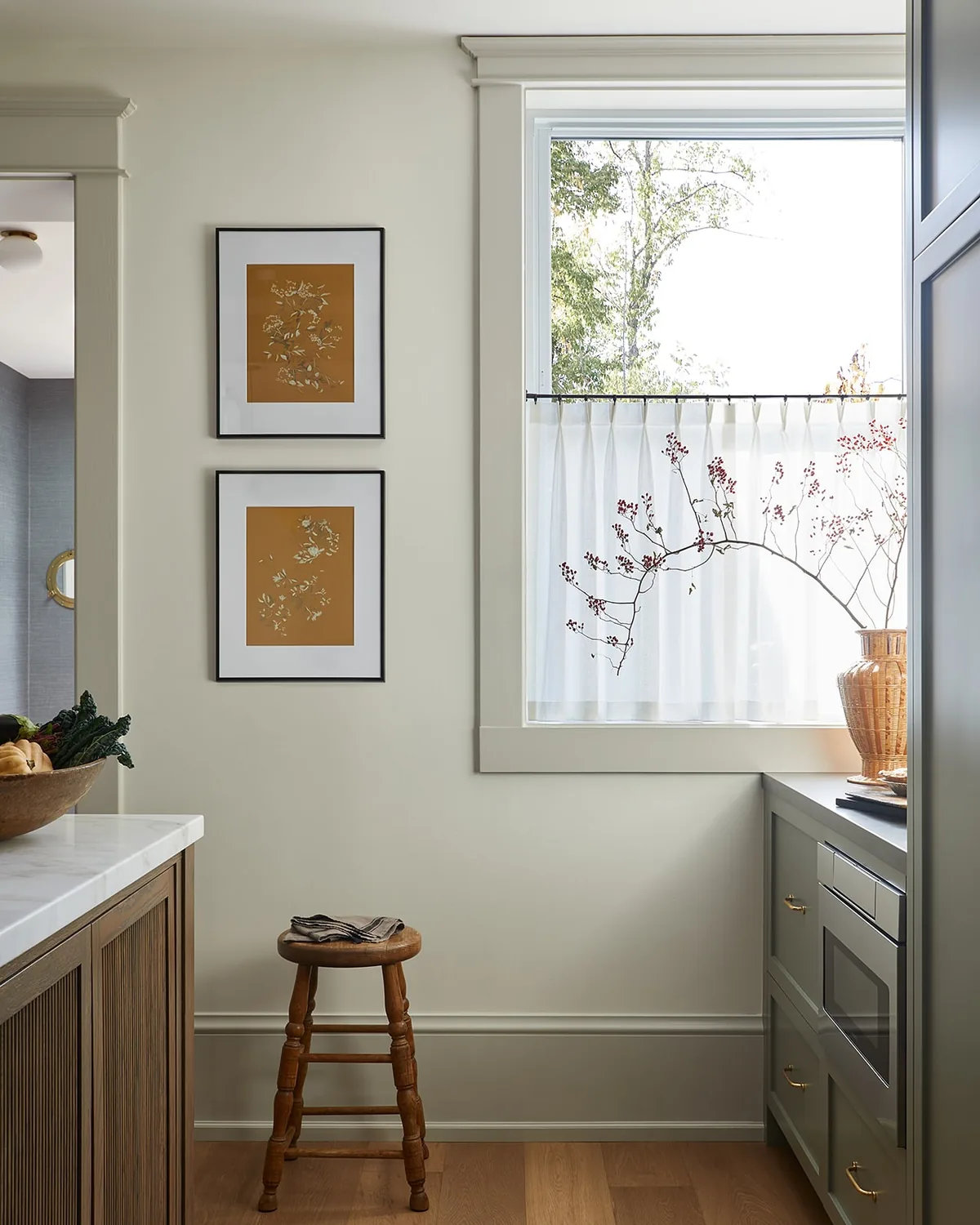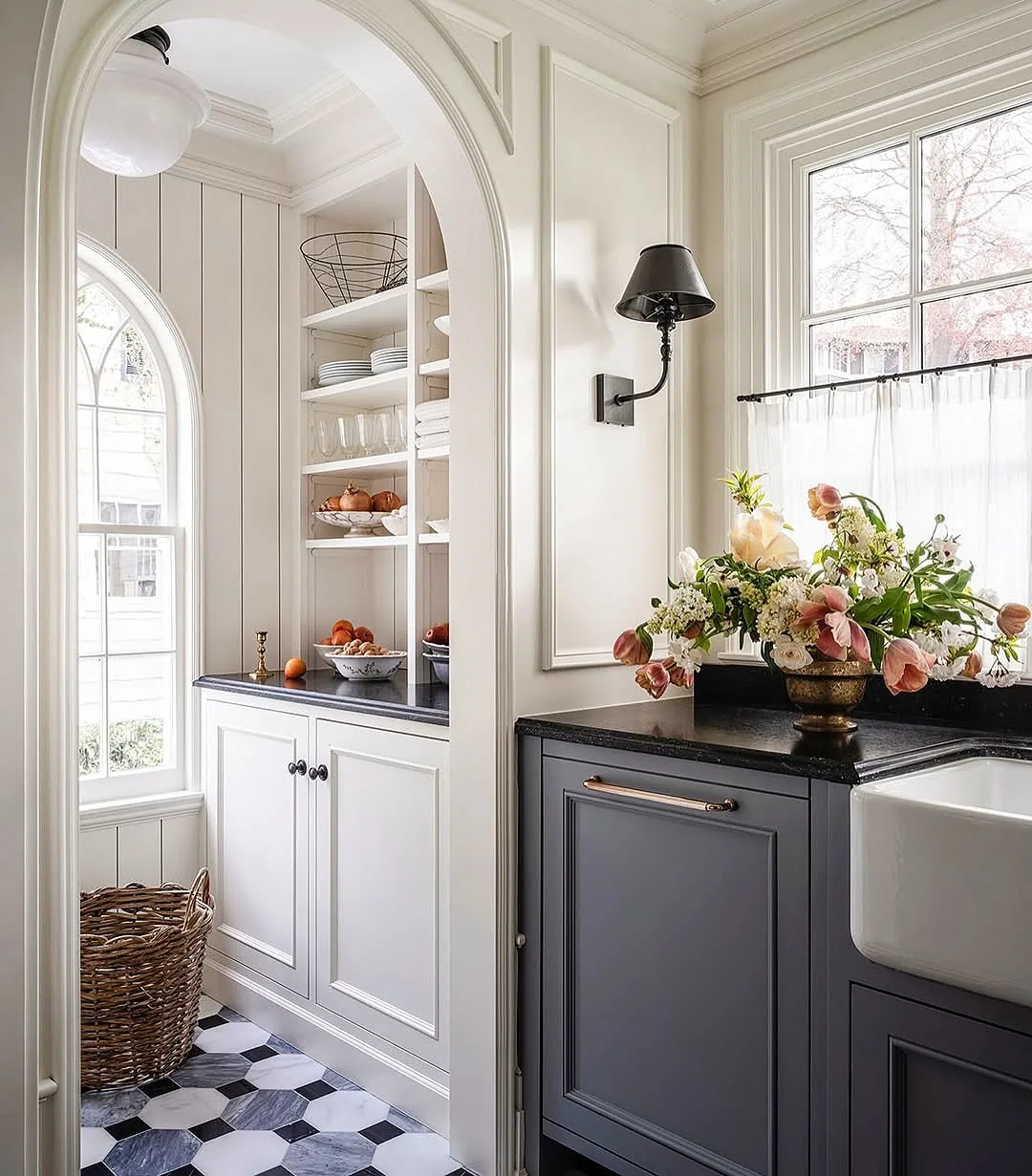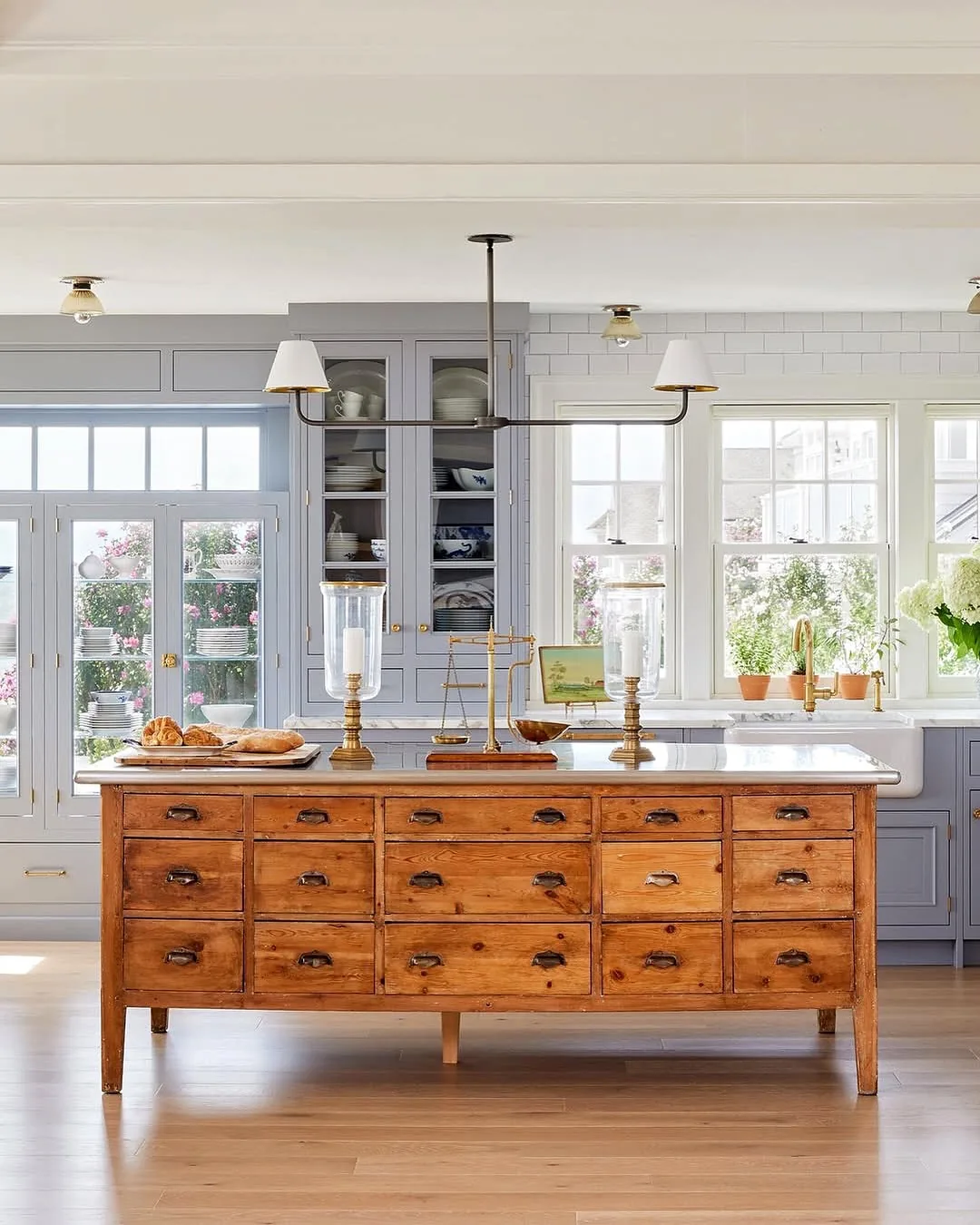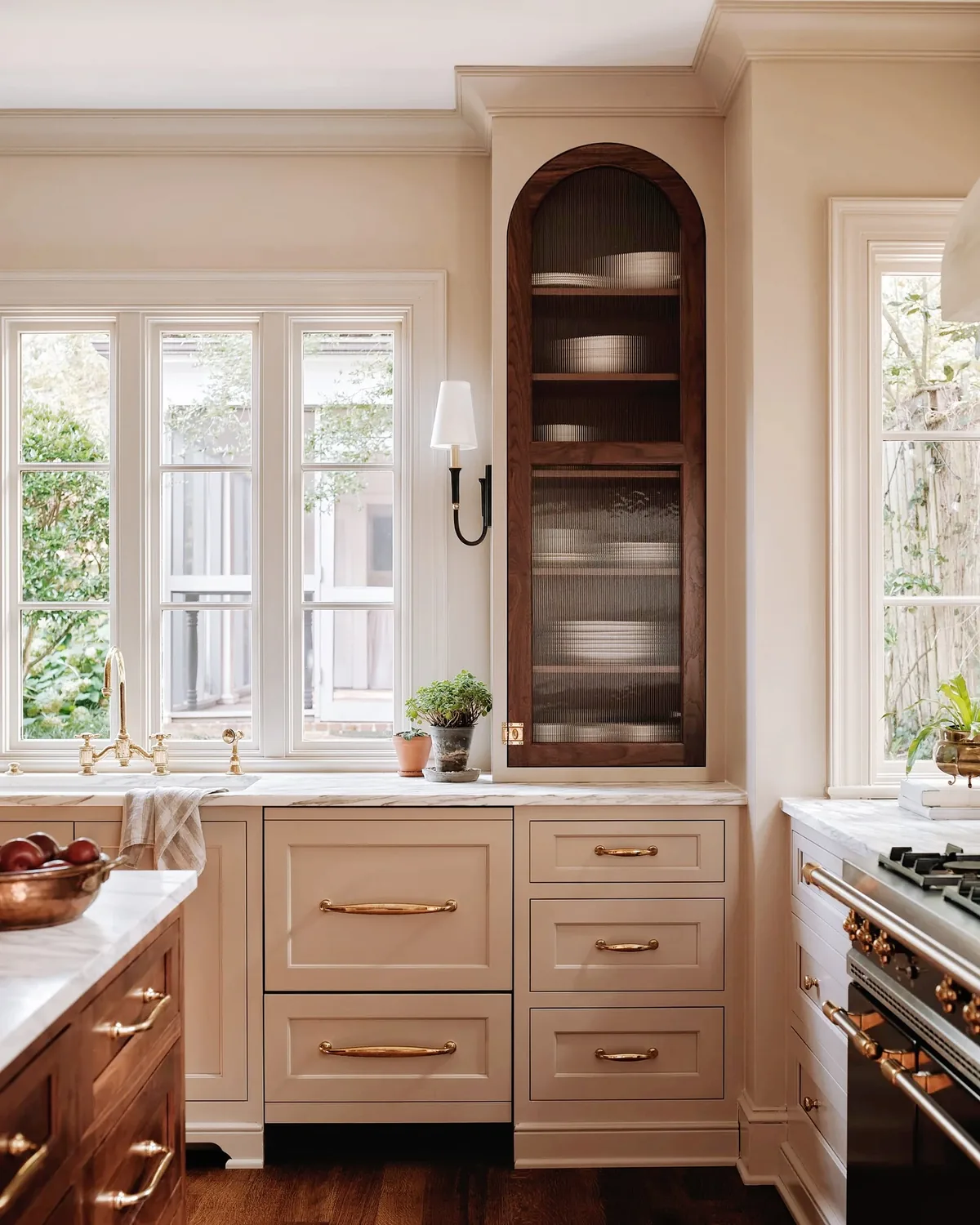
Dark Paint Without a Lighting Plan Gives You a Cave

Add us as a preferred source to see more stories on Google.
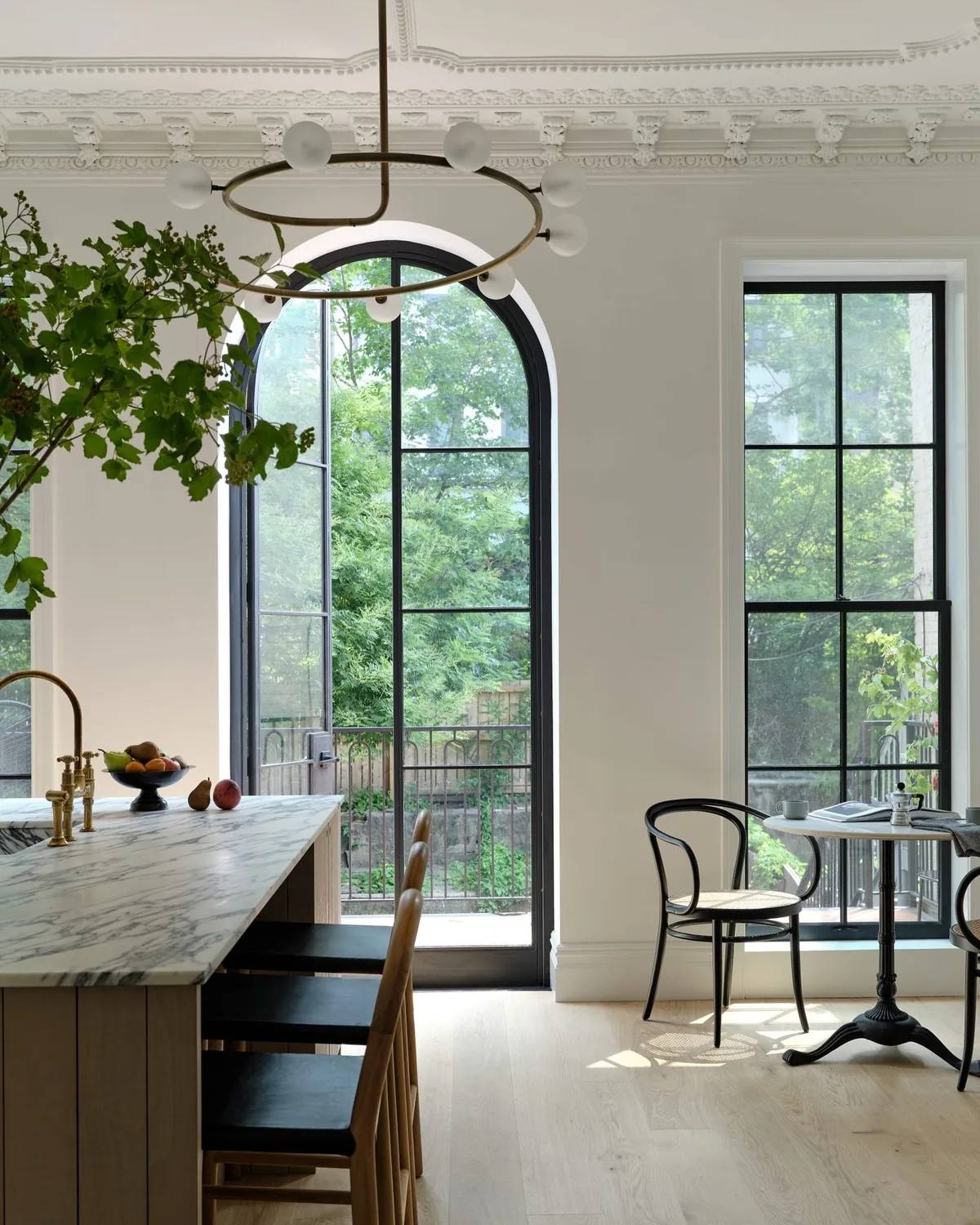
The paint tin promises atmosphere. It can’t deliver it alone.
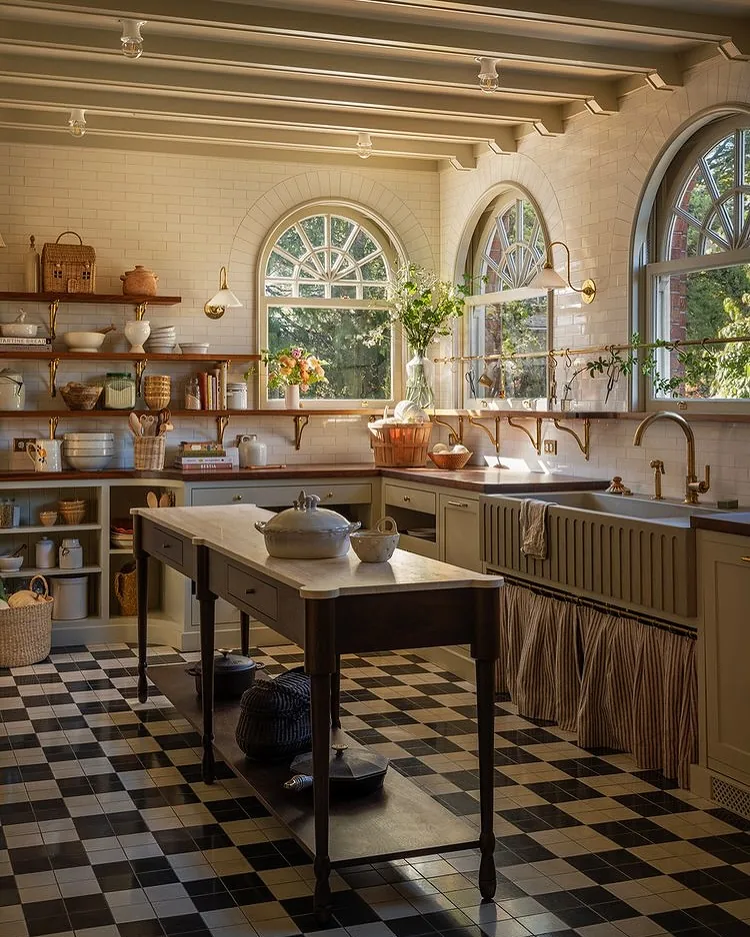
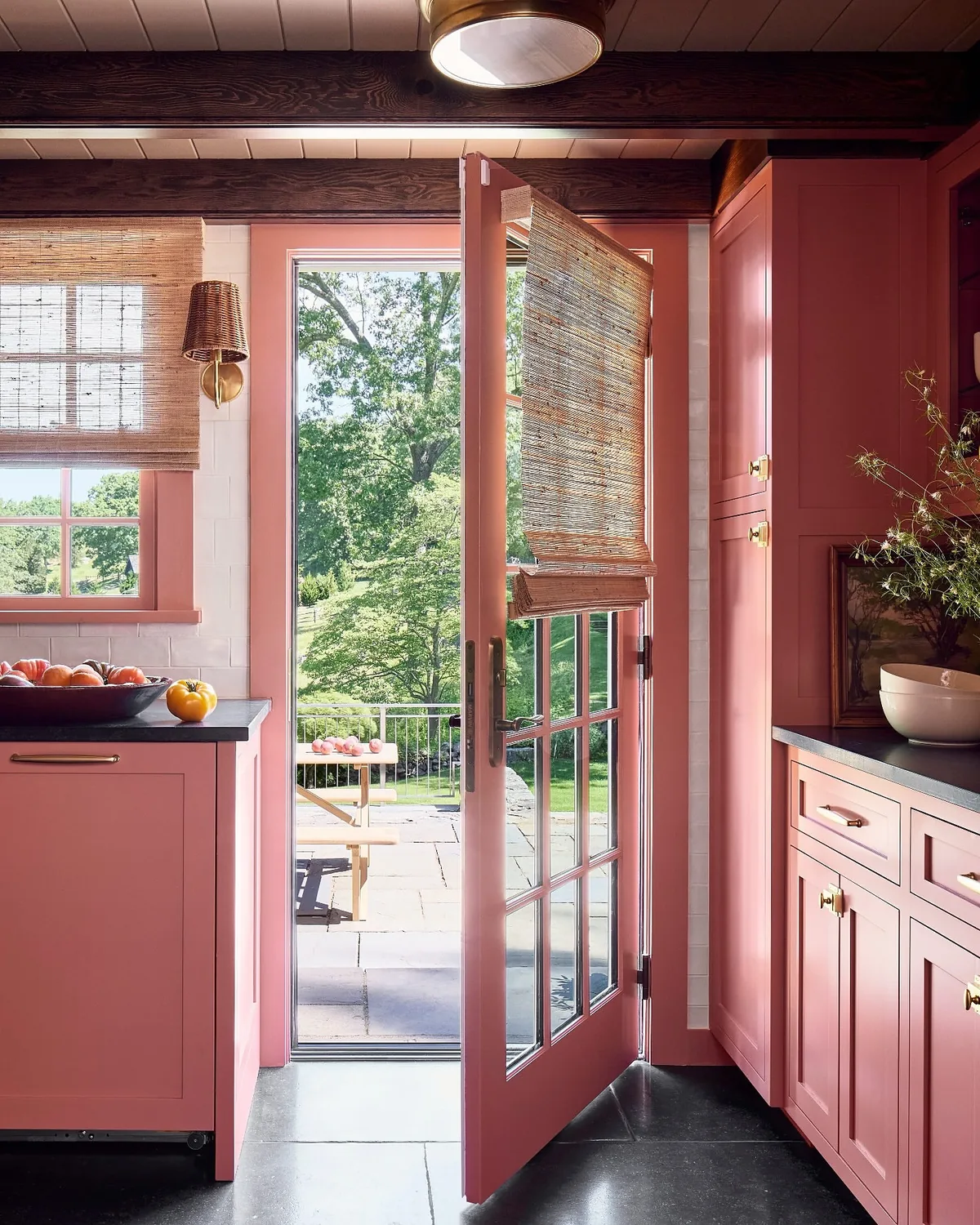
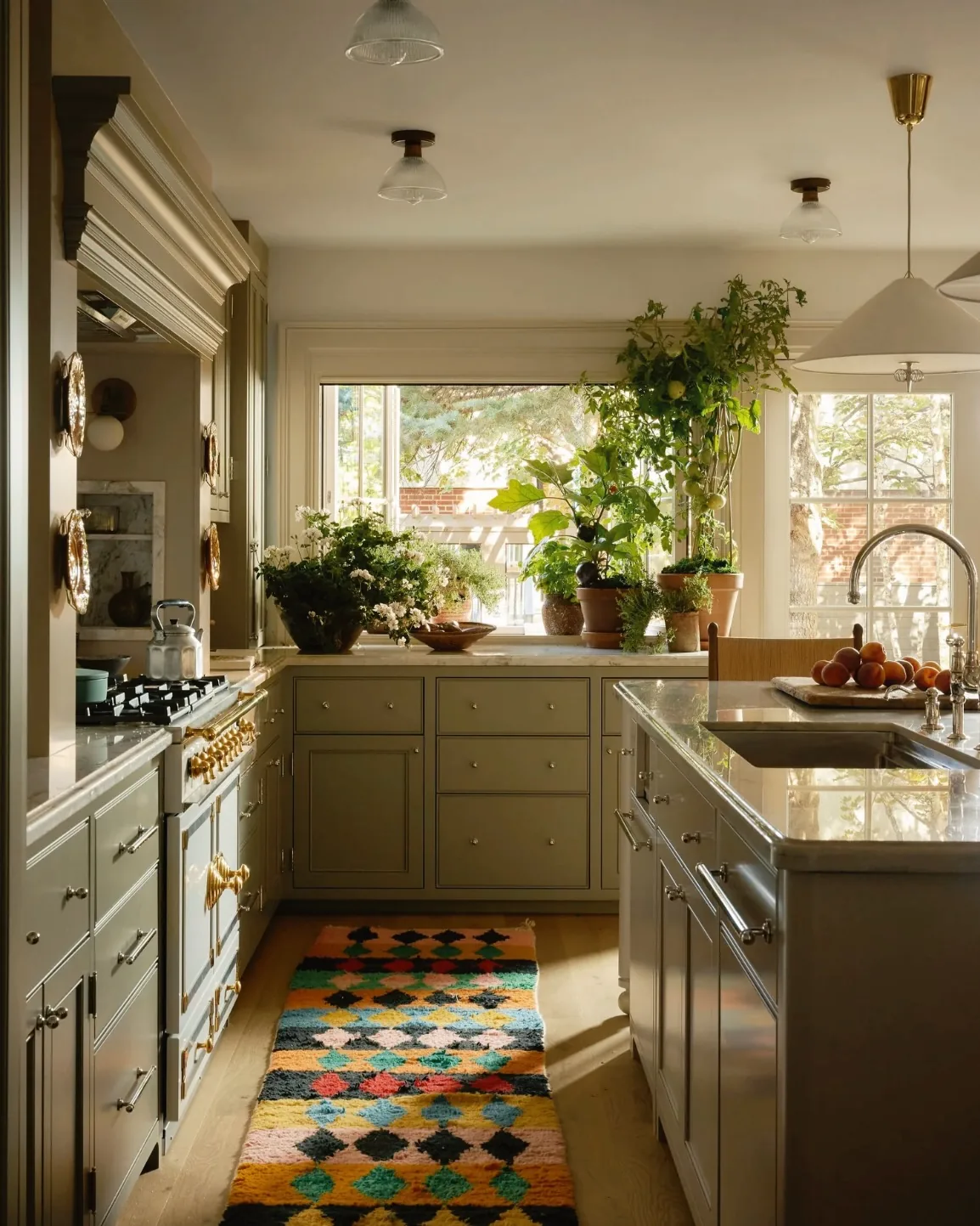
Every moody kitchen you saved glows because of what the photos rarely credit: three layers of warm light, wood or brass offsets, and dark color placed where light already lives. Paint without that scaffolding gives you a cave with nice cabinets.
So this guide starts where the paint ends. Buy the darkness only with the lighting budget attached. These dark & moody kitchen ideas turn cinematic instead of gloomy when light leads.
Light the mood before you paint it
You’ll design the lighting plan on paper first. Three ideas make darkness glow instead of gloomy.
Promise three layers in writing
One overhead in a dark kitchen makes a dungeon. You’ll commit to ambient dimmable overheads, under-cabinet task strips and one accent glow, pendant, sconce or lit shelf, before buying paint. Write the list down, because the layer you’ll skip under budget pressure is the one the mood depends on.
You’ll wire dimmers everywhere while walls are open. Dark rooms live or die on adjustability: bright for prep, low for evenings. When all three layers burn warm together, black reads rich. When one cold overhead does the job alone, the same black reads flat. Light first, paint second, always in that order.
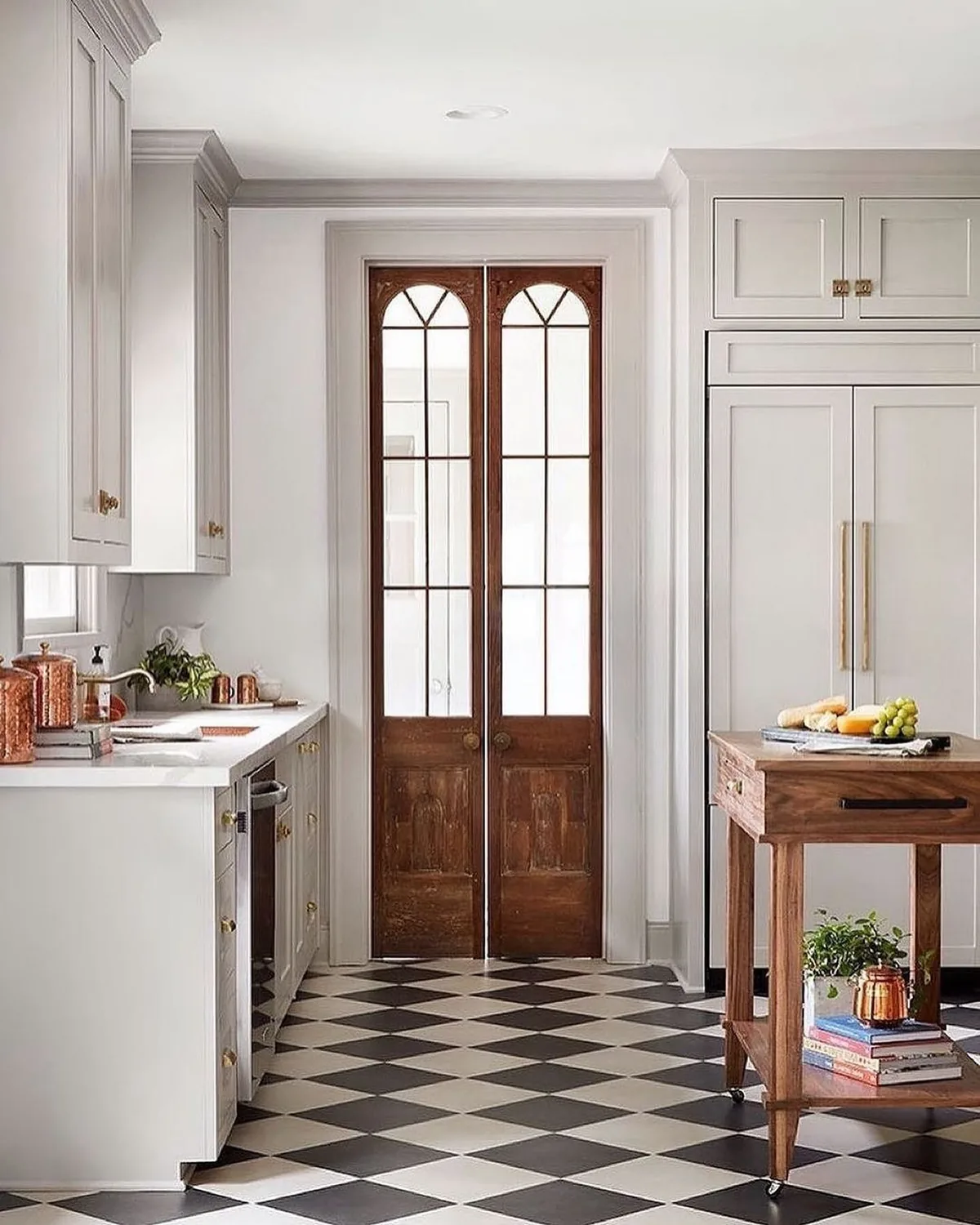
Warm every bulb to 3000K or below
Cool white bulbs murder moody kitchens. You’ll fit 2700 to 3000K everywhere, since warm light turns black surfaces grounded and wood tones honeyed. A single 4000K tube among warm lamps reads as a mistake your eye finds instantly.
You’ll check the bulbs the fixtures shipped with, because builders install cold daylight almost universally. Swapping every bulb costs little and changes more than the paint did. When the whole room hums one warm temperature, evenings feel candlelit. Mixed temperatures feel like an office with a dimmer nobody fixed.
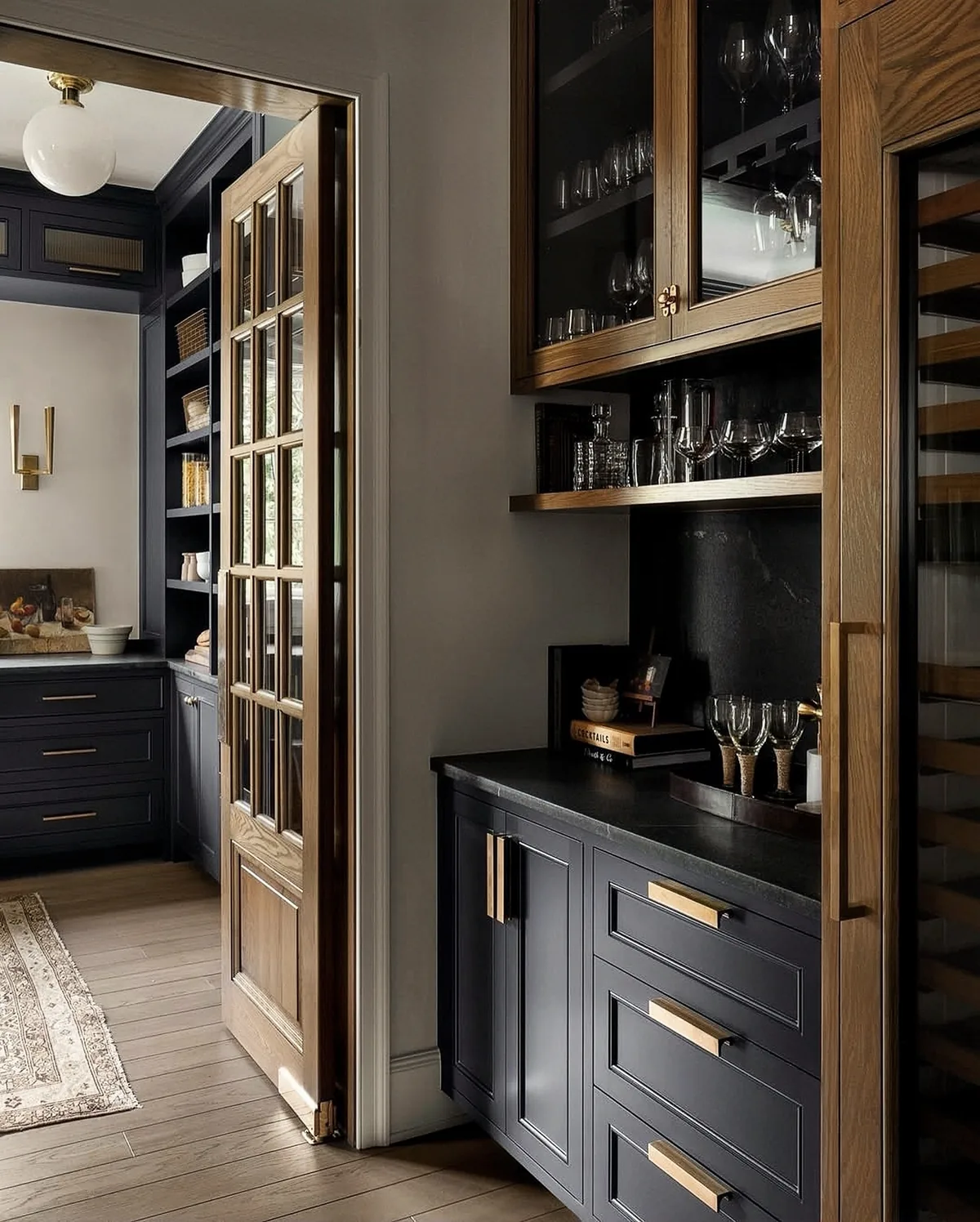
Strip light under every wall cabinet
Under-cabinet strips are the highest-impact cheapest upgrade in dark kitchens. You’ll run warm LED strips along all work runs, washing counters and backsplash in task light that doubles as evening glow. Counters you can see make food better and rooms warmer simultaneously.
You’ll choose high-CRI strips so food and finishes read true. Cheap strips tint everything green-grey and undo your palette silently. Hardwire them to a wall switch you’ll actually use, never a remote lost in a drawer. When counters glow and uppers float above lit backsplashes, the kitchen gains depth no paint provides.
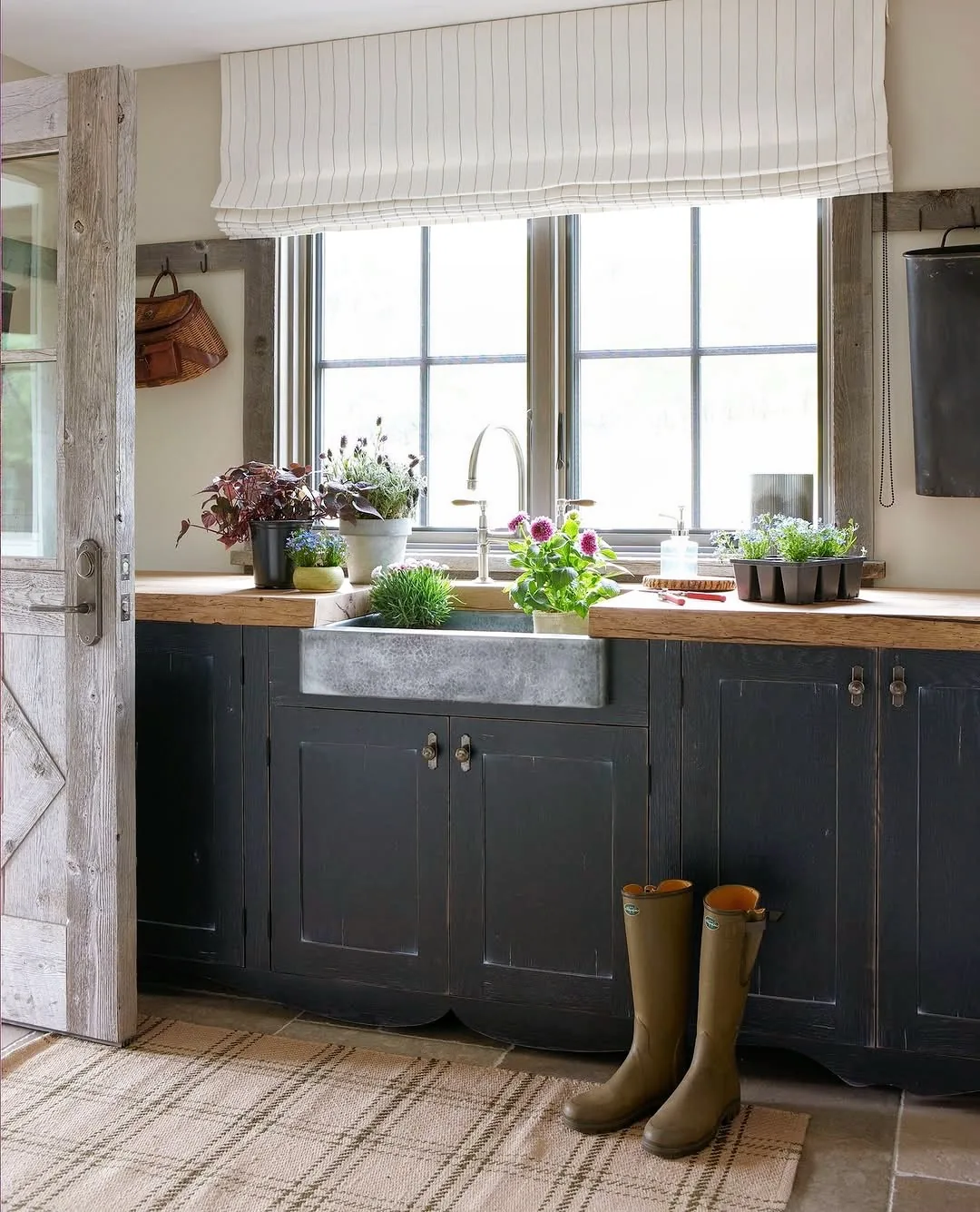
Offset every dark with warmth
Darkness needs warm company or it chills. Four ideas supply it.
Lay wood floors that bounce light upward
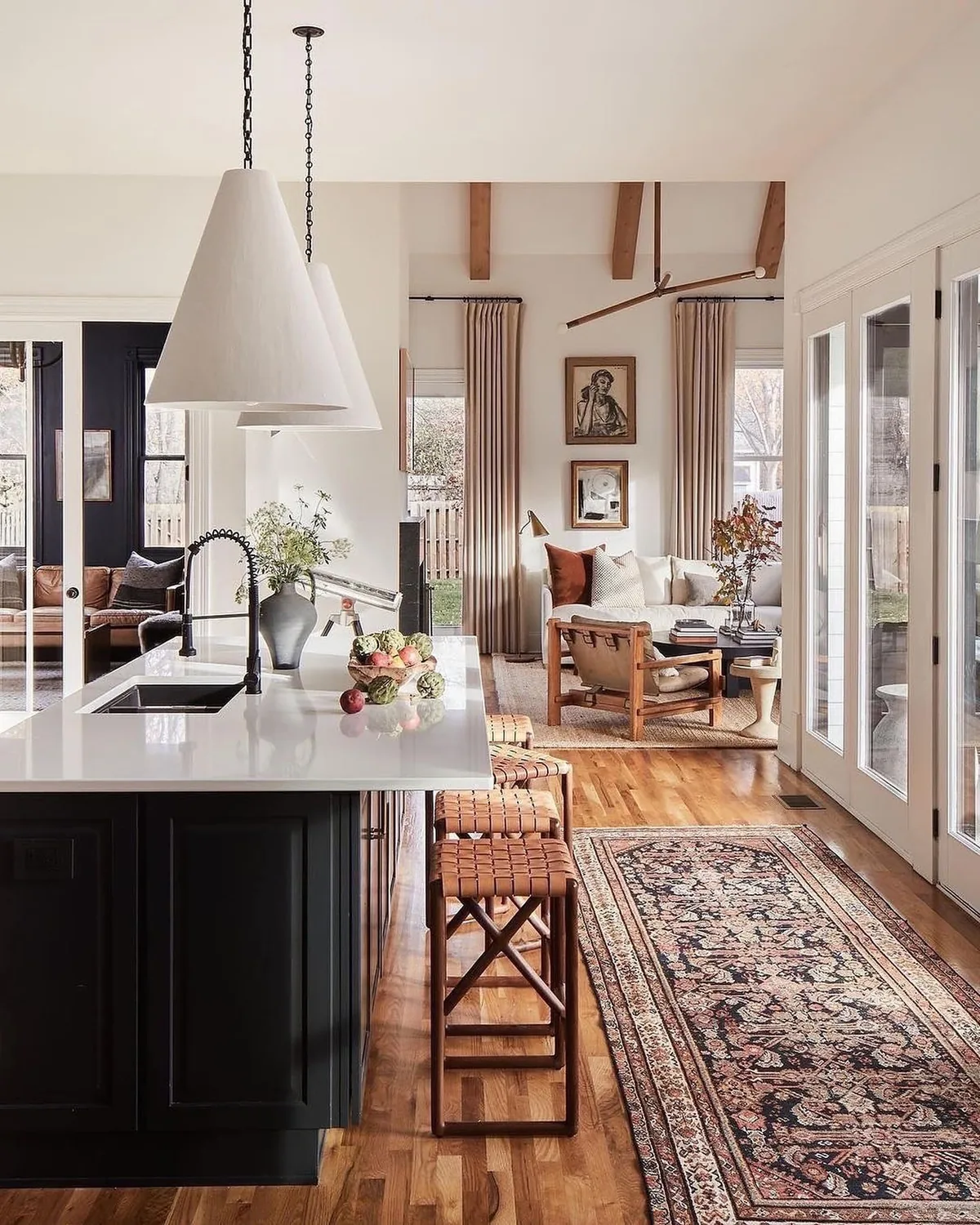
Dark cabinets over dark floors sink rooms into wells. You’ll lay warm oak, honey hickory or walnut that throws light back up into the space. Floors cover the most area, so their vote outweighs cabinets, counters and walls combined.
You’ll choose mid-tones over very dark stains, since the floor’s job is lifting, not matching. Pale oak under black cabinets is the classic rescue for good reason. When feet stand on warmth, the whole dark scheme relaxes. Cold grey floors under black read architectural in photos and punishing in February mornings.
Brass the dark corners glowing
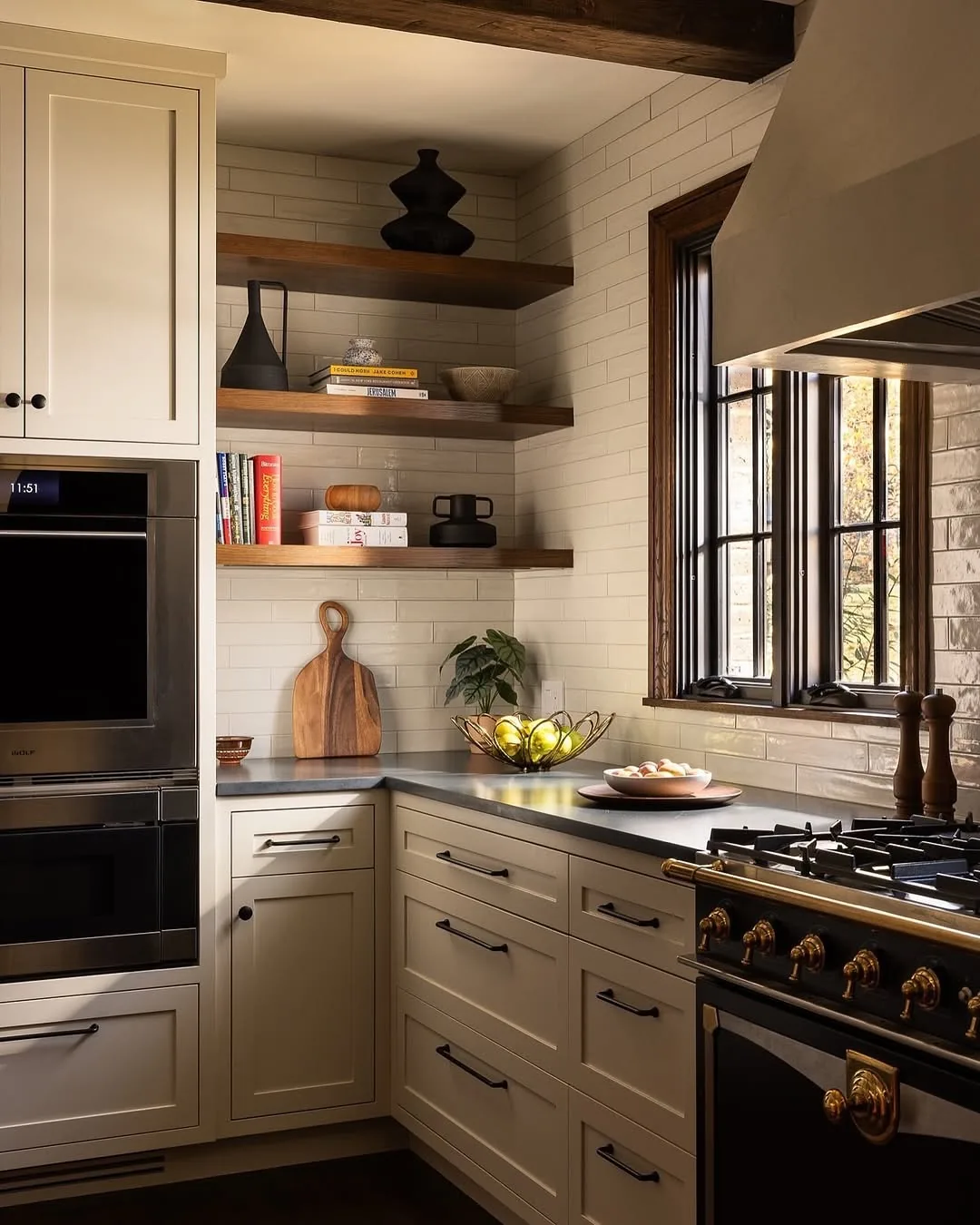
Black absorbs light and brass returns it. You’ll run brass or aged bronze through pulls, faucets and pendants so warm metallic points glow against the dark field. Each one acts as a small lamp even unlit, catching daylight and lamplight alike.
You’ll keep the metal family unified, because scattered finishes on dark cabinets look accidental fast. One warm metal throughout reads as jewelry. Two competing metals read as indecision. When brass dots the darkness consistently, the kitchen feels curated and deep. Without it, black sits flat however good the lighting.
Marble one surface for relief
All-matte darkness needs one luminous break. You’ll give it marble, a honed island top or a veined backsplash, whose pale movement relieves the dark without leaving the palette. Stone glow reads luxurious where white paint would read like surrender.
You’ll hone rather than polish in working kitchens, since matte stone hides etching that glossy amplifies. One marble moment per kitchen suffices. Two compete, three stage a quarry. When a single pale surface floats among dark ones, the contrast does the decorating for you.
Test dark & moody kitchen ideas on timber first
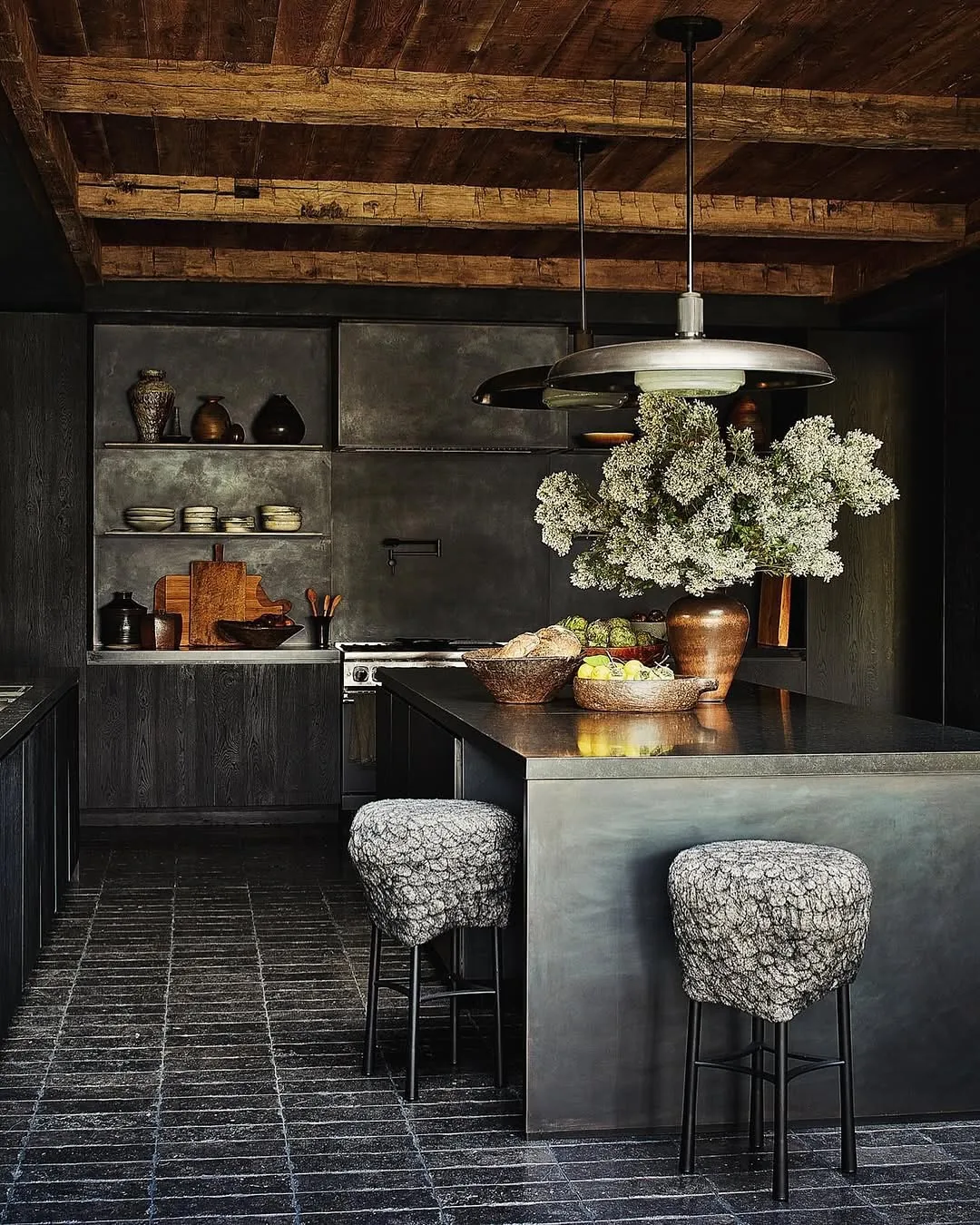
Cold hard surfaces gang up on dark rooms. You’ll test your palette against warm timber, open shelves, butcher block or a wood hood, before approving tile-only schemes. Wood forgives darkness the way nothing manufactured does.
You’ll grant wood at least one strong appearance: shelves, island top or flooring. Rooms with zero timber read severe whatever their lighting. When oak or walnut warms one plane, black relaxes everywhere else. Timber is the difference between dramatic and merely dark.
Place darkness where light lives
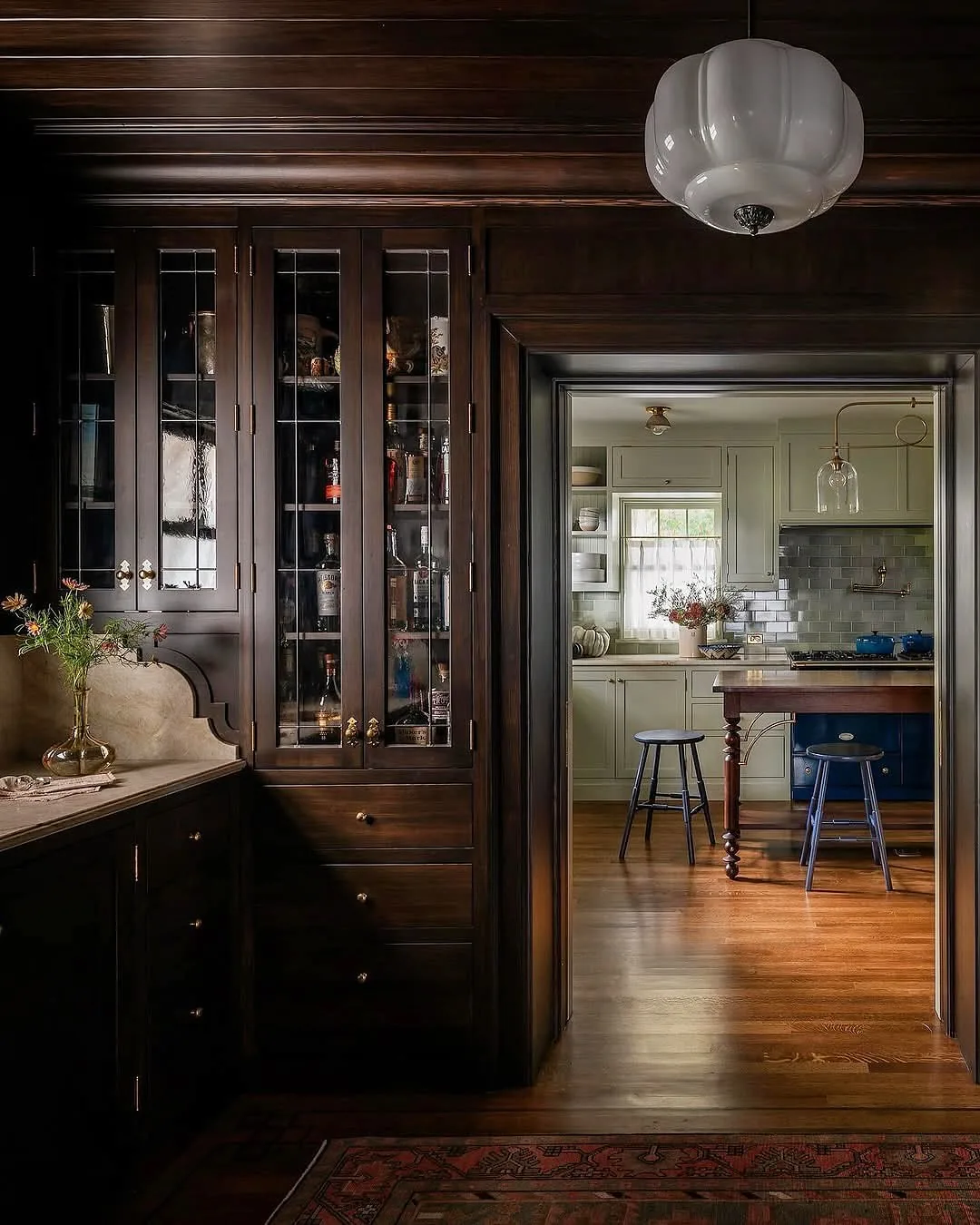
Dark color follows daylight, never fights it. Four ideas position it to win.
Blacken lowers, liberate uppers
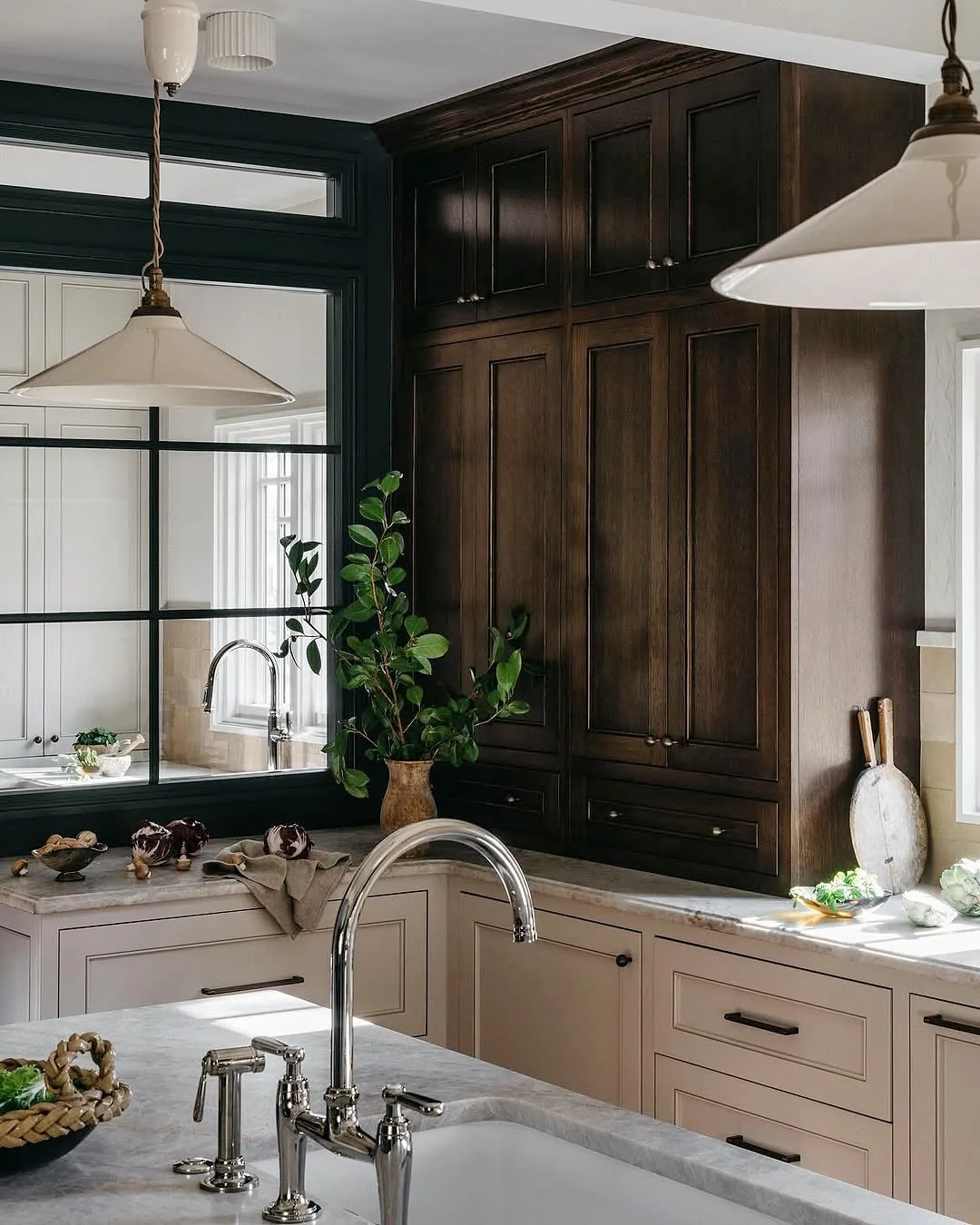
Dark lowers with light uppers is the single most forgiving moody move. You’ll ground the room at waist height while the eye travels up into brightness. Small and dim kitchens take this split beautifully, gaining drama without surrendering air.
You’ll keep upper interiors light too, since dark boxes behind glass doors read as holes. Cream uppers, open wood shelves or glass fronts with lit interiors all release the top half. When weight sits low and light lives high, the kitchen feels designed rather than darkened. Full-height black needs earning through windows.
Island the drama off the walls
Unsure about dark perimeters? You’ll paint the island near-black and keep walls cream. The island becomes furniture with presence while the room stays bright and resale-calm. For making that bright surround work instead of going sterile, see our white kitchen ideas. Guests remember the dark centerpiece without living inside it.
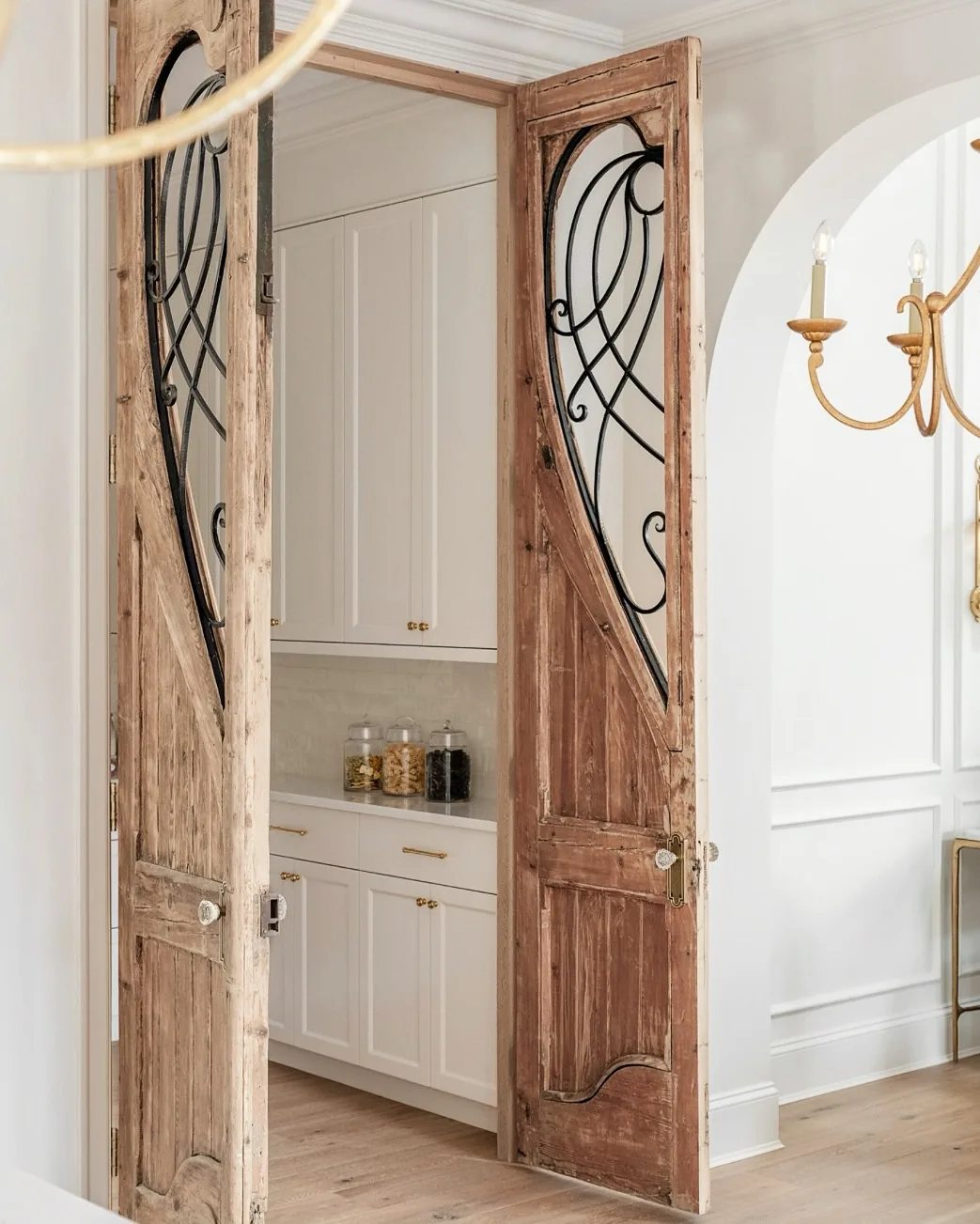
You’ll repeat the island tone once, a pantry door or range surround, so it reads as scheme rather than sample. If that pantry door opens onto a real back kitchen, our butler pantry and scullery ideas plan program and workflow before finishes. Single-appearance darks look accidental. When the island leads and one echo answers, you get moodiness with an exit strategy costing one weekend. Commitment issues solved by placement.
Glass the uppers to release pressure
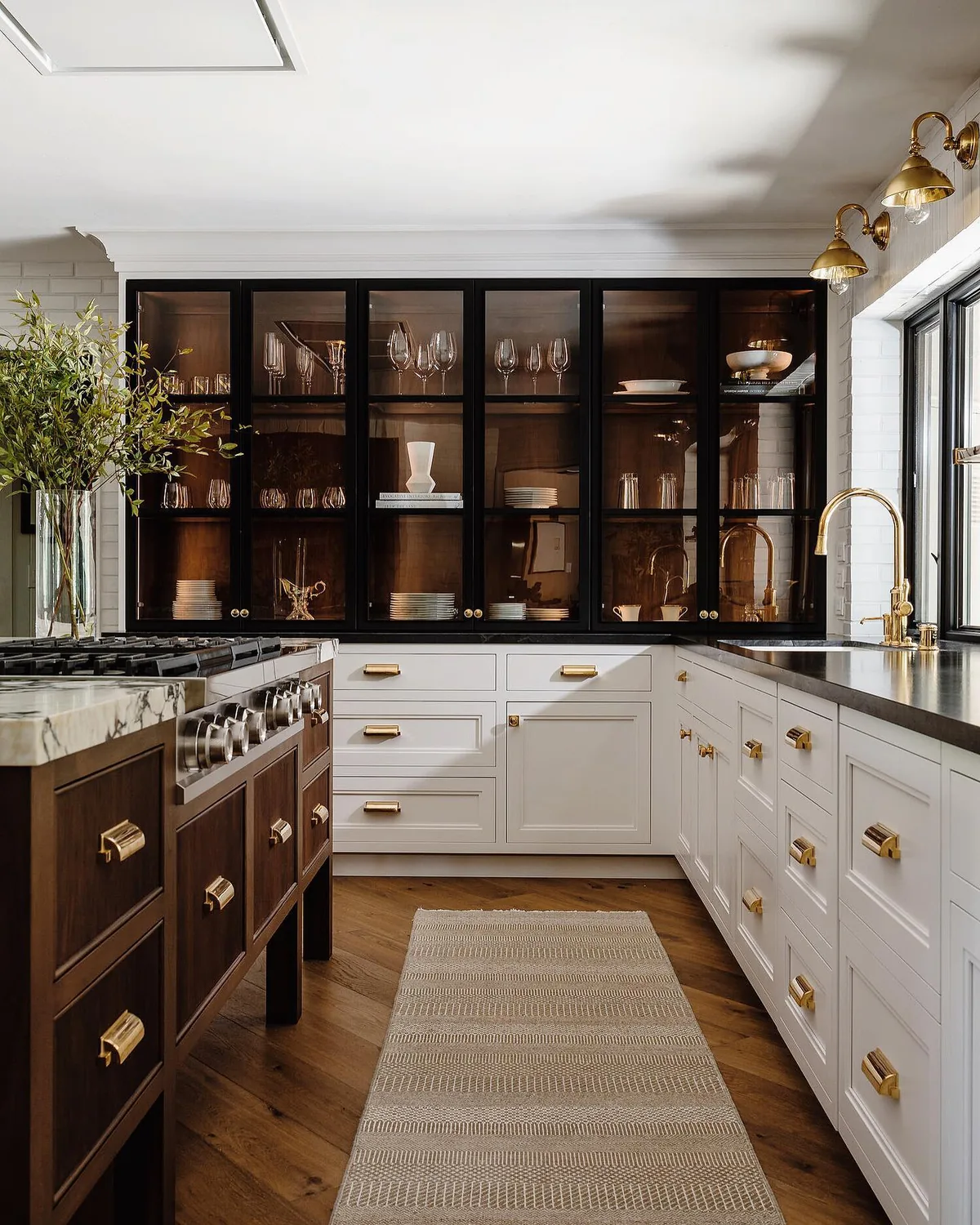
Solid dark uppers press down on small kitchens. You’ll swap some for glass fronts with lit interiors, turning heavy boxes into glowing display. Light passing through beats light stopping cold, and your everyday dishes become the decor.
You’ll keep glass contents neutral and tidy, since display demands discipline. Cream ceramics and clear glass glow beautifully. Cluttered rainbow plastic reads as a lit mess. When uppers gleam instead of loom, the whole wall breathes. Transparency is square footage you don’t have to build.
Check south light before full saturation
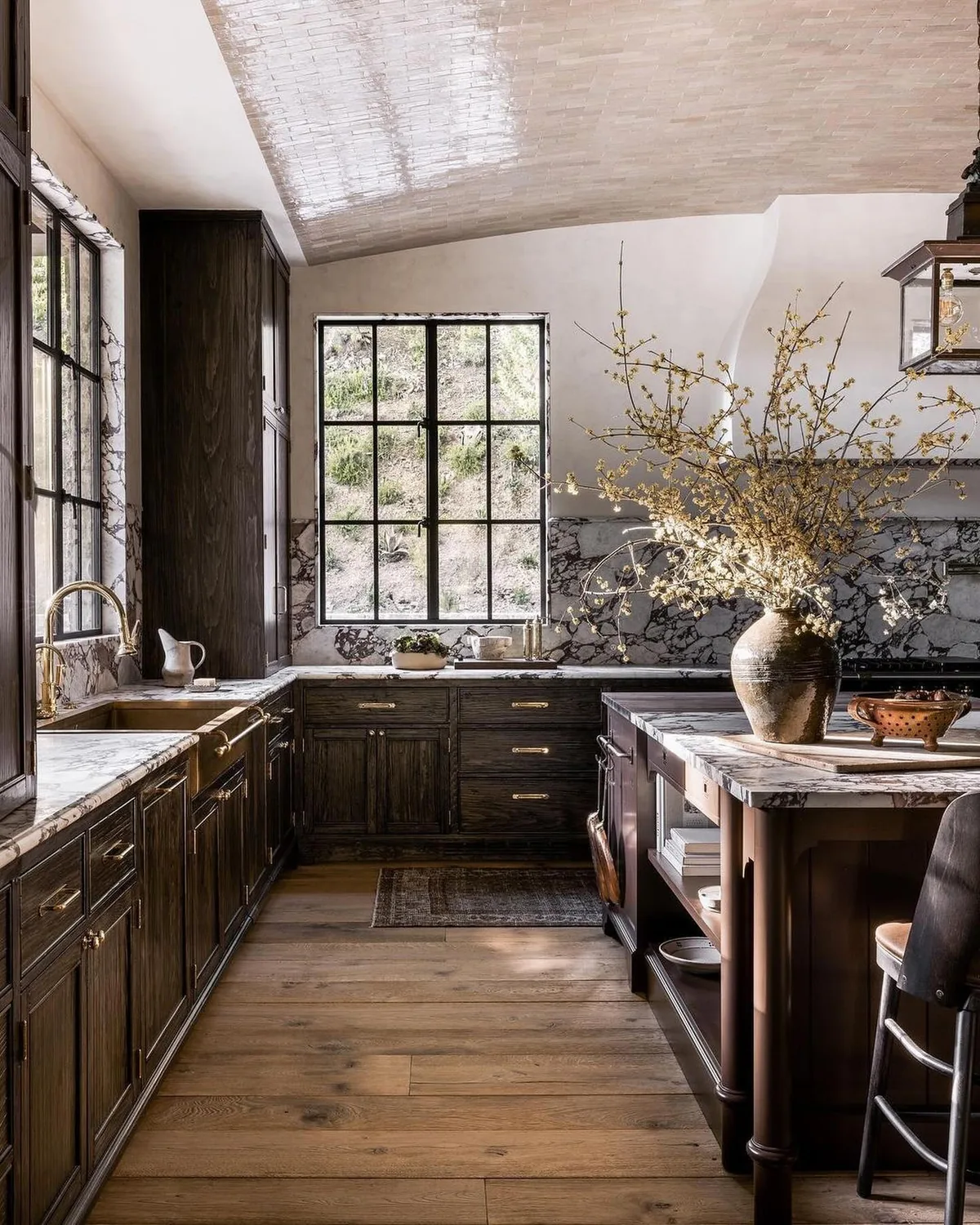
Full dark rooms need daylight income to spend. You’ll audit your windows honestly: generous south or west glass earns enveloping charcoal walls, while single north windows restrict you to lowers and island. Light is the budget darkness spends.
You’ll supplement weak daylight with solar tubes or borrowed light before painting, not after regretting. Architecture first, paint second, always. When the room’s light income supports its dark ambitions, evenings glow for decades. Overspending light you don’t have bills you every grey morning.
Detail the dark without dust traps
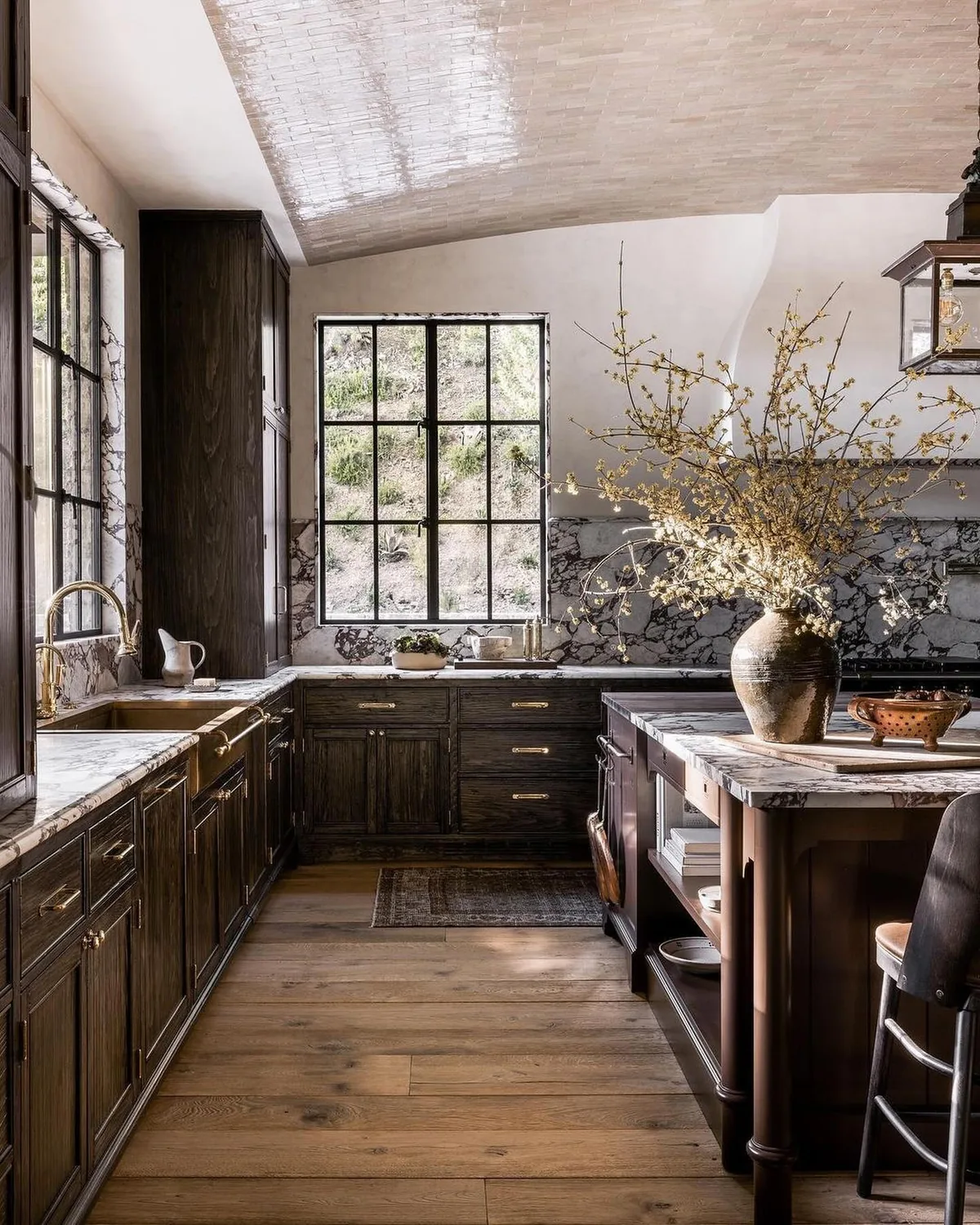
Moody kitchens show everything except what you’d expect. Four ideas keep them livable.
Matte the cabinets, gloss one accent
Flat matte black hides fingerprints and reads current. You’ll finish cabinets matte or eggshell, then punctuate with one glossy note, zellige backsplash, lacquered island face or polished faucet, that catches light deliberately. Contrast of sheen beats contrast of color in dark rooms.
You’ll avoid high-gloss everywhere, which bounces harsh reflections and shows every wipe mark. Matte hush with glossy punctuation is the combination that photographs endlessly. When sheen varies on purpose, the room gains dimension no extra color could buy. One shine, placed where lamps hit it.
Clear counters to eighty percent bare
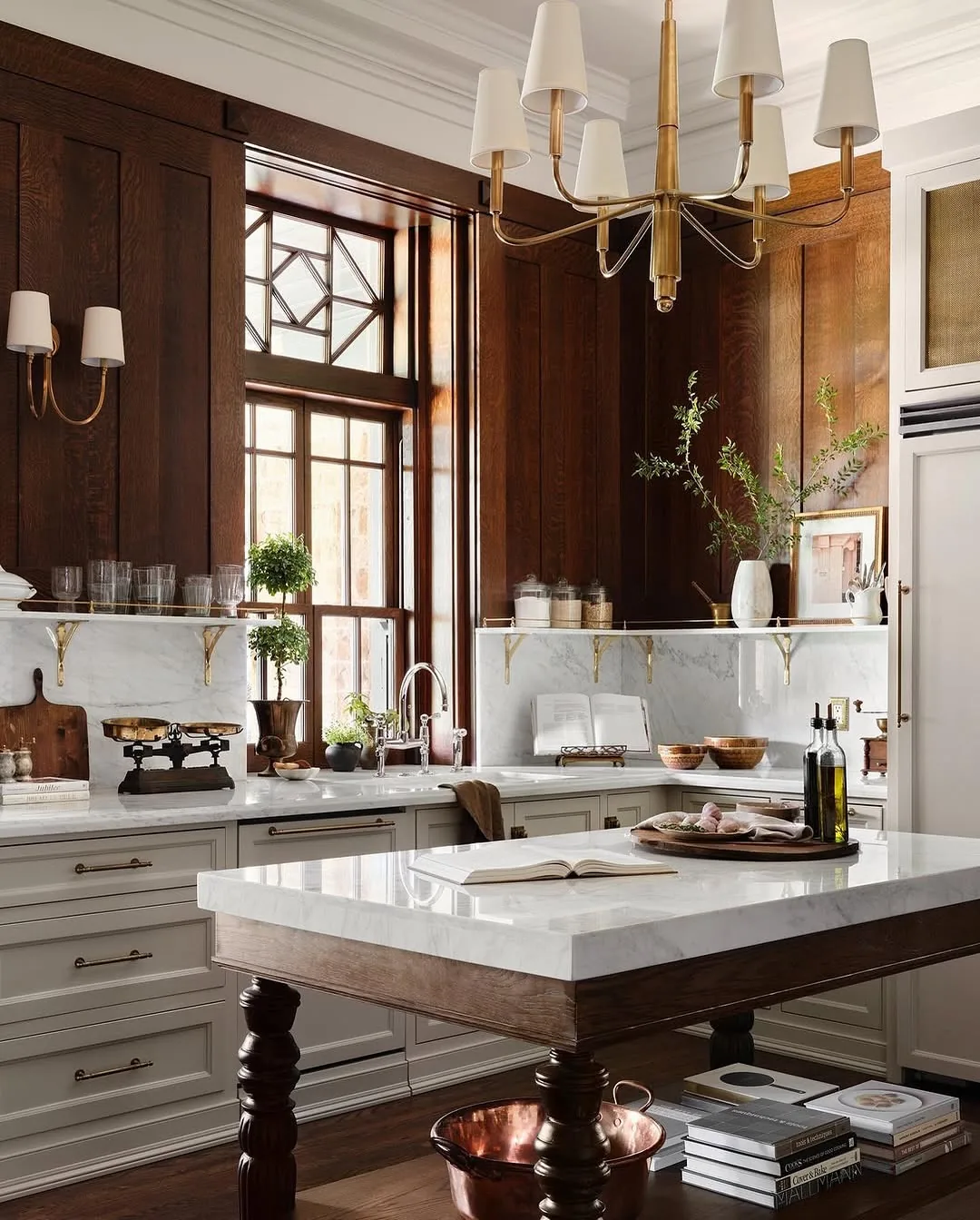
Clutter reads twice as loud on dark counters. You’ll keep four-fifths clear: one board leaning, one tray with coffee gear, one bowl of fruit. Everything else lives behind doors. Dark kitchens punish mess faster than white ones forgive it.
You’ll enforce the rule weekly, because moody minimalism decays into moody mess without policing. A clear dark counter with one warm pool of under-cabinet light is the whole aesthetic in a glance. When surfaces stay bare, the materials speak. When they fill, the room shouts however beautiful the finishes.
Plant herbs against the darkness
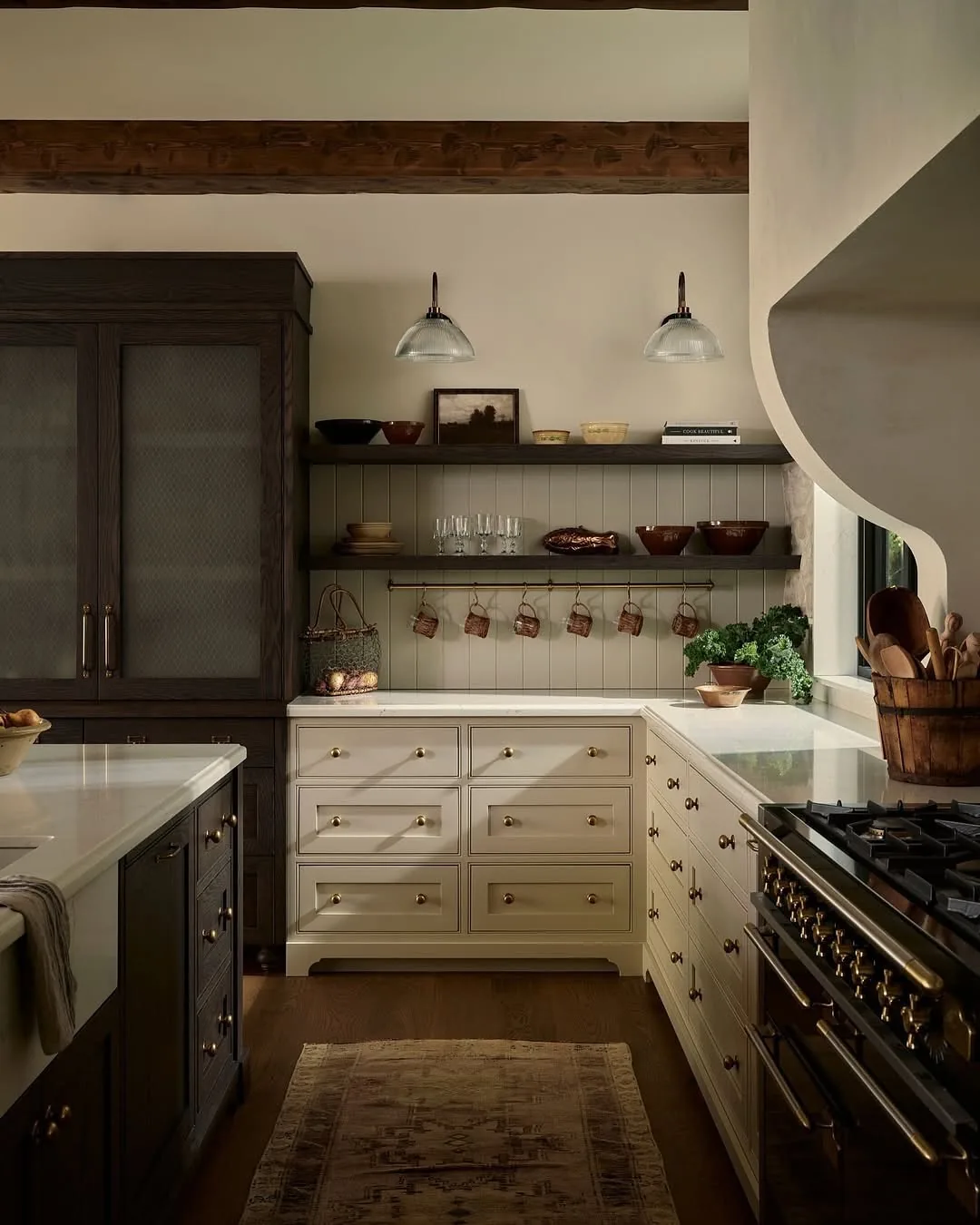
Living green lifts moody kitchens instantly. You’ll keep rosemary, thyme and trailing pothos where light reaches, on sills and open shelves. Plants add the one color no paint provides and prove the room sustains life, not just style.
You’ll choose low-light tolerant varieties for dark corners and rotate them toward windows weekly. Dead plants accuse dark rooms faster than bright ones. One thriving pot does more warming than another brass fitting. When green grows in the gloom, the kitchen feels alive rather than staged.
Frame black windows like architecture
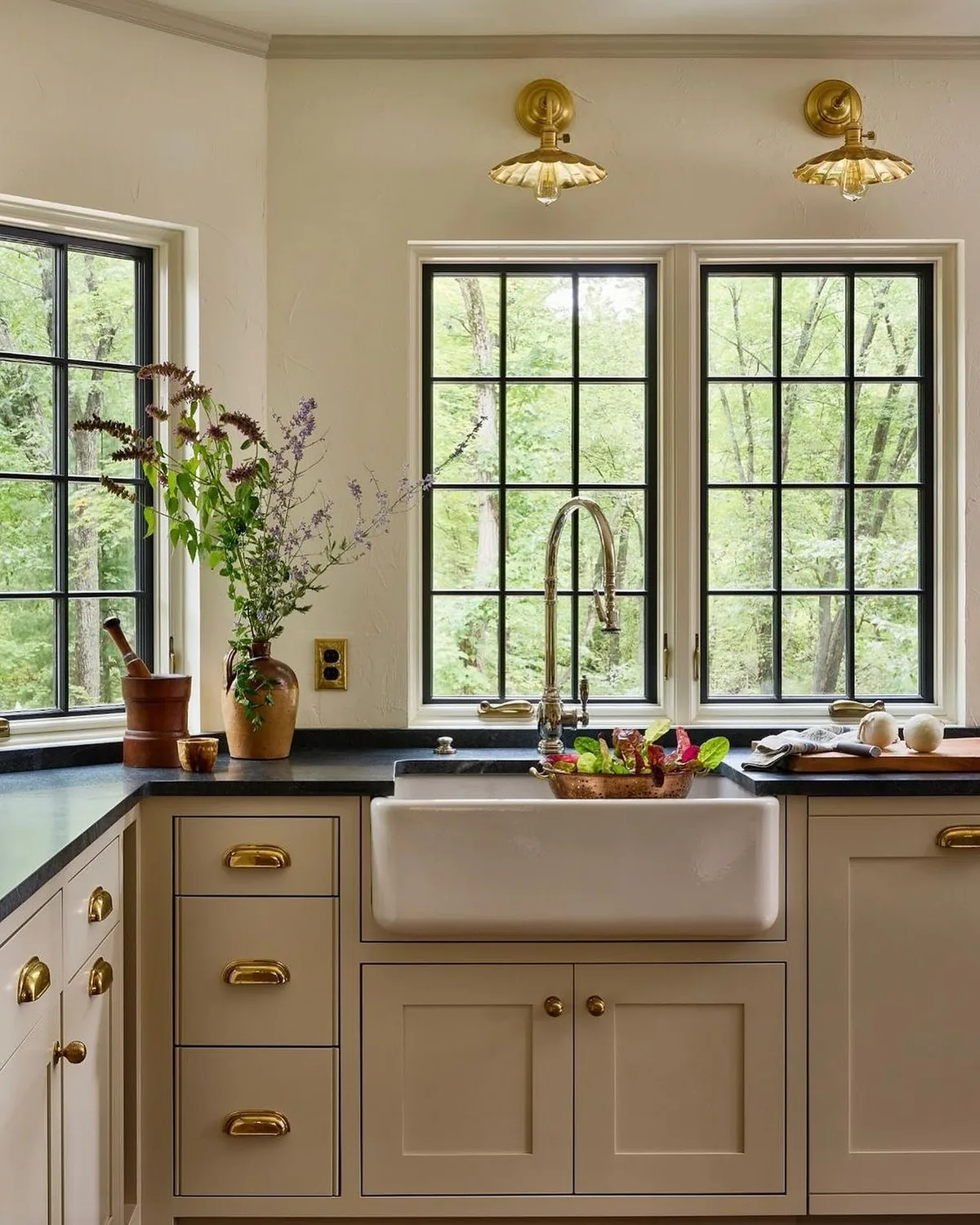
Black window frames against dark or moody walls draw crisp lines that white frames can’t. You’ll paint sashes and trim near-black where views deserve framing, turning each window into a deliberate picture. Dark frames recede at night and sharpen by day.
You’ll keep glass clean religiously, because dark frames spotlight every smudge. One squeegee by the sink solves it in seconds daily. For more kitchens planned in this same order, browse our kitchen ideas hub. When frames, faucet and hardware share the black family, the room gains a graphic backbone. Scattered blacks decorate while unified blacks compose.
Moody done right versus moody by paint alone at a glance
| Moody with scaffolding | Paint-only moody | |
|---|---|---|
| Light | Three warm layers, dimmed | One cold overhead |
| Offsets | Wood, brass, marble | Nothing, dark on dark |
| Placement | Lowers, island, one wall | Wrapped entirely |
| Sheen | Matte hush, one gloss note | Flat everywhere |
| Counters | Eighty percent bare | Fully styled |
| Verdict | Glow here | Repaint this |
The Moody Kitchen Formula
If you strip all fifteen ideas down to a plan, it reads like this:
- Three warm layers. Overhead dimmed, task strips, one glow, all 2700 to 3000K.
- Wood underfoot. Warm floors bounce light upward all day.
- Brass throughout. One metal family glowing against the dark.
- Darkness placed low. Lowers and islands earn mood, uppers stay free.
- One marble relief. A single luminous break in the matte field.
- Counters eighty percent bare. Clutter shouts loudest on dark stone.
Get those six right and moody glows instead of glooming. You’ll own the cinematic kitchen instead of repainting it.
Frequently Asked Questions
Will black cabinets make my kitchen feel small?
They’ll deepen it, which reads cozy with layered warm light and light uppers. You’ll confine black to lowers or the island in tight rooms. Small bright rooms take more black than large dim ones, since light outranks footage. These dark & moody kitchen ideas assume lamps do the evening work, never a single overhead.
How do I light a dark kitchen?
You’ll layer three warm sources: dimmable overheads, under-cabinet task strips and one pendant or sconce glow. Keep every bulb 2700 to 3000K. One cold overhead makes a dungeon regardless of paint quality.
What counters suit black cabinets?
Honed marble or warm quartzite with movement for relief, butcher block for farmhouse warmth. You’ll avoid flat cold slabs that chill the palette. One luminous surface per kitchen stops darkness going flat.
Is matte or gloss better for dark cabinets?
Matte or eggshell for cabinets, hiding prints and reading current. You’ll add one glossy accent, zellige or lacquer, placed where lamps hit it. All-gloss bounces harshly and shows every wipe.
Can a north-facing kitchen go dark?
You’ll restrict it to lowers, island or one wall with cream elsewhere. North light is cool and thin, so warm bulbs and wood offsets work overtime. Full saturation needs daylight income the room must actually earn.
How do I keep a dark kitchen clean looking?
You’ll clear counters to eighty percent bare and wipe matte fronts weekly. Dark shows dust and prints faster than white shows crumbs. Plant herbs, keep one tray styled, and police clutter before it compounds.
This article may contain affiliate links. We may earn a commission at no extra cost to you.