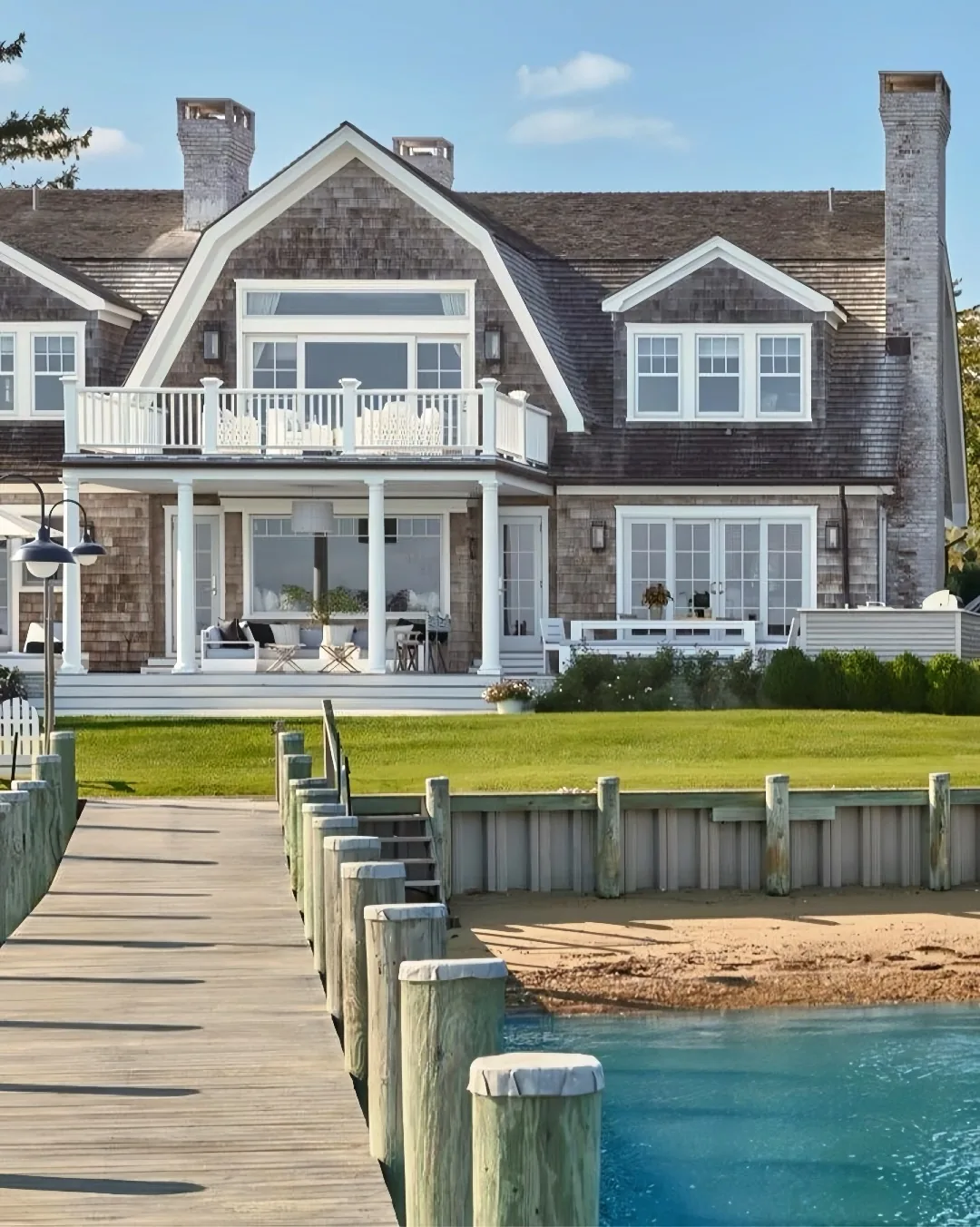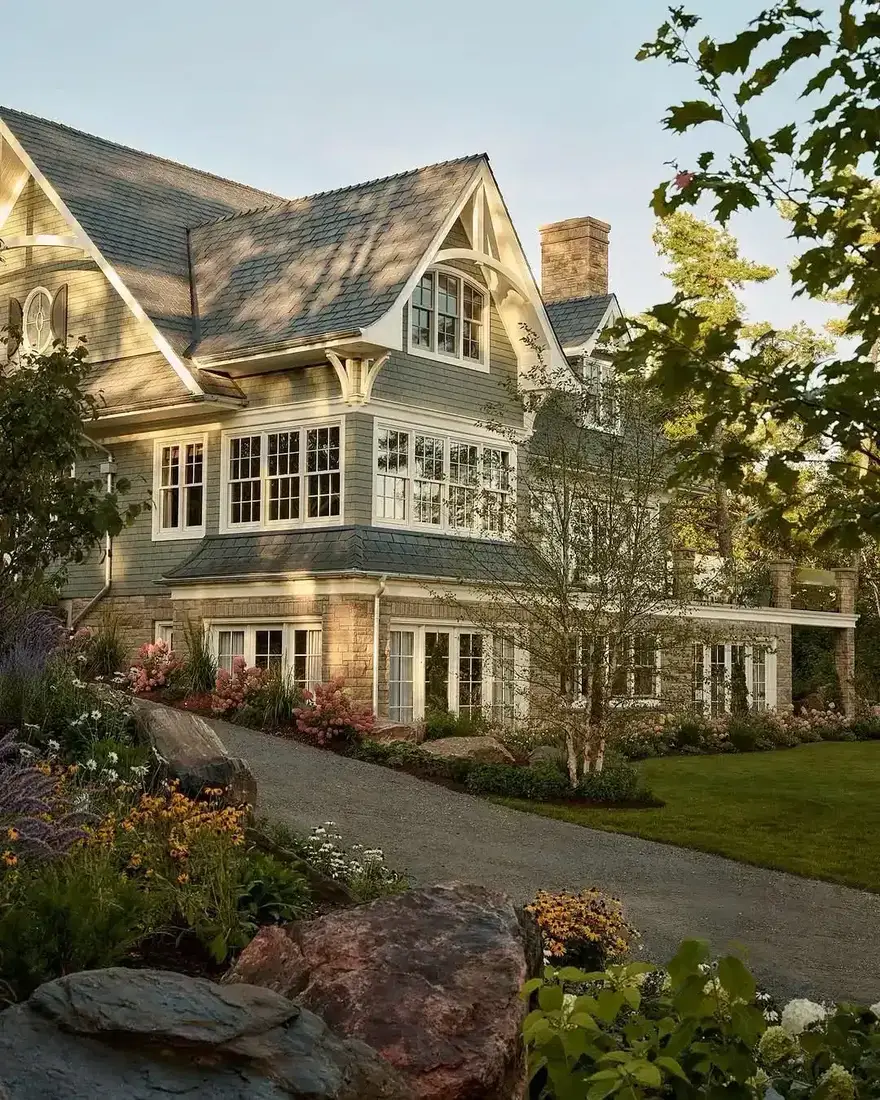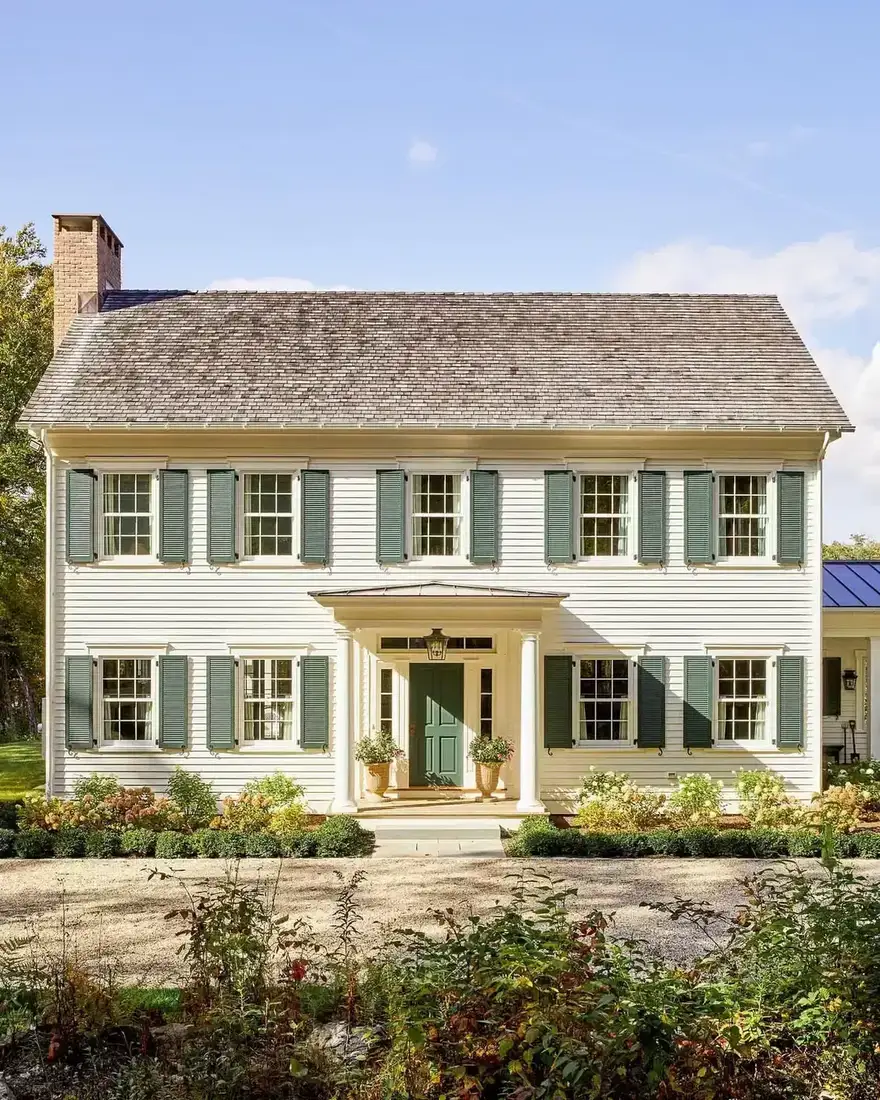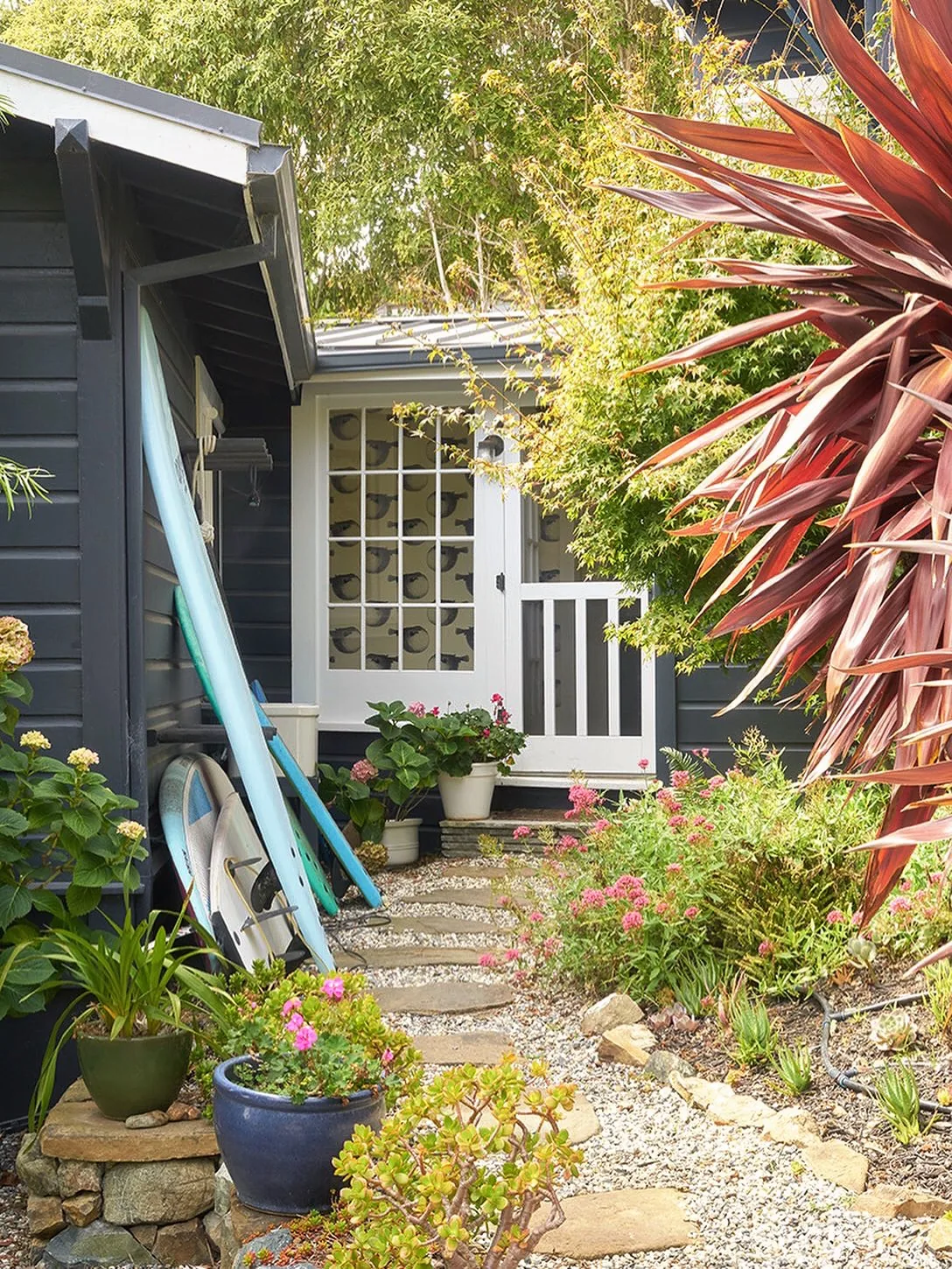
White Farmhouses: Pick Warmth, Not Just White

Add us as a preferred source to see more stories on Google.
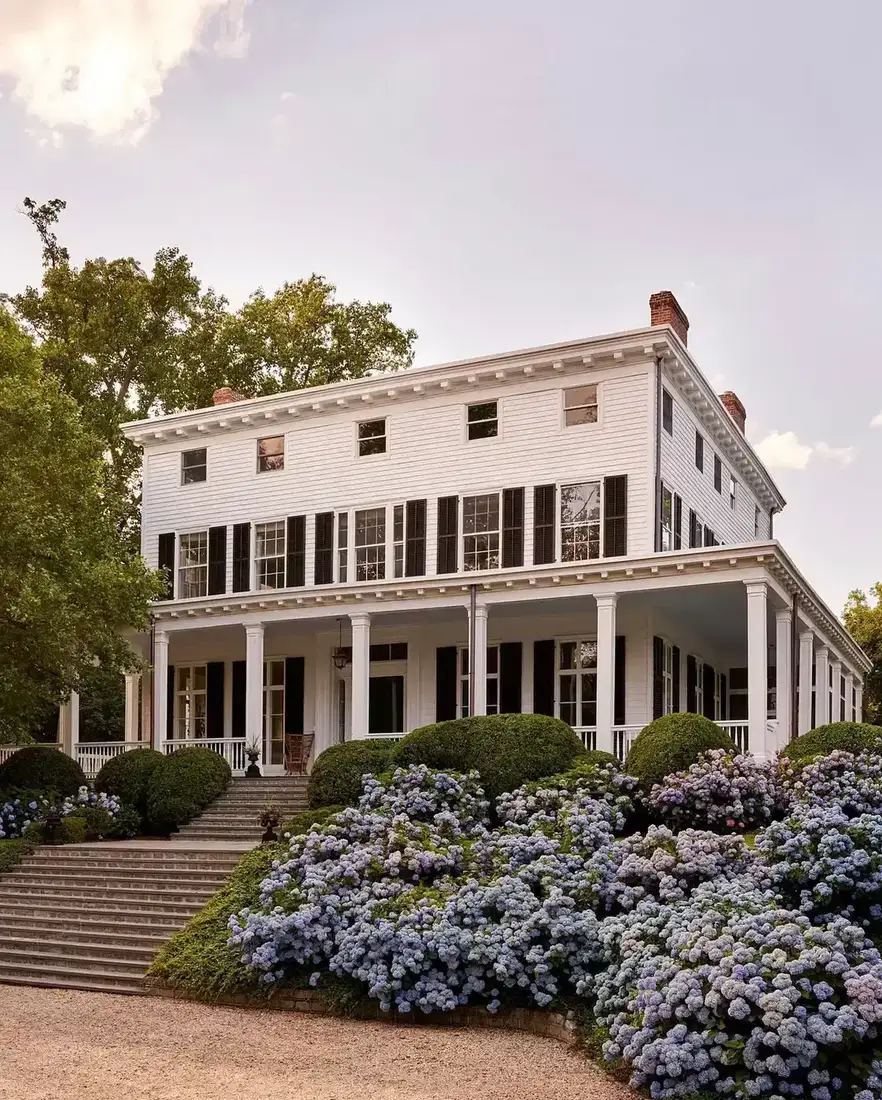
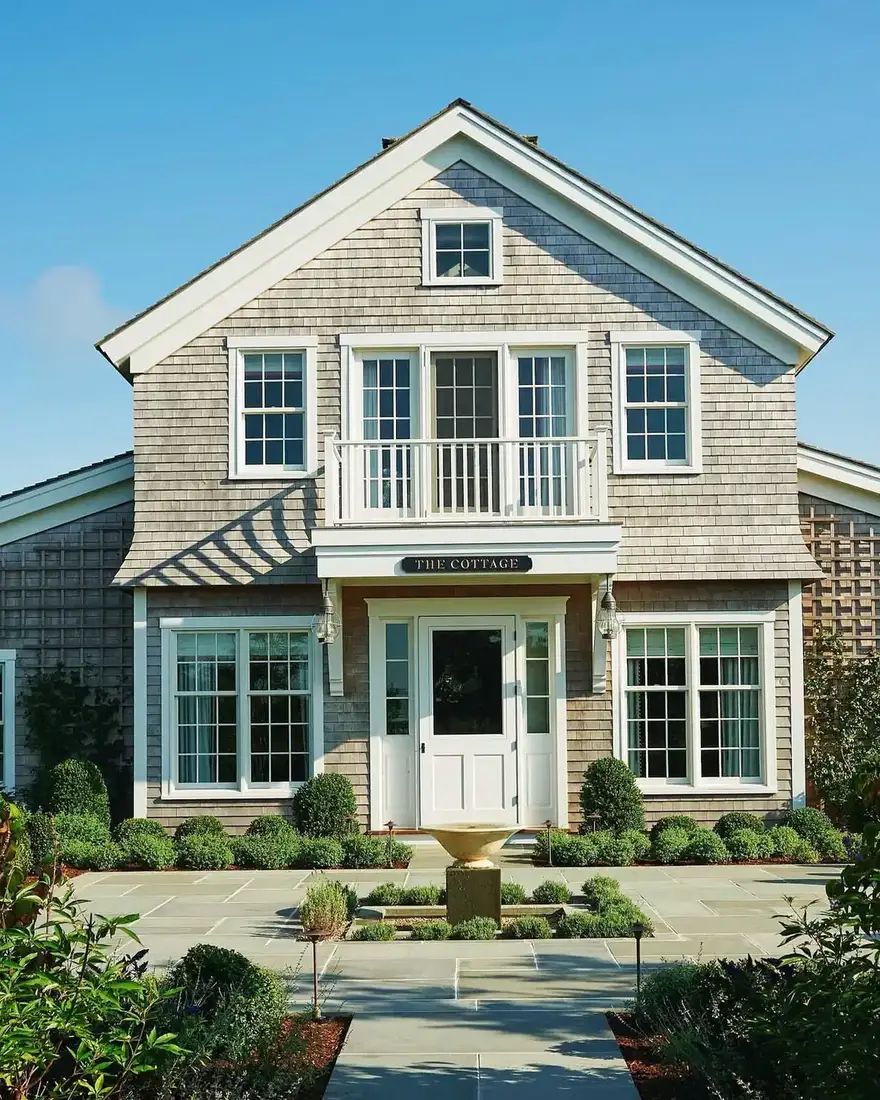
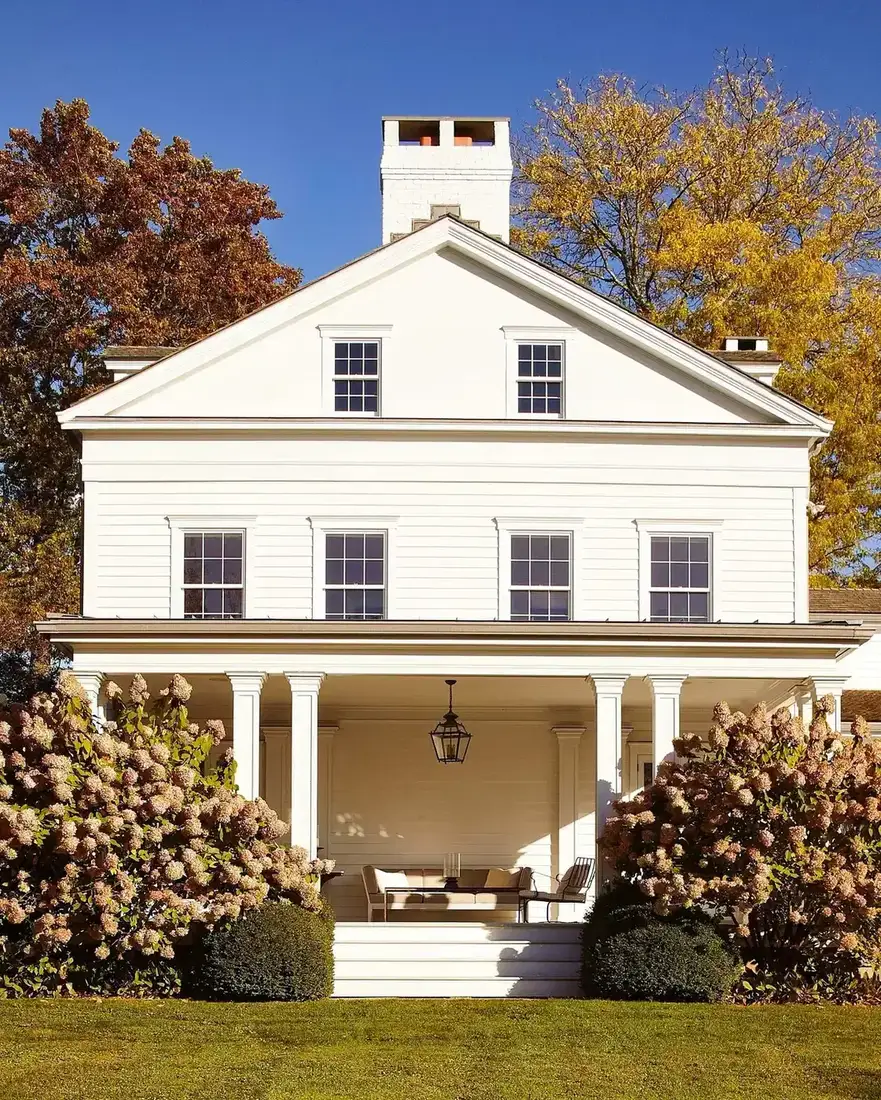
You saved twenty photos of white farmhouses. You painted your house white. It looks nothing like them.
Here’s the thing. White isn’t a colour, it’s a category, and there are hundreds of them.
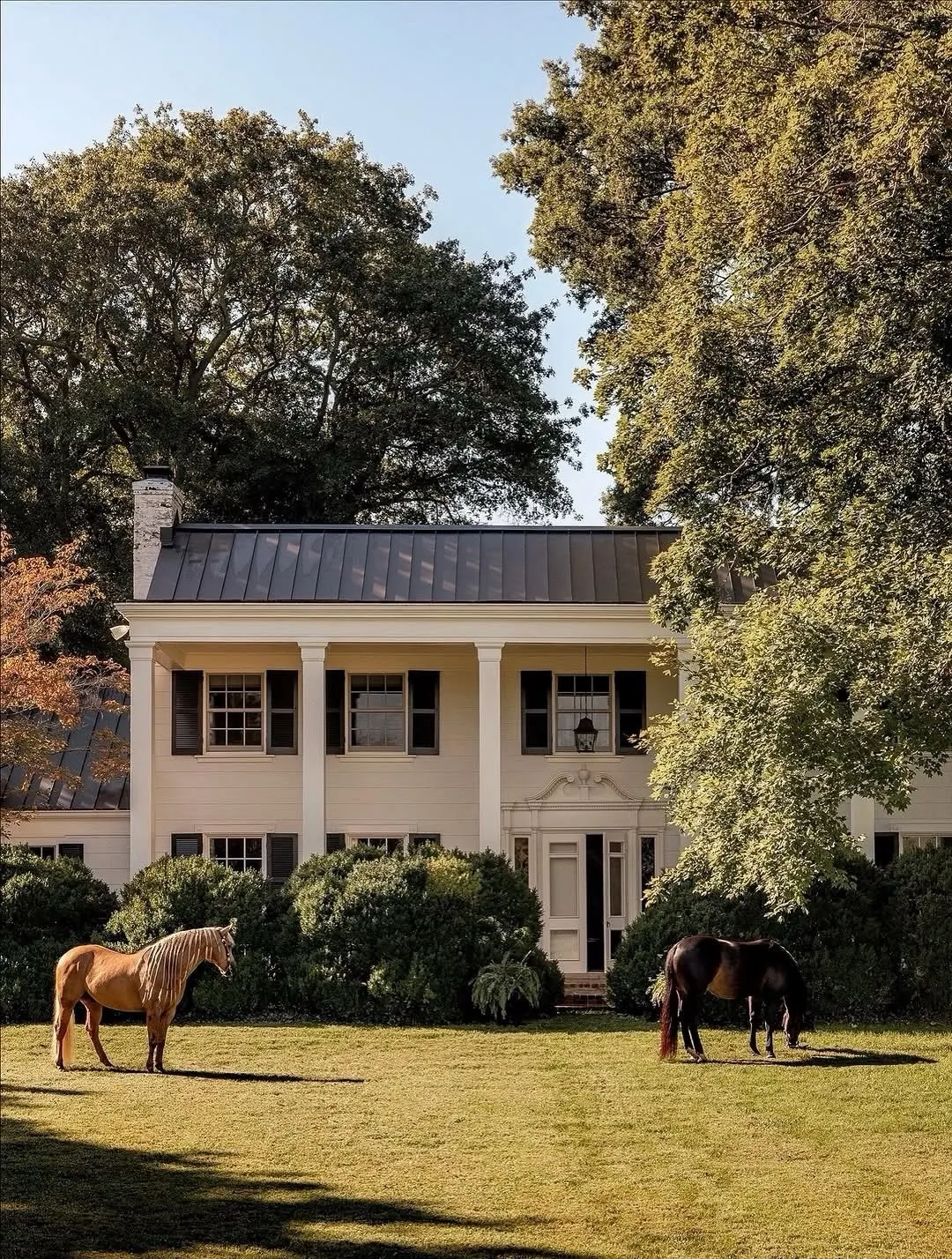
Chances are the houses you pinned were a warm white sitting under a black roof. The one that disappointed you was a cool bright white with a pale grey roof.
Picking your white
Learn what an undertone is, in one minute
Every white has a colour hiding in it. That’s the undertone.
Warm whites lean yellow, cream or greige, which is grey with a bit of beige in it. Cool whites lean blue or grey. Indoors you might get away with either. Outside, in full daylight, a cool white goes hard and clinical fast.
Not sure which yours is? Hold your paint chip against a sheet of ordinary printer paper. If the chip looks creamy or slightly dusty next to it, that’s a warm white and it’s the one you want. If it looks cleaner and brighter than the paper, put it back.
Check the LRV before you commit
LRV stands for light reflectance value. It’s a number from 0 to 100 printed on most paint chips, where 0 is black and 100 is pure white.
For an outside wall you want 80 to 90. In that band the white still reads as white but the surface has enough depth to show shadow, texture and the shape of the boards.
Go above 90 and a big south-facing wall turns into a mirror on a bright day. It flattens out, loses every shadow line, and gives you a headache when you pull into the drive. Worth knowing before you buy five litres.
Paint a big sample and look at it three times
A paint chip is about the size of a playing card. Your house isn’t.
Paint a sample straight onto your wall, at least a metre square, and leave it. Then look at it at three points in the day. Morning north light, midday sun, and early evening. You’ll see three different colours, and one of those three is the one you’ll live with most.
Do this on more than one wall too. The front and the shaded side won’t agree with each other, and you want a white that behaves on both.
The roof and the dark anchor
The roof is doing half the work
Go back to the photos you saved and cover your roof with your thumb. Most of them lose their punch immediately.
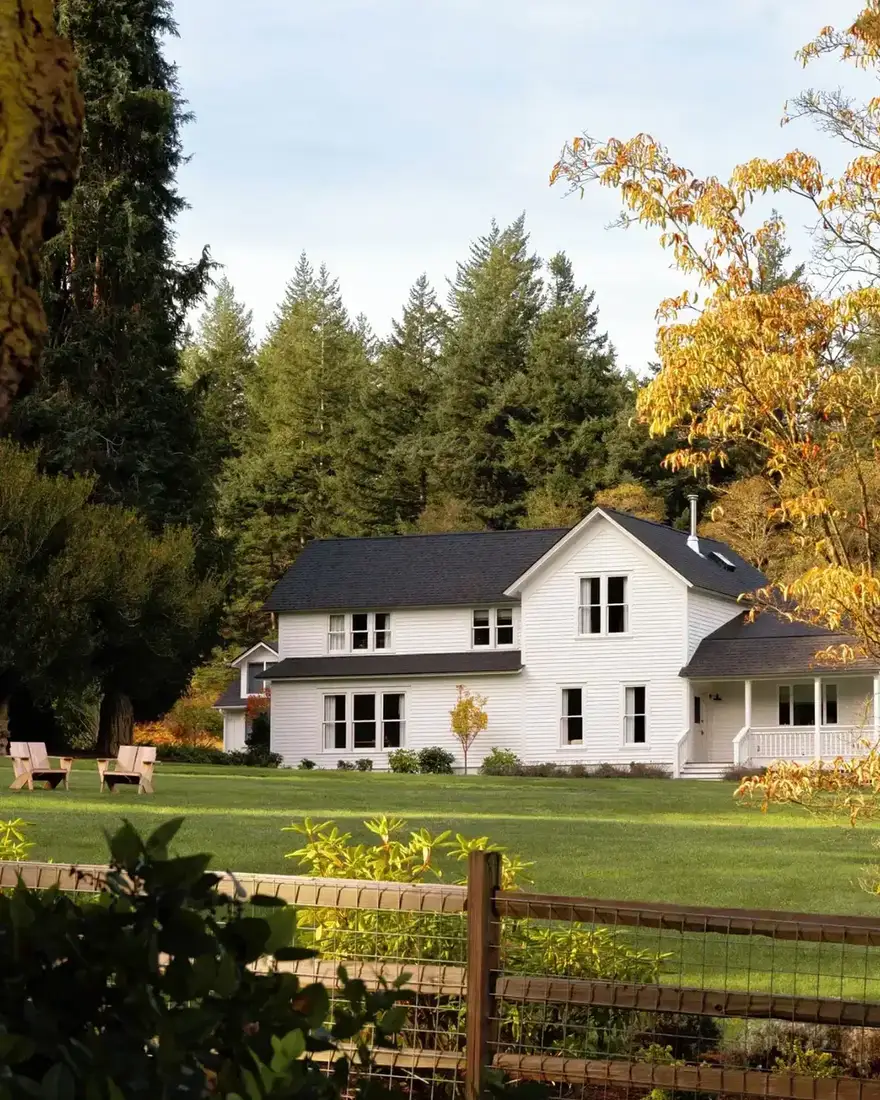
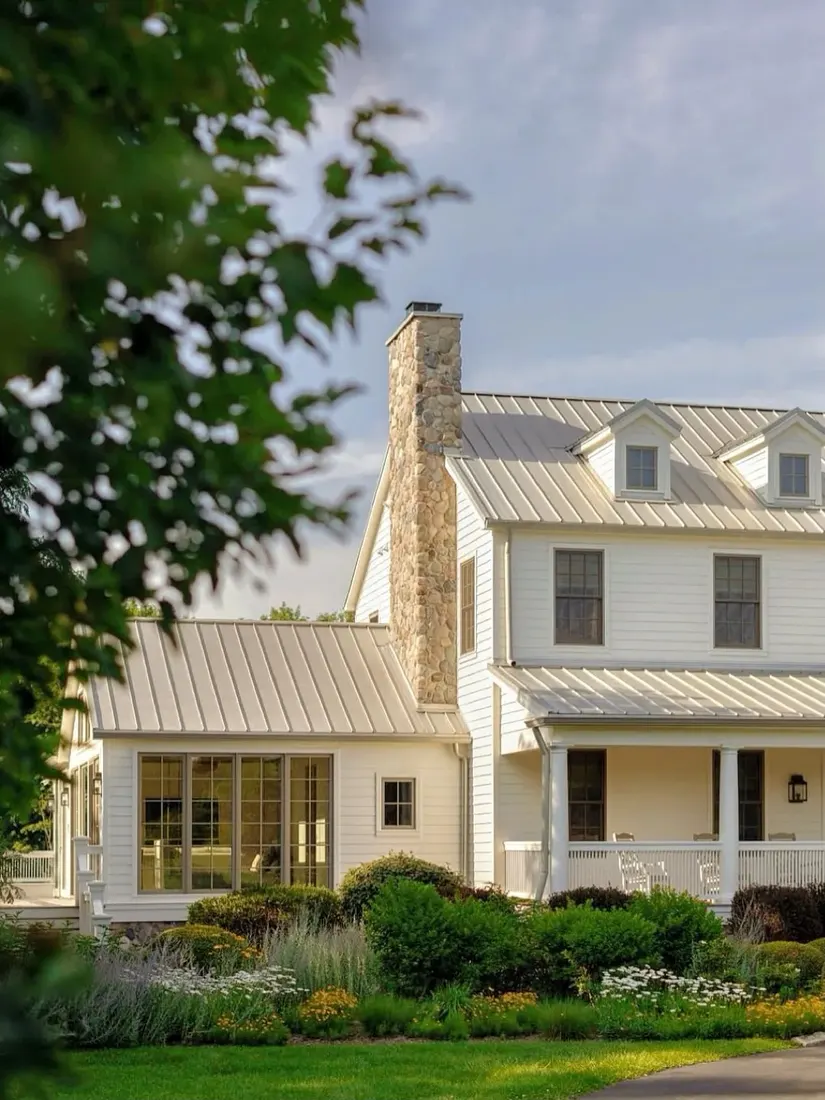
A black or dark charcoal standing seam metal roof is what gives modern farmhouse photos their snap. Standing seam just means the panels join in raised vertical ribs, so you get long clean lines instead of a texture.
If you’re replacing your roof anyway, this is the single biggest change you can make to a white house. If you’re not, don’t panic. You can get the same effect from window frames and shutters instead.
Give the house one dark anchor
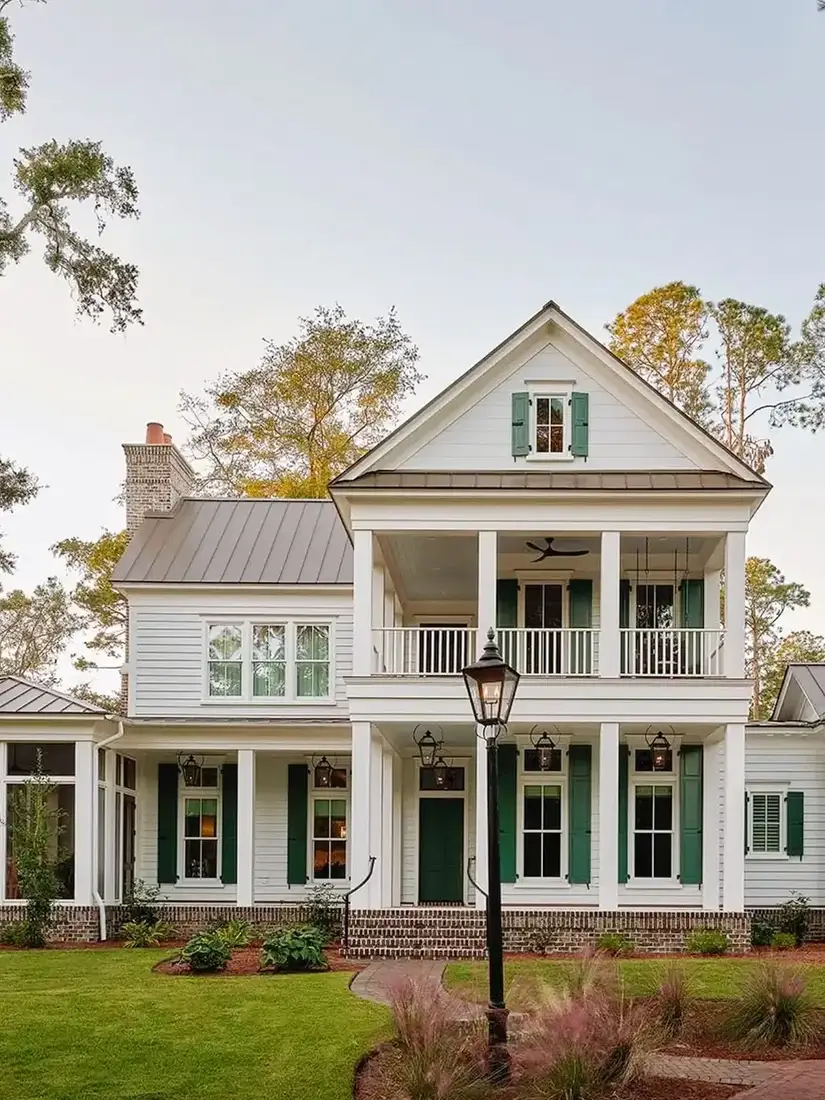
This is the rule that saves most white houses, and it’s the same one that governs brick house exteriors: pale walls need one dark thing holding them down.
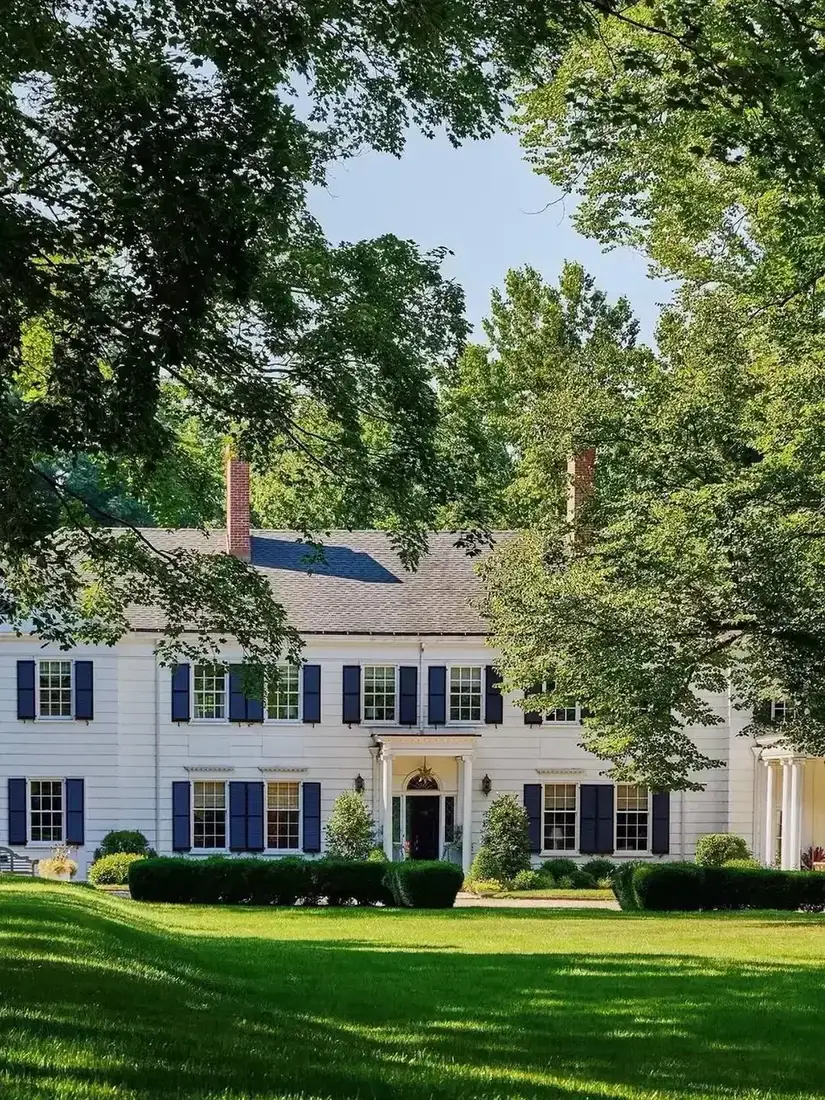
Black window frames. A dark front door. Black shutters. A charcoal roof. Pick one, or at most two that agree with each other.
What fails is white walls, white trim, white windows and a pale grey roof. On a clear day it looks bleached. On an overcast day it vanishes into the sky. You’ve probably driven past a house like that and never once noticed it.
Don’t be scared of a second building
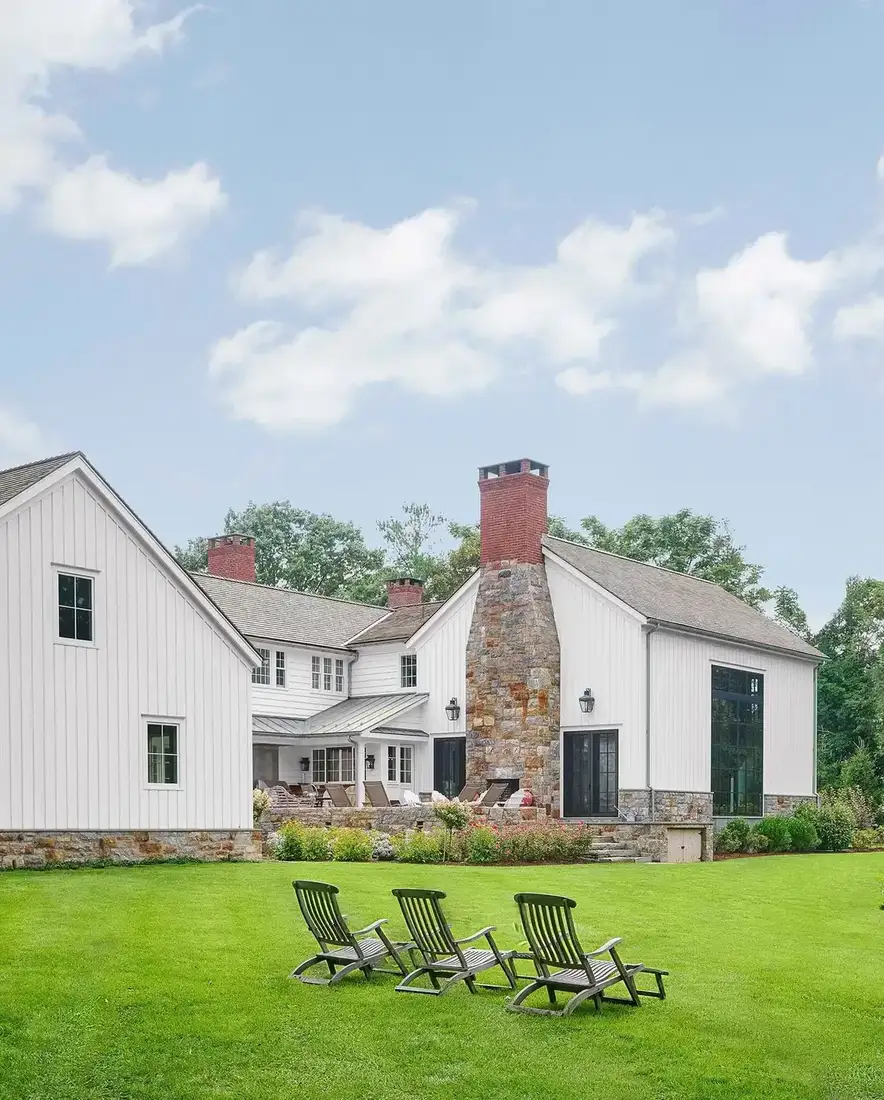
A red barn, a dark outbuilding or a detached garage in a contrasting colour makes the white house read whiter. If your outbuilding is a barn in its own right, our cabin, lodge and barn exteriors guide covers the red paint commitment, metal roofs and meadow ground.
It works the way a dark mount makes a photograph look brighter. Your eye gets a reference point, and the farmhouse reads as crisp instead of washed out.
If you’ve got a shed or a garage you were planning to paint to match, consider going the other way. A deep barn red, a charcoal, or a dark olive gives the whole plot more depth than another white box would.
Cladding and the porch
Know the difference between board and batten and clapboard
These two words come up constantly and they’re simple.
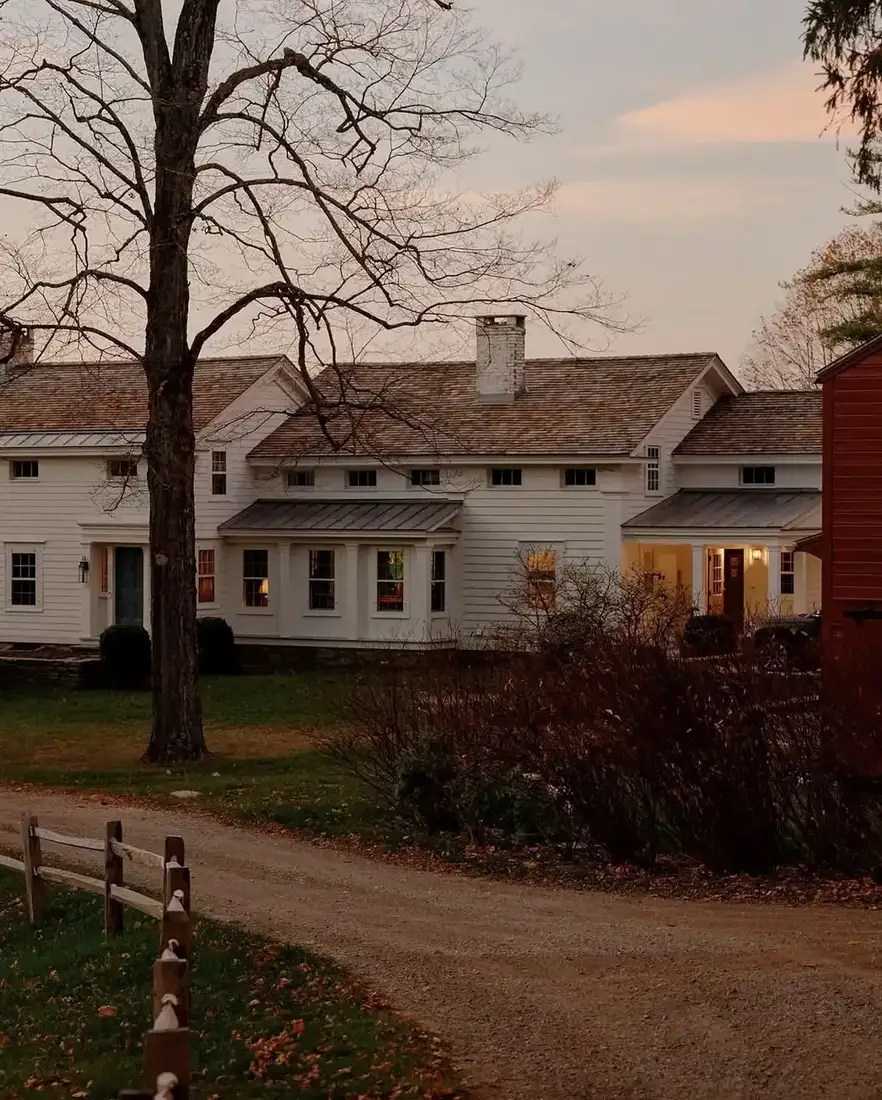
Clapboard is horizontal boards, each one overlapping the one below. It’s the traditional farmhouse look and it throws soft horizontal shadow lines across your wall.
Board and batten is vertical boards with narrow strips, called battens, covering the joins. The shadows run up and down instead of across, and it reads as modern farmhouse.
Neither is better. But mixing them badly looks like an accident, so if you’re combining the two, give each one a whole wall or a whole storey rather than patching them together.
Let the porch break up the white
A long unbroken white wall gets boring, however nice the white is.
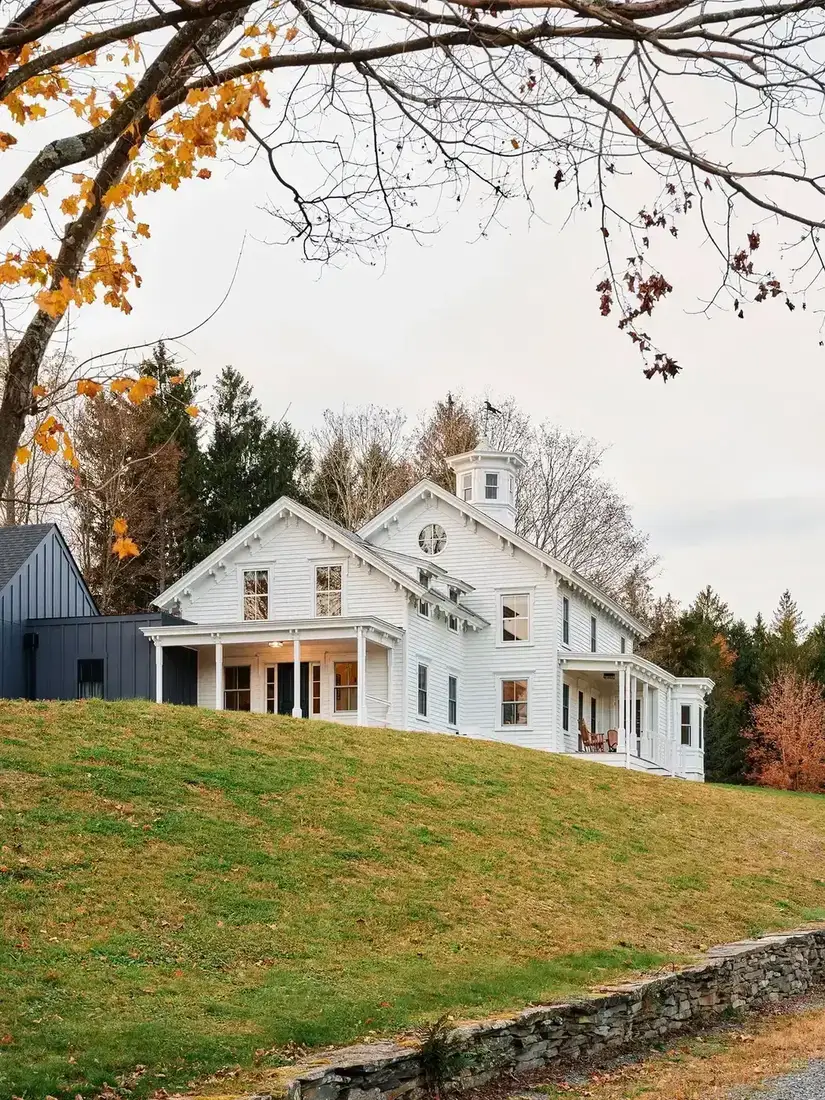
A covered porch fixes that in one move. It carves a deep band of shadow across your front of your house, and that shadow is a free architectural feature you don’t have to pay a designer for.
If you already have a porch, paint the ceiling. A pale blue, soft grey or warm off-white ceiling reads as intentional rather than forgotten, and it bounces a bit of light back onto your front door.
Use dormers and a cupola to break the roofline
A plain roof on a plain white box is a lot of nothing.
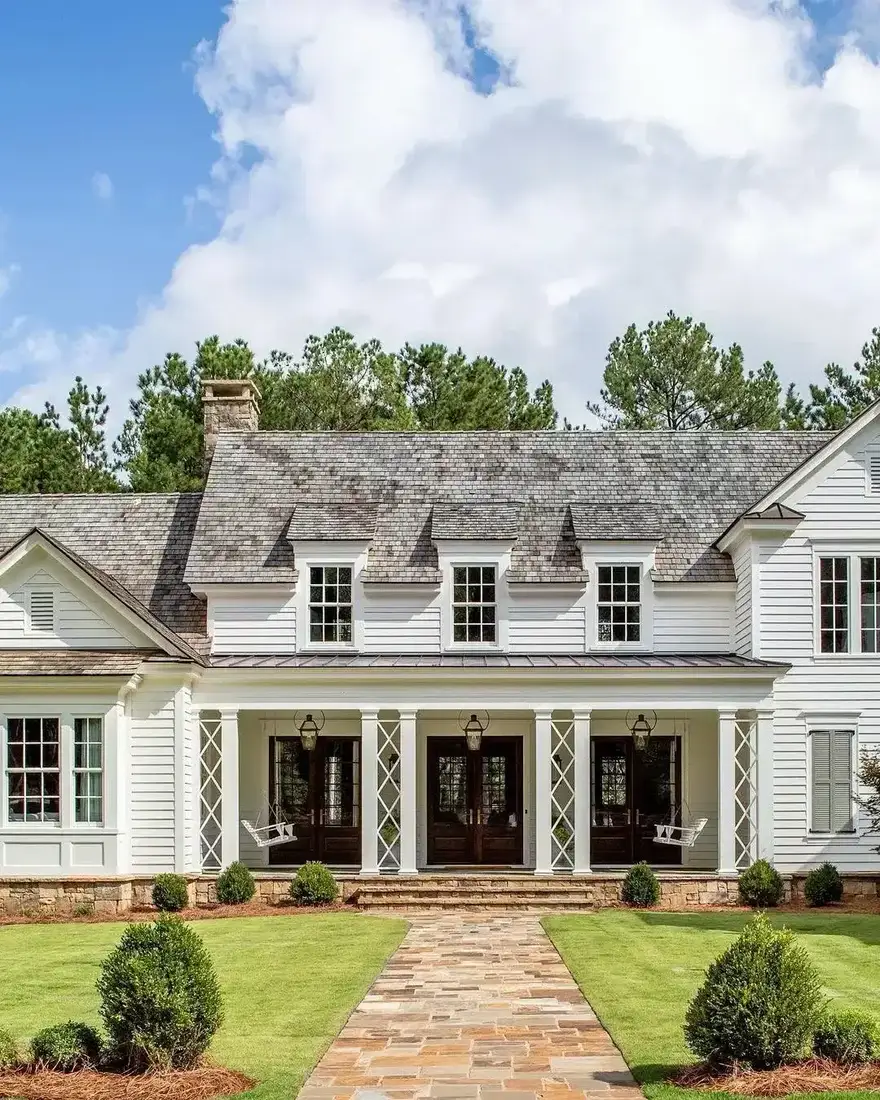
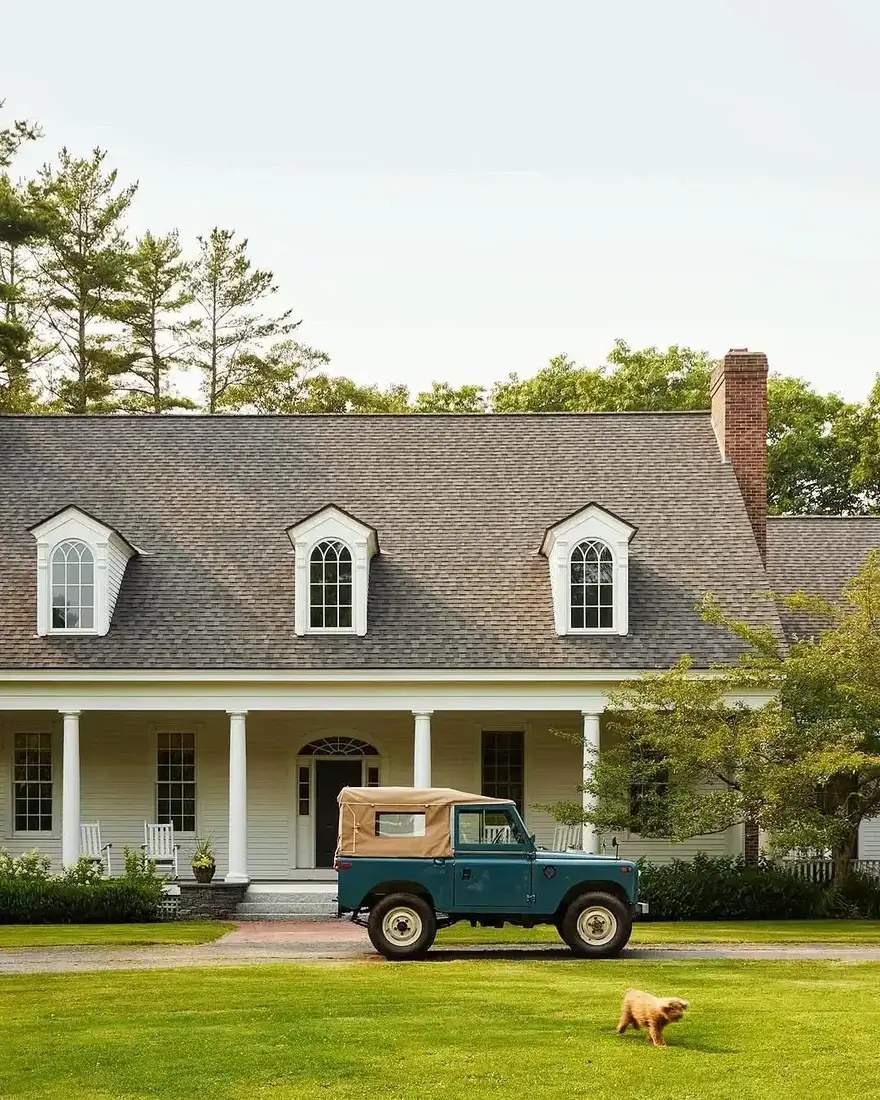
Dormers, the small windows that stick out of your roof slope, break the line and add shadow. A cupola, the little vented box on the ridge, does the same at the top. Both are old farm building features that earn their place because they add depth from the kerb.
You don’t need many. Two or three dormers on a wide front is plenty. Any more and your roof starts to look busy, which is the opposite of what a farmhouse should feel like.
Doors, metals and planting
Warm metals beat chrome every time
Once your walls are a warm white, chrome and bright nickel start to look cold against them.
Go for aged brass, copper, or oiled bronze on your house numbers, light fittings, door handle and letterbox. They pick up the warmth already in the paint and they get better as they age.
This is a cheap change. Swapping four light fittings and a door handle costs very little and lifts the whole entrance. It’s the same undertone logic that decides whether a warm neutral living room feels cosy or slightly grey.
Budget for a wash, because white shows everything
Nobody puts this in the inspiration photos. White shows dirt, and it shows algae.
North-facing and shaded walls go green first. So do walls with planting pressed up against them, because the air can’t move and the surface stays damp.
Plan on a soft wash every year or two. Soft wash means low pressure and a cleaning solution, not a jet washer. High pressure drives water into the boards and lifts the paint. Also keep shrubs cut back about 450mm off your wall so air can get behind them.
Plant green structure, not a flowerbed
A white wall is the best backdrop you’ll ever get. Don’t waste it on bedding plants.
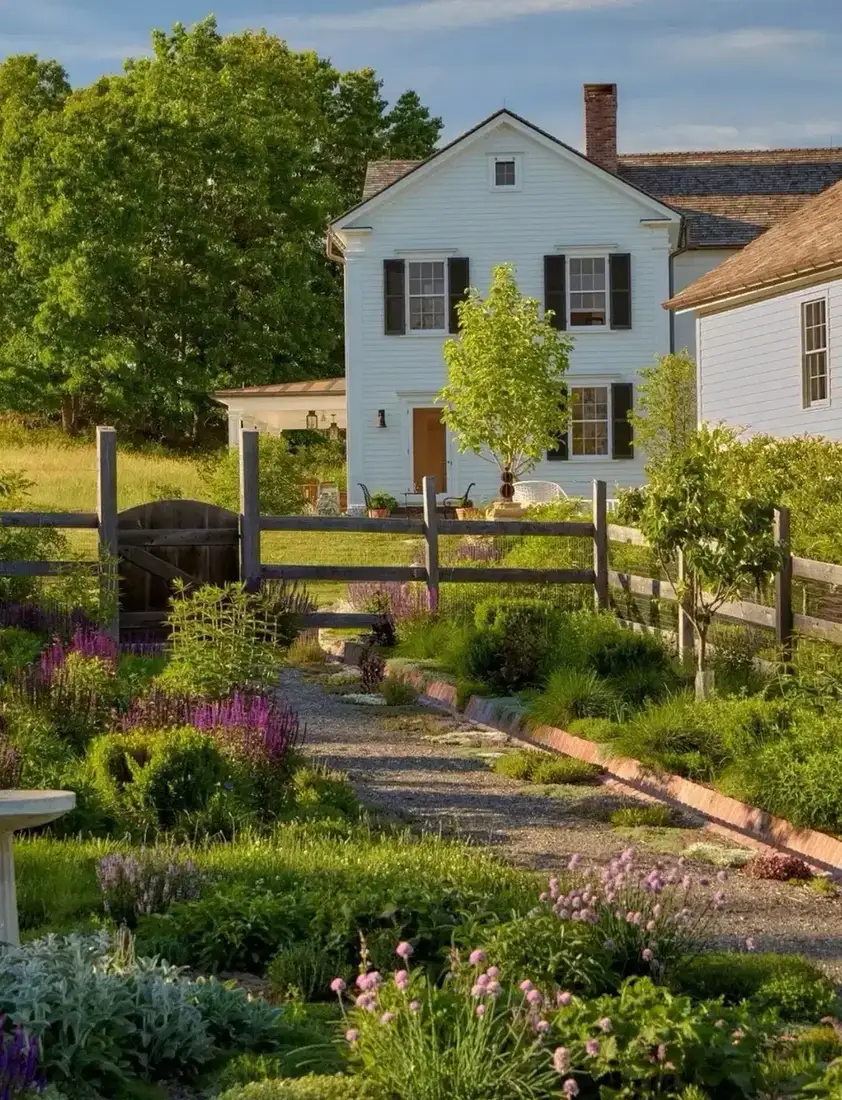
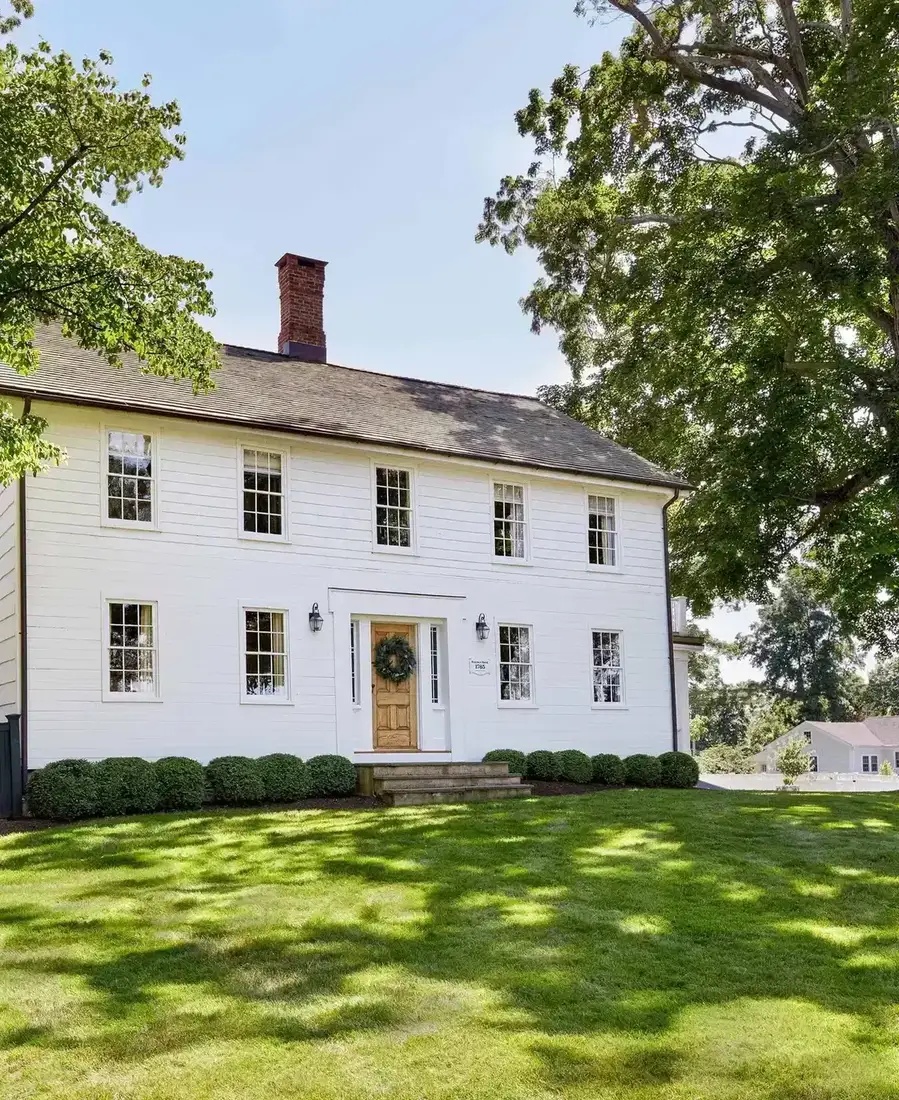
Clipped boxwood, yew, hornbeam or a pair of standard bays read as calm and deliberate against white, and they still look like something in February when your front garden is most exposed.
Keep the path to the door clear and plant symmetrically if your house is symmetrical. Save the colour for pots you can move, or push it round the back where garden decor and planting can do whatever it likes.
Warm white or cool white?
| Warm white | Cool white | |
|---|---|---|
| Leans towards | Yellow, cream, greige | Blue, grey |
| Next to printer paper | Creamy, slightly dusty | Cleaner, brighter |
| Typical LRV | 82 to 88 | 88 to 94 |
| In full sun | Softens, holds shadow | Can glare and flatten |
| On a grey day | Still looks warm | Goes cold and flat |
| Best with | Black roof, brass, wood, stone | Very modern builds only |
| Farmhouse verdict | Pick this one | Usually a mistake outside |
The White Farmhouse Formula
- Warm white, checked against printer paper.
- LRV between 80 and 90. Above 90 will glare.
- Big sample on your wall, looked at three times of day.
- One dark anchor. Roof, window frames or shutters. Not all three fighting.
- Warm metals. Aged brass, copper or bronze, never chrome.
- Evergreen structure and a soft wash every year or two.
Get those six right and it’ll look like the photos you saved. You can see how the same thinking plays out on other materials across our home exterior guides.
Frequently Asked Questions
What is the best white for a farmhouse exterior?
A warm white, meaning one with a slight yellow, cream or greige undertone, with an LRV between 80 and 90. Hold the paint chip against a sheet of printer paper. If it looks creamy or slightly dusty beside the paper, it’s warm. If it looks brighter and cleaner, it’s a cool white and it will read cold outdoors.
What does LRV mean on a paint chip?
LRV is the light reflectance value, a number from 0 to 100 where 0 is black and 100 is pure white. For an exterior wall, aim for 80 to 90. Above 90 a large sunlit wall reflects so much light that it flattens out and loses its shadow lines.
What colour roof goes with a white farmhouse?
Black or dark charcoal, ideally a standing seam metal roof. The dark roof is what gives most white farmhouse photos their contrast. If you can’t change the roof, get the same effect from black window frames or black shutters instead.
What is the difference between board and batten and clapboard?
Clapboard is horizontal boards that overlap each other and reads as traditional farmhouse. Board and batten is vertical boards with narrow strips covering the joins, and reads as modern farmhouse. Give each one a whole wall or storey rather than mixing them in patches.
How often does a white exterior need cleaning?
Plan on a soft wash every one to two years. Shaded and north-facing walls grow algae fastest. Use low pressure and a cleaning solution rather than a jet washer, because high pressure forces water into the boards and lifts the paint.
Should I paint my trim the same white as the walls?
No. White walls with white trim and a pale roof disappear against an overcast sky. Give the house one dark anchor instead, such as black window frames, black shutters or a dark front door, so your eye has somewhere to land.
This article may contain affiliate links. We may earn a commission at no extra cost to you.