Paint Fades Long Before Your Metal Roof Does

Add us as a preferred source to see more stories on Google.
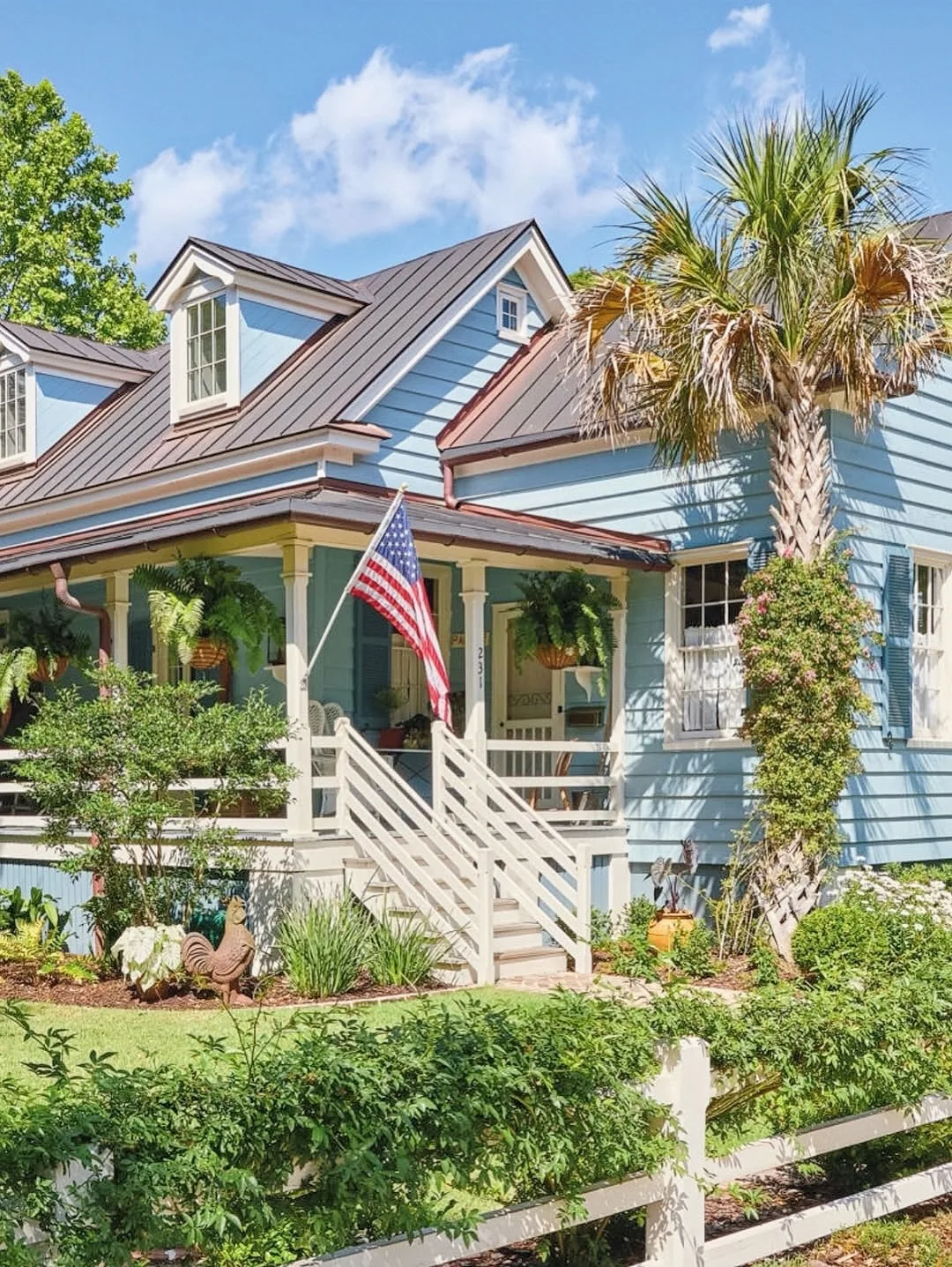
You picked the siding. You picked the paint. You left the roof for last.
Here’s the thing. Your roof outlives your paint three times over, so it was choosing for you the whole time.
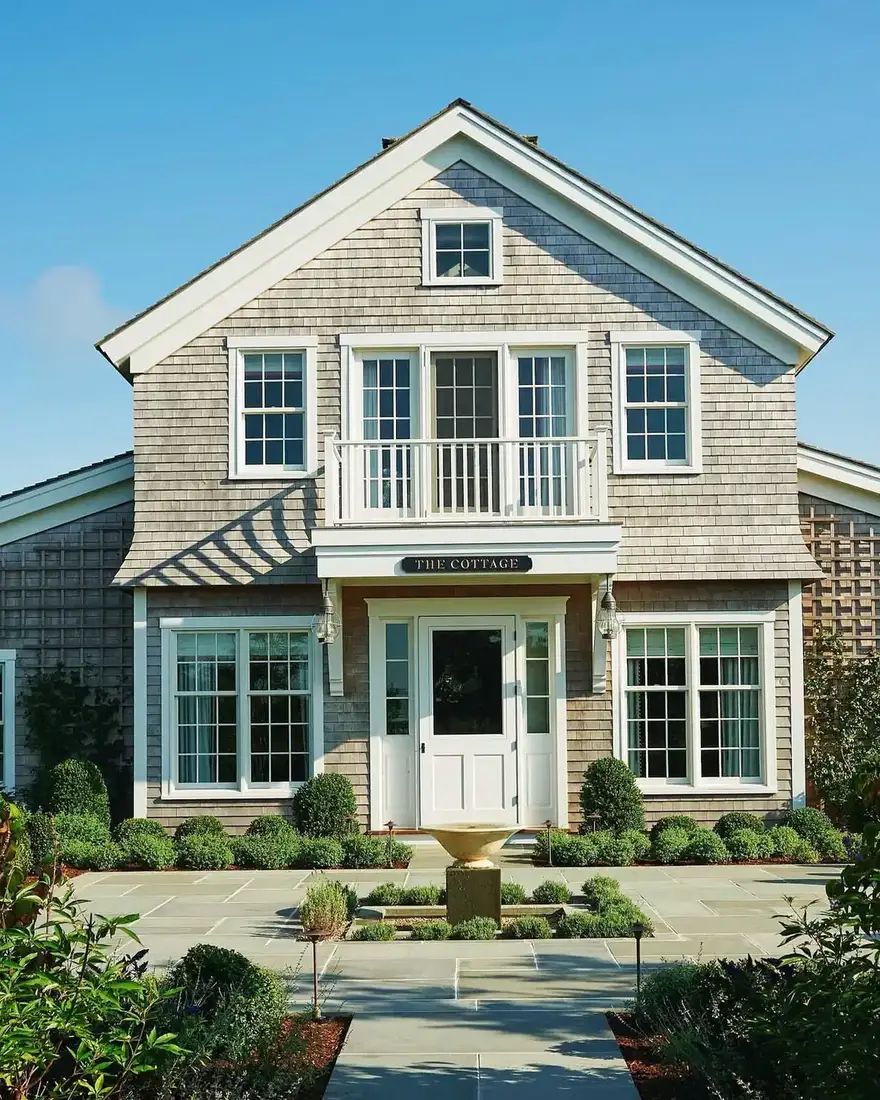
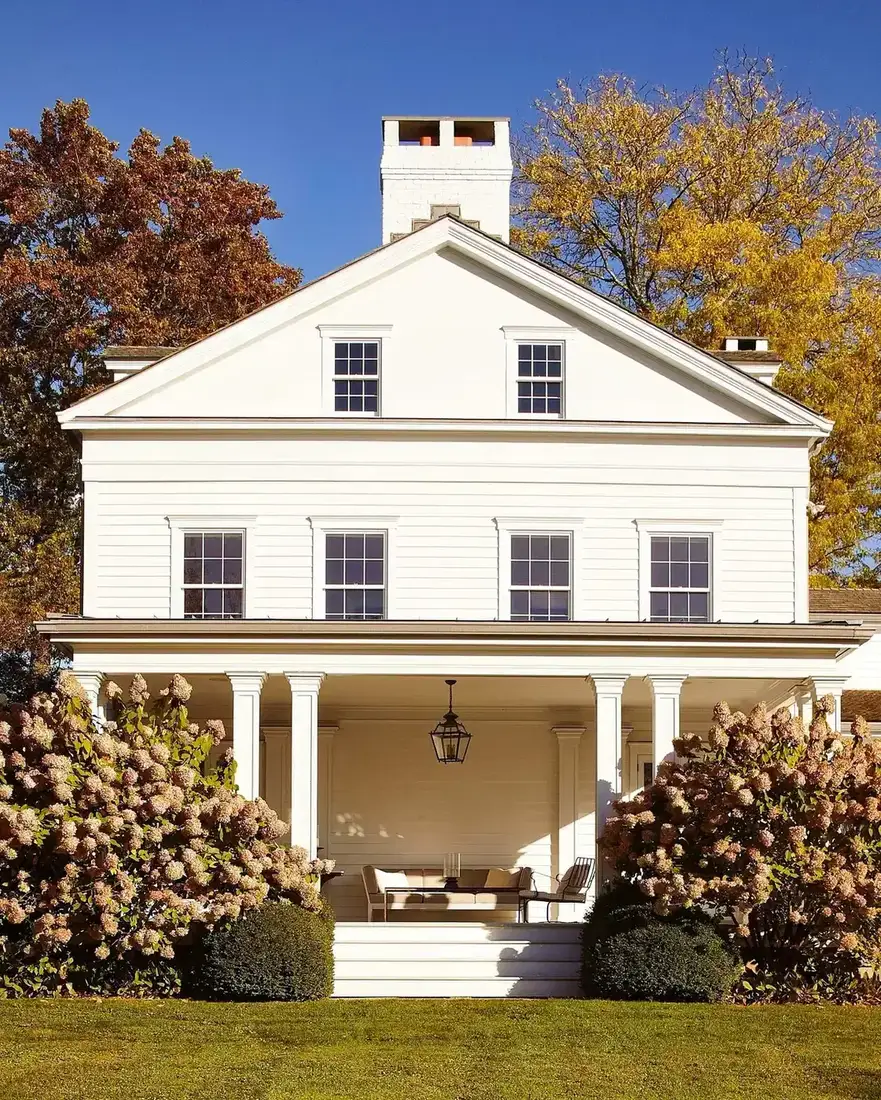
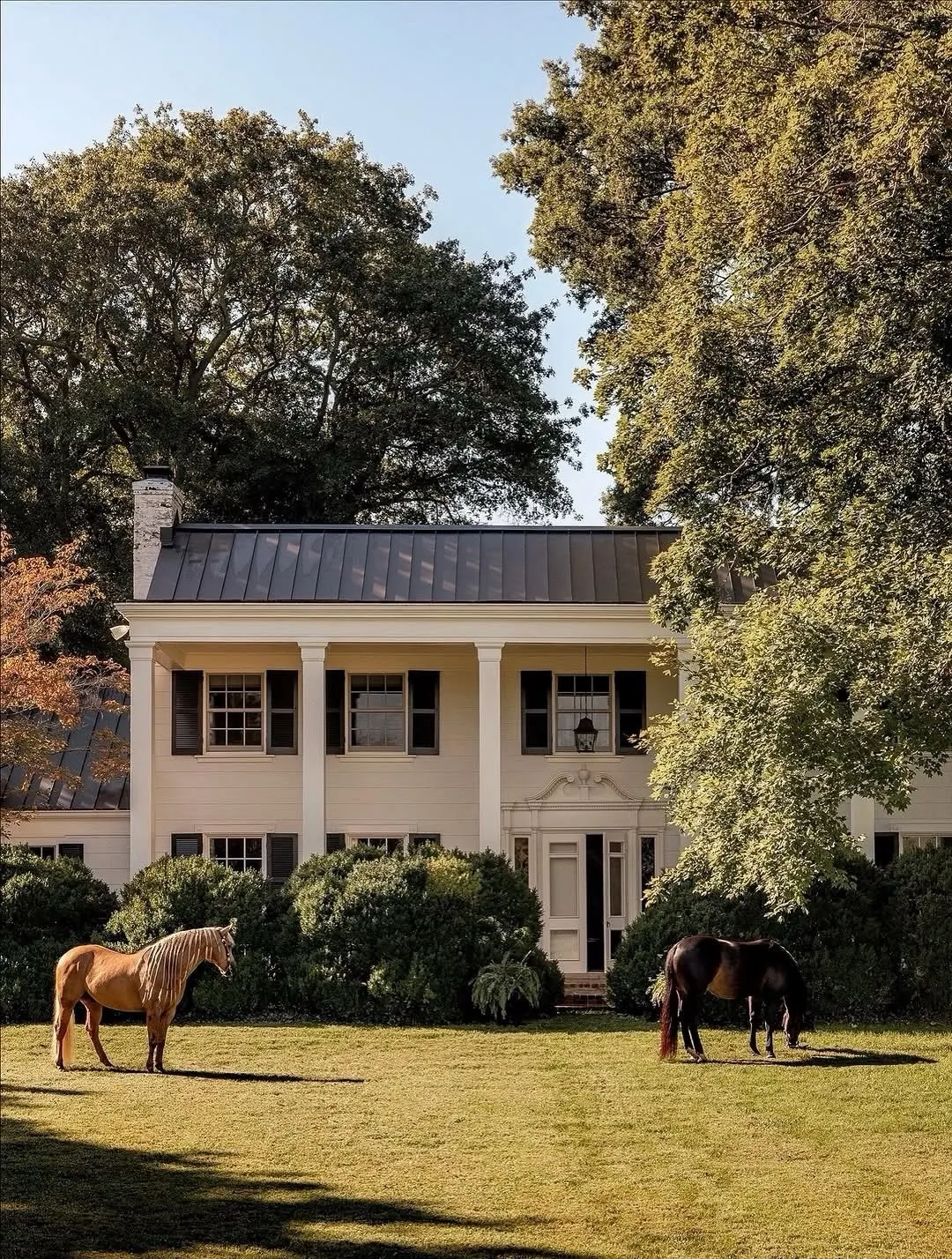
Chances are the modern farmhouse metal roof exteriors you saved all wear the same black standing seam roof. Nobody pinned what that roof costs in heat, noise and snow.
Decide the roof before the paint
Every photo you saved was decided roof-first, even if its owner chose paint-first. These four ideas put the order right.
Choose the roof before you choose the paint
Paint feels like the big decision because you stare at chips for weeks. It isn’t. A good metal roof lasts 40 to 70 years, while asphalt shingles last 20 to 30 and exterior paint lasts about ten. That means you’ll repaint around your roof at least three times, and each of those future paint jobs has to agree with a color you picked today.
So lock the roof first. Get the metal sample home, look at it against your stone or siding in morning and evening light, and only then start narrowing paint. When the roof leads, every later choice gets easier. When paint leads, you end up tinting your whole house to flatter a roof you barely thought about.
Spend the money on concealed fasteners
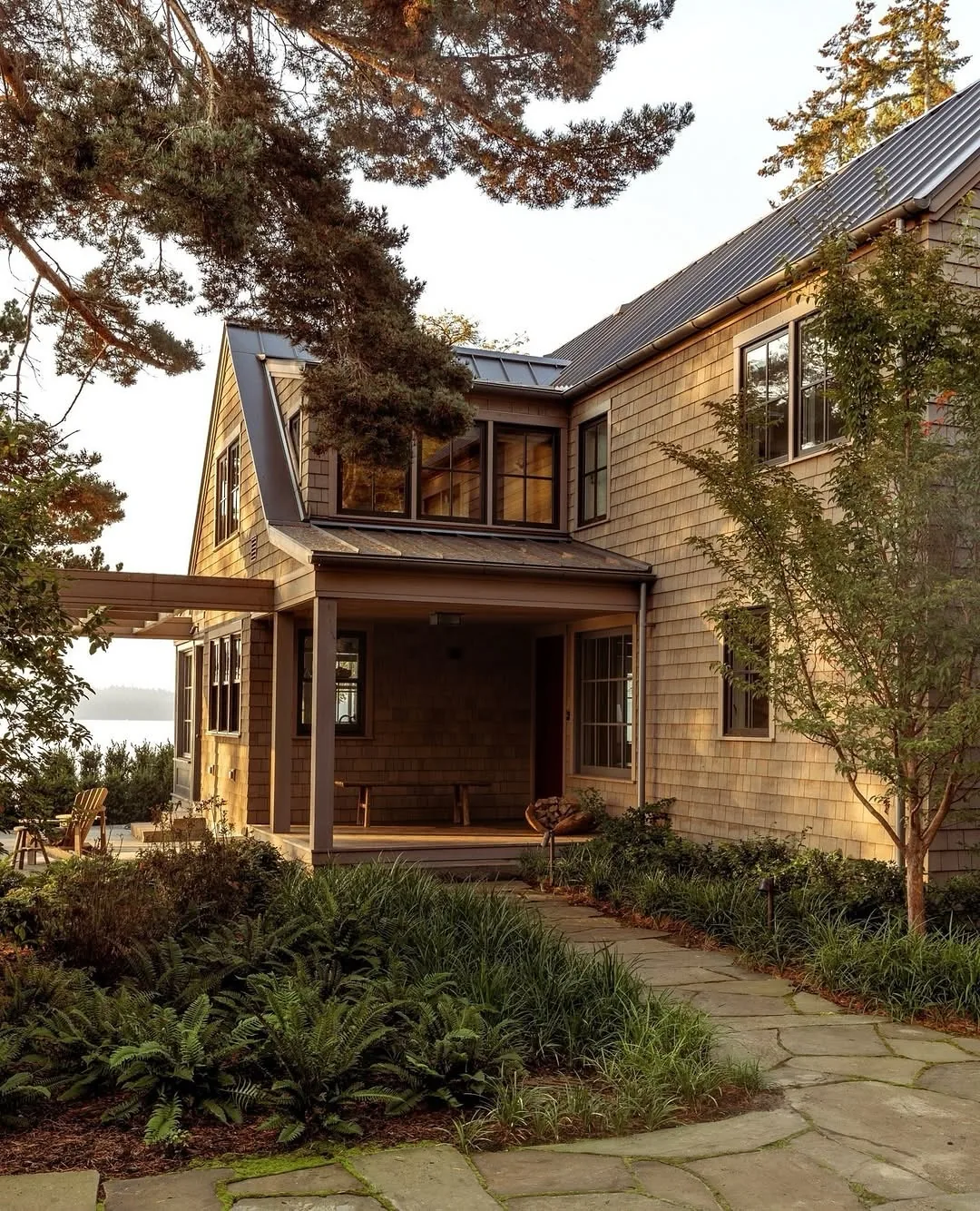
Standing seam costs more for one reason worth paying for. Its clips hide under raised vertical ribs, so no screw ever pierces the panel face and no rubber washer ever sits in the sun. The roof can expand and contract with the seasons without working a hole open.
Screw-down panels, the kind with visible rows of screws, cost less up front and suit a porch or an outbuilding fine. But each of those screws is a washer baking in UV, and washed-out screws need checking and re-seating about every 10 to 15 years. On a big main roof that’s a maintenance date you’d rather not own. Pay for the hidden clips where you’ll see the roof every day.
Know what black costs before you pick it
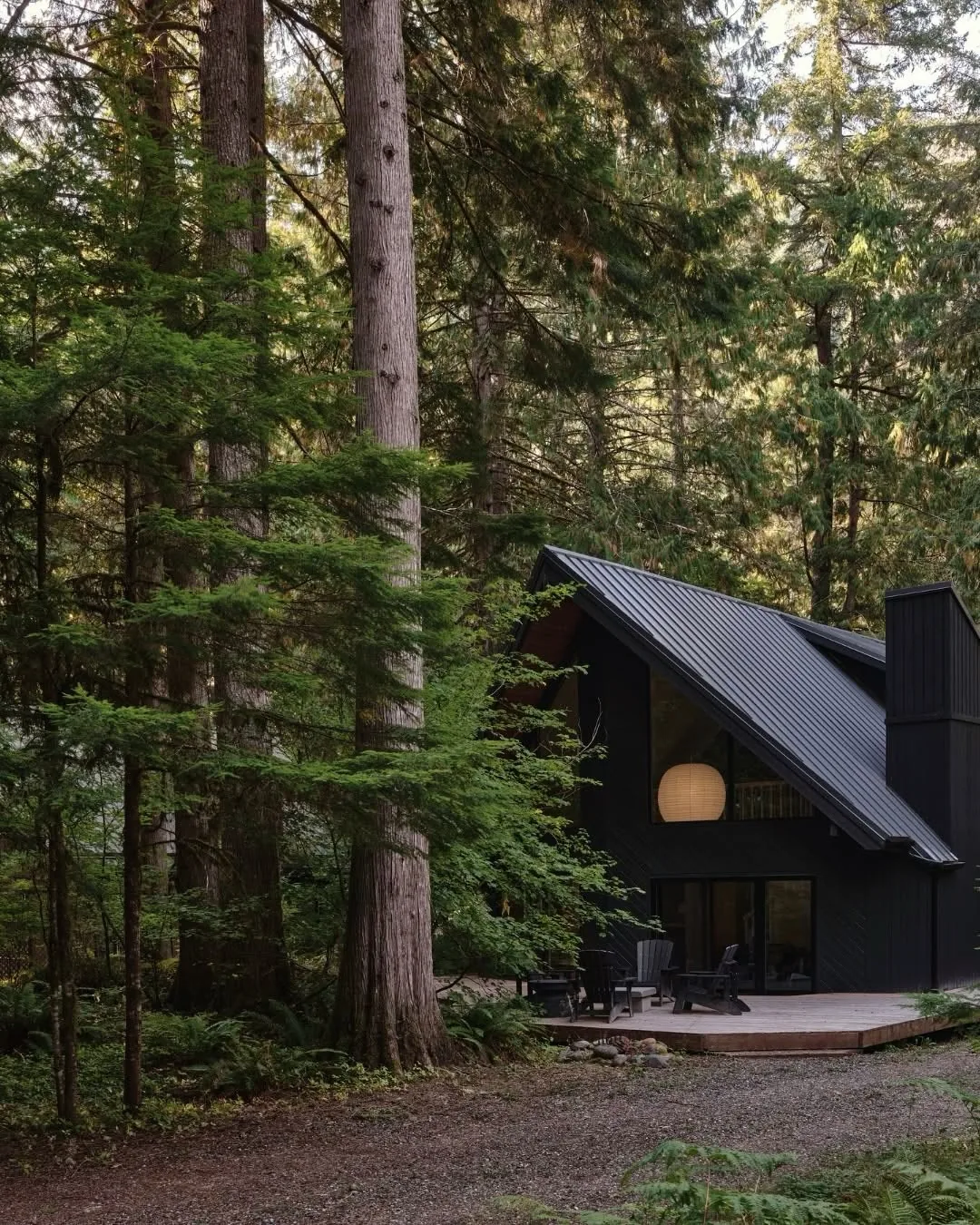
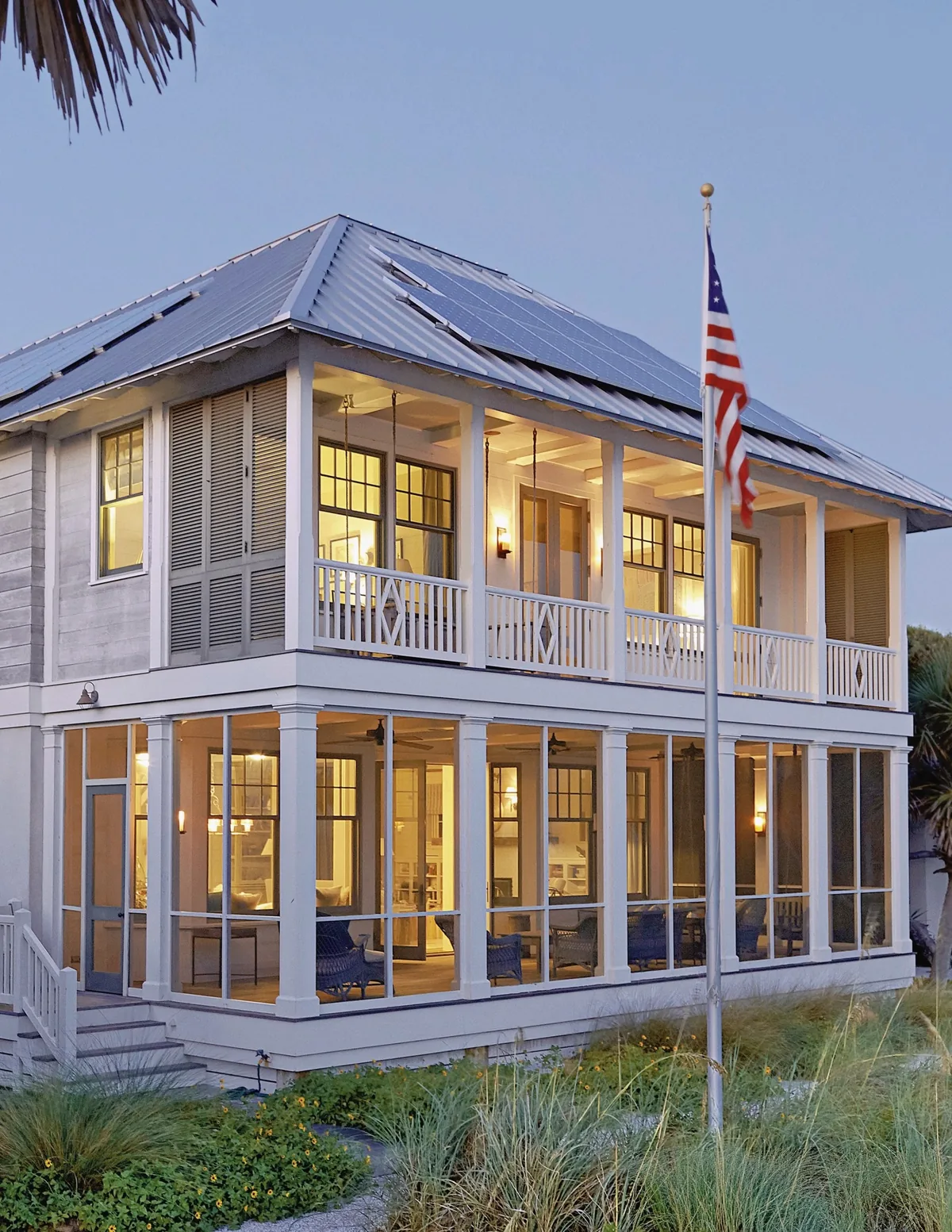
Black is the color in every photo you saved, and it earns its place. Nothing makes white siding snap like a near-black lid. But go in with your eyes open. A black roof absorbs far more solar heat than a white, light bronze or plain galvanized one, so your attic ventilation and insulation have to be right, not decorative.
Black also shows everything. Hail dimples, ladder scuffs and the faint waviness called oil-canning all read louder on dark glossy panels than on lighter ones. If you love the look but not the upkeep, ask your roofer about cool-roof pigments, which bounce back more heat while still reading dark from the curb.
Pick a low-sheen finish, never a glossy one
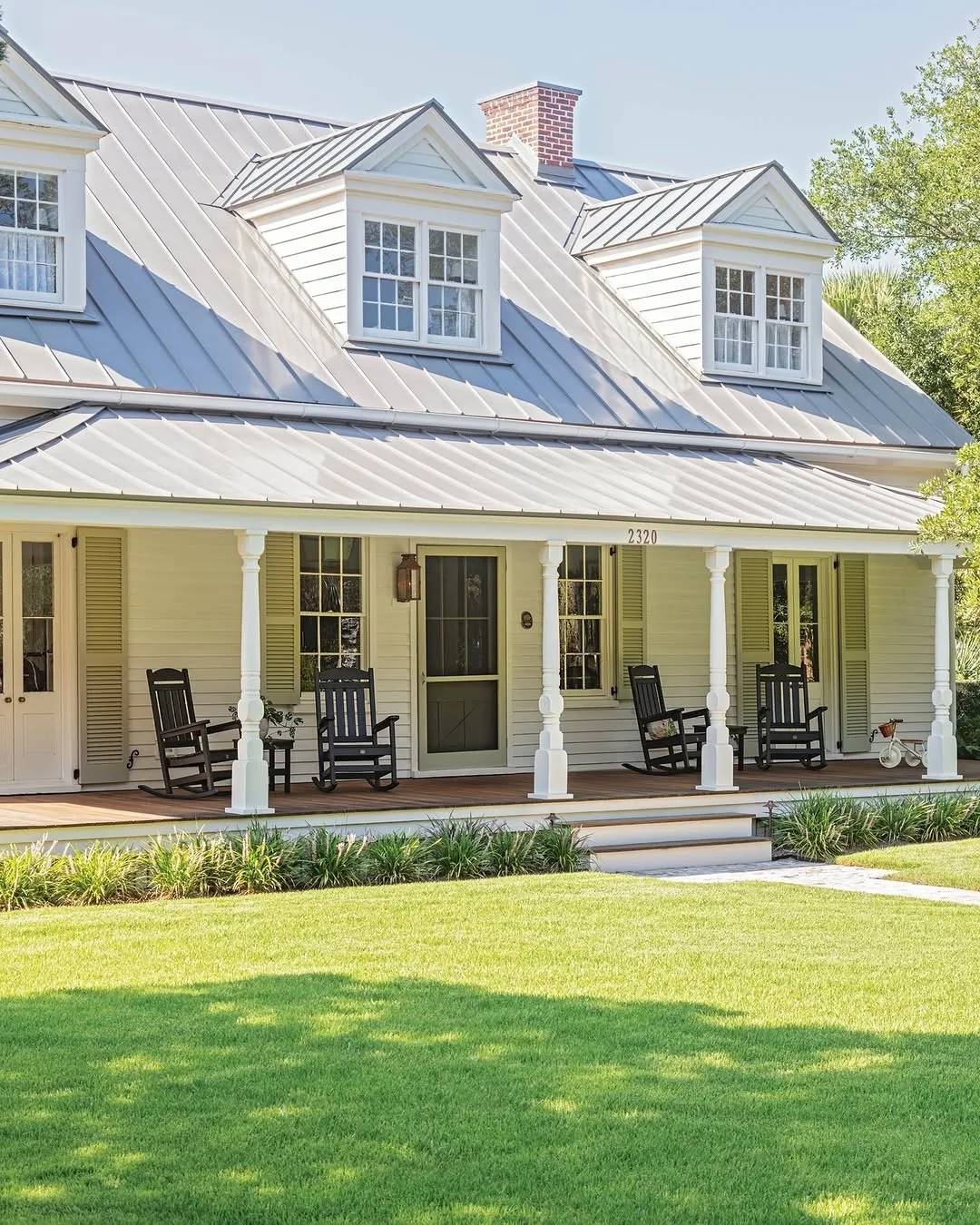
Gloss looks sharp in a brochure and restless on a real roof. A high-shine panel mirrors the sky, flashes at passing cars and exaggerates every ripple in the steel. Matte and low-sheen finishes do the opposite. They hold their color steady through the day and forgive the small waves that even good installers can’t fully press out.
There’s a practical side too. Farmhouse roofs are big simple planes with no tile texture to hide behind, so the finish is doing visual work all day long. Order samples in matte black, matte charcoal and matte bronze, prop them against your wall and watch them at noon. You’ll pick the quiet one within minutes.
Pair the roof with your walls
The roof is fixed. Now everything under it has to agree with it, and some walls agree more easily than others.
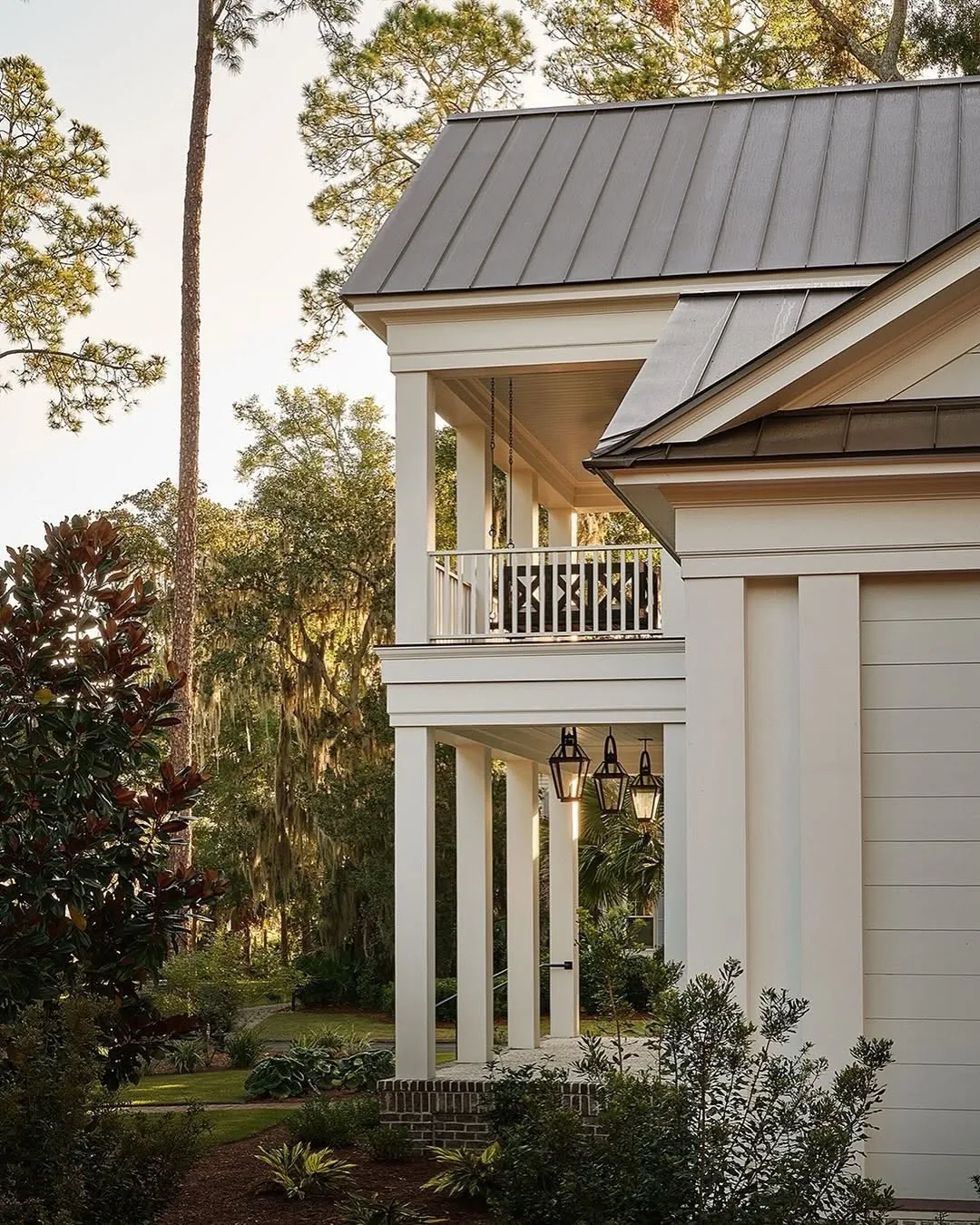
Match white boards to a roof with real contrast
White siding plus a dark metal roof is the whole modern farmhouse look in one sentence, but the white has to pull its weight. Pick a warm white with an LRV between 80 and 90, which is the band that reads white without glaring on a big sunlit wall. Anything cooler turns chalky next to black ribs.
Vertical board and batten makes the pairing even better, because its shadow lines echo the roof seams running down toward you. For the full method on undertones and that LRV band, read our farmhouse exterior color schemes guide first. Then study how vertical and horizontal boards split the work in our board and batten and clapboard exteriors guide.
Ground modern farmhouse metal roof exteriors on warm stone
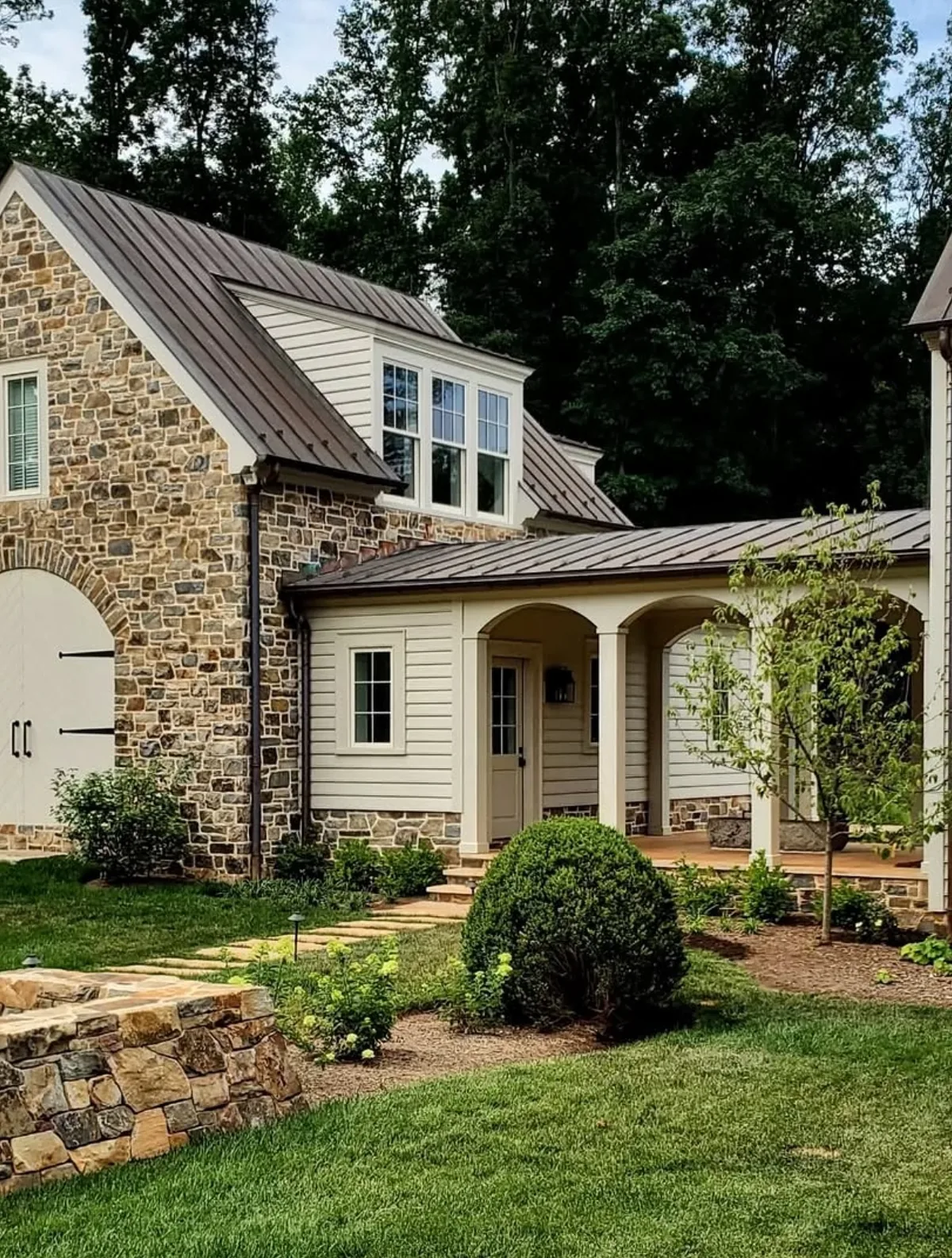
Stone forgives a dark roof faster than any painted wall, because the wall already carries visual weight. But the stone’s temperature matters. Warm buff, honey and brown stone sit happily under black or bronze metal. Cold blue-grey stone fights it, and the fight gets louder the darker your roof goes.
Keep the mortar in the same warm family as the stone rather than defaulting to bright white joints, which stripe the wall and compete with the roof seams. Our stone farmhouse exterior ideas guide covers pointing color in detail. Get stone, mortar and roof agreeing and your house looks settled from the road.
Keep stucco calm under a dark metal roof
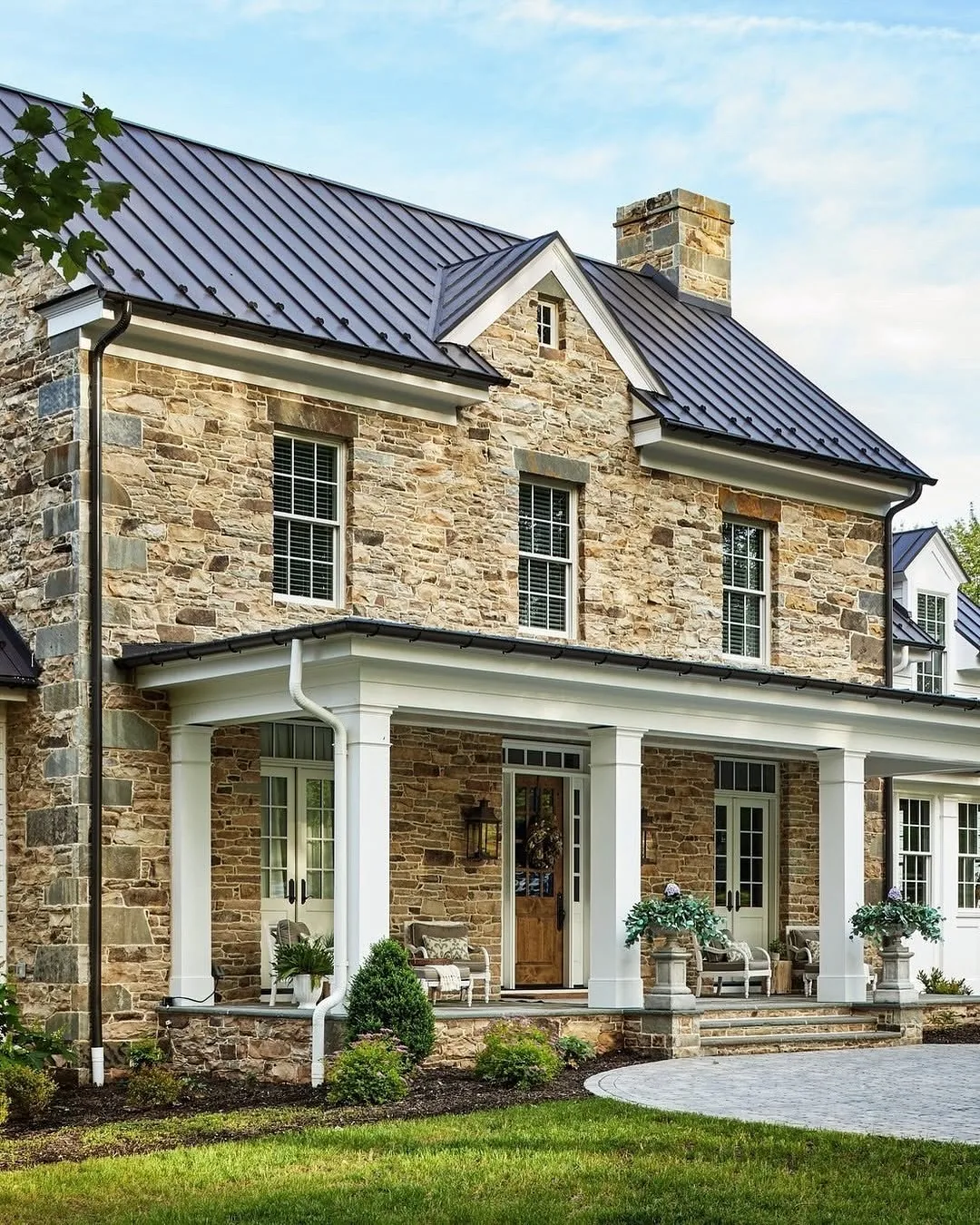
Stucco and standing seam are both strong personalities, so one of them has to whisper. Let the roof be the crisp one and keep your stucco soft: warm cream or bone, minimal trim, no competing textures. The smooth wall becomes the quiet background your dark ribs need.
Details should stay simple here too. One pair of lanterns by the door, dark like the roof, beats a collection of mixed metals scattered across the front. For the full approach to texture, arches and white stucco maintenance, see our stucco and Spanish style home exteriors. A word of warning: don’t add shutters to stucco just to fill space. Stucco never had working shutters, and screwed-on decoration cheapens the calm you’re paying the roof to create.
Let cedar shingle do the warming
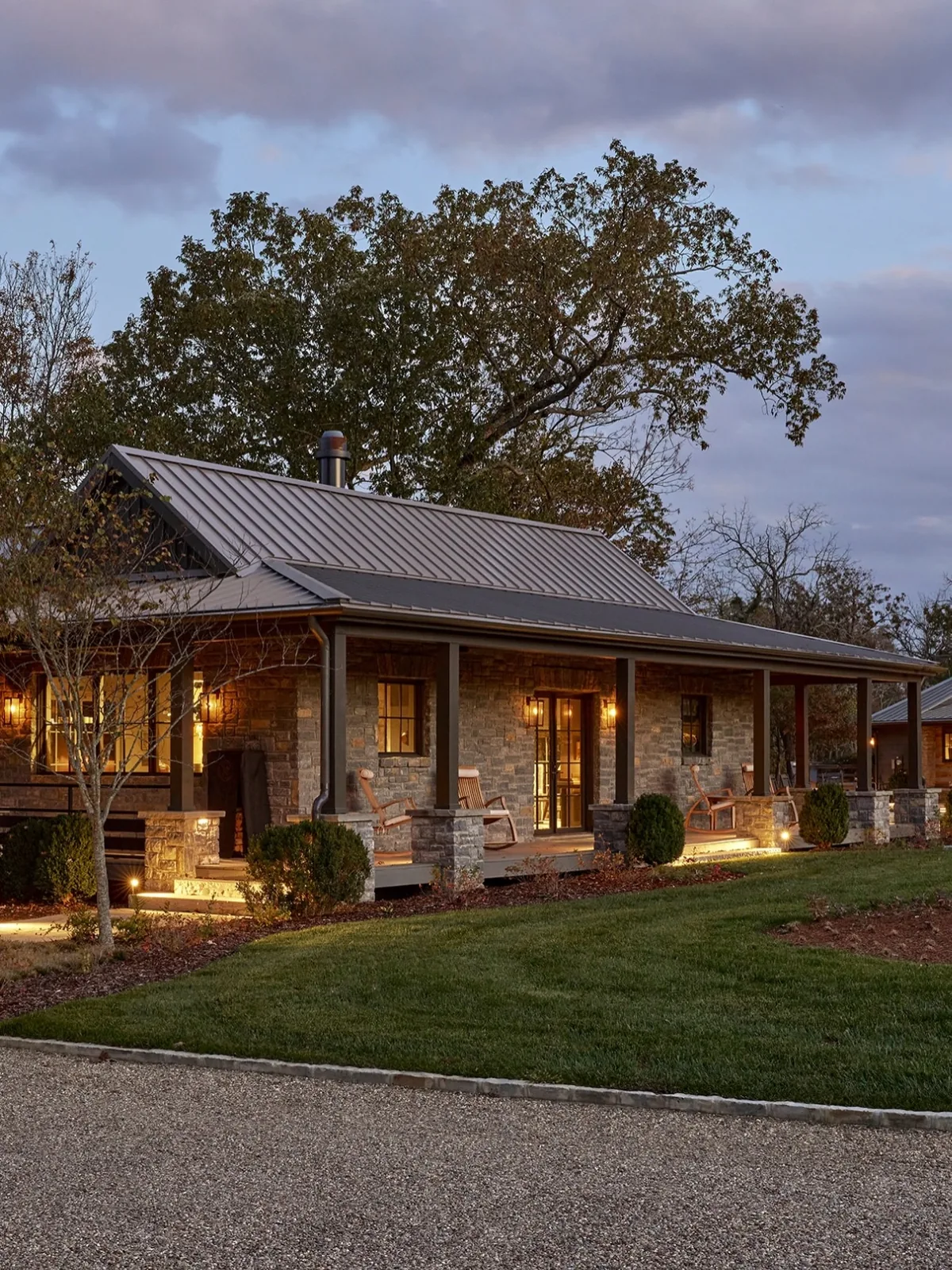
Cedar and black metal are the warm-meets-crisp pairing your camera loves. The shingle brings honey tones and rough texture while the roof brings discipline, and neither one has to shout. This combo suits coastal and wooded plots where a full white house would glare against the trees.
Give the cedar time. Fresh shingles start honey-orange and silver to grey over a few years, and month three makes plenty of owners panic and reach for stain. Don’t. Let it weather on its own schedule and keep your roof choice out of the argument. The silvered shingle and the dark roof look even better together than the orange did.
Sweat the details that decide it
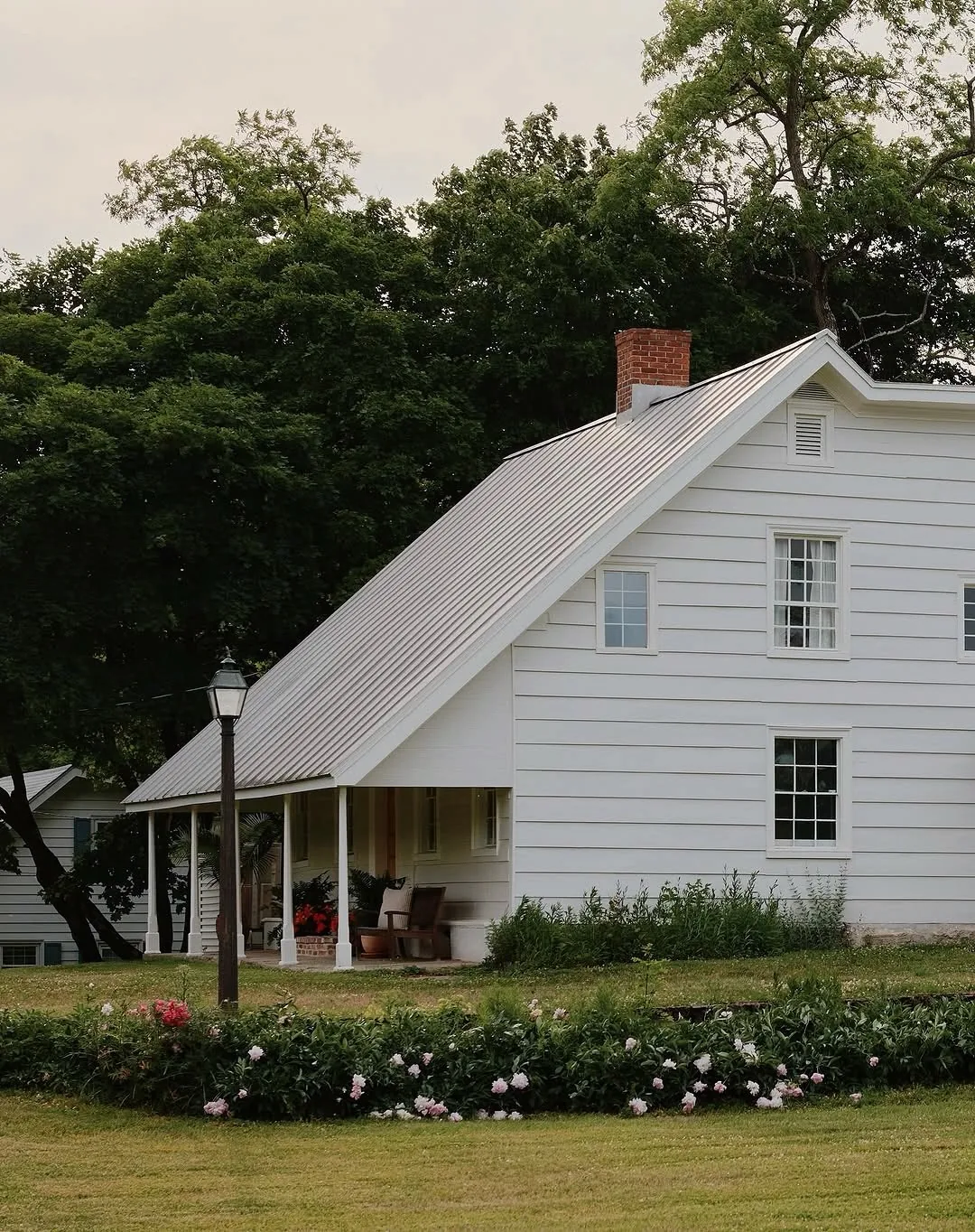
Roof and walls agree. Now the porch, the dormers, the gutters and the lights get their vote, and small votes swing close elections.
Run metal over the porch alone before you commit
Nervous about a full metal roof? Start with the porch. A standing seam porch roof under shingled main slopes is an old farmhouse pattern, not a compromise, and it lets you live with the material through one winter of sliding snow and one summer of drumming rain before you commit the whole house.
It also teaches you your real color. You’ll learn whether black feels crisp or severe against your siding, and whether you’d rather go bronze or green on the big slopes later. Treat the porch as a full-scale sample you can sit under. Few samples work this hard for the money.
Break a long roofline with dormers and a cupola
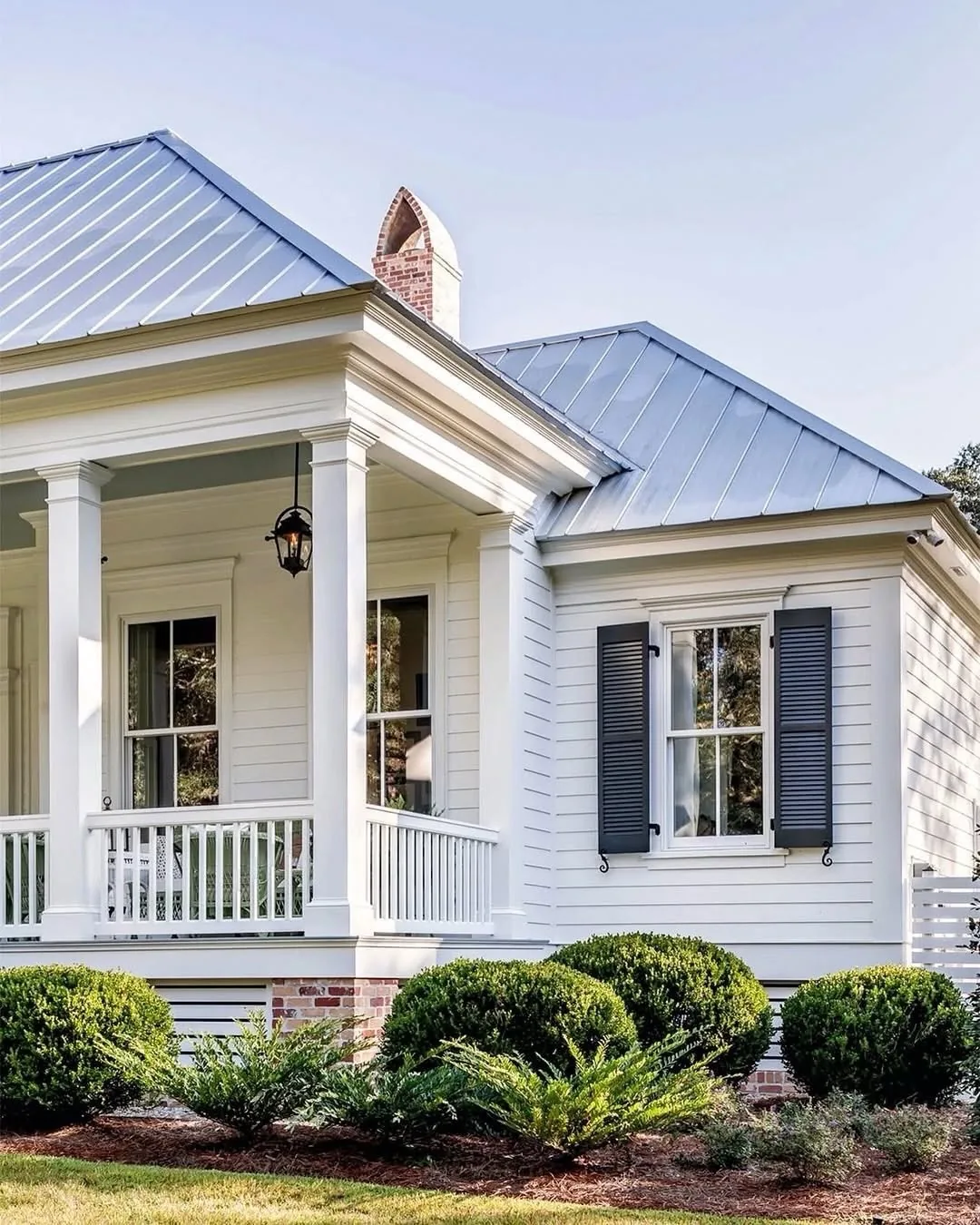
Metal loves a simple plane, but farmhouses are long and a single unbroken slope can read like an aircraft hangar. Dormers chop the expanse into bays your eye can measure, and they pay you back inside with headroom and daylight. A small cupola or a slim chimney does the same work on the ridge.
Paint dormer cheeks to match your walls exactly, never a shade off, or each dormer becomes a patch. And keep dormer roofs in the same metal and color as the main slopes. For how dormers and porches share the work on pale houses, browse our white farmhouse exterior ideas next.
Give the gutters the same dark answer as the roof
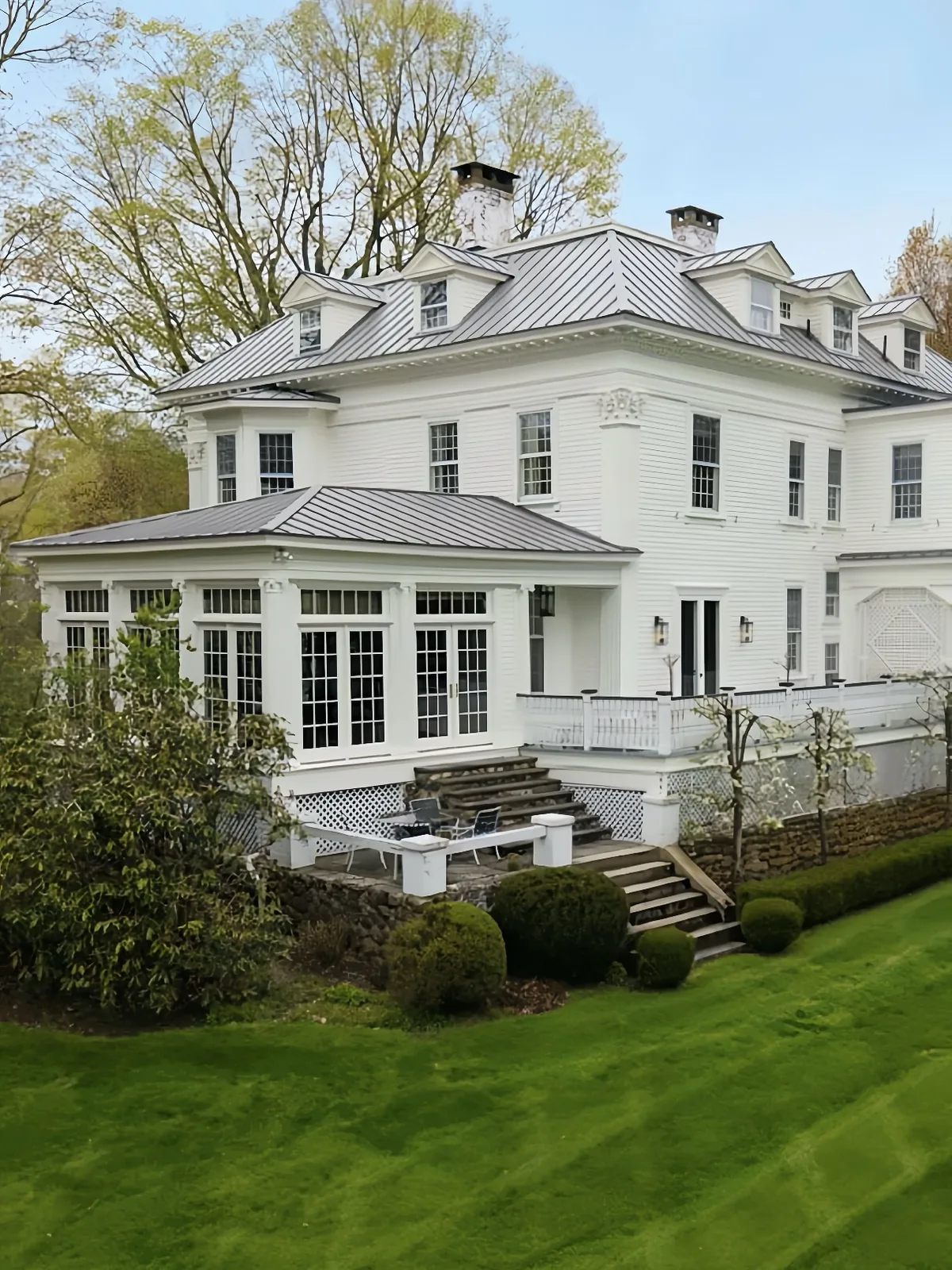
Gutters are the trim nobody budgets for and everybody sees. White gutters strung along a black roof edge chop your eaves into stripes and undo the crisp line you paid for. Match gutters and downspouts to the roof color so the whole edge reads as one deliberate band.
One material rule while you’re up there. Never let copper touch zinc-coated steel where water runs, like copper valleys draining onto a galvanized roof, because the runoff corrodes the steel below. Pick one metal family for roof, valleys, gutters and flashing, and keep it consistent from ridge to ground.
Light the porch at 2700K or below
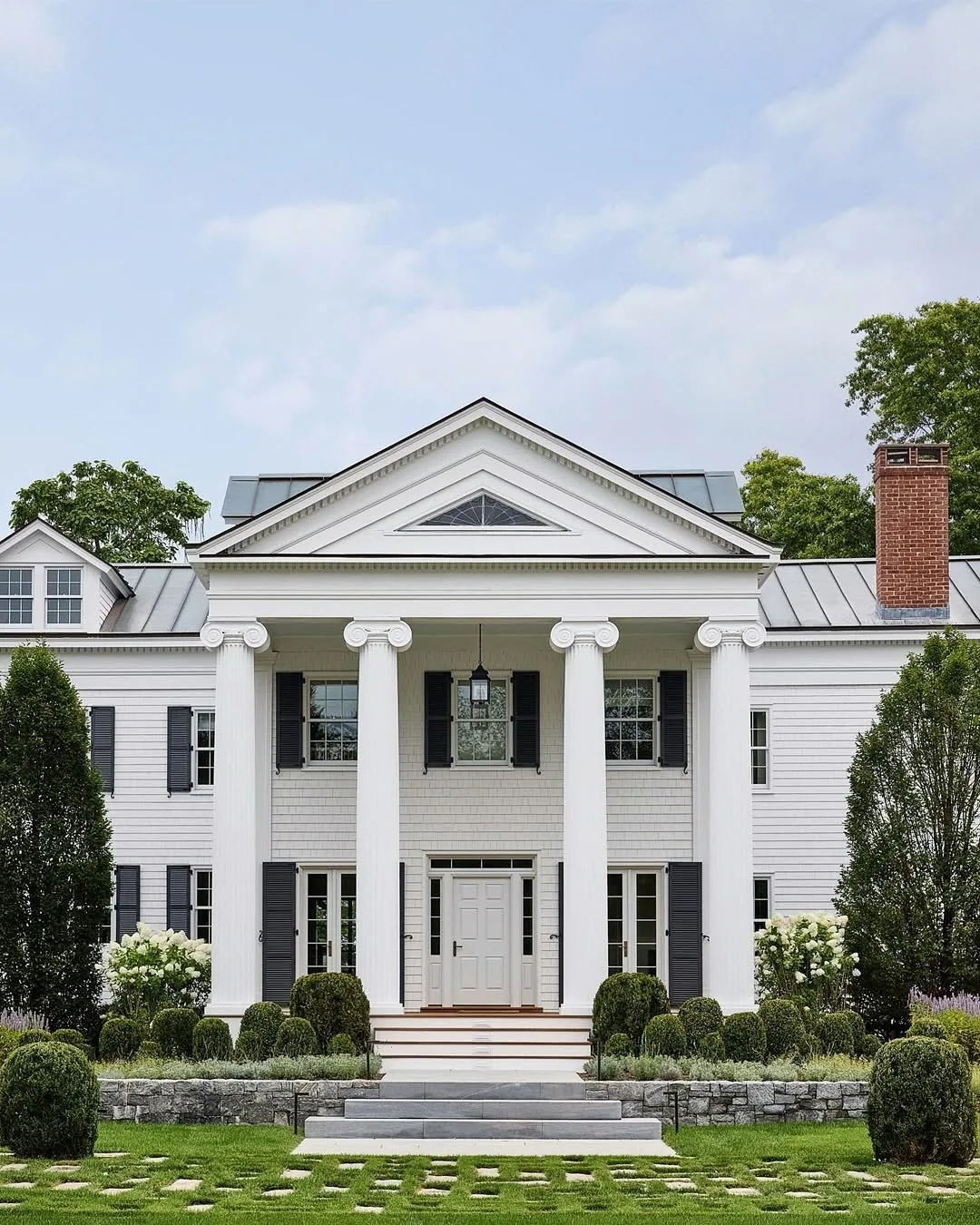
A dark roof swallows daylight at the porch line, so your bulbs do more work here than on a shingled house. Fit warm bulbs at 2700K or below in every porch and eave fitting. That amber light flatters white siding, makes wood doors glow and keeps the black roof from looming over the entrance.
Keep all your outdoor bulbs in one warm family. A single cool-white floodlight among warm lanterns reads as a mistake from the road, and it’s the kind of mistake visitors remember instead of your house. Worth knowing: warm light also draws fewer insects to your door on summer nights than cool white does.
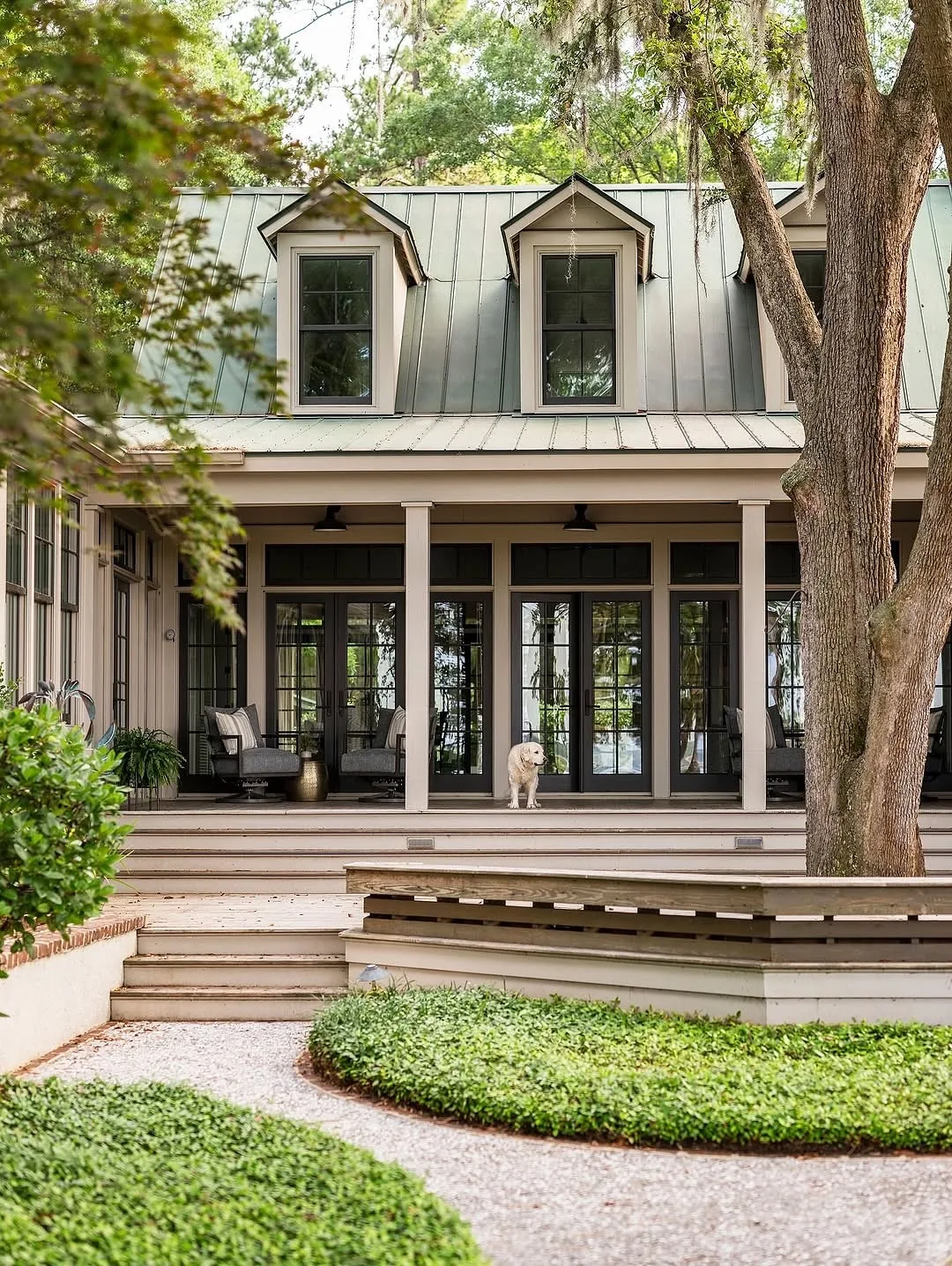
Live with it for forty years
This roof will outlast three paint jobs and most of your appliances. Buy for year twenty, not photo day. For the planting and trim choices that age alongside it, see the rest of our home exterior guides.
Stop snow where your people walk
Smooth metal sheds snow the way a slide sheds children: fast and all at once. The first winter teaches this lesson with a roar above the back door. Fit snow guards, those small bars or pads that break the sheet into harmless chunks, above every entrance, walkway and anywhere your gutters could take the hit.
Place them before the first snow, not after the first avalanche, because retrofits cost more and never sit as cleanly. And tell your family the rule for every metal roof. Nobody parks a grill, a bin or themselves under the eaves in February. The roof is doing exactly what you paid it to do.
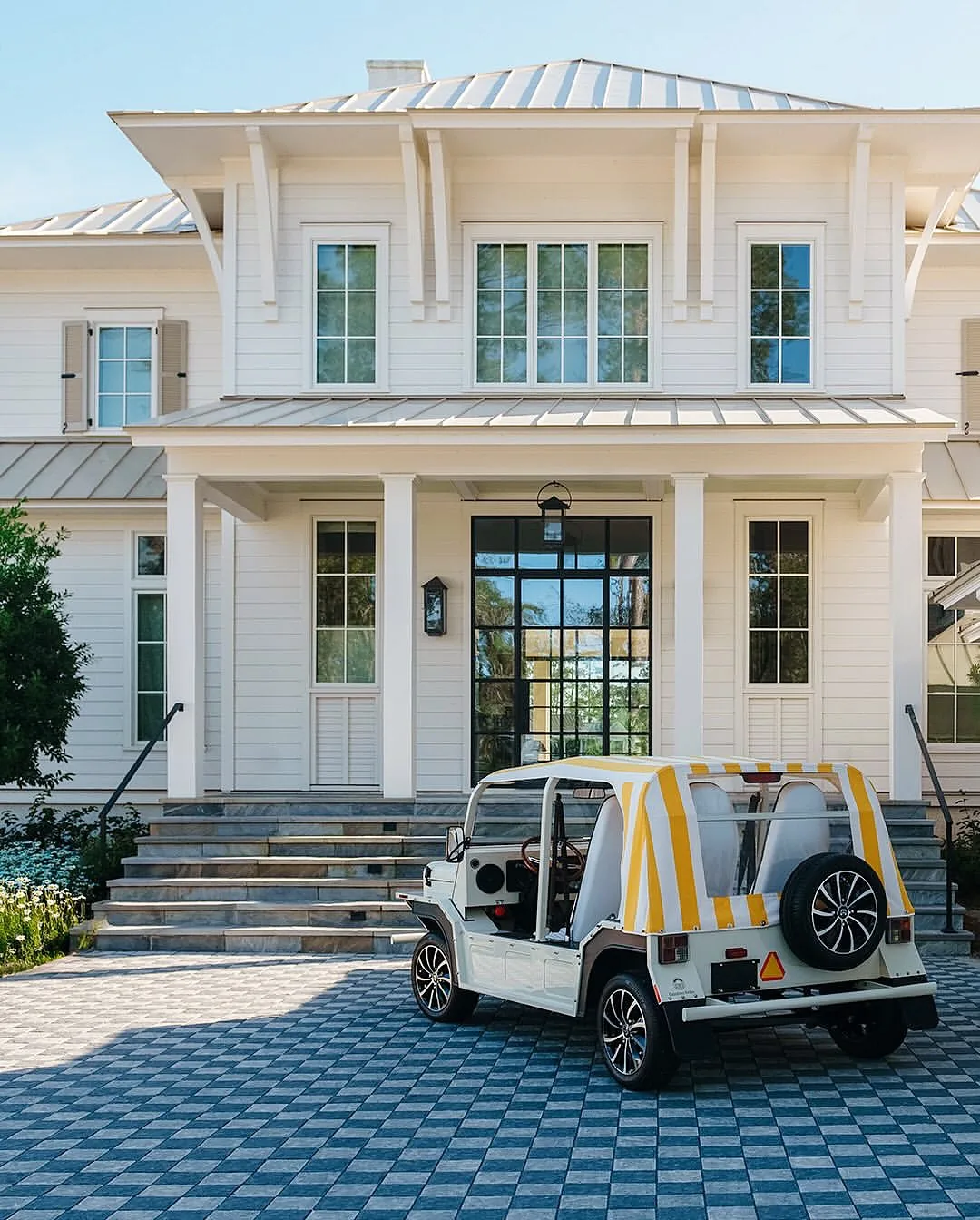
Budget for what sits under the metal
Two houses can wear the same panel and sound nothing alike in a storm. What decides the noise is everything underneath: solid decking instead of open battens, a quality underlayment, and real attic insulation with ventilation above it. Skimp there and you’ll hear every cloudburst. Spend there and rain fades into the background.
The same sandwich handles summer heat. Insulation and airflow carry away what your dark roof absorbs before it reaches your rooms. When quotes arrive, compare the underlayment and insulation specs line by line, not just the panel brand. The hidden layers decide how your roof feels for decades.
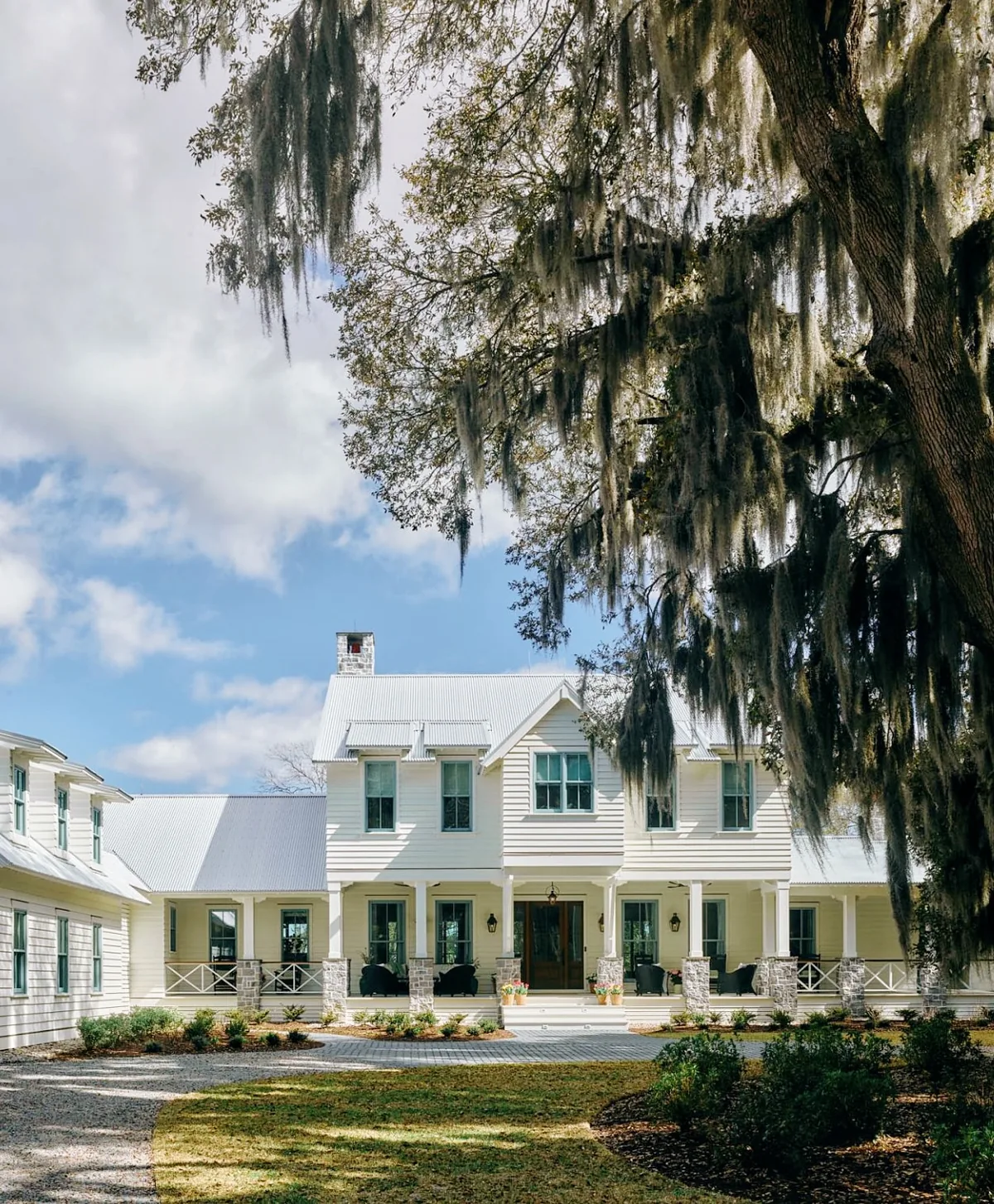
Resist wide flat panels if ripples will bother you
Stand across the road from any big metal roof and you may catch faint waviness between the seams. That’s oil-canning, a trick of light on thin flat steel, and it’s cosmetic rather than structural. But once you’ve seen it on your own house you can’t unsee it, so plan around it now.
Narrower ribs, striated or ribbed panel profiles and heavier gauges all break up the reflection and hide the waves. Steel also shrugs off hail better than softer aluminum or copper, which dimple more visibly. Ask your roofer to show you a five-year-old install in your color before you sign. No sample beats a roof that’s already lived.
Standing seam versus exposed fasteners at a glance
| Standing seam | Exposed fasteners | |
|---|---|---|
| How it fixes | Clips hidden under raised ribs | Screws driven through the panel face |
| Panel life | 40 to 70 years | 40 to 70 years for the panel itself |
| Upkeep | Little once fitted | Screws and washers need checking about every 10 to 15 years |
| Best use | Main house roof you see daily | Porch, barn or outbuilding |
| Cost | Highest of the two | Lower up front |
| Farmhouse verdict | Pick this one | Fine where a ladder reaches easily |
The Modern Farmhouse Metal Roof Formula
If you strip all fifteen ideas down to a plan, it reads like this:
- Roof first, paint second. The roof lasts decades and your paint lasts about ten years.
- Concealed fasteners on the main roof. Screws belong on porches and barns.
- Black if your attic can take the heat. Otherwise bronze, green or a cool-roof dark.
- Matte finish, never glossy. Quiet color hides waves and never flashes.
- One metal family everywhere. Roof, valleys, gutters and flashing all agree.
- Guards above doors, insulation below panels. Snow and noise both get planned, not discovered.
Get those six right and your house earns its photo. You’ll have spent where it shows for decades.
Frequently Asked Questions
How long does a metal roof last on a farmhouse?
A quality metal roof lasts 40 to 70 years, while asphalt shingles last 20 to 30 and exterior paint lasts about ten. That means you’ll repaint around your roof at least three times, so pick a roof color you can live with through several paint colors, not just the one on the walls today.
Does a black metal roof make the house hotter?
Yes. A black roof absorbs far more solar heat than a white, bronze or plain galvanized one. Good attic insulation and ventilation carry most of that heat away before it reaches your rooms. If your attic runs hot already, look at cool-roof pigments that read dark from the curb while reflecting more heat.
Is a metal roof louder than shingles in the rain?
It depends on what’s under the panel, not the panel brand. Metal over open battens with thin insulation drums loudly in heavy rain. The same panel over solid decking, quality underlayment and a well insulated attic sounds close to any other roof. Compare the hidden layers in your quotes, not just the metal.
Should I pick standing seam or exposed fasteners?
Pick standing seam for the main house roof. Its clips hide under raised ribs so no screw pierces the panel and nothing sits in the sun to age. Save exposed-fastener panels for porches, barns and outbuildings, and plan on checking and re-seating their screws about every 10 to 15 years.
Will snow slide off a metal roof?
Yes, fast and all at once, which is exactly the problem to plan for. Fit snow guards above every door, walkway and gutter run before the first winter. Never park anything you value under the eaves from the first freeze to the last thaw.
What color metal roof goes with a white farmhouse?
Black or dark charcoal first, since that contrast is what makes modern farmhouse metal roof exteriors photograph so well. Deep green runs second and suits wooded plots. Keep your white warm with an LRV between 80 and 90, match gutters to the roof, and light the porch warm so the dark roof doesn’t loom.
This article may contain affiliate links. We may earn a commission at no extra cost to you.