Grey Stain Won't Give You Real Silver Cedar

Add us as a preferred source to see more stories on Google.
You want that soft coastal silver you keep pinning.
You think you can buy it in a tin of grey stain.
The grey in these photos is not paint and it is not stain. It is bare cedar left alone, turned by salt air and sun. People try to buy the look with grey stain and get something flatter, because weathered cedar is uneven and stain is not.
These eleven cottages show you how to wait for silver and what to give it so it reads finished.
For more on tying texture to a calm base, see our coastal living room ideas and small garden ideas.
Wait for the weather
Real coastal silver is a process, not a product. These three help you trust it.
Leave the cedar bare and let salt and sun do the work
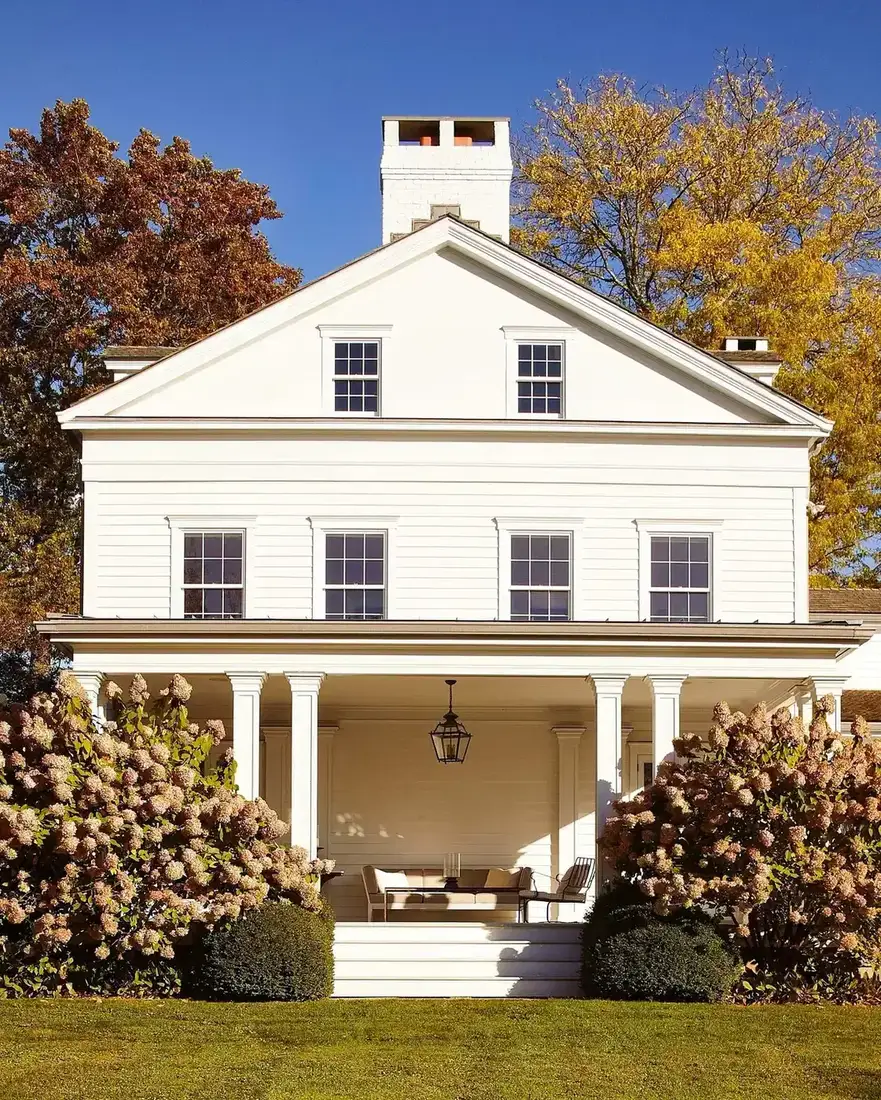
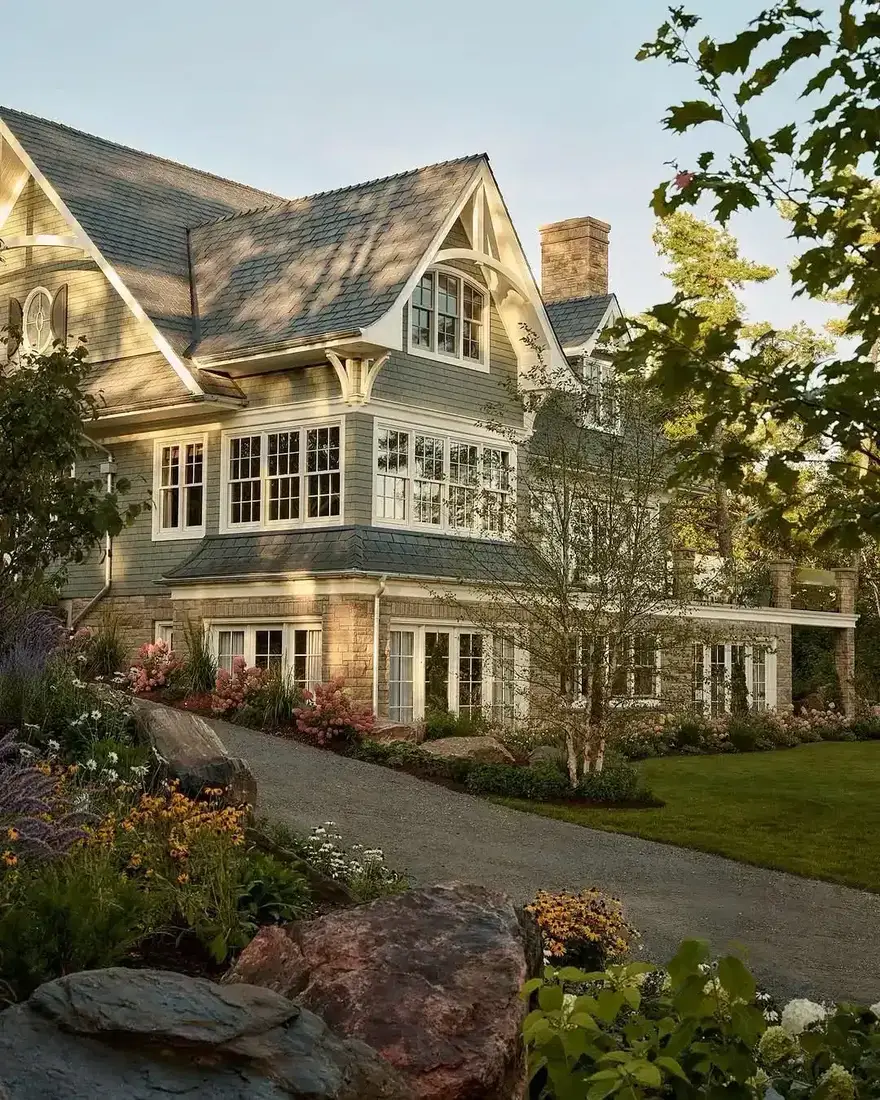
Admire the grey house with its symmetrical gables set on a green lawn. That even silver is not a colour you can match in a shop. It comes from bare cedar plus salt air and sun, with coastal walls silvering fastest because they catch more wind and light. You can chase that tone with grey stain and land somewhere flatter, since stain makes every shingle the same while weather makes each one a little different. If you want the real thing, leave your shingles bare and let the first year do its work. Your patience costs nothing and your wall gains the subtle texture people try to fake later.
Expect uneven silver before it evens out
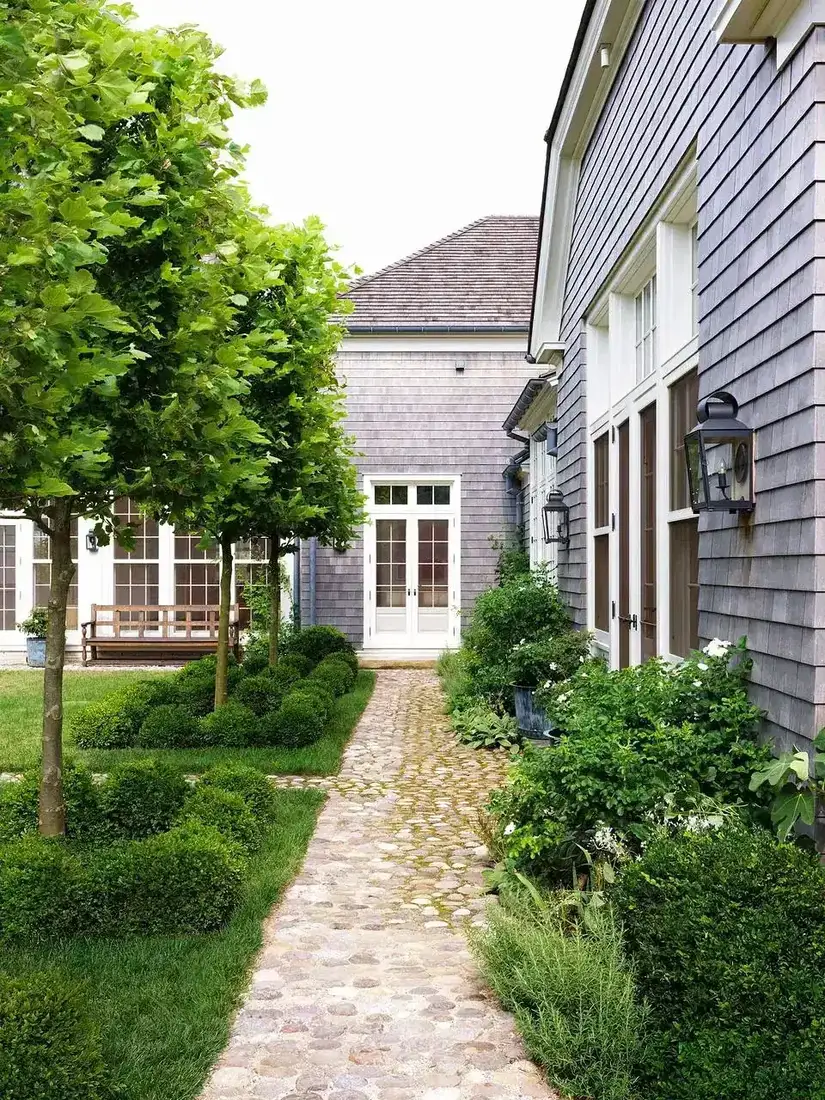
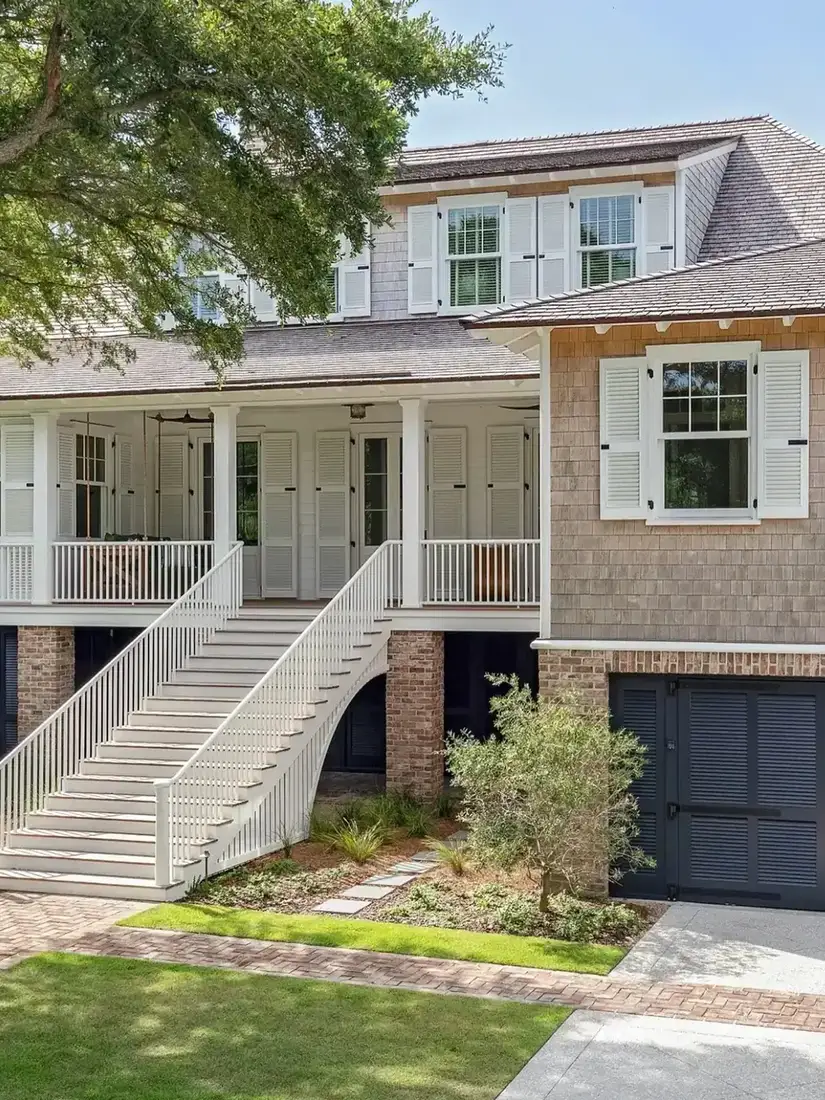
Climb the white double staircase and notice how the grey behind it reads calm, not patchy. That calm arrived after an uneven start that evens out. Early on, sun-facing walls turn first and shaded sides catch up, and the street side often greys before the porch side. Many owners panic in month three and reach for stain. You should not. That patchiness is proof the process is working and it evens out as the seasons pass. When you photograph the house for reference, shoot the same wall at the same time of day each month. You will see sunny and shaded faces converge rather than diverge, even if your eye told you otherwise last week.
Choose bleaching oil only if you cannot wait
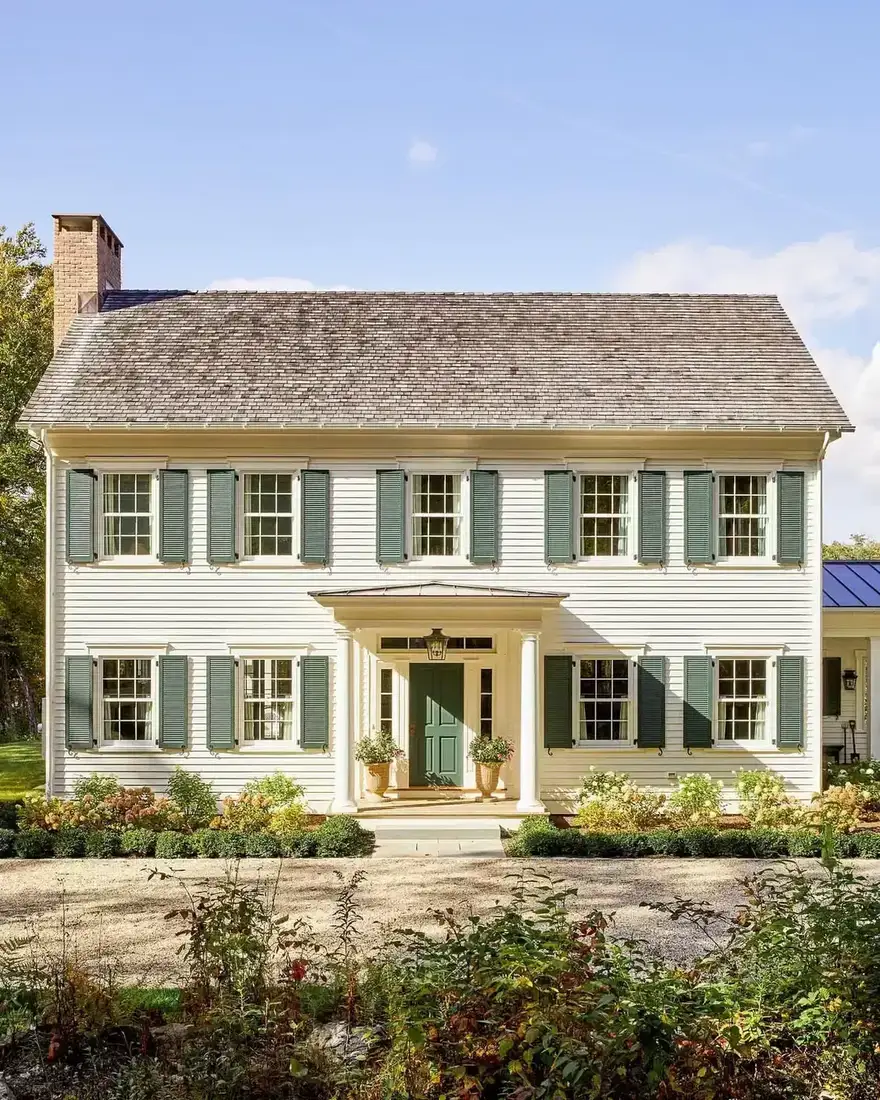
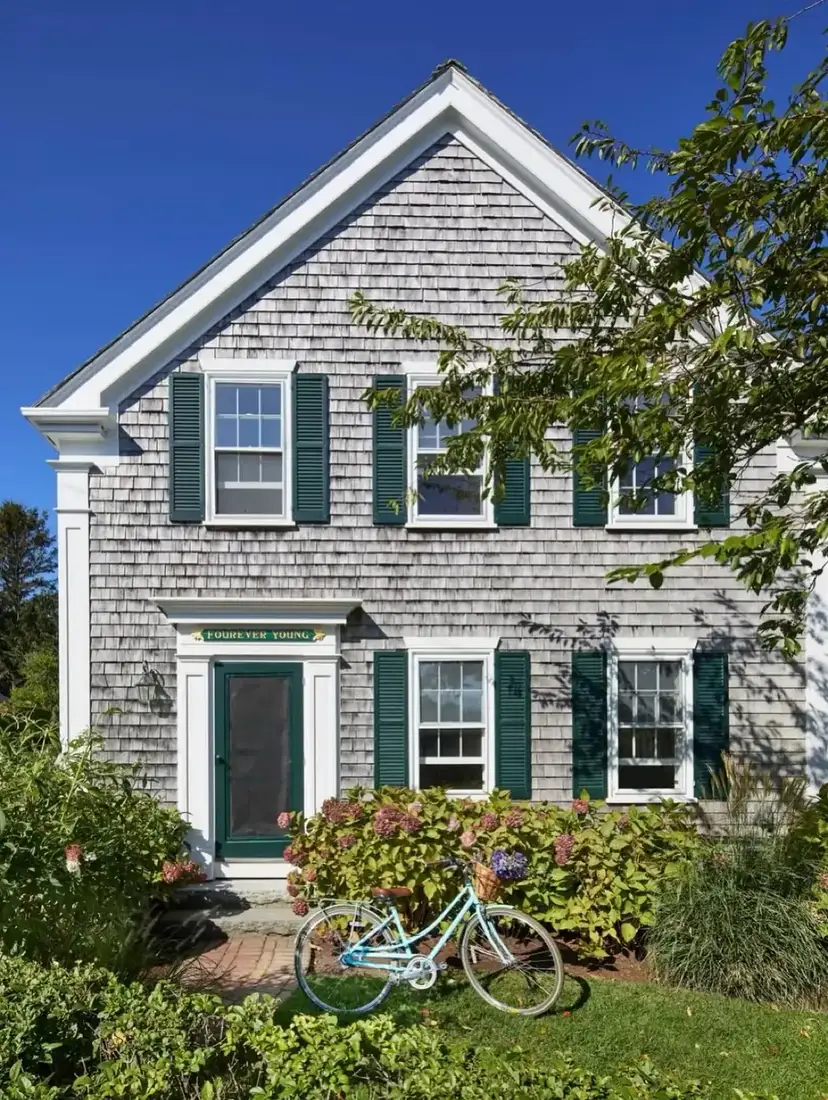
The grey saltbox with its green shutters and bicycle by the step wears an even silver that could be nature or could be help. A bleaching oil gives the grey immediately and evenly if you cannot wait. It is a finish choice, not a preservative, so it gives you the look without pretending to extend the life of the wood. You should decide why you are reaching for it. If you need the house to photograph evenly for a listing or a wedding, bleaching oil earns its place. If you simply feel impatient, give it another season bare. The shore will do the same work for free, only slower and slightly more varied.
Frame the silver so it reads finished
Cedar alone can look like you ran out of money. These three show you the simple moves that turn weathering into a style.
Frame silver with white trim or it reads unfinished
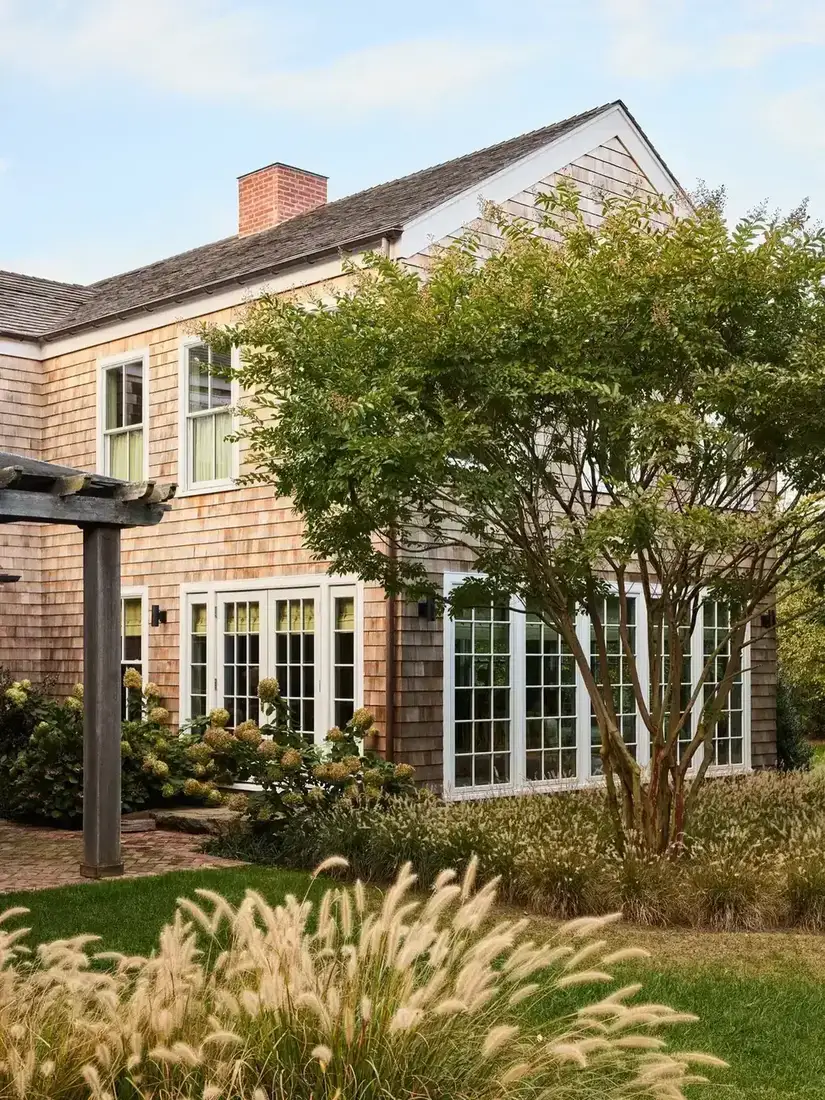
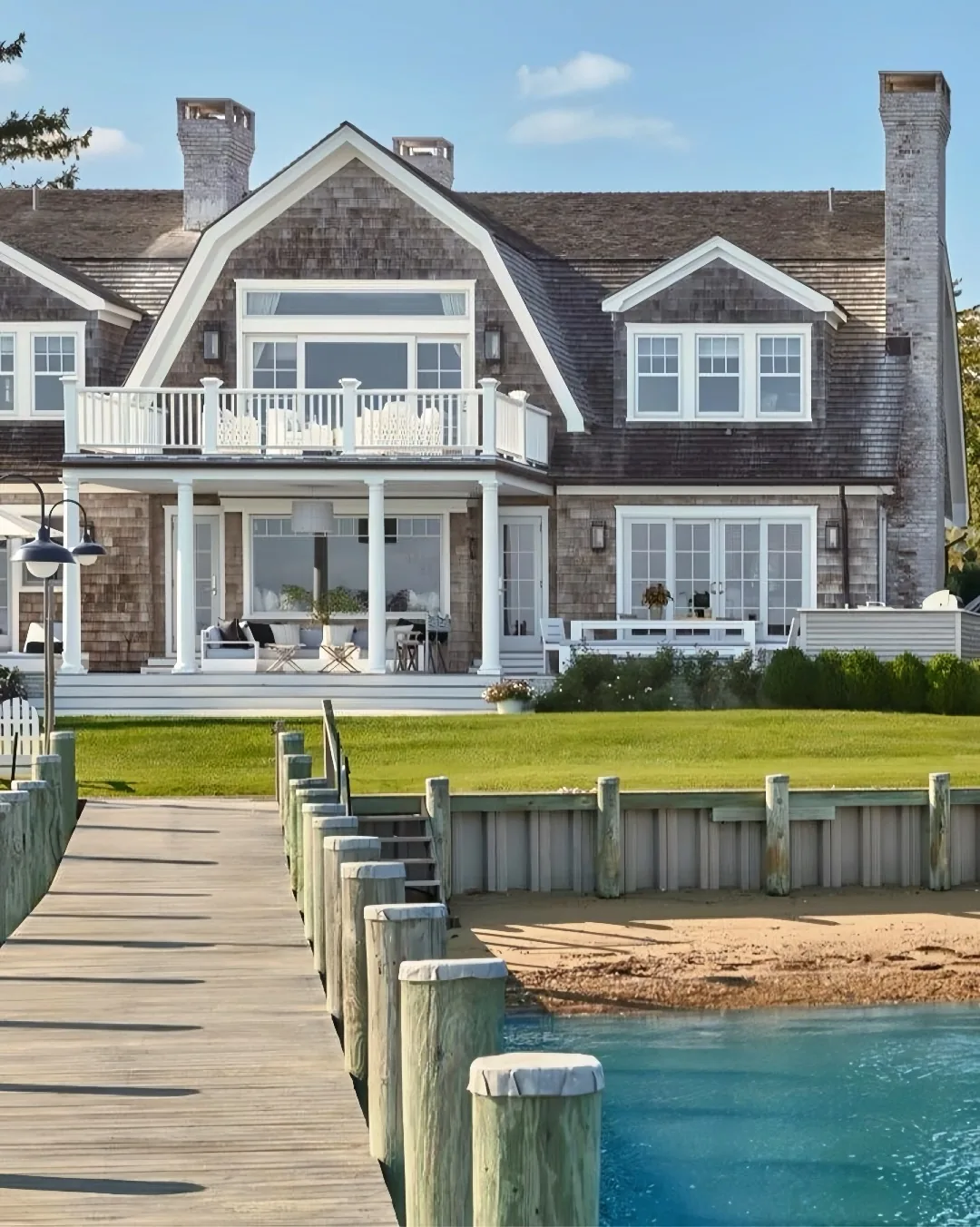
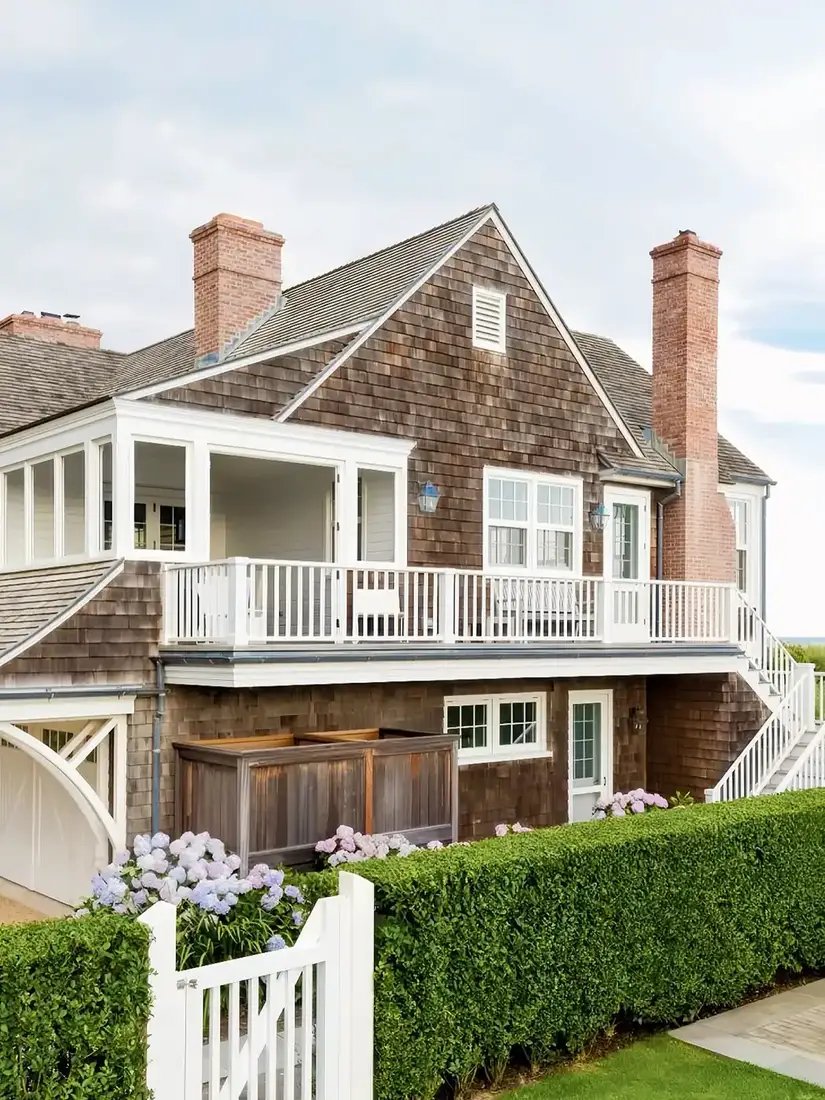
Study the Hamptons shake house where thick cedar meets crisp white around windows. The contrast is what makes you read coastal rather than neglected. White trim beside silvered cedar is what gives the style its read. Cedar alone, without that bright edge, can look like an unfinished job waiting for paint. You want your window frames, corners, and eaves in a clean warm white that catches light even on a dull day. Keep the trim consistent across the house so the eye moves smoothly. When your shingle silvers, that white will be the frame that tells visitors you meant this.
Stop the bottom course short of the ground
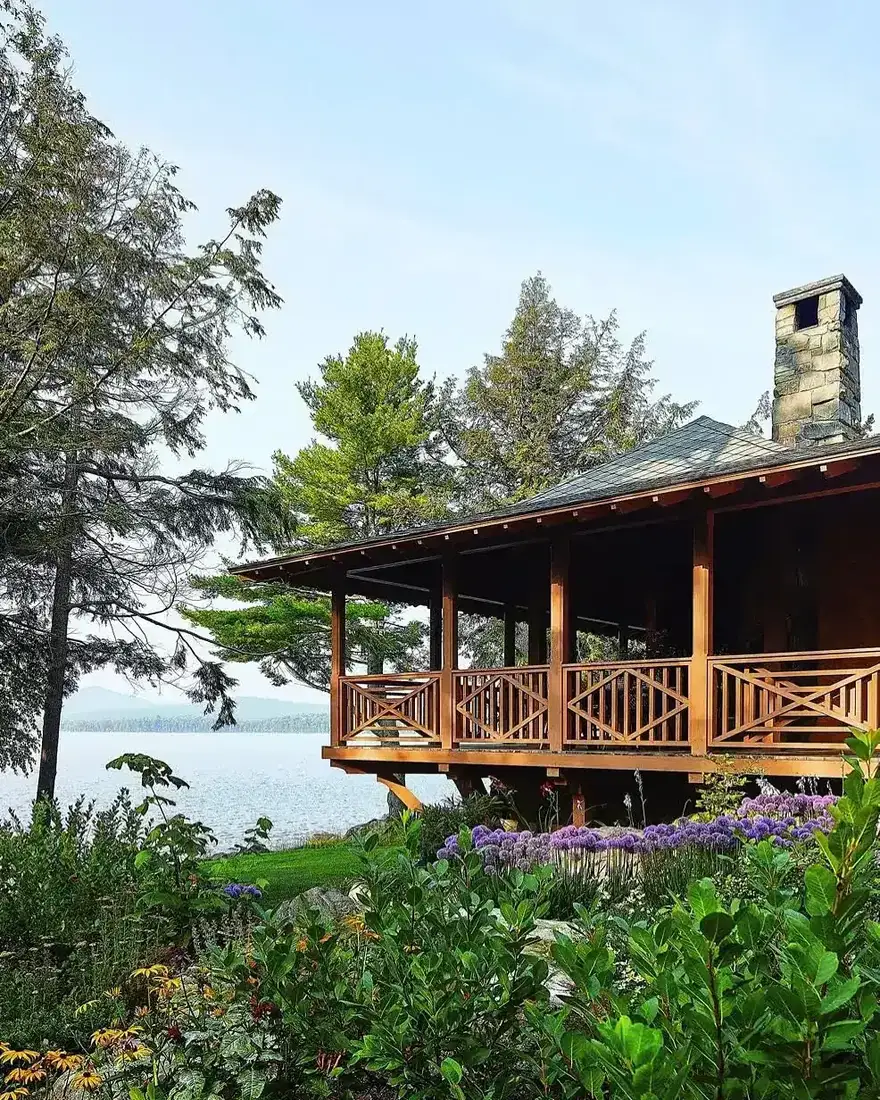
At the lakeside porch with the twig railing, the shingle wall stays pale and dry near the floor because its bottom course never touches soil. Keep the bottom course clear of the ground so splash cannot sit against the wood and so air can dry the wall after rain. You should check that your siding stops short of grade and that planting sits forward. That gap lets you see the shadow at the foot of the wall, which reads as good building rather than a repair waiting to happen. Lakeside plots punish every shortcut here, so our coastal lake house shingle exteriors guide builds the full clearance and drainage routine around them. When leaves collect there in autumn, sweep them. Damp leaves hold moisture against the very place you kept clear.
Trust the rest when one wall silvers first
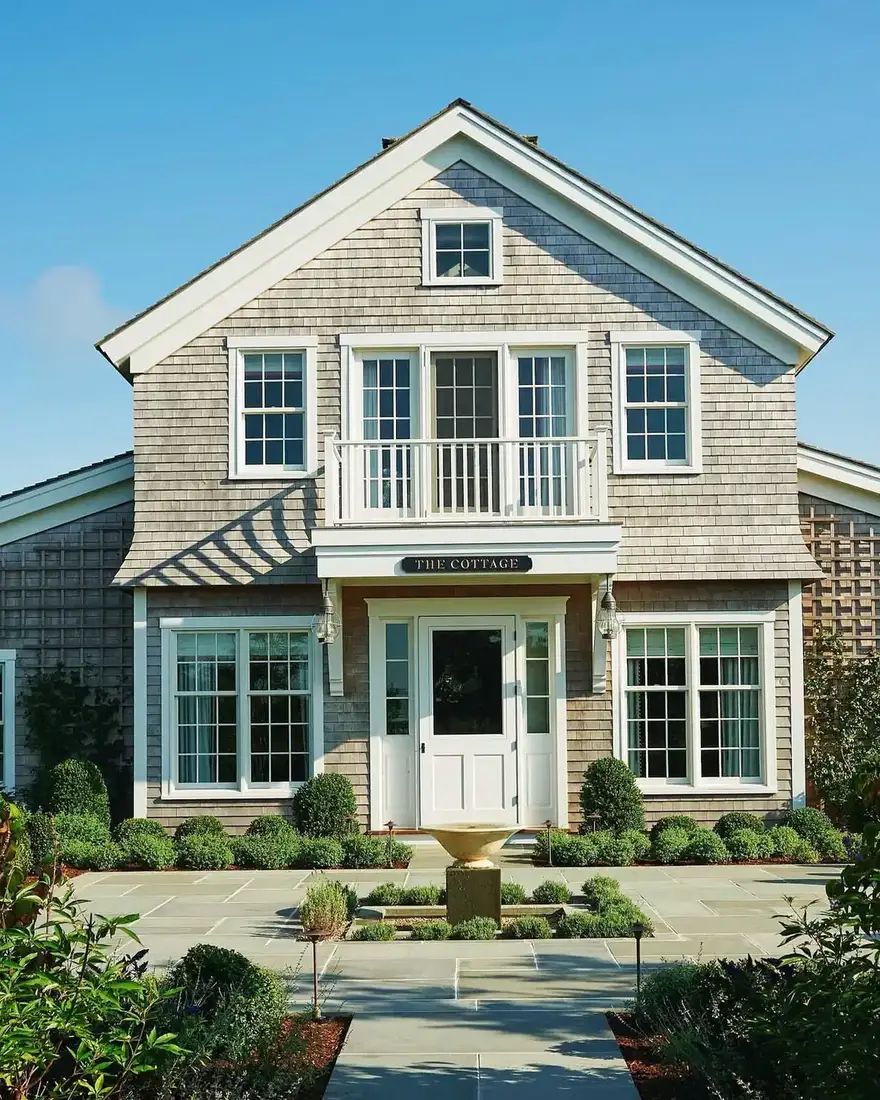
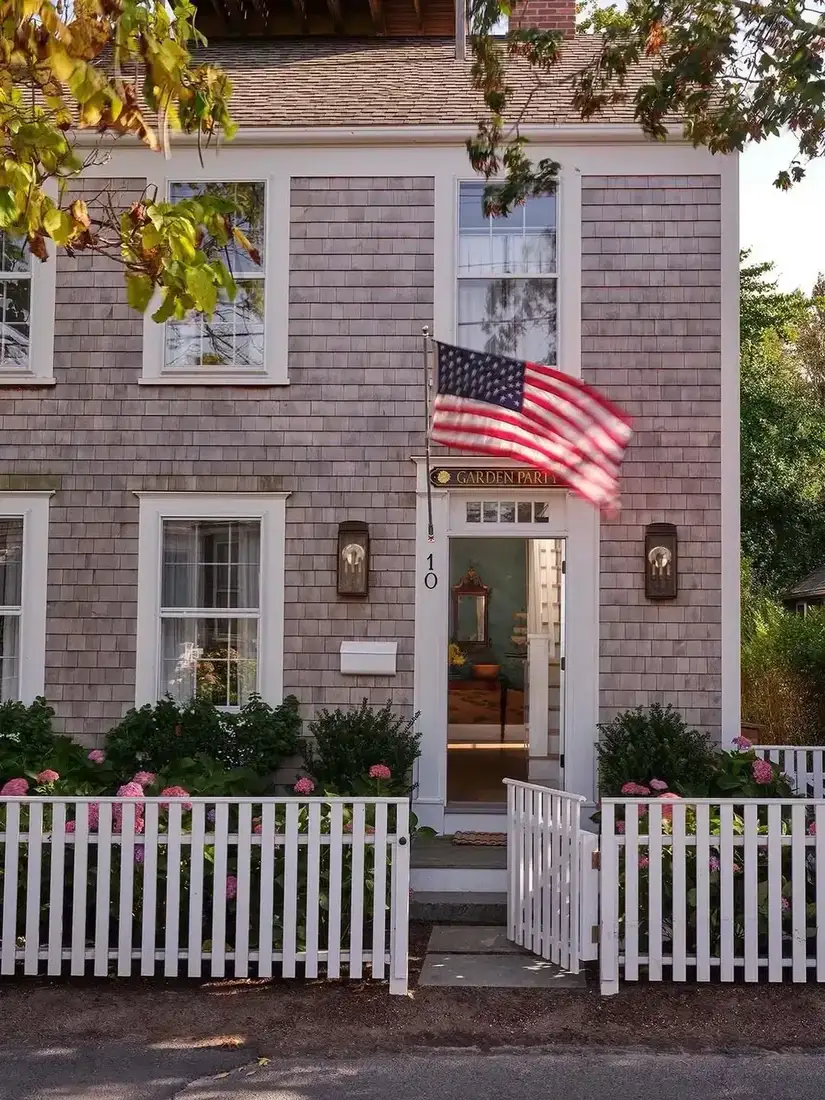
Consider the Nantucket cottage behind its low white picket. The front may silver a season before the side under the big oak. That lag is normal and you should let it be. Cedar that weathers at its own pace gains the subtle variety that grey stain cannot copy. When guests arrive, they do not compare your north and south walls. They feel the overall tone. You can help the slower wall by trimming a branch that casts heavy shade, but you do not need to force an even coat. Evenness comes, and the slow wall will catch up. At the water’s edge that lag stretches from seasons to years, so our coastal lake house shingle exteriors guide details the shore wall separately. Picket and planting read as one palette when they share a colour, a point our home exterior guides return to.
Color that loves both orange and silver
You live with cedar during the orange year before you live with silver. These three keep the transition calm.
Strip the palette back so texture does the talking
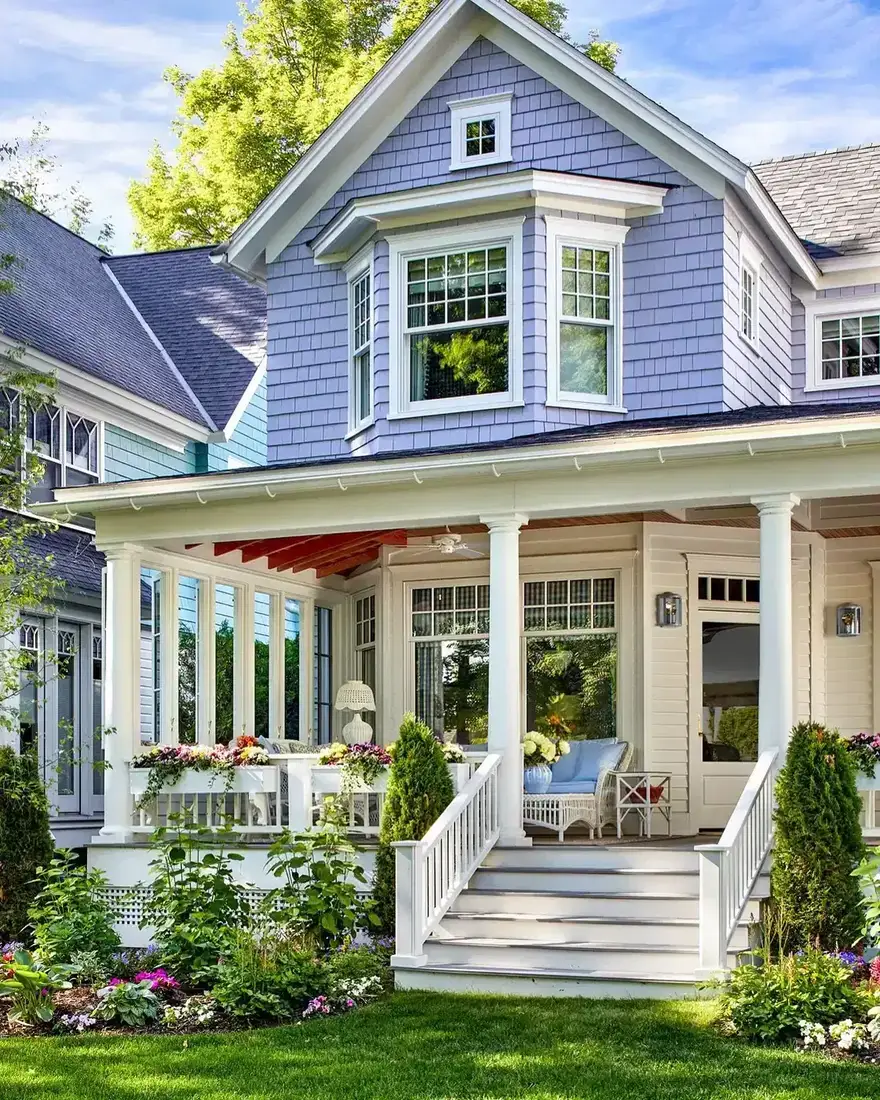
The periwinkle Victorian wrapped in its deep porch shows you how little color a shingle house needs. One muted blue, white trim, and silver do all the work. You should resist the urge to paint the house to hide the orange year. A quiet palette lets shingle texture be the feature while the cedar changes. When you add more hues, the wall feels busy during the very months it is already uneven. Stand back and squint. If you still read texture before you read color, you have kept the balance right and your silver will arrive without drama. For Victorians beyond the shingle palette, our Victorian house exterior ideas guide ranks body, trim and sash colors by hierarchy.
Borrow color from sea and garden, not from stain
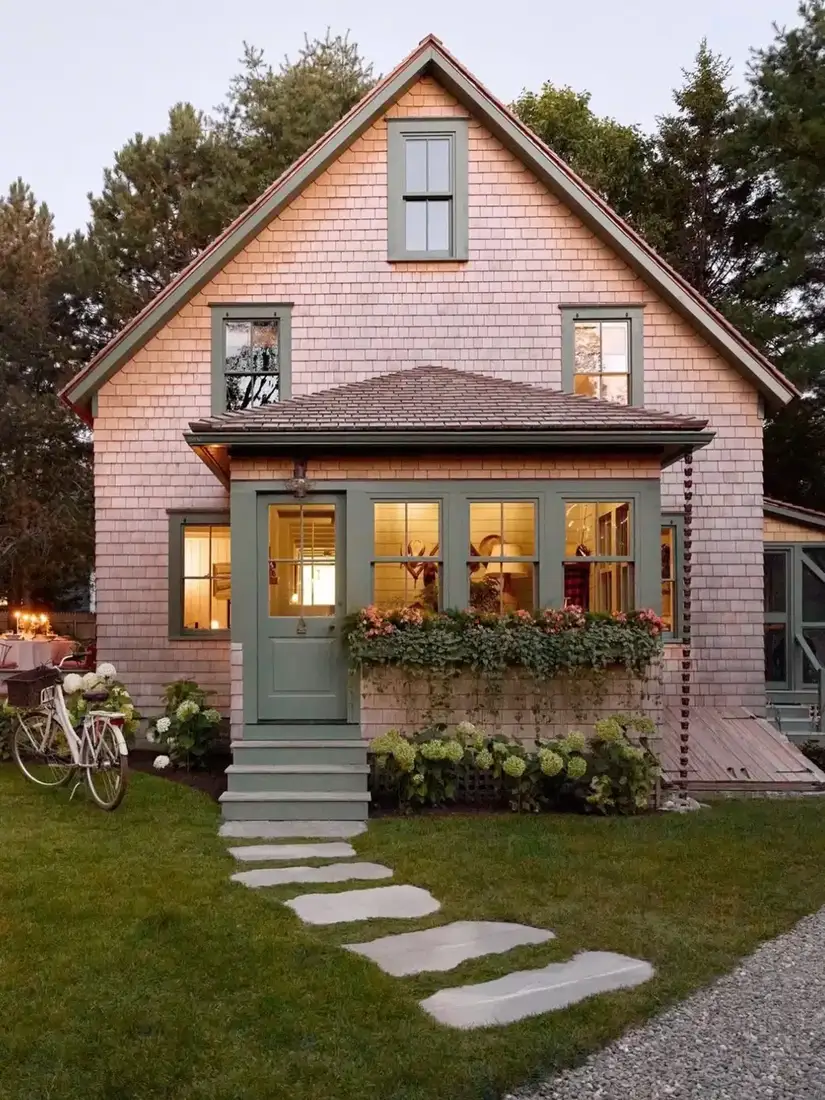
Picture the pink cottage with its sage door and neat window box. Its charm does not come from a stained wall but from colors borrowed from sea glass, hydrangeas, and shells. You get a coastal cottage faster by adding a soft door or a few pots than by coating the whole house. Cedar as a warm grey brown lets you carry a slightly bolder door than a painted house could. Keep that door matte and a touch greyed so it sits calm against both orange year one and silver year three. When the shingle finally silvers, your door will still sing. Cottage doors carry extra weight because the facade is small, and our cottage exterior ideas guide builds the whole front around that one rectangle.
Pick a quiet roof so silver stays the star
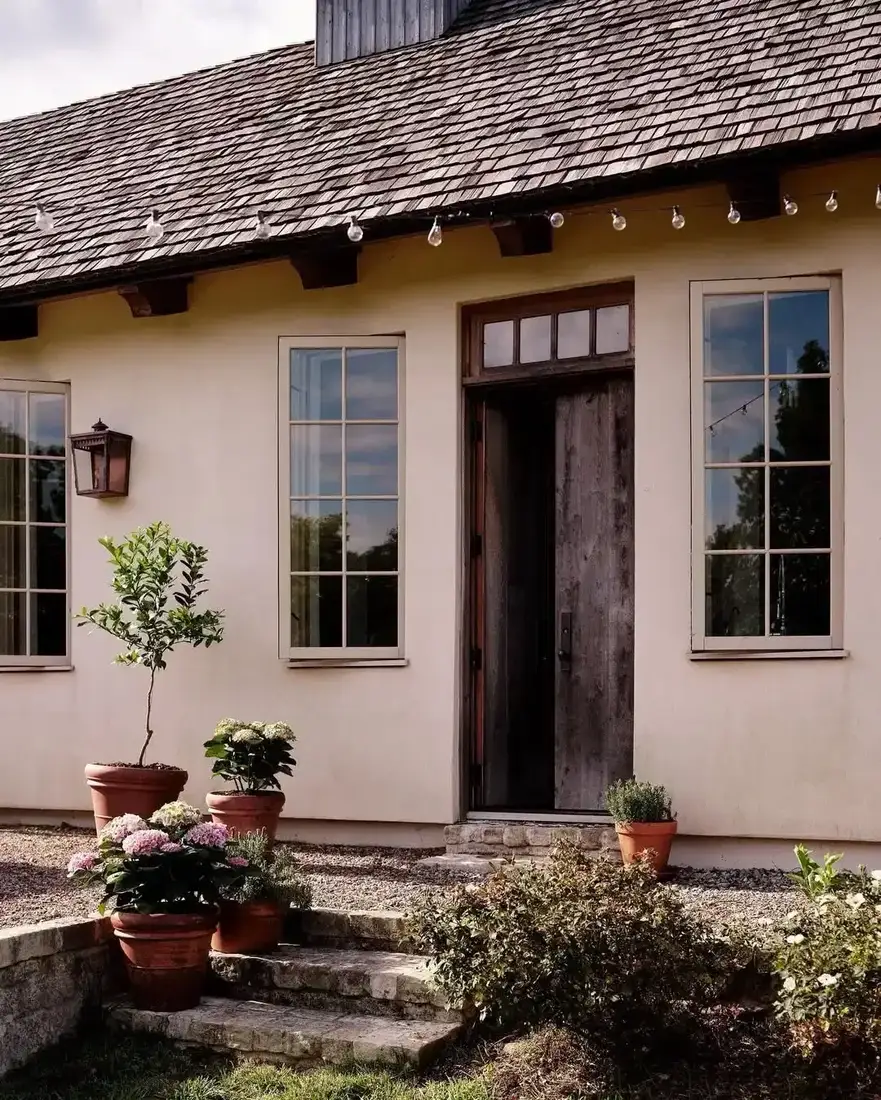
Look across the courtyard where pink stucco meets a shingle roof and simple clay pots. The stucco is smooth, the shingle is textured, and the pots are earthen. That mix works because the roof stays calm. When you give silver cedar a quiet neighbour, the eye stays on the shingle. You should keep roof, pots, and hard surfaces in muted mates of the cedar rather than stark contrasts. Those quiet companions let the weather do the styling. If you love pattern, put it in a fabric inside. Outside, let the shingles be the pattern you already paid for. Where stucco rather than shingle is your main wall, our stucco and Spanish style home exteriors guide covers its texture, color and upkeep.
Woodland, heavy timber and the last details
Logs, sage and a breezeway you will actually use round this off.
Trust the same logic on a shingle roof
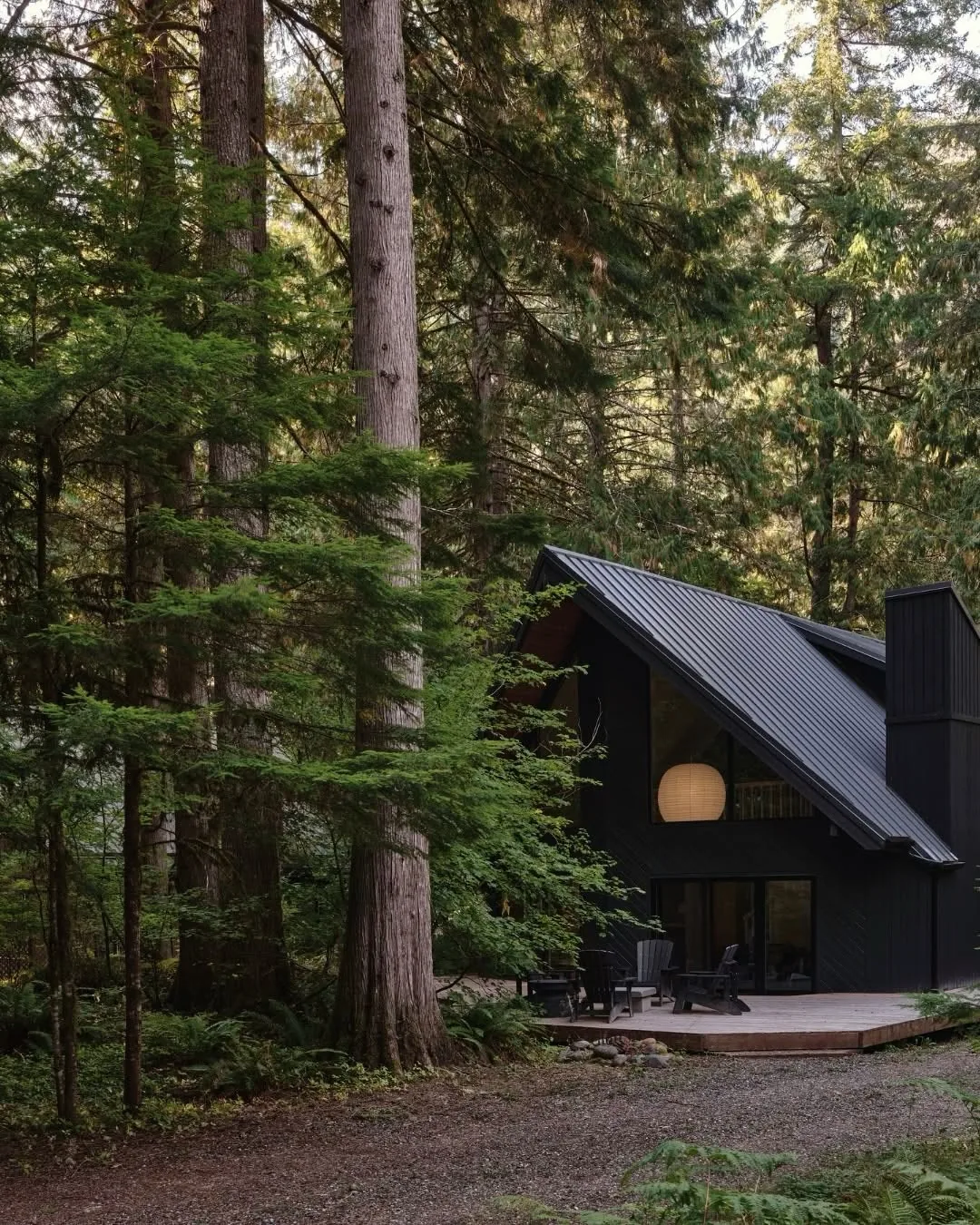
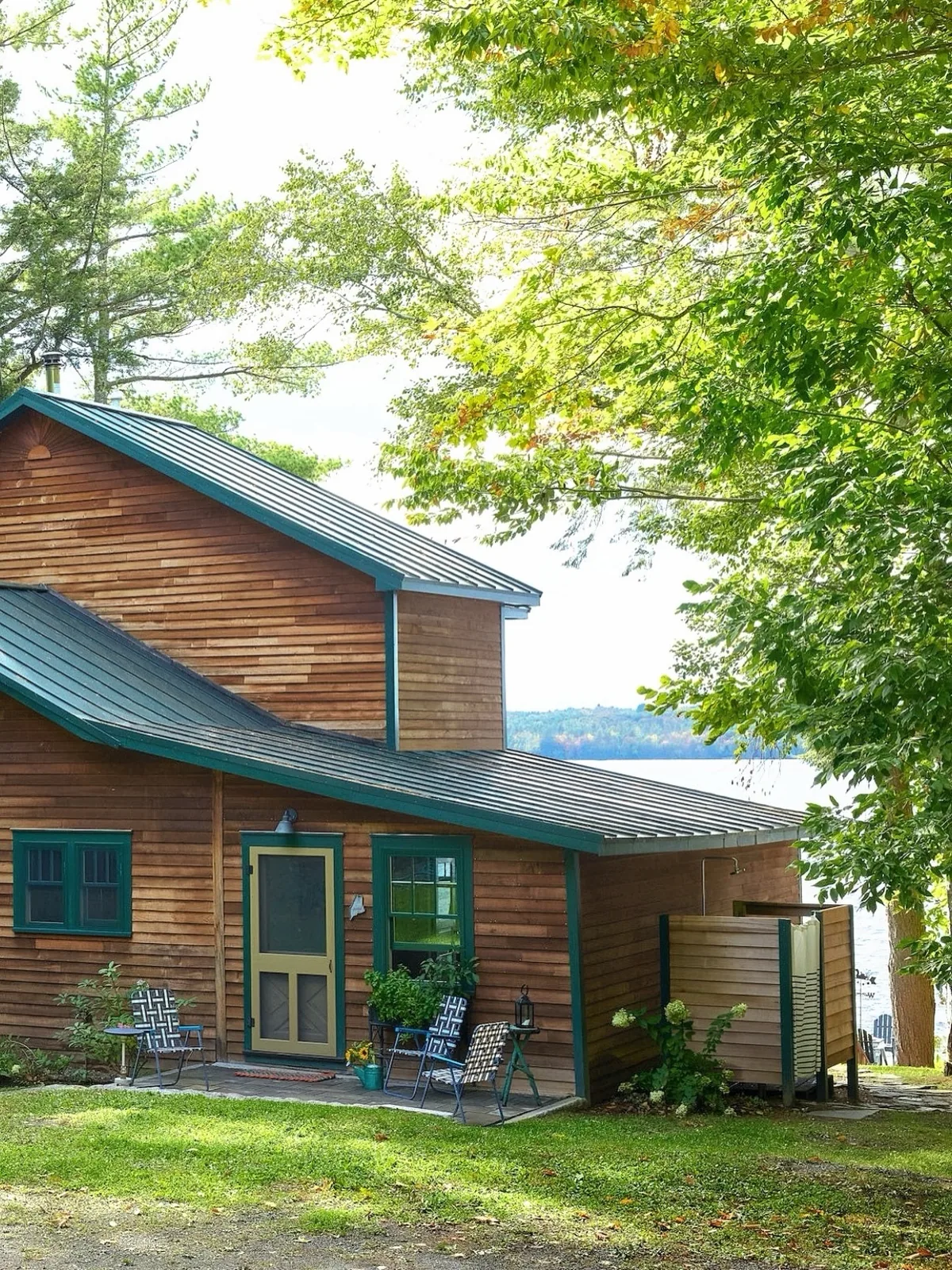
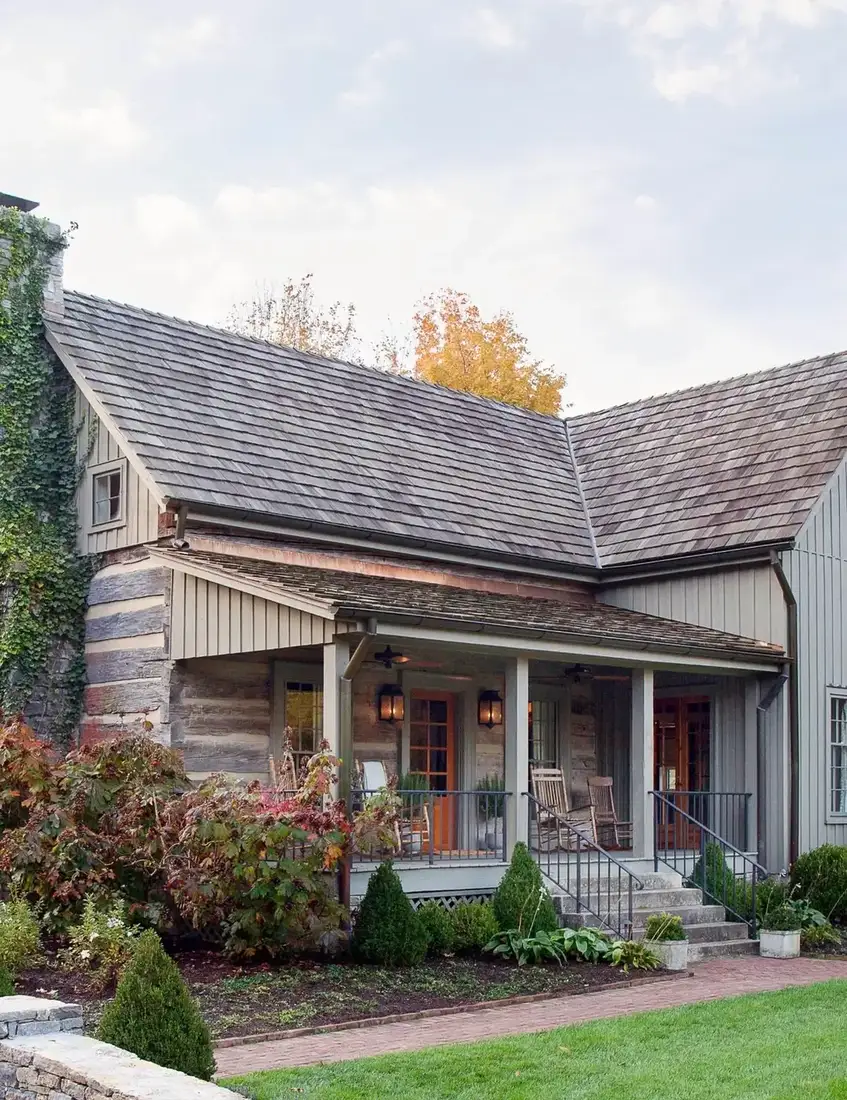
Consider the log cabin where cedar is not wall but roof over heavy logs. The same waiting applies. Bare shingle roofs silver in the same way walls do, fastest where sun and salt hit, and a bleaching oil gives you an even tone sooner if you need it for photographs. Keep the roof ventilated, keep the eave deep enough to throw rain clear of the logs, and keep that bottom edge clear of branch shade where you can. Gardens that frame timber without crowding it are covered in our garden decor ideas.
Plain trim and base put silver in front
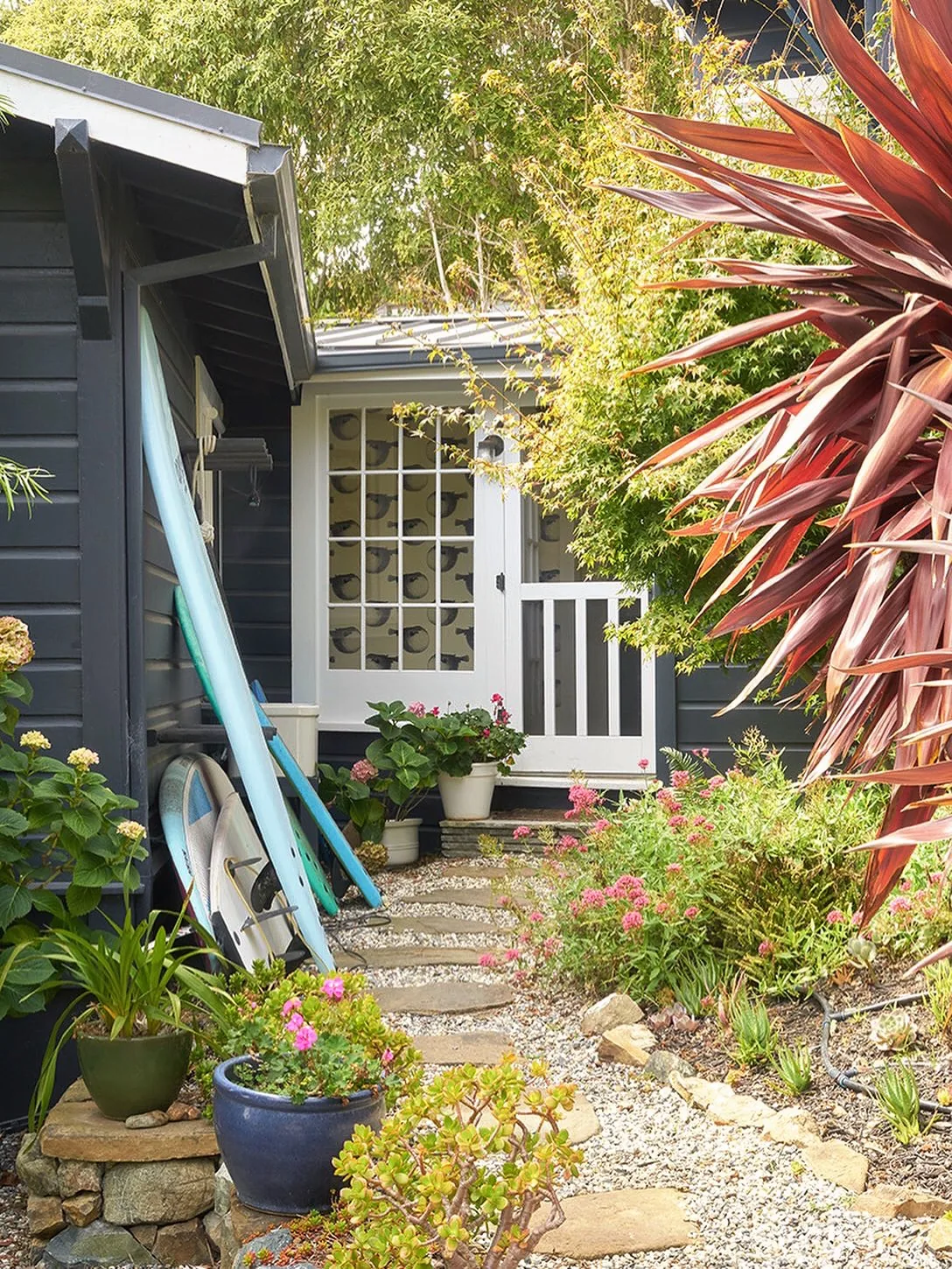
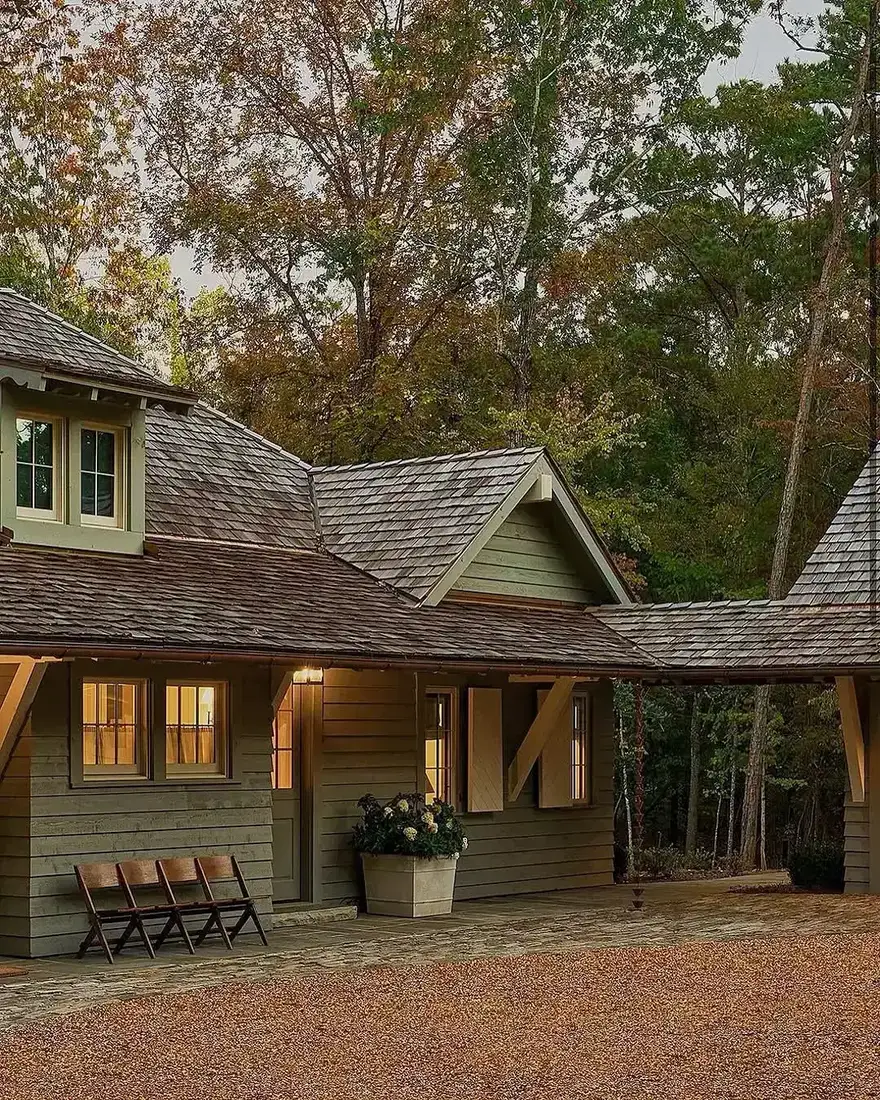
Finally, study the sage cottage with its breezeway to the carport. The sage is a quiet veil over silver, and the white trim holds the line. You do not need more than that. Hold the bottom course clear, repeat the trim white, and let the breezeway stay open so air moves. Your silver will feel at home because everything around it stays plain. When you step back, you should read white lines, pale gravel or lawn, and a soft grey field that shifts a little with the sun. That slight shift is the very thing grey stain flattens.
Coastal cedar texture and care at a glance
| Choice | What it does to silver | Use it when | Watch for |
|---|---|---|---|
| Bare cedar плюс salt and sun | Gives classic coastal silver fastest | Any coastal cottage | Impatience in first year |
| Uneven weathering | Sunny walls turn first, then even out | Every new cedar wall | Grey stain to hide patchiness |
| Bleaching oil | Even grey in weeks, finish not preserver | Need instant even tone | Thinking it replaces air and gap |
| White trim against silver | Makes weathering read as style | Any silvered cedar | Cedar alone with no frame |
| Bottom course clear of ground | Keeps base dry and pale | Every shingle wall | Soil or mulch touching siding |
| Quiet roof and garden | Lets texture be the feature | Small cottage or porch house | Busy palette that fights silver |
The Coastal Shingle Formula
- Leave new cedar bare. Real coastal silver comes from salt and sun, not a tin.
- Wait out the patchy stage. Sunny walls silver first and shaded walls catch up.
- Reach for bleaching oil only if you must. It gives even grey now, but it is a look, not protection.
- Frame silver in white. Without trim, weathered cedar reads unfinished.
- Keep the bottom course clear. Air and a shadow gap at the foot keep the base true.
- Keep the palette quiet. Let shingle texture be the pattern you came for.
Six decisions, and the grey you moved for arrives on its own. For the orange to silver timeline with stainless nails and ventilation, see our cedar shingle house exterior ideas.
Frequently Asked Questions
Why does coastal cedar turn silver?
Bare cedar weathers when salt air and sun break down its surface oils. Coastal walls get more of both, so they silver fastest. That silver is a natural change, not a stain color.
My new cedar looks patchy. Is that normal?
Yes. It starts patchy, with sun-facing walls turning first and shaded sides lagging a season before they even out.
Should I use a grey stain to get silver faster?
You can, but you will get a flatter look. Grey stain makes every shingle the same, while real weathering varies a little. If you need even grey immediately, a bleaching oil gives it without pretending to protect the wood.
What is bleaching oil then?
A finish that gives you an even grey in weeks. It is a look, not a preservative. You still need to keep the bottom course clear and the wall able to dry.
What trim color makes silver cedar look finished?
White. White trim next to silvered cedar is what gives the look its read. Without that edge, cedar alone can look unfinished, and that bright edge tells visitors the silver was chosen.
How do I keep the bottom of my cedar wall from rotting?
Keep the lowest course clear of soil, mulch, and planting so air can move and splash can drain. When leaves or soil build up there, clear them before they hold damp.
This article may contain affiliate links. We may earn a commission at no extra cost to you.