13 Rustic Ideas That Skip the Kitsch

Add us as a preferred source to see more stories on Google.
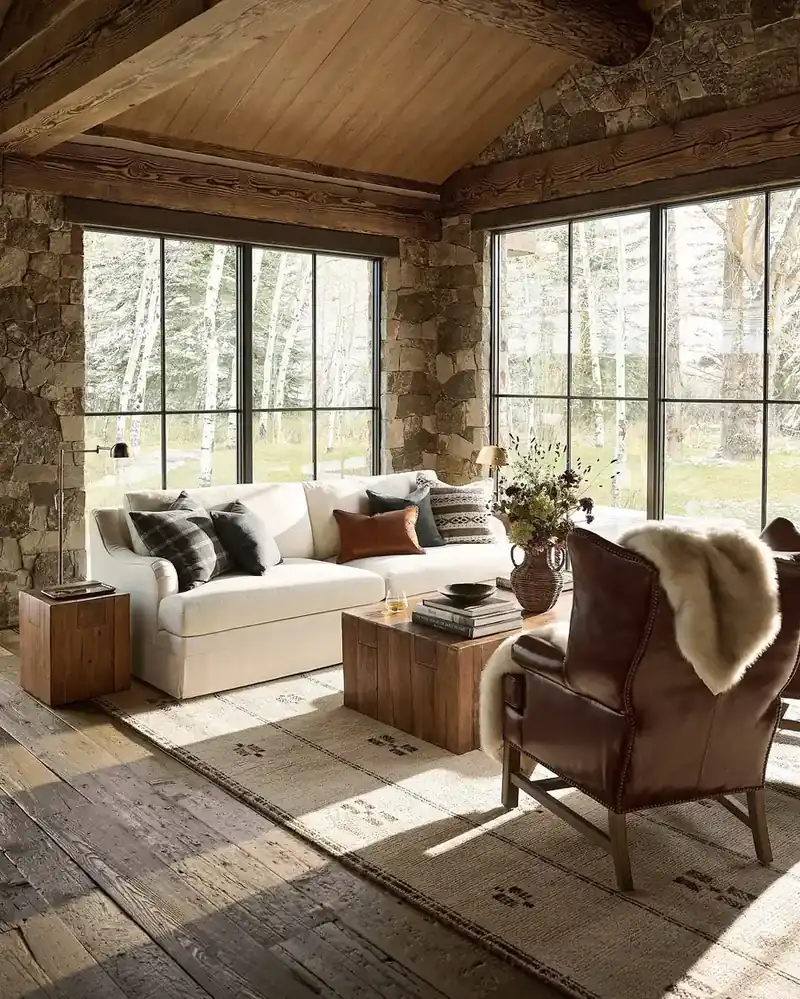
Rustic decorating has a reputation for being heavy on wood, dark on color, and covered in cabin-inspired accessories.
But the most beautiful rustic homes rarely look themed.
They feel collected.
A weathered wood table sits beside soft linen upholstery. Natural stone brings weight to a room, while a wool rug softens the floor. A worn leather chair adds warmth without making the space feel old-fashioned. Large windows bring the landscape inside, and simple objects give the room a sense of personality without filling every surface.
That balance is what makes rustic interior design so appealing.
The goal isn’t to make your home look like a mountain lodge from floor to ceiling. It’s to bring in the qualities people love about rustic spaces: natural materials, warmth, texture, comfort and connection to the outdoors, while keeping the overall room relaxed and refined.
Here are 13 rustic home decor ideas that do exactly that.
You feel the room settle when you let one material lead and you keep the rest quiet. When you choose stone for weight, you let linen soften it, and when you choose wood for warmth, you let wool calm it. You decide where your eye rests, and you keep the view outside as part of your palette. When you add leather, you feel its age grow with you.
The Foundation, Where Rustic Becomes Architecture
Before the furniture, the room itself can do half the decorating. When the walls, ceiling, and windows carry natural character, everything you place beneath them feels more intentional.
1. Let Natural Stone Become Part of the Architecture
One of the easiest ways to give a room genuine rustic character is to let the architecture do some of the decorating.
Natural stone walls immediately introduce texture, variation and visual weight. Unlike a decorative accessory, stone doesn’t feel added to the room. It feels as though it belongs there.
The most successful rustic interiors often pair stone with another natural material, especially wood.
Think:
- irregular stone walls with reclaimed timber
- rough stone beside smooth linen
- warm wood ceilings against cooler stone
- natural stone paired with black-framed windows
The contrast is important.
If every surface is rough and heavily textured, the room can start to feel visually overwhelming. Balance the stone with quieter materials such as cream upholstery, simple curtains or a restrained rug.
The takeaway: use natural stone as an architectural anchor rather than covering every available surface.
2. Soften Rustic Wood With Creamy Upholstery
Rustic rooms can easily become too hard.
Wood is beautiful. Stone is beautiful. Leather is beautiful. But put too many hard materials together and the room can start feeling more like a lodge lobby than a comfortable home.
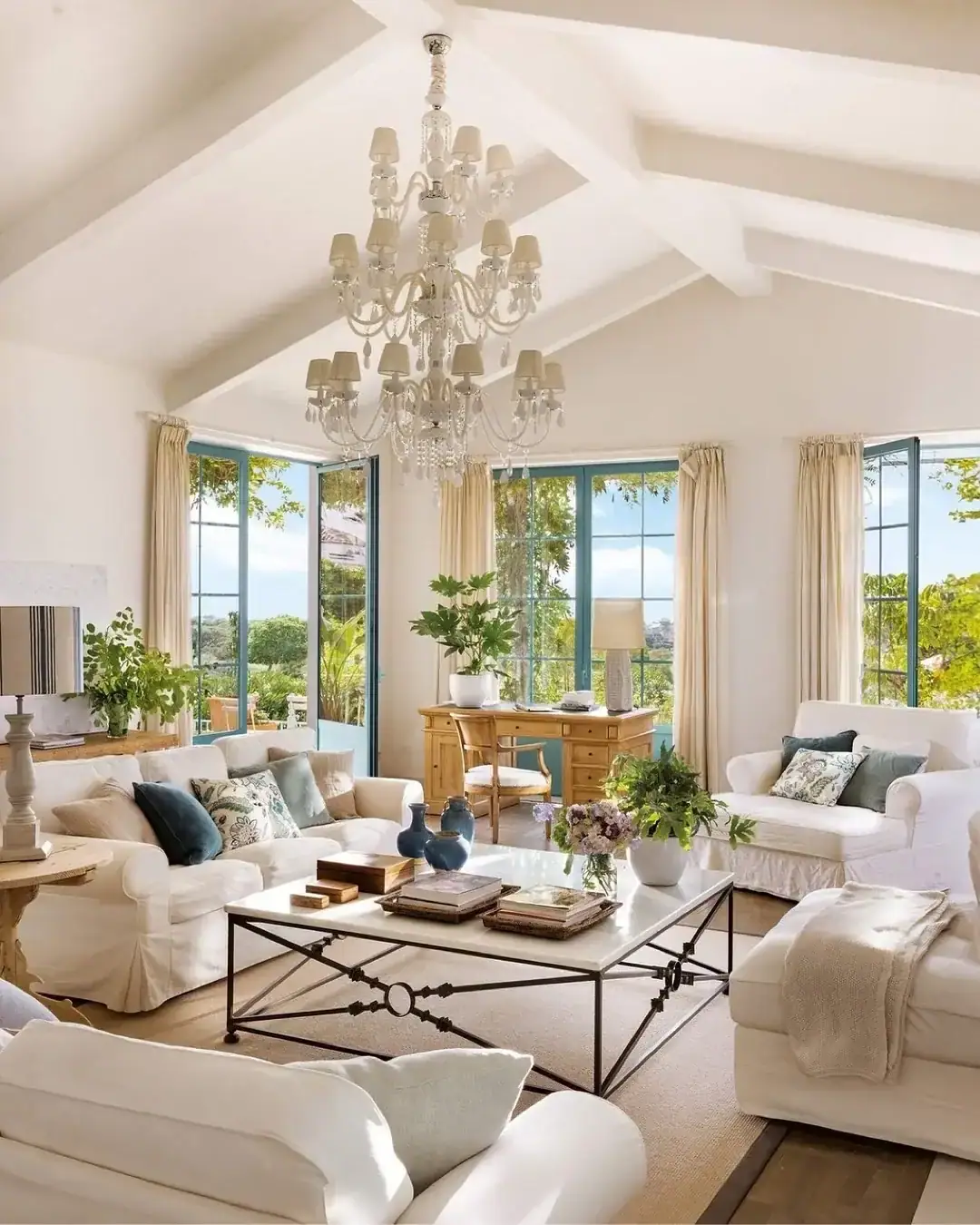
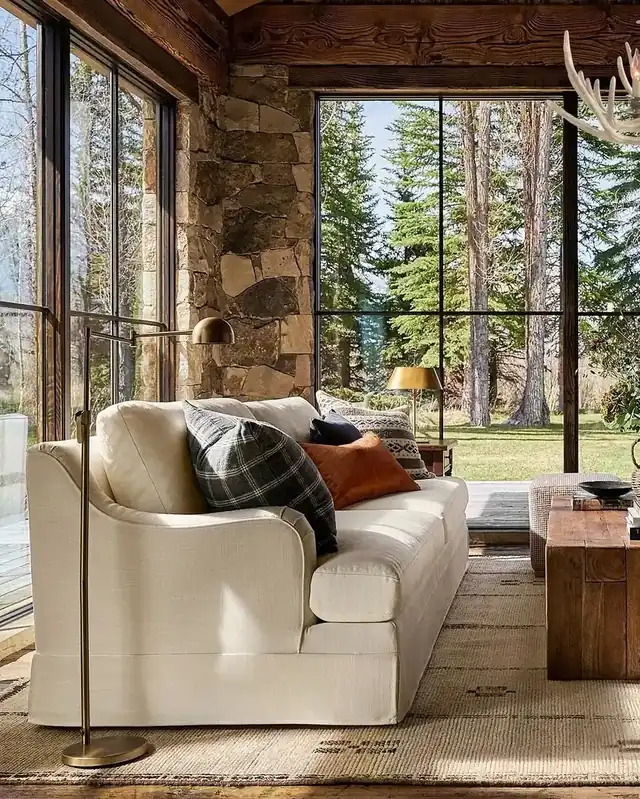
A cream or ivory sofa changes the balance immediately.
Soft linen upholstery creates visual breathing room against darker beams, wood furniture and stone. It also gives you a neutral foundation that makes it easier to introduce warmer accents through pillows, throws and rugs.
If your home already leans rustic: reclaimed beams, wide-plank floors, stone fireplace, this one shift is often enough to make the whole room feel more livable. See our favorite cozy living room ideas for more ways to keep a soft, inviting palette while the architecture stays strong.
Look for upholstery with:
- visible weave
- relaxed edges
- natural texture
- slightly imperfect linen
- warm rather than icy white tones
The result is rustic without being overly traditional.
Design principle: when your architecture is visually heavy, make the largest upholstered piece feel light.
3. Add One Cognac Leather Statement Piece
If there is one material that instantly connects a rustic room to its heritage, it is leather.
But you don’t need a room full of leather furniture.
In fact, one or two substantial pieces often work better.
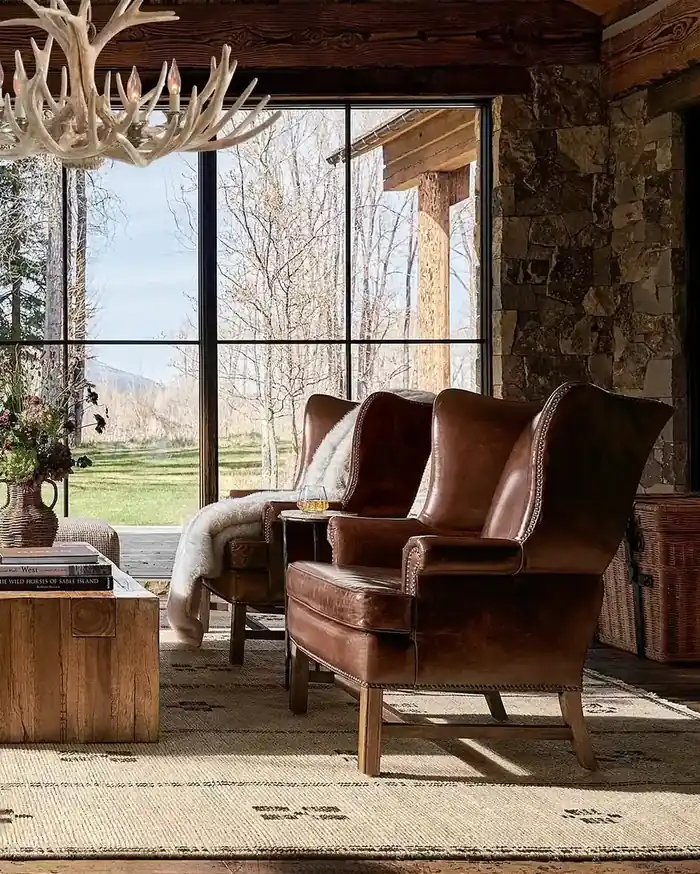
A cognac leather armchair beside a cream sofa creates exactly the kind of contrast that makes rustic interiors feel sophisticated. The leather introduces warmth and depth while the lighter upholstery keeps the room from becoming visually heavy.
Cognac, saddle brown and tobacco tones are especially useful because they work beautifully with:
- natural oak
- walnut
- reclaimed timber
- cream
- charcoal
- warm beige
- muted green
As leather ages, small variations and patina can make it even more interesting.
That lived-in quality is part of the appeal.
4. Make Large Windows Part of the Decor
One of the strongest features in these rustic interiors isn’t actually furniture.
It’s the view.
Large, black-framed windows create a visual relationship between the interior and the landscape outside. Trees, mountains, grass and changing daylight become part of the room’s composition.
This is particularly effective in rustic homes because natural surroundings reinforce the materials already inside.
Wood feels more intentional.
Stone feels more connected to the landscape.
Leather and wool feel warmer.
If you’re lucky enough to have a strong view, don’t compete with it.
Keep window treatments relatively simple and arrange furniture so that the landscape remains visible.
A beautiful view doesn’t need much decoration around it.
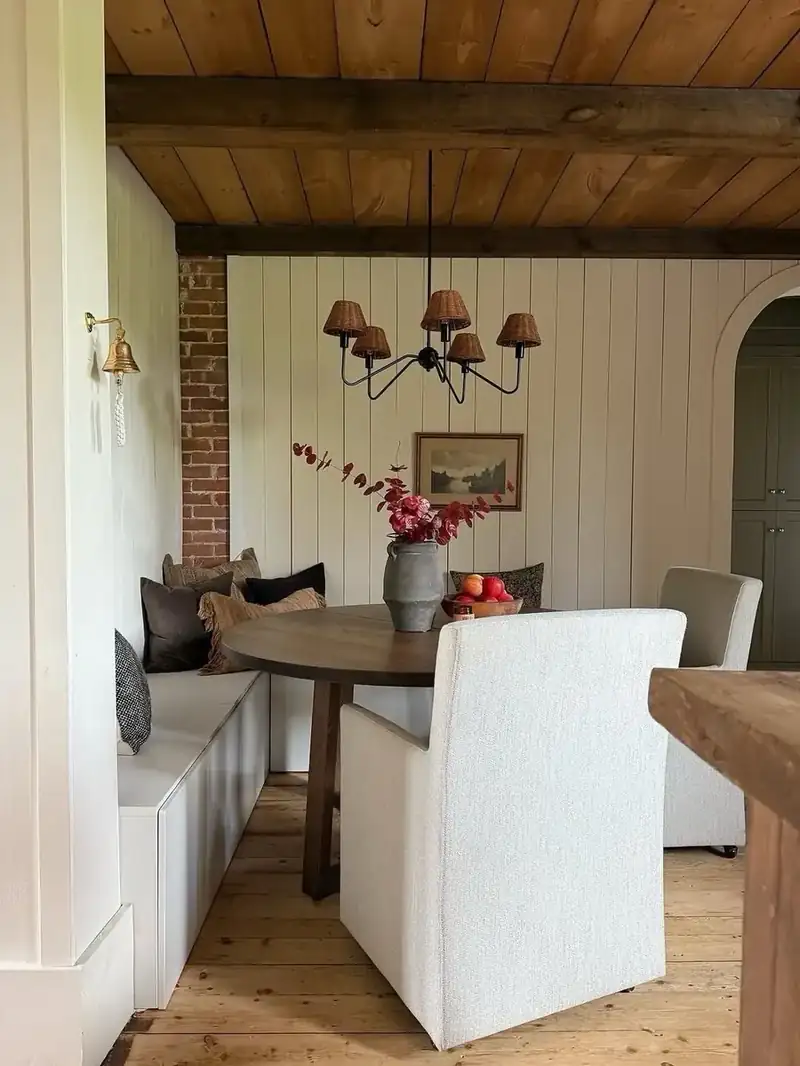
5. Use Exposed Beams as a Quiet Framework
Exposed beams are one of the defining architectural elements of rustic design.
But their impact comes from restraint.
If the ceiling already has strong timber beams, you don’t need another dozen rustic accessories underneath them.
Let the beams become the room’s natural framework.
Then introduce quieter furniture below:
- cream sofa
- simple coffee table
- textured rug
- leather chair
- understated lighting
This creates a useful visual hierarchy.
Architecture first. Furniture second. Accessories third.
That hierarchy is one of the reasons some rustic rooms feel sophisticated while others feel overly decorated.
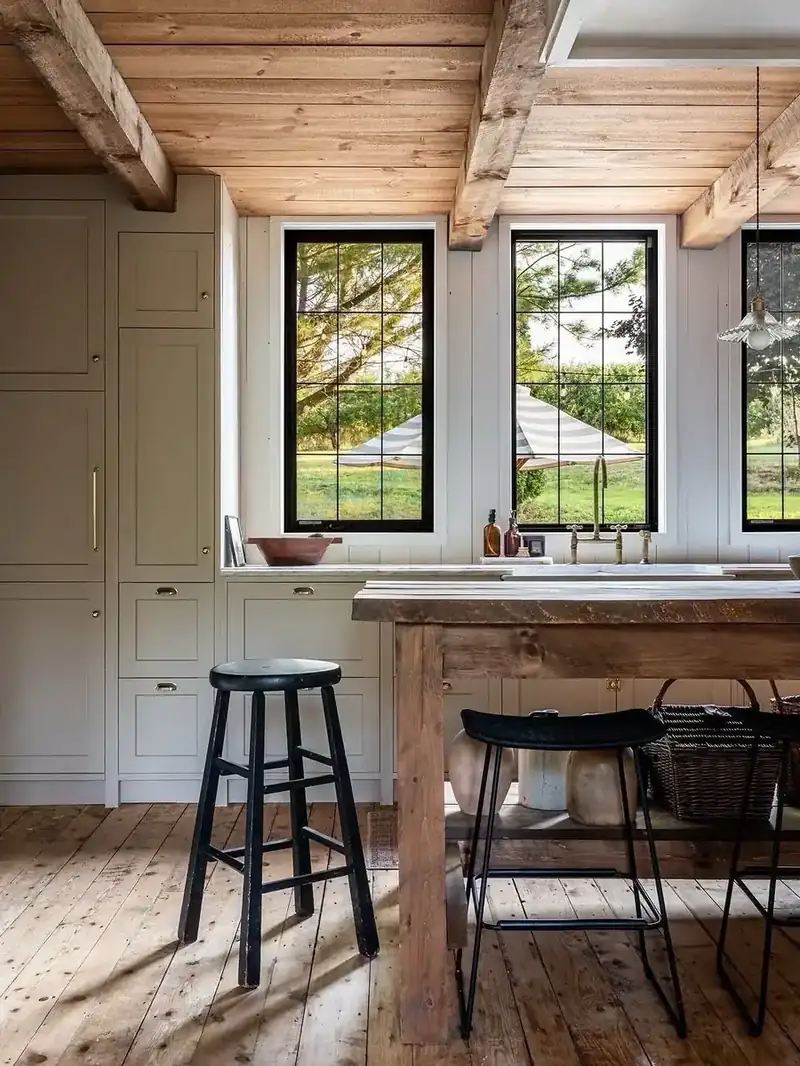
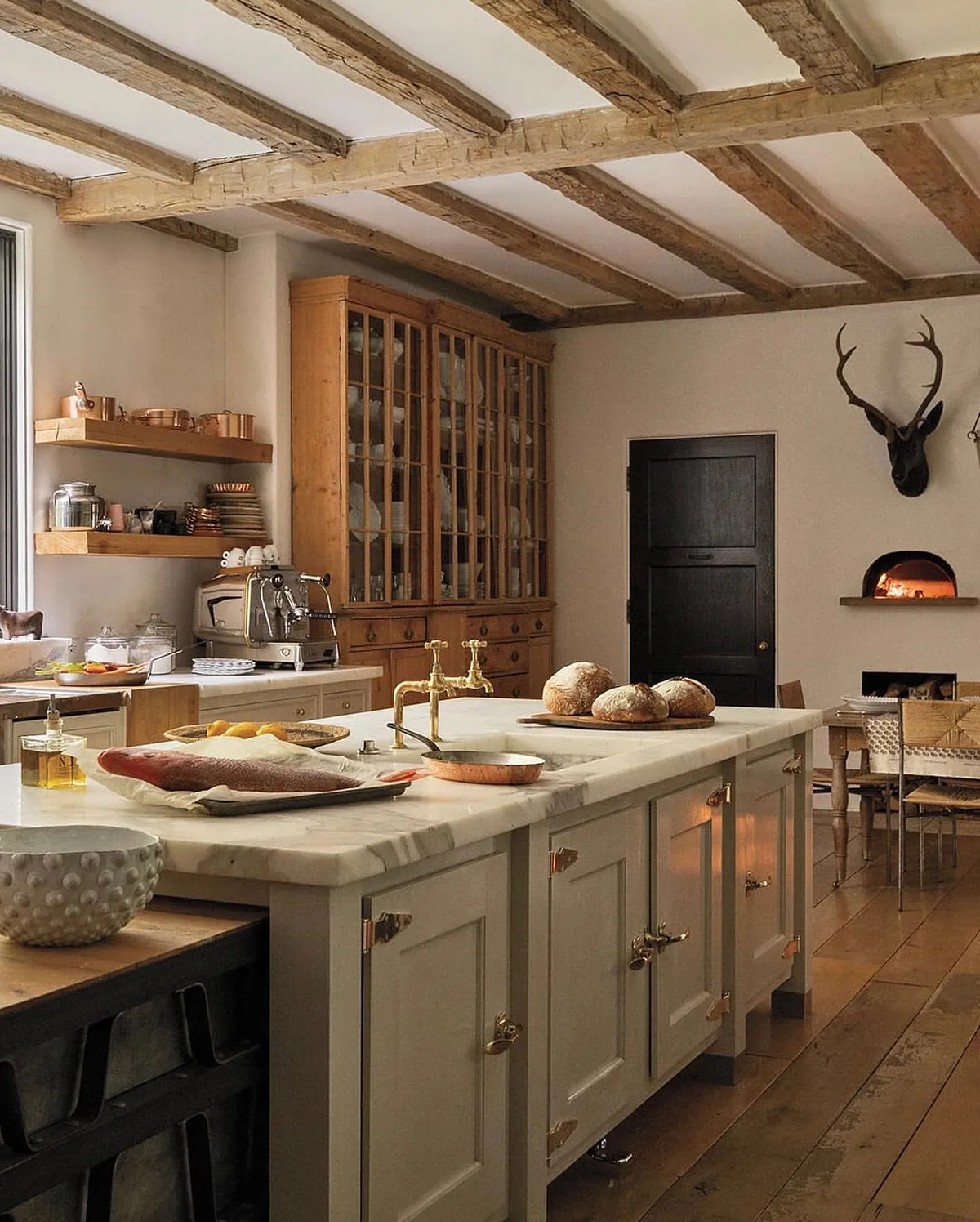
6. Let the Rustic Kitchen Stay Quiet and Made to Work
The rustic kitchen doesn’t need to shout.
In the best examples, the bones are wood: a thick butcher-block island, wide-plank floors, exposed beams, while the cabinets stay calm and light. Sage, warm white, or soft greige keeps the room from feeling heavy, and brass or aged hardware adds just enough warmth.
Keep counters edited:
- a wooden bowl
- ceramic canisters
- a wicker basket below
- one plant or a small stack of cookbooks
Reclaimed wood is already a strong texture. Let it be the texture, rather than competing with a busy backsplash or too many small objects.
The rustic kitchen feels best when it looks used but uncluttered: a place where someone actually cooks, just with care for what stays visible. For the kitchen version of this discipline, see our rustic and country kitchen ideas.
Materials, Touch, and Restraint
Once the shell is right, rustic style is held together by what you can feel with your hand. The next four ideas are about choosing materials that soften, connect, and endure.
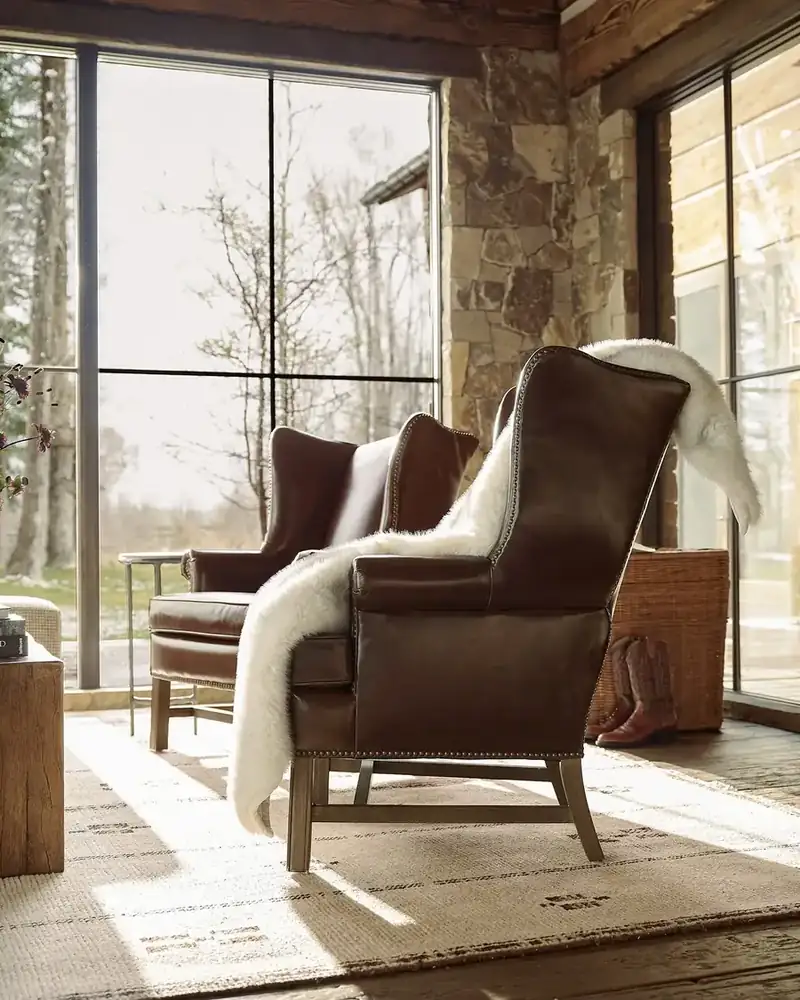
7. Build a Reading Corner Around One Exceptional Chair
Not every corner needs to perform the same job.
A rustic home benefits from at least one place designed purely for slowing down.
A comfortable leather wingback near tall windows can become that place.
Add:
- a small side table
- a reading lamp
- a soft throw
- one basket
- a stack of books
That’s enough.
Negative space makes the chair feel intentional. And if the chair faces trees, a garden or winter light, you’ve created something more valuable than another decorative arrangement: a reason to stay in the room.
8. Mix Materials Instead of Matching Everything
A common mistake in rustic decorating is buying everything from the same visual family.
Wood table.
Wood chairs.
Wood cabinet.
Wood accessories.
The result can feel flat despite having plenty of texture.
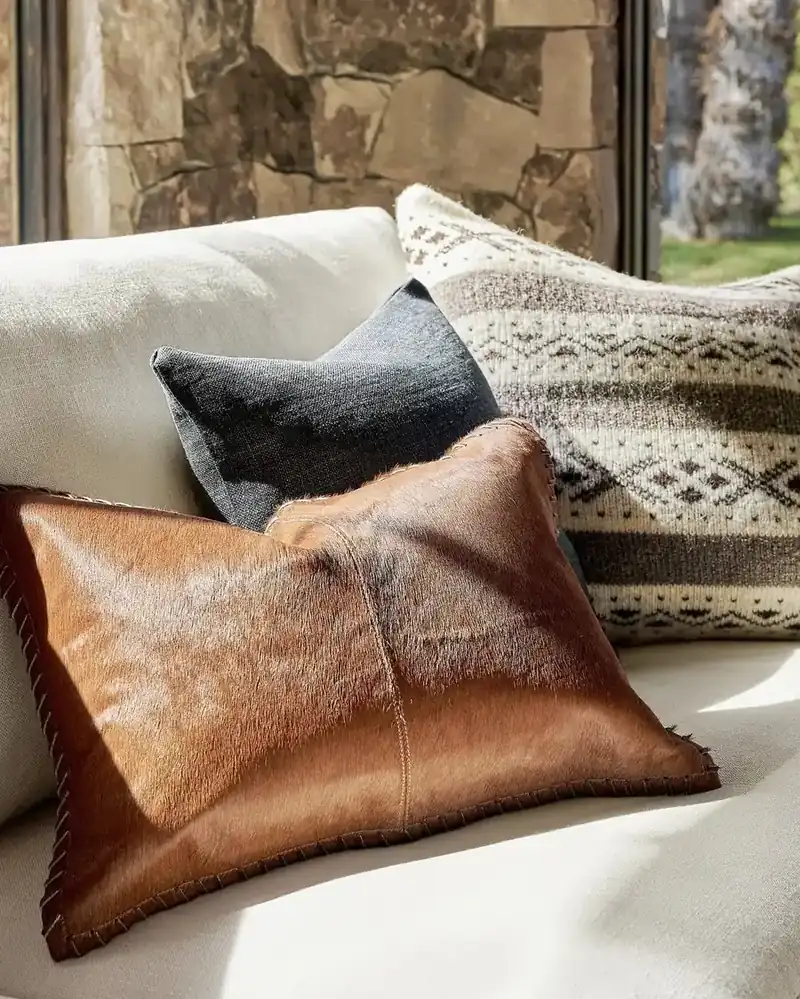
Instead, create contrast between materials. This close-up shows why mixing works: hair-on-hide leather against a wool fair-isle knit and soft linen, all on the same cream sofa. Each surface brings something different without competing.
Try a combination such as:
Wood + stone + leather + linen + wool + metal
- Wood provides warmth.
- Stone provides weight.
- Leather adds depth.
- Linen softens the composition.
- Wool introduces tactile comfort.
- Metal adds a little visual sharpness.
For more on balancing pattern and texture without overwhelming a calm palette, see our guide to minimalist decorating principles, the same restraint applies here.
9. Make the Coffee Table a Quiet Focal Point
A rustic coffee table doesn’t need to be covered in decorative objects.
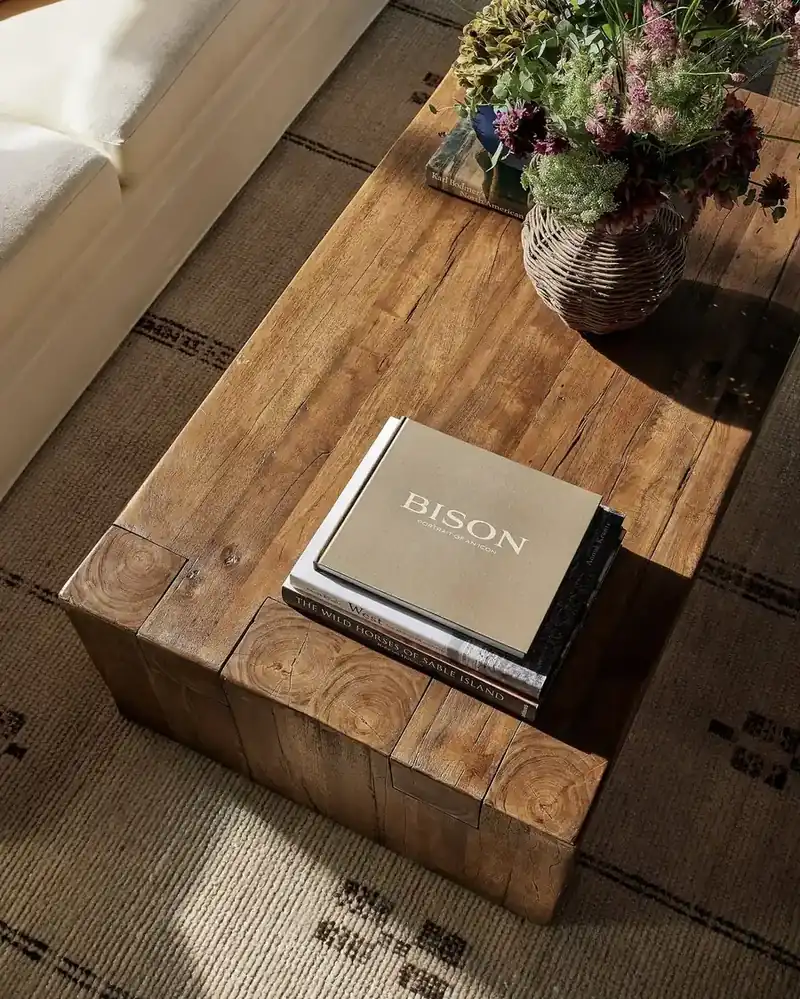
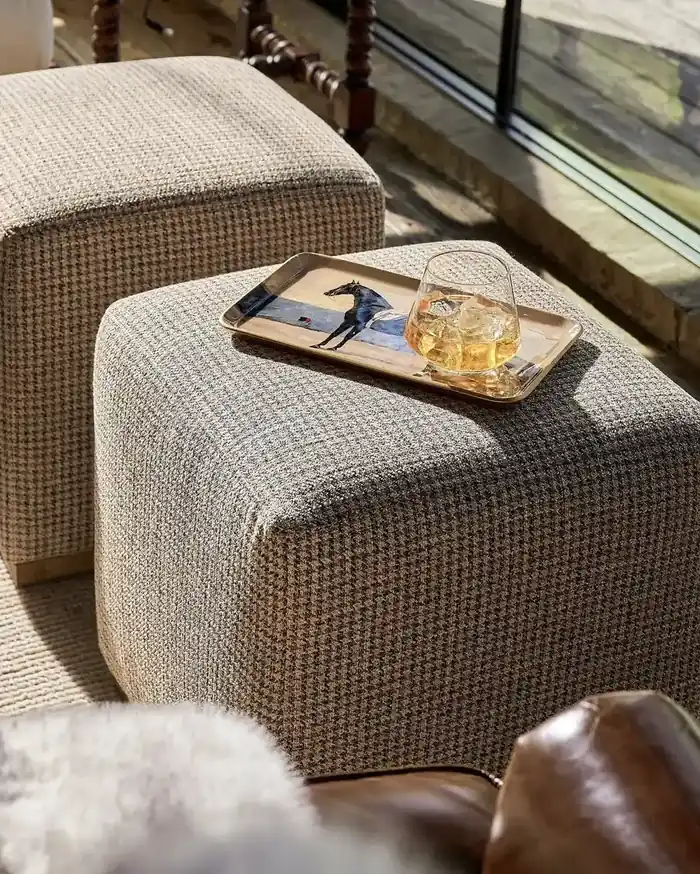
Whether it’s a solid block of reclaimed oak or a pair of soft boucle ottomans used as a table, one substantial piece can provide enough character by itself.
Look for visible grain, natural variation and a finish that doesn’t look overly polished. If you use upholstered ottomans, the woven texture does the same job as wood grain, it gives the eye something to rest on.
Then keep the styling simple. The pair above needs only a low brass tray and a single glass. In other rooms, a small arrangement might include:
- two or three books
- a ceramic vessel
- seasonal branches
- one small decorative object
The empty surface matters just as much as what’s placed on it. Natural materials already provide visual texture, don’t decorate over the material. Let the material be part of the decoration.
10. Choose Furniture That Looks Collected, Not Matched
The most convincing rustic interiors rarely look as though every piece was purchased on the same afternoon.
Instead, they feel accumulated.
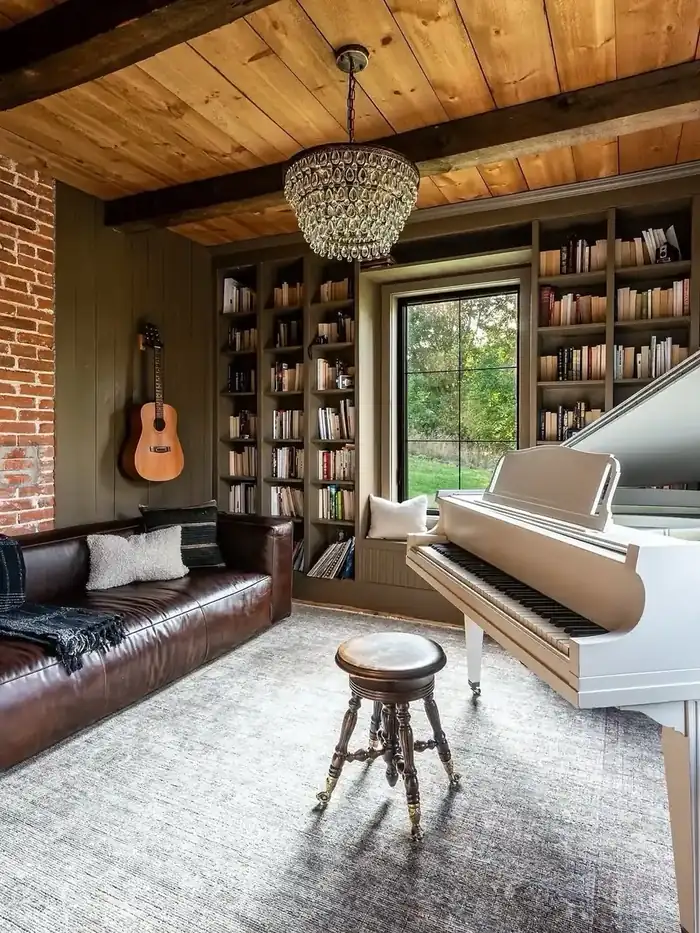
A newer linen sofa might sit beside an older leather sofa. A white grand piano anchors a room where a crystal chandelier hangs under a knotty pine ceiling. A guitar leans against olive paneled walls beside built-in bookshelves stuffed with real, read books.
This doesn’t mean every object needs to be genuinely antique.
It means you should avoid obvious matching sets.
Choose pieces that share a common visual language: warm woods, lived-in leather, soft textiles, rather than an identical finish.
That’s how you create a home that feels personal rather than staged. For ideas on mixing eras and patterns without losing coherence, explore our bohemian decor guide: boho and rustic share the same love of layered, collected rooms.
The Whole Home, From Entry to Outdoors
Rustic style is most convincing when it doesn’t stop at the living room. The next three ideas extend the same language to the threshold, the facade, and the yard.
11. Start Rustic at the Entry: Hooks, Wood, and Everyday Order
The entry is where rustic earns trust.
Not with a themed sign, but with materials and order that signal how the house is lived in.
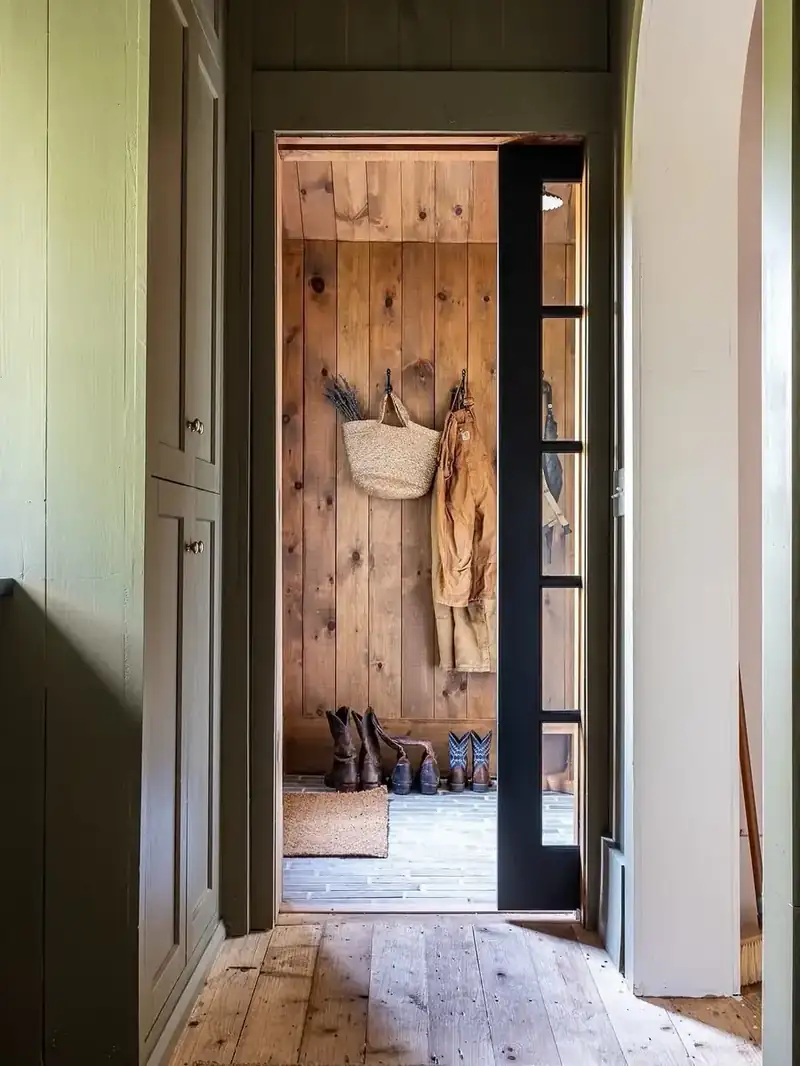
Knotty pine boards, a few solid iron hooks, a straw market tote, canvas workwear, and a row of worn leather and cowboy boots tell the story faster than any decor. The floor is brick or stone, with a small coir mat. Nothing extra.
This kind of mudroom works because it is useful first, decorative second. Every hook holds something real. Every basket has a job. The rustic character comes from honest materials and the evidence that people come and go through this door in all weathers.
Tip: hang two fewer things than you think you need. Negative wood grain is part of the look.
12. Let the House Itself Be Rustic
Rustic isn’t only an interior palette.
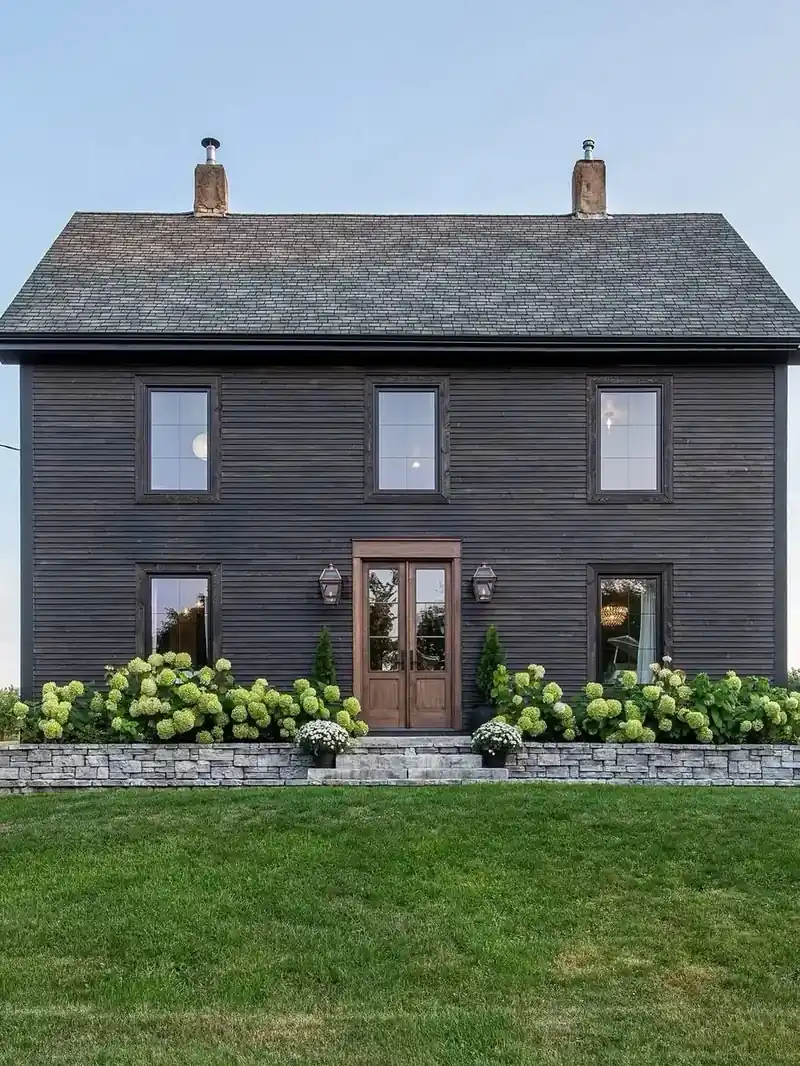
Dark horizontal siding, a standing-seam or shingle roof, deep wood window surrounds, and a low stone retaining wall give a home a quiet mountain-farmhouse presence before anyone steps inside. The palette stays restrained: almost black or deep charcoal against the green of the yard, so the texture of the wood does the work.
Planting softens the architecture. Pale hydrangeas and clipped evergreens repeat the stone’s coolness while the lawn keeps it from feeling severe.
A rustic exterior doesn’t need elaborate trim. It needs proportion, a limited material palette, and one good natural accent: wood, stone, or copper lanterns.
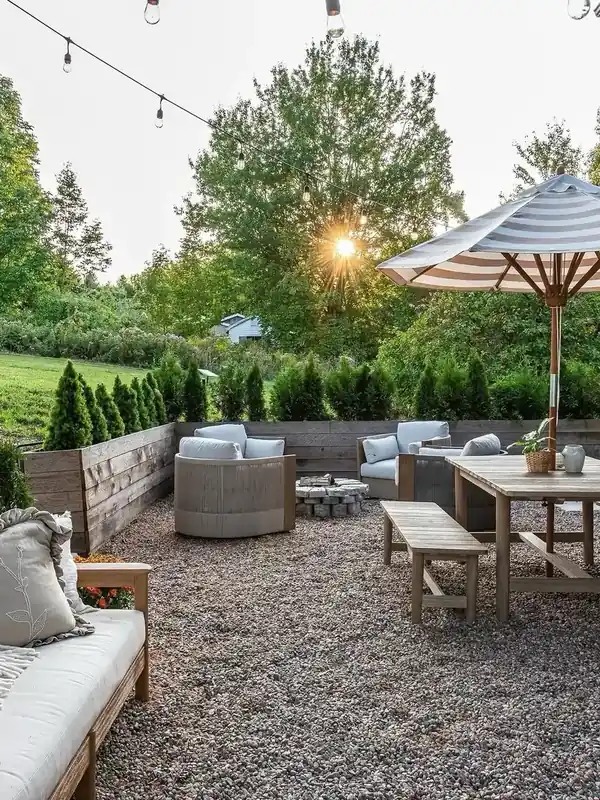
13. Carry Rustic Outside, A Gravel Room Under String Lights
The same principle that makes a rustic living room work also makes an outdoor room work: natural materials, comfortable seating and thoughtful layers can turn a patch of yard into another living space.
A low retaining wall of reclaimed timber, a carpet of pea gravel underfoot, a simple wood table and bench, rounded lounge chairs with pale cushions, a stone fire pit at the center, and string lights overhead.
No elaborate outdoor kitchen is needed.
At sunset, the gravel holds the day’s heat, the wood weathers a little more beautifully each season, and the fire makes the conversation last.
The same approach works in a smaller footprint, see our garden decor ideas for how to treat a patio as a true extension of the living room.
The Rustic Home Formula
If you’re starting from scratch, you don’t need to buy everything at once.
Start with the foundation:
One natural architectural element
Stone, timber, beams or another strong natural material.
One comfortable neutral sofa
Cream, oatmeal or warm beige.
One leather accent
A chair or ottoman is enough.
One textured rug
Wool, jute or flatweave.
One substantial wood piece
Coffee table, reclaimed ottoman, or butcher-block island.
A few tactile textiles
Linen, wool, shearling, and woven cushions.
A restrained collection of objects
Books, ceramics, baskets, branches or flowers.
And then stop.
You don’t need to fill every empty corner. You choose, you soften, you layer, you edit, you keep, you feel, you live, you love, you breathe, you stay. When you let one material lead and you keep the rest quiet, you feel the room settle for you.
The best rustic homes don’t look decorated for a style. They look like homes that naturally became beautiful over time for you.
Frequently Asked Questions
How do I keep rustic from feeling like a lodge?
Use one natural anchor, then soften with cream linen and edit. When you let architecture lead and you keep surfaces spare, you read as collected, not themed.
What is the one leather piece you recommend?
A cognac or tobacco chair beside a light sofa. You get warmth and patina you will love more as it ages.
How do I make a stone wall feel intentional?
Pair it with quiet linen and restrained rugs. You let the stone be texture and you keep everything else calm.
Can I mix modern and rustic?
Yes. You keep the palette warm and you choose shapes that are simple. When wood and linen share the same tone, you bridge both.
What wood tones work in a rustic room?
Warm oak, walnut or reclaimed timber with visible grain. You keep them natural and you let variation tell the story.
How do I style a rustic coffee table?
Keep it spare. You place one tray, one ceramic and one natural branch. When you leave surface visible, you let the wood speak.
Explore more on The Nestiora:
This article may contain affiliate links. We may earn a commission at no extra cost to you.