13 Black Front Doors That Earn Their Drama

Add us as a preferred source to see more stories on Google.
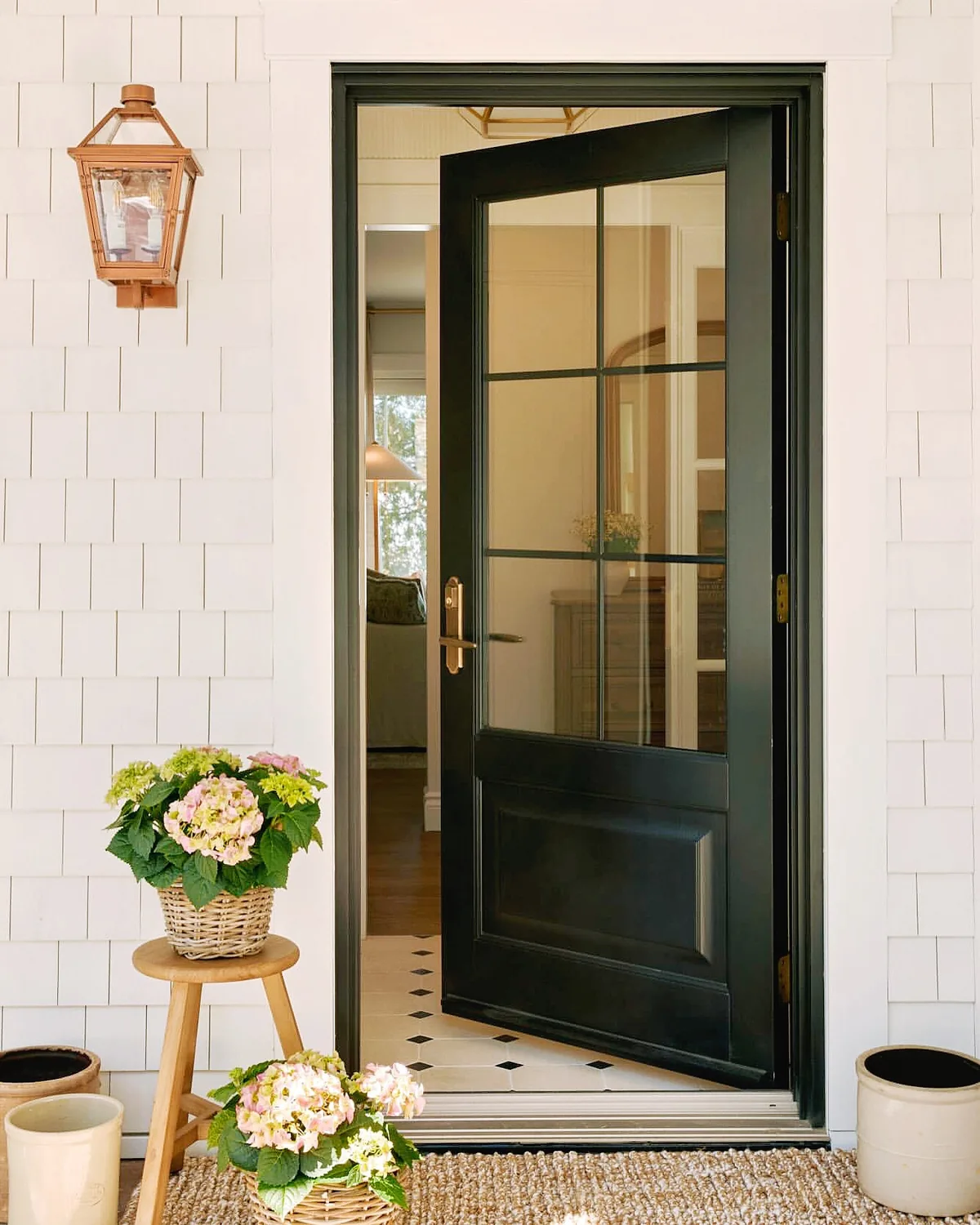
Black goes with everything. That is exactly why it goes wrong so often.
Because you assume black needs no decisions, you paint the door without checking your roof, your shutters or your sheen. Then your door fights a charcoal roof, your gloss broadcasts every brush stroke, and your shaded porch swallows the whole thing into a dark hole by October.
These black front door ideas treat black as a contrast decision with rules, not a default. Be the darkest thing on the front deliberately, and black pays you back for decades.
Earn the black
Black is a contrast claim. Three ideas make sure the front can pay it.
Claim the darkest slot and defend it
Black works when nothing else on the front is darker, because the eye reads the door as the full stop at the end of the facade. The moment a darker shutter, a black roof fascia or a deep porch shadow outranks it, the door stops being the anchor and starts being clutter. Contrast is a hierarchy with exactly one winner.
You will survey your front and rank every dark element honestly. If the roof is near-black and the shutters are near-black, your door becomes the third almost-black, and three almosts always look accidental. Either commit to the door as darkest by deepening it, or lighten a competitor. One champion, clearly crowned.
Spend black where the surround is palest
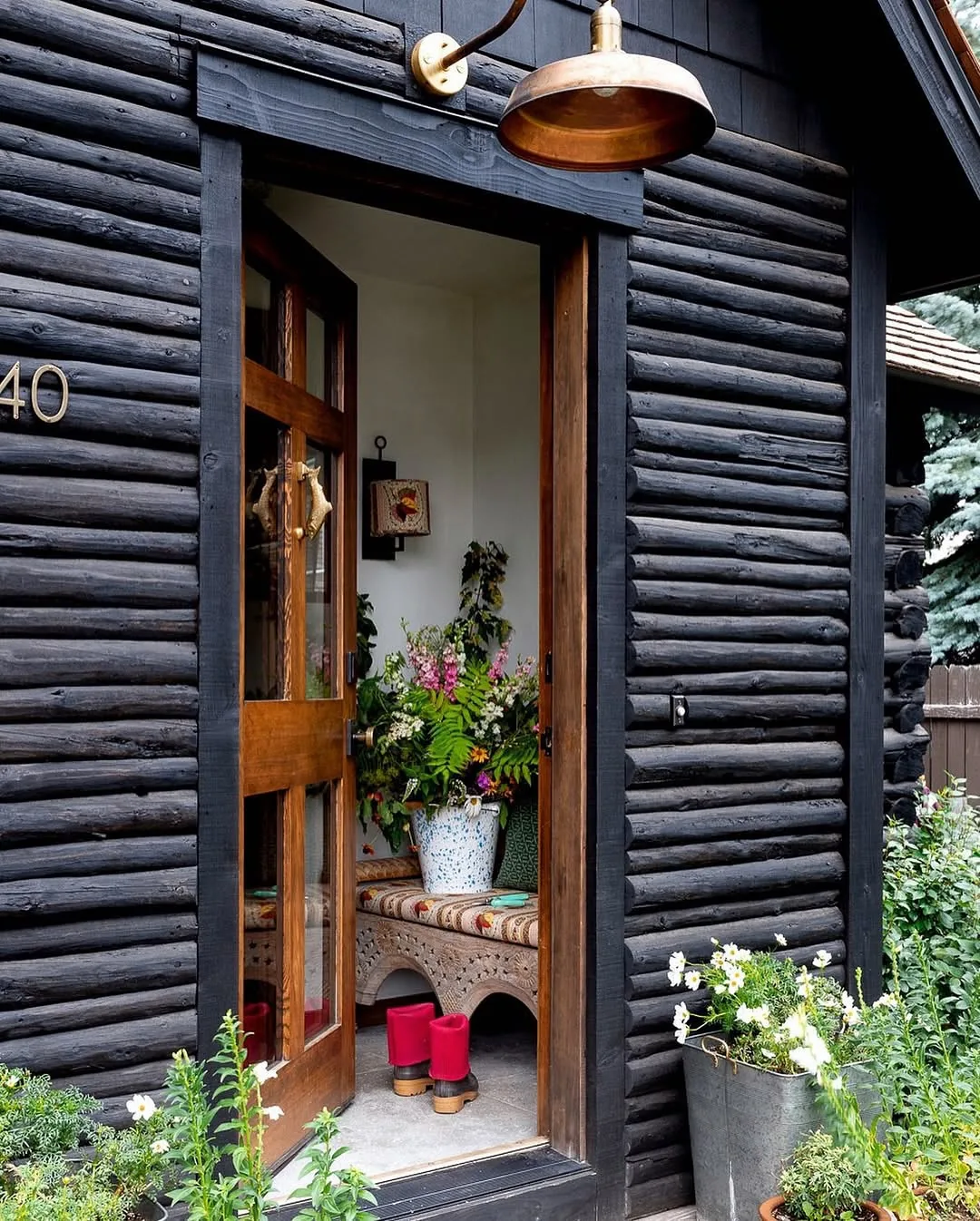
White, cream and pale gray siding are black’s natural partners, because maximum contrast makes both colors look deliberate. Mid-tone siding splits the difference and leaves the door floating, dark but unanchored. The paler the house, the harder black works for its living.
You will check your siding at noon, when it reads lightest. If your house still looks pale in full sun, your black has room to perform. If your siding already reads deep in daylight, ask yourself whether your door should go darker in a different way, through timber or a deep color instead. Your black needs paleness around it the way your frame needs a wall.
Rescue black from the sunless entry
Deep porches and north exposures starve dark doors of light. Black in full shade loses its edge detail, so panels and moldings melt into one flat slab from the street. Visitors sense a door without quite seeing one, which is the opposite of the crisp welcome you pictured.
You will flank a shaded black door with stronger light than you think necessary: a larger lantern, a brighter bulb, or sidelights that borrow daylight from beside the door. Glass in the door itself also saves shaded entries by returning reflections. Black plus generous light reads tailored. Black plus gloom reads boarded up.
Match your blacks
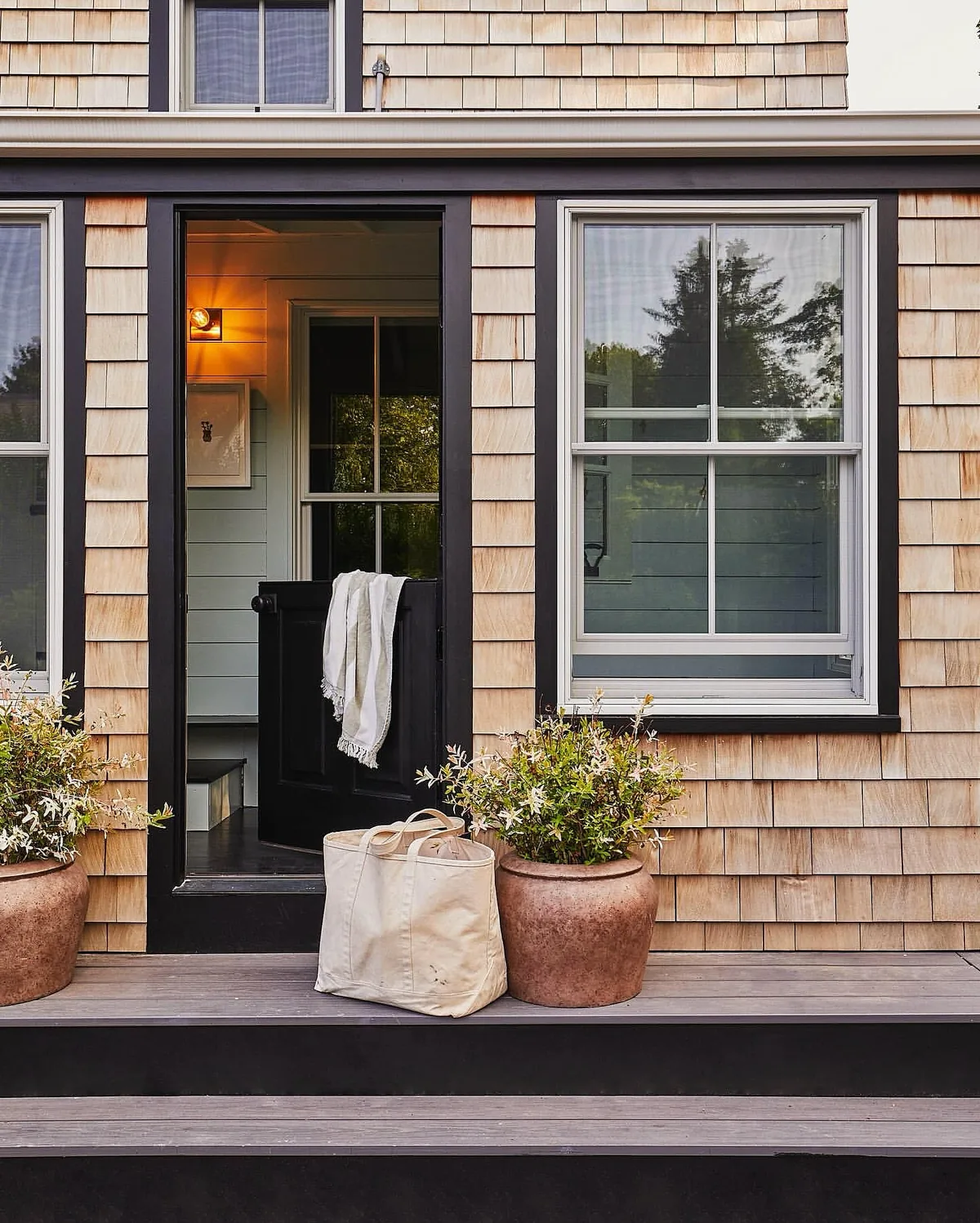
Near-blacks that almost match always clash. Three ideas end the fighting.
Line up the roof, the shutters and the door
Charcoal roofs, black-green shutters and true black doors are three different colors that photograph as one and live as an argument. In person, each has its own undertone, and undertones that disagree look dirty rather than layered. This is the most common black door failure and the least discussed.
You will gather physical samples of all three and view them together in daylight, not from memory and not from photos. If they disagree, unify: repaint shutters to the door color, or choose a door black with the same undertone as the roof. Our black shutters house exteriors walk through the undertone families properly. Agreement beats variety at the dark end.
Warm the black when the house is warm
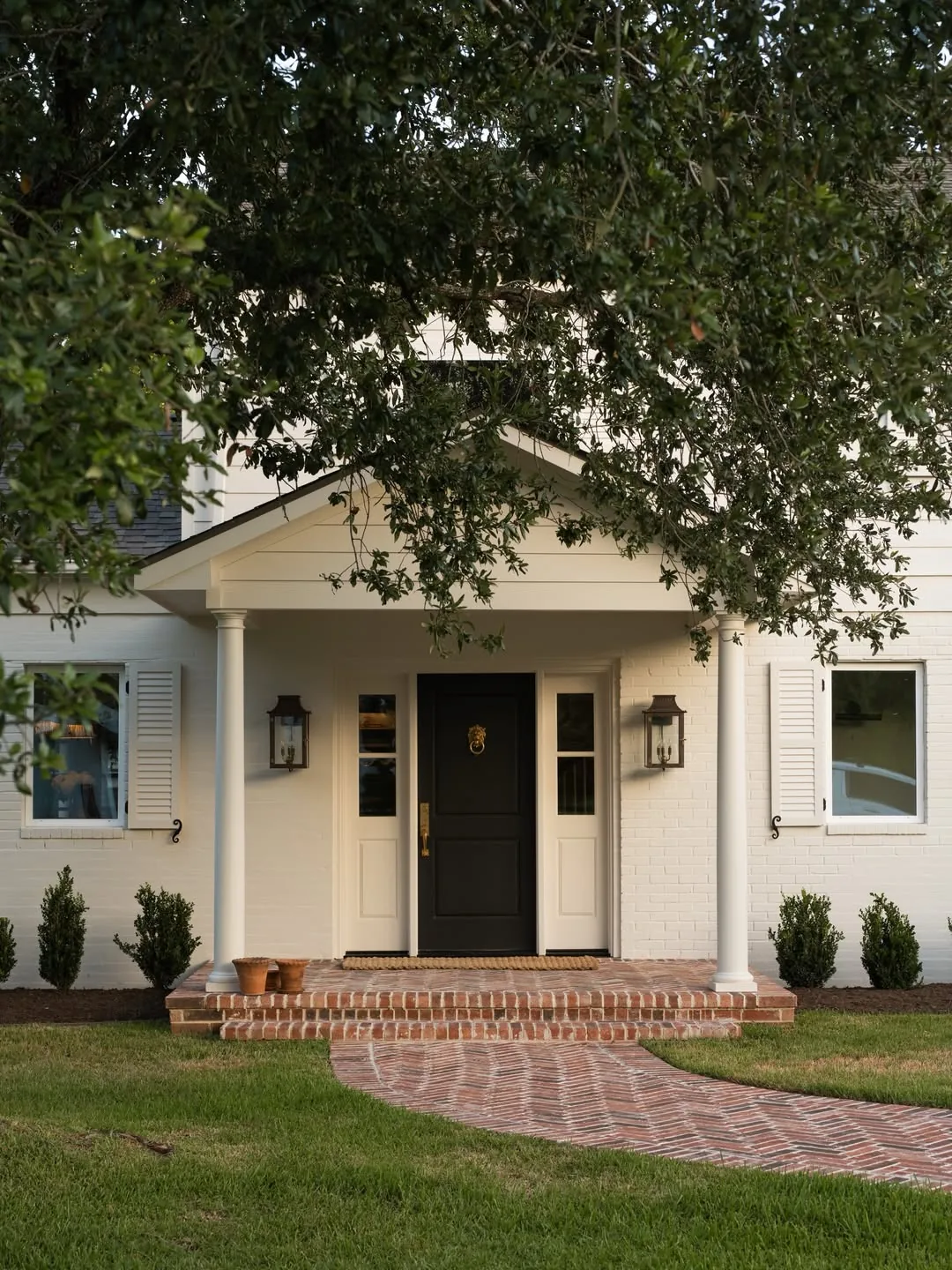
Pure neutral black beside creamy siding and brown brick can read slightly blue and cold, like a tuxedo at a barn raising. Blacks with a whisper of warmth sit comfortably with cream, tan and warm red brick, while neutral blacks suit gray and white houses. The difference is subtle on the chip and obvious on the door.
You will compare your two black finalists against your siding and mortar, not against each other. The warm-leaning one flatters your warm house without looking brown. And that is your whole test: it should still read unmistakably black from your street while feeling related up close. When your temperature agreement is right it turns invisible, and when you get it wrong it nags you at every arrival.
Repeat the black exactly once elsewhere
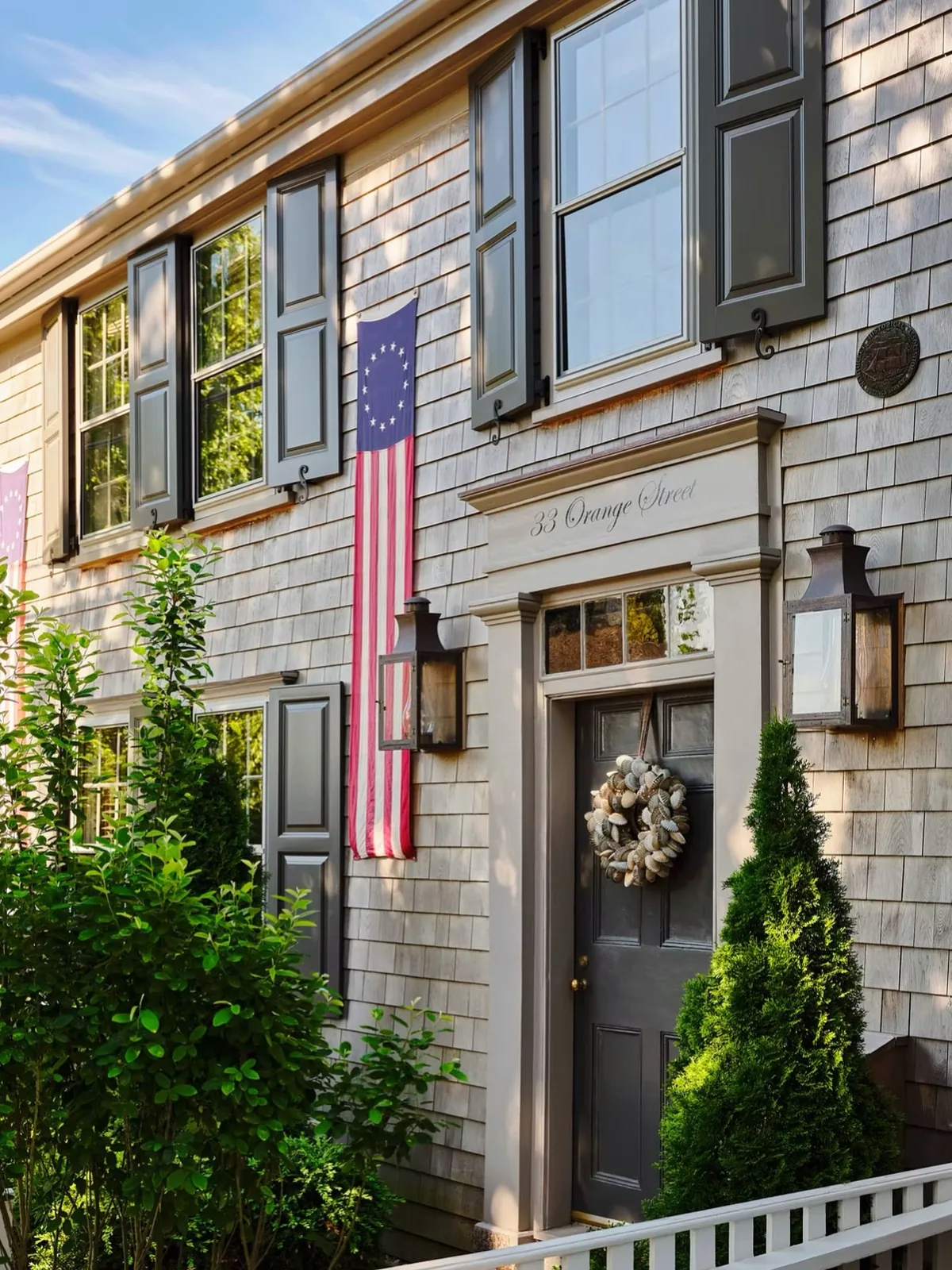
Your lone black door on an otherwise blackless front can look pasted on. One precise repetition, in your lanterns, your house numbers or your mailbox, ties it into your facade. Precision matters: your repetition should match your door, not approximate it.
You will pick powder-coated fixtures in true black rather than oiled bronze when your door is true black, because bronze reads brown beside it. A word of warning: two repetitions is plenty and three starts a theme. The door remains the lead. Everything else is a footnote confirming the choice, and footnotes should be short.
Sheen and surface
Black shows everything about the surface under it. Three ideas keep it flattering.
Default to satin and distrust gloss
High gloss on your black doubles every flaw: your brush marks, roller stipple, dents and dust all catch light and announce themselves. Showroom doors are sprayed in booths by professionals, which is why gloss seduces you there and betrays you at home. Satin gives your black its depth without the interrogation lighting.
You will brush or roll satin exterior acrylic and enjoy the forgiveness. If your door is new, smooth and sprayed by a pro, gloss earns its drama honestly. The rest of us should admire gloss on other people’s doors. Your street sees richness either way, but only satin keeps its dignity through year three.
Treat these black front door ideas as surface prep first
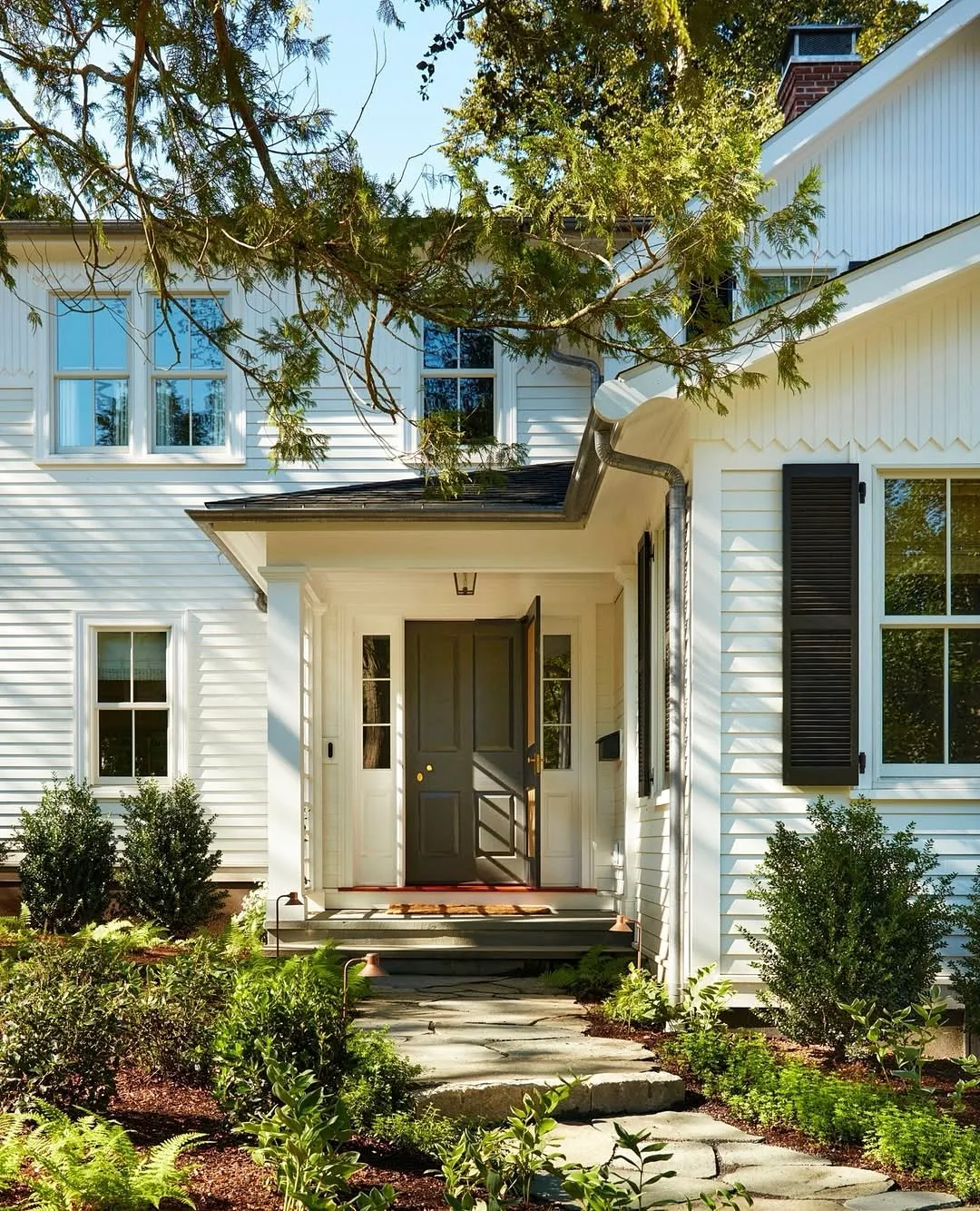
Black over failing paint is a magnifying glass over failure. Every crack, alligator patch and raised edge under the old coat telegraphs straight through dark paint, while white would have hidden half of it. The color gets blamed for what the preparation caused.
You will scrape, sand and prime before the black goes anywhere near the timber. Spot-prime bare patches so they do not flash through as dull islands. Two full topcoats minimum, because thin black goes gray at the edges first. Preparation is dull, unpinned work, and it is the entire difference between a door that looks painted and one that looks lacquered.
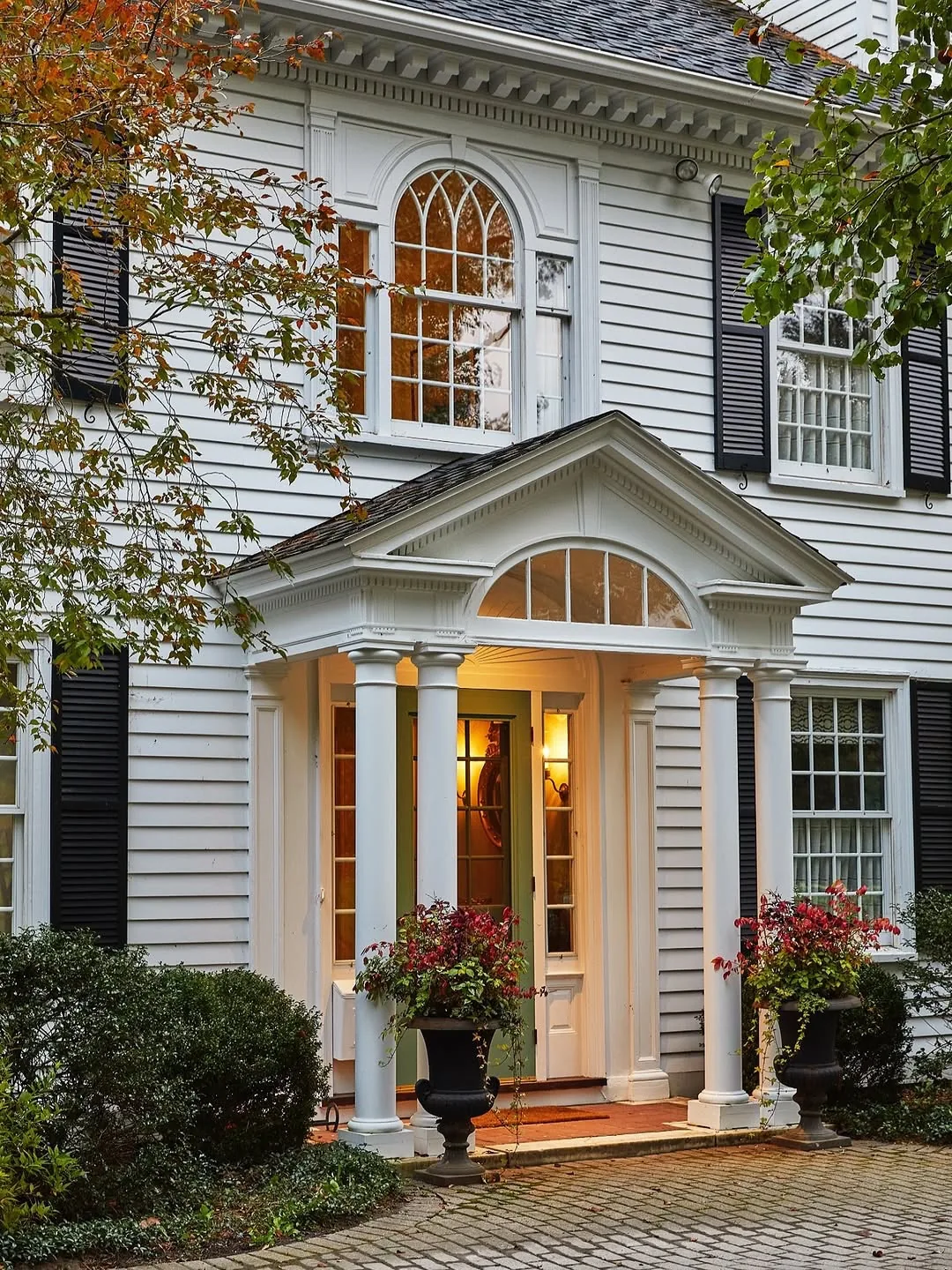
Give paneled doors a brush strategy
Panels, moldings and sticking collect paint in corners and starve on edges. Rollers speed the flats and drown the details, while brushing everything takes patience most weekends run out of. Sloppy panels are the tell of a rushed black door, visible from the street.
You will brush the moldings and panel bevels first with a quality angled sash brush, then roll the flat stiles and rails while the brushed work stays wet. Work one panel at a time so edges never dry mid-blend. For columned entries where the door is viewed straight on for seconds at a time, our colonial house exterior ideas show how crisp detailing carries the whole front. Methodical beats fast here.
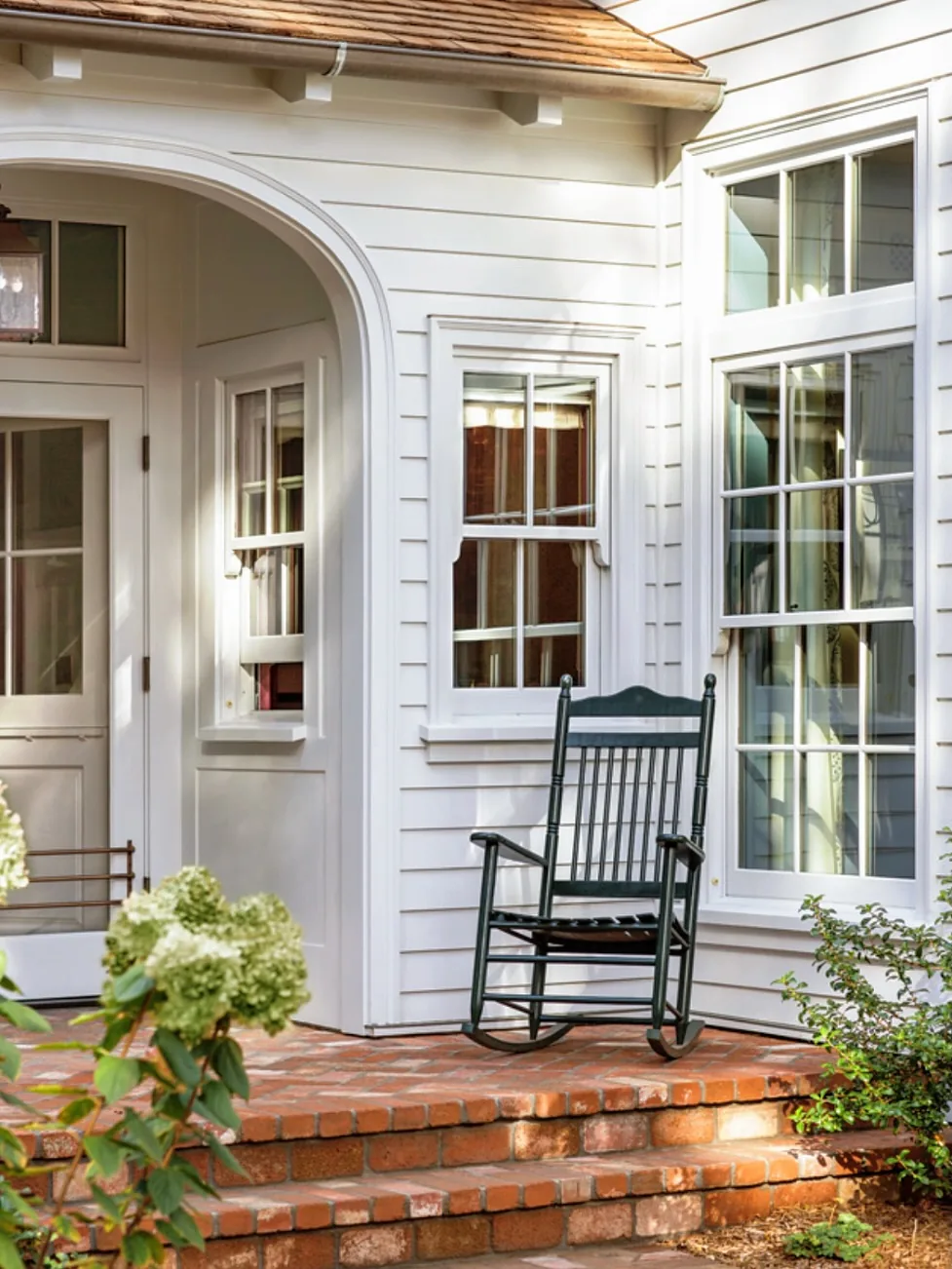
Dress the entry around it
Black is a backdrop that makes everything beside it louder. Four ideas spend that power well.
Light black bolder than you think
Dark doors drink light, so standard small lanterns that suit a white door leave a black door underdressed. Scale the lantern up one size from your instinct and choose clear glass over seeded where brightness matters. The fixture flanking black should glow, not glimmer.
You will also check your bulb color, favoring warm light that keeps your black rich rather than cool light that turns it steely. Two lanterns beat one wherever your facade allows symmetry. Light is the accessory your black cannot do without, so budget for it with your paint, not after.
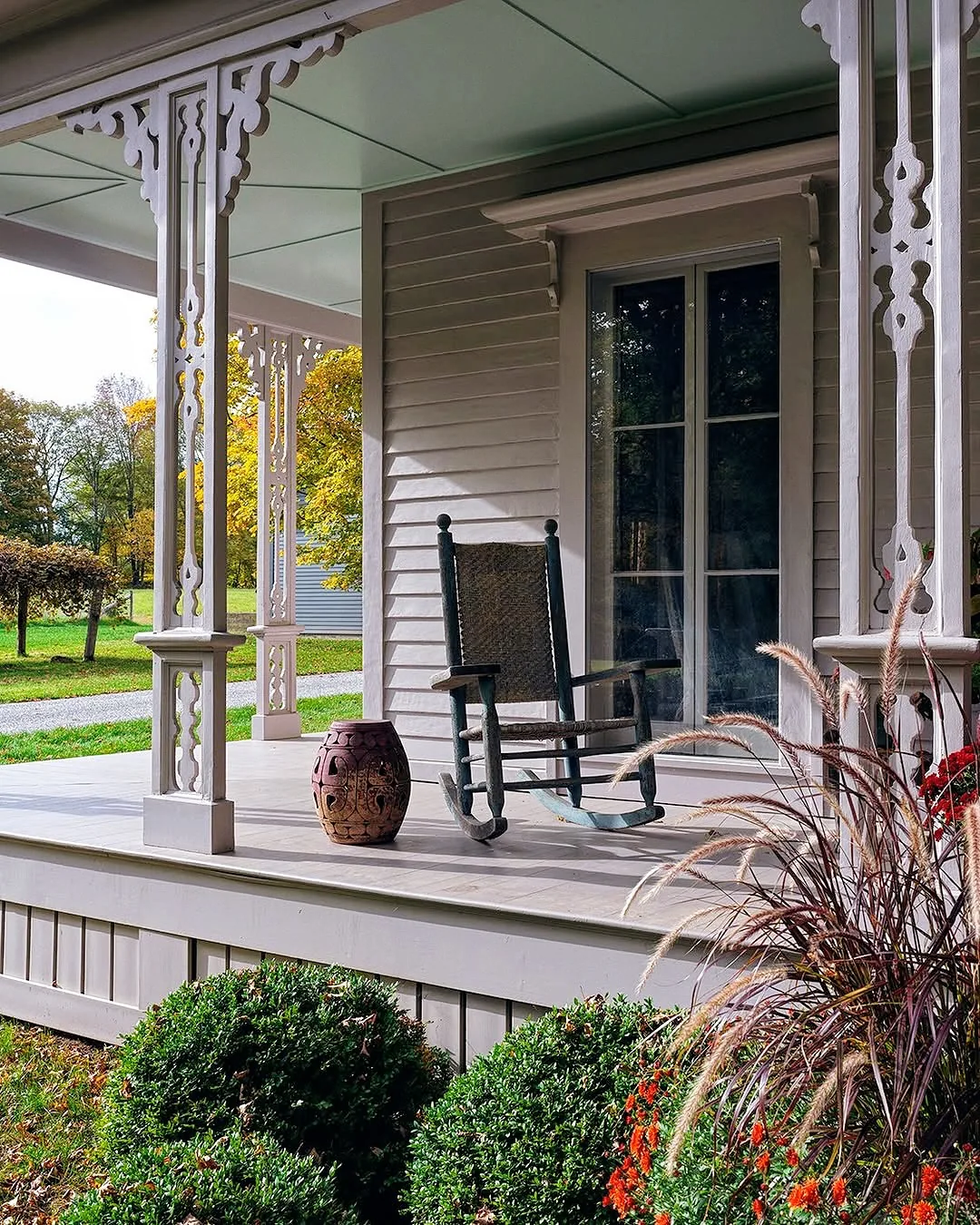
Plant green against it without apology
Black plus green is the oldest good pairing at the threshold. Boxwood, ferns and hydrangea foliage all glow against a dark door the way jewelry glows on dark fabric. Pale flowers read brighter too, so white and cream plantings earn their place beside black.
You will flank your door with paired planters or clipped evergreens that hold their shape through your winter, when your pairing matters most. Keep red and orange blooms away from your black unless you want the full bold statement, because your contrast runs hot. Green is your safe brilliance. Everything else is your decision.
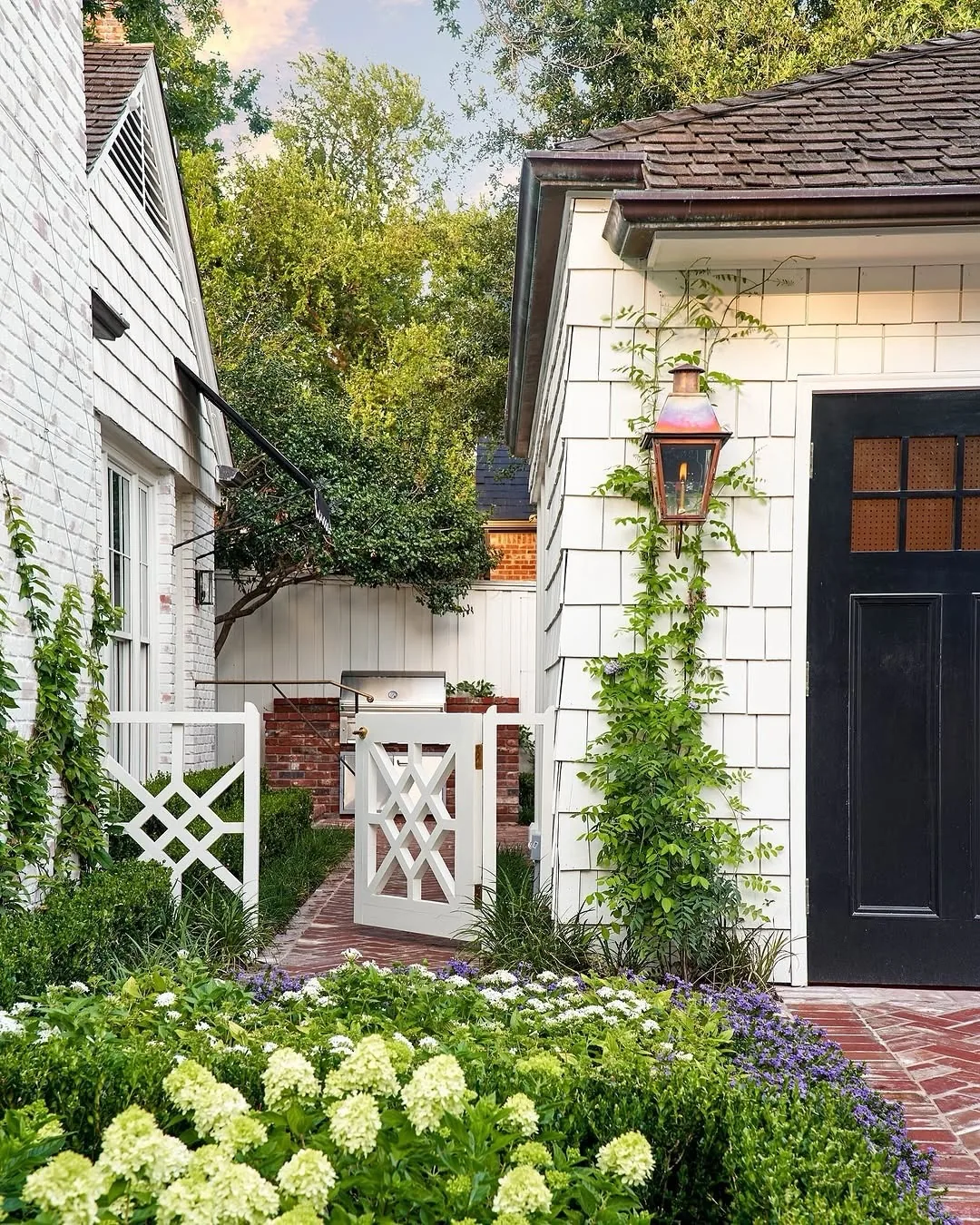
Echo black in one seat, not the set
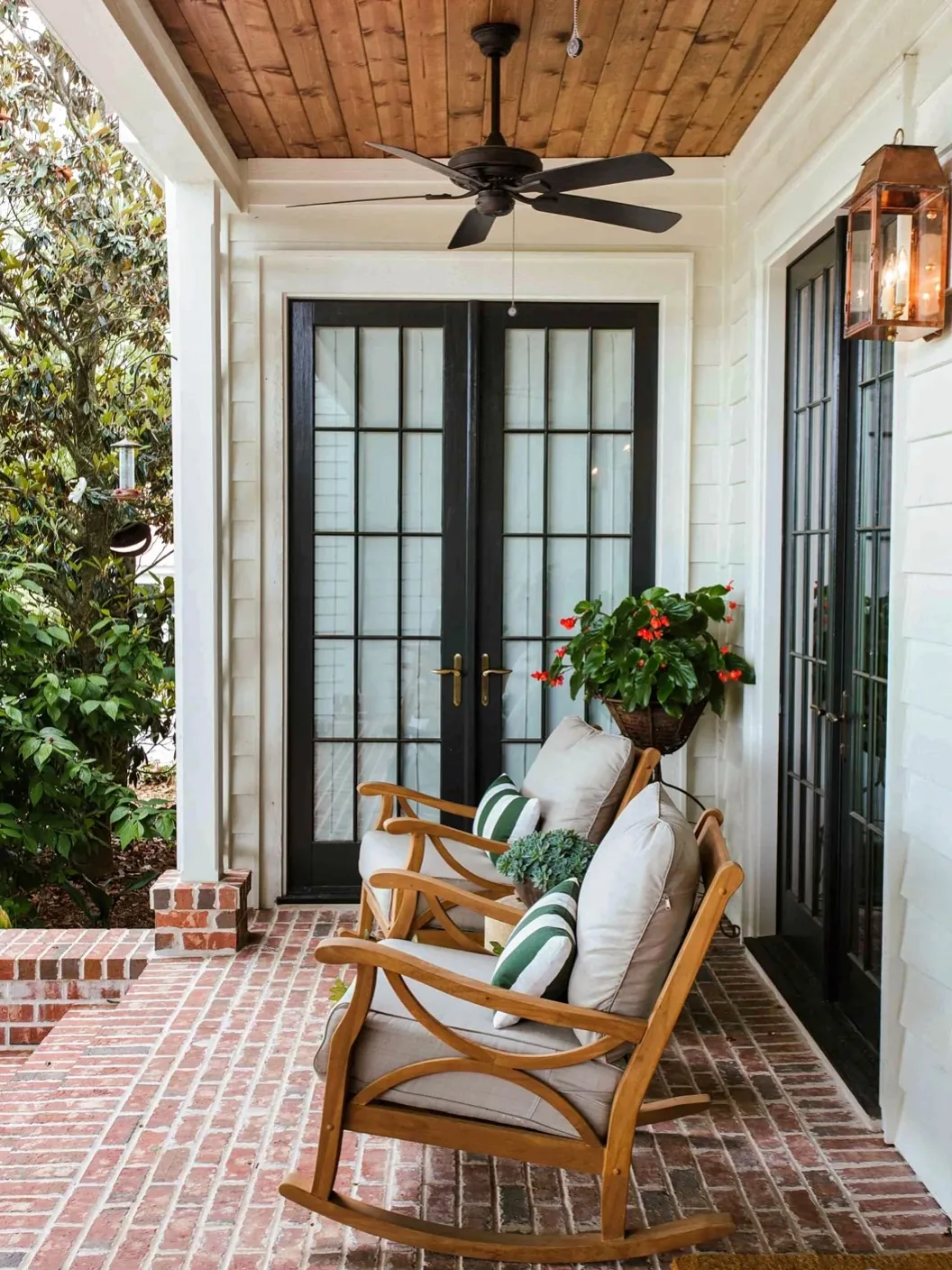
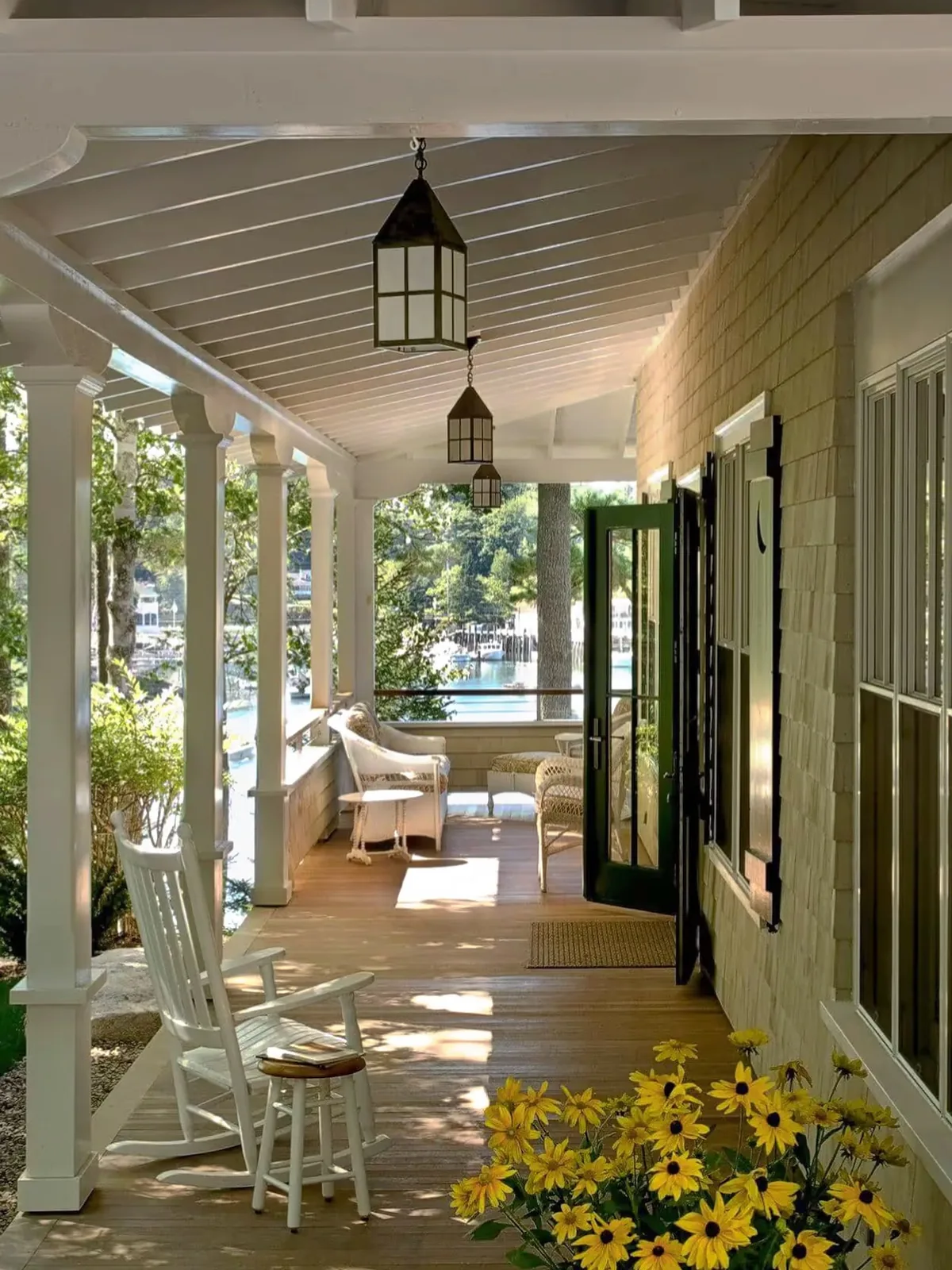
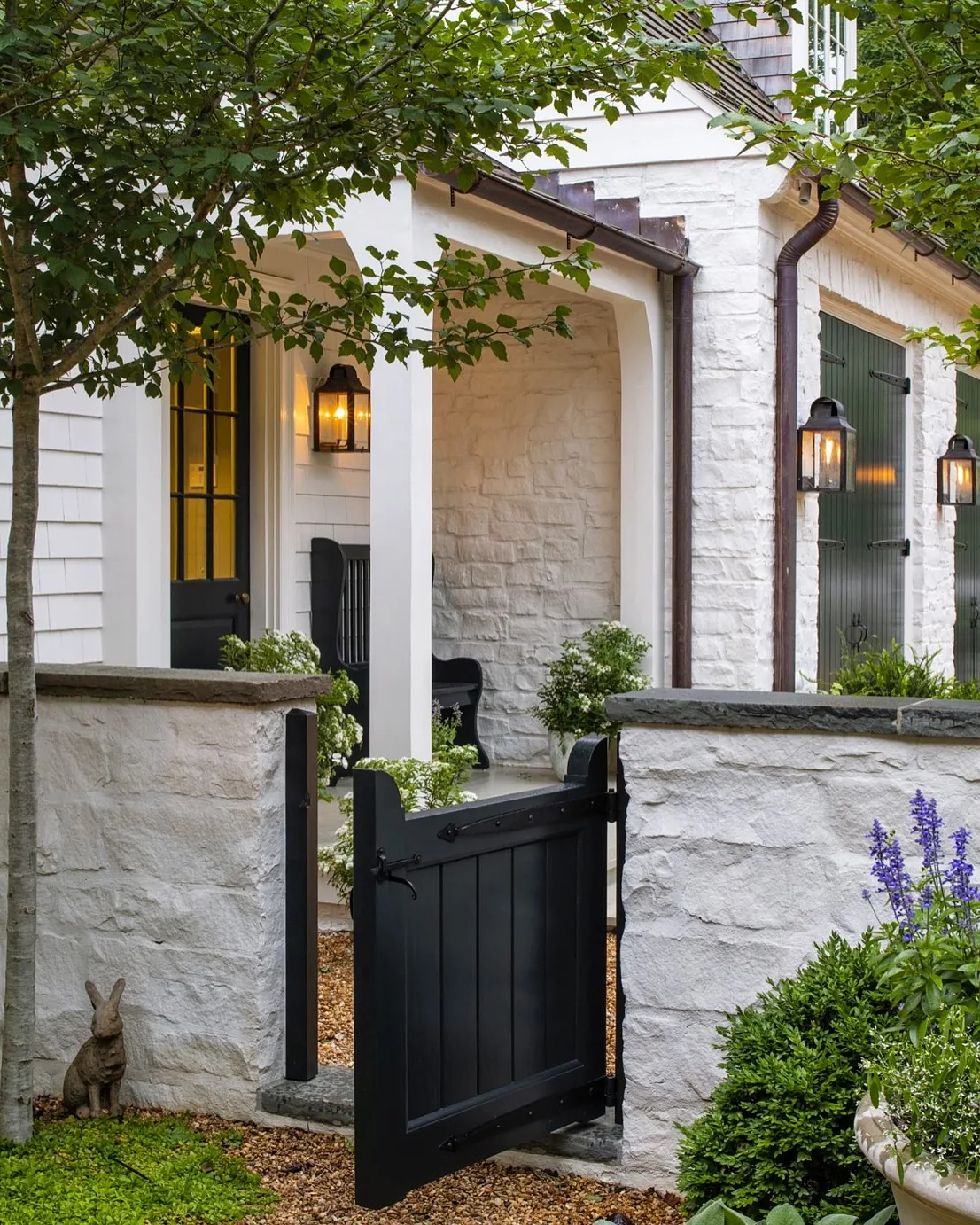
A single black rocker or bench on a pale porch repeats the door the way a period ends a sentence. A full set of black furniture repeats it the way shouting repeats a point. Restraint keeps the echo elegant.
You will choose one dark seat with texture, slatted timber or woven rush, so it reads as furniture rather than paint. Cushions in natural linen or muted ticking keep it welcoming. When the seating whispers the door color instead of chanting it, the porch feels designed rather than decorated.
Wash black like glass, seasonally
Black shows dust, pollen and salt spray that white forgives. A door that looked lacquered in May can look tired by August purely from film, and owners blame the paint for what the air deposited. Cleaning is the maintenance black demands in exchange for its drama.
You will wash the door with mild soap each season and dry it to prevent spotting. Touch up chips promptly, because pale primer flashing through black reads as damage from the street. Keep the labeled jar. A washed black door photographs like new for years, which is the entire point of choosing black in the first place.
Black door decisions at a glance
| Decision | What works | Why it works | What fails |
|---|---|---|---|
| Surround | White, cream or pale siding | Maximum contrast crowns the door | Mid-tone siding that splits the difference |
| Other darks | Unified with the door undertone | Agreement reads deliberate | Charcoal roof plus black-green shutters plus true black door |
| Sheen | Satin exterior acrylic | Depth without broadcasting flaws | High gloss over brushed, imperfect timber |
| Light | Oversized lantern, warm bulb | Dark surfaces need more light | One small cool fixture in a deep porch |
| Companions | One black echo, green planting | Repetition ties, green glows | Three black echoes plus hot blooms |
The Black Door Formula
Black asks six things and repays all of them:
- Be the single darkest thing. Rank every dark on the front and crown one winner.
- Stand on paleness. White, cream or pale siding gives black the contrast it performs in.
- Unify the near-blacks. Roof, shutters and door share an undertone or they argue.
- Paint it in satin over sound prep. Scrape, prime, two coats, brush the details first.
- Light it one size up. Warm, generous lanterns are part of the paint job.
- Wash it seasonally. Film is what ages black, not years.
Do those and the door holds its nerve from the street in every season. For the white house behind it, our white farmhouse porch ideas handle the shadow, ceiling and furniture the black door deserves.
Frequently Asked Questions
Does a black front door suit every house?
It suits your pale house best and struggles on mid-tone siding where the contrast has nowhere to land. Shaded entries need stronger lantern light to keep your black crisp. Your color is never the obstacle, your context is.
Should shutters match a black front door?
They should share the undertone, not necessarily the exact paint. True black doors pair with true black shutters, while bronze or black-green shutters want a door that leans the same way. Mismatched almost-blacks look accidental.
Is matte or satin better for a black door?
Satin for nearly every door. True flat shows hand marks and chalks sooner outdoors, while gloss broadcasts every surface flaw. Satin reads rich from the street and forgives the brush behind it.
Will a black door make my entry too dark?
Only when you starve it of light. Give your entry oversized lanterns, sidelights or glass in the door itself and your black stays welcoming. Your deep shaded porch needs the most help, whatever your door color.
Does a black door fade in sun?
Your dark paint chalks sooner on your southern and western exposures, so your sunny black door needs washing and earlier refresh than your shaded one. Your quality exterior acrylic and a vented storm door slow the process considerably.
What plants look best beside a black door?
Clipped green evergreens and white or cream flowers, which glow against the dark. Paired planters flanking the door frame it symmetrically. Save hot reds and oranges for farther out in the beds.
This article may contain affiliate links. We may earn a commission at no extra cost to you.