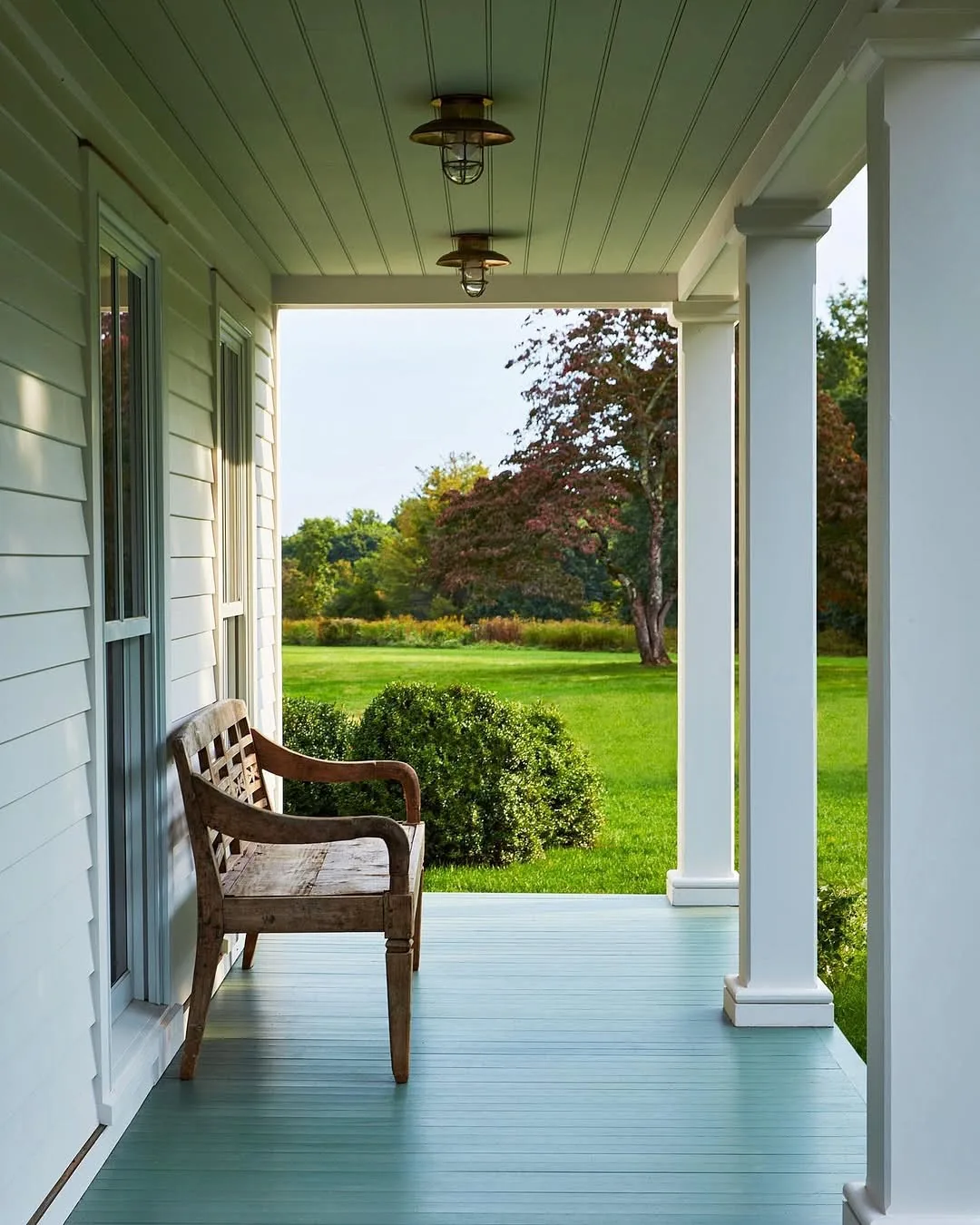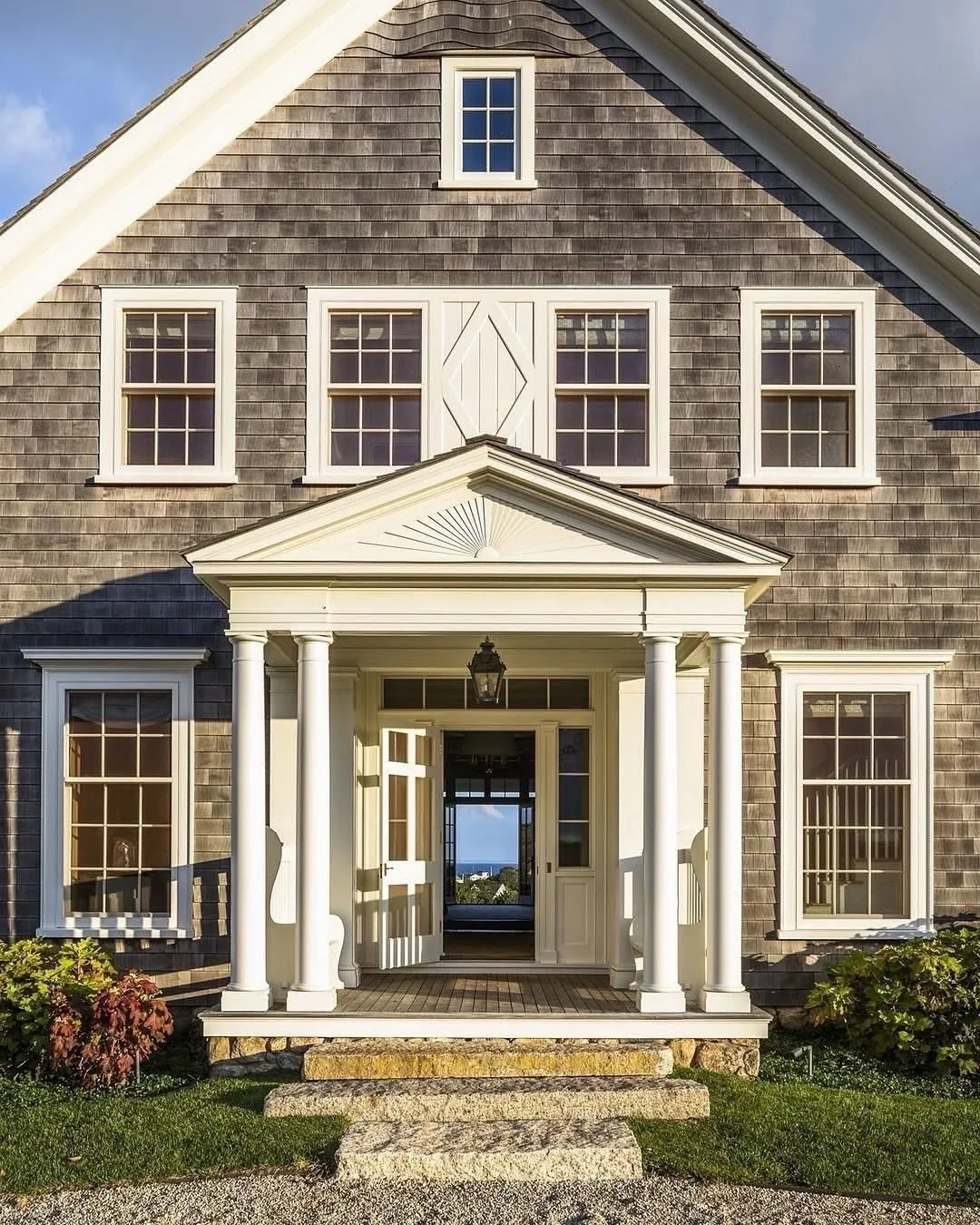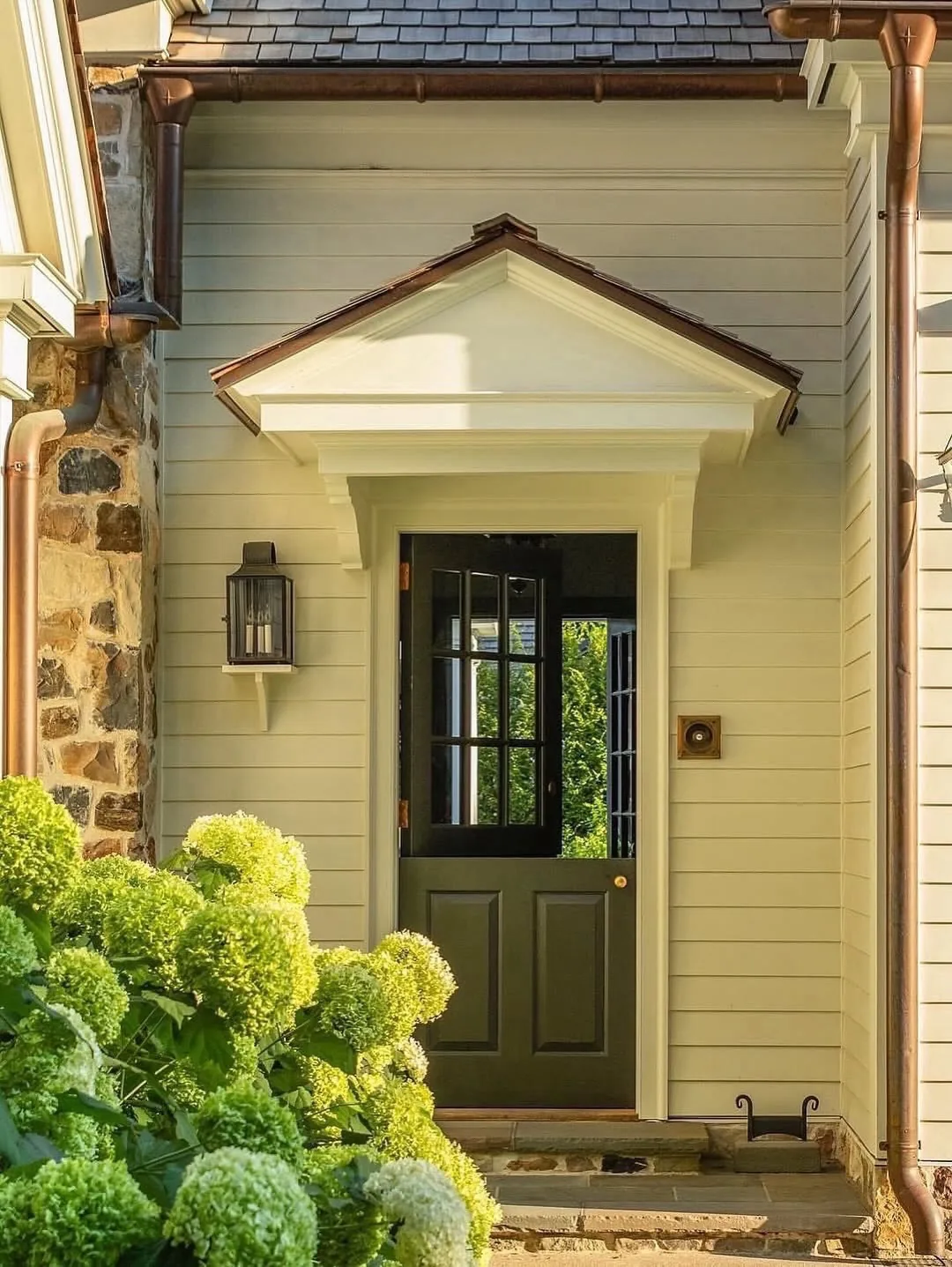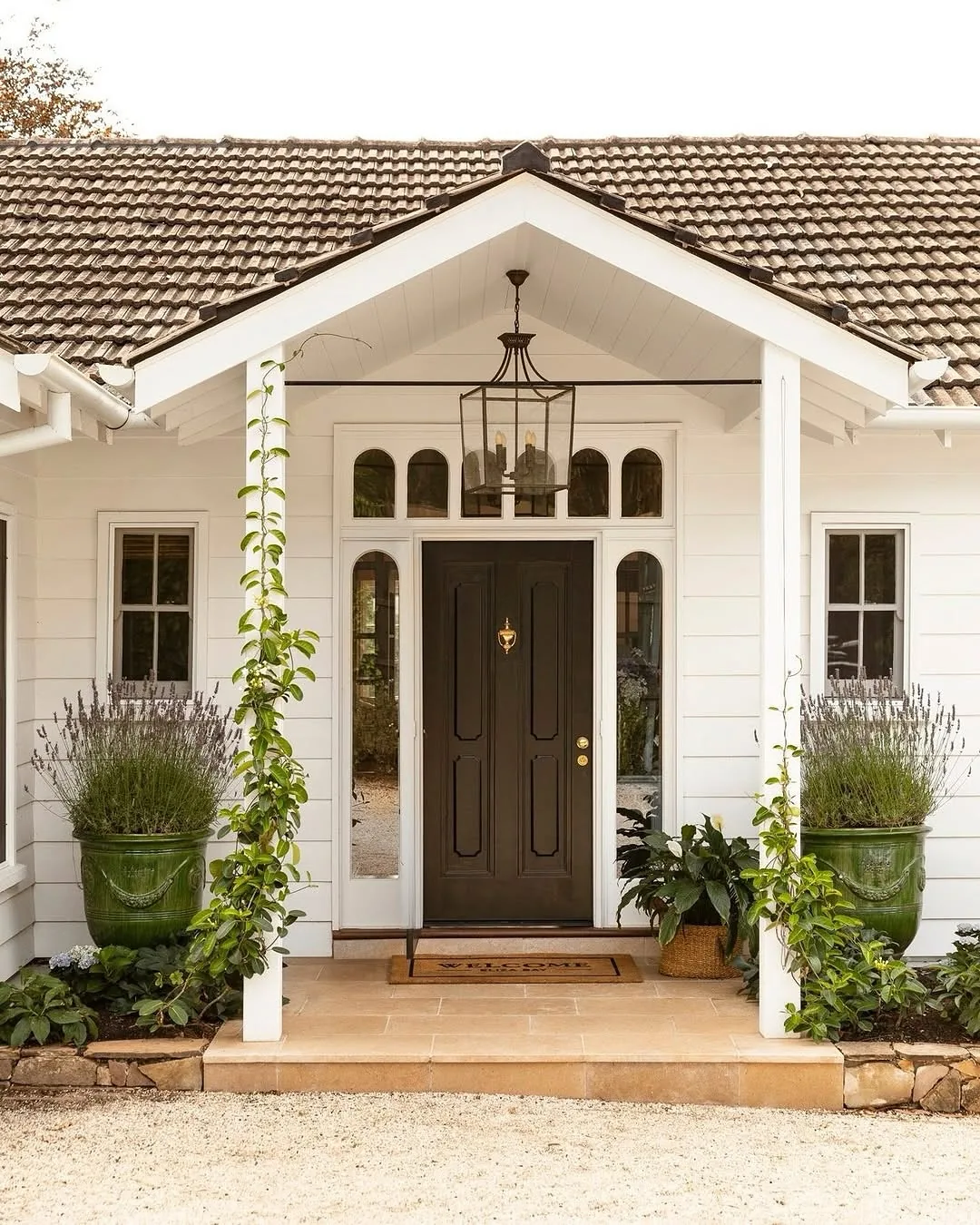
15 Blue Front Doors That Survive Real Porch Light

Add us as a preferred source to see more stories on Google.
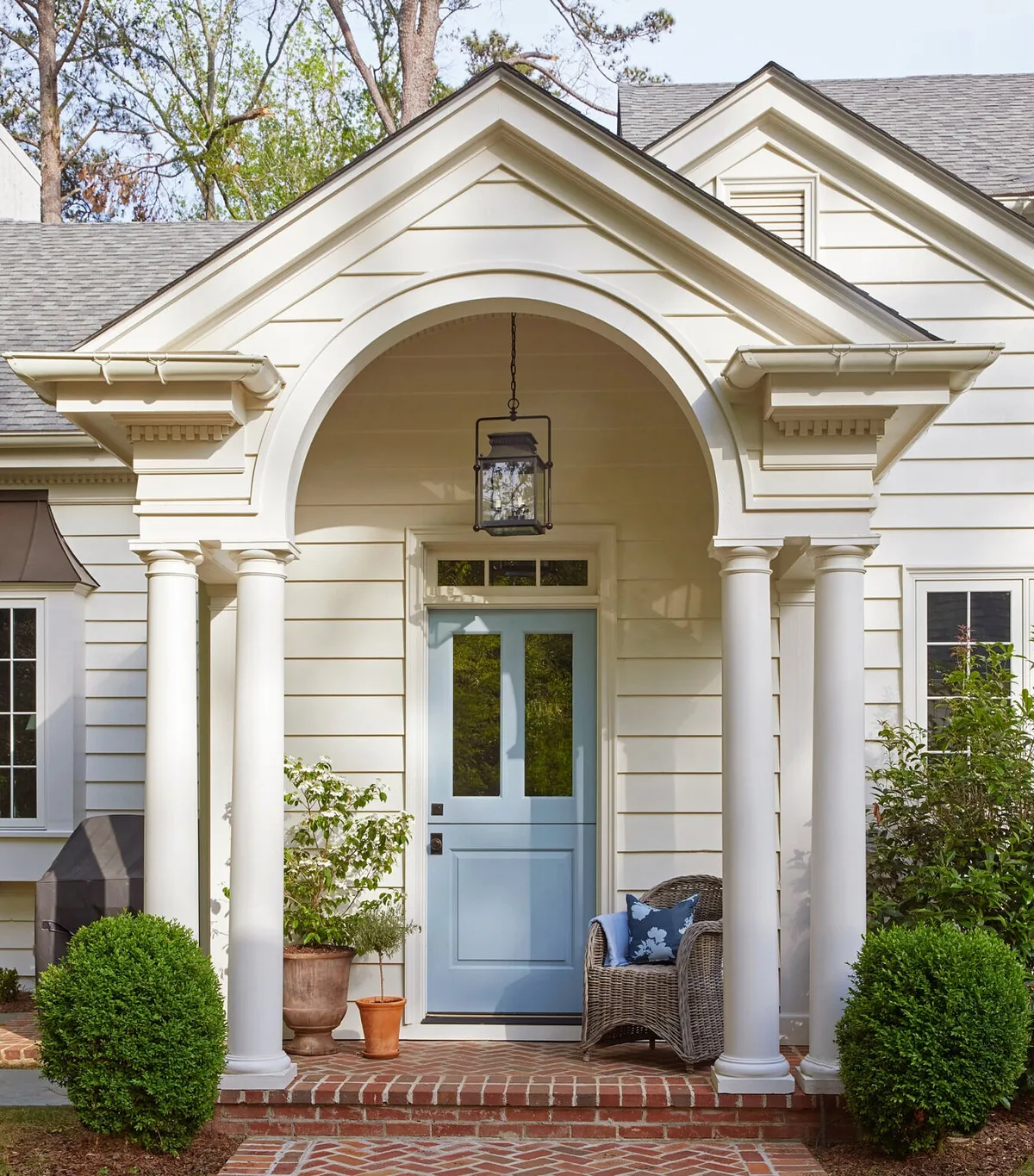
Your paint chip looked perfect in the store. On your door it looks like a different color entirely.
That is not bad luck. Front doors live in porch shade, face one compass direction all day, and sit against siding that pushes their undertone around. Chips are judged under store lights held flat in your hand, which reproduces exactly none of those conditions.
These blue front door ideas start from light and undertone instead of taste, because taste was never the problem. Pick the blue your orientation and your siding allow, and the pretty part takes care of itself.
Read your light before your chip
Doors live in shade and face one direction. Four ideas stop the chip from lying to you.
Judge the color from the street in real shade
Walk to the end of your drive and look at your door the way visitors see it. Most front doors sit six or more feet back under a roof, which means you are choosing a shade color, not a sun color, however bright your yard feels. A blue that sings on a sunlit fan deck can go muddy the moment it moves into that slot of shade.
You will test every finalist taped to the door itself, viewed from the street. Hold the sample vertical, because color reads darker upright than flat in your palm. When the blue still pleases you from thirty feet in afternoon shade, you have a candidate. Everything else is decoration.
Face the compass before the fan deck
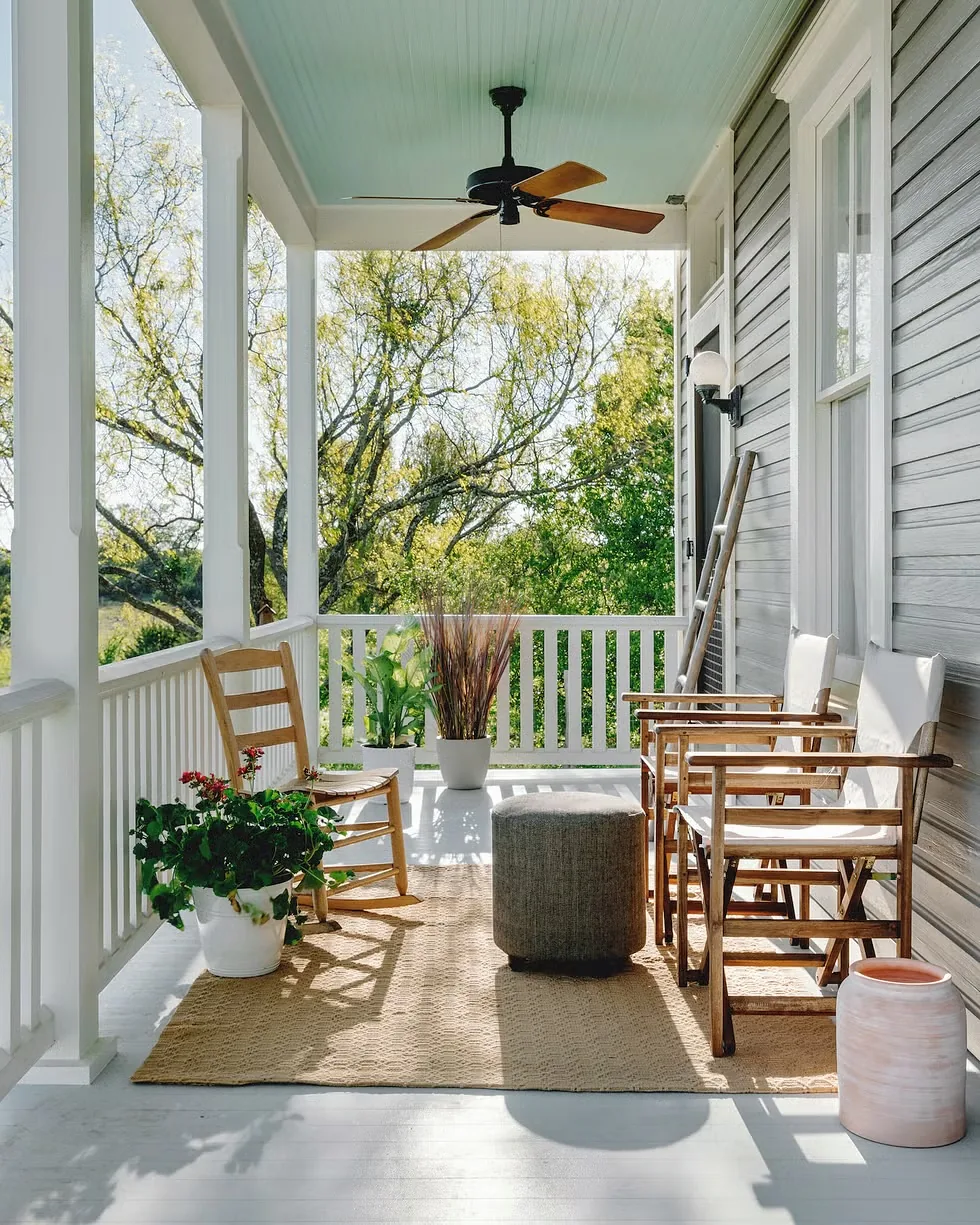
North light runs cool and blue all day, while south light runs warm and yellow. That means a gray-blue door on a north-facing porch gets a double dose of cool and can read icy, and the same door facing south gets warmed into balance. Your compass direction is tinting your door for free, every hour of daylight.
You will warm up your choice on north and east exposures and feel freer with clear, cool blues facing south and west. Not sure which way your door faces? Check the compass on your phone standing at the threshold. It takes ten seconds and it narrows the fan deck by half. Light decides more than taste here.
Paint the test board door-sized, not chip-sized
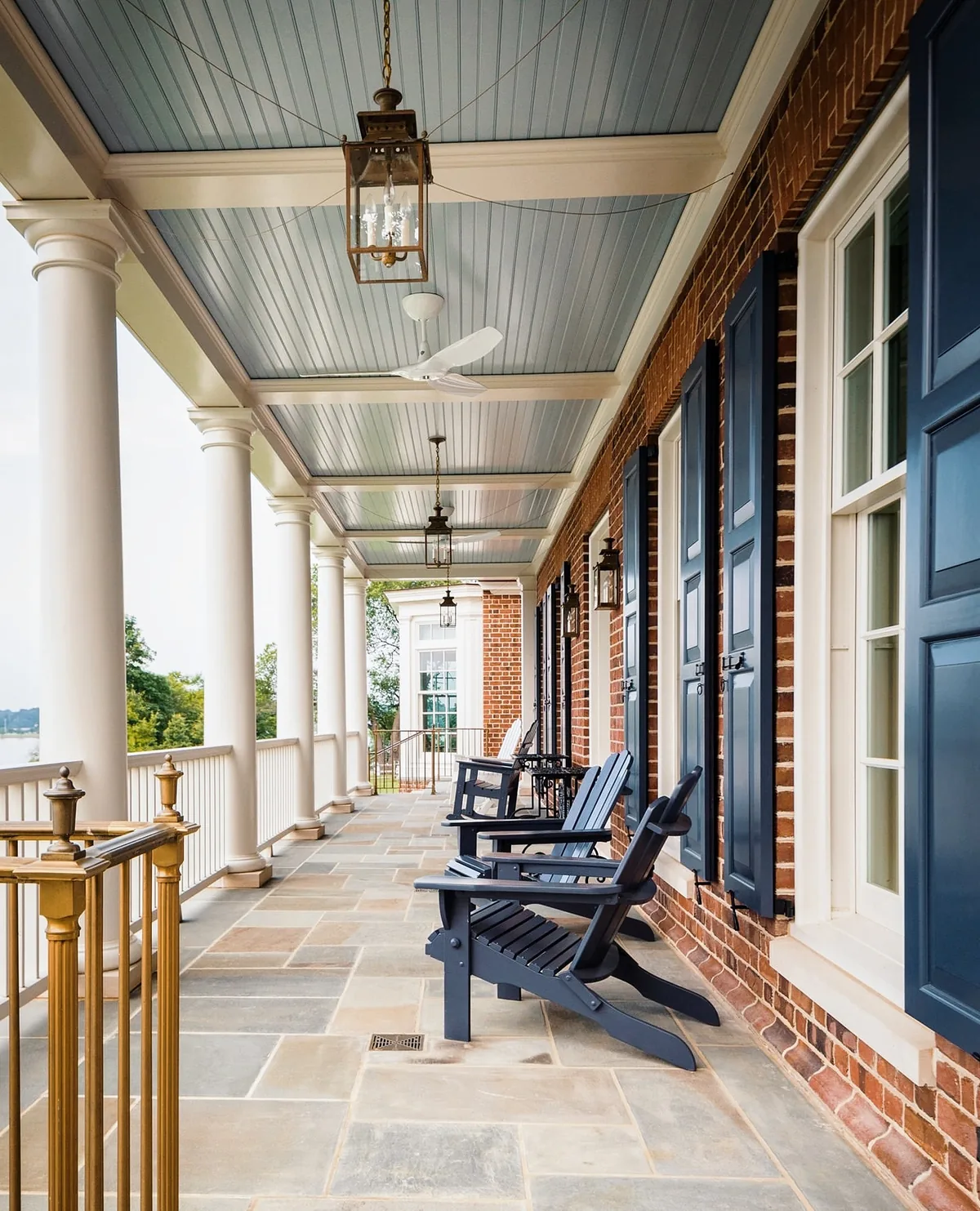
A two-inch chip cannot preview a twenty-square-foot door. Small samples always read lighter and brighter than the same paint spread large, so the blue you loved in miniature arrives bolder and darker on timber. This is the single most common reason doors get repainted within a year.
You will paint a large board, or paint the back of a spare shelf, and prop it full height against the door for three days. Look at it morning, noon and dusk before deciding. Chances are one of your three finalists drops out by day two. That dropout just saved you a weekend and a gallon of the wrong blue.
Expect sun to eat the south and west faces
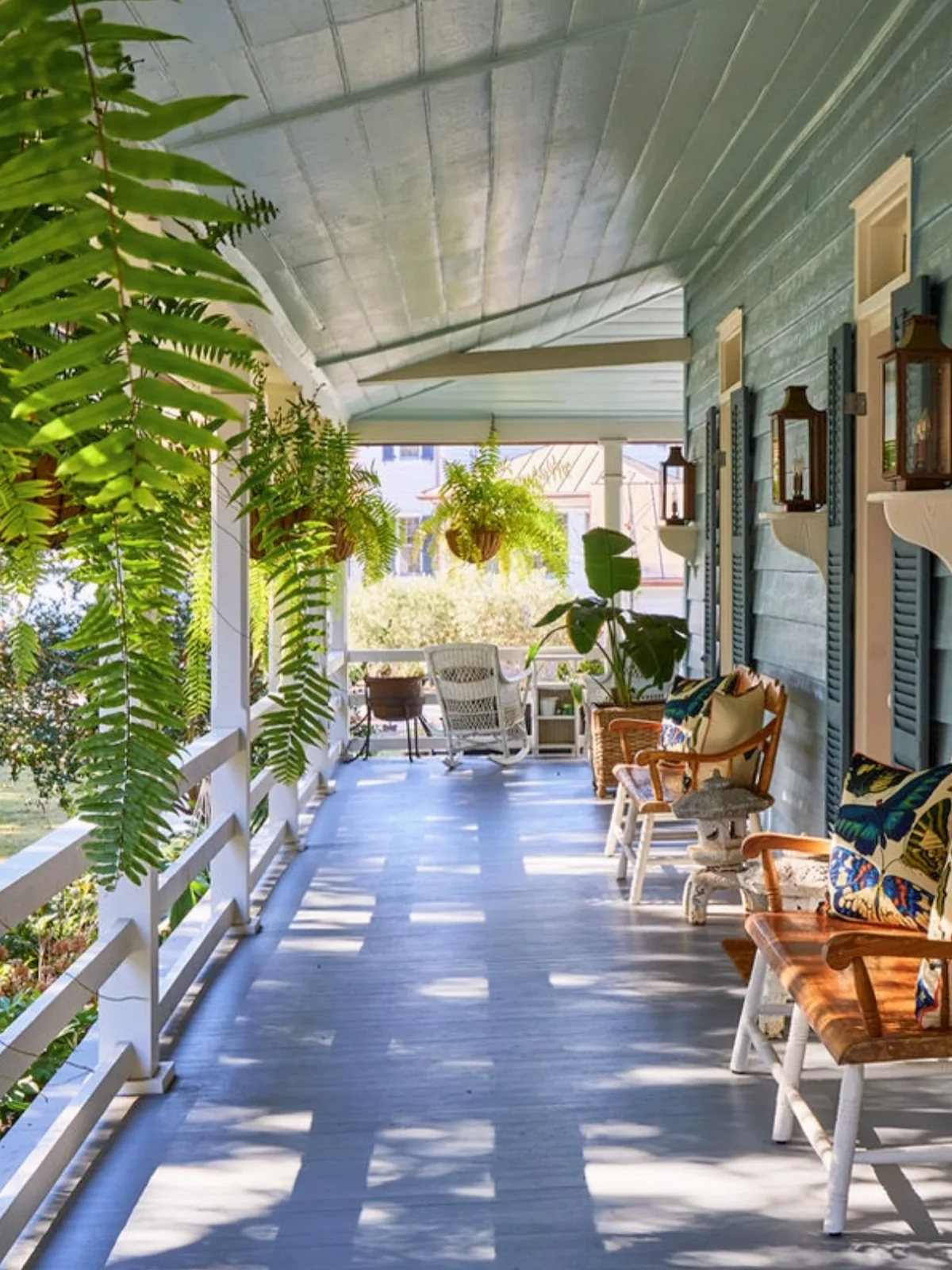
Ultraviolet light chalks dark paint faster than pale paint, and a navy door taking full southern sun will fade visibly sooner than the same navy in shade. Coastal and high-altitude sun is harsher still. This is not a reason to avoid blue on a sunny exposure, but it is a reason to choose knowingly.
You will favor quality exterior acrylic latex, which holds color far longer than old oil formulas, and plan on the sunny door needing attention a season or two earlier than a shaded one. Pale and mid blues forgive sun gracefully. Deep navy shows the chalk first, so sun-blasted navy owners should budget a refresh sooner. Sun is a maintenance schedule, not a veto.
Marry the undertone to the house
Blue is three colors wearing one name. Four ideas match each to its siding.
Sort every blue into gray, green or true
Hold your finalists against a sheet of plain white paper in daylight. Within seconds you will see it: some blues lean gray and stormy, some lean green and coastal, some stand up straight and true. That lean is the undertone, and it decides every pairing that follows.
You will name the lean before choosing anything beside it. Gray-blue argues with warm brick and green trim. Green-blue argues with gray roofs. True navy argues with almost nothing but demands light. Here is the thing: nobody regrets a blue for being blue. They regret it for leaning the wrong way against the biggest surface on the house.
Echo the door once in the shutters, then stop
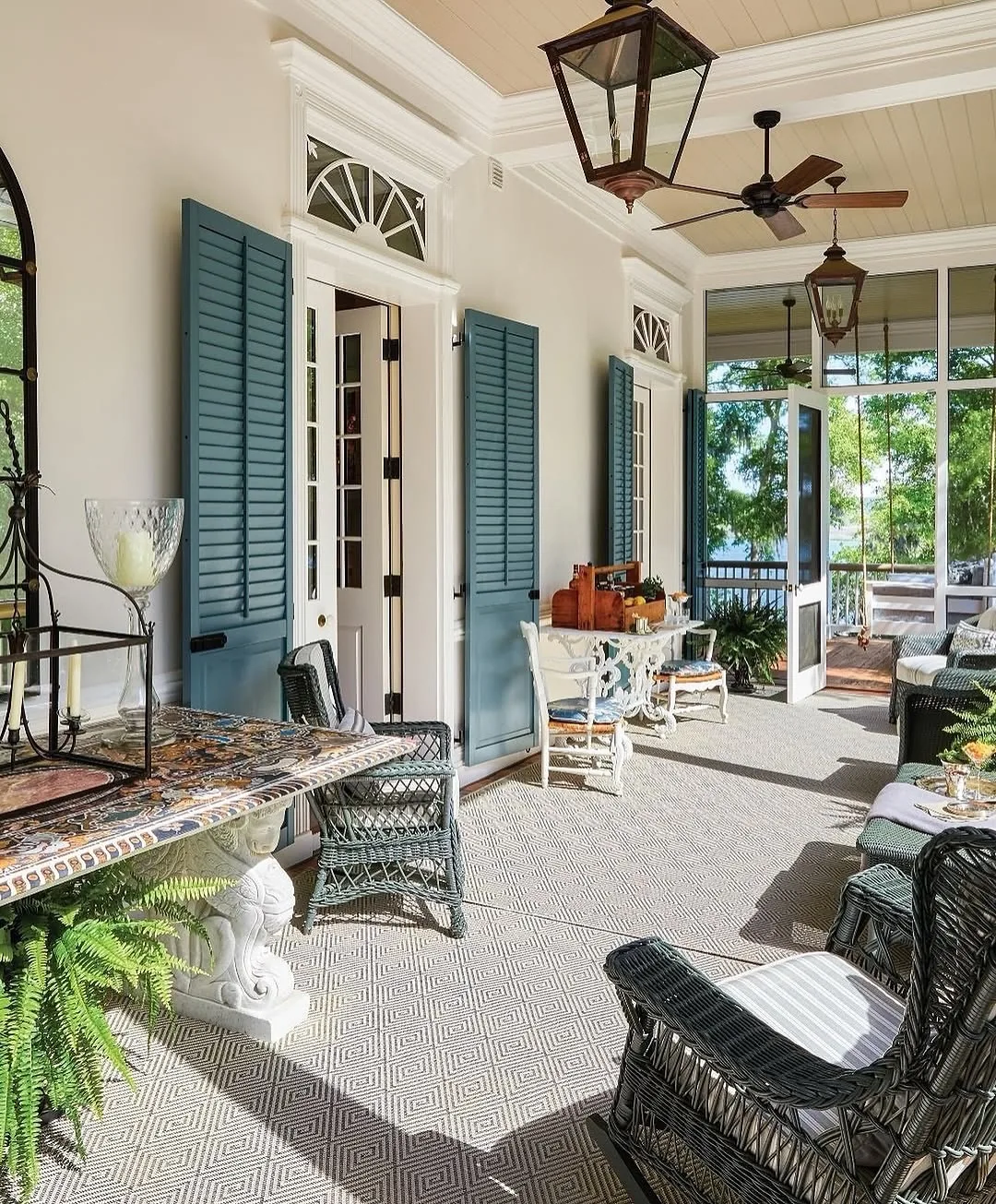
One echo of the door color elsewhere on the front makes the choice look deliberate. Shutters are the classic echo, and a shutter a shade or two off the door reads layered rather than matchy. Our black shutters house exteriors show how a single repeated note steadies a whole facade.
You will echo exactly once. Door plus shutters plus porch ceiling plus planters in four different blues reads as indecision, however lovely each blue is alone. Pick the door as the lead singer and give it one backup vocal. When guests sense the repetition without quite noticing it, you pitched it right.
Keep green-blue away from red brick
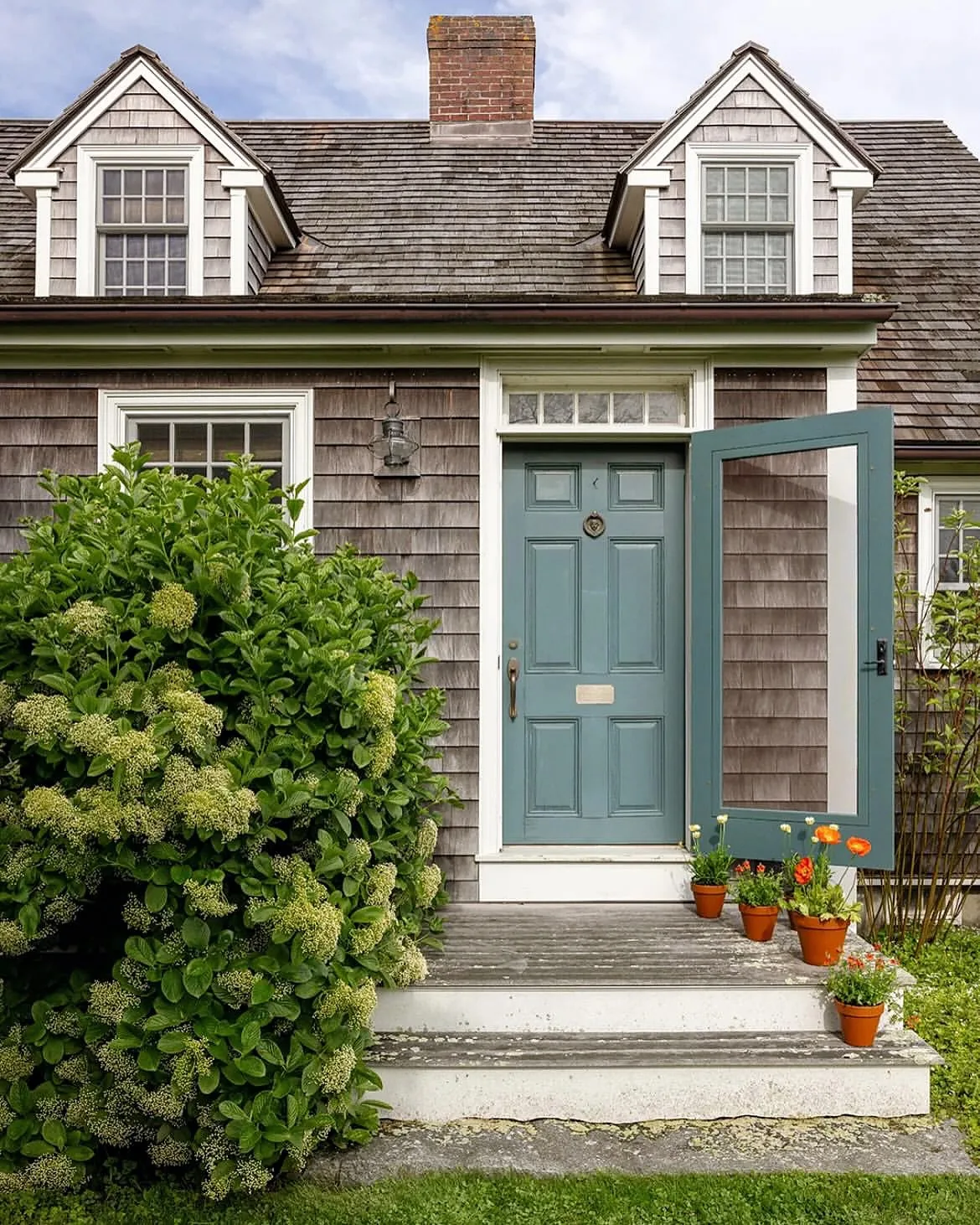
Green-blue beside orange-red brick sets up a vibration that exhausts the eye. They sit opposite enough to shout but not opposite enough to harmonize, so the front feels restless from the street. Cedar shingle, gray siding and stone all welcome green-blue. Red brick does not.
You will give brick houses gray-blue or true navy instead, both of which sit calmly against warm masonry. If your heart is set on the coastal green-blue and your house is brick, spend that color on porch furniture and lanterns, where small doses charm. The door itself should keep the peace with the largest surface it touches.
Let bright white siding take the clearest blue
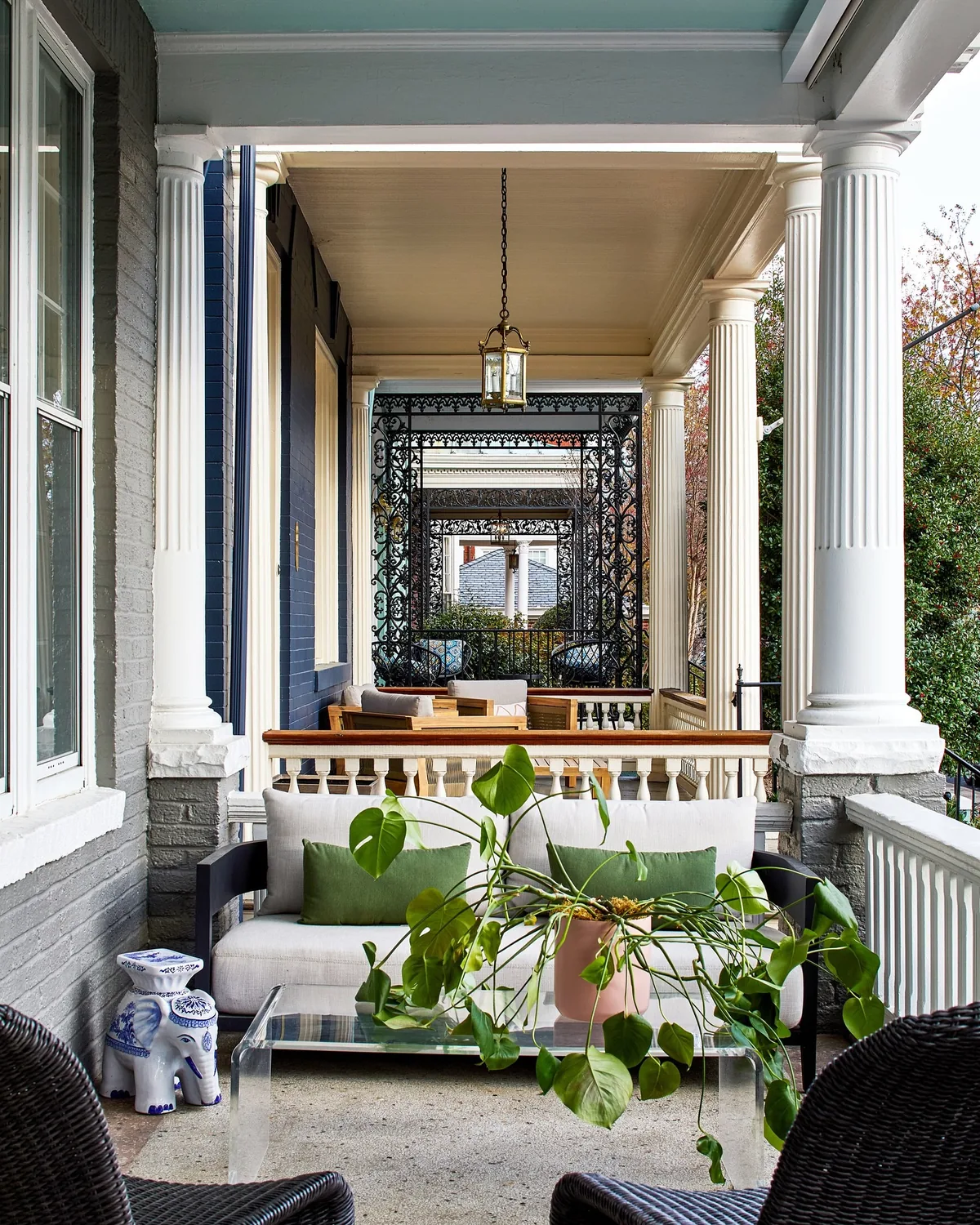
White houses can carry saturated color that would bully a muted facade. A clean, clear blue against crisp white trim reads fresh and intentional, the red door of the blue family. This is why the boldest blue doors you have saved almost all sit on white or cream houses.
You will still check the white itself, because a warm creamy white flatters warm-leaning blues while a stark cool white suits icy ones. For the full rules on reading your white, our white farmhouse porch ideas cover undertones properly. Match the blue’s temperature to the white’s, and the contrast does the rest.
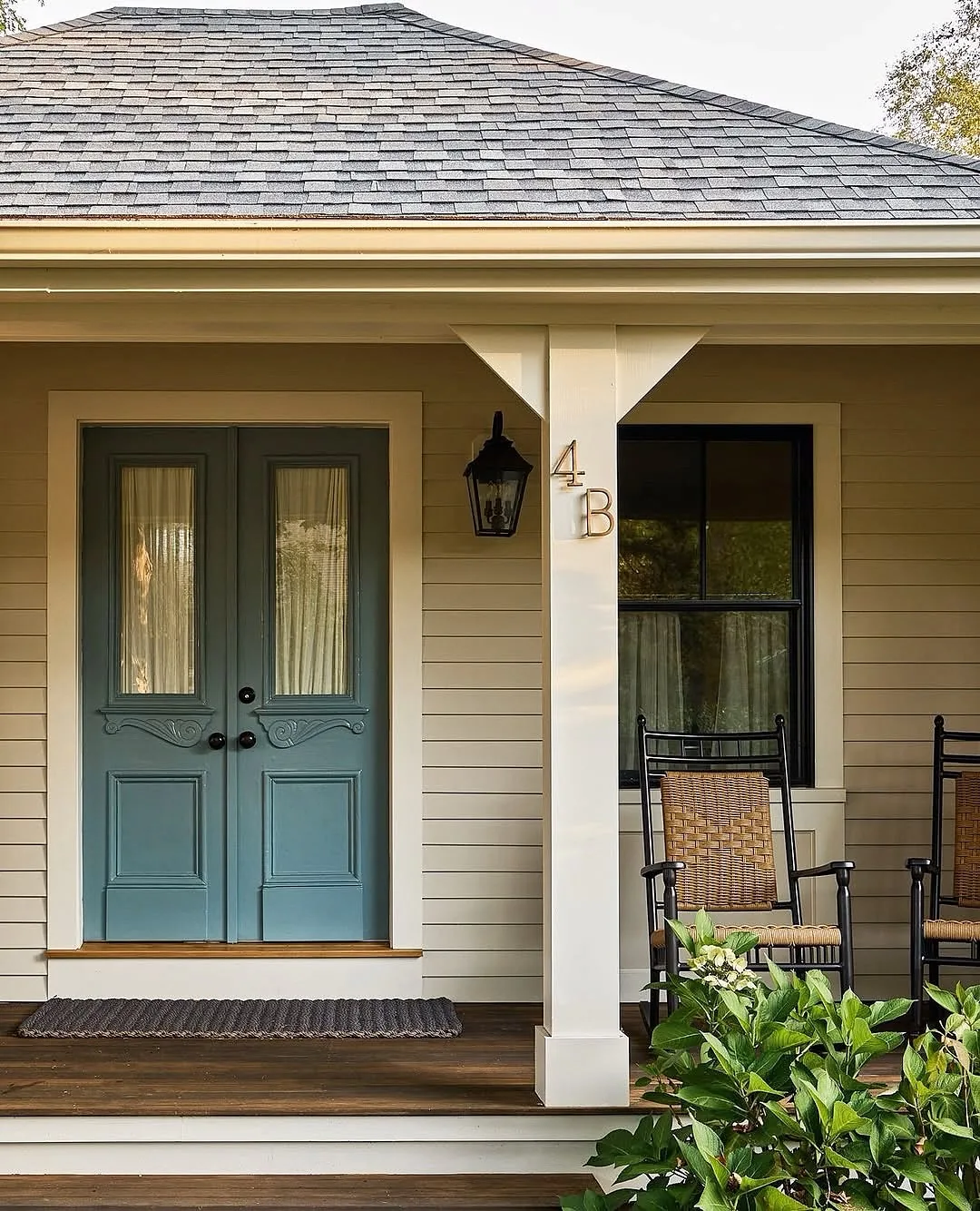
Place navy on purpose
Navy is the most pinned and most returned blue. Four ideas keep it from going black.
Test blue front door ideas at dusk, not noon
Navy holds its blueness in daylight and surrenders it after sunset. Under a warm porch bulb, deep navy can read as plain black from the street, which is fine if you expected black and heartbreaking if you paid for blue. Noon showrooms never warn you about this.
You will do your final judging after dark with the porch light burning. Stand at the street and ask whether the door still reads blue. If it went black and you love it anyway, sign with confidence. If the disappearing blue disappoints you, step one bucket lighter before buying. Dusk is the critic that matters, because winter evenings are long.
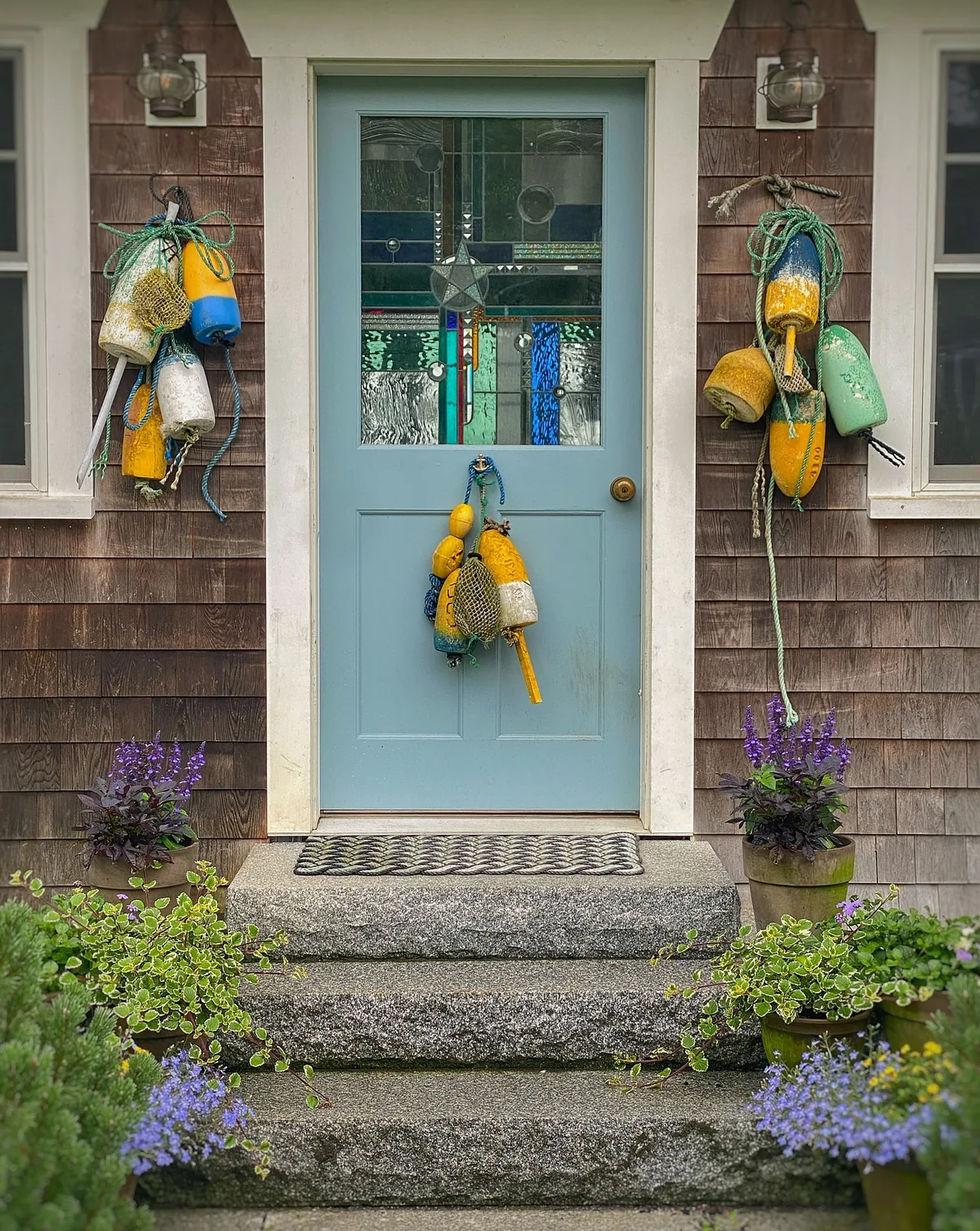
Ground pale blue with white trim, never gray
Pale powder blue needs crisp company. Against bright white trim it reads fresh and coastal. Against gray trim or gray siding it picks up the gray and goes dingy, like white laundry washed with darks. The trim decides which version of your pale blue the street sees.
You will frame pale doors in the whitest white your house can carry. If your trim is cream or your siding is gray, skip the palest bucket and choose a dusty mid-tone with enough body to stand alone. Pale blue is the most trim-dependent color in this article, so borrow confidence from the frame, not the field.
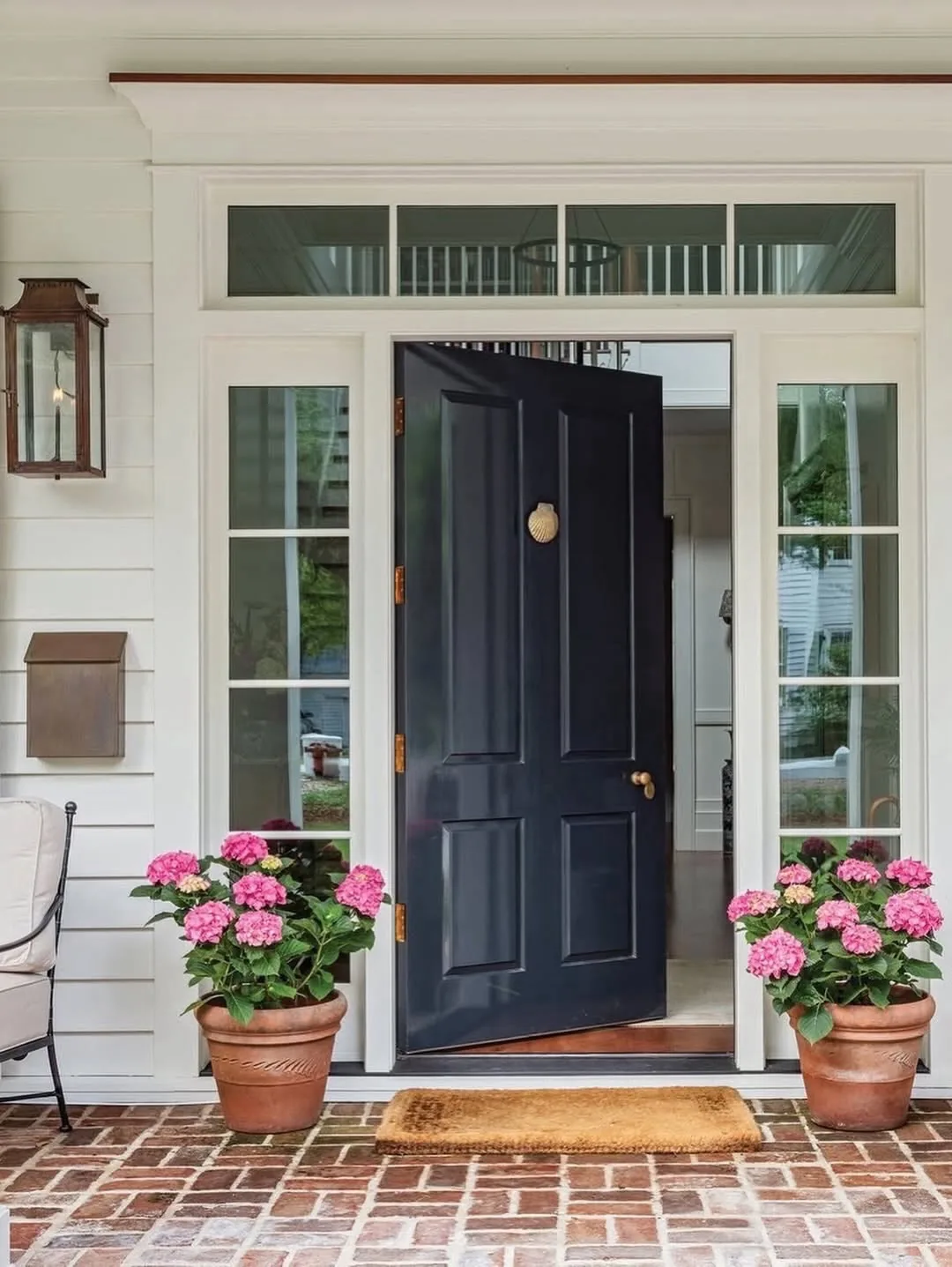
Warm navy with one glowing metal
Navy plus chrome reads cold enough to shiver. Navy plus aged brass or copper reads like lamplight, because the warm metal lends the dark paint some of its glow. Lanterns, house numbers and the handle all count, and they should agree with each other.
You will pick one warm metal family and carry it through every fixture at the entry. A word of warning: mixing brass, bronze and black hardware around one navy door splits the entry into factions. One metal, repeated three times, makes navy feel expensive. For symmetrical fronts where every fixture shows, our colonial house exterior ideas show the discipline up close.
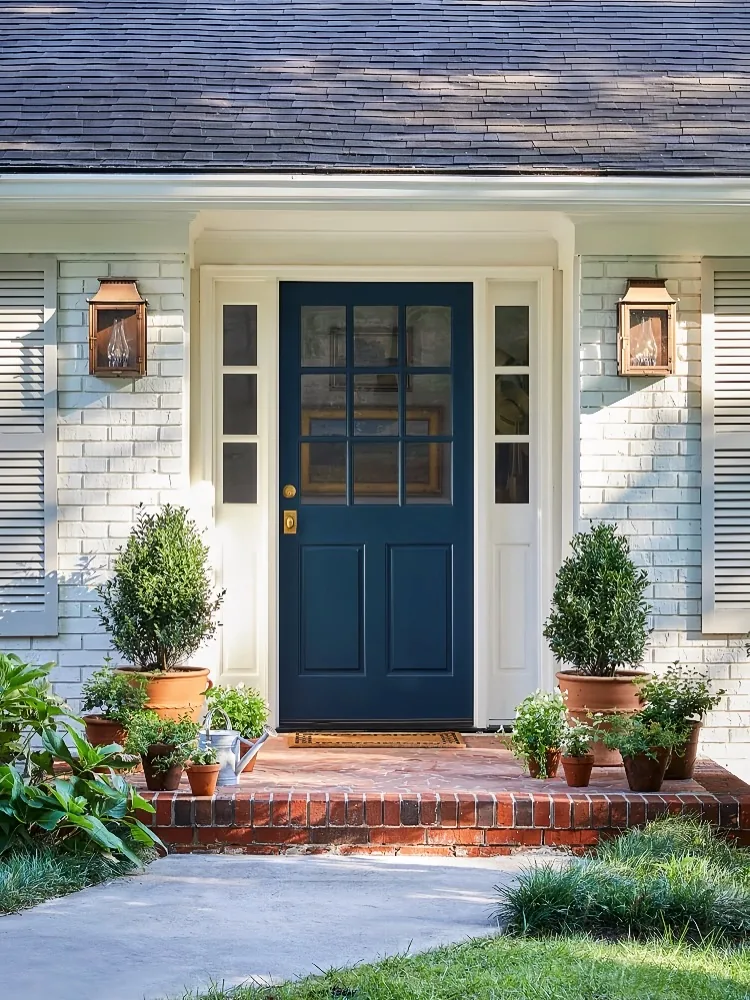
Keep full navy off the sunless porch unless you commit
A north-facing door under a deep porch roof gets almost no direct light on its face. Navy there reads black from morning to night, all year. Some owners love that depth and choose it deliberately. Most expected the navy from the brochure and feel cheated by October.
You will either commit to near-black as the look, pairing it with bright trim and strong lantern light, or step up to a mid blue that survives shade with its color intact. There is no wrong answer, only an accidental one. shaded navy chosen on purpose is sophisticated. Shaded navy chosen by surprise is a repaint.
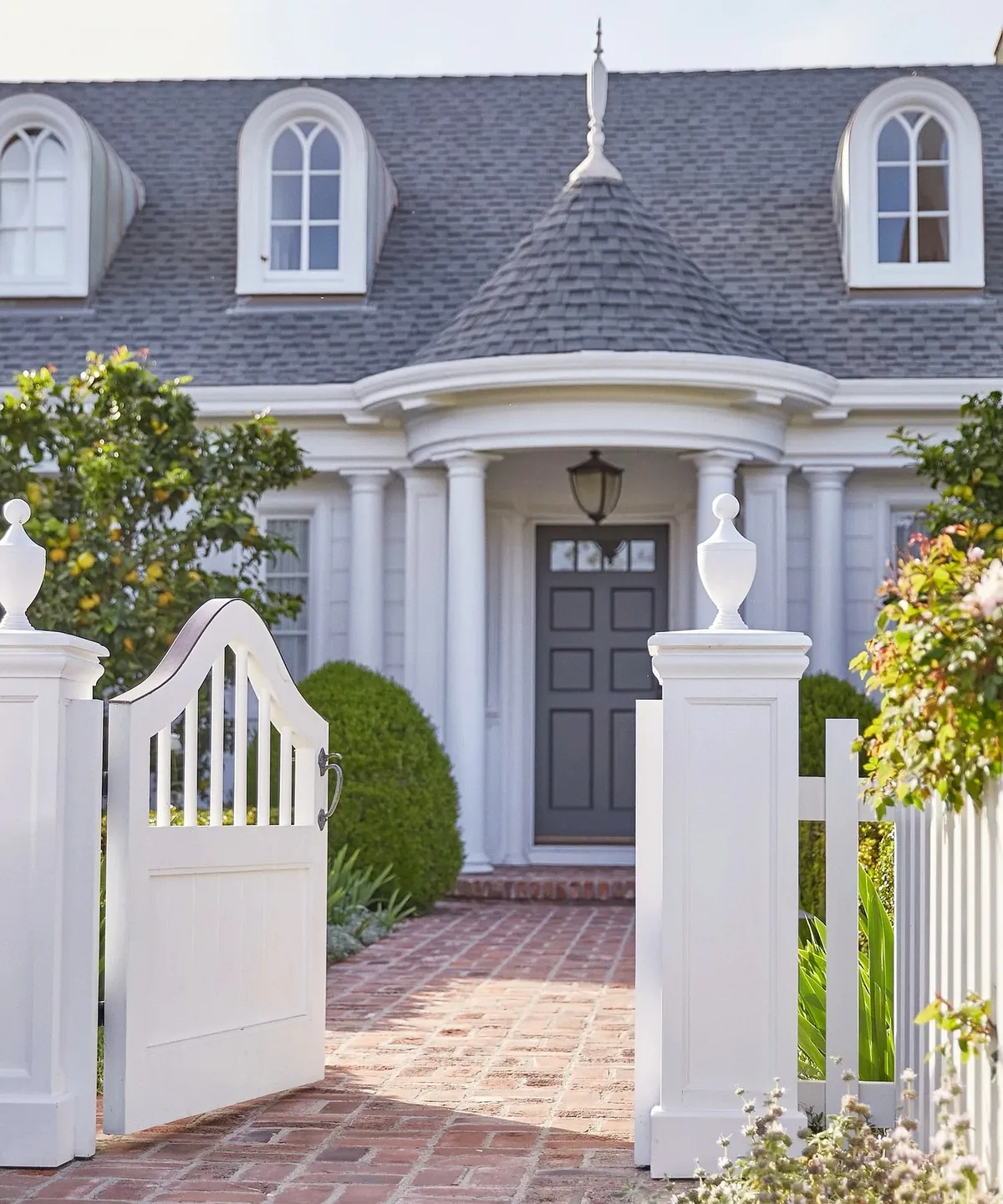
Paint it to stay
Color choice is half the job. Three ideas make the paint itself last.
Choose satin, the sheen that forgives
Flat paint chalks and high gloss spotlights every brush mark and dent. Satin sits between: enough glow to read rich from the street, enough forgiveness to hide an amateur brush. Nine times out of ten it is the right sheen for a front door.
You will reserve high gloss for perfectly smooth new doors sprayed by a professional. Everyone else gets satin and a better weekend. The sheen changes the color slightly, usually deepening it, so run your dusk test in the actual sheen. Testing in flat and painting in gloss is how doors come out darker than planned.
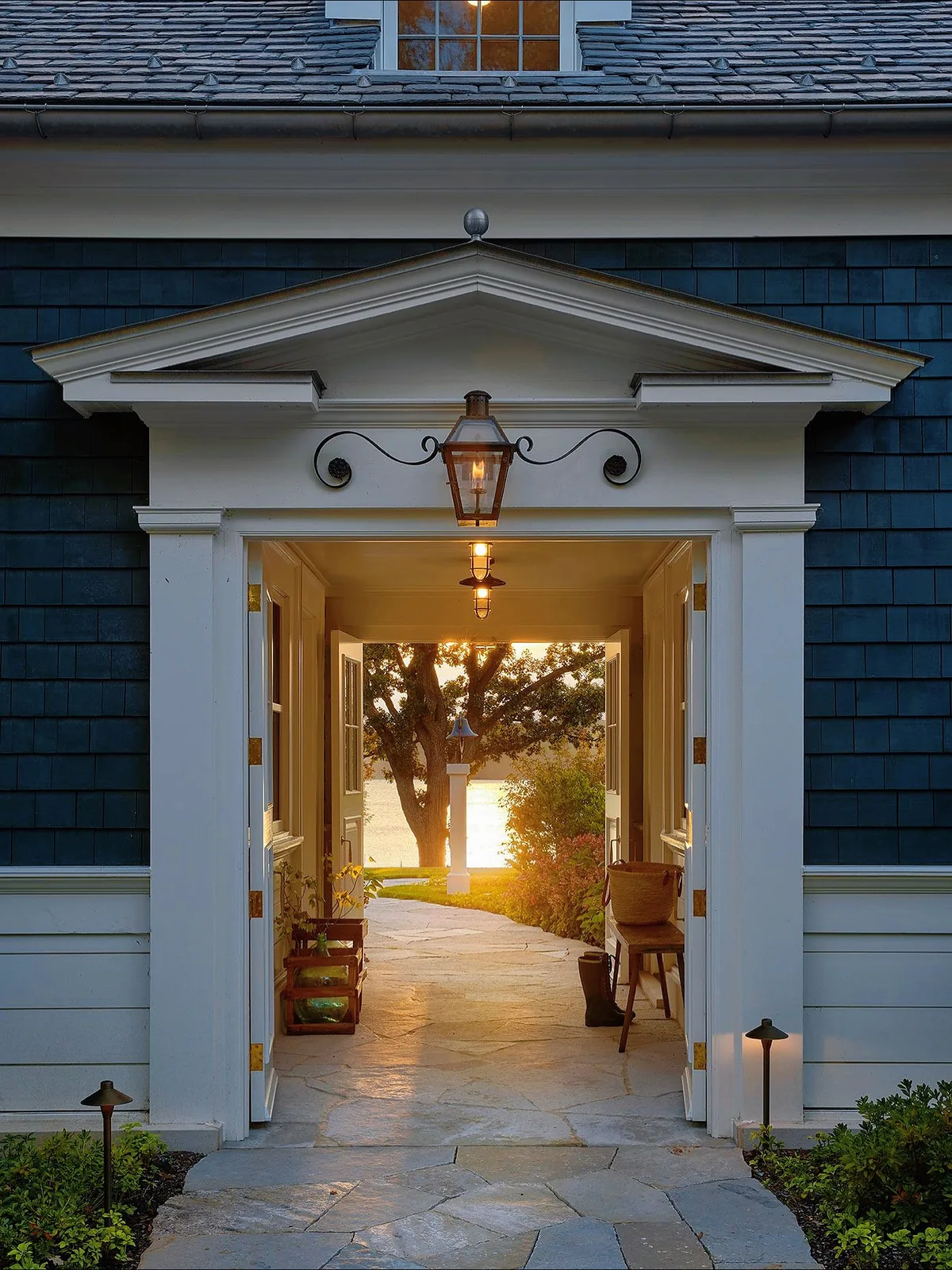
Vent the storm door or skip it entirely
A glass storm door over a dark painted door builds an oven. Trapped heat blisters paint and cooks weatherstripping, and manufacturers will tell you plainly that dark colors under full glass void their finish warranties. South and west exposures suffer worst.
You will fit a vented storm that lets heat escape, or leave the storm off and invest in good weatherstripping instead. If you need the glass for a sleeping baby or a barking dog, choose a retractable screen that vanishes most of the year. The prettiest navy in the world bubbles by August behind sealed glass facing the sun.
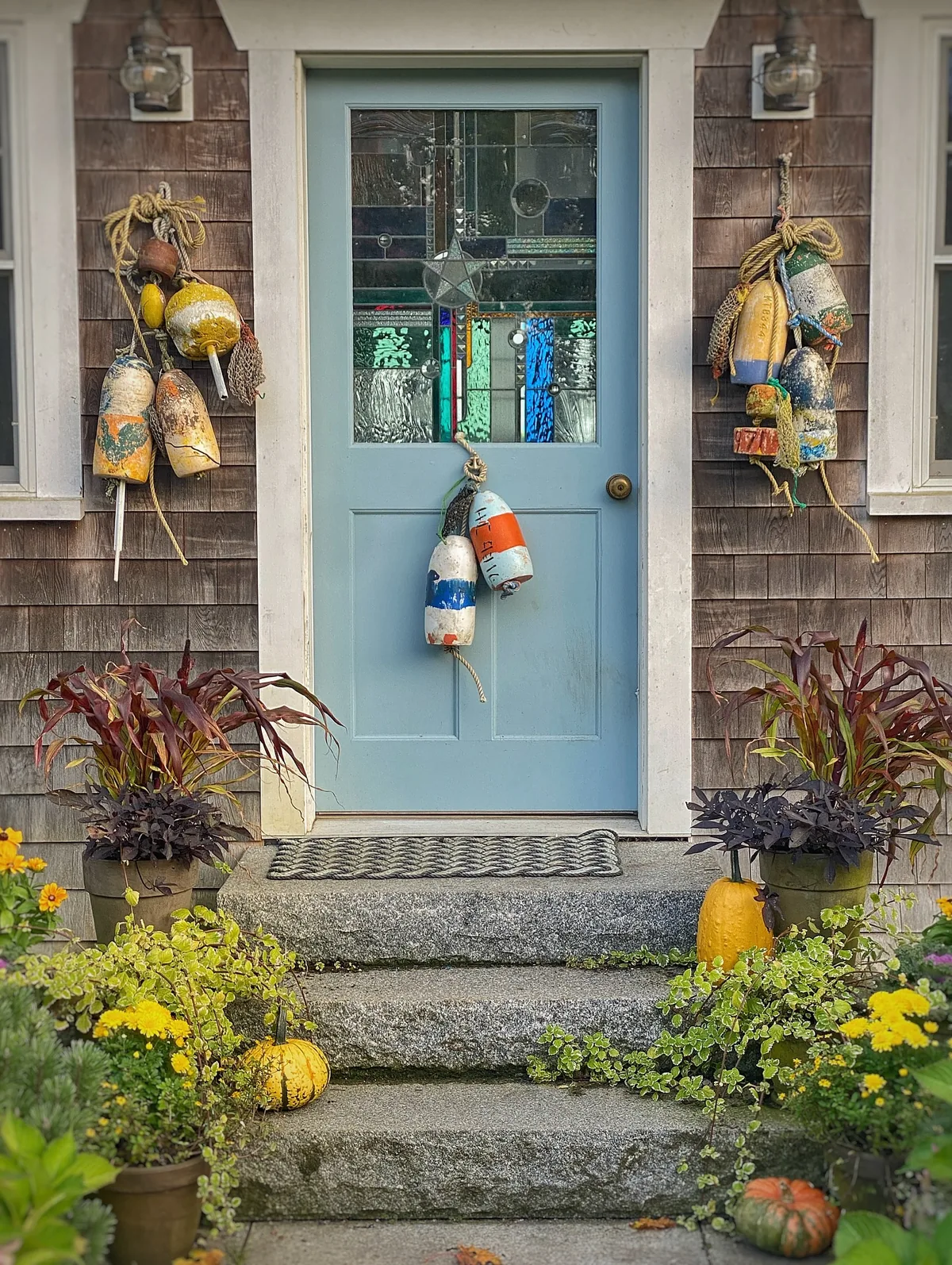
Wash the door every spring and touch up by fall
Doors collect pollen, road film and hand grime faster than any other painted surface, and blue shows the dulling sooner than white does. A bucket of warm water with mild soap restores the color you actually chose, and it takes twenty minutes.
You will wash in spring, inspect chips in fall, and touch up before freeze-thaw cycles lever small flakes into large ones. Keep a small labeled jar of the door paint on the shelf, because fan decks retire colors without asking you. Maintenance is unglamorous and it is the entire difference between a five-year door and a ten-year one.
Which blue for which house
| Blue bucket | Sits happiest with | Needs from you | Walk away if |
|---|---|---|---|
| Pale wash | Bright white trim, coastal shingle | Crisp white frame, sheltered exposure | Your trim is gray or the porch is deep shade |
| Dusty mid-tone | Gray siding, stone, cream brick | Almost nothing, the forgiving middle | You want high drama from the street |
| True navy | Bright white, warm brick, strong light | Dusk test passed, warm metal beside it | North-facing under a deep porch roof |
The Blue Door Formula
Six rules stand between you and the repaint:
- Judge from the street in shade. The drive view in afternoon light is the only preview that counts.
- Warm the blue as the exposure cools. North and east doors take warmer blues, south and west take clear ones.
- Name the undertone against white paper. Gray, green or true decides the siding pairing before taste gets a vote.
- Echo once, in the shutters. One repetition looks deliberate, four looks undecided.
- Pass the dusk test. If navy reads black under your porch bulb and you still love it, sign.
- Paint it in satin and vent the storm. Forgiving sheen, breathing entry, spring wash yearly.
Follow those and your door keeps the color you fell for, in the light where it actually lives. The porch around it gets the same treatment in our white farmhouse porch ideas, where the ceiling color does half the work.
Frequently Asked Questions
What is the most popular blue for front doors?
Deep navy leads by a wide margin, followed by dusty slate blue. Navy photographs beautifully, which explains the pinning, but it needs light and warm trim to read blue rather than black on your actual house.
Should a blue front door be light or dark?
Match the depth to your light and trim. Shaded porches and gray trim suit dusty mid-tones, while bright exposures with white trim carry navy or pale wash. When in doubt, the middle bucket disappoints fewest owners.
What goes with a navy front door?
Bright white trim, one warm metal repeated at every fixture, and gray or white siding. Avoid green-leaning trim beside it and skip a second dark color competing for the anchor role.
Does a blue door suit a brick house?
Yes, with the right lean. Gray-blue and true navy sit calmly against warm brick, while green-blue vibrates unpleasantly. Test your finalist taped to the mortar joints, since mortar color shifts the reading.
What sheen is best for a front door?
Satin for nearly everyone. It reads rich from the street while hiding brush marks that high gloss would broadcast. Reserve gloss for smooth new doors finished by a professional sprayer.
Why is my navy door turning black at night?
It is not turning, it is revealing. Deep colors lose their hue under warm artificial light, so navy reads black once the porch bulb takes over. Bigger lanterns and a step-lighter blue are the two honest fixes.
This article may contain affiliate links. We may earn a commission at no extra cost to you.