Keep Your Coastal Room From Tipping Into Theme

Add us as a preferred source to see more stories on Google.
Coastal decor tips into theme faster than any other style. You add a striped sofa, then a rope, then a shell, and suddenly the room feels like a seafood restaurant rather than a place to sit.
The rooms that work use one coastal element inside an otherwise plain room. The rooms that fail use five.
These ten rooms show you how to keep that one note calm.
One note, not five
The first edit is subtraction.
Group one collection instead of scattering it
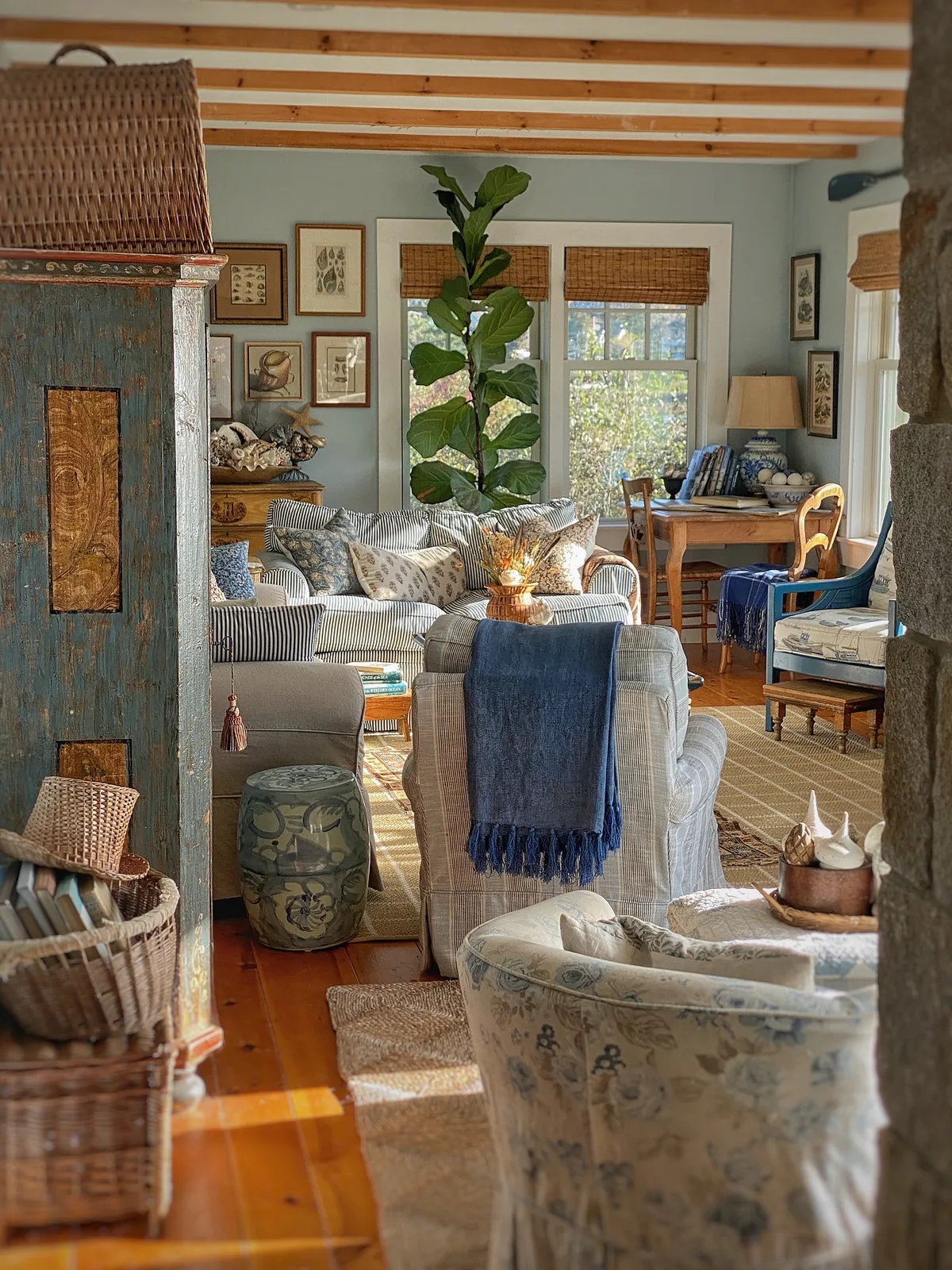
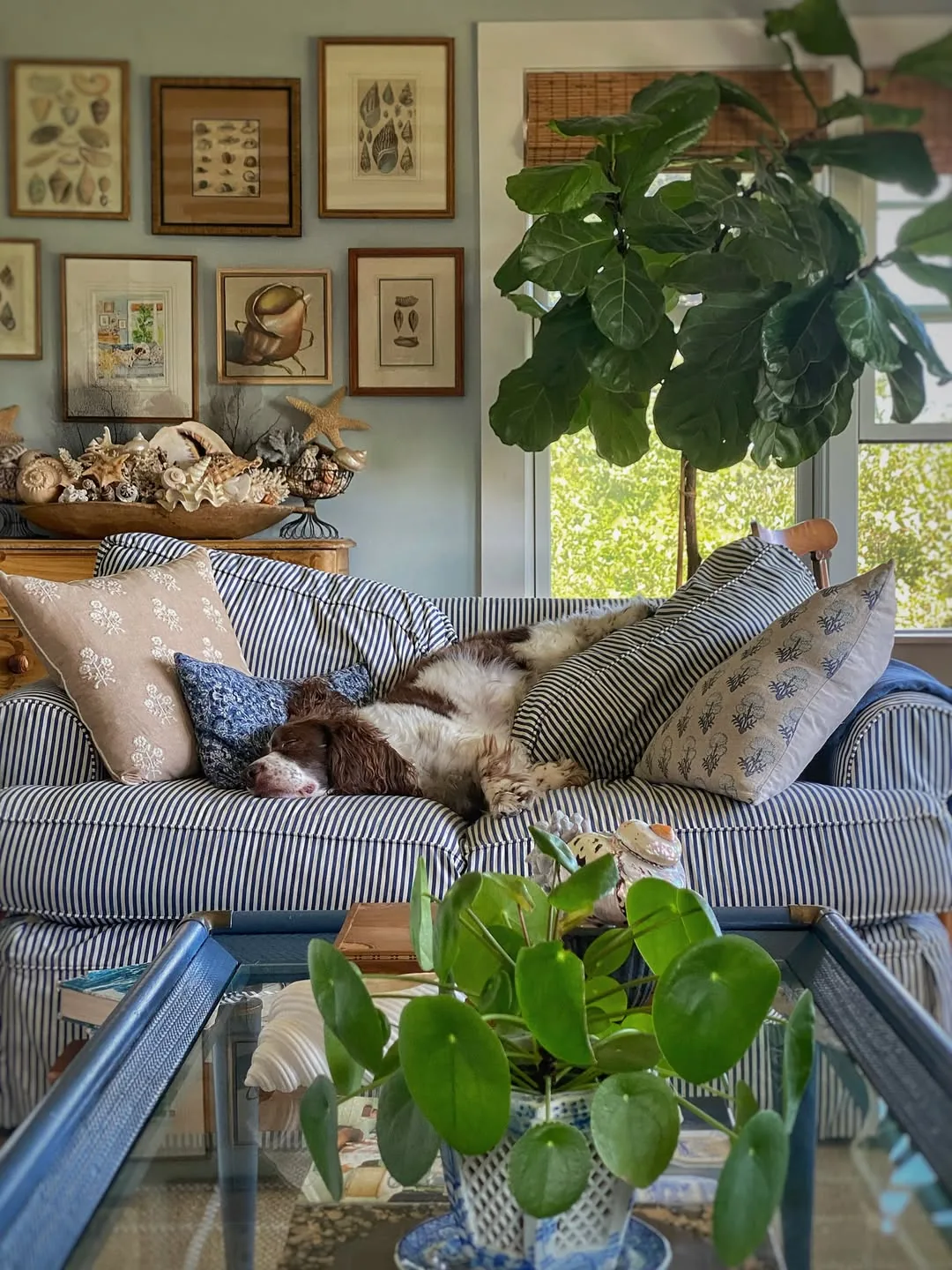
Objects scattered around a room read as clutter you forgot to tidy for you. One collection displayed together reads as a collection you chose. Gather shells, blue transferware or woven baskets in one place, on a single shelf, tray or low table, and leave the rest of the room plain for you. That single cluster gives you the coastal hint, and the empty surfaces around it keep the coast from taking over. When you group, think of a low wooden tray that holds varied heights, a taller vase behind, a low bowl in front, so the cluster has its own topography. You can then run your hand across the rest of the room and feel nothing competing. For more on editing shelves to breathe, see our bookshelf styling ideas.
Let stripes carry the coast
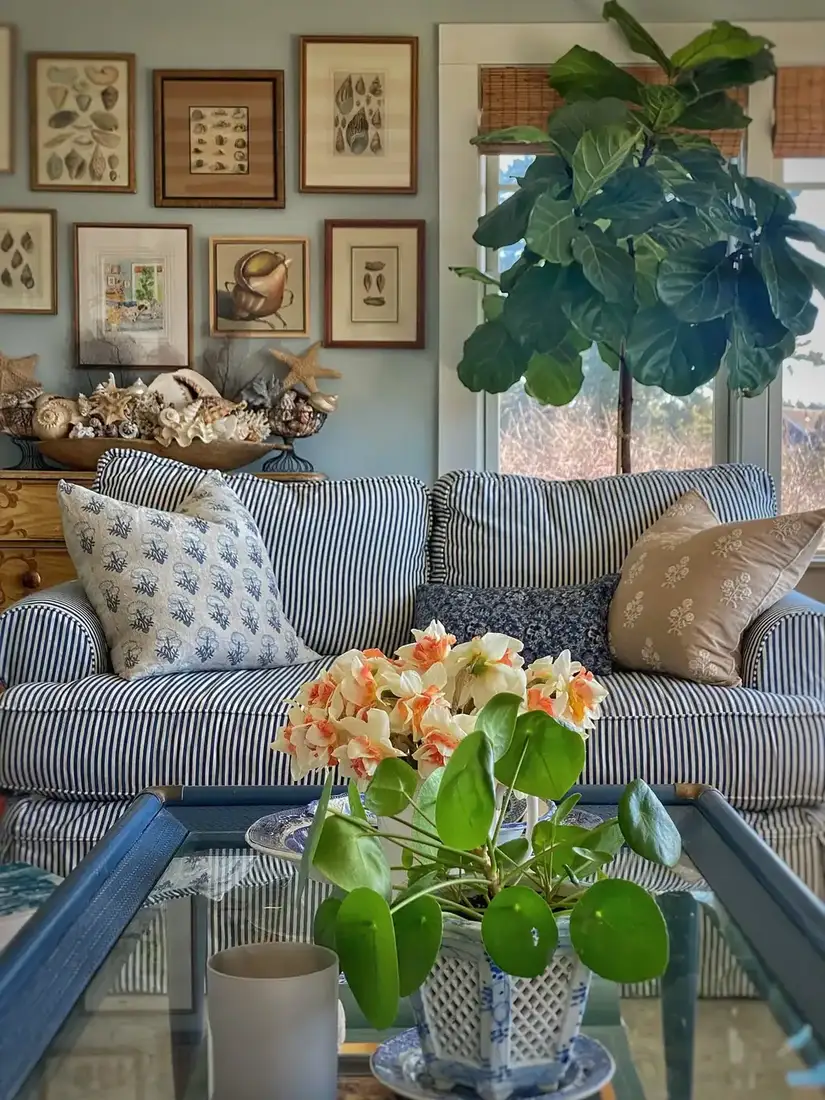
Stripes are the safest coastal signal because they carry no literal imagery. A blue and white stripe on a sofa, cushion or curtain reads as coastal without naming it. You get the reference to sea and sky without a single rope or anchor. Keep the stripe’s scale generous, not thin and busy, and let it be the only pattern in the room. When you want a second pattern, choose a solid linen in the same blue so the stripe stays the star.
Keep the themed trinkets to one at most
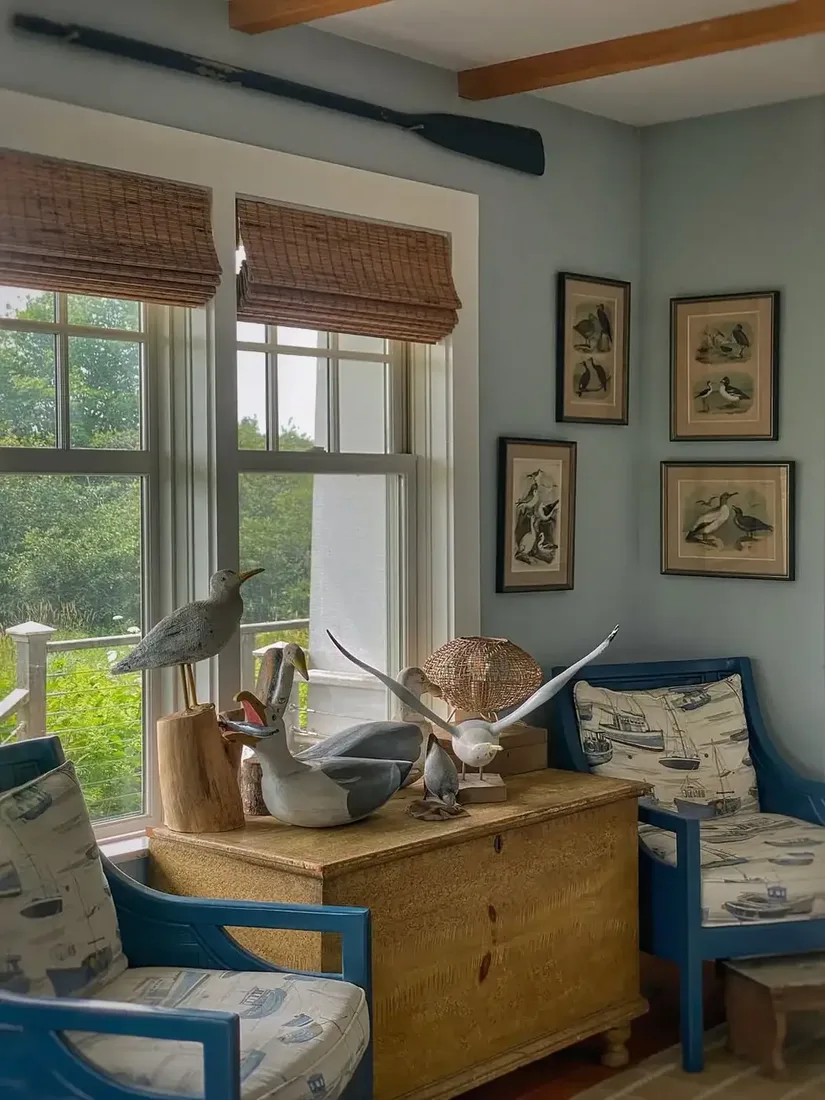
Rope, anchors and ship’s wheels are the fastest route to theme, and that speed is the problem. Use at most one, and make it small. A single rope-trimmed mirror, a small brass porthole, or one woven pendant is enough to hint. When you add a second and third, the room tips from calm to costume. You catch the difference when you remove the second trinket and the room exhales.
Walls and palette that do the work without objects
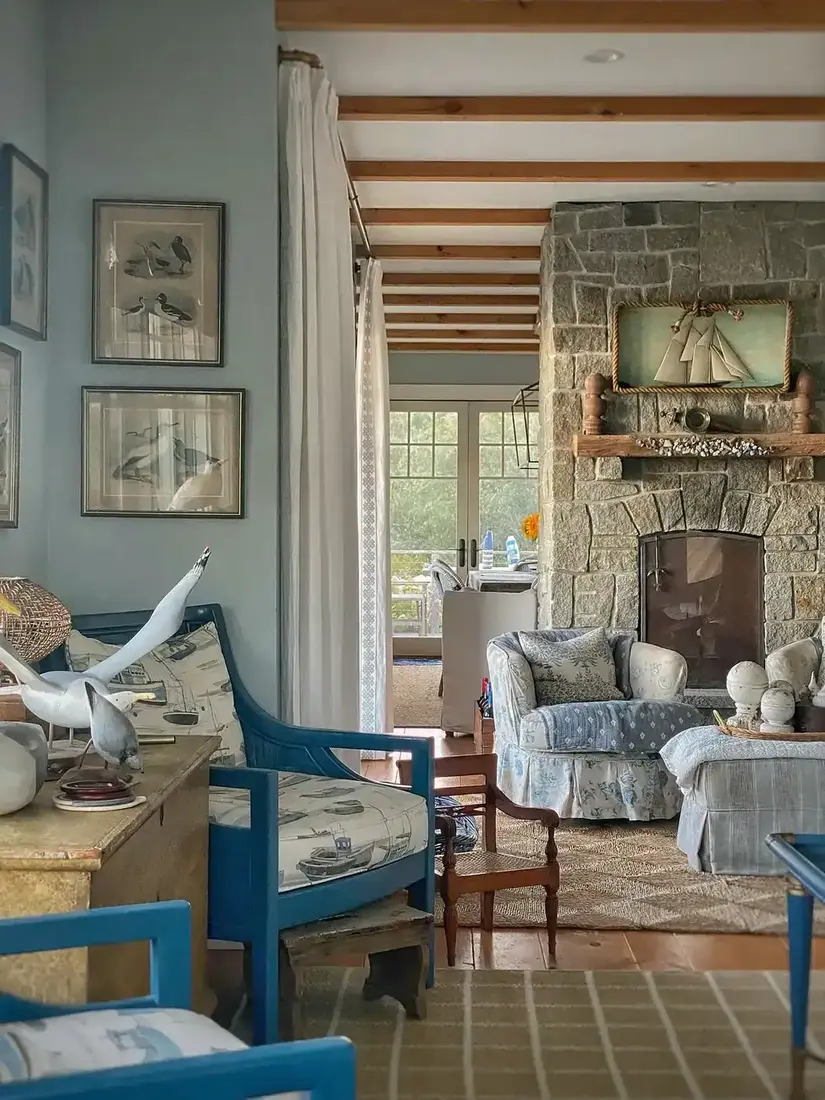
You can feel coastal before you buy a single coastal object for you. When you let that wall texture do the work for you, you keep the palette quiet and you let the coast feel like the house itself for you.
Let striped sofas hold the palette
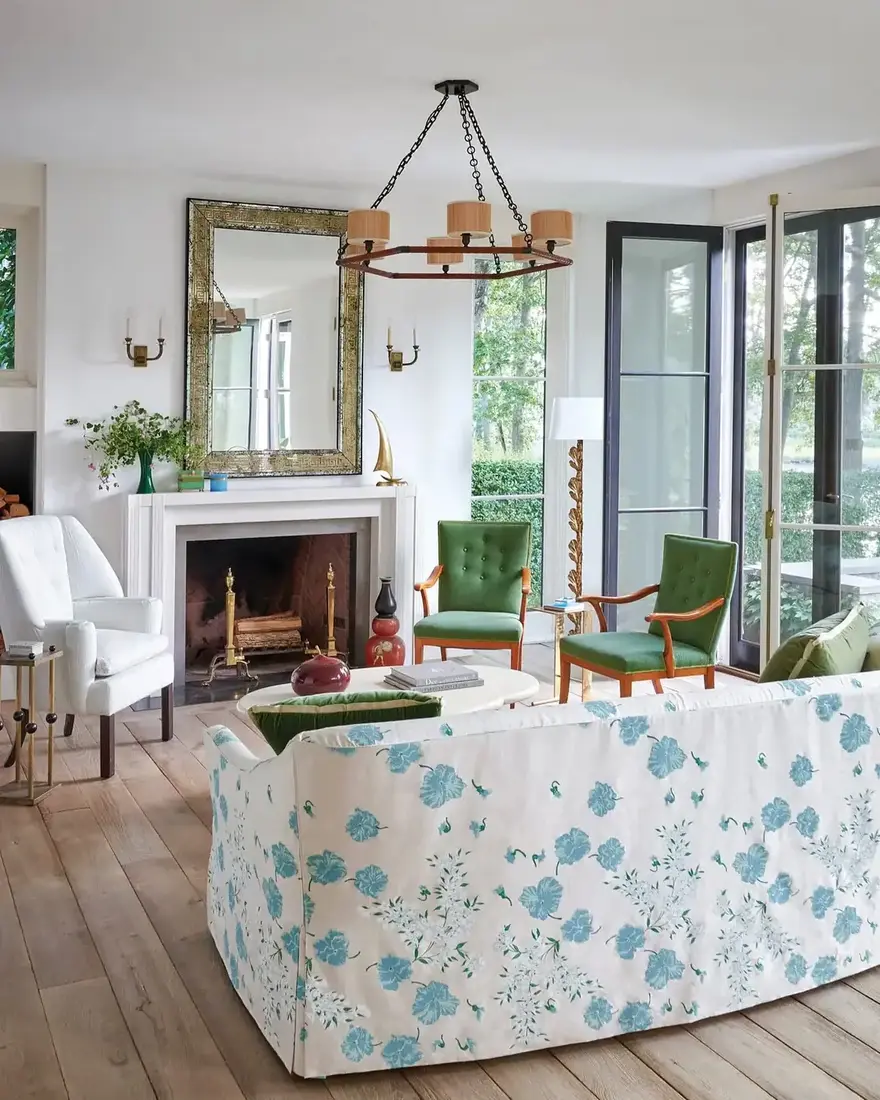
A blue-striped sofa against white walls does more than five small coastal hints scattered around. The stripe holds the coast at the scale you see first, and the rest of the room can stay plain. Keep the sofa’s blue a little muted, not bright turquoise, so it sits calmly against warm white. Add one warm neutral, a jute rug or oak table, and the palette settles. You will notice the stripe reads as architecture when its scale is generous — a wide, relaxed stripe feels like a sail, while a thin pinstripe feels like a shirt. Keep that breadth and the sofa can carry the coast alone.
Pair blue pillows against a plain backdrop
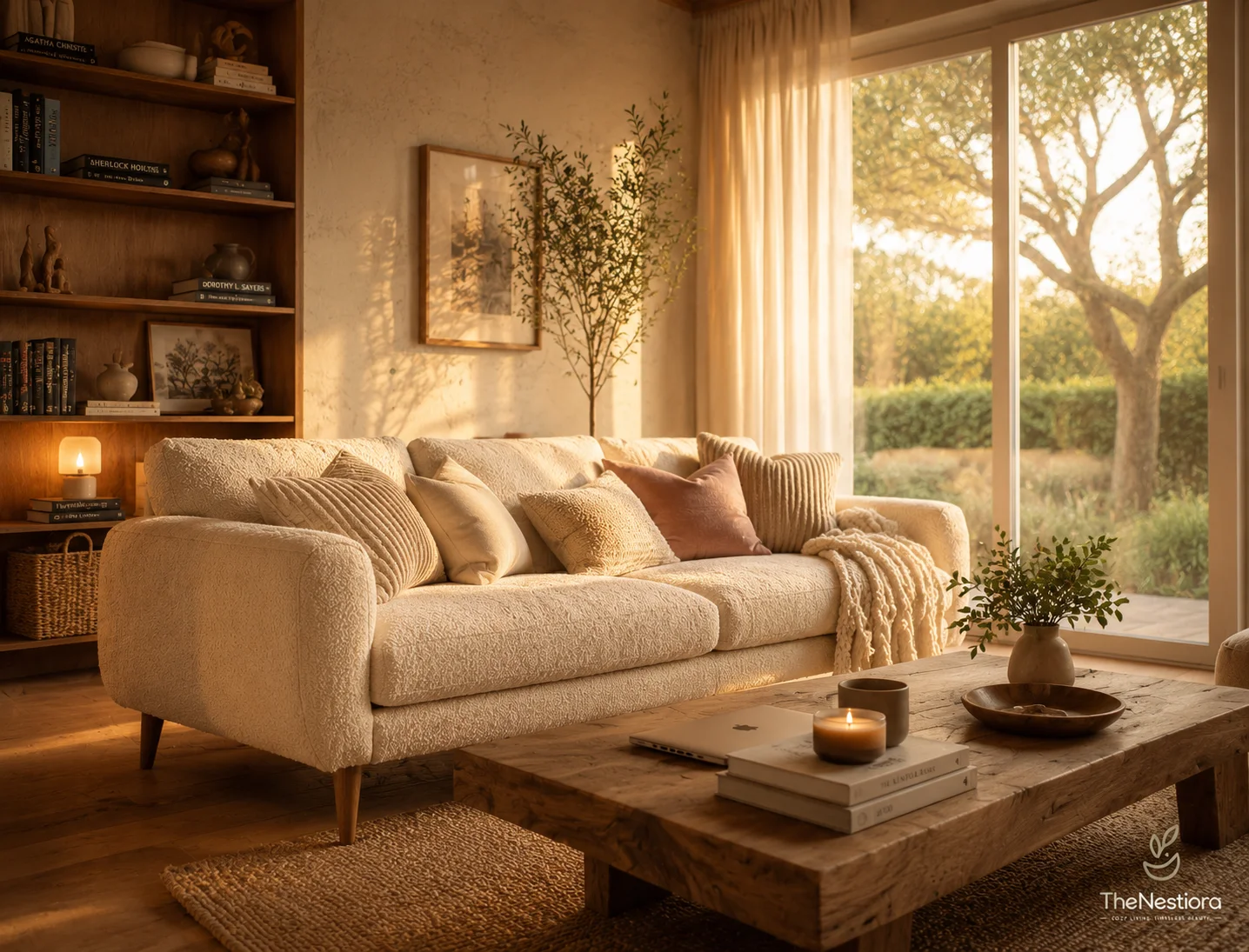
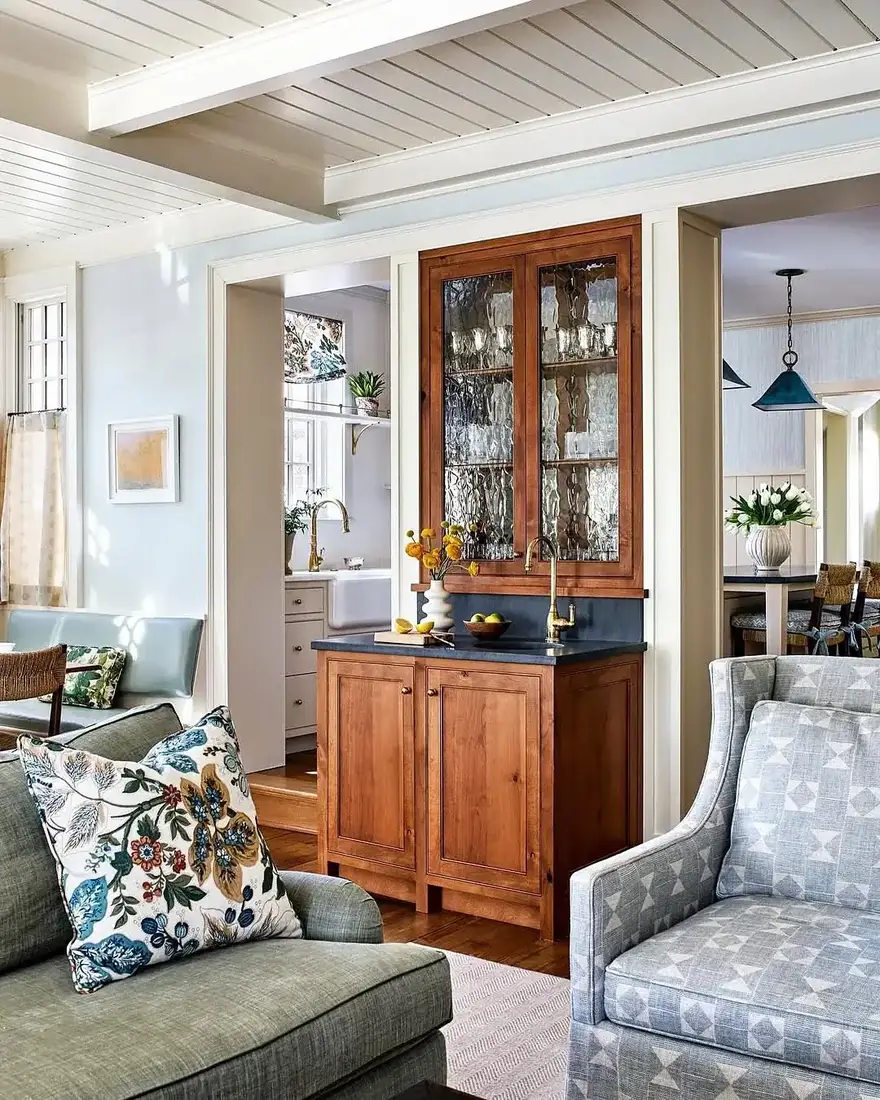
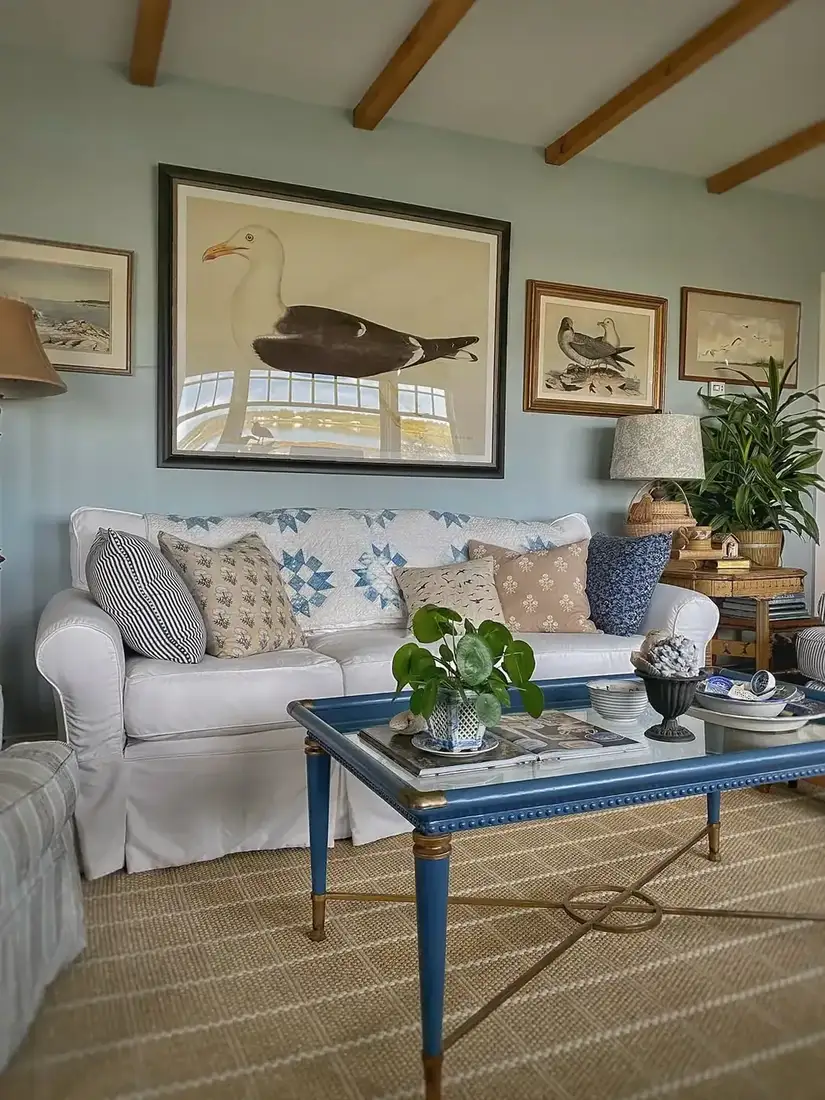
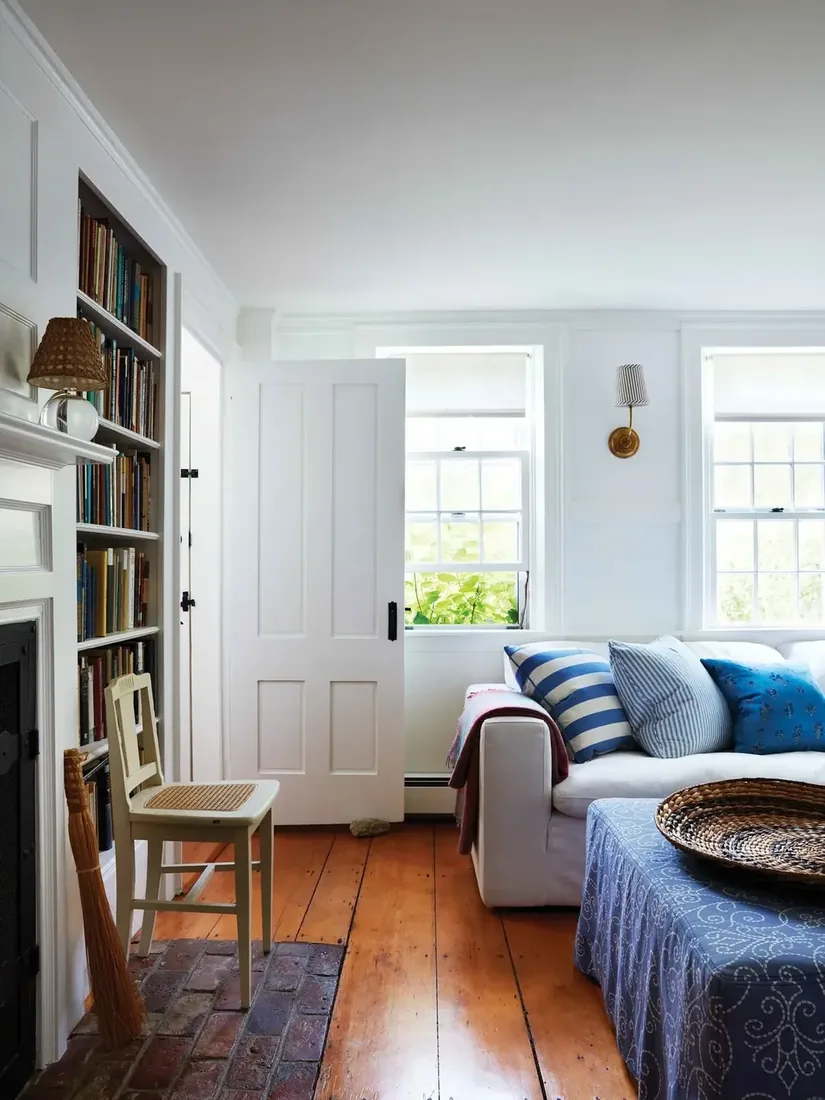
A white or warm-white farmhouse sofa with blue pillows shows how little you need when the base is plain. The sofa gives you a quiet field, the pillows bring the coast in a way you can change with the season. Keep the pillows in the same blue family, not mixed turquoises, and keep the sofa skirt simple. You get a coastal room without a single themed object on the shelves. When you keep that base plain, you can swap the pillows and the room feels fresh without buying anything new for you. For more on keeping a quiet base rich, see our neutral living room ideas.
Let whitewashed brick do the coastal work
Whitewashed brick and painted panelling give you coastal feel without a single object. The texture of brick softened with white, or the vertical lines of panelling, read as beach house immediately. You keep furniture simple, a slipcovered sofa, a jute rug, a timber table, and the walls carry the coast. That approach lasts because you never bought a themed object you will later hide. When you run your hand over that brick, you feel the soft wash that lets the mortar show through — that irregularity is what keeps it from reading as new paint.
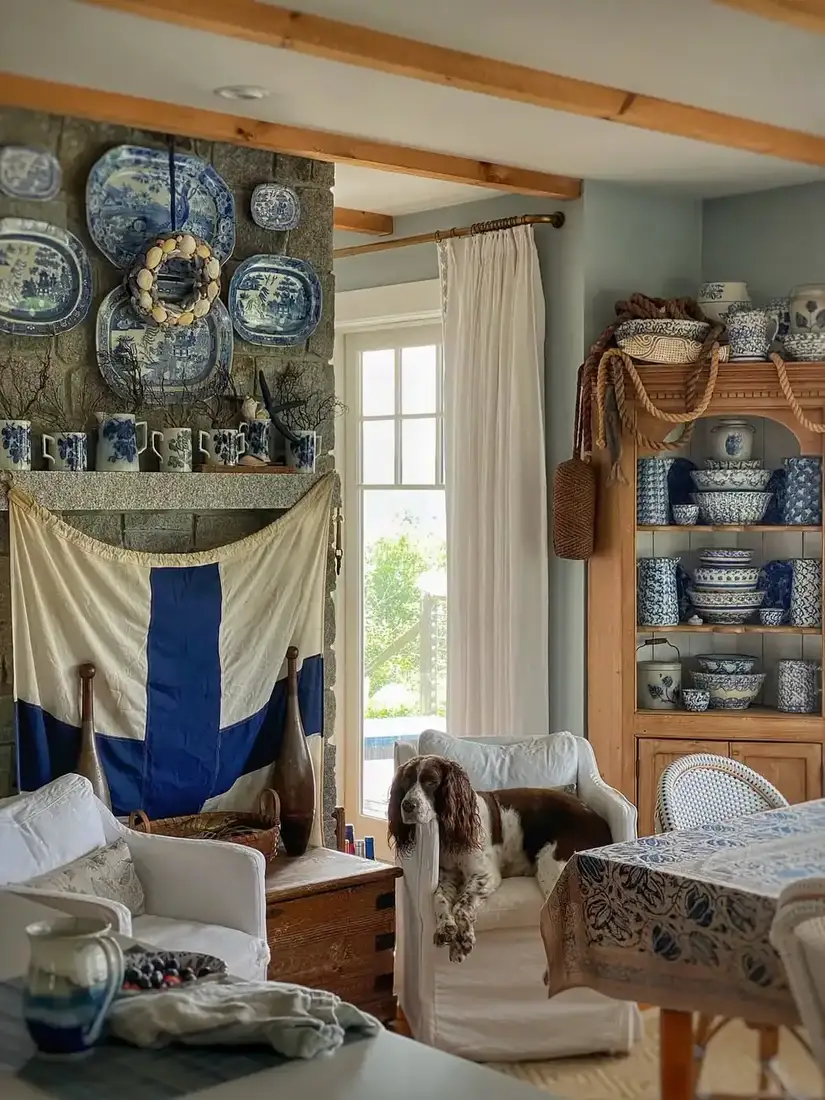
Keep the palette to three and let it breathe
The last restraint is colour count.
Hold the room to two colours plus white
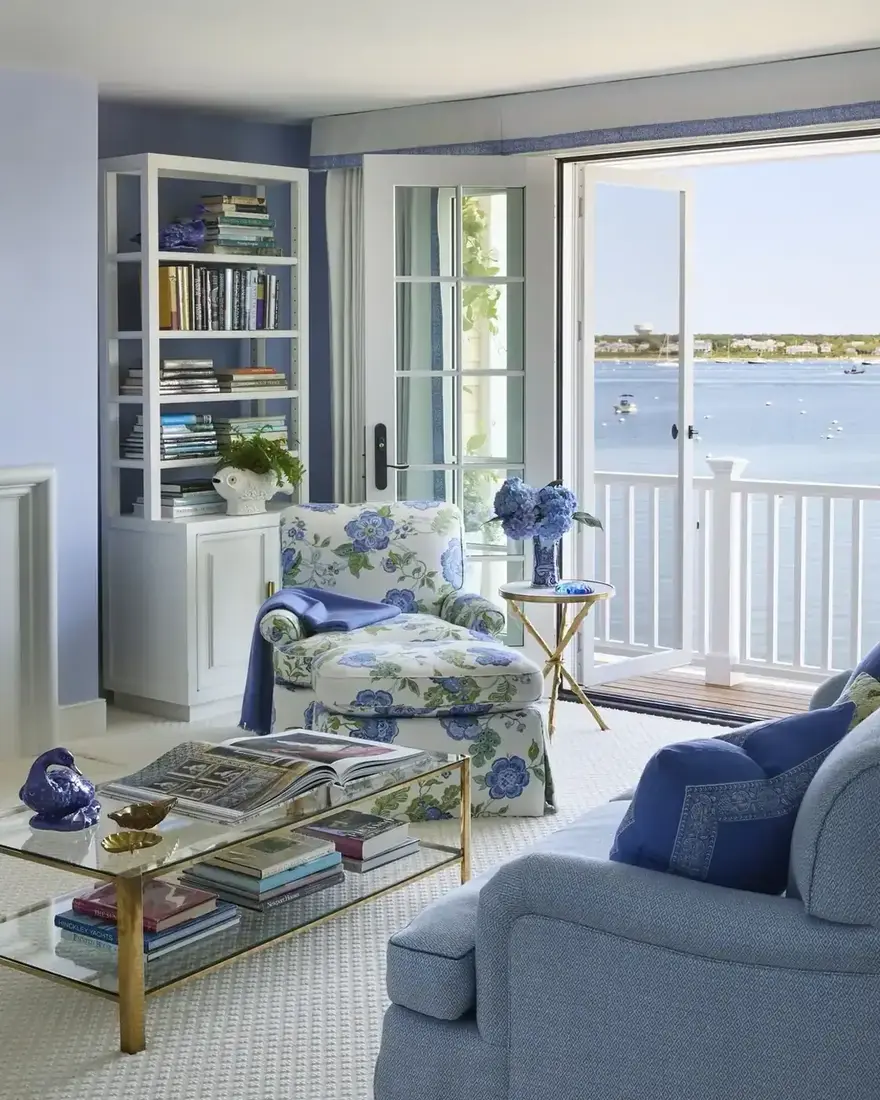
Keep to two colours plus white and the coast stays calm. Navy and white with one warm neutral, jute, oak or sand linen, is the reliable trio. That warm neutral keeps the blue from going cold, and you feel the room settle when the trio stays limited. When you add a fourth colour, even a small one, the palette starts to compete with the sea view you wanted to echo. Step back to the doorway and count what you see. If you can name the palette in three words, you have it. When you test that fourth colour, try it as a small cushion you can remove — if the room feels calmer without it, you have your answer.
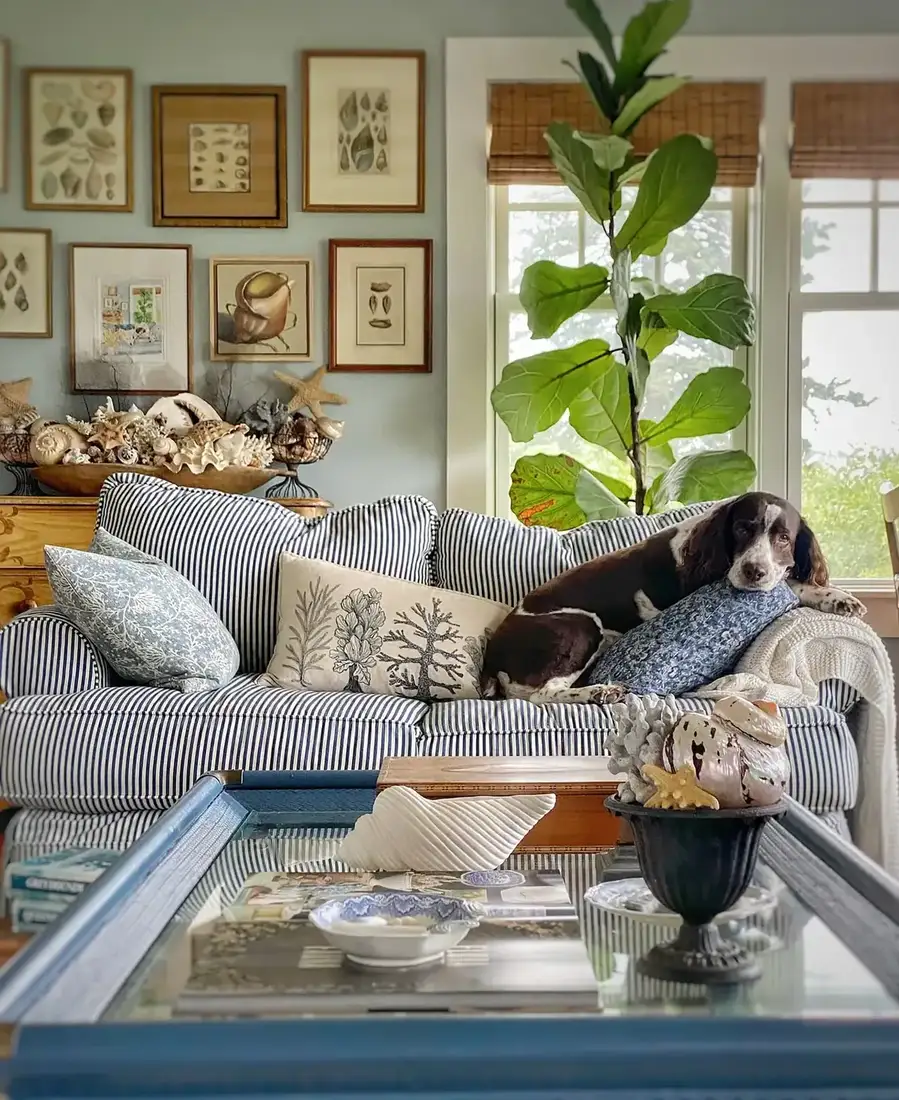
Add one warm neutral to keep blue from chilling
Navy and white alone can feel crisp and a little distant. One warm neutral, a sand linen throw, a rattan chair, or a honey oak table, gives the palette somewhere to sit. That warmth is what keeps a coastal room from reading as a showroom. Keep that warm element low and large, like a rug or sofa base, rather than a small trinket, so the warmth feels structural for you, not added. When you place that warm rug, notice how the blue looks deeper and less stark — the neutral gives it a place to land.
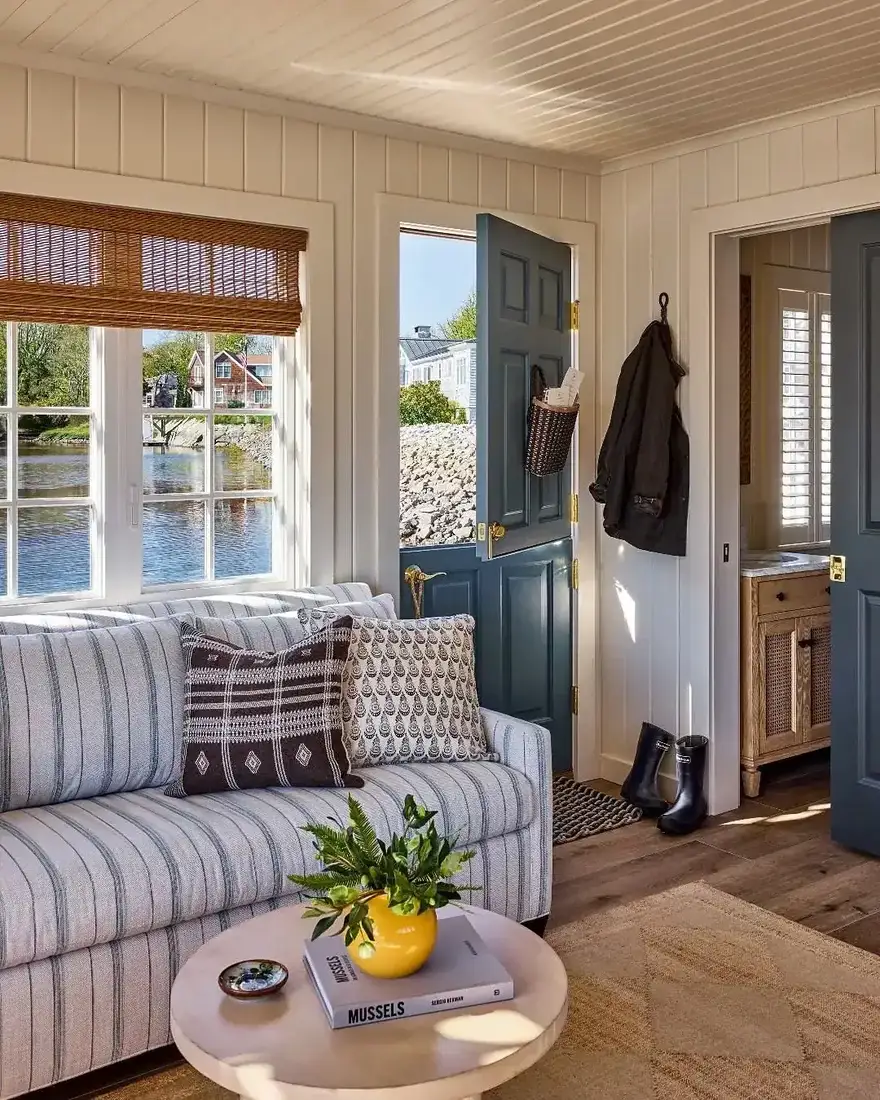
Keep beams and brick as the tall texture
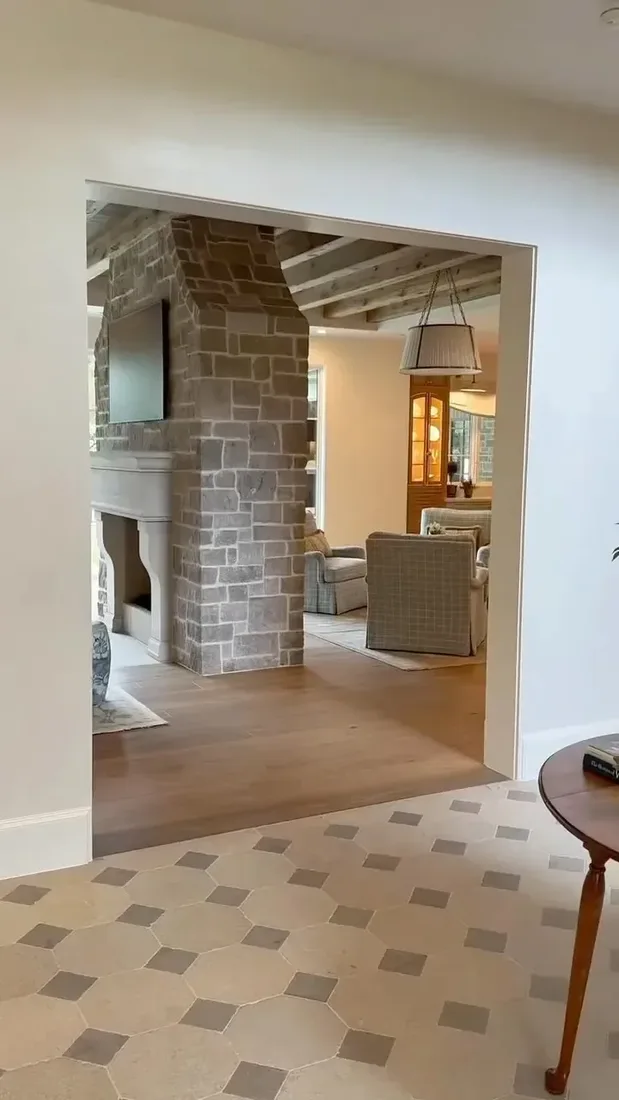
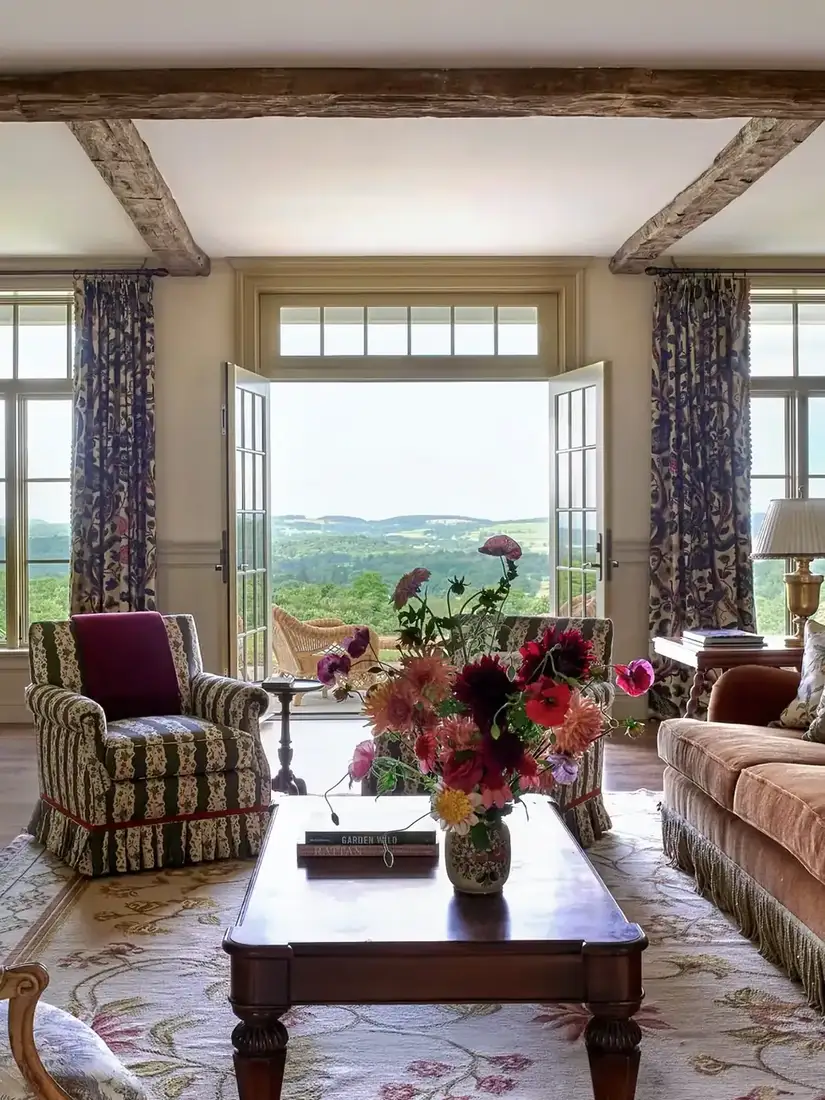
Exposed beams or whitewashed brick give a coastal room vertical texture without any coastal prop. The beams add shadow and the brick adds soft pattern, both reading as beach house because the palette stays the same. Keep those architectural textures white or pale for you, and keep the furniture beneath them low and plain for you. You keep that tall texture for you and you let the palette stay calm for you. You pick up on the room breathe when the tall texture belongs to the house, not to objects you placed.
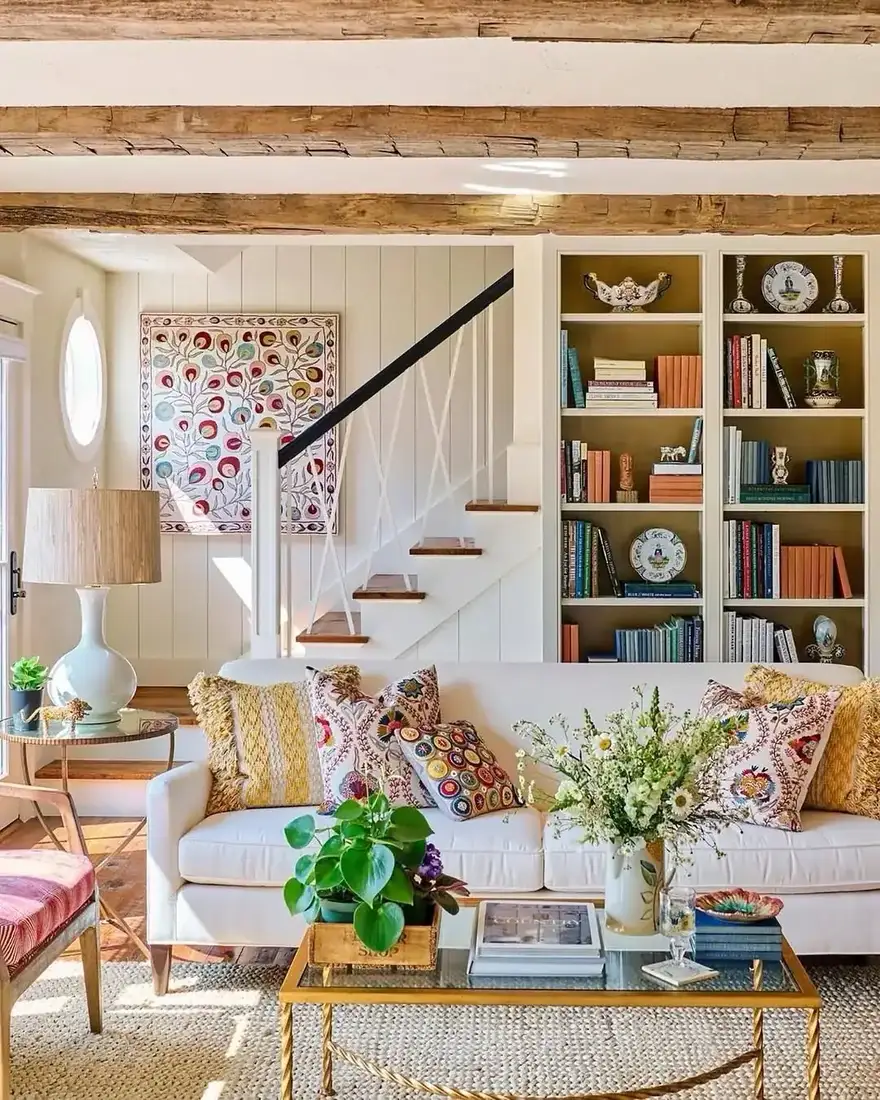
Dress for a season without dressing the house
A coastal room dressed for winter with a pinecone garland and soft ribbon shows how to nod to season without changing the house. Keep the coastal base plain and add one seasonal layer you can remove. That layer makes the room feel alive for a month and leaves no trace when it goes. You keep the coast as the calm you return to for you, not the event you chase.

Coastal choices that stay calm
| Choice | How it reads | When you use it |
|---|---|---|
| One grouped collection | Collected, intentional | Objects feel scattered |
| Stripes | Safest coastal signal | You want hint without imagery |
| One rope/anchor at most | Hint, not theme | You love nautical trinkets |
| Whitewashed brick or panelling | Coastal without objects | Walls feel plain |
| Two colours plus white | Calm trio | Palette feels busy |
The Coastal Living Room Formula
- Group one collection together. Scattered reads as clutter.
- Let stripes be the signal. No imagery, just blue and white rhythm.
- Limit themed objects to one. Rope, anchor or wheel, not all three.
- Give the walls the coast. Whitewashed brick or panelling without a prop.
- Hold the palette to three. Navy and white plus one warm neutral.
- Keep that warm neutral low and large. Jute or oak that grounds the blue.
Hold those six and the coast stays a note, not a theme.
Frequently Asked Questions
How do I keep coastal from looking like a theme?
Use one coastal element inside an otherwise plain room. Group one collection together and keep stripes as your only pattern. When you add a second themed object, remove the first.
Is striped fabric coastal?
Yes, and it is the safest signal because it carries no literal imagery. A blue and white stripe reads as coastal without naming it.
Should I use rope, anchors or ship's wheels?
At most one, and keep it small. Those three are the fastest route to theme, so one hint is enough.
How do I get coastal without buying coastal decor?
Use whitewashed brick or painted panelling. The texture and vertical lines give the feel without a single object.
What colours make coastal calm?
Two colours plus white. Navy and white with one warm neutral like jute or oak is the reliable trio that keeps the coast from going cold.
How do I display a shell collection?
Together on one tray or shelf, not scattered around the room. Grouped reads as a collection, spread out reads as clutter.
This article may contain affiliate links. We may earn a commission at no extra cost to you.