12 Ways to Work With Stone You Can't Change

Add us as a preferred source to see more stories on Google.
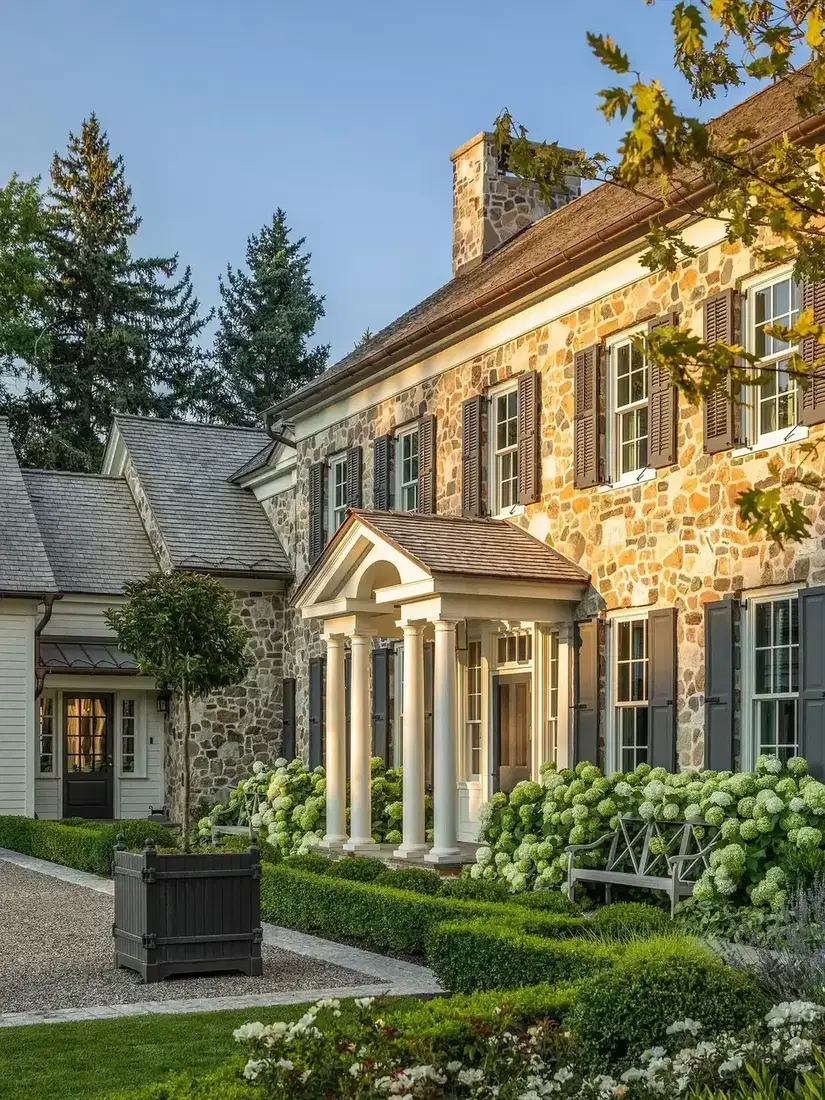
You love the stone. You just don’t know what to do with the rest of it.
The windows are tired. The door is the wrong colour. Someone has smeared grey cement across half the front wall.
Here’s the thing. You can’t pick your stone. It’s already there, and it’s staying.
The mortar and the wall itself
This is the boring part that matters most. Sort it before you spend a penny on paint.
Repoint with lime, not cement
Your joints are about 15 to 20% of the wall surface. That’s a lot of visible material. If your house went up before about 1930, it needs lime mortar. Cement is harder than old stone. Water that gets in has to leave somewhere, and if the joint is harder than the stone, it leaves through the stone face instead. The face then flakes off. That’s called spalling, and it’s the most expensive stone mistake there is. You can’t glue a stone face back on. Brick has exactly the same problem, and you’ll find the same rules in our guide to brick house exterior ideas. Ask your builder which mortar they plan to use. If they shrug, find another builder.
Set the joints back, never proud
You’ve probably seen this. Mortar smeared in a raised band that stands out past the stone, with neat sharp edges. That’s ribbon pointing, and it’s the classic bad repair. It looks wrong on every traditional building, because it makes the joints read as the main event. Your stone ends up looking like it’s been posted through a letterbox. A good joint sits slightly back from the stone face. The stone reads first, the mortar recedes, and the wall looks like one surface again. If you only do one thing to an old wall, fix ribbon pointing. It costs nothing extra to point it properly, and the difference from the pavement is huge.
Clean it the gentle way, or not at all
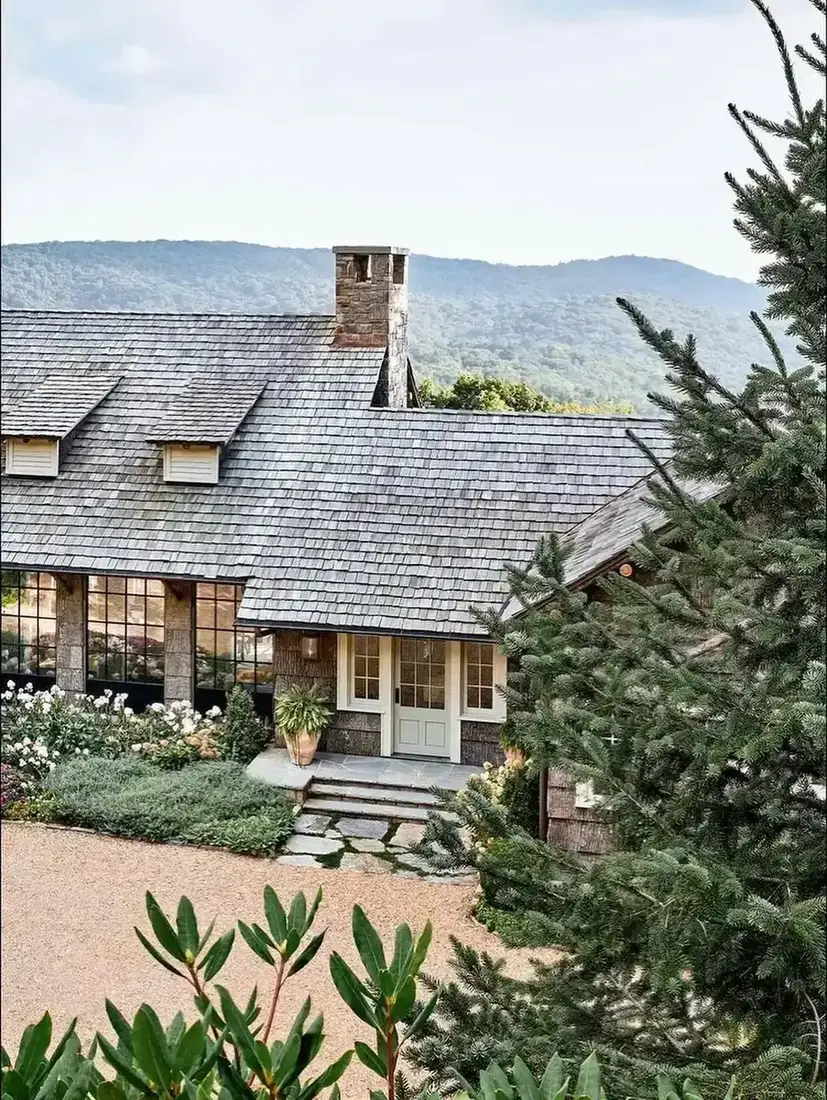
Never sandblast your stone. Never pressure-wash it either. Old stone has a weathered outer skin that has taken a century to form, and that skin is what keeps water out. Blast it off and the stone underneath soaks up water far faster. You’ve made the house wetter forever to remove some green marks. Use the gentlest method that works. Start with a soft brush and plain water. Give it a season. Chances are your wall doesn’t need cleaning at all, and the patina is doing you a favour. A word of warning: any quote that mentions “blasting back to fresh stone” should go straight in the bin.
Colour, and why stone decides it for you
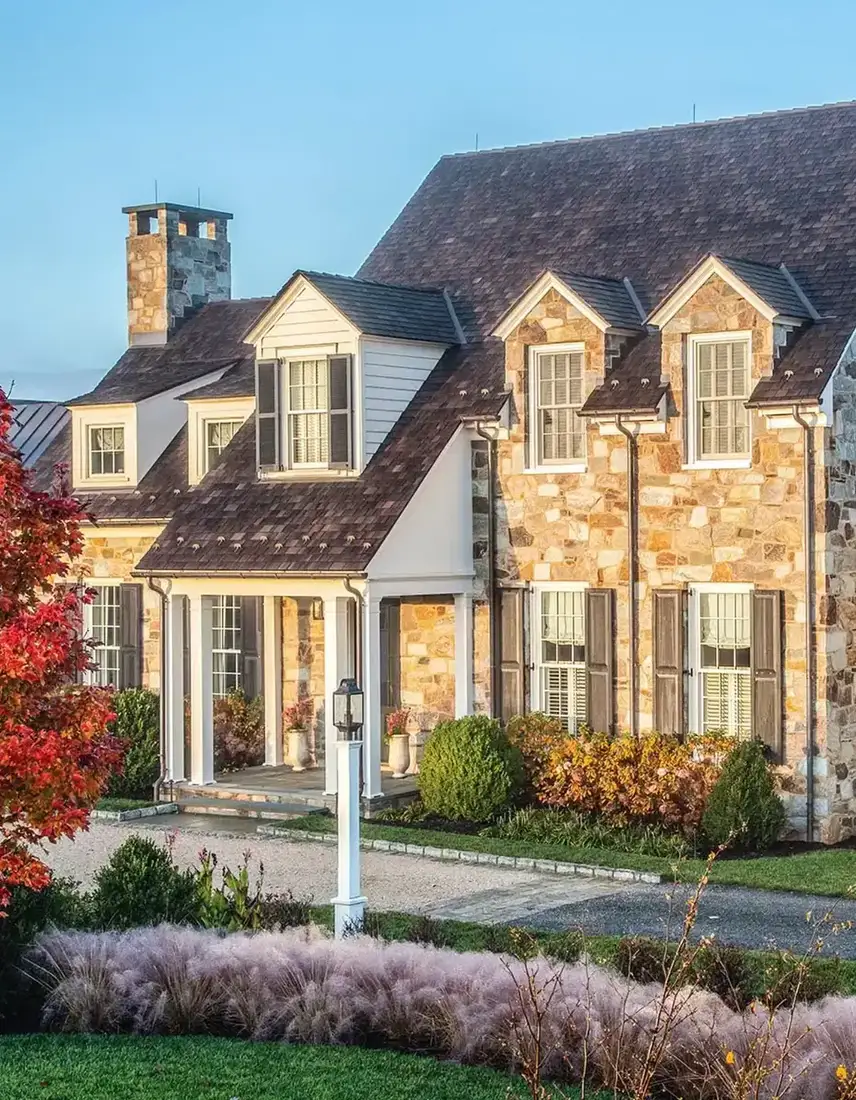
Stone is a neutral. Cool grey, soft buff or warm honey. Read yours first, then pick everything else to sit beside it.
Choose black for frames when you want the stone to lead
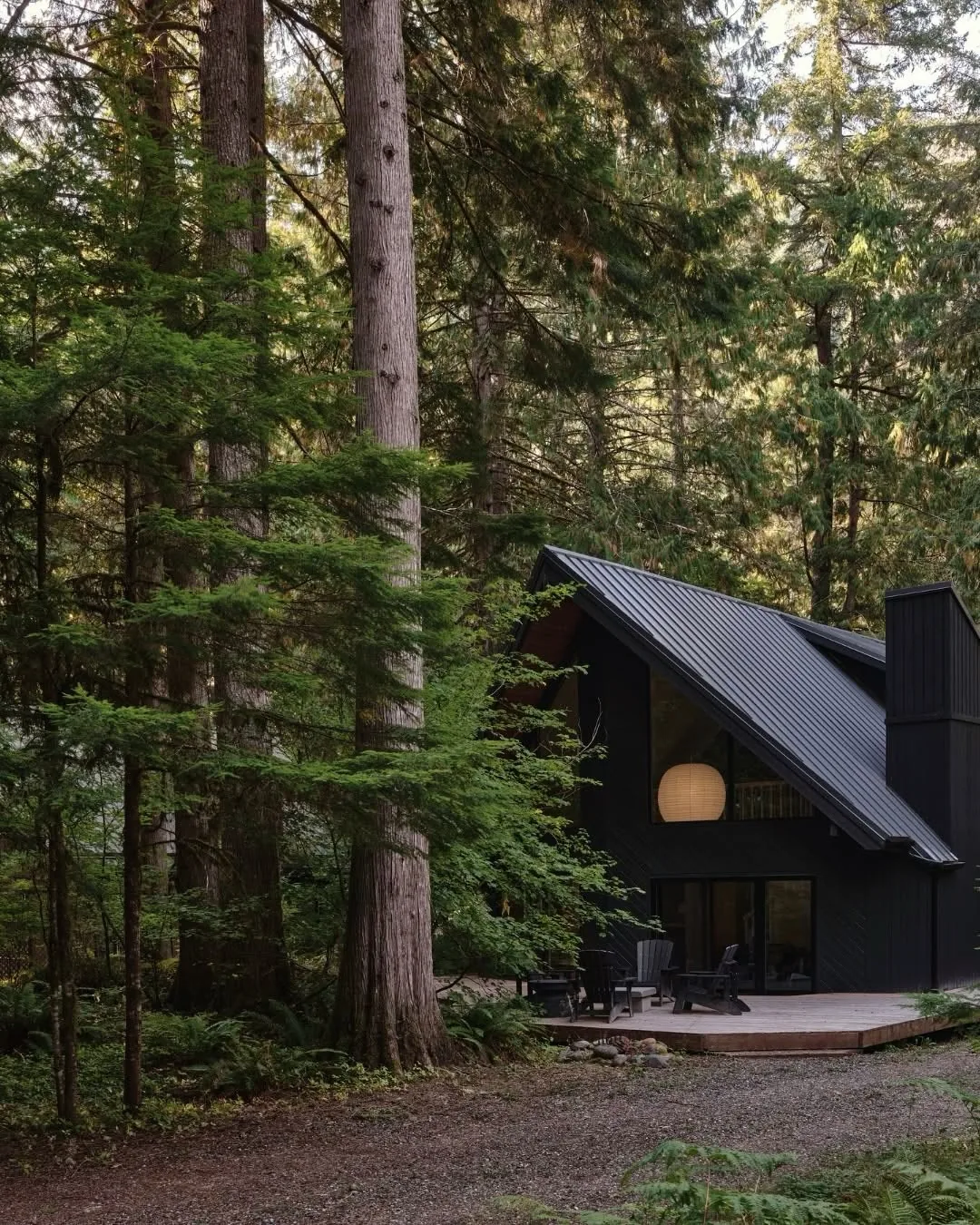
Black window frames are quiet against stone. That sounds backwards, but it works. Black reads as a shadow line, so your eye skips over the frames and lands on the wall. On grey fieldstone with a slate roof, black is close to foolproof. It also ties in your gutters, downpipes and ironwork, so the whole front of the house calms down. Try it on the windows first before you commit to the door as well. Paint a sample board and hold it against the wall on a dull day, not a bright one. Dull light is how you’ll see your house most of the year.
Pick off-white, not bright white
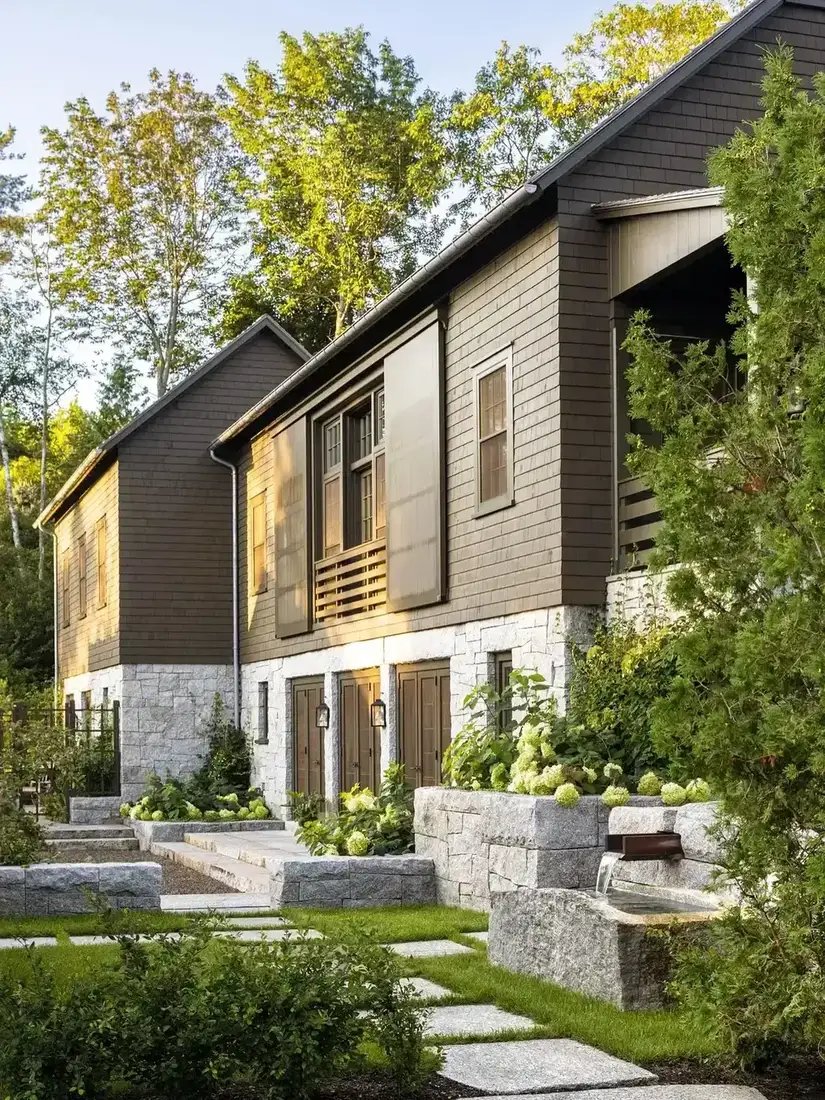
Bright white against grey stone looks harsh. The stone is warm and slightly uneven, and pure white is flat and cold, so the frames end up looking plastic. A softer off-white sits far better. Something with a touch of cream or stone in it. On honey coloured limestone, go warmer again. Here’s the easy test: hold a plain sheet of printer paper against your wall. If your paint sample looks grubby next to the paper, you’re in the right area. If it looks brighter than the paper, it’s too stark. And that’s fine, you just need one shade down.
Use deep green as your third colour
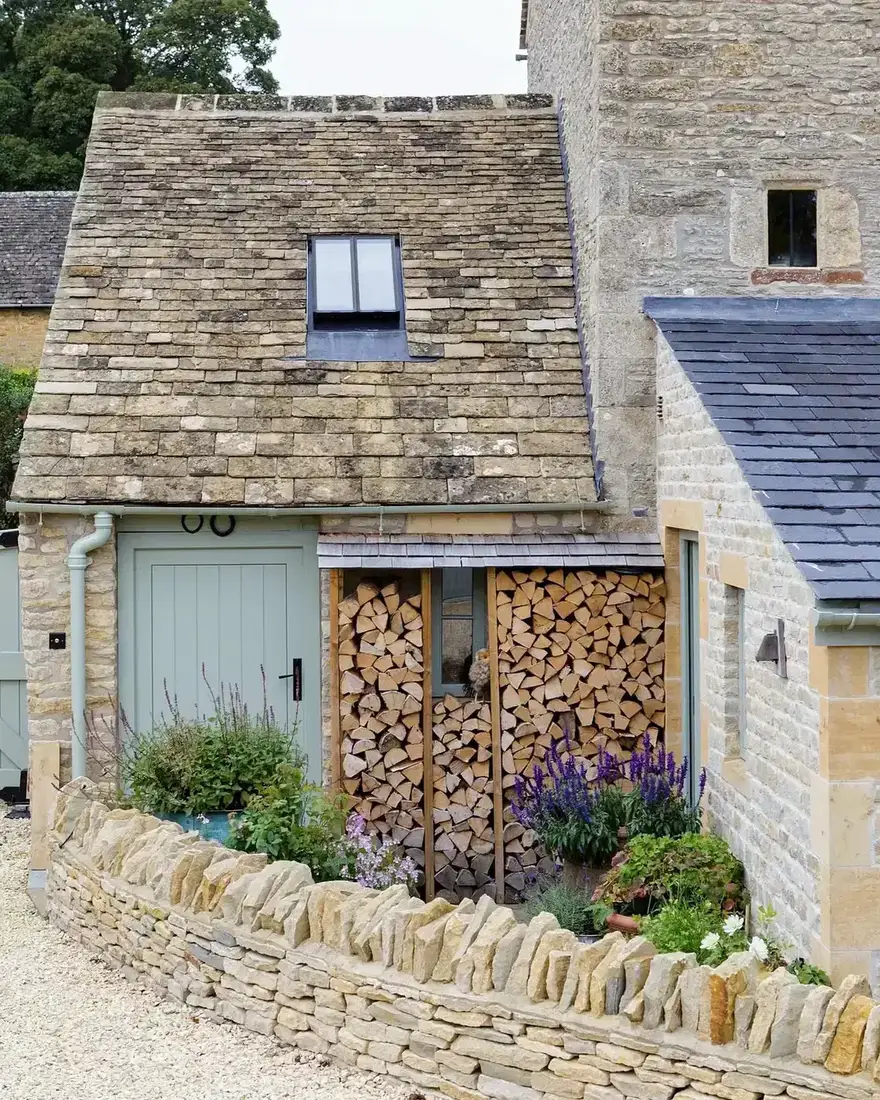
Deep green is the sleeper hit on stone. Cool grey stone, buff stone and honey stone all take it. It borrows from the planting, so the house and the garden read as one thing. Use it on the door, or on the door and a log store, or on shutters if you have them. Keep it dark and slightly muddy rather than bright. Bright green pings; a deep, slightly grey green settles. If your roof is warm terracotta, test the green outside next to the tiles before you buy the tin. Some greens turn sour against orange, and you want to know that before it’s on the door.
Never paint the stone
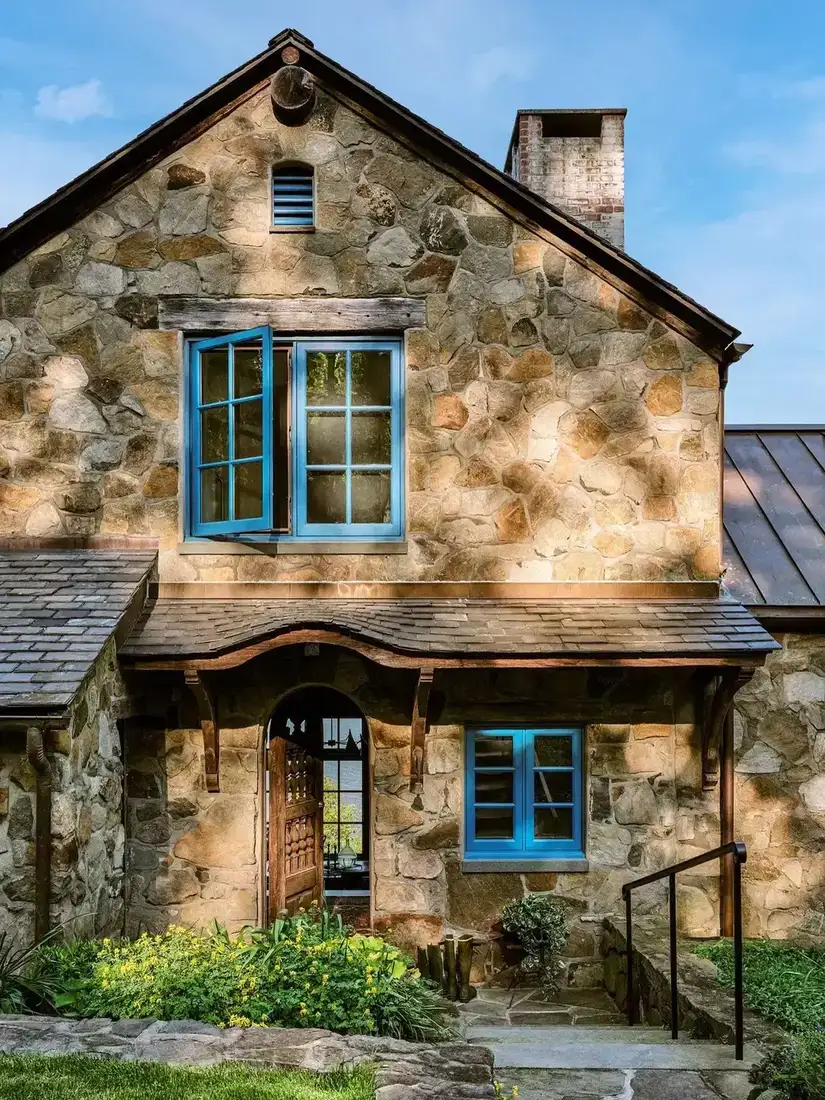
Please don’t. It’s the same breathing problem as the mortar, and it’s worse to undo. Paint seals the face, water gets trapped behind it, and then it pushes back out through the stone. You get blown paint, damp inside, and a repair bill. Stripping paint off stone is slow, costly and often damages the face anyway. If you hate the colour of your stone, change the frames, the roofline or the planting instead. Nine times out of ten it isn’t the stone you dislike. It’s the cement pointing, the dead grass, or the brown plastic windows sitting in front of it.
The roof, the frames and the hard edges
Your roof is the biggest single surface after the wall. It sets the temperature of the whole house.
Match the roof to the stone’s temperature
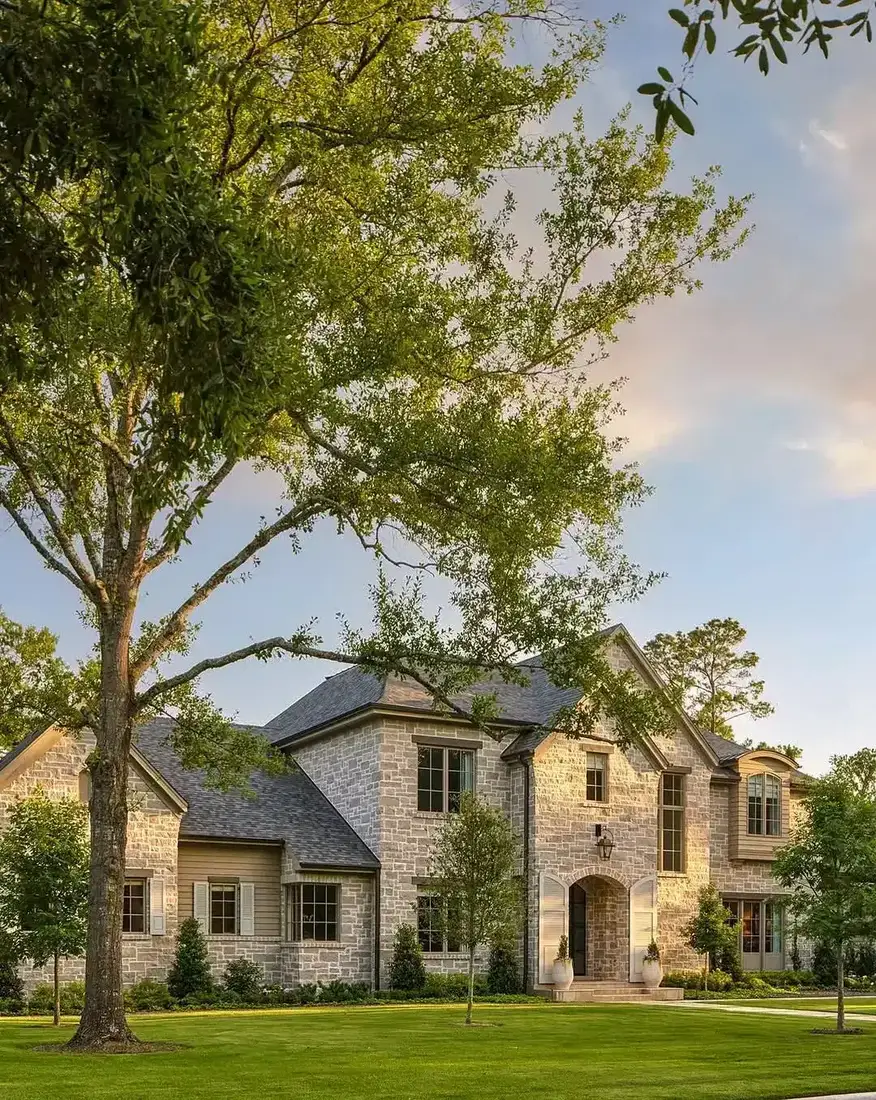
Cool grey stone wants a grey roof. Slate is the obvious answer, and it’s the reason so many stone cottages look effortless. Warm honey stone can carry a warmer roof, terracotta or a soft clay tone. Trouble starts when you mix them without meaning to. Cool grey stone under an orange concrete tile always looks slightly off, and most people can’t say why. You probably can’t replace a roof on a whim, and that’s fine. Just let the roof you’ve got choose your other colours. Warm roof, warm off-white. Cool roof, black and green.
Go slim on the frames, not just dark
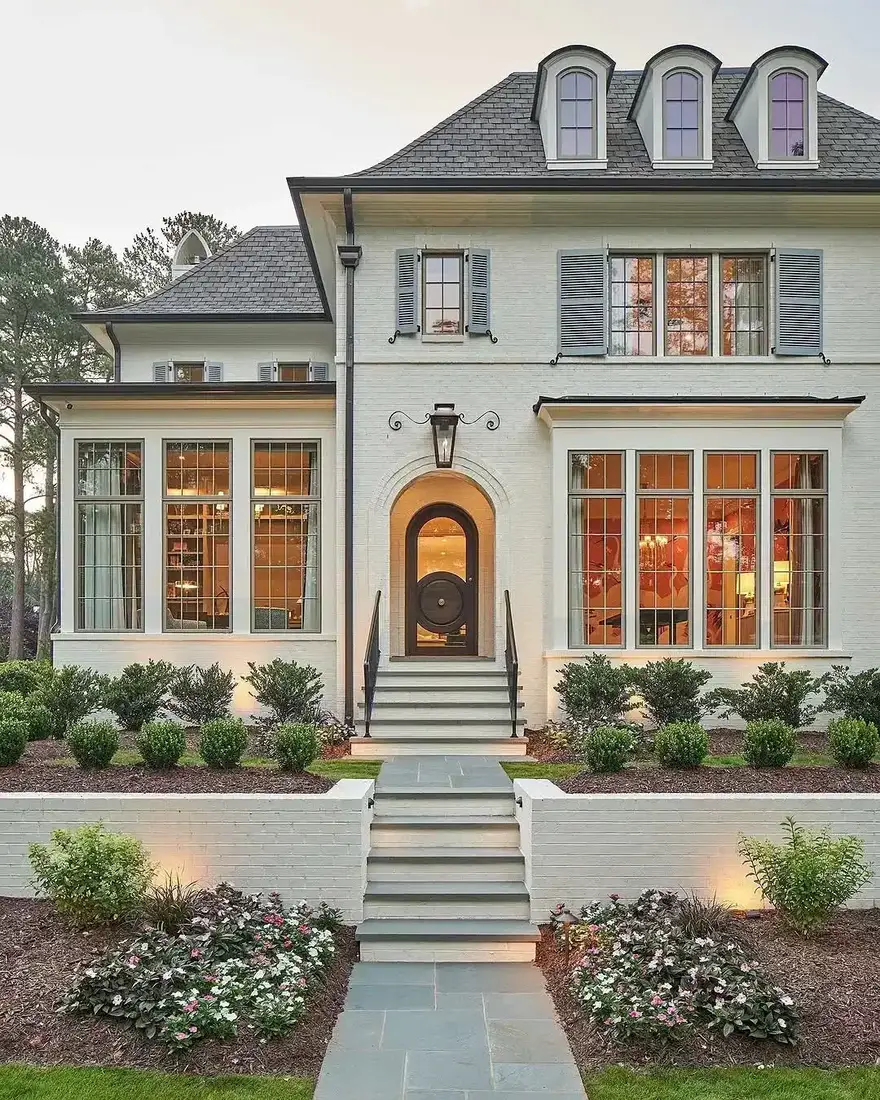
Colour is half the job. The other half is how thick the frame is. Chunky plastic frames make a stone wall look cheap, whatever colour you paint them. Slim frames let more glass show, and more glass means more contrast with the stone. Steel or steel look windows are the extreme version of this, and they’re stunning on stone. If new windows aren’t happening this year, you can still get some of the effect. Paint the frames dark, so the bulk reads as shadow. Clean the glass properly. Take down the net curtains. Depth is what makes stone look good, and dark glass gives you depth for free.
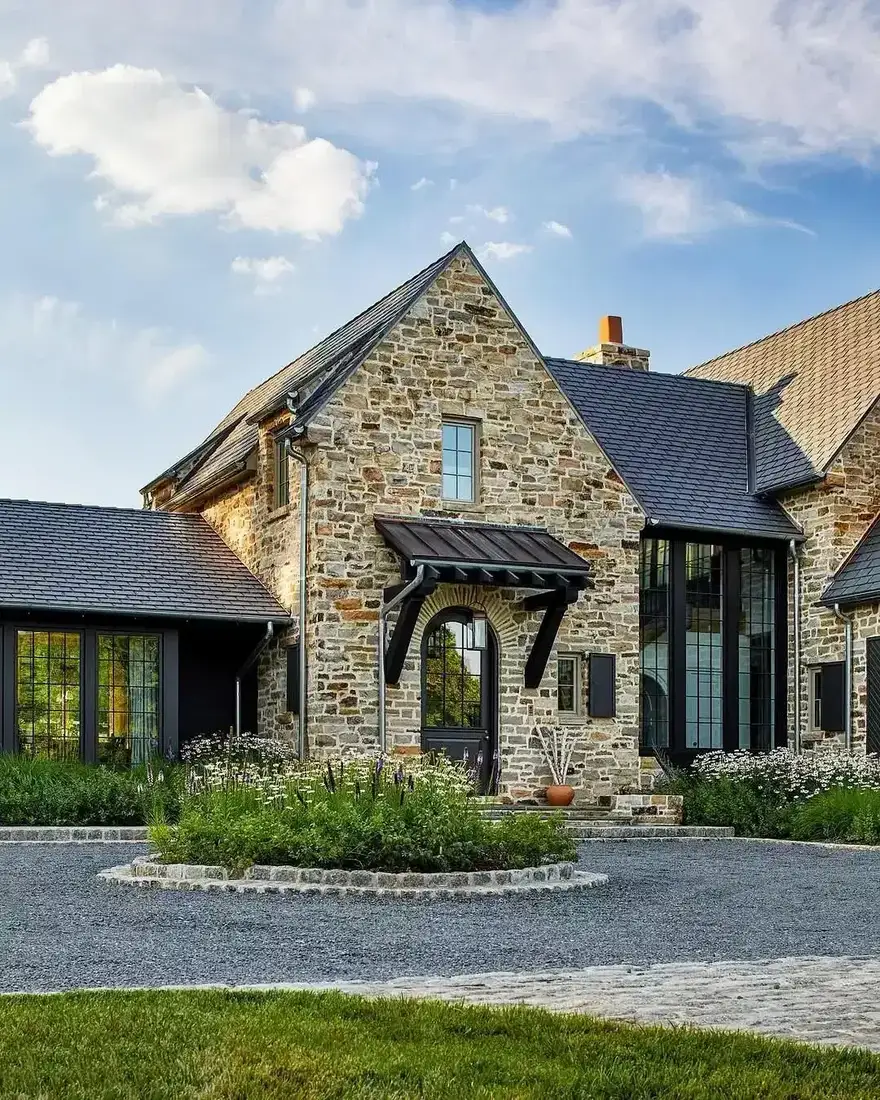
Use gravel, not tarmac, at the base of the wall
The ground finish right in front of your house matters more than you’d think. Gravel is loose, pale and slightly rough, so it echoes the stone. Tarmac is flat, black and dead. It swallows the light at the bottom of the wall and makes the whole front look heavier. Gravel also drains, which keeps splashback off your lowest courses of stone. Choose a gravel with some warmth in it rather than a cold blue chipping. Then keep it raked. A tidy gravel edge does more for your kerb appeal than any amount of new furniture by the door.
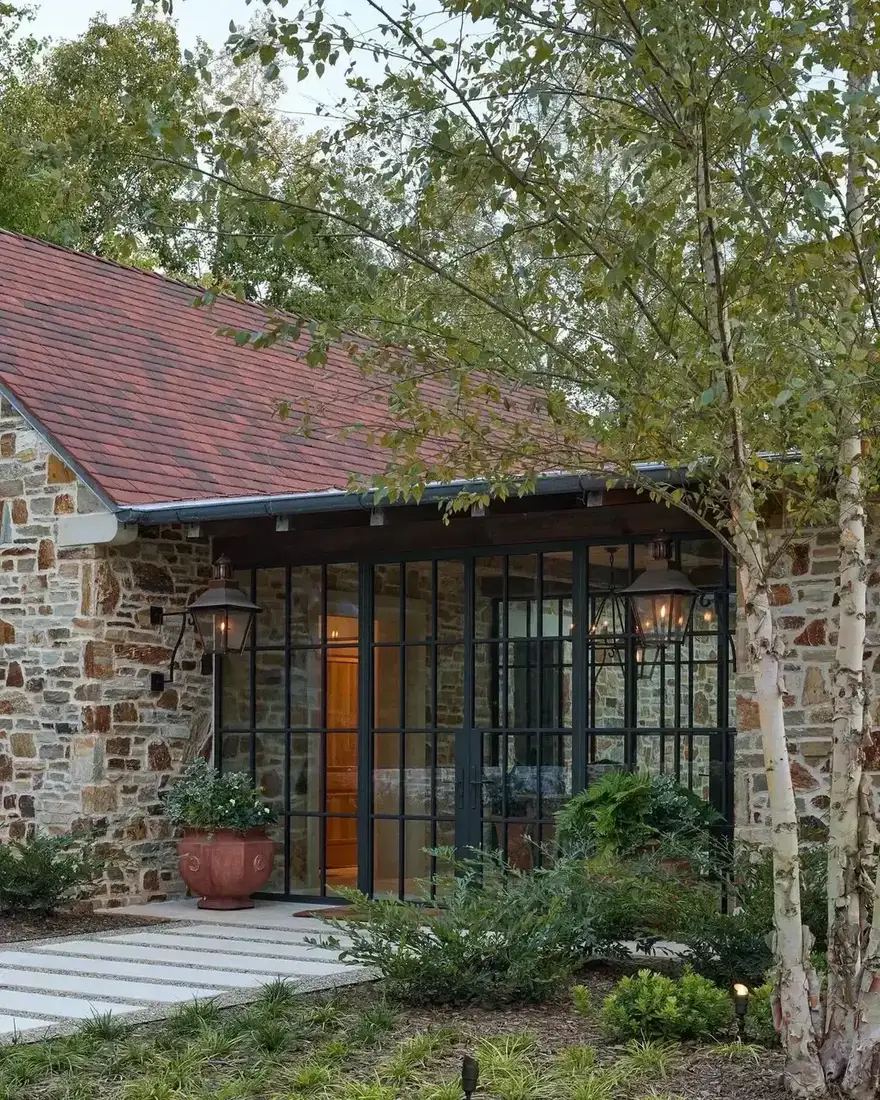
The planting that finishes it
A stone wall is already busy. Lots of shapes, lots of tones. Your planting job is to calm it, not compete.
Plant evergreen structure, not flowerbeds
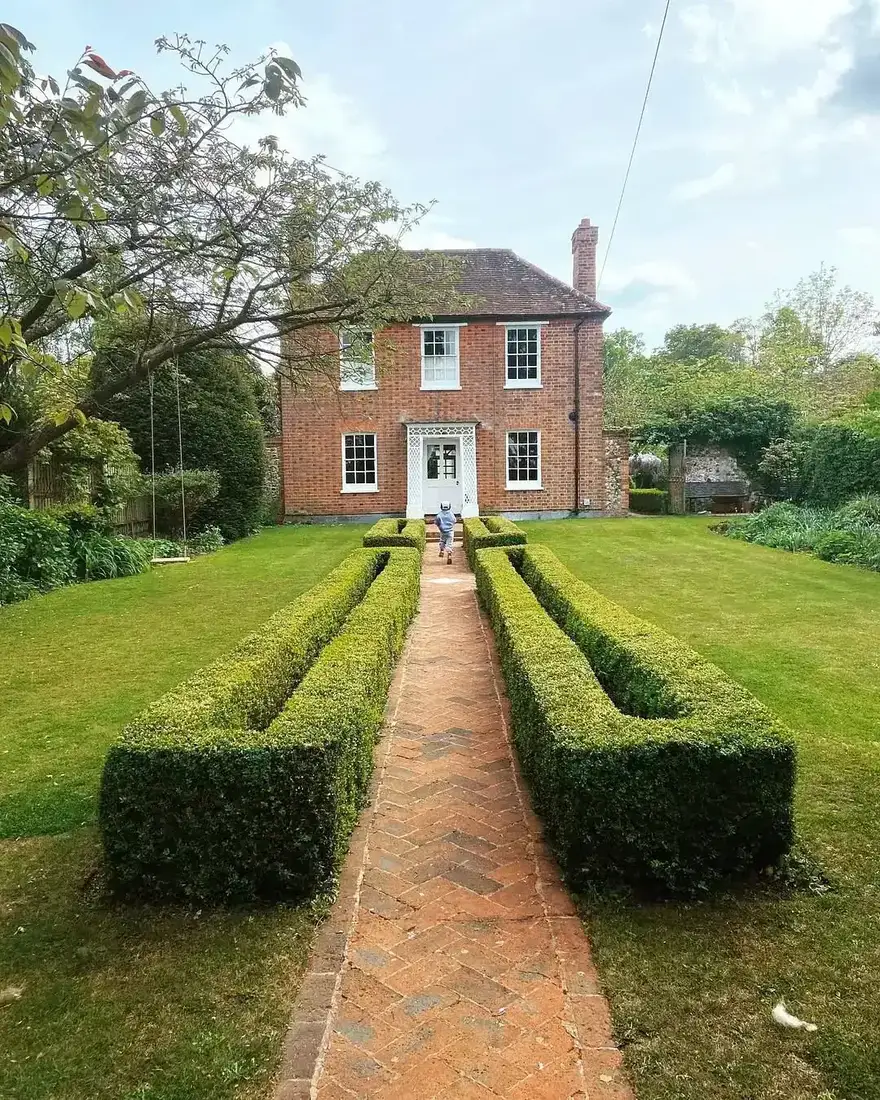
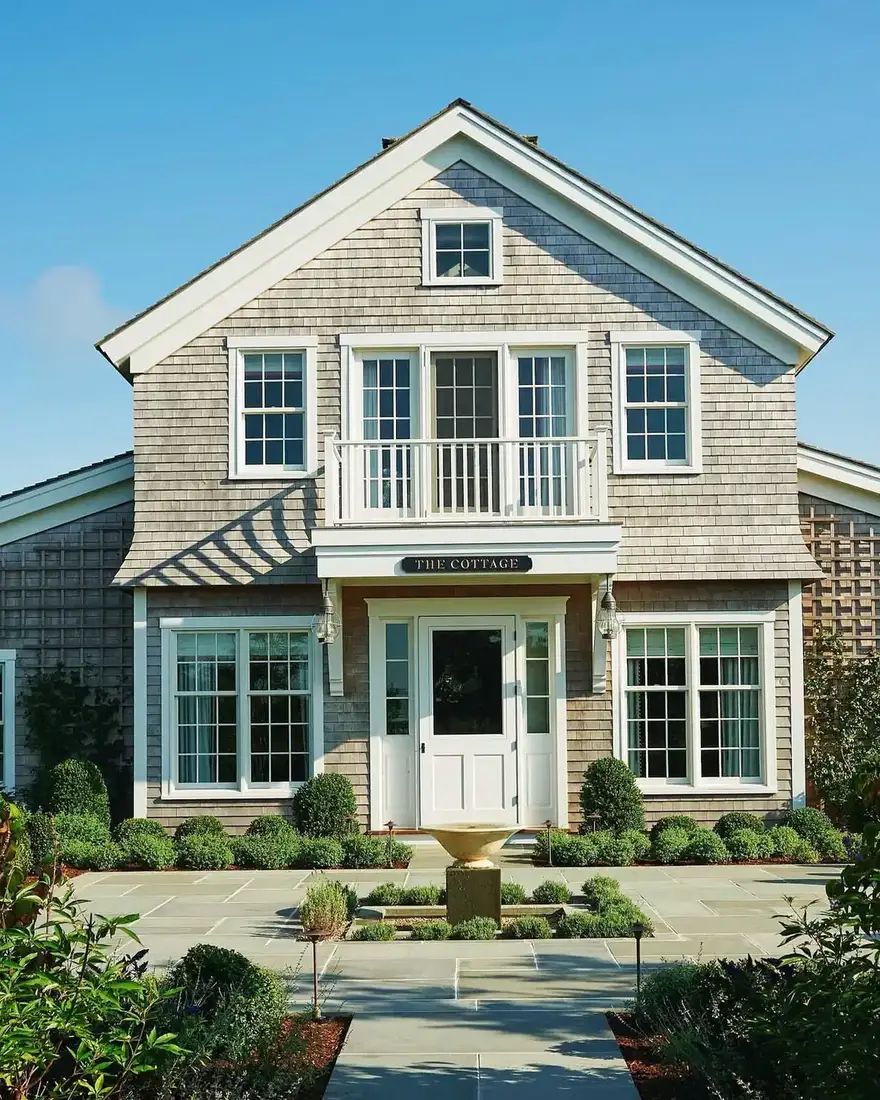
Against a busy stone wall, clipped evergreens beat a mixed border every time. Boxwood balls, yew blocks, hornbeam. Simple shapes, one colour, holding their form all year. They give the eye somewhere quiet to rest, and they make the stone look deliberate. A frothy flowerbed does the opposite, because both the wall and the border are competing for attention. Keep flowers for the sides and the back garden. Save the front for green geometry and one or two well placed pots. For the pieces that go between the planting, our garden decor ideas guide covers what actually suits an older wall.
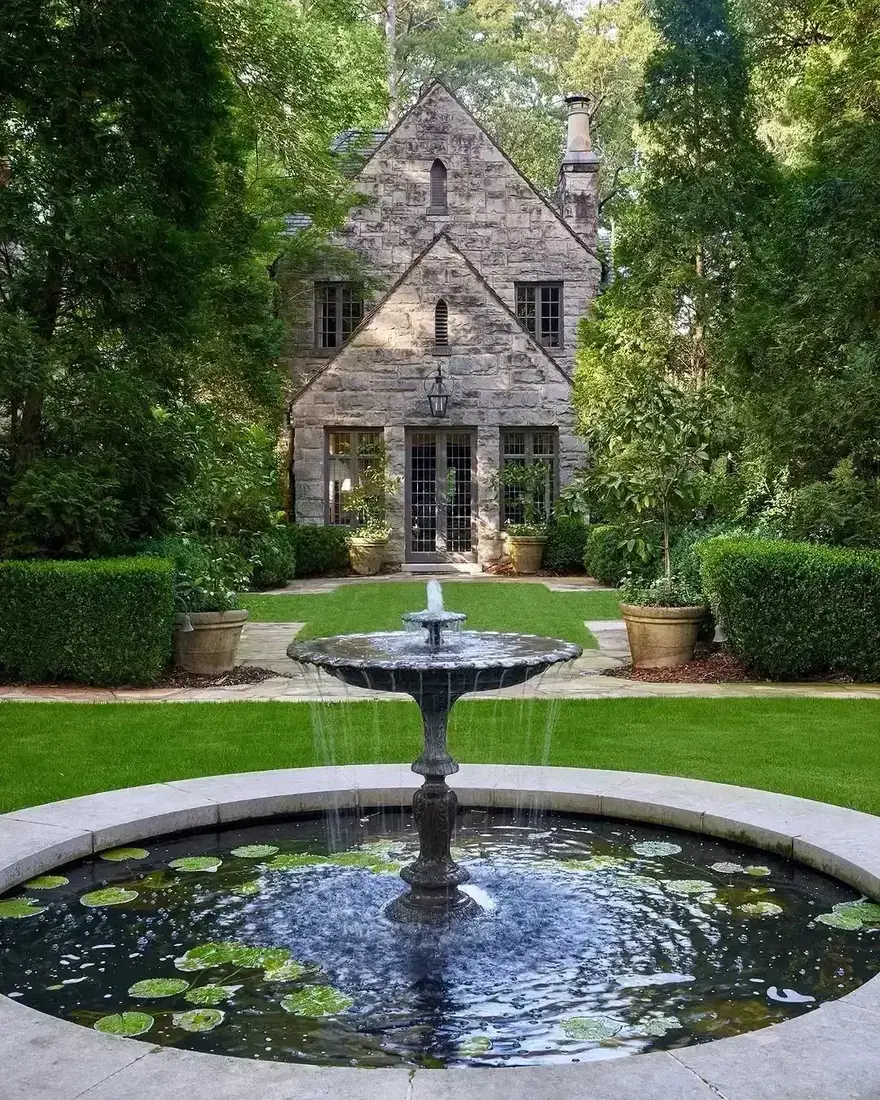
Leave the wall a gap to breathe
Don’t push planting hard against the stone. Ivy and dense shrubs hold water against the wall, keep it damp and make repointing miserable later. Leave a strip of gravel or paving, at least a foot wide, between the bed and the stone. Your plants will still read as being at the house. The wall stays dry and you can actually get a ladder to it. If you want height near the house, use a pot you can move. Which is a shame, because a big climbing rose on old stone looks wonderful. Grow it on a frame held off the wall instead.
Mortar and cleaning: what each option actually does
| Choice | What it does to old stone | Use it when |
|---|---|---|
| Lime mortar | Softer than the stone, so water leaves through the joint | Any house built before about 1930 |
| Cement mortar | Harder than the stone, pushes water out through the face and causes spalling | Modern stone only, never on old walls |
| Flush or slightly recessed joint | Stone reads first, mortar recedes, joint sheds water | Almost every traditional wall |
| Ribbon pointing | Raised band of mortar over the stone face, looks wrong and traps water | Never |
| Soft brush and water | Removes surface dirt, keeps the weathered skin | First and usually only choice |
| Pressure washing | Strips the outer skin, so the stone soaks up water faster | Avoid on anything old |
| Sandblasting | Permanently removes the face, no way back | Never |
The Stone House Formula
- Fix the pointing first, with lime mortar on anything pre-1930.
- Keep joints slightly back from the stone face, never proud of it.
- Clean with the gentlest method that works, or leave the patina alone.
- Read your stone’s temperature, then match the roof and frames to it.
- Choose black or a soft off-white for frames, and one deep colour for the door.
- Plant evergreen structure, and leave the wall a gap to breathe.
Work through those six in order and you’ll spend less than you feared. For more on the rest of the front of the house, browse our home exterior guides.
Frequently Asked Questions
Can I paint a stone house exterior?
You shouldn’t. Paint seals the stone face and traps water inside the wall. That water then pushes back out, blowing the paint and damping the rooms inside. Removing paint from stone is slow, expensive and often damages the face. Change the frames, roofline or planting instead.
What mortar should I use on an old stone house?
Lime mortar, on any house built before about 1930. Lime is softer than the stone, so water escapes through the joint. Cement is harder than old stone, which forces water out through the stone face and makes it flake off. That damage is called spalling and it cannot be undone.
How much difference does repointing really make?
More than most people expect. The mortar joints are roughly 15 to 20% of the visible wall surface. Change the colour, texture and depth of that 15 to 20% and the whole wall reads differently, even though every stone is exactly where it was.
Should I pressure wash my stone walls?
No. Pressure washing and sandblasting strip the weathered outer skin that protects old stone. Once that skin is gone, the stone soaks up water much faster. Start with a soft brush and plain water, and use the gentlest method that works.
What colour windows look best on a stone house?
Black works on almost any stone, because it reads as a shadow line and lets the wall lead. A soft off-white also works well. Avoid bright white on grey stone, as it looks harsh next to the warm, uneven surface.
What should I plant against a stone wall?
Clipped evergreens such as boxwood, yew or hornbeam. Simple shapes in one colour calm a busy wall, while a mixed flowerbed competes with it. Leave at least a foot of gravel or paving between the planting and the stone so the wall can dry out.
This article may contain affiliate links. We may earn a commission at no extra cost to you.