Half a Farmhouse Kitchen Reads as Costume

Add us as a preferred source to see more stories on Google.
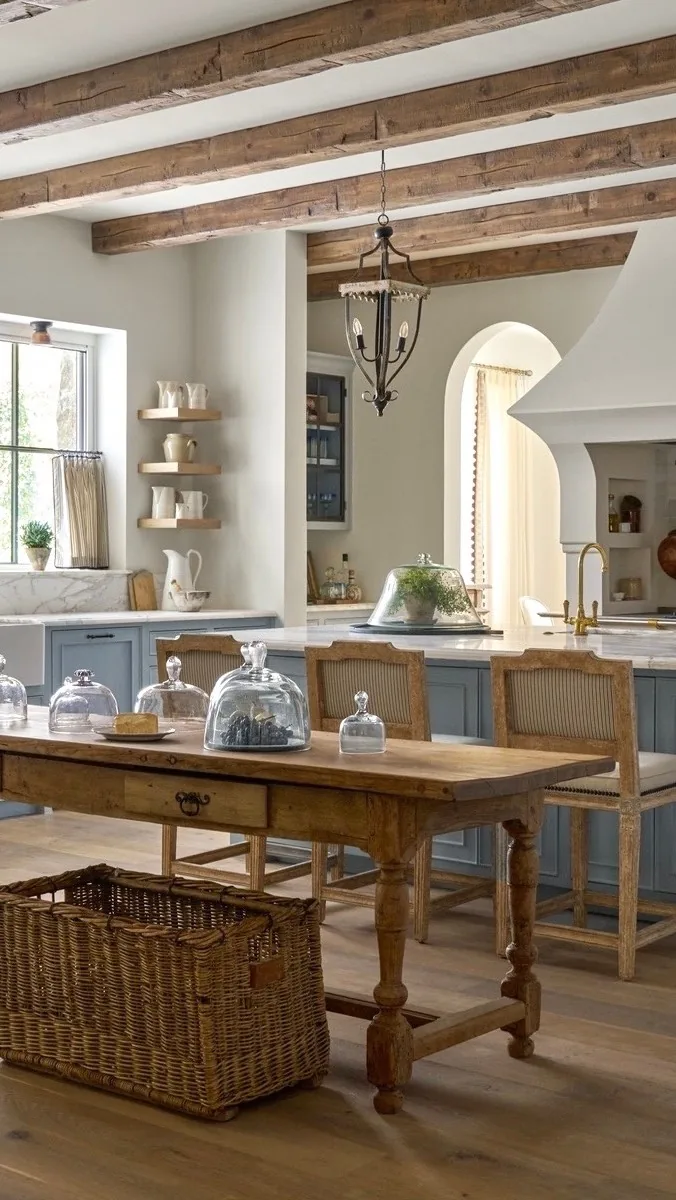
Your mood board holds fourteen farmhouse signals. Your kitchen needs three materials.
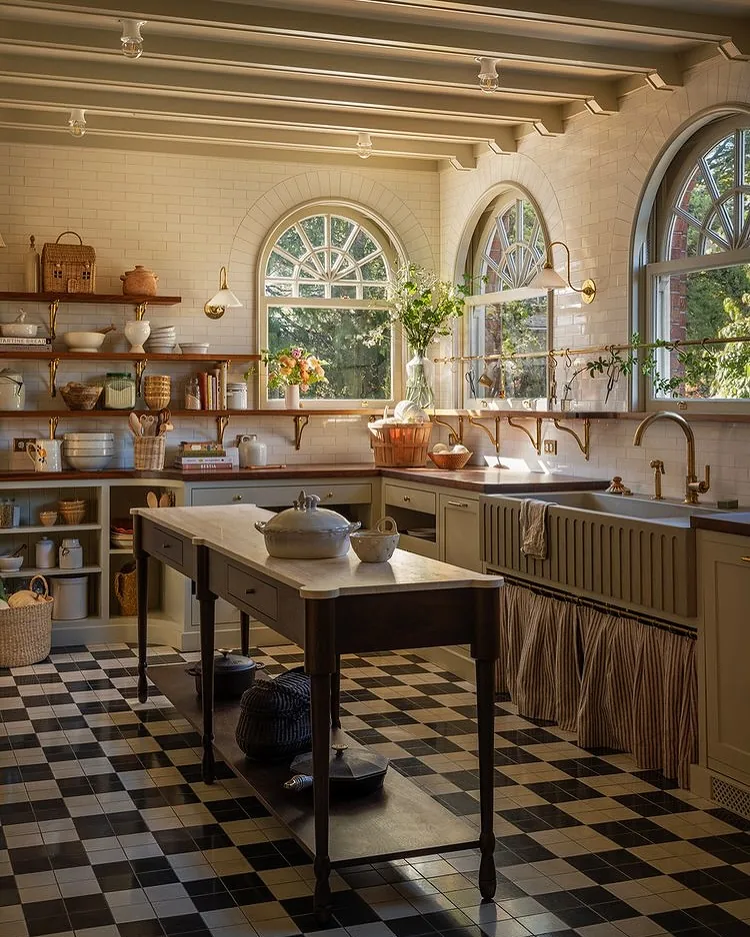
That’s the gap between the farmhouses people love and the ones that read as sets. Real ones run on honest stuff: solid shaker doors, a working apron sink, actual timber overhead. The costume versions run on signals: faux beams, printed signs, galvanized everything.
Signals outnumbering materials five to one is exactly what makes guests smile politely. You’ll keep the count honest with these farmhouse kitchen ideas, and your room will thank you daily.
Build the bones honestly
You’ll spend on structure that ages, and you’ll thank yourself every year it improves. Three ideas separate real from stage set.
Hang shaker doors in solid wood
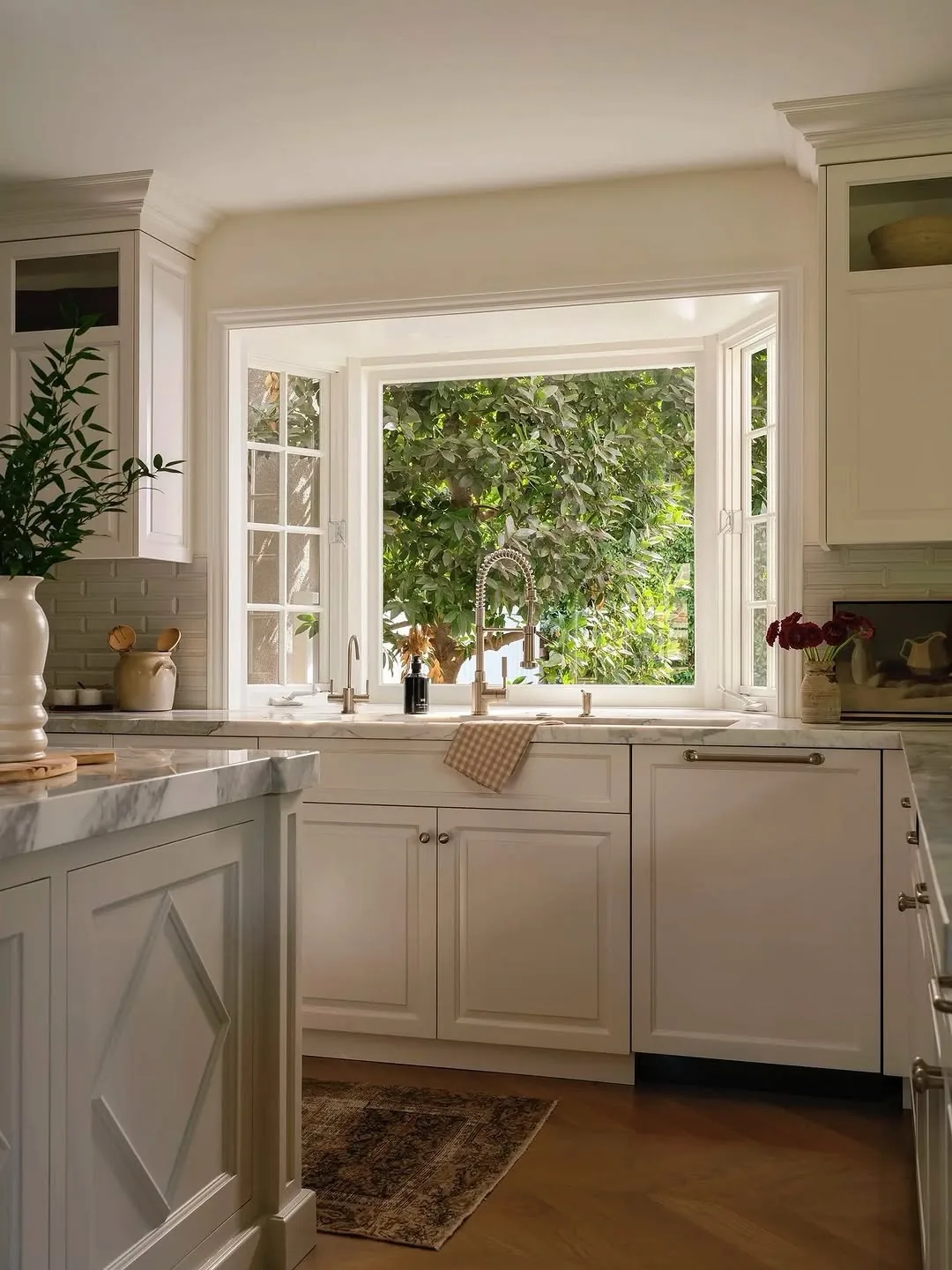
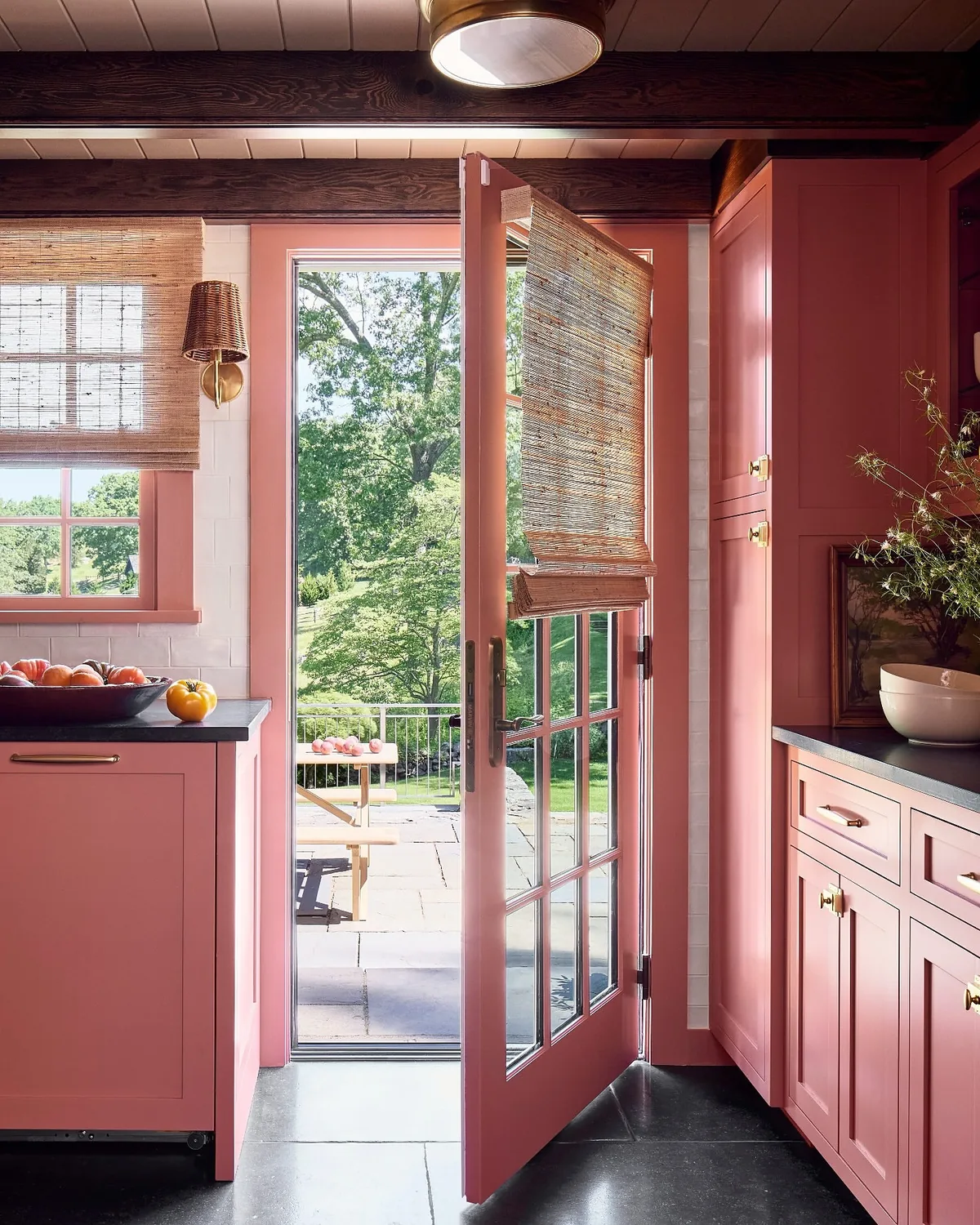
Shaker’s flat panel and simple frame flatter farmhouse like nothing else. You’ll choose solid wood doors that take touch-ups for decades over MDF that chips beyond repair. Paint wears honestly on hardwood. It fails catastrophically on compressed board.
You’ll keep profiles simple and hardware unfussy. Cup pulls or plain knobs in black or aged brass suit the idiom without shouting. When doors, frames and boxes all share real timber, your kitchen gains the quiet integrity photographs can’t fake. Cheap doors doom your expensive styling every time.
Beam it real or skip beams entirely
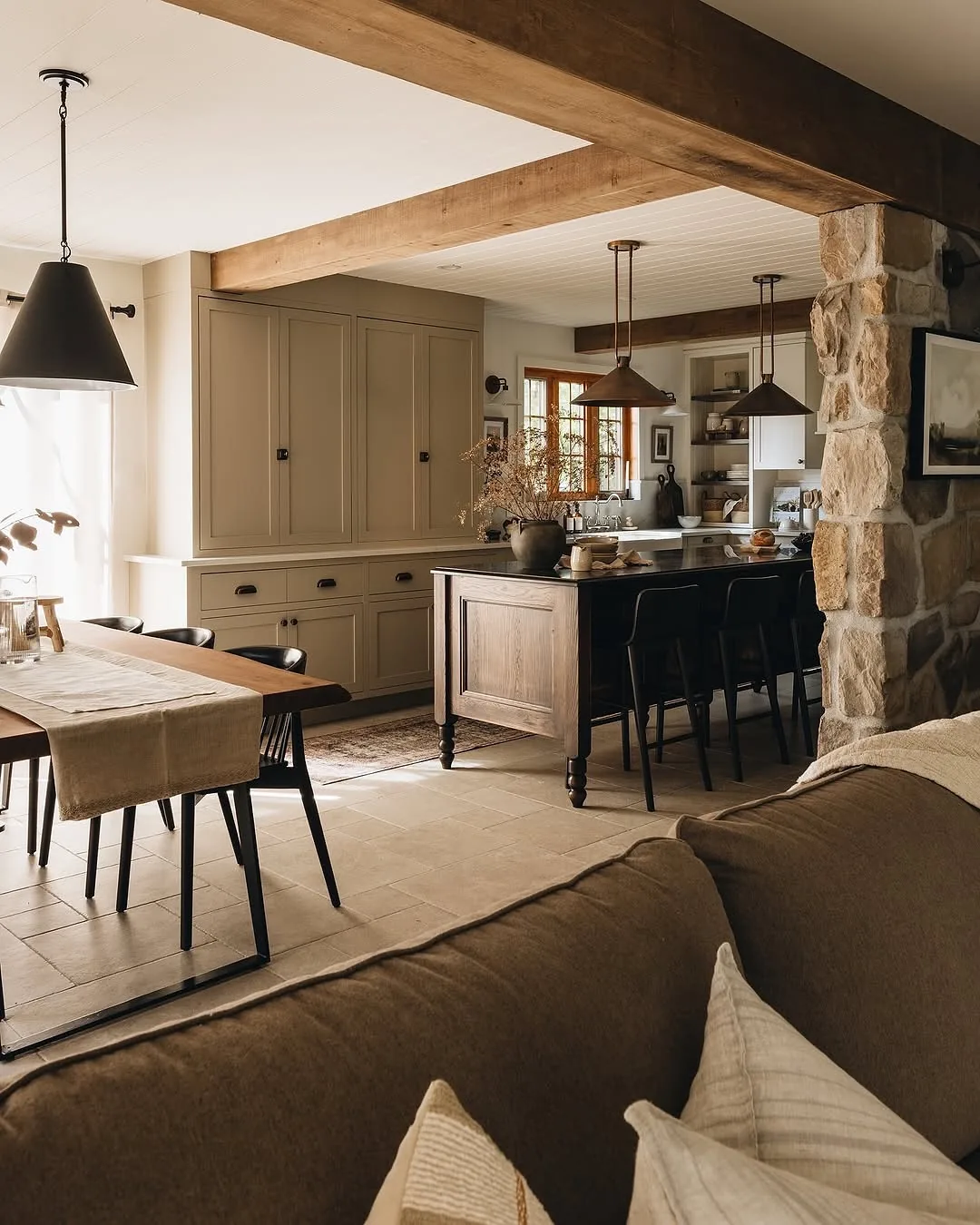
Foam beams read as theater the moment anyone looks closely. You’ll install real reclaimed or new hardwood beams, or you’ll design a beautiful beamless ceiling instead. Farmhouses without beams look fine. Farmhouses with obvious fakes look foolish.
You’ll run beams structurally honestly too, spanning wall to wall rather than floating as decoration. Two substantial timbers beat six skinny sticks you’ll regret. When timber carries real visual weight overhead, the whole room grounds itself. For beam scale and vaulted volume specifics, see our beamed and vaulted ceiling kitchens.
Sink the apron, skip the theme
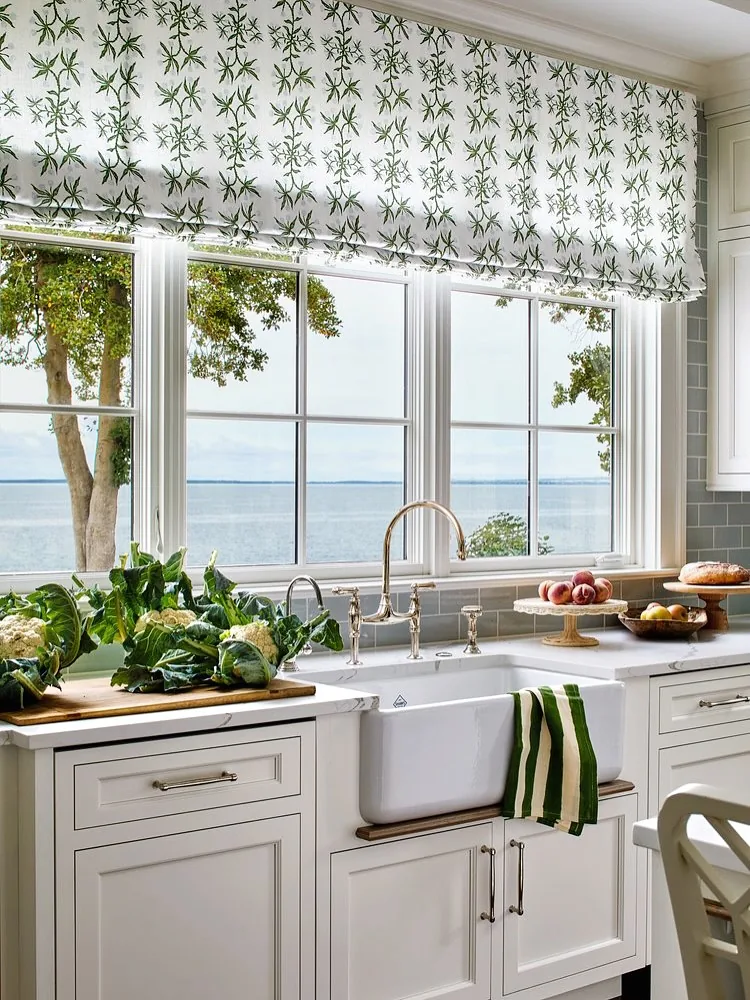
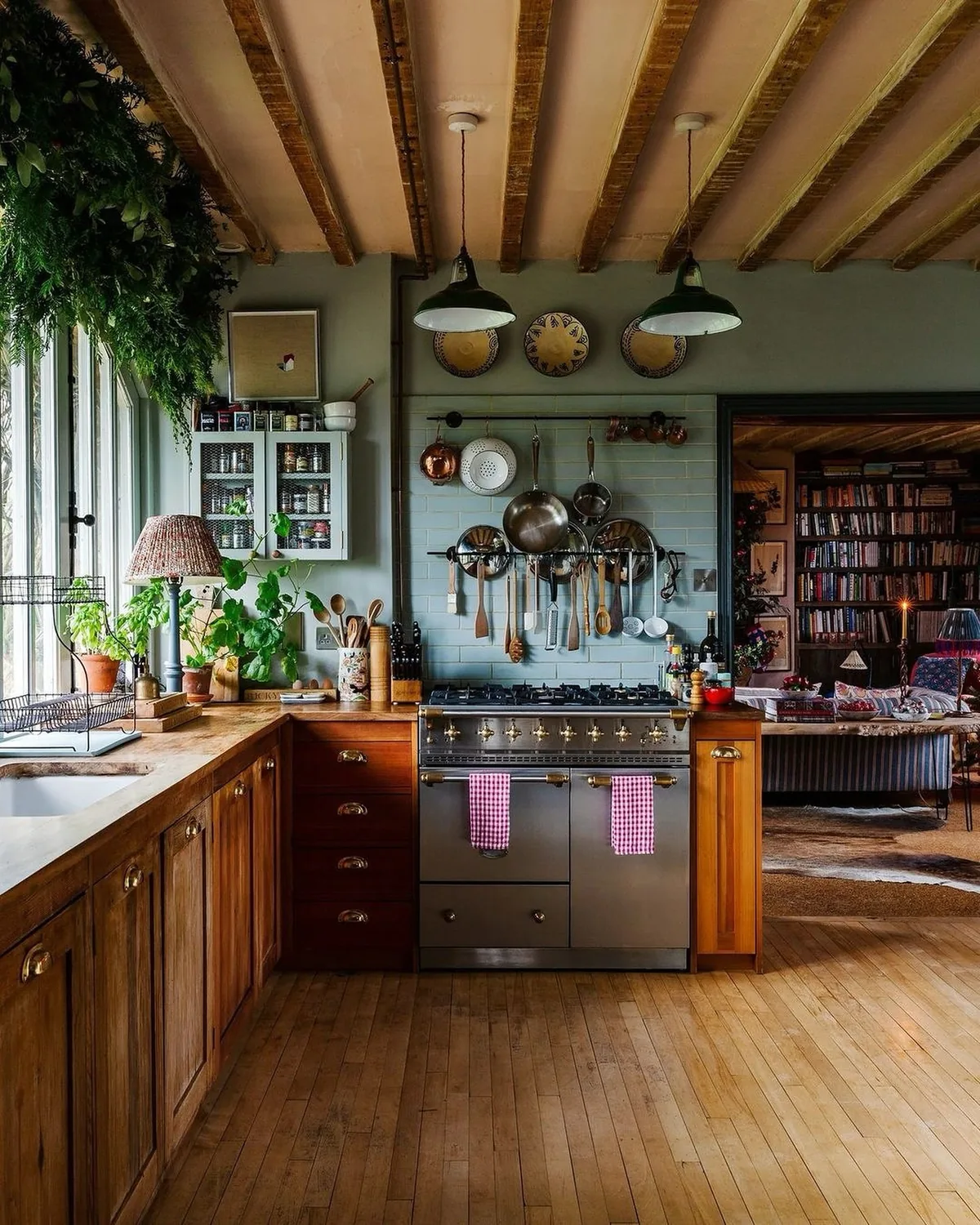
The apron sink is farmhouse’s signature and its most abused feature. You’ll install a real fireclay or cast iron basin that works daily, not a decorative nod beside a standard sink. One working apron anchors the style completely.
You’ll resist every other water-themed decoration once the sink speaks, because restraint is what keeps your kitchen a kitchen. Word art about washing up, novelty faucets shaped like farm equipment, themed soap dispensers by the dozen. The sink said farmhouse already. When the hardest-working fixture carries the theme, your room stays a kitchen instead of becoming a gift shop you’ll tire of.
Warm it with copper and wood
Metal and timber do farmhouse’s emotional work. Three ideas spend them right.
Copper the range wall once
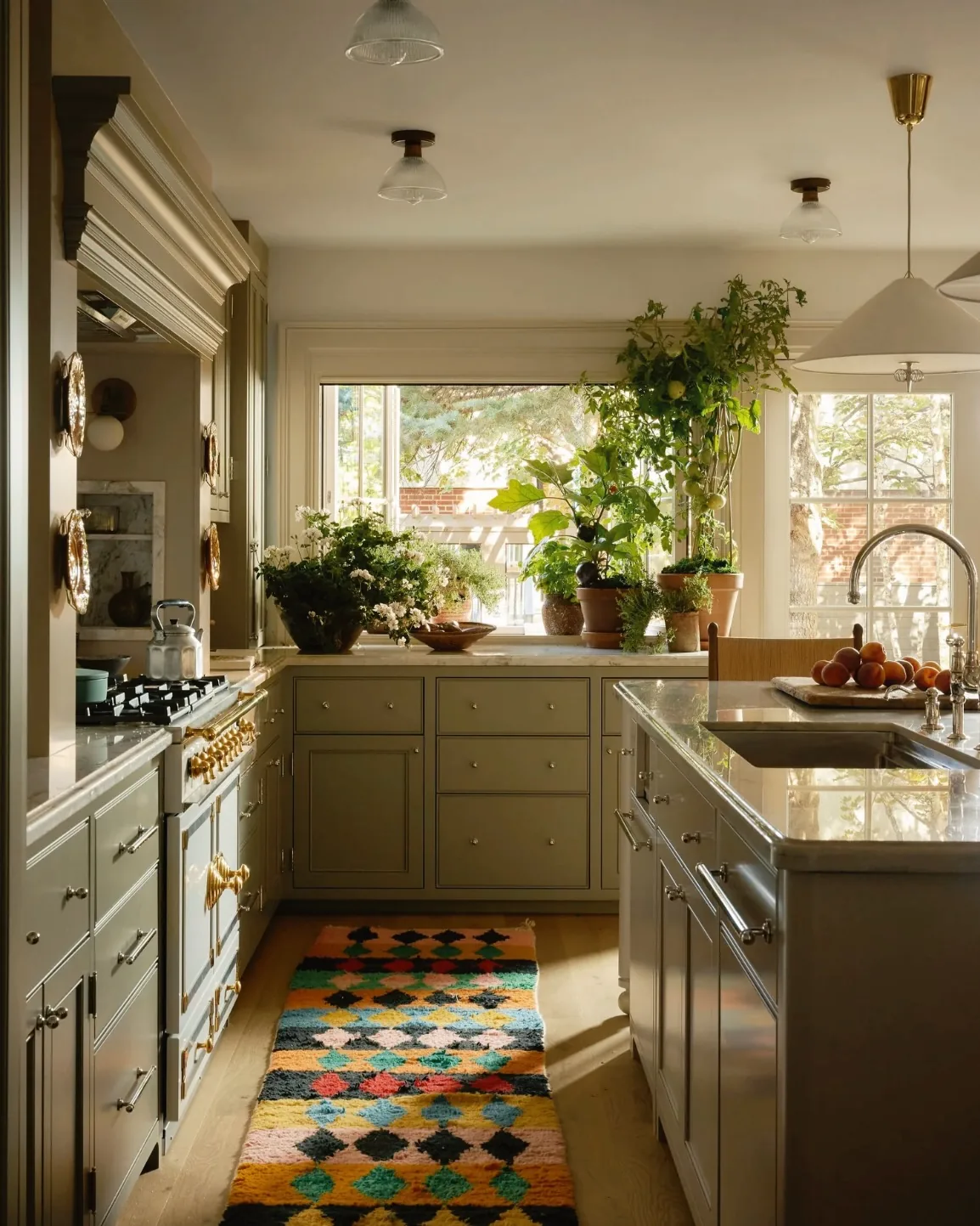
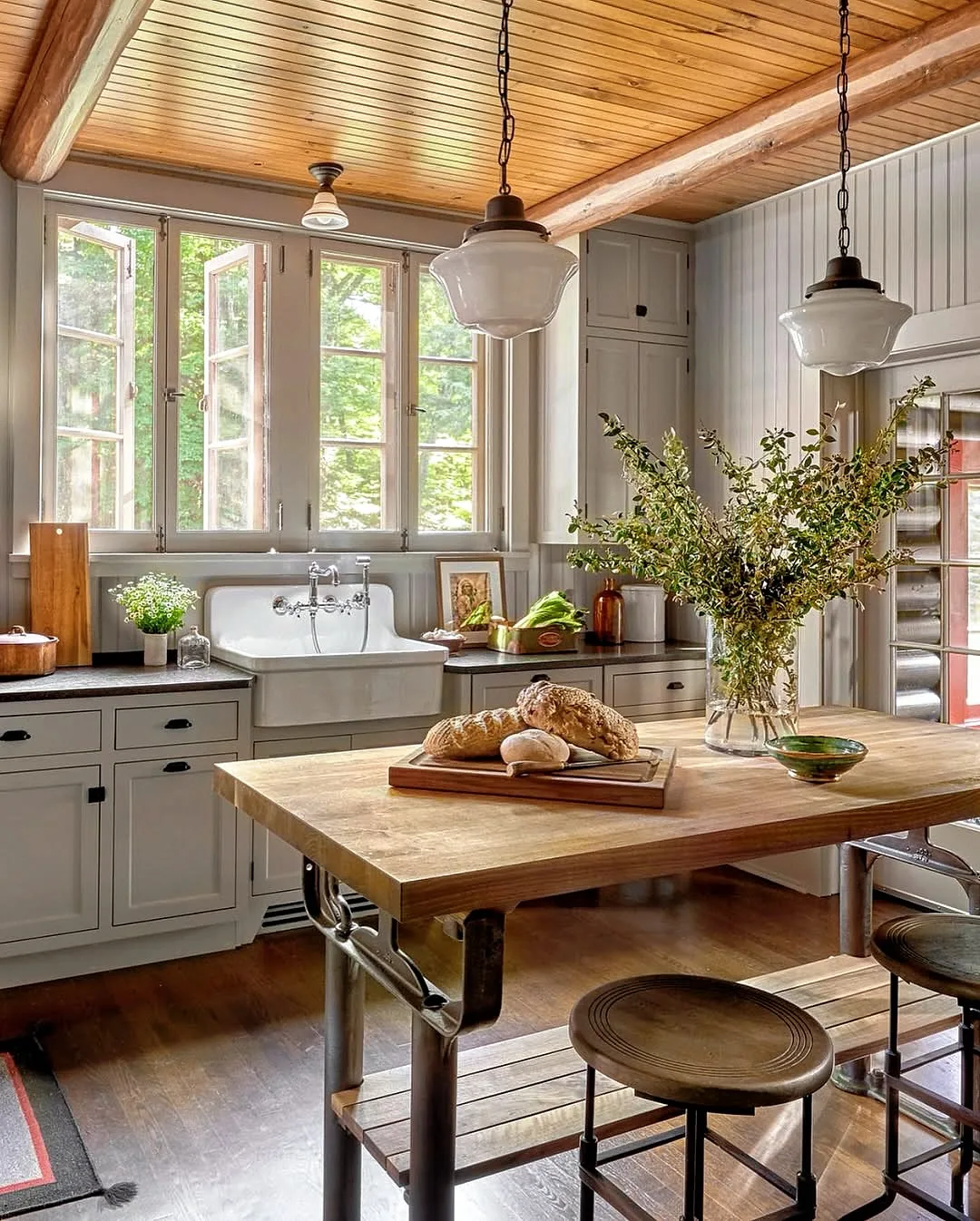
Copper pots, hood or faucet bring living warmth nothing else matches. You’ll concentrate copper in one zone, usually the range wall, so it reads as collected rather than scattered. Single-zone metals compose. Sprinkled metals confuse.
You’ll let copper patina naturally instead of polishing weekly. Unlacquered surfaces darken and mottle with use, which farmhouse forgives completely. When the range wall glows with hammered warmth, the kitchen feels fed even empty. Polish for photos, patina for life, and you’ll choose patina daily.
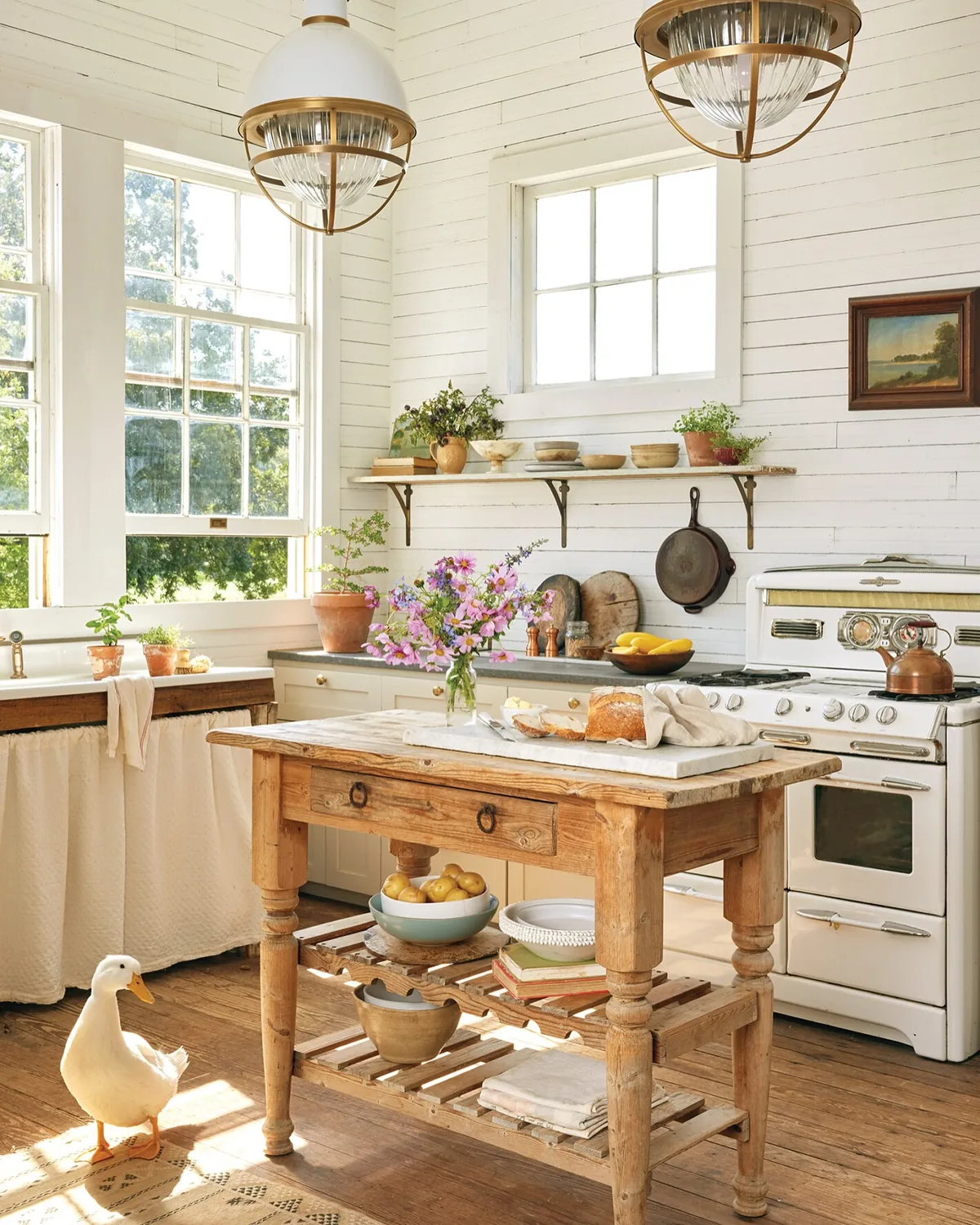
Top the island in honest timber
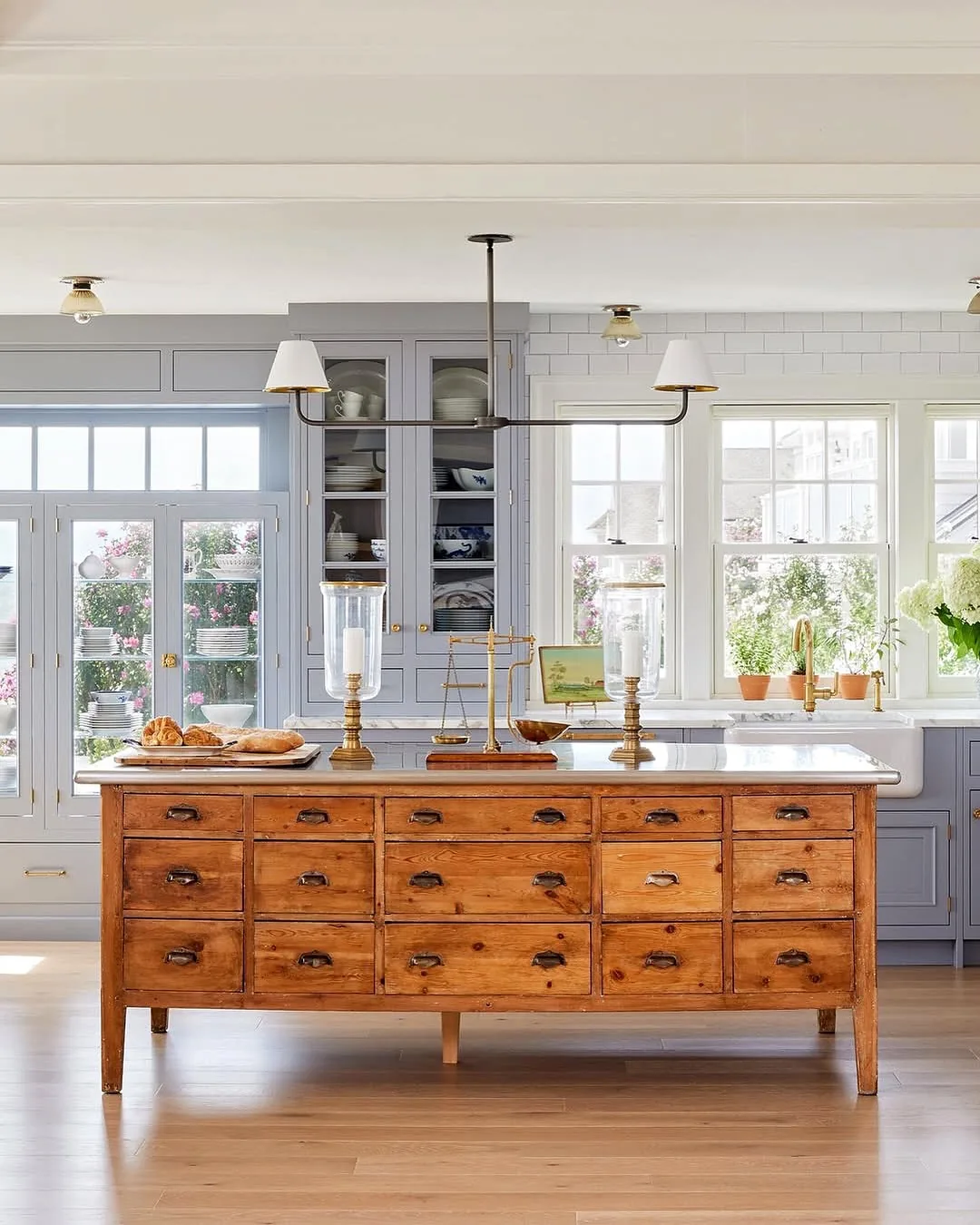
Butcher block or solid oak island tops age through use into character. You’ll choose thick edge-grain boards oiled regularly over thin veneers that chip at edges within a year. Real timber records your cooking kindly. Fake timber records it as damage.
You’ll oil monthly without fail, since dry island tops check, crack and stain darkly. Five minutes with mineral oil preserves the investment completely. When the island top glows honeyed from years of care, it becomes the kitchen’s biography. Neglected timber becomes its rap sheet.
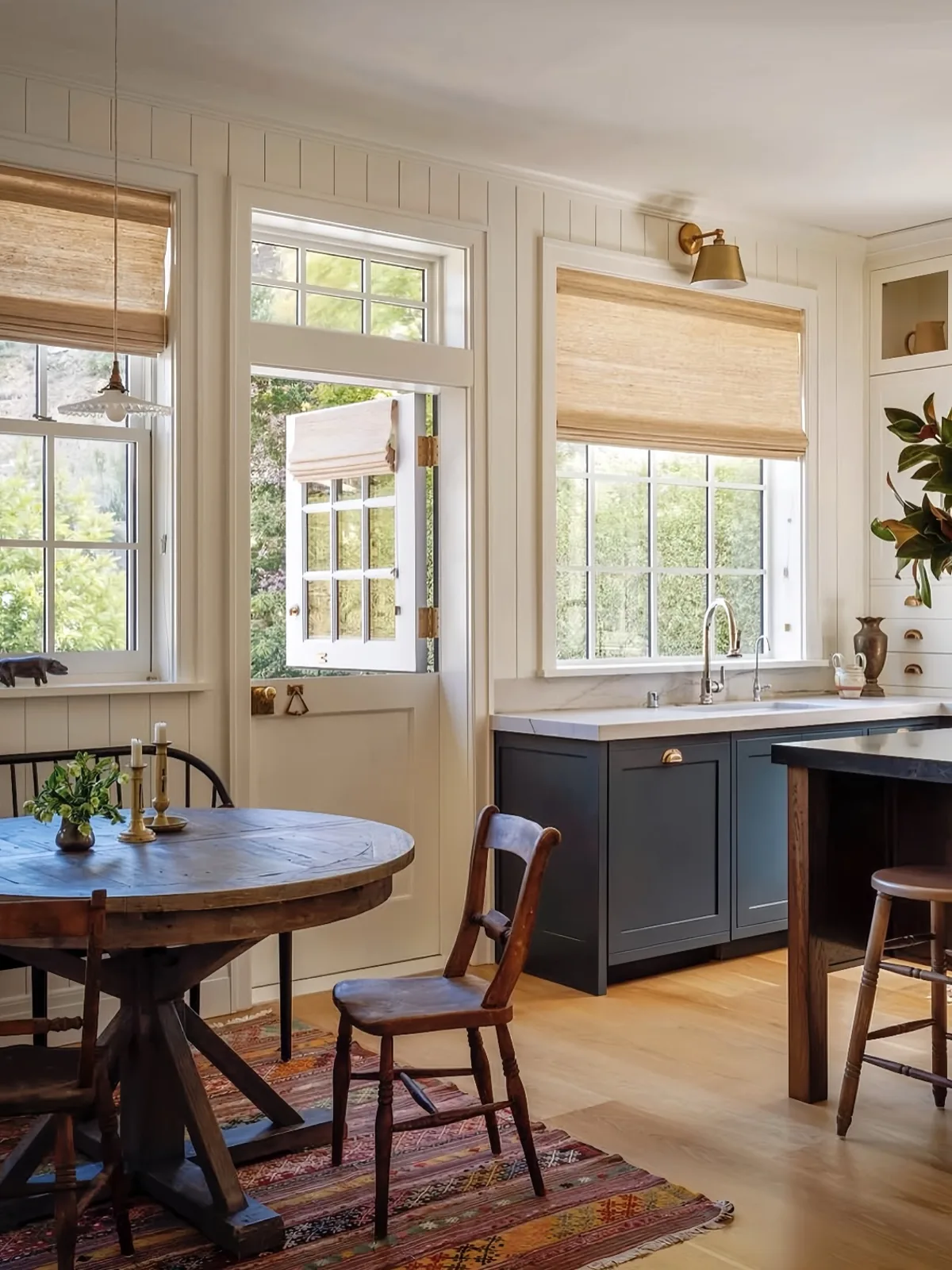
Judge farmhouse kitchen ideas by their hardware honesty
Cup pulls, bin pulls and plain knobs suit farmhouse because they look like tools. You’ll choose one metal family, black or aged brass, and run it through every door and drawer. Mixed novelty hardware reads as a junk drawer mounted on cabinets.
You’ll size pulls to the doors honestly: substantial bars on wide drawers, tidy knobs on small doors. Hardware too small looks apologetic. When every pull feels good in hand and matches its neighbor, the kitchen’s smallest details confirm its largest claims. Hands test honesty daily.
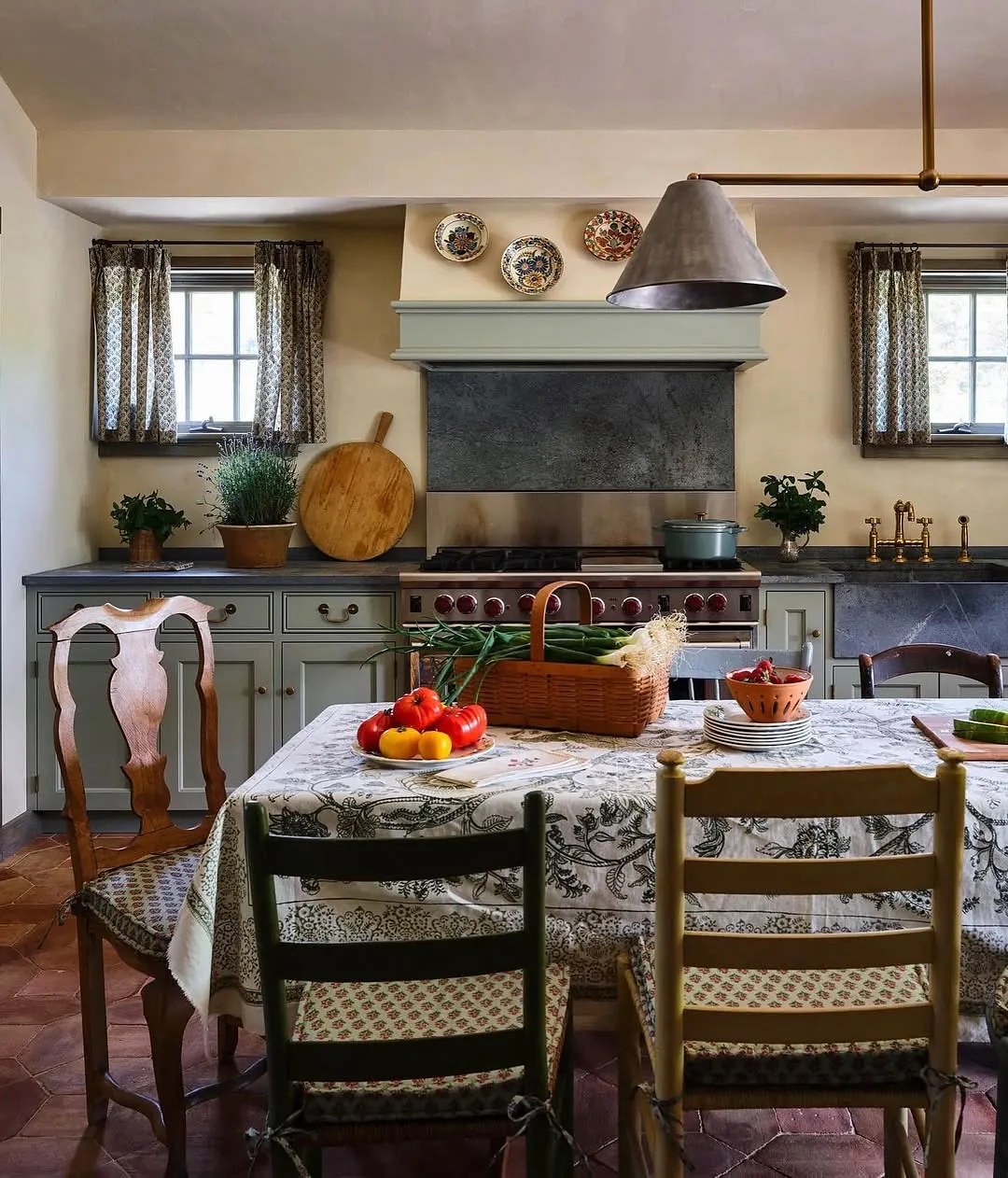
Gather around the table
Farmhouse kitchens feed crowds at real tables. Three ideas host properly.
Table the kitchen, don’t island it exclusively
Islands prep brilliantly and dine adequately. You’ll keep a real table in or beside farmhouse kitchens, because long benches and passed bowls need their proper stage. Gathering around stone perimeters never quite replaces gathering around wood.
You’ll size the table for holidays, not Tuesdays, with leaves or extensions handling daily compactness. Farmhouse hospitality means room for whoever appears. When the table stands ready, the kitchen’s purpose stays visible all week. Islands work. Tables welcome.
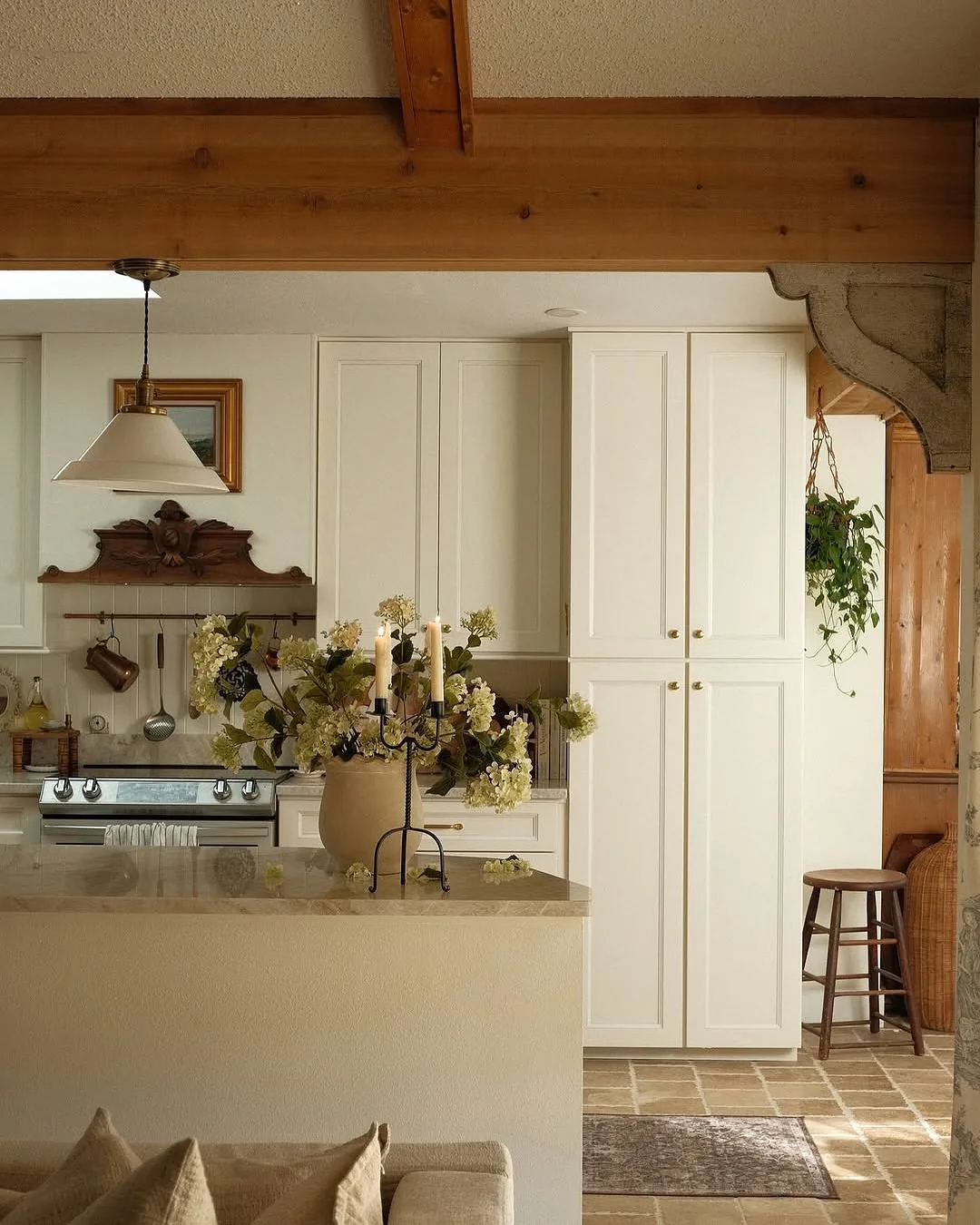
Bench one side for flexible crowds
Benches seat shifting numbers that chairs can’t. You’ll bench the wall side of your farmhouse table, keeping chairs for the outer edge where pulling out matters. Kids squeeze, guests slide, holidays expand without furniture math.
You’ll build the bench with storage inside for linens and overflow. Dead space under seating wastes the room’s best cubic meters. When benches hide the holiday tablecloths they serve, the kitchen stores its own entertaining. Flexible seating is farmhouse hospitality engineered.
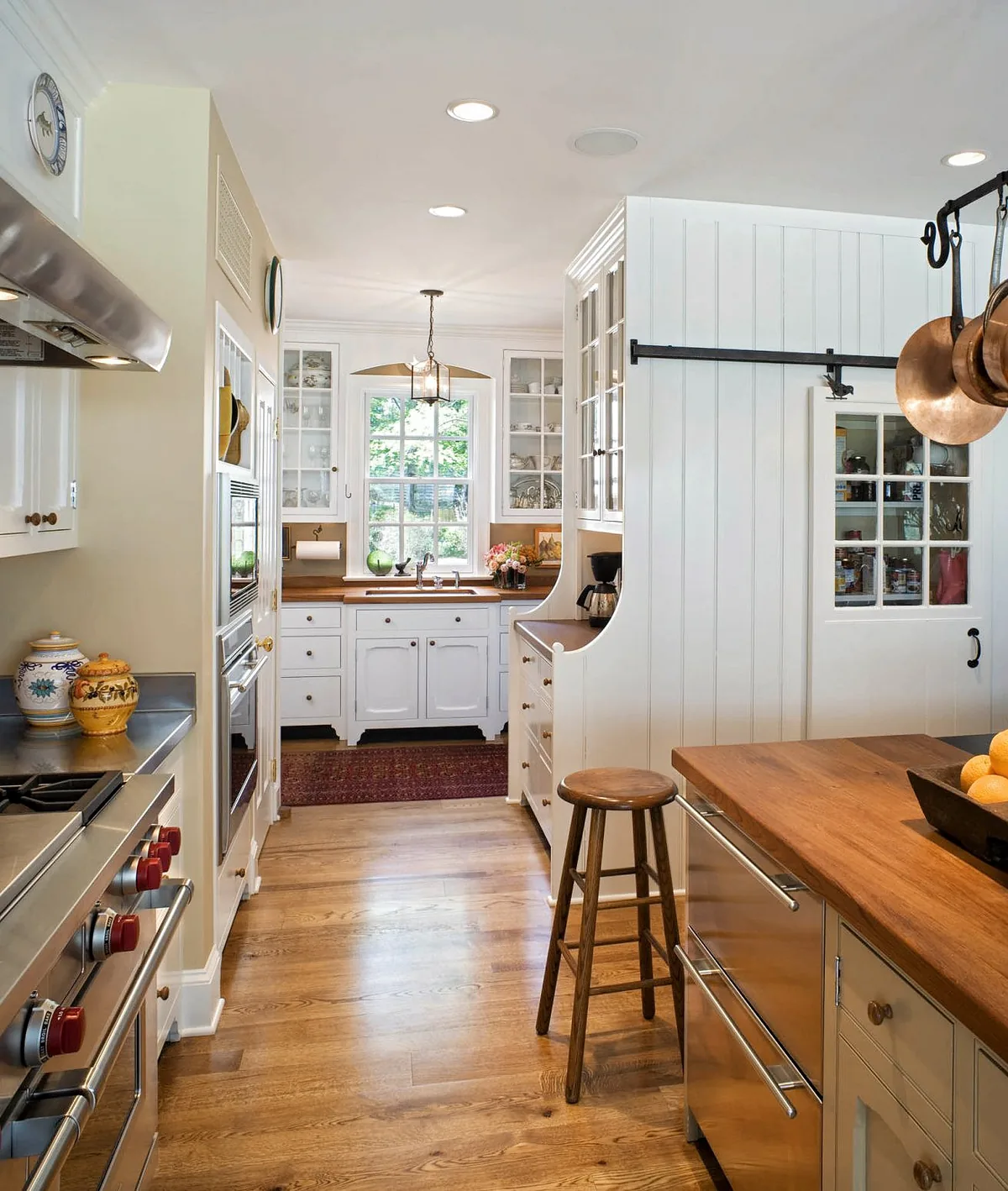
Barn-door the pantry, never the bathroom
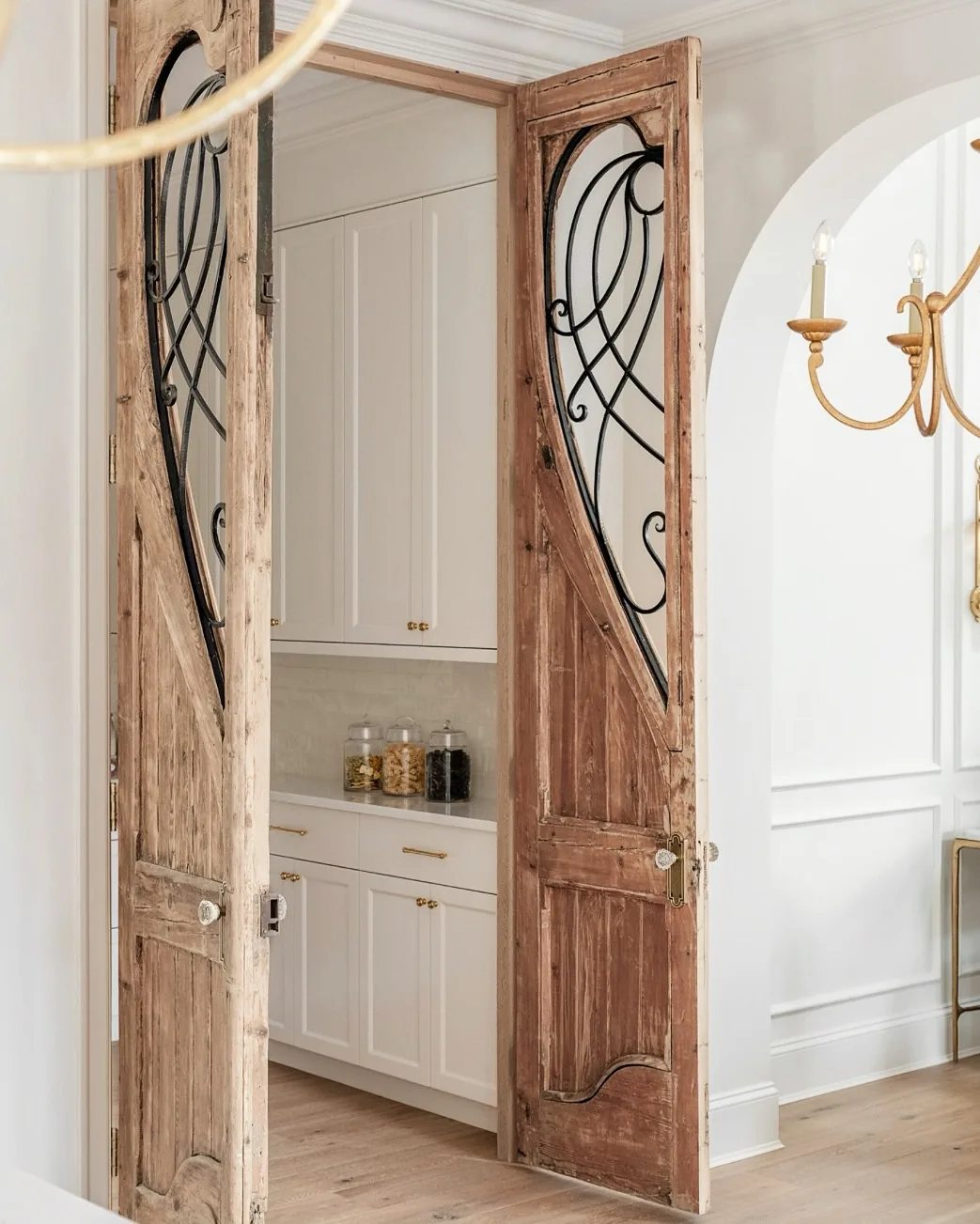
Sliding barn doors suit pantries and mudrooms beautifully. You’ll hang them where their rustic slide reads intentional and their poor sound sealing harms nothing. Pantry doors open constantly and never need privacy.
You’ll never barn-door a bathroom or bedroom, where gaps around sliding slabs broadcast everything. Farmhouse charm ends where dignity begins. When barn hardware serves storage zones only, it charms daily. Misplaced on private rooms, it embarrasses nightly. Placement decides whether rustic reads clever or crude.
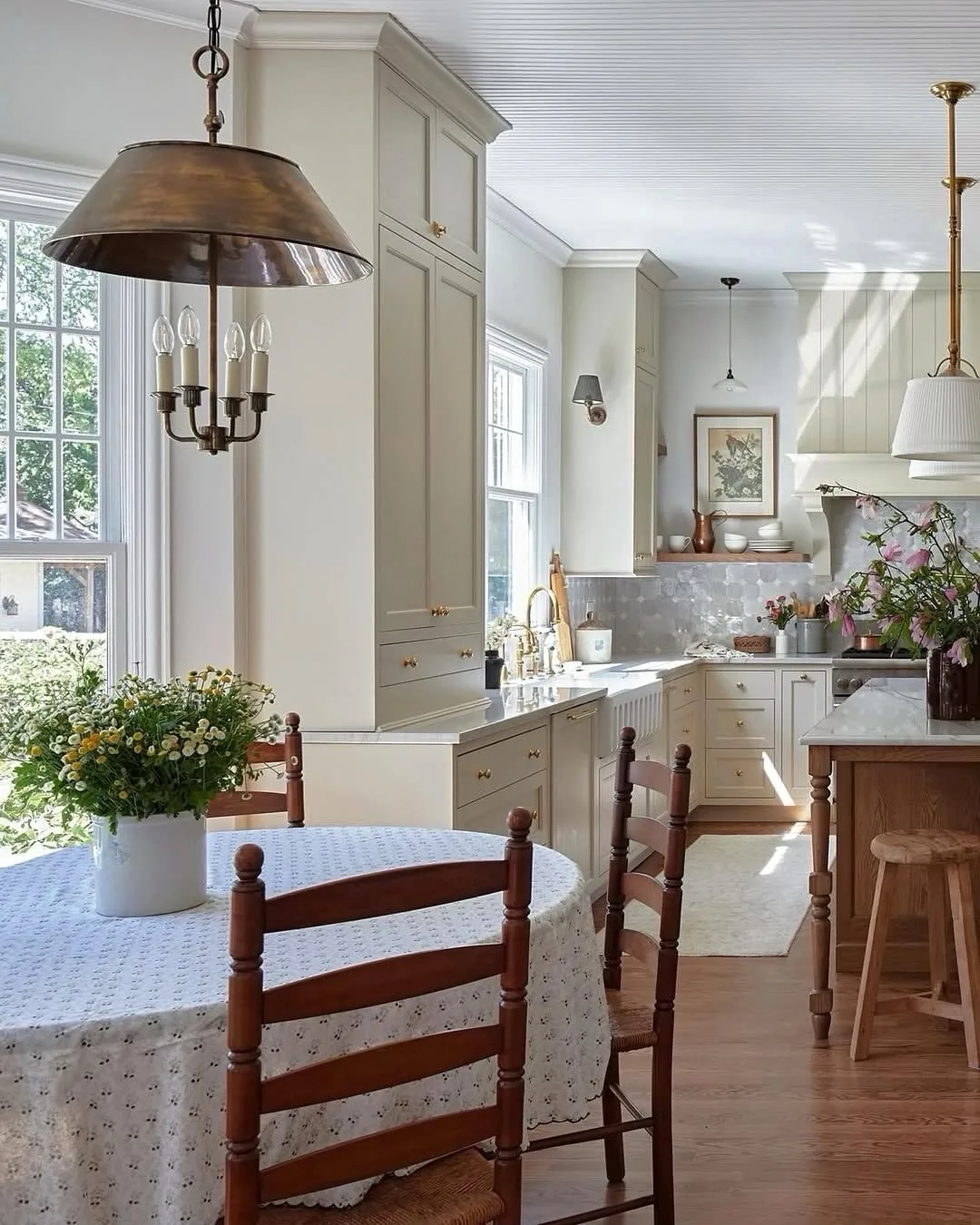
Restrain the palette and the decor
White needs warmth and signals need limits. Two ideas finish honestly.
Warm the white with wood, never grey
Stark white plus grey reads clinical beside farmhouse timber. You’ll warm whites toward cream and pair them with honeyed wood so the room glows. For the full discipline on choosing that white, see our white kitchen ideas. Grey belongs to modern minimalism, not to rooms with copper and beams.
You’ll test whites against your wood in room light, since chips lie about temperature badly. Cream that sings beside oak turns dingy beside grey floors. When white leans warm and wood leans honeyed, the kitchen wraps you. Cold whites interrogate farmhouse warmth until it leaves.
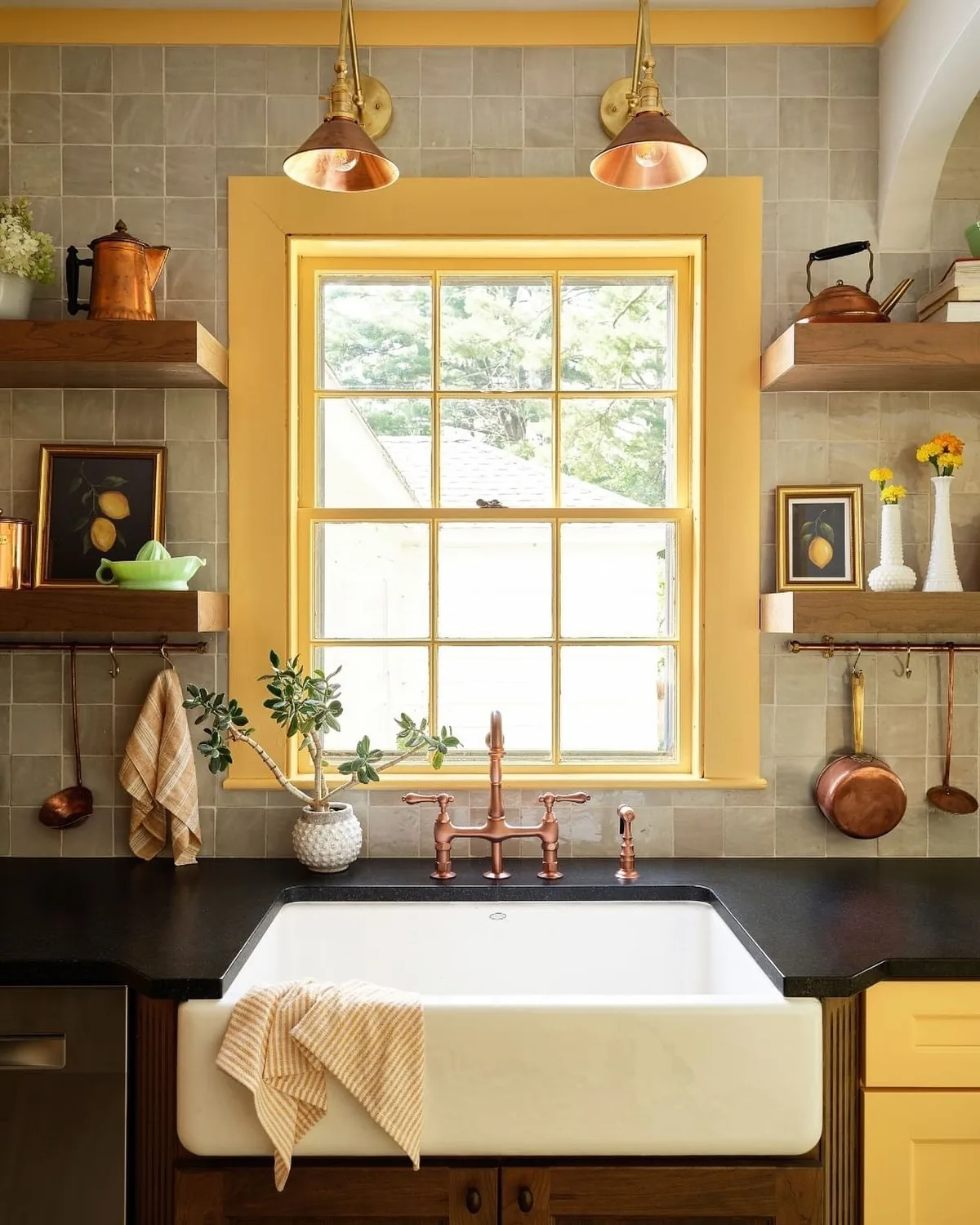
Cap themed decor at three pieces total
Signs, scales, faux milk cans and rooster collections multiply silently. You’ll allow three themed objects in the entire kitchen, chosen slowly over years. Everything past three converts charm to clutter with mathematical certainty.
You’ll remove one theme piece for every new arrival. Farmhouse collections grow like weeds without this rule. When three beloved objects speak and thirty stay silent in storage, visitors remember the three. Restraint isn’t minimalism here. It’s letting the real materials hold the room.
Real farmhouse versus costume farmhouse at a glance
| Real farmhouse | Costume farmhouse | |
|---|---|---|
| Doors | Solid shaker, touchable | MDF, chipping |
| Beams | Real timber or none | Foam pretending |
| Sink | Working apron daily | Themed nod, standard basin |
| Metals | One family, patina welcome | Mixed novelty everywhere |
| Table | Real wood, benched | Island only, stools |
| Verdict | Ages better yearly | Tires by year four |
The Farmhouse Kitchen Formula
Three materials and three moves carry the whole style:
- Solid shaker throughout. Real timber doors that touch up for decades.
- Working apron daily. Fireclay or iron basin, plumbed and supported properly.
- One honest timber. Beams, island top or shelves, real or omitted.
- Copper zoned once. Range wall warmth, patina left alone.
- Table plus benches. Gathering furniture, not just prep perches.
- Three signals maximum. Themed decor capped before it compounds.
Hold that line and the kitchen reads honest for thirty years. Materials do the talking while signals stay mercifully quiet.
Frequently Asked Questions
What defines a farmhouse kitchen?
Solid shaker cabinets, a working apron sink, honest timber somewhere and restrained decor. You’ll build from those three materials before adding any themed signals. Real stuff first, costume never.
Is farmhouse style outdated?
Theme-park farmhouse is fading fast. You’ll note the bones, shaker, apron, timber, outlast every cycle while signals date instantly. Material honesty never trends out because it was never trending in.
Can a small kitchen be farmhouse?
You’ll prioritize the apron sink, shaker doors and one timber note, skipping beams and tables the footprint can’t hold. Small farmhouses distill rather than dilute. Three honest moves beat ten cramped signals.
What colors suit farmhouse kitchens?
Warm whites, creams, sage and honeyed wood with one metal family. You’ll avoid grey floors and chrome that chill timber warmth. Cream beside oak glows while stark white interrogates it.
Do I need open shelves in a farmhouse kitchen?
You’ll treat shelves as accent, never the whole wall. One run of wood shelves warms shaker perimeters beautifully. For the full contract on styling and dusting, see our open shelving kitchen ideas guide.
How do I avoid a kitschy farmhouse?
You’ll cap themed decor at three pieces and let materials lead. Remove one theme item per arrival. When real timber, copper and fireclay speak, signs stay silent.
This article may contain affiliate links. We may earn a commission at no extra cost to you.