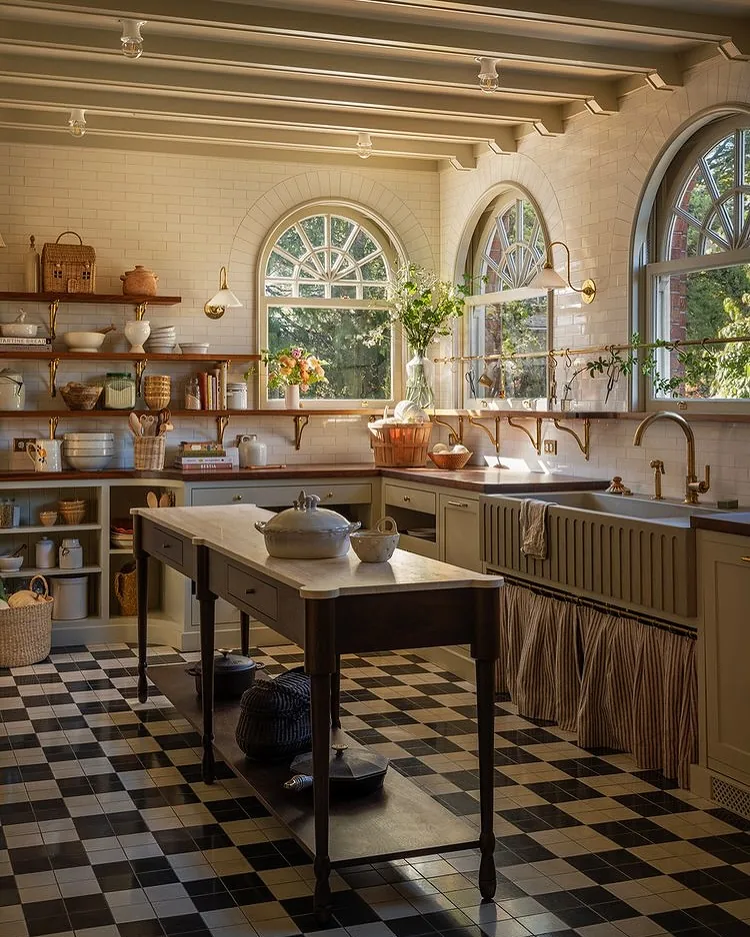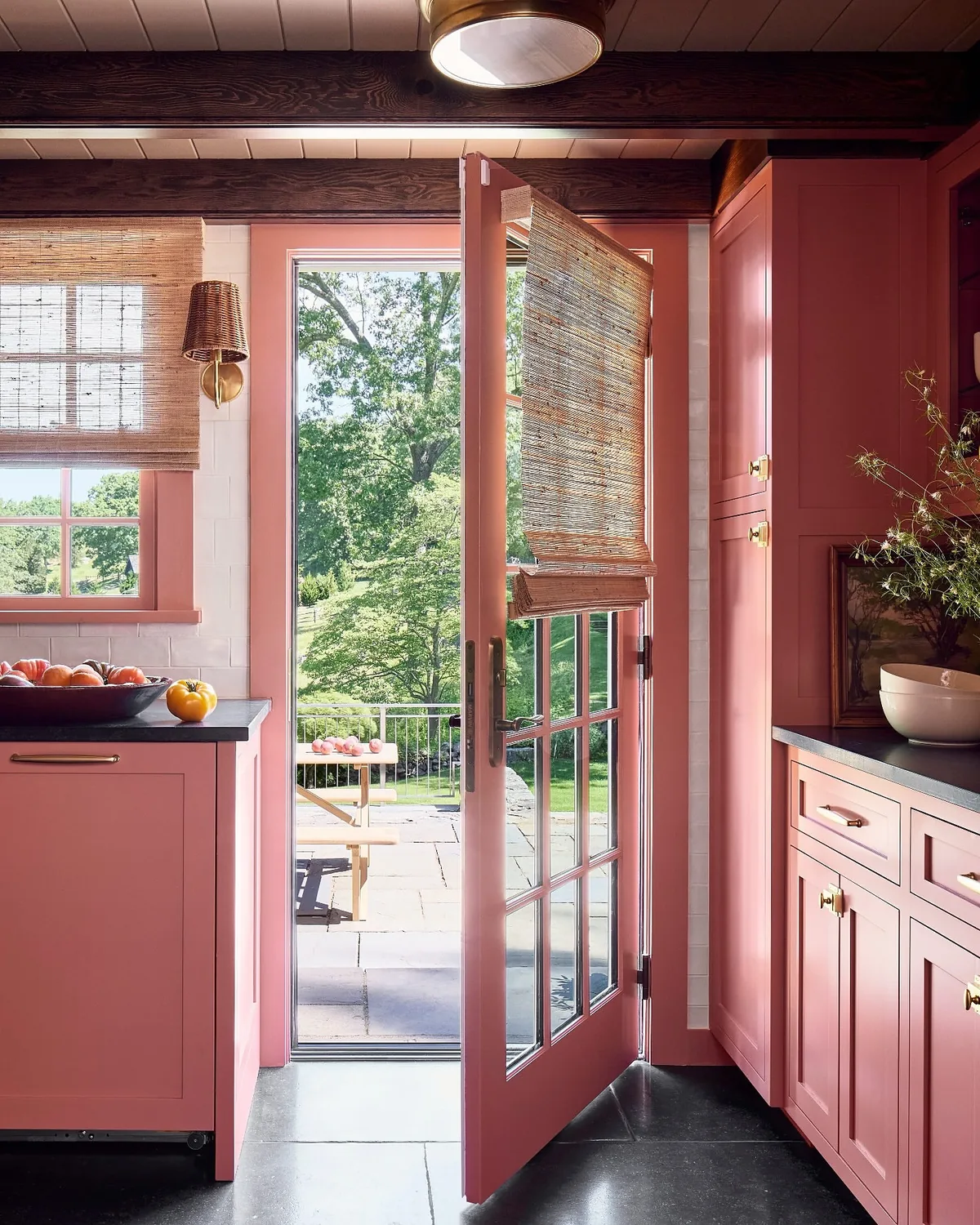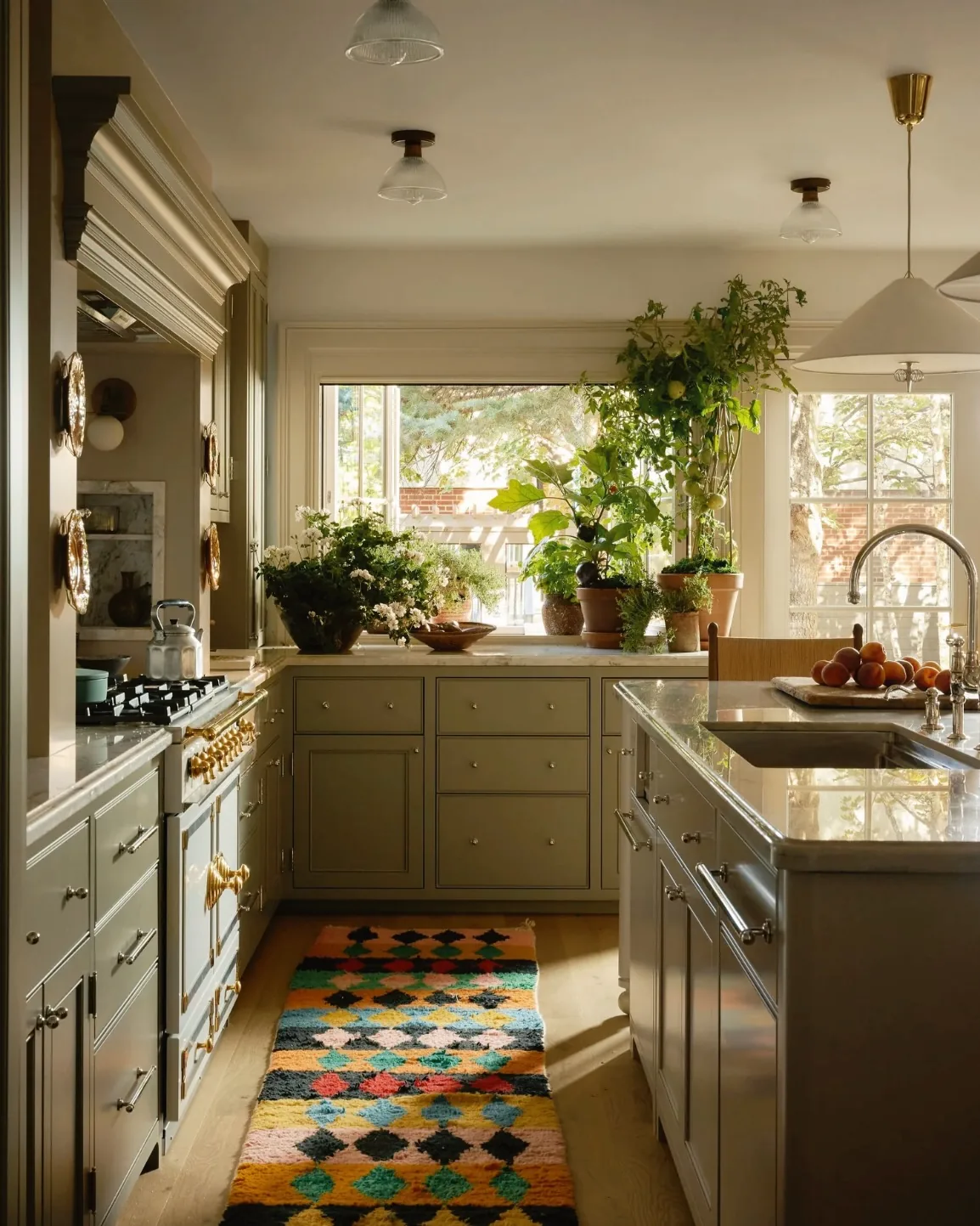
Will Your Stone Etch the First Dinner Party?

Add us as a preferred source to see more stories on Google.
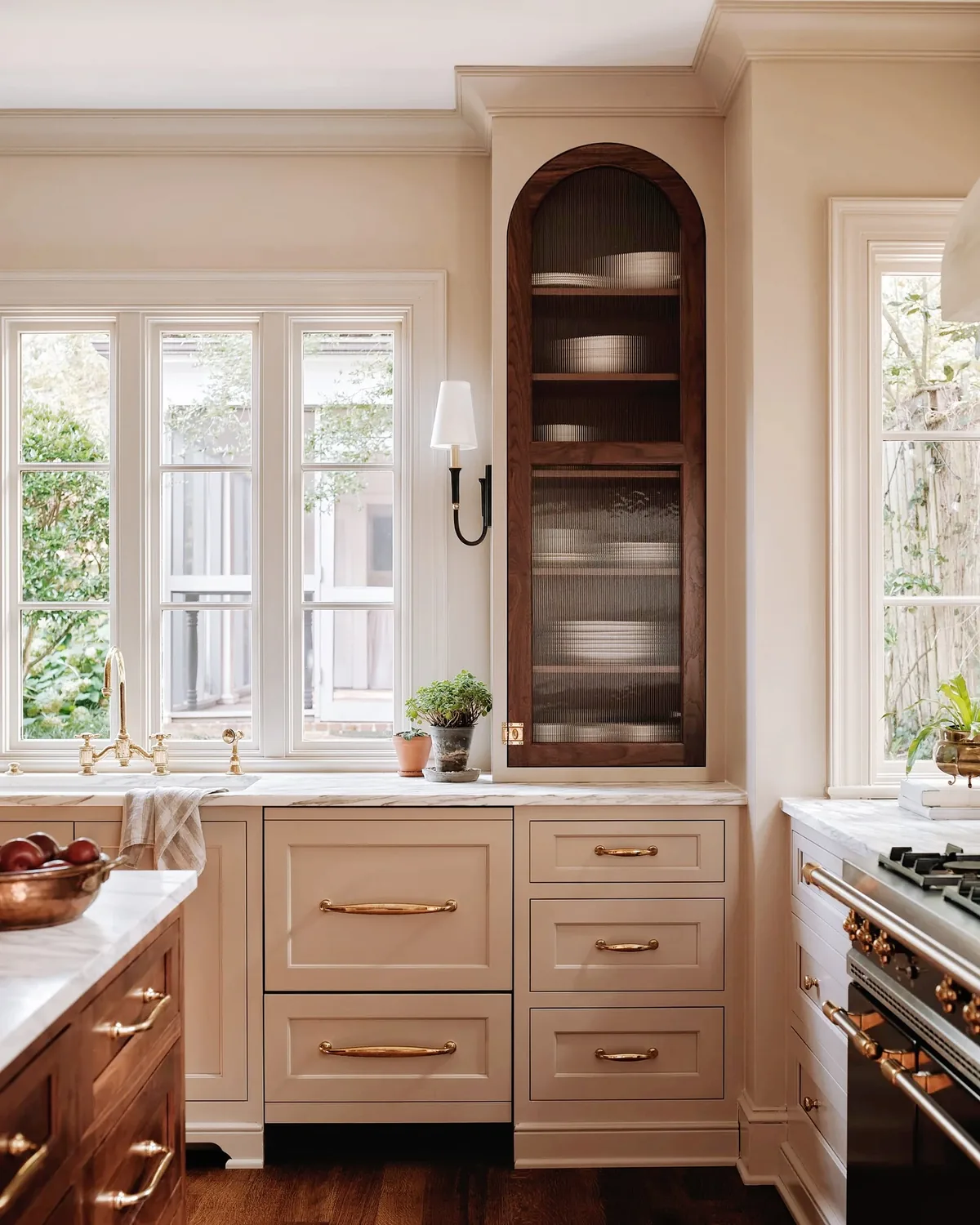
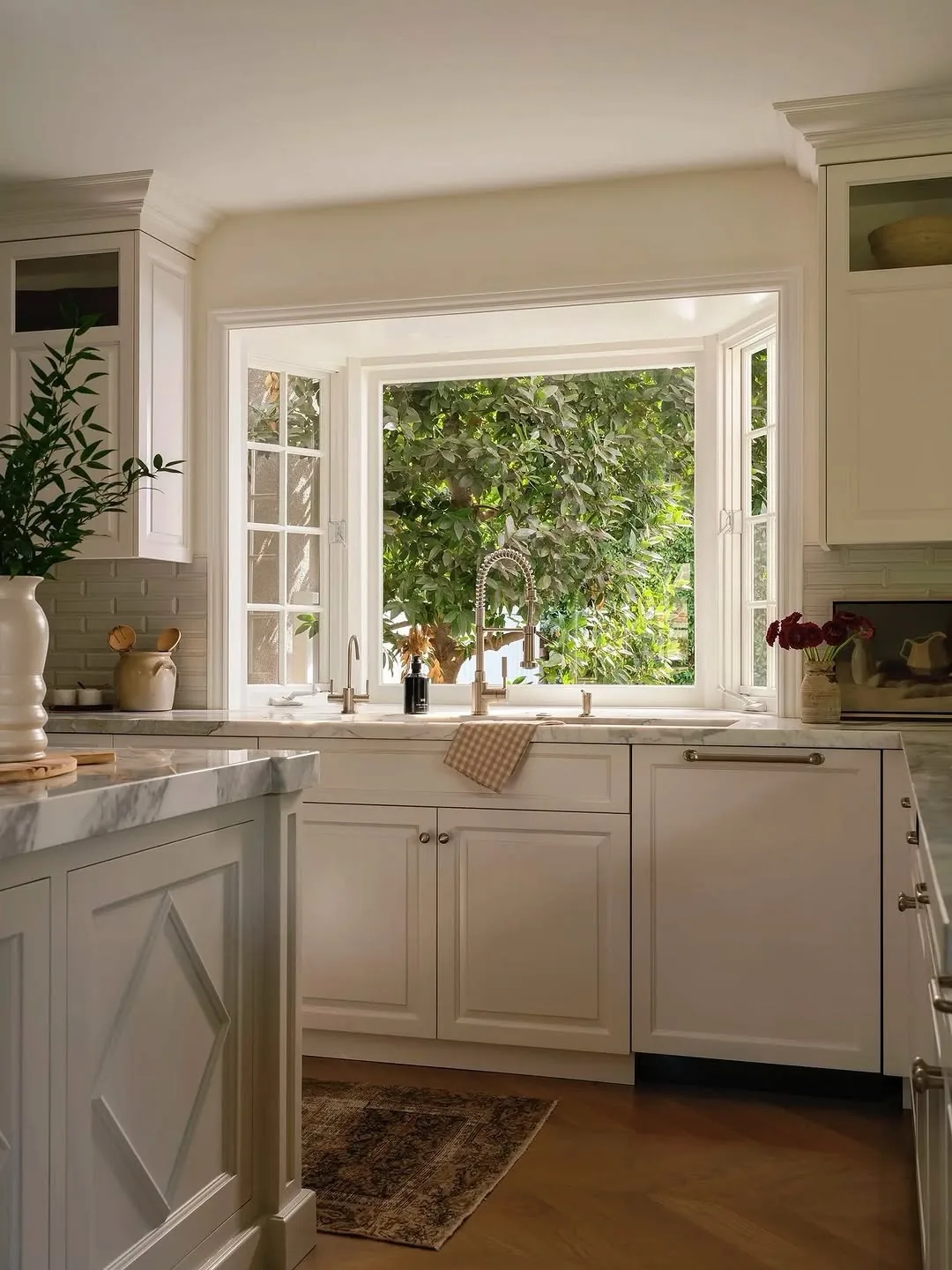
Wipe up that lemon slice tonight and your marble still marks. It marked on contact, and these marble & stone countertop kitchens were planned by people who accept that.
Etching is chemistry, not a cleaning failure. Acids dissolve marble’s surface the instant they touch it, and no sealer ever sold stops that reaction. Sealers block stains soaking in. They do nothing to etching burning down.
So the decision was never about maintenance schedules. It’s about which stone forgives your cooking, and whether you’ll grant patina permission or pay for a stone that needs none.
Learn the chemistry before the showroom
You’ll understand two different damages. Three ideas make the distinction permanent.
Separate etching from staining forever
Two enemies, two physics. You’ll learn them once: etching dissolves the surface where acids touch, leaving dull marks no cleaner removes. Staining soaks color into pores, which sealers genuinely prevent. Every marble anxiety you’ve ever heard confuses these two.
You’ll test your temperament with a lemon slice on a sample overnight. These marble & stone countertop kitchens all passed that test, because the dull spot previews year one honestly. If that preview ruins your week, marble will ruin your years no matter the sealer schedule. When you can name which damage you fear, you can choose the stone that answers it.
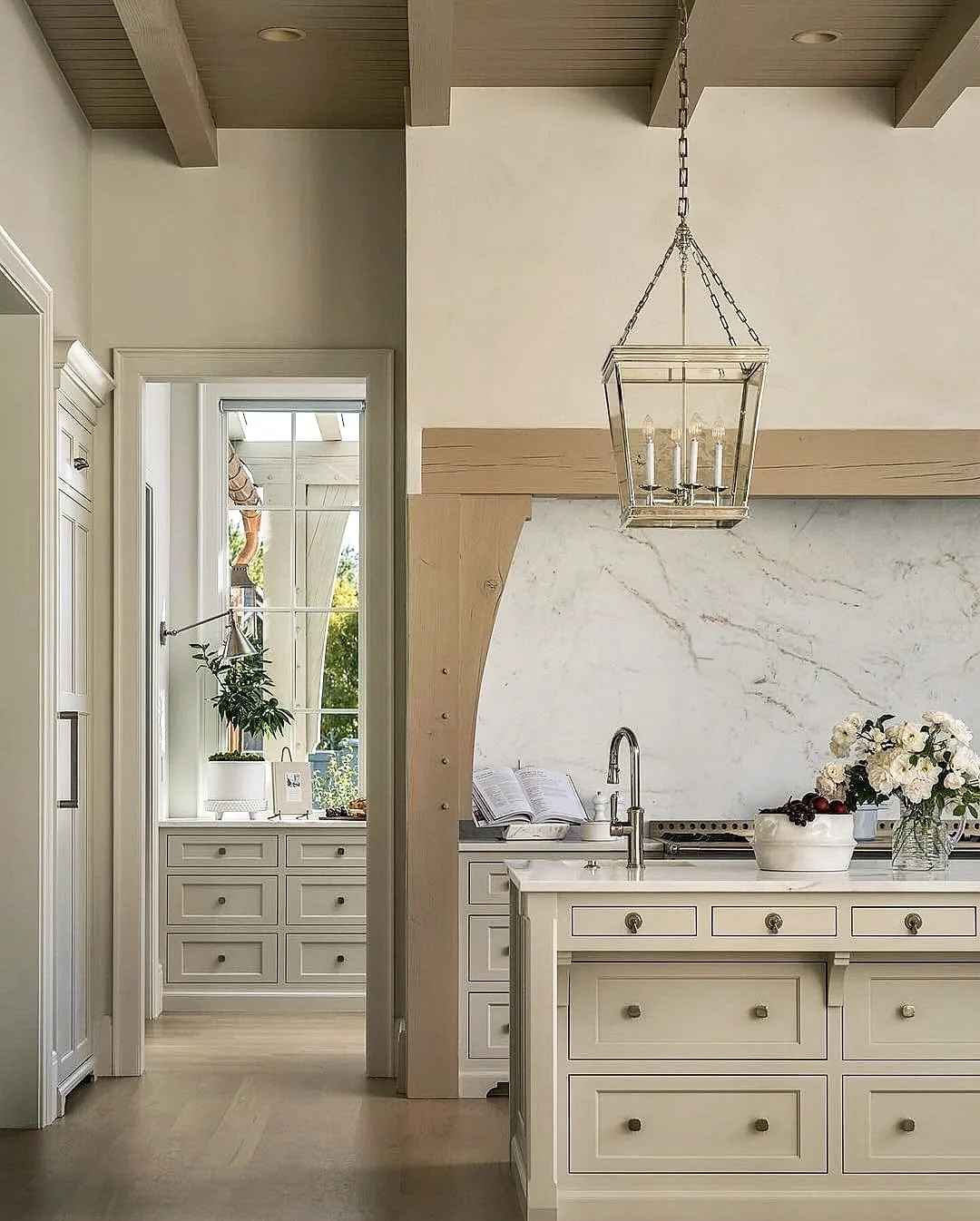
Stop expecting sealer to do chemistry’s job
Sealer marketing implies total protection. You’ll read the truth instead: impregnating sealers fill pores against stains and stand helpless before acids acting at the surface. The lemon reacts before any subsurface barrier matters.
You’ll still seal yearly, because stain protection earns its keep against wine, oil and turmeric. But you’ll stop feeling betrayed by etch marks on sealed stone. They were never a sealing failure. When expectations match chemistry, marble ownership turns calm. Mismatched expectations turn every dinner party into an inspection.
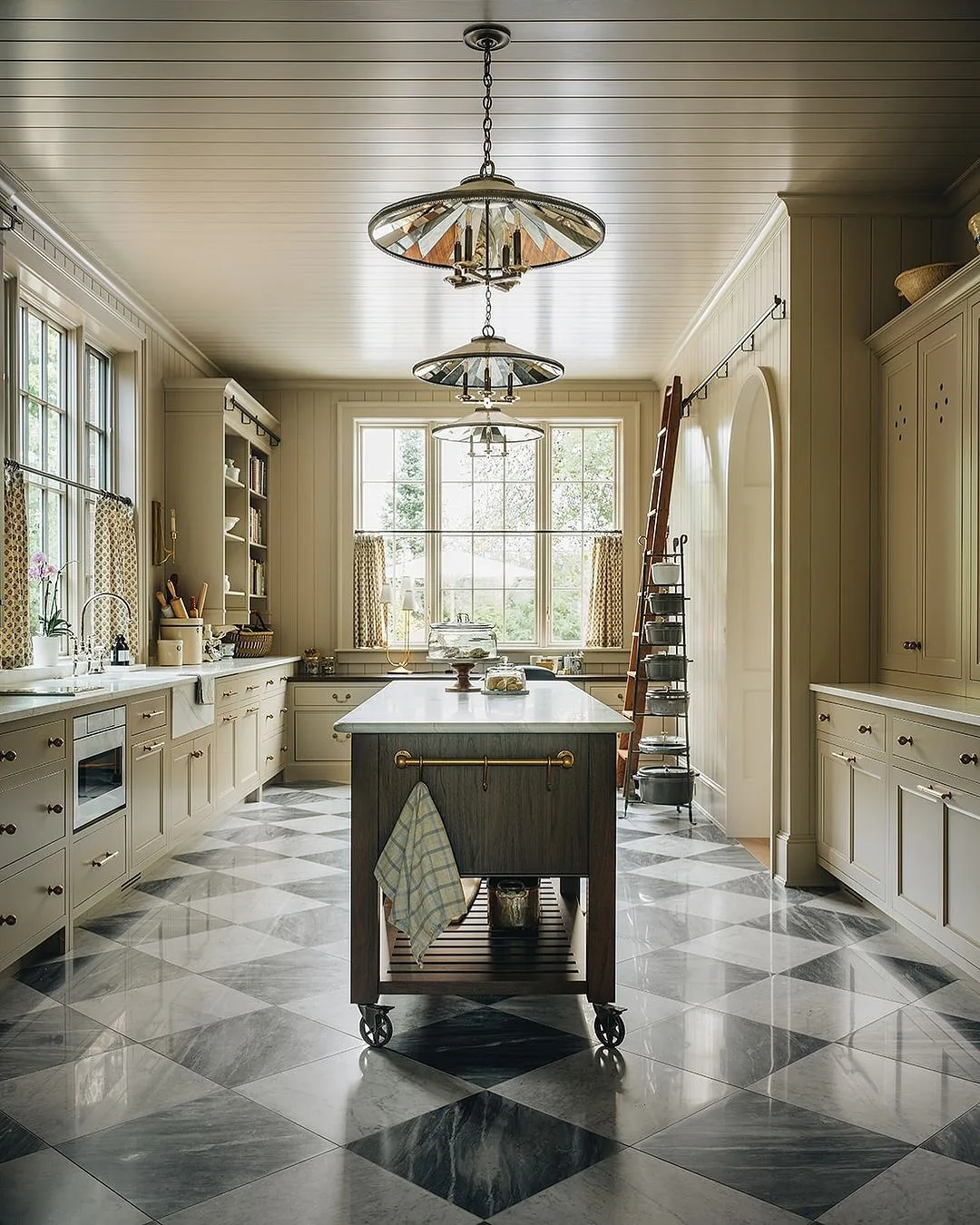
Hone working surfaces, polish the showpieces
Finish decides how wear reads, not whether it happens. You’ll hone counters where cooking occurs, since matte etching blends into matte stone invisibly. Polished counters announce every dull spot against their gloss like scars on glass.
You’ll reserve polish for backsplashes, bars and bathrooms where acids rarely land. Those showpieces earn their shine through light use. When working surfaces go matte and display surfaces glow, each finish does what it does best. Reversing them punishes you daily for a showroom decision.
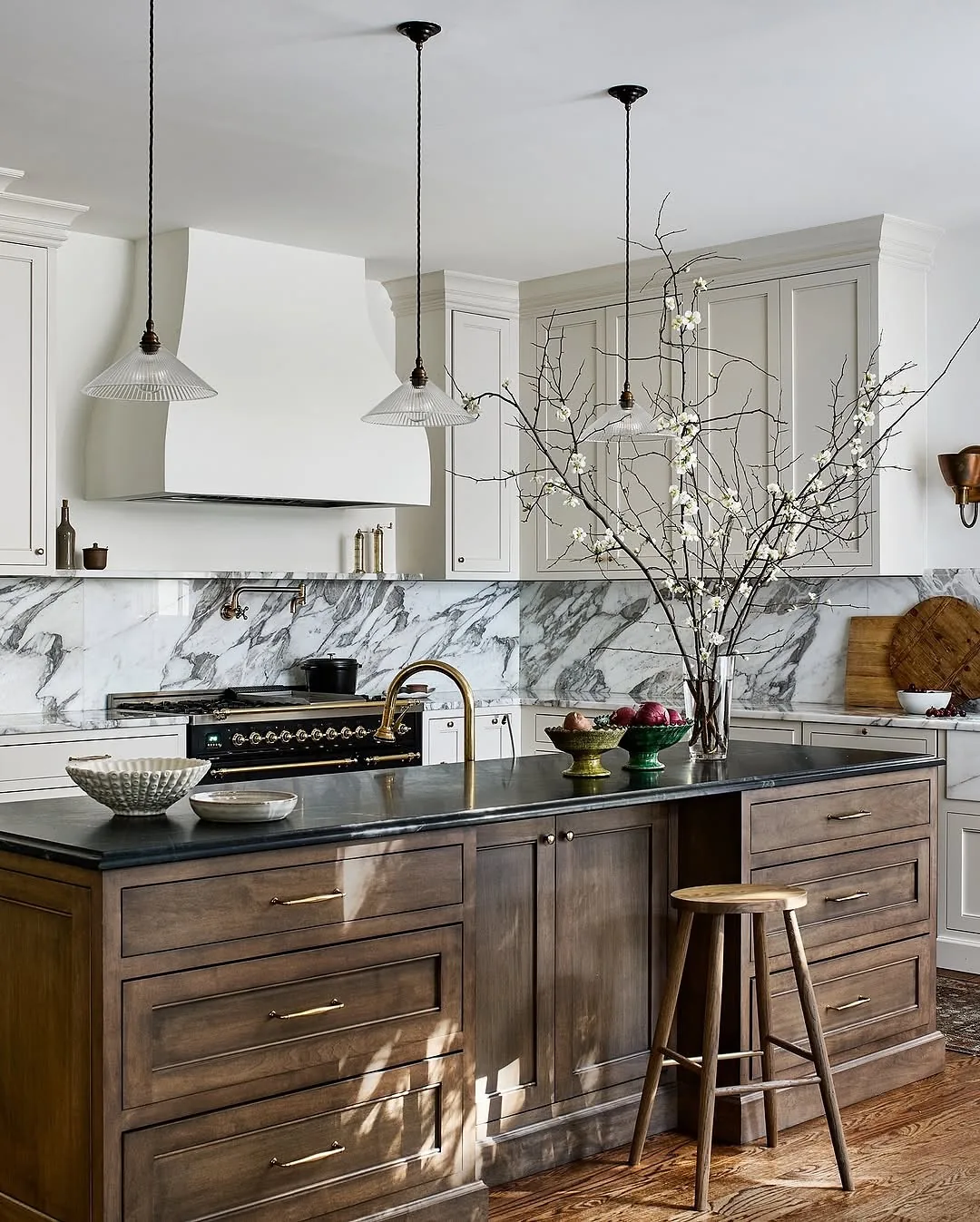
Choose the stone that forgives you
Marble isn’t the only natural stone. Four ideas match rock to cook.
Grant patina permission or skip marble
Marble ages visibly no matter your habits. You’ll decide upfront whether accumulating marks read as character or damage to you personally. Patina people love their counters more each year. Perfectionists grieve them monthly from the first ring onward.
You’ll answer with your current possessions as evidence. Scarred cutting boards you adore signal patina tolerance. Plastic-covered sofas signal the opposite. Neither temperament is wrong, but marble only suits one of them. When permission is granted in advance, every mark tells your story. Without it, each one accuses.
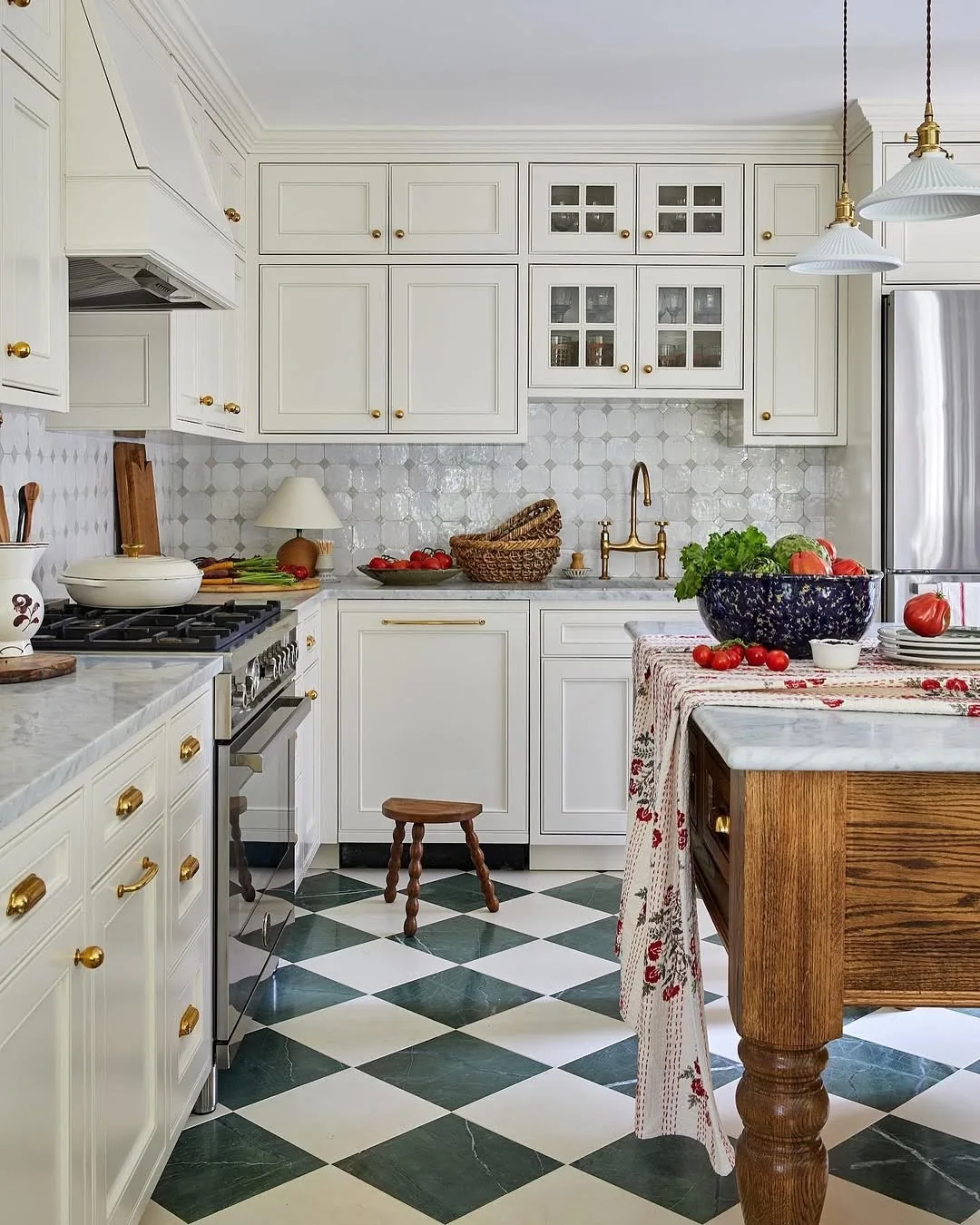
Consider quartzite for marble looks minus etching
Quartzite wears marble’s veined beauty over granite-like hardness. You’ll pay premium prices for stone that shrugs off lemon, wine and heat that destroy marble overnight. For cooks who love the look and refuse the patina, quartzite ends the debate expensively.
You’ll verify actual quartzite, since mislabeled marble sells regularly under the name. A glass scratch test at the yard, or a trusted fabricator’s word, protects you. True quartzite resists acids that etch marble on contact. When the budget stretches, it delivers marble’s face with a far calmer temperament.
Soapstone the sinks and hearth zones
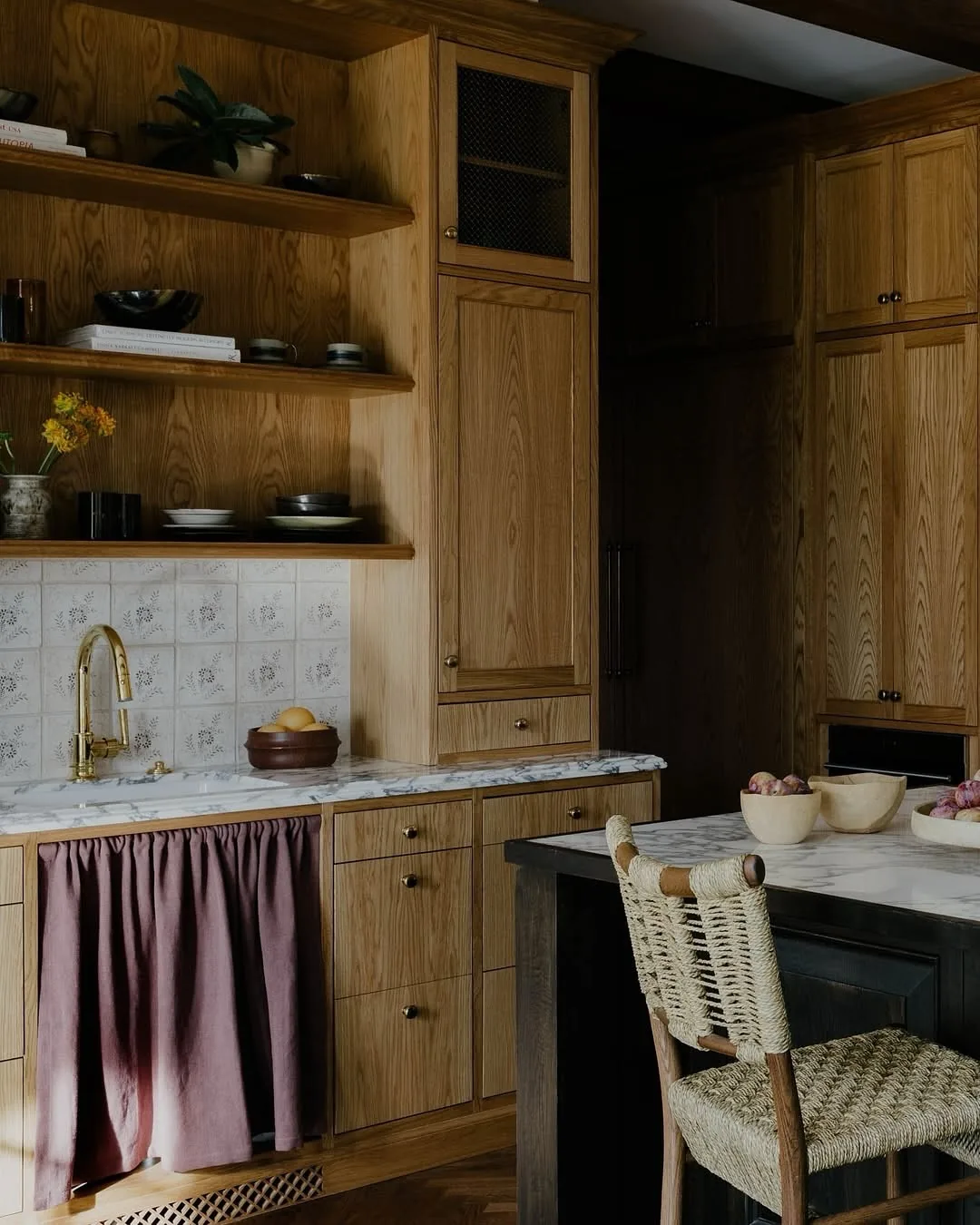
Soapstone ignores acids, heat and stains with a shrug few stones match. You’ll use it where abuse concentrates: around ranges, at prep sinks, on baking stations. Its soft matte charcoal warms modern and farmhouse kitchens equally.
You’ll oil it initially to even the tone, then let use build character. Scratches sand out easily since the stone cuts soft throughout. When the hardest-working zones wear the toughest stone, the whole kitchen relaxes. Save marble’s beauty for where eyes land and soapstone’s toughness for where work happens.
Judge marble & stone countertop kitchens in daylight, never showroom spots
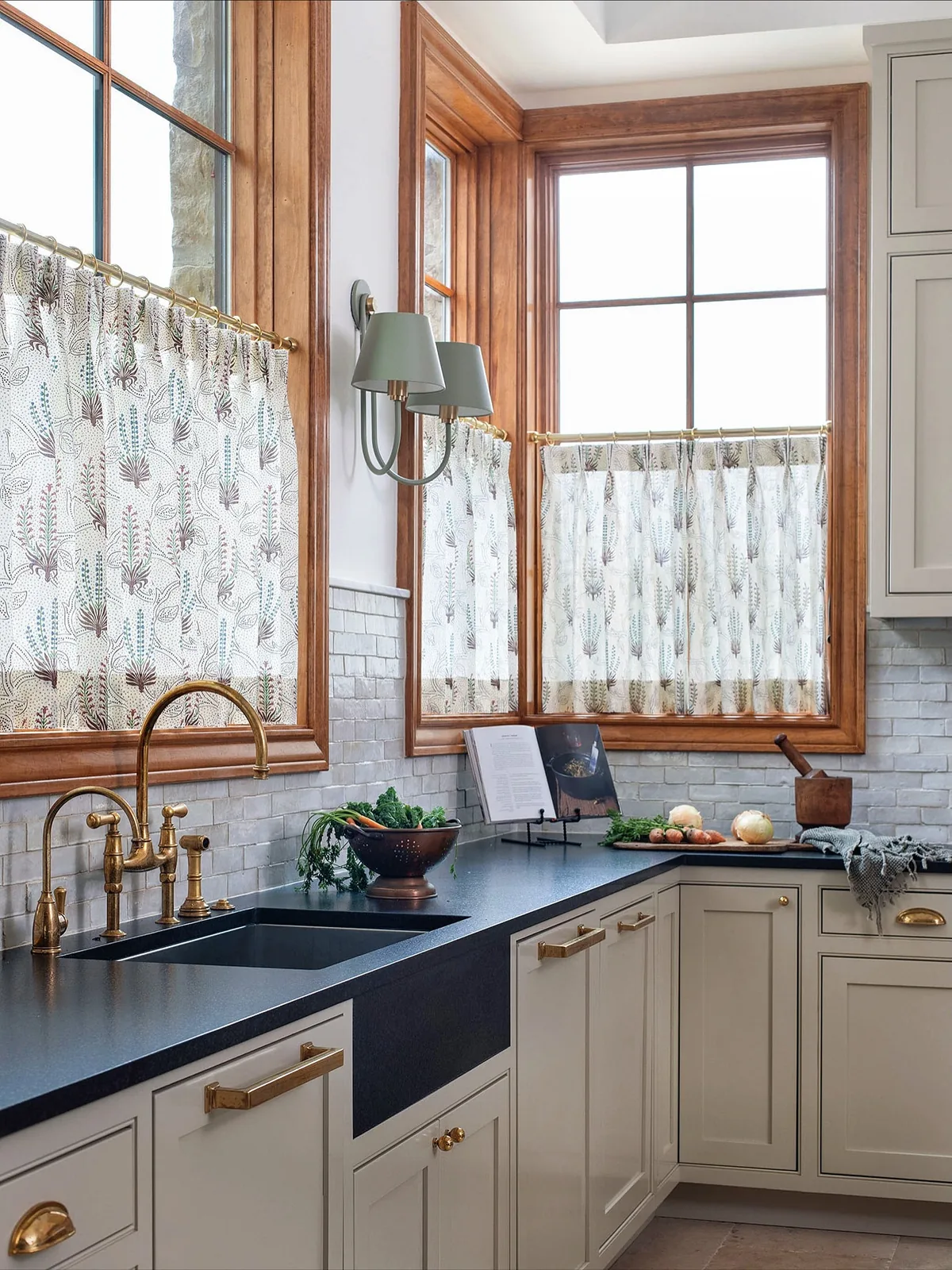
Showroom spots flatter every slab into agreement. You’ll view finalists in daylight, preferably wheeled near a window or door, because your kitchen lives under sun and warm lamps, never retail floods. Veining, warmth and movement all read differently honest.
You’ll bring cabinet and floor samples to the yard for the same reason. Stone chosen in isolation fights its neighbors for years. When slab, wood and paint meet in daylight before money moves, the combination arrives coordinated. Warehouse lighting has sold more mismatches than taste ever did.
Live with stone daily
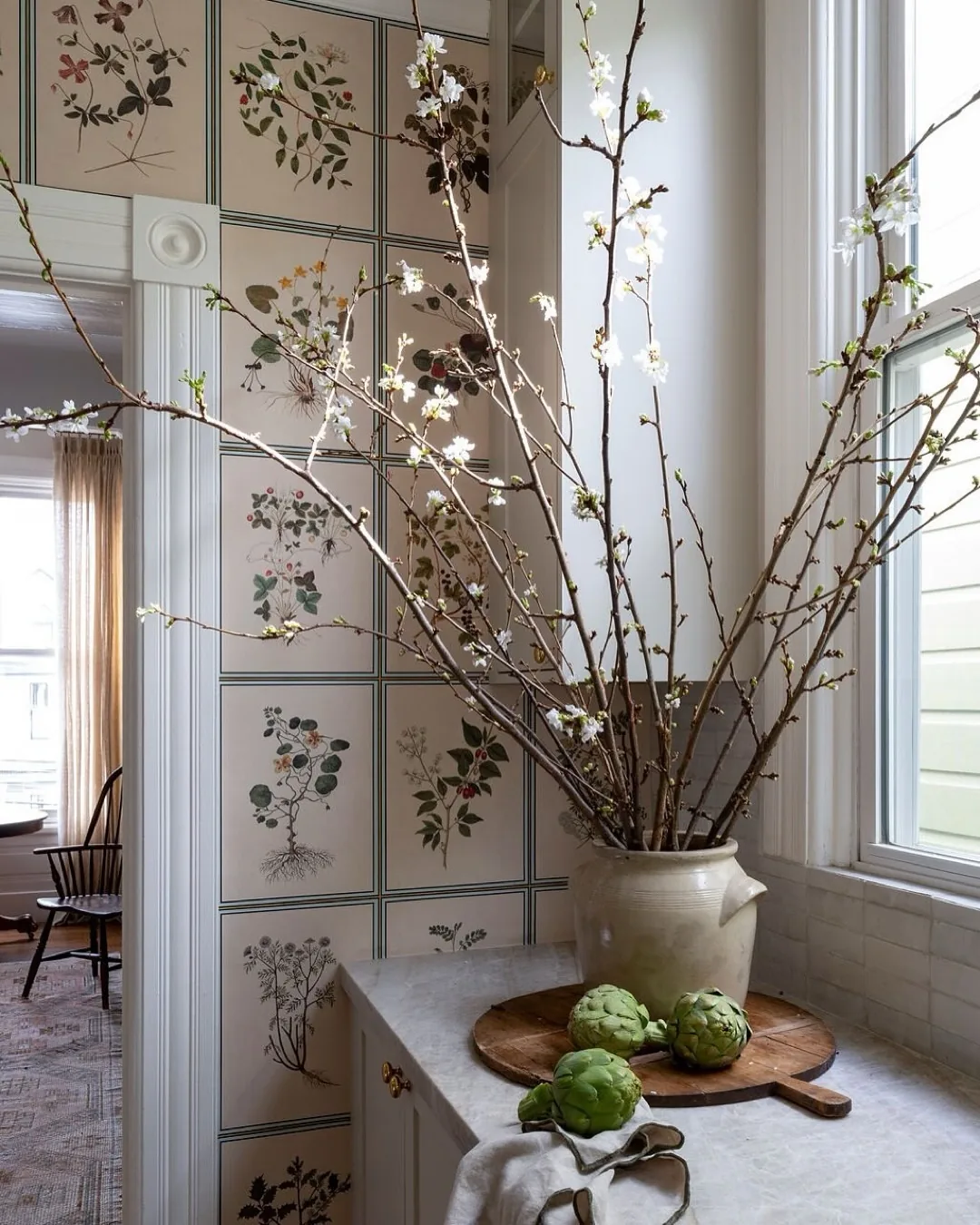
Habits matter more than products. Four ideas build the routine that keeps stone beautiful.
Blot acids fast, never wipe them wider
Wiping spreads acid across fresh stone, etching more area than the spill owned. You’ll blot spills straight up with a cloth, lifting rather than smearing. That single technique change halves visible damage over the stone’s life.
You’ll keep stone-safe spray and cloths within reach of every work zone. Friction kills routines, so supplies live where spills happen. When blotting becomes reflex, etching slows to the occasional accident rather than the daily accumulation. Technique beats products every time with natural stone.
Board every cut without exception
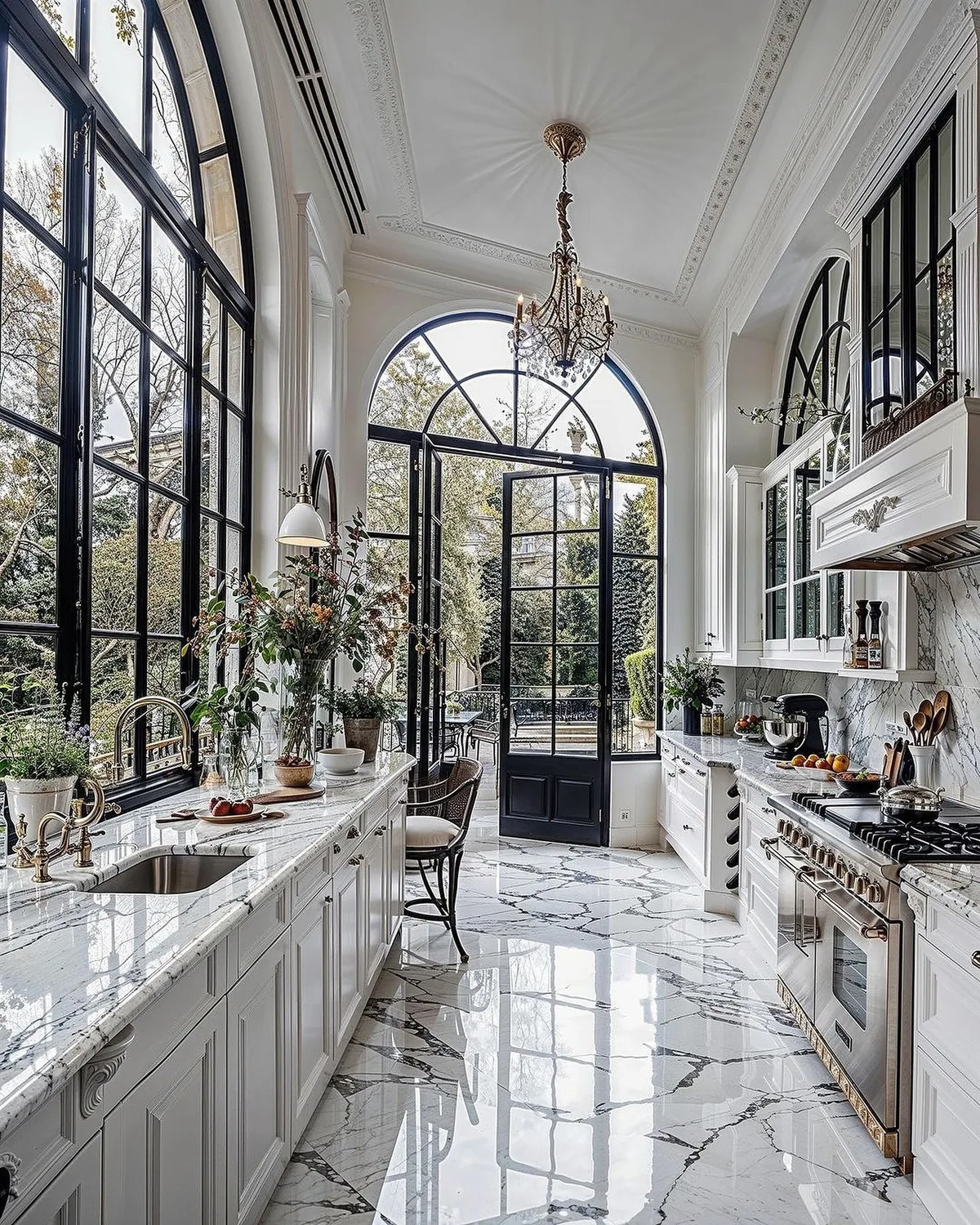
Cutting directly on stone scars sealers and edges regardless of rock. You’ll keep boards at every station, wood for daily work, plus one large board that lives out permanently. The habit protects stone and knives simultaneously.
You’ll match board to task: heavy butcher block for chopping, thin flexible mats for trim work over the sink. Boards that live out get used. Boards stored away get skipped. When cutting never touches stone, the surface ages on your terms instead of your hurry’s.
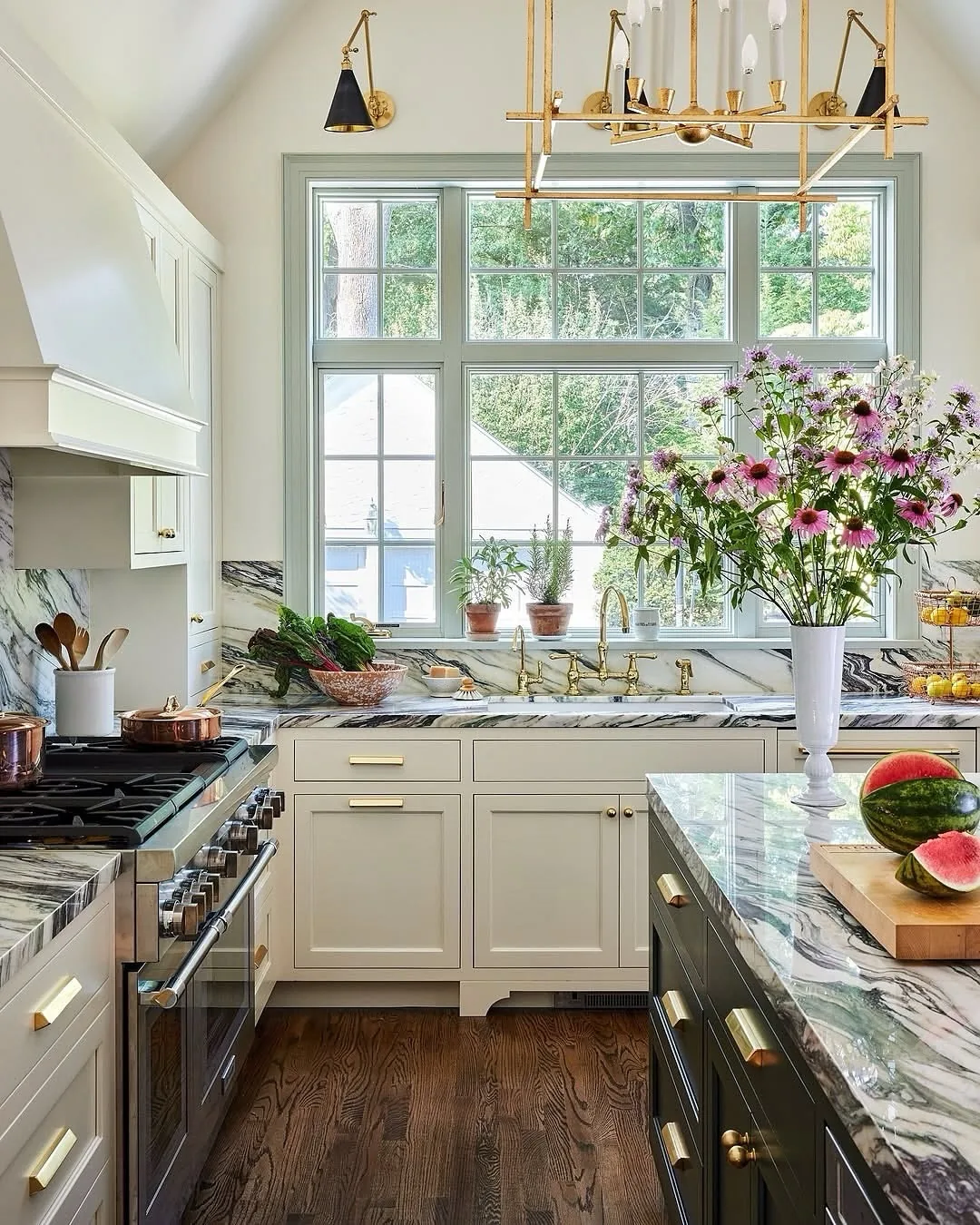
Tray the oils and daily bottles
Ring stains cluster where bottles live permanently. You’ll corral oils, soaps and daily condiments on trays that lift as one unit for wiping. Trays turn ten objects into one motion, which is the difference between maintained and neglected.
You’ll choose trays in stone, wood or metal that wipe clean themselves. Fabric liners absorb and stain beneath bottles invisibly. When everything moveable lifts together, weekly wipe-downs take minutes. Stationary clutter forces detail cleaning around each base, which nobody sustains.
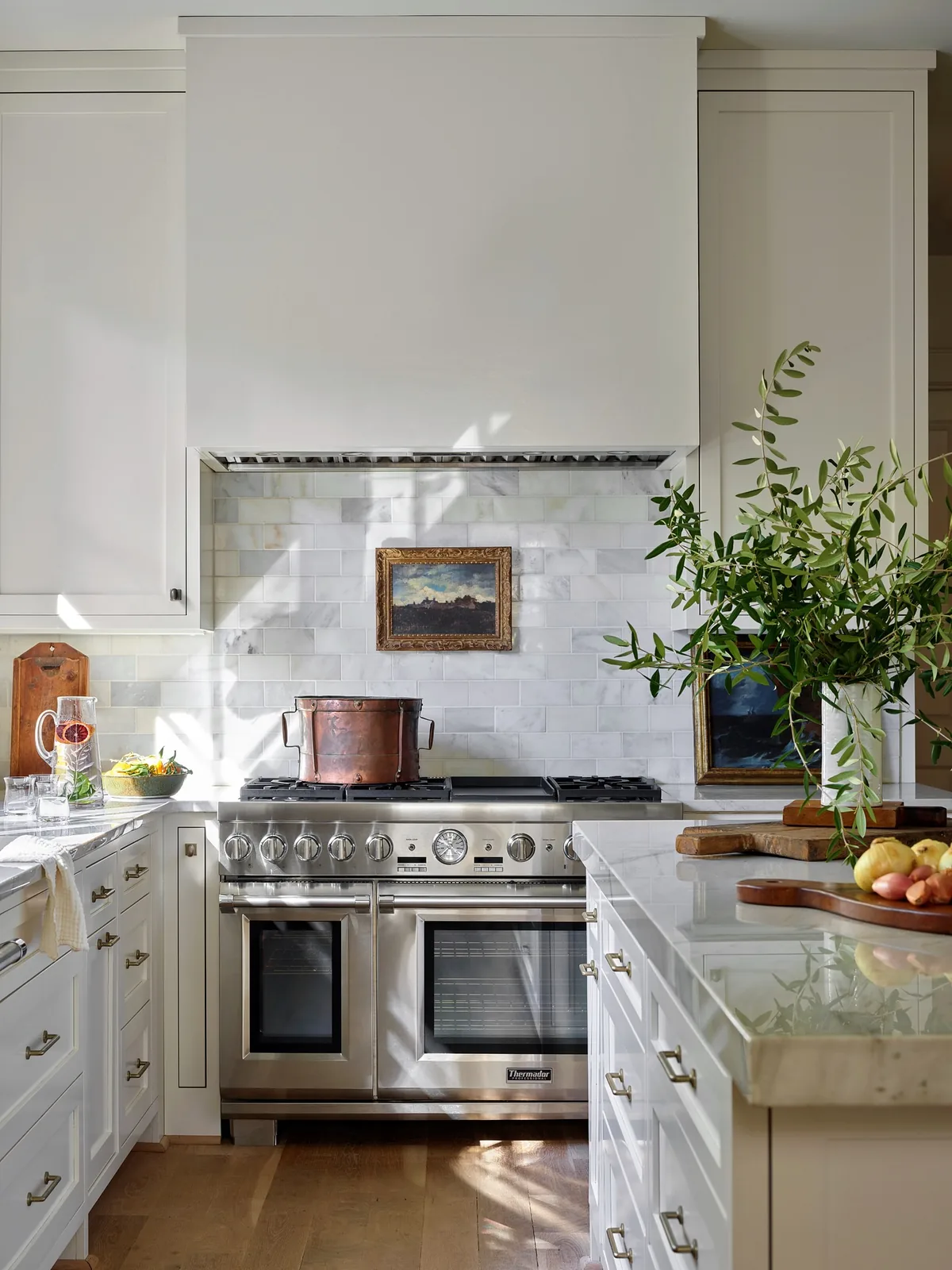
Warm stone rooms using wood and copper
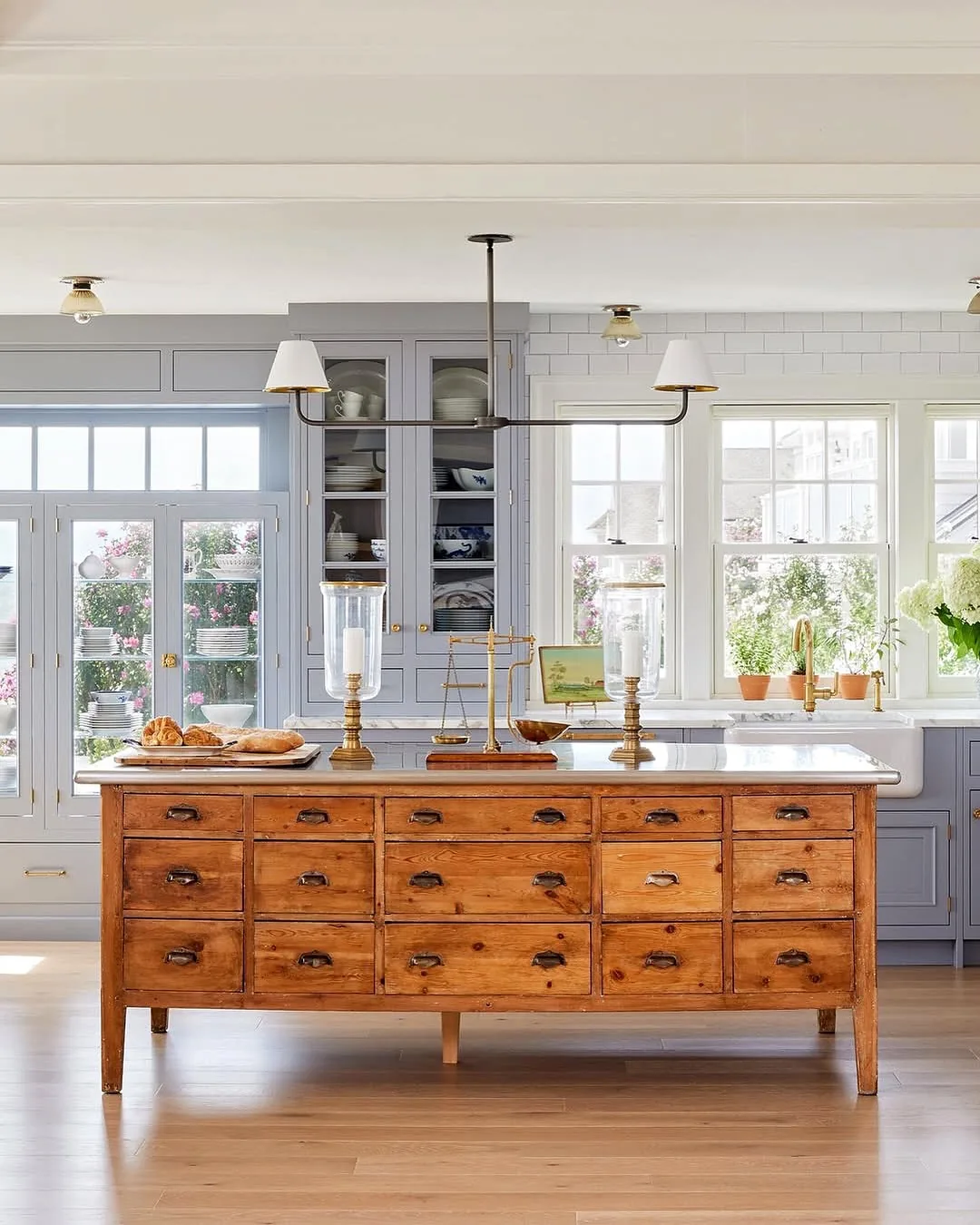
Stone rooms chill without organic relief. You’ll answer marble with butcher block sections, open oak shelves or copper pots that throw warm reflections. Wood and copper do thermal work stone can’t, and they photograph beautifully against pale rock.
You’ll repeat the warm note at least twice so it reads as palette, not accident. One lonely board looks forgotten. Two warm elements compose. For the full method on wood tones beside pale surfaces, browse our kitchen ideas hub. When stone meets timber and metal, kitchens feel fed even empty.
Stone choice by cook temperament at a glance
| Marble | Quartzite | Soapstone | Butcher block | |
|---|---|---|---|---|
| Etching | Yes, always | Rarely | Never | N/A, cuts heal |
| Staining | Sealed prevents | Resists well | Shrugs off | Oils darken evenly |
| Finish | Honed for work | Any works | Matte always | Oiled matte |
| Upkeep | Seal yearly, blot acids | Wipe and enjoy | Oil initially | Oil regularly |
| Suits | Patina people | Look plus calm | Hard zones | Warm minimalists |
| Verdict | Most beautiful | Calmest luxury | Toughest stone | Warmest touch |
The Stone Counter Formula
Eleven ideas distill to six habits worth keeping:
- Etching versus staining. Name your enemy correctly and half the fear evaporates.
- Honed where you cook. Matte meets matte and wear disappears into finish.
- Stone matched to temperament. Patina permission or quartzite calm, decided upfront.
- Daylight at the yard. Slab, wood and paint meet before money moves.
- Blot, board and tray. Three reflexes that preserve stone better than any product.
- Wood beside rock. Warmth answers stone everywhere they meet.
Keep those six and your counters age the way you hoped when you chose them. Stone rewards the cooks who understand it and punishes only the surprised.
Frequently Asked Questions
Does sealing marble prevent etching?
Never. You’ll learn this once: sealers fill pores against stains while acids dissolve the surface on contact regardless. Seal yearly for stain protection and stop blaming sealer chemistry for etch marks.
Is honed or polished marble better for kitchens?
You’ll hone working counters since matte etching blends invisibly. Reserve polish for backsplashes and bars where acids rarely land. Finish decides how wear reads, never whether it happens.
What is the lowest maintenance natural stone?
Soapstone for hard zones, quartzite for marble looks without etching. You’ll match stone to the work: soapstone at ranges and sinks, quartzite where beauty leads. Both forgive more than marble while keeping natural character.
How do I remove etch marks from marble?
You’ll prevent more than you repair. Light honed etching sometimes blends with fine abrasive pads, while polished etching needs professional re-polishing. Blot acids promptly and accept patina as the long game.
Can I cut directly on stone counters?
You’ll board every cut without exception. Knives scar sealers and edges on any rock. Boards that live out get used, so keep one large block permanently stationed.
How often should I seal marble?
You’ll test yearly with the water drop: beads mean protected, darkening means reseal now. Honed stone may want slightly more frequent attention. Sealing prevents stains while never touching etching chemistry.
This article may contain affiliate links. We may earn a commission at no extra cost to you.