Your Cottage Has Nowhere to Hide a Big Mistake

Add us as a preferred source to see more stories on Google.
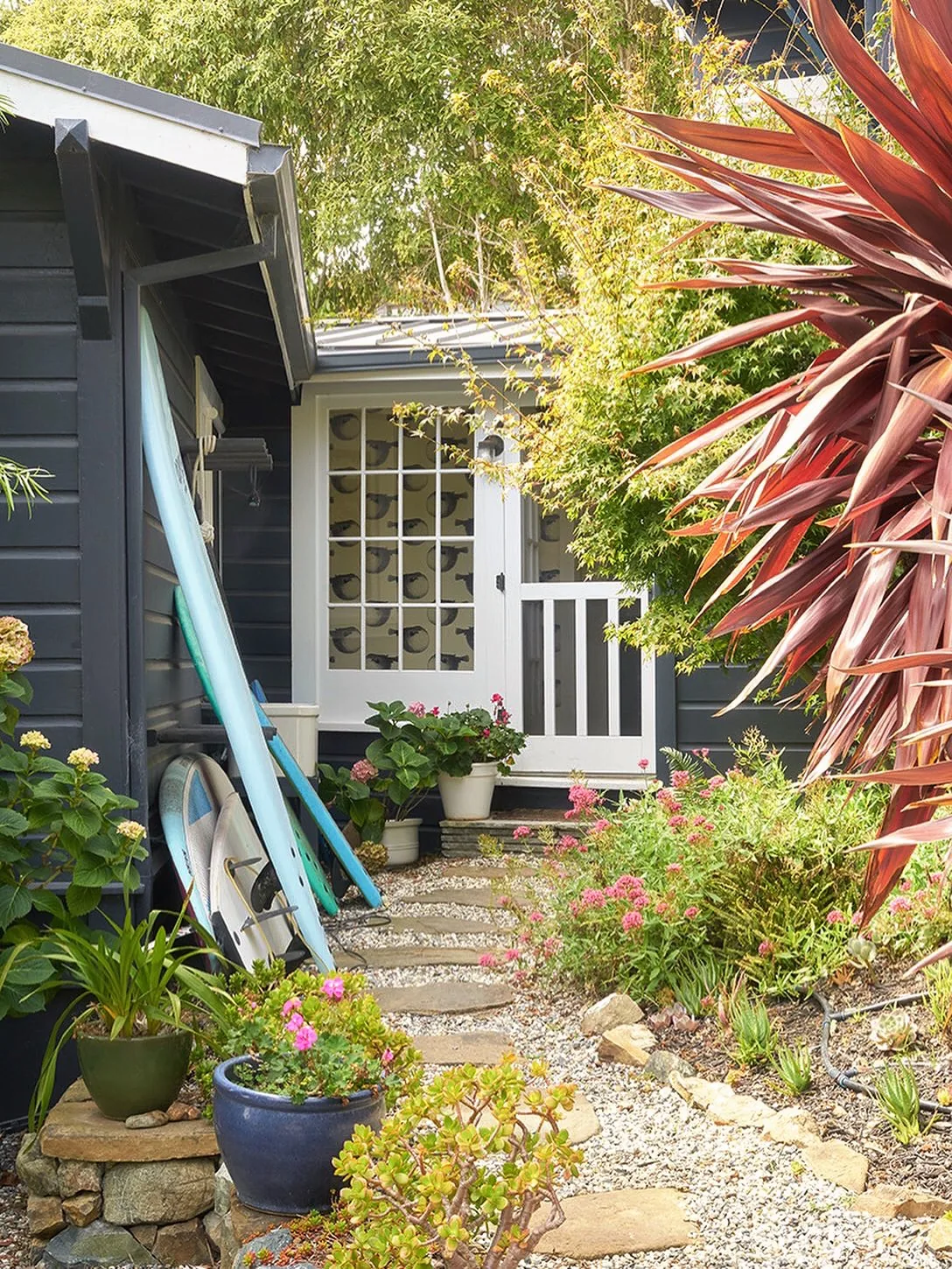
You fell for a small house. Then you shopped full-size.
Here’s the thing. A cottage has nowhere to hide an oversized decision, so every standard-size fixture, door and shrub lands like a costume piece.
Chances are the cottage exterior ideas you saved all share one discipline nobody names: everything on them is scaled down. You’ll learn that discipline here, and your small house will finally look charming instead of cramped.
Scale first, shopping second
Before you buy a single thing, you’ll recalibrate your eye. Cottage scale forgives small and punishes standard.
Measure your facade before you fall in love
Tape the width of your front and the height to your eaves, then write both numbers on the shopping list you carry everywhere. You’ll discover your facade is narrower than your memory claims, which is exactly why full-size pieces overwhelm it. Numbers beat instinct when the house is small.
Carry a tape on every shopping trip and check fixture widths against your door and window widths. A lantern wider than a quarter of your door belongs on a bigger house. You’ll return half your cart the first trip and keep the half that actually fits. That discipline is the whole difference you’re admiring in saved photos.
Shrink your columns or skip them
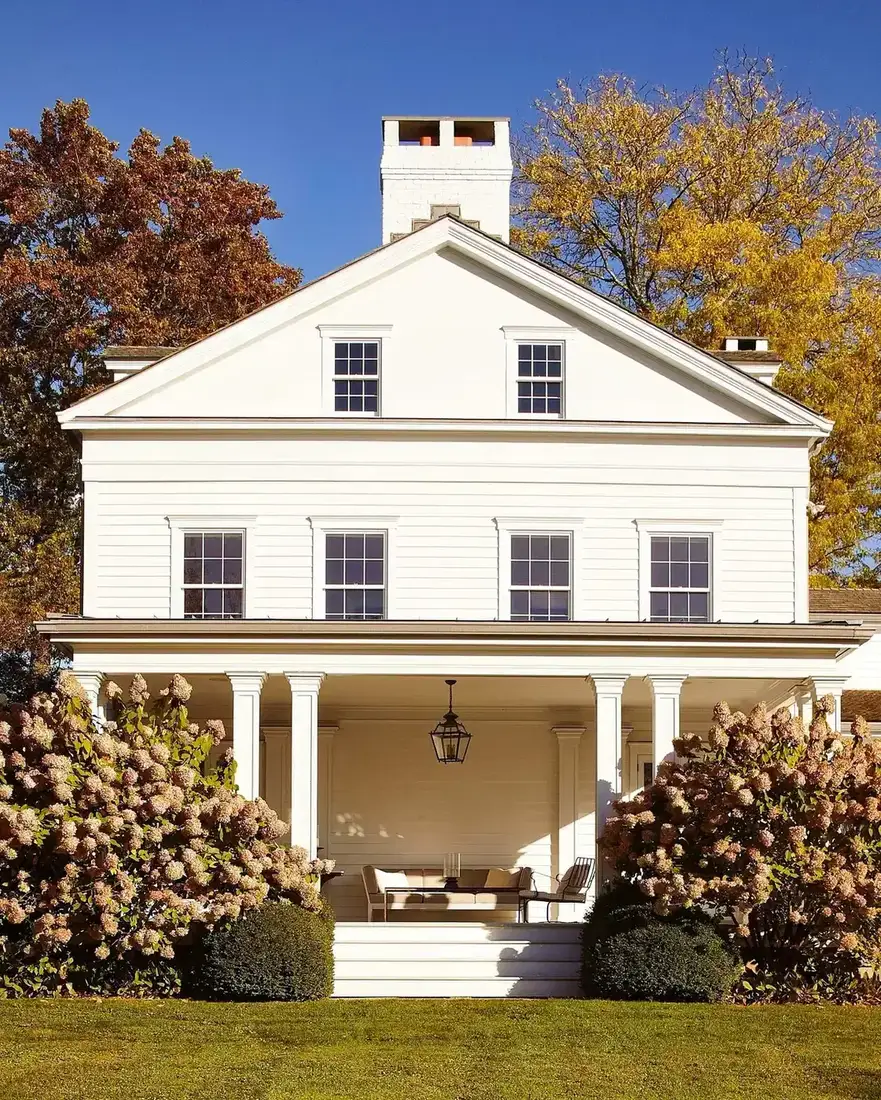
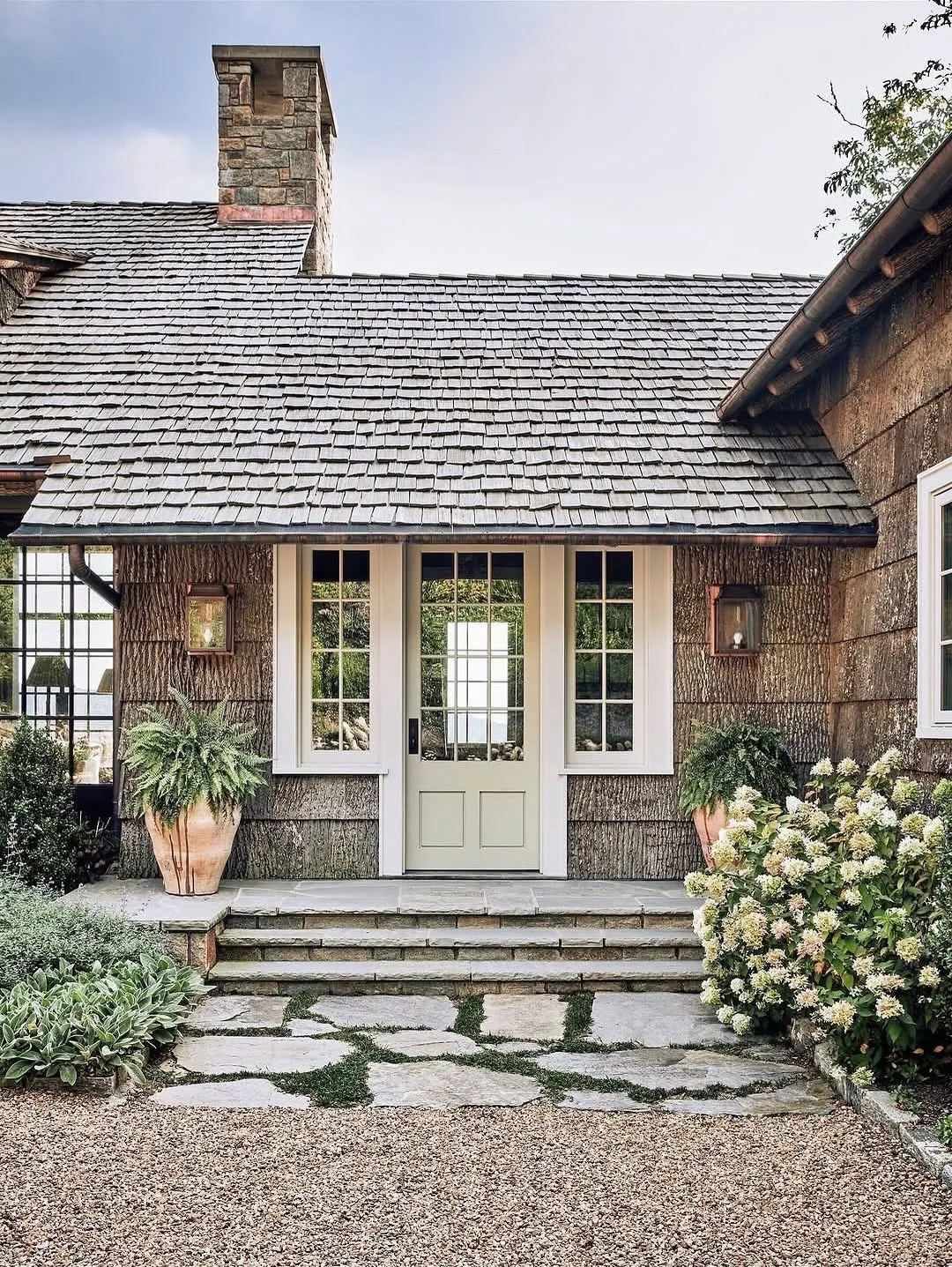
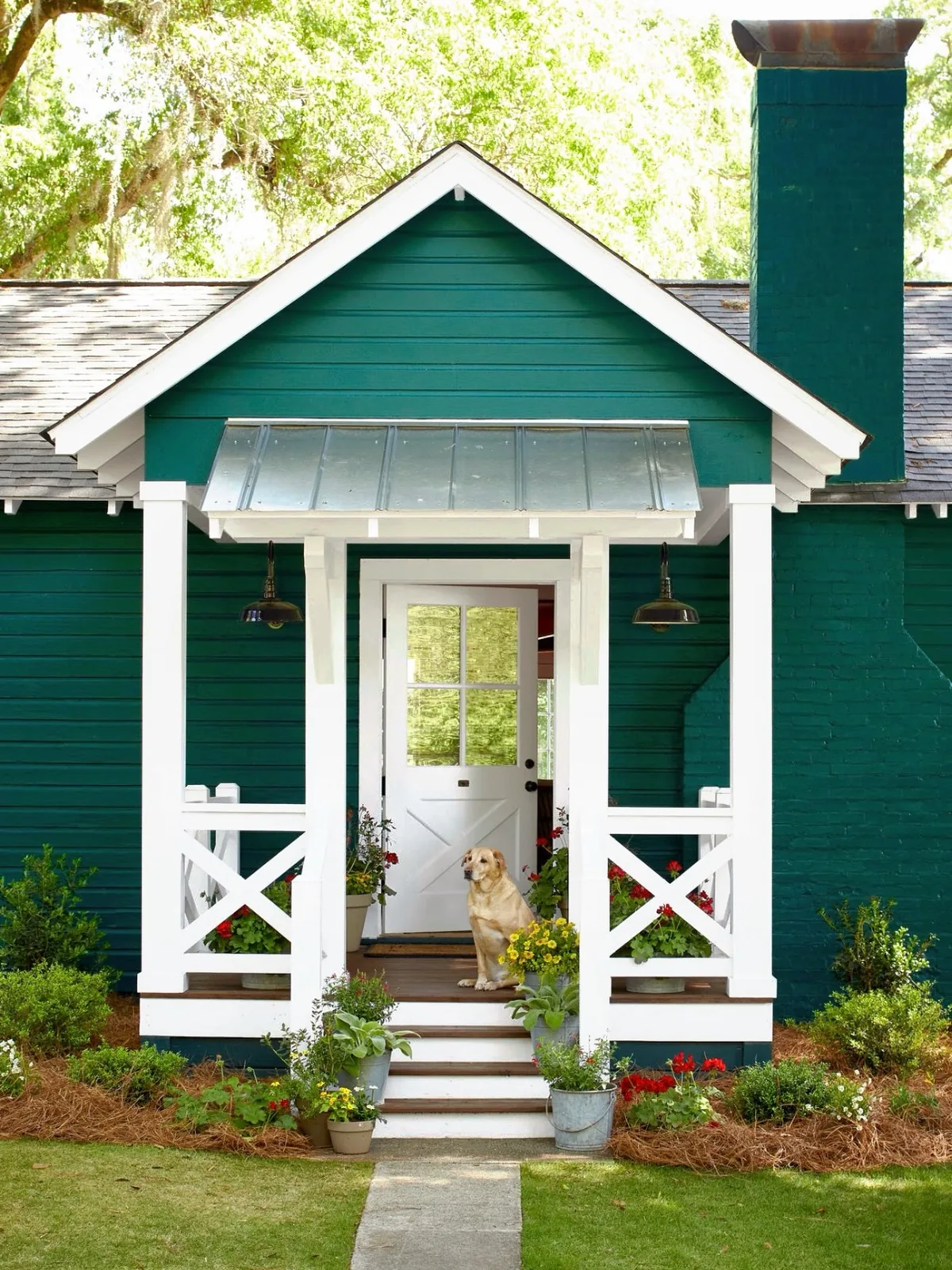
Chunky full-size porch columns eat cottages alive. A pair of six-inch posts can visually halve your porch width and turn your entrance into a fortress gate. You’ll get more charm from slim turned posts, simple square pickets or no posts at all under a bracketed hood.
If your porch roof needs real structure, you’ll hide it in the wall with a beam rather than planting columns in front of your windows. Brackets where post meets beam add craft without bulk. Stand at your curb and compare: slim supports let your door and windows show, while chunky ones make your cottage read as a shed wearing a costume.
Let one small roof flirt with copper
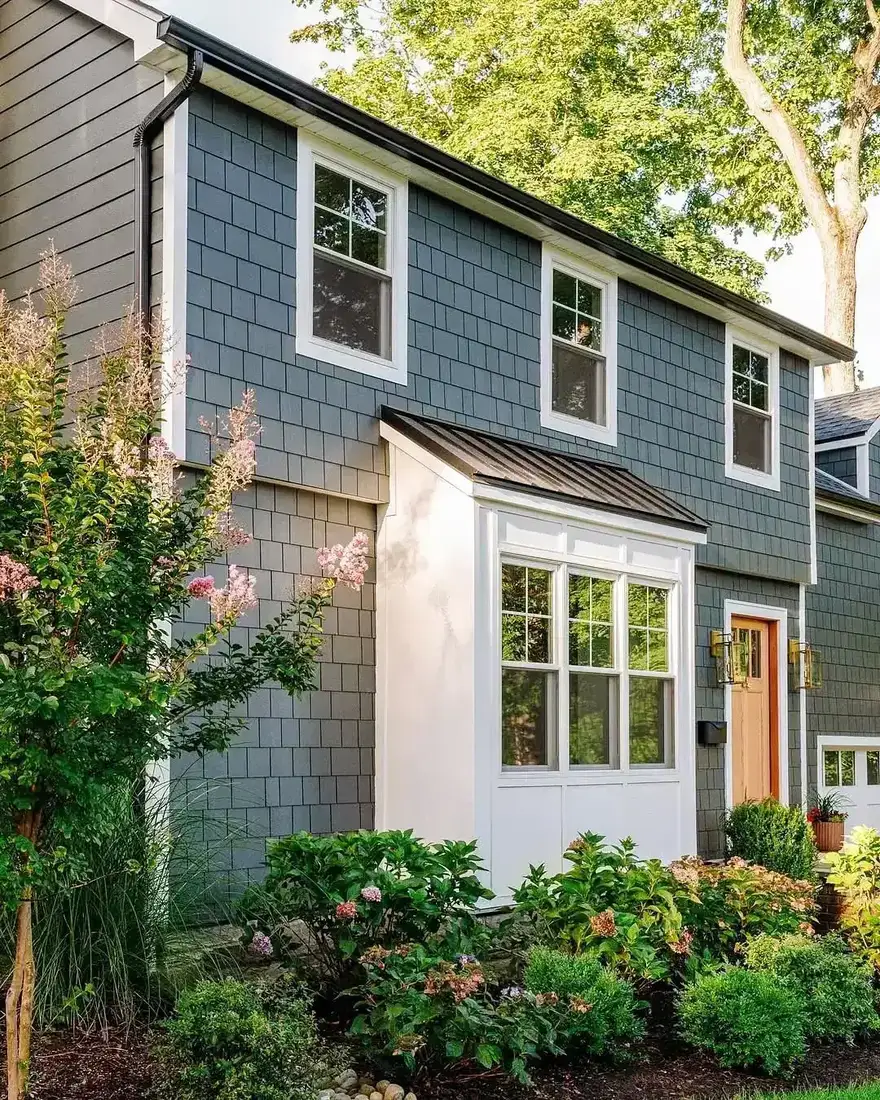
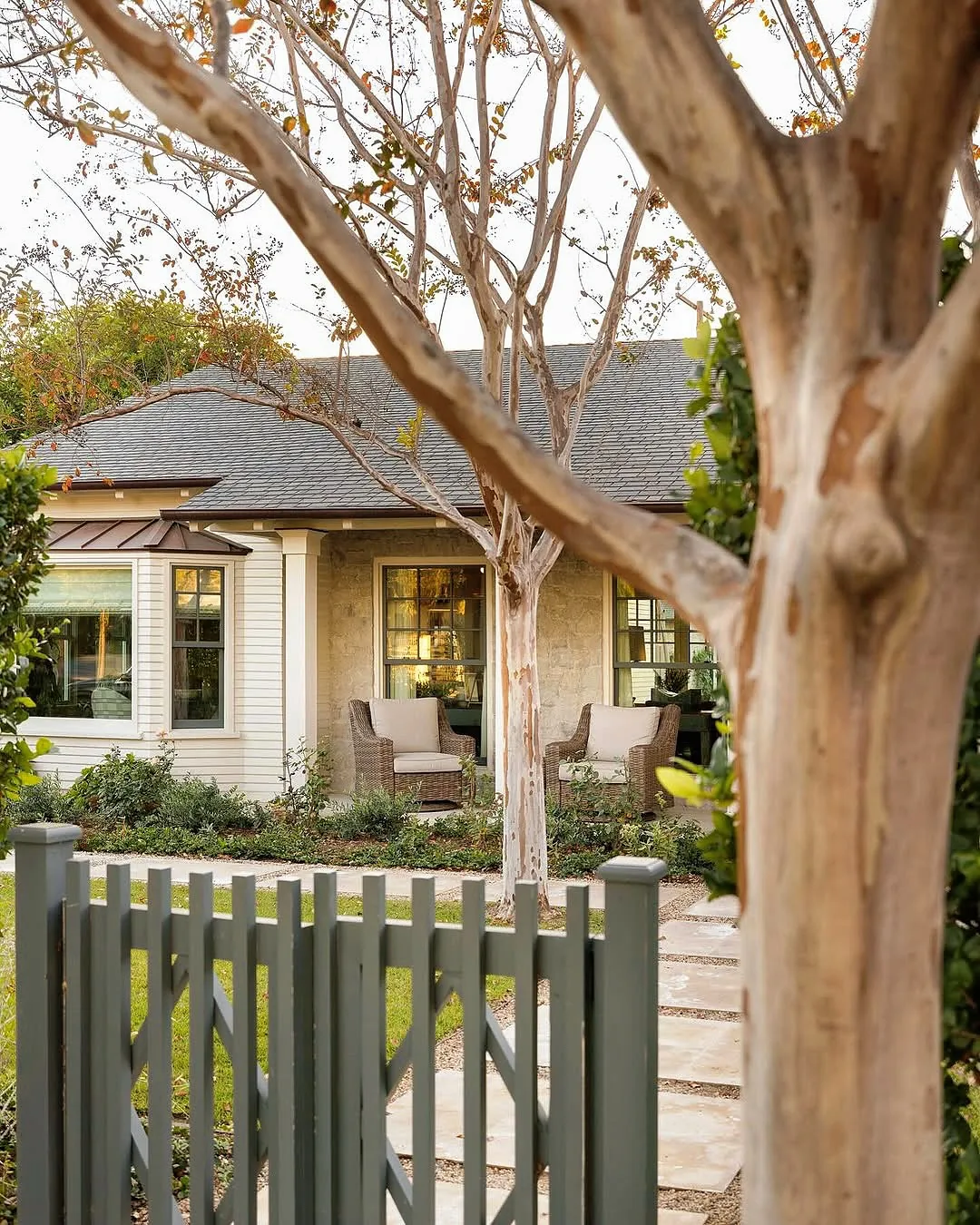
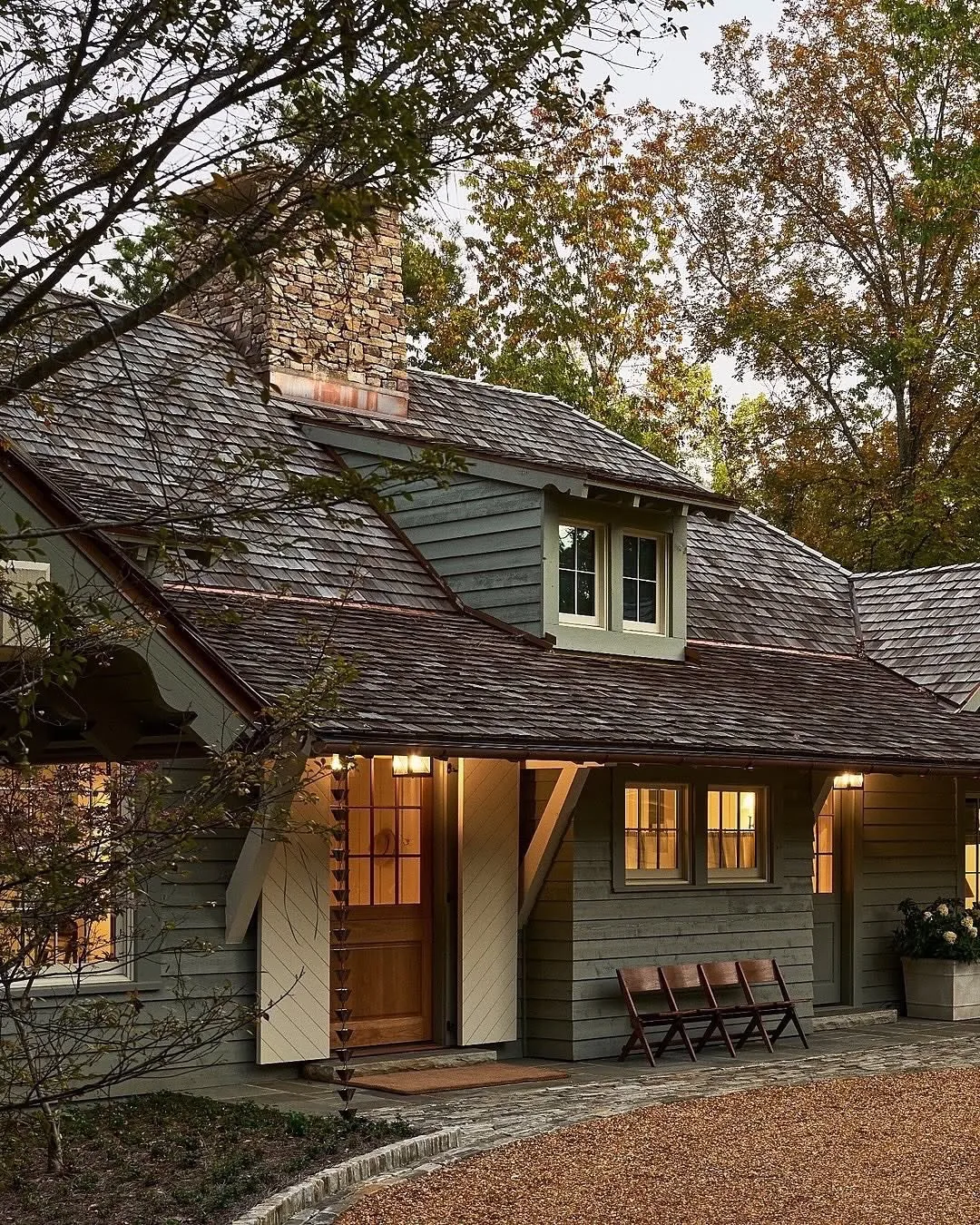
A full copper roof belongs on a bigger budget and a bigger house, but a small copper awning, bay cap or porch roof gives your cottage its jewelry in one affordable move. You’ll get the warm metallic glow that photographs beautifully and ages into soft brown-green patina over the years.
Keep the main roof quiet so the copper moment reads as intentional. Shake, shingle or simple standing seam in a muted tone lets one small copper plane carry the whole composition. You’ll spend a fraction of a full metal roof and get most of the charm. Small house, small splurge, full effect.
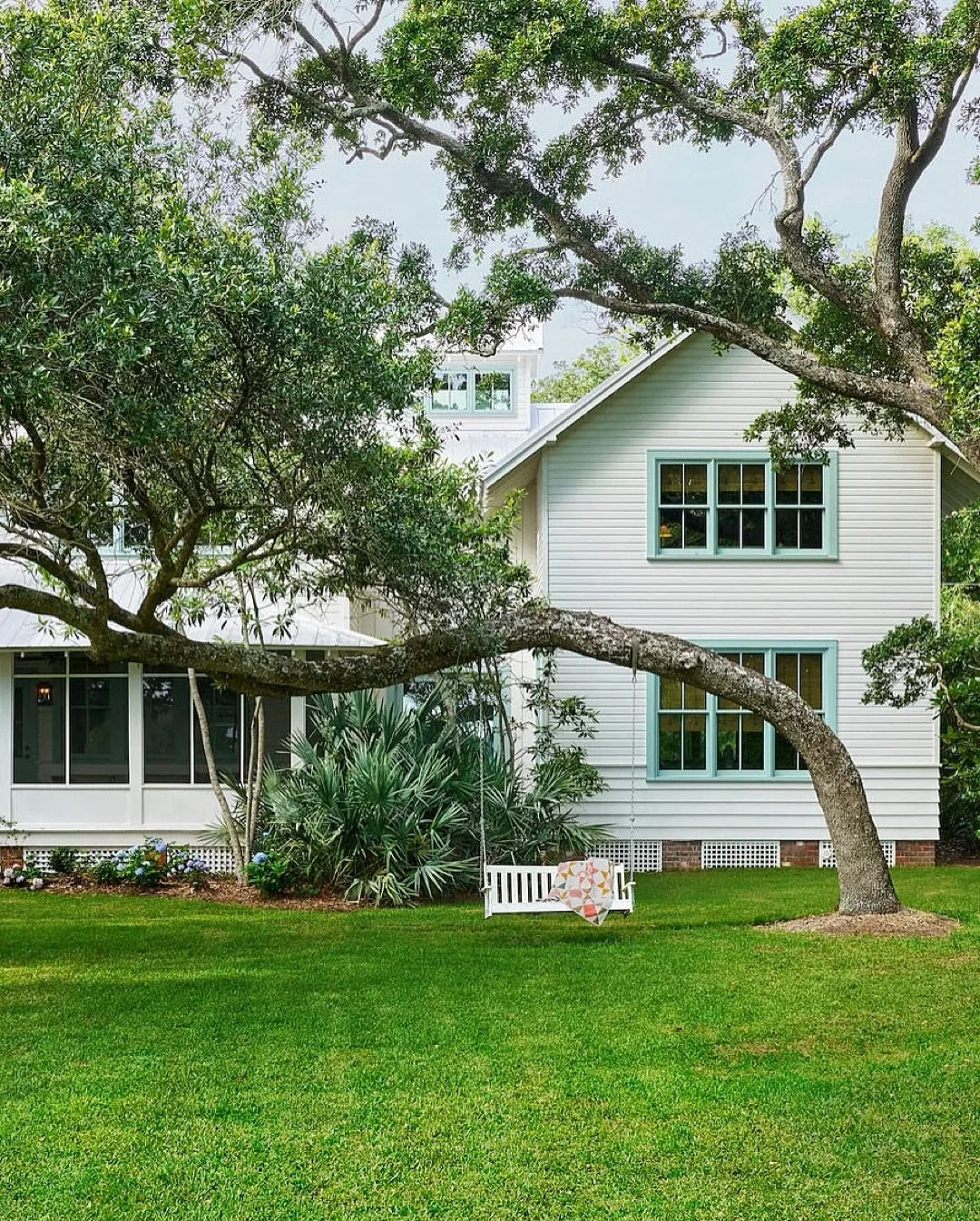
Borrow the oaks, don’t fight them
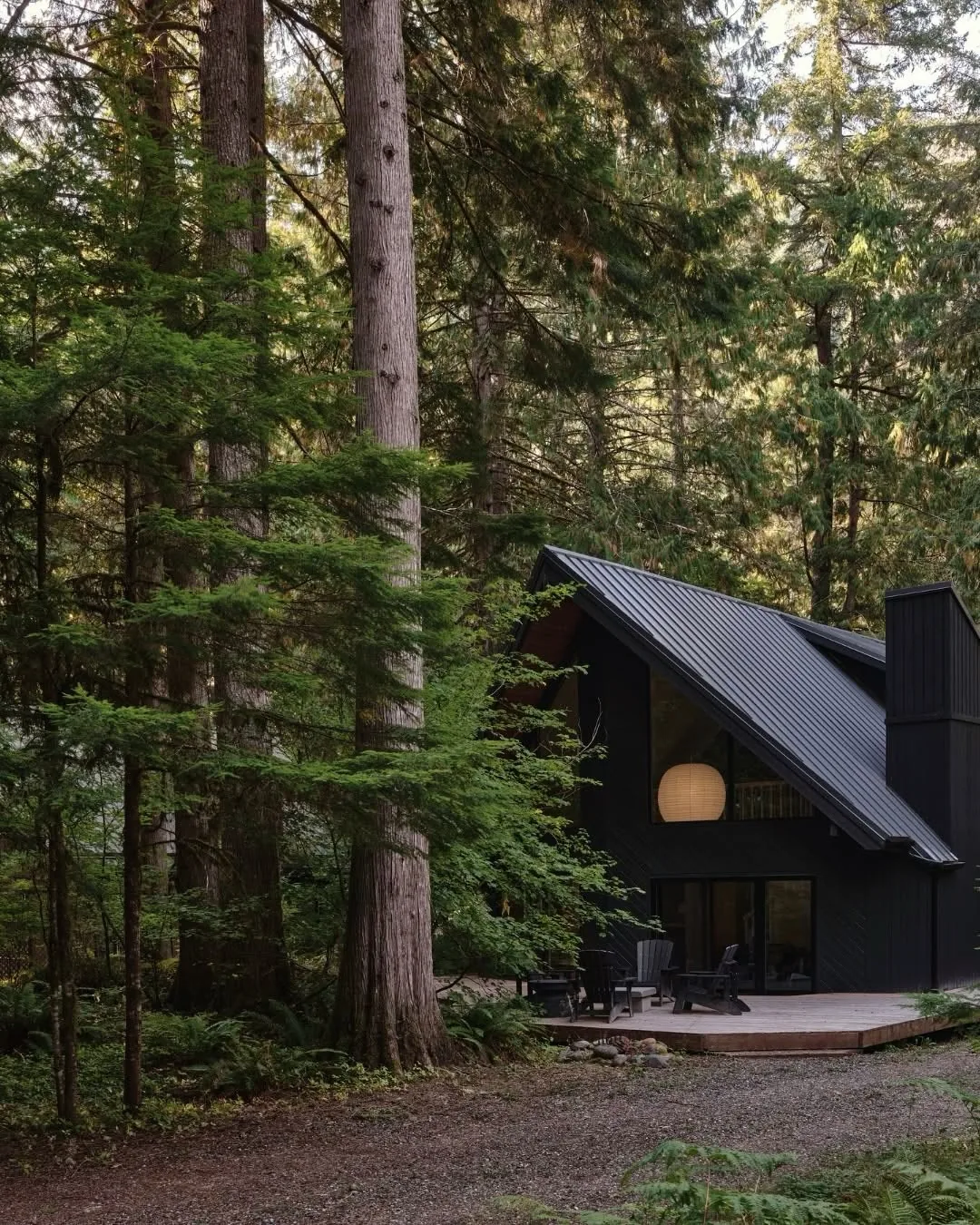
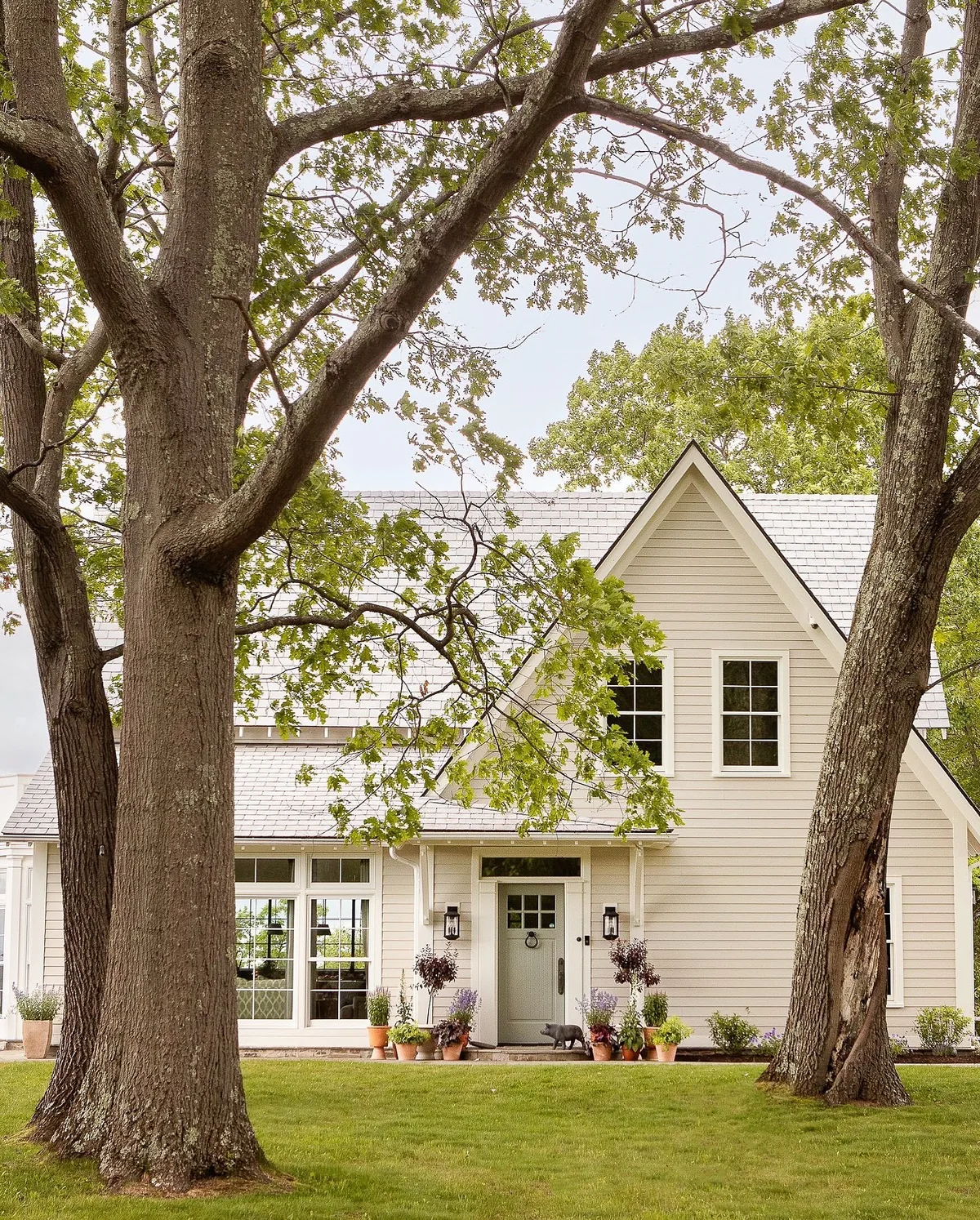
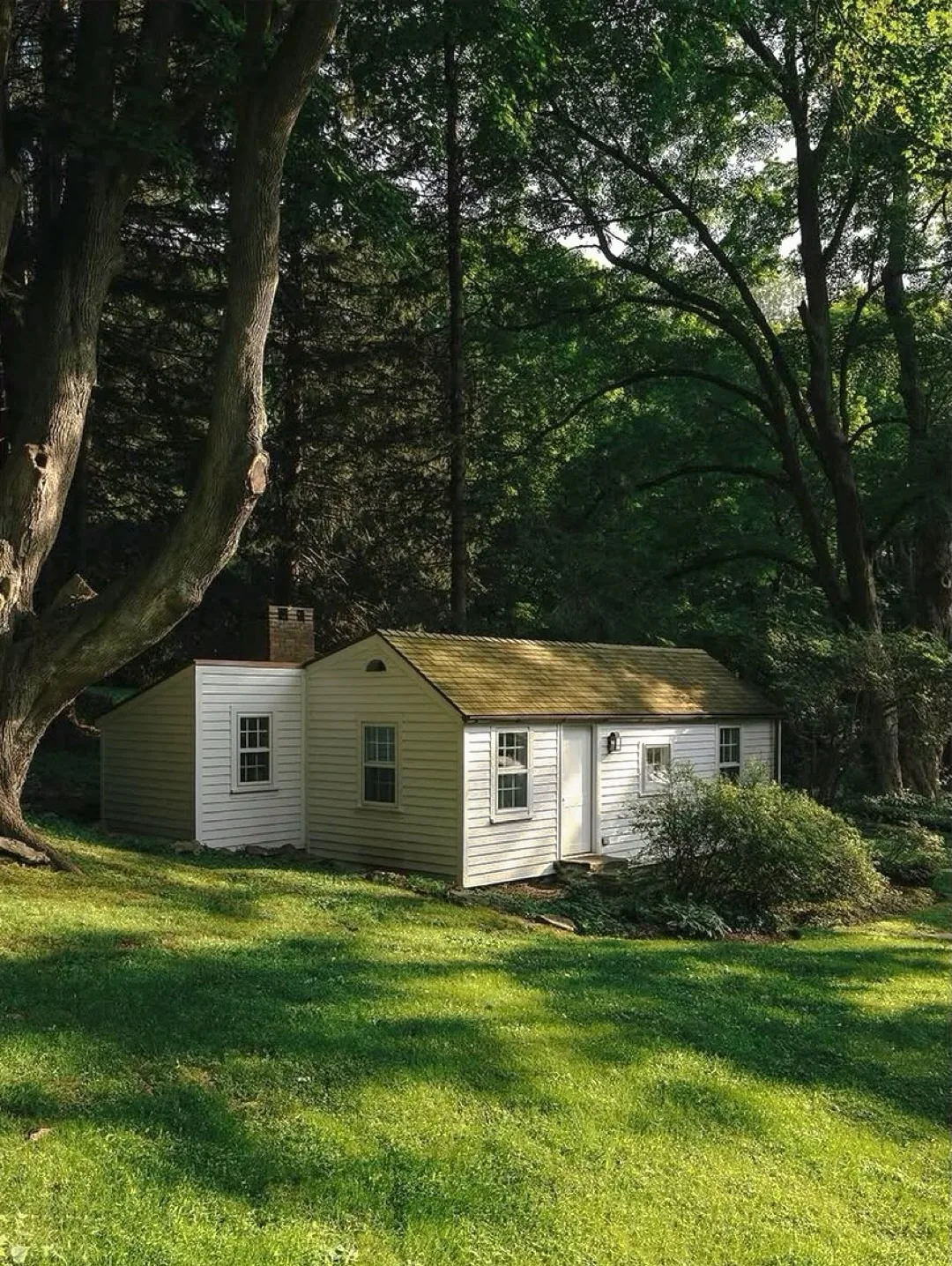
Mature trees dwarf small houses when you plant against them and ennoble them when you frame with them. You’ll site beds and paths so trunks stand clear of your walls while canopies arch over the whole scene. The cottage nestles, the trees preside, and the scale reads storybook instead of cramped.
Pot your fussier plants and keep them movable. You’ll rearrange through the seasons, tucking color by the door in summer and shelter in winter. Pots also protect your walls from irrigation and soil buildup that in-ground beds press against siding. Small house, movable garden, zero regrets.
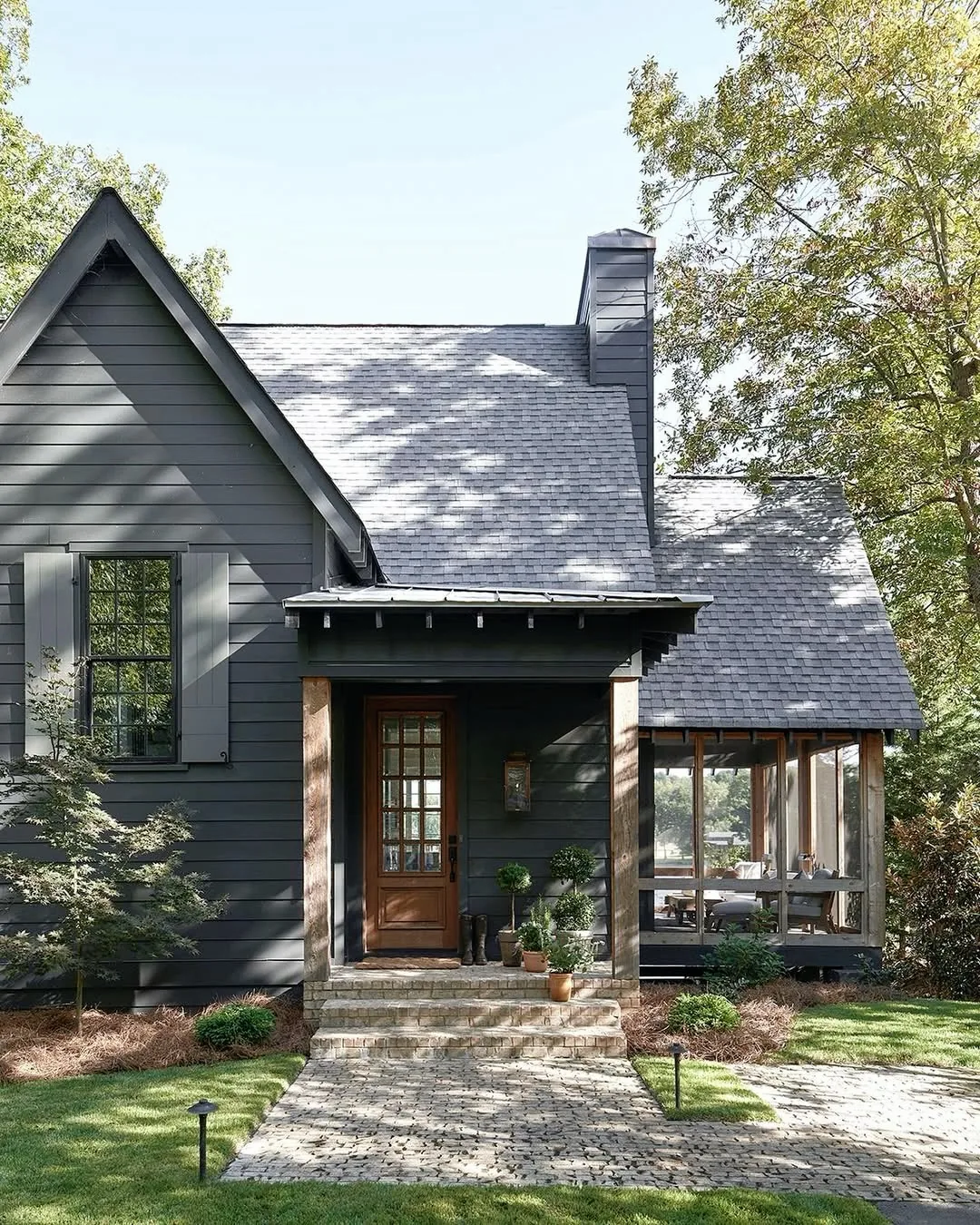
Color with confidence
Small walls take big color better than big walls do. You’ll use that freedom while big-house rules sit this one out.
Paint it darker than you dare
Pale cottages can wash out to nothing in strong sun, while deep charcoal, forest green or navy wraps a small house like a jewel box. You’ll find dark colors recede visually too, so your cottage settles into planting instead of shouting across the street. The houses you photograph on walks prove it.
Commit fully once you choose. Dark walls want crisp white trim and one warm accent, wood or copper, to keep them from brooding. You’ll repaint a small house cheaply anyway, so the risk is low and the payoff is a cottage with presence far beyond its square meters. Timid color shrinks houses faster than small rooms do.
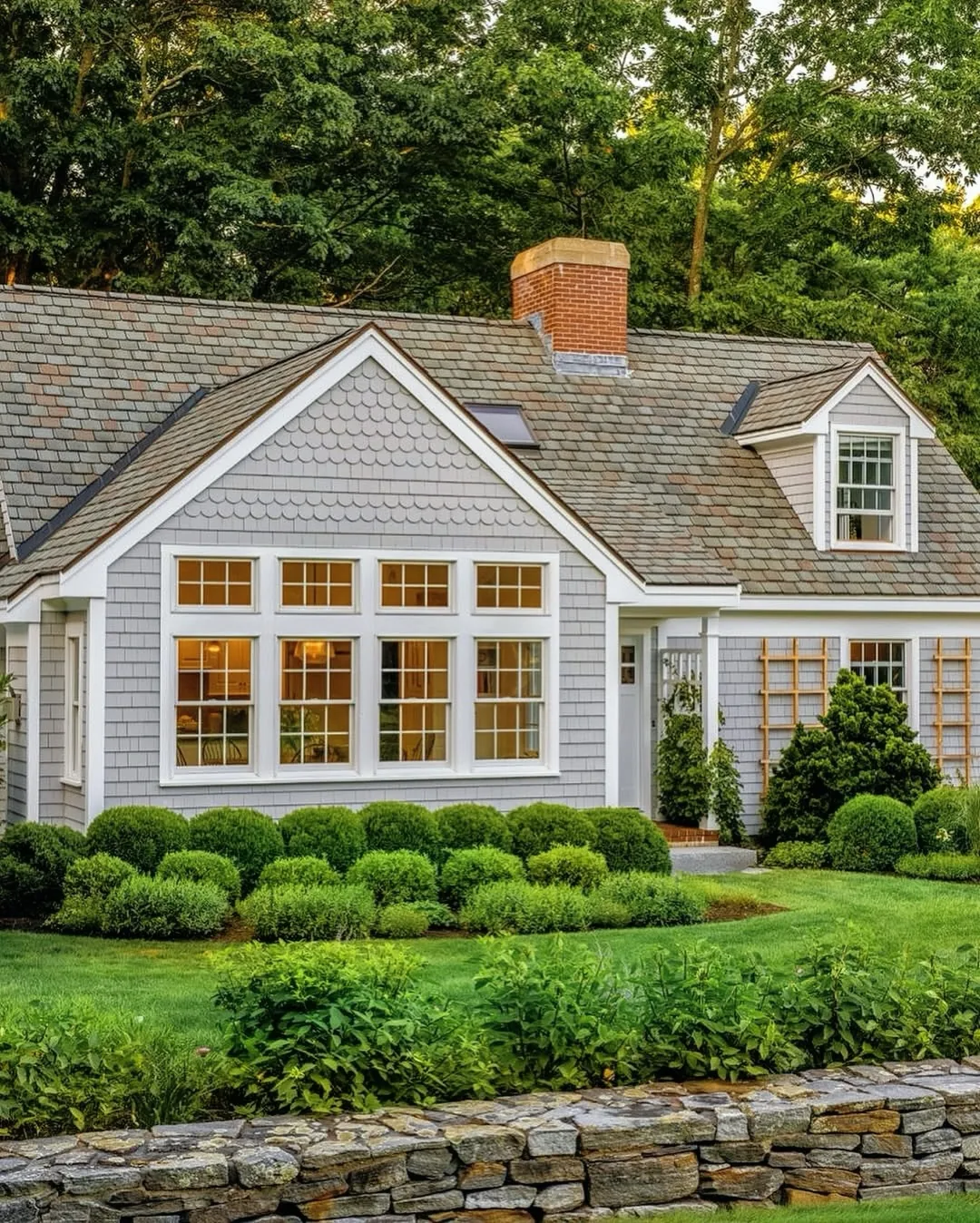
Ground cottage exterior ideas in layered planting
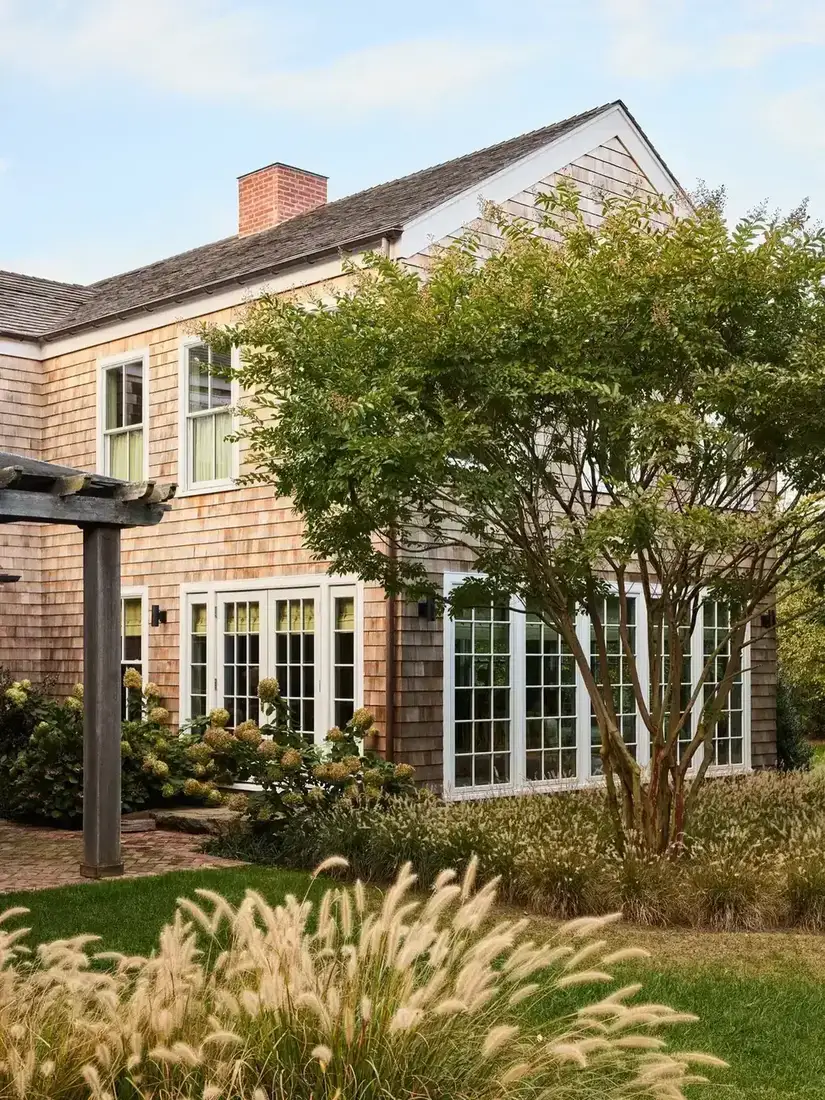
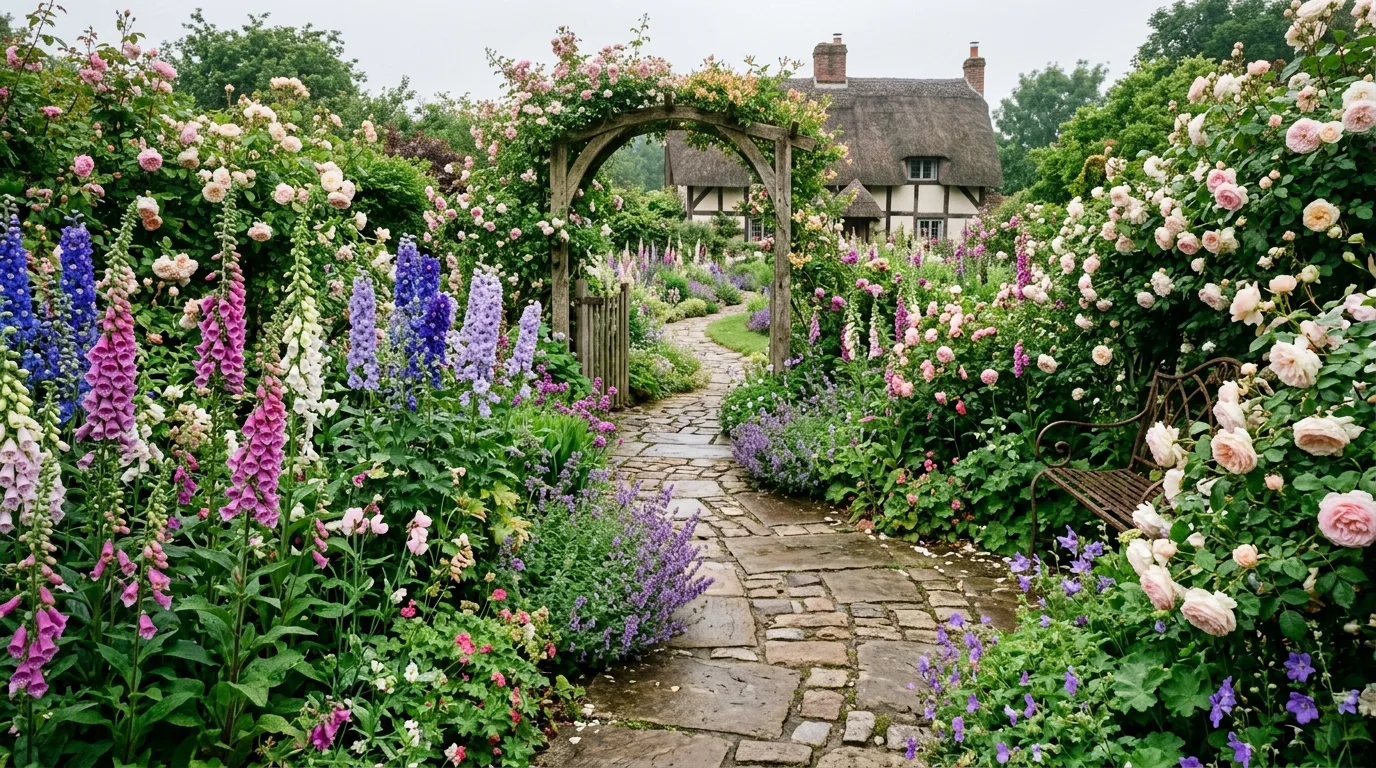
Flat foundation shrubs in a straight line shrink small houses by drawing a hard stripe across them. You’ll layer instead: low evergreens at the wall, billowing perennials in front and one taller accent off-center to break the roofline. The staggered depths pull your eye outward and make the plot feel bigger.
Leave breathing room behind every plant so air reaches your siding and you can paint without demolition. You’ll mulch the gaps the first year and let the layers knit by the third. For the stone-edged, gravel-pathed version of this approach, see our shingle cottage curb appeal ideas. Patience landscapes better than money.
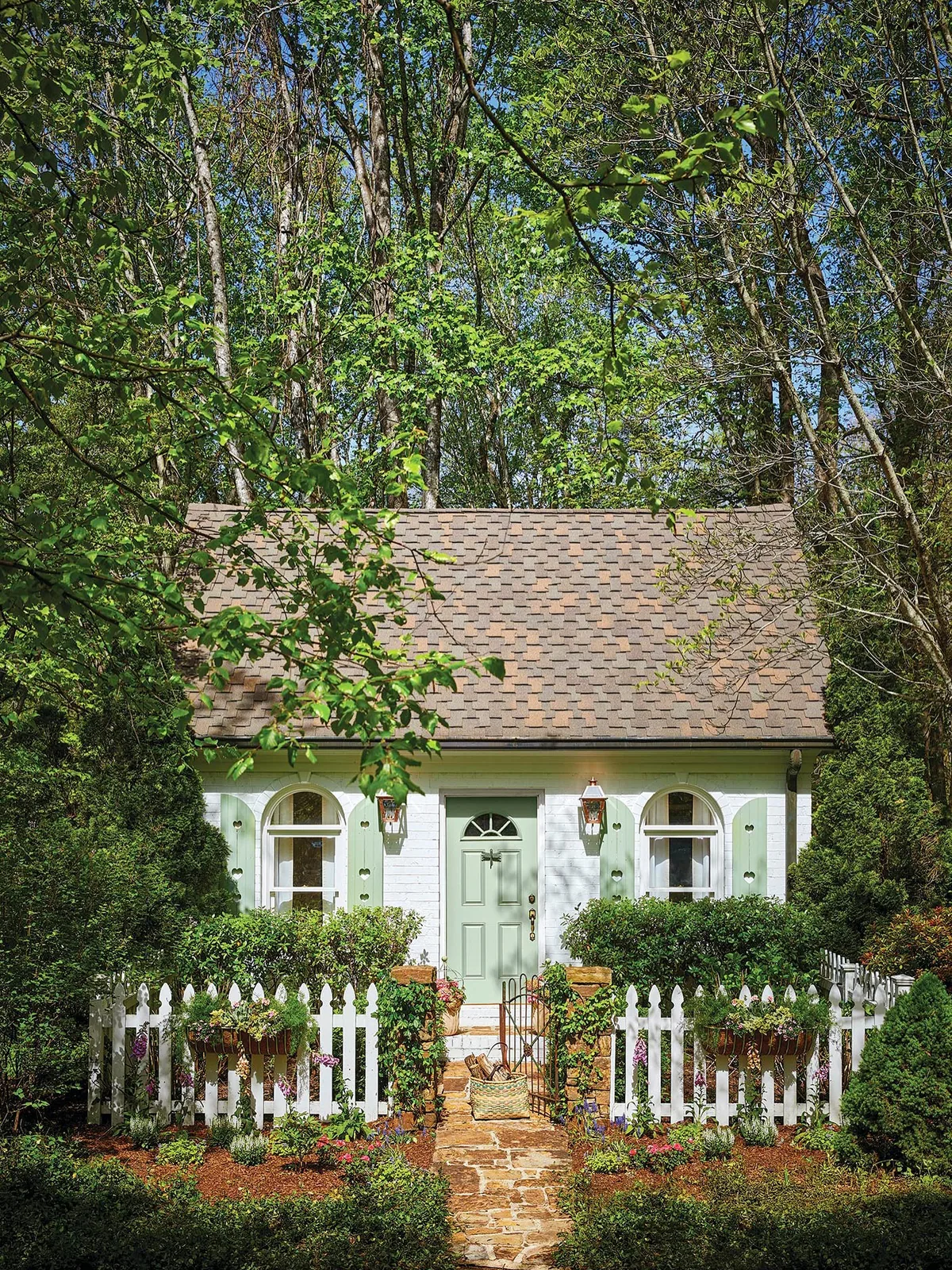
Hang shutters that fit petite windows
Undersized shutters look doubly lost on small windows, like postage stamps beside peepholes. You’ll size each shutter to half its window so the pair would meet if closed, which gives even tiny windows rhythm and intention. Louvered or board styles both suit cottages when the fit is honest.
Paint them to talk to your door rather than matching it exactly. You’ll get a composed front when shutters echo the door a shade deeper or softer. Screwed-flat fakes flatten small facades fastest because there’s so little wall to distract you. If your windows can’t take proper pairs, you’ll skip shutters and spend on window boxes instead.
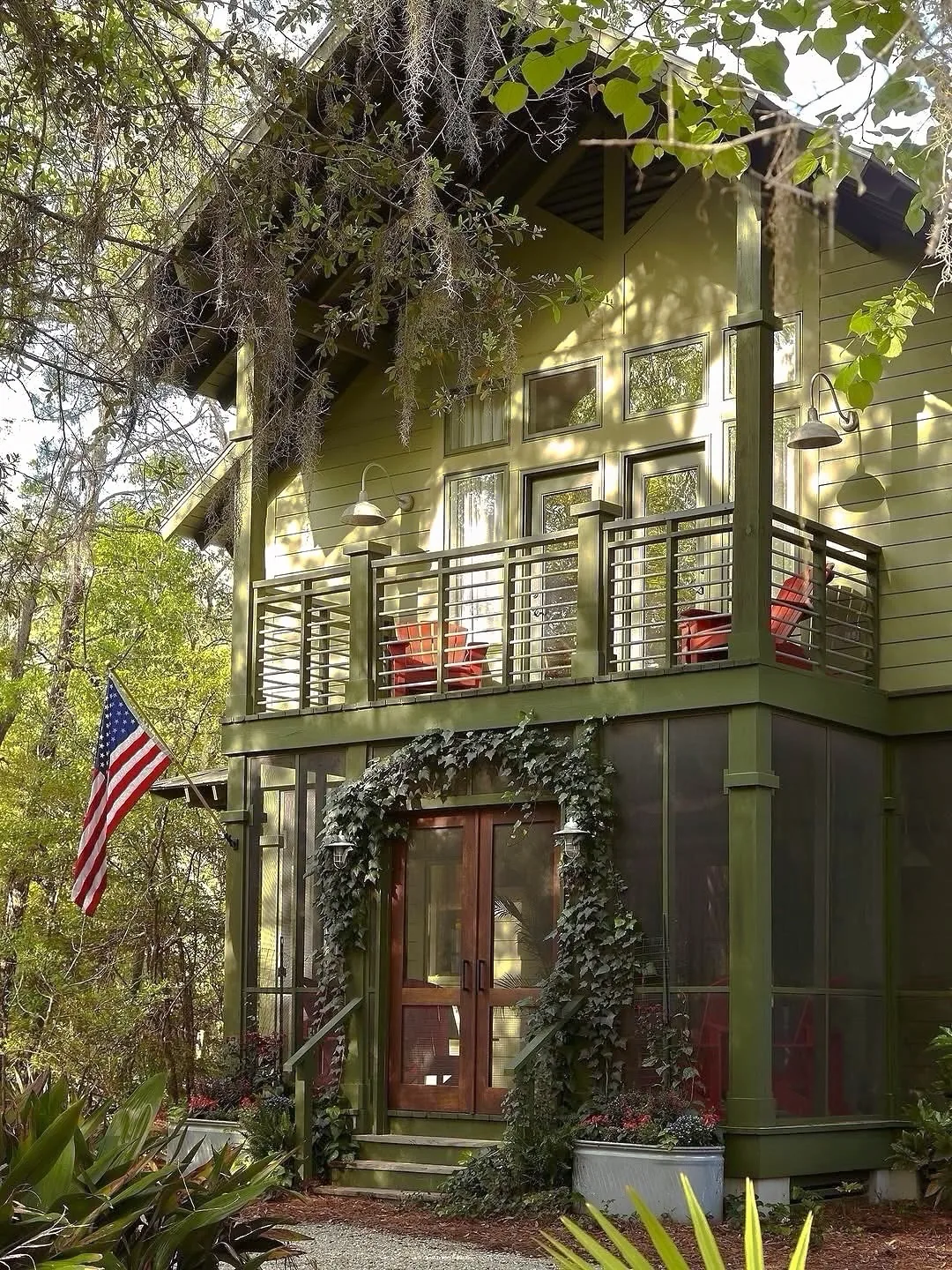
Fly one flag, not a festival
A single flag or banner gives your cottage a vertical lift and a personal note that no fixture can match. You’ll mount one bracket by the door or on the porch post and change the flag with seasons. That single moving accent draws the eye up, which small houses desperately need.
Stop at one. Multiple flags, windsocks and hanging signs turn charm into clutter within a week, and you’ll stop seeing any of them. The discipline you’re practicing everywhere else applies here too. One voice speaking clearly beats a crowd mumbling, especially on a small front.
Porches that invite
Your porch is your largest room in summer and your best photograph year-round. You’ll furnish it like you mean it.
Swing where the shade already lives
A porch swing earns its hooks only where you’ll actually sway. You’ll hang it in the shaded bay, facing your best view, with room to clear the rail behind. A swing in full afternoon sun becomes sculpture within a month because nobody sits in a furnace.
Hang it from structure, not from trim boards, and you’ll sleep through storms. Through-bolt into the beam above with proper hardware and test it with two adults before you call it done. You’ll spend more evenings out there than anywhere else you own, so hang it for decades, not for the photo.
Furnish petite and leave the lane
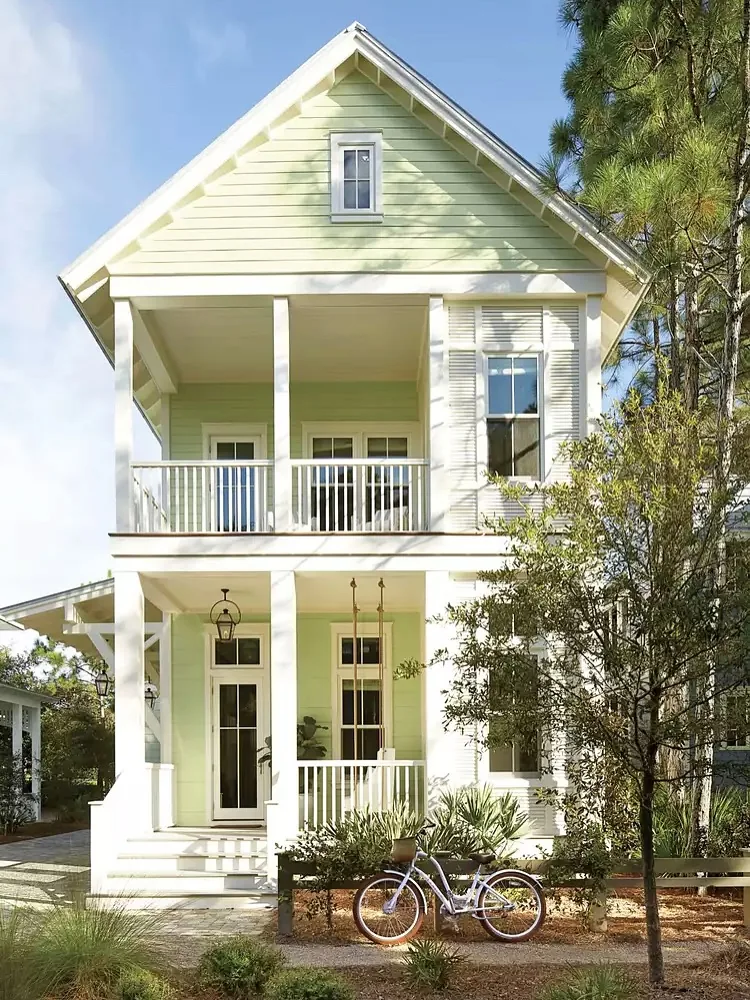
Porch furniture sized for a suburban deck swallows a cottage porch whole. You’ll choose a slim glider or two petite rockers with a tiny side table, then confirm a clear walking lane remains behind them. If you must squeeze past your own chairs, guests will feel it instantly. For swing arcs, hanging hardware and weatherproof materials at porch scale, our porch rocking chair and seating ideas tape the airspace first.
Leave the lane even when it tempts you as plant space. You’ll thank yourself carrying groceries in the rain. Small-scale pieces also photograph better because they leave your door, windows and rails visible. A porch you can walk through invites you out, while a furnished storage unit keeps you inside.
Lean useful things by the door
Bikes, surfboards and oars leaning by a cottage door read as life, not clutter, when they’re the real equipment you use. You’ll give them one designated bay, a gravel pad or a wall hook, so they gather intentionally instead of sprawling. The house tells visitors what you do for joy before you say a word.
Contain it to that single bay or the charm curdles. You’ll corral the overflow into a shed or side yard the moment leaning becomes piling. One bay of honest gear photographs like a postcard. Three bays photograph like a yard sale, and you’ll feel the difference every arrival.
Paint the door the bravest color you love
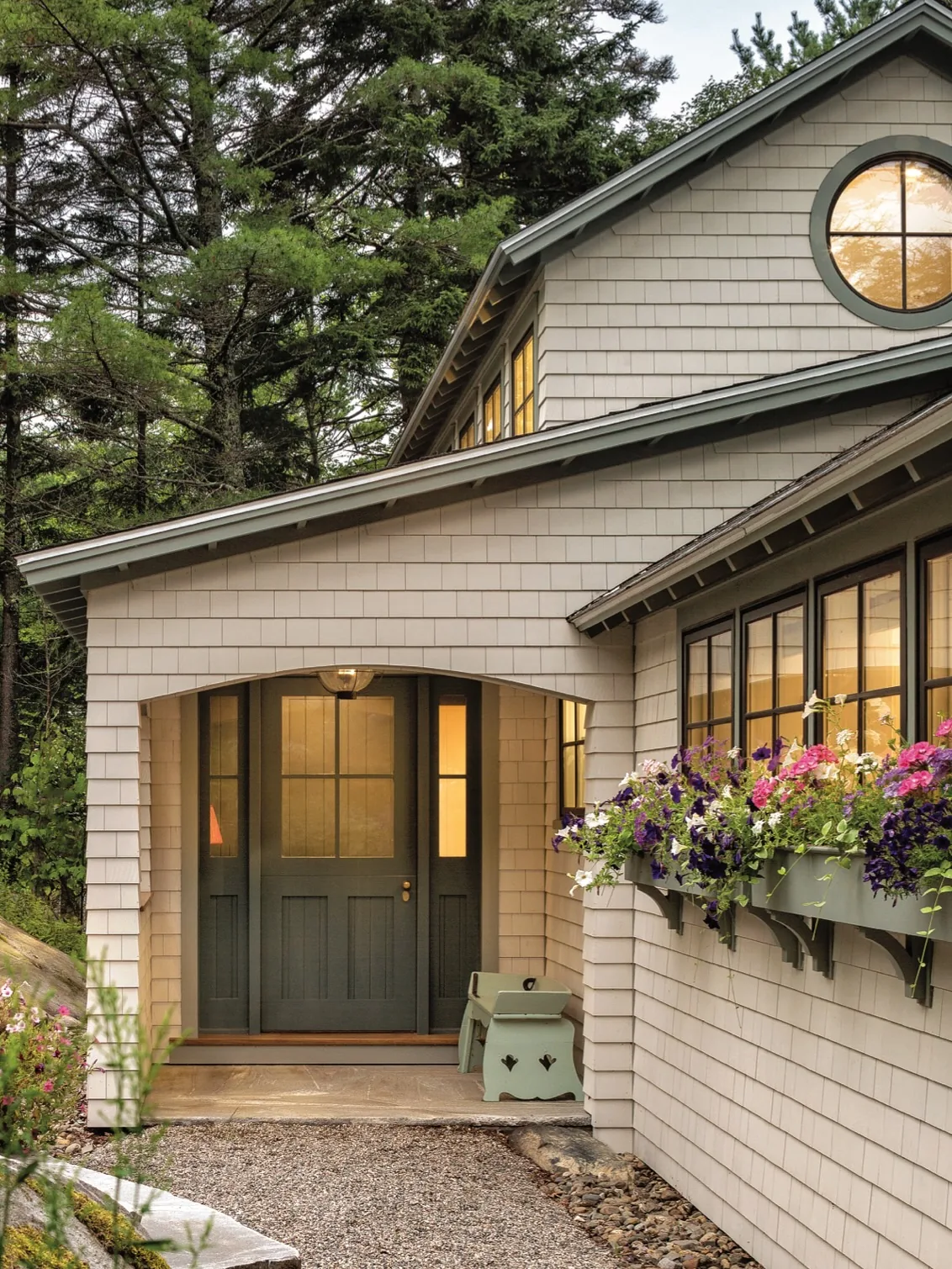
Your door is the smallest paintable surface you own and the bravest color belongs there. You’ll pick the sage, teal or mustard you’ve been saving and commit fully with proper prep and two coats. If your bravest color runs green, our green front door ideas match olive, sage and forest to the garden outside. A small house carries bold color the way a small room carries bold art: concentrated and perfect.
Keep the storm door simple or remove it so your color shows. You’ll clean the hardware, paint the trim crisp and let that single rectangle do all the talking. When friends describe your house, they’ll name your door first. That’s a small surface earning its keep like nothing else you own.
Paths, fences and winter
Cottages get judged at walking pace, in every season. You’ll detail the last three meters like they matter, because they do.
Lay gravel where lawns give up
Shade, oaks and foot traffic kill cottage lawns into mud exactly where guests walk. You’ll lay a gravel path with stone edging from gate to door and stop apologizing for grass that never wanted to grow there. Gravel drains between rains, crunches pleasantly and suits small houses better than striped turf.
Edge it properly or it migrates into beds within a season. You’ll set stone or steel edging flush and top up the gravel yearly. For the full method on stone paths meeting cottage walls, see our stone cottage exterior ideas. The path you walk daily deserves more design than the lawn you only mow.
Fence low and picket honest
A white picket fence frames a cottage like a mat frames a print, but only when it stays low and honest. You’ll keep it at the height that marks your boundary without walling you off, with pickets spaced to see through. Neighbors stay neighbors when you can chat over the top.
Paint it before it greys and you’ll keep the crisp frame your planting needs. Let it rot and it drags your whole front down with it. You’ll walk the fence line each spring, replacing soft pickets and touching up paint. A fence is a promise of care, so keep yours or remove it entirely.
Plant evergreen bones for February
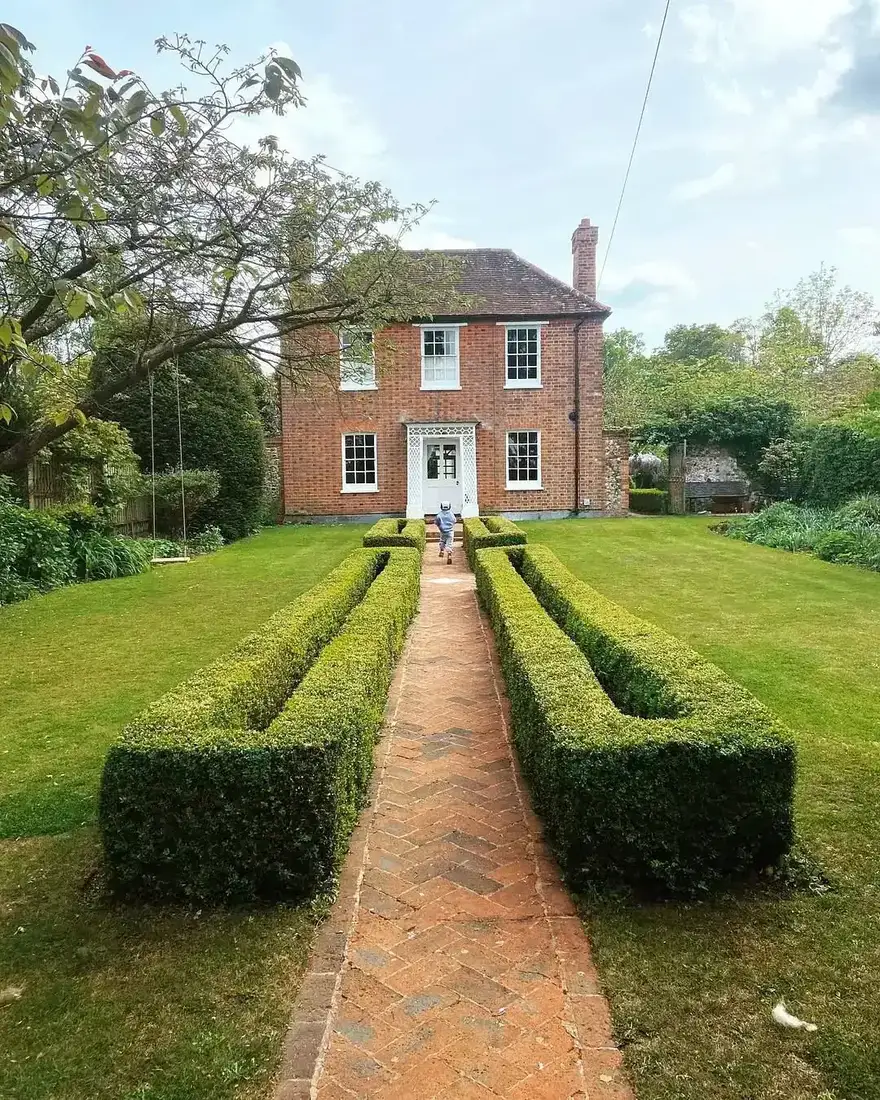
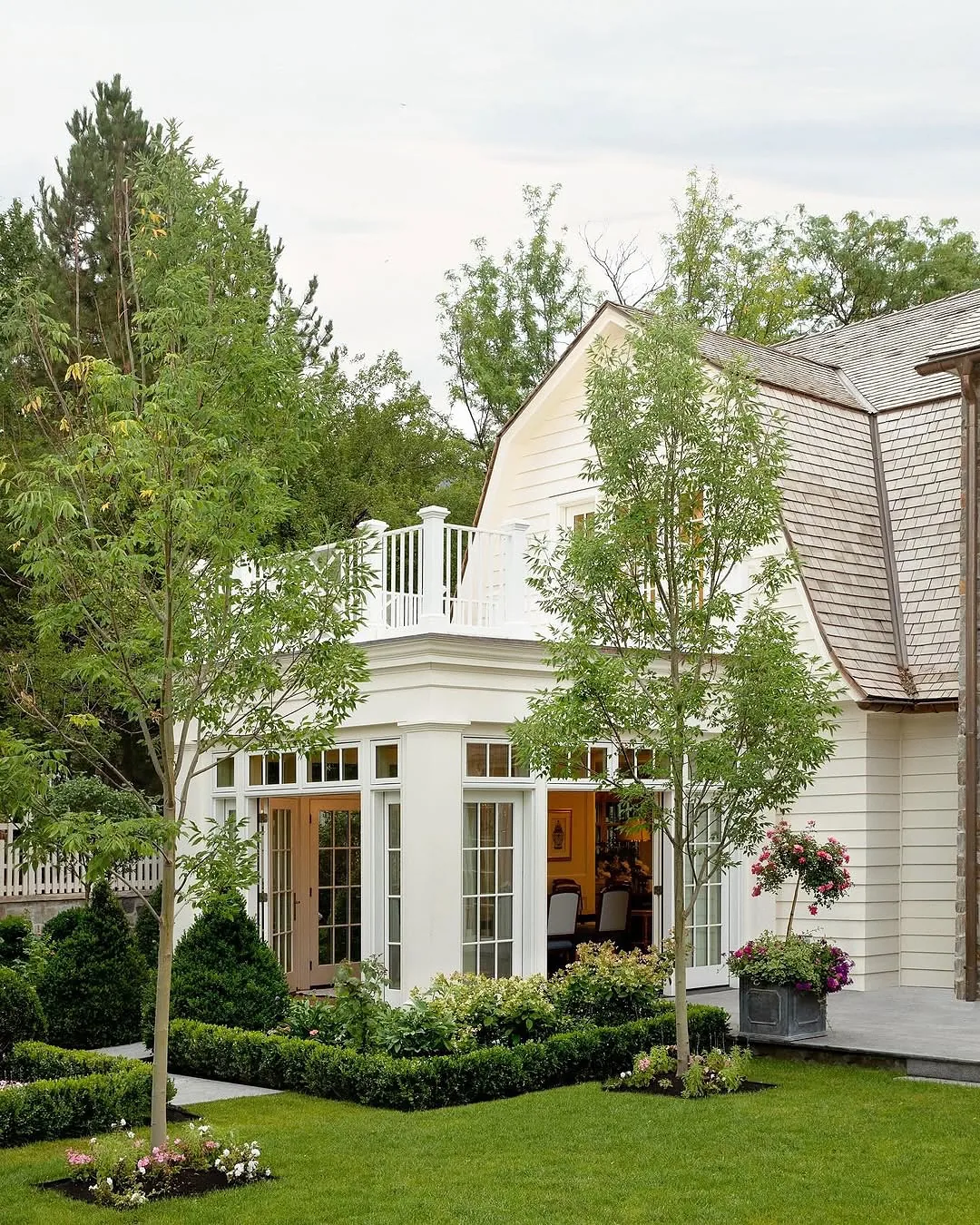
Flower season flatters every cottage, but you’ll be judged in February when blooms are a memory. For the summer flower party itself, planned across the whole season, see our flower garden ideas. Clipped boxwood, yew or holly hold your composition through winter and give snow something to outline. You’ll place these bones first, then let perennials party around them in summer.
Keep the evergreens clipped below your sills so winter sun still reaches your glass. You’ll shear lightly twice a year rather than hacking once. For more planting that frames small houses through every season, browse the rest of our home exterior guides. February is the honest month, so design for it first.
Small-scale versus full-size choices at a glance
| Cottage scale | Full size | |
|---|---|---|
| Columns | Slim posts or brackets | Chunky six-inch columns |
| Lanterns | Petite, door-proportioned | Oversized statement fixtures |
| Furniture | Slim glider, clear lane | Deep deck set |
| Shrubs | Layered, pulled back | Foundation hedge wall |
| Fence | Low picket you see over | Tall privacy wall |
| Verdict | Buy this scale | Shrinks your house visually |
The Cottage Scale Formula
If you strip all fifteen ideas down to a plan, it reads like this:
- Measure first. Tape your facade and carry the numbers shopping with you.
- One size down, always. The smaller choice is right nine times out of ten.
- Dark or brave color. Small walls carry color better than big ones.
- Door as focal point. The bravest color you love, properly prepped.
- Gravel paths, low fences. Detail the last three meters like they matter.
- Evergreen bones. Design for February and summer takes care of itself.
Get those six right and your small house reads charming, not cramped. You’ll own the storybook look instead of squeezing into it.
Frequently Asked Questions
What color should I paint a small cottage?
Go darker or braver than your instinct says. Deep charcoal, forest green or navy wraps a small house like a jewel box and settles it into planting, while timid pale colors can wash out to nothing. You’ll repaint a small house cheaply, so the risk stays low and the payoff runs high.
How do I make my cottage look bigger from the street?
Layer planting outward instead of striping shrubs along the wall, keep trim crisp for definition and let one vertical accent draw the eye up. Avoid chunky columns and oversized fixtures, which make small facades read smaller. You’ll gain presence through proportion, not square meters.
Should a cottage have shutters?
Only when they fit. Size each shutter to half its window so the pair would meet if closed, and hang them with a gap off the wall. Undersized boards screwed flat flatten small facades fastest, so skip shutters entirely and buy window boxes if your windows can’t take proper pairs.
What should I put on a small porch?
Less than you think. A slim glider or two petite rockers with a tiny table, plus a clear walking lane behind them. You’ll use a porch you can walk through and abandon one you must squeeze through. Hang a swing only in the shaded bay from real structure.
How do I landscape a tiny front yard?
Lay a gravel path with stone edging where feet actually go, layer low evergreens with billowing perennials, and pot the fussy color so you can move it. You’ll mow less, weed less and walk dry all year. Leave breathing room behind every plant for air and future paint.
Is a white picket fence right for my cottage?
Yes when it stays low and honest. A low picket fence frames your cottage like a mat frames a print and keeps neighbors neighborly. You’ll repaint before it greys and replace soft pickets each spring. Remove a rotting fence entirely rather than letting it drag your front down.
This article may contain affiliate links. We may earn a commission at no extra cost to you.