Design From the Water Side, Not the Street

Add us as a preferred source to see more stories on Google.
You renovated the street side first. You’ll live on the other one.
Here’s the thing. You’ll use your water side ten times more than your road side, yet most waterfront renovations spend the budget exactly backwards.
Chances are the lake house & coastal exteriors you saved all share one habit: porches, rails, stairs and paths aimed at the water like the house is watching it. This guide covers that living layer. For the shingle walls themselves, read our coastal lake house shingle exteriors companion piece.
Aim everything at the water
You’ll audit your plot from a kayak’s viewpoint. Whatever blocks that sightline is your first project.
Put your deepest porch on the water side
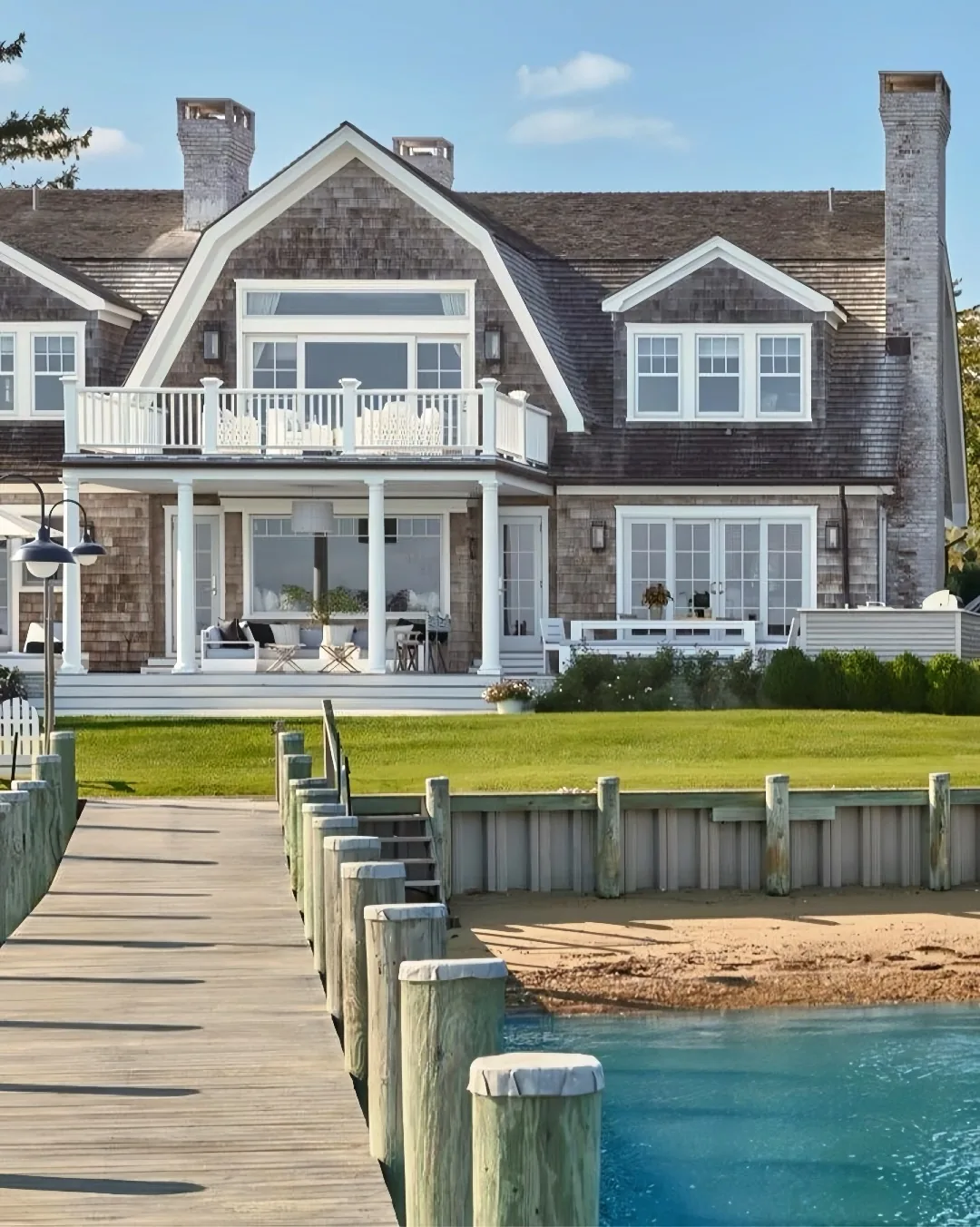
Most houses inherited their biggest porch facing the road out of habit, while the water gets a narrow deck nobody uses. You’ll flip that priority: the widest, deepest outdoor room belongs where the view lives. That’s where you’ll drink coffee, host dinners and watch storms roll in.
Depth decides use exactly like indoors. You’ll want room for a dining table plus a lounging corner, with circulation that never squeezes. A shallow strip becomes a corridor you cross, while a true room holds you for hours. Measure your furniture before you frame, because a porch built for the view still has to fit your life.
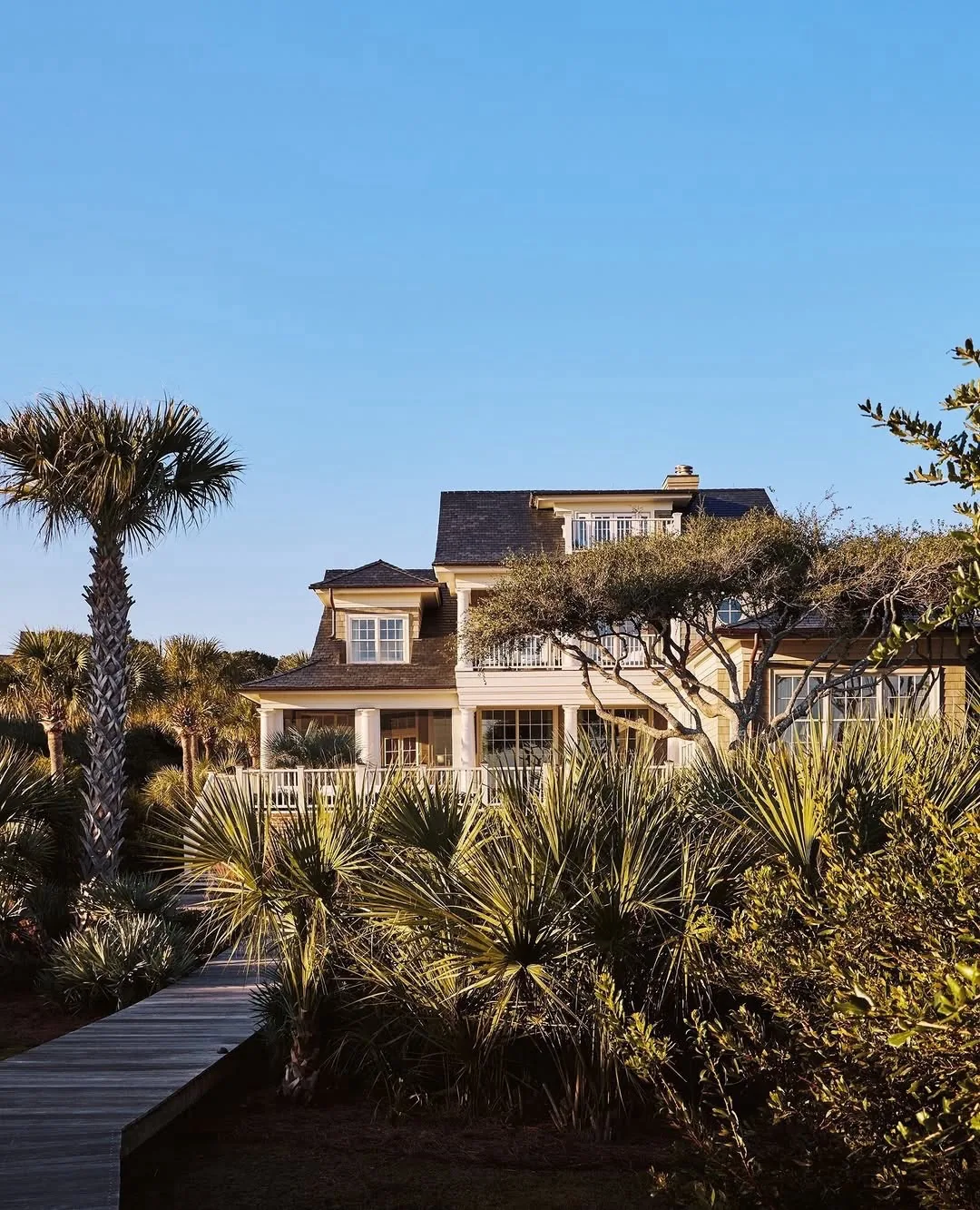
Choose rails you can see through sitting down
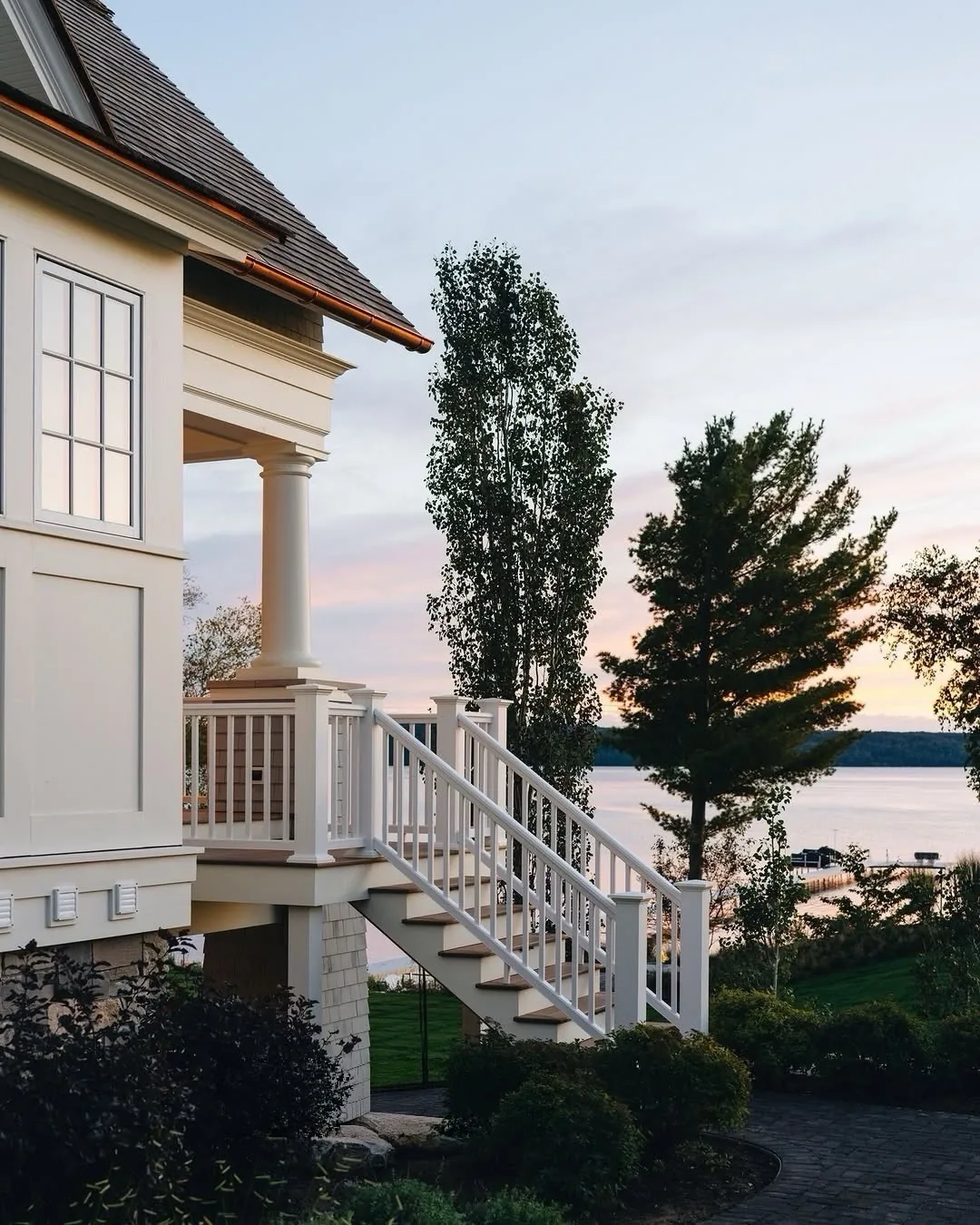
A beautiful railing that blocks your seated view fails its only job on the water side. You’ll test every option from chair height: slim cable, glass panels or widely spaced pickets keep the horizon whole, while chunky rails and solid half-walls cut it into slices. The view is your most valuable finish, so you’ll protect it fiercely.
Keep the street side traditional and the water side transparent without guilt. You’ll match colors so both read as one house while performing differently. Guests will gather exactly where the view opens and avoid where it closes. Rails decide where people stand more than furniture ever does.

Run stairs and paths all the way to the shore
A grand porch that ends in a muddy scramble down the bank wastes itself. You’ll carry proper steps with a handrail from your terrace to the waterline, lit for night use, so every age in your family reaches the shore safely. The path is the umbilical cord of the whole property.
Build the stair for wet feet and dark nights. You’ll choose grippy treads, one continuous rail and low lights that mark each step without glaring. Stone or gravel landings drain between rains where lawn turns to slip. When the path works, you’ll end every evening at the water instead of debating the trek.
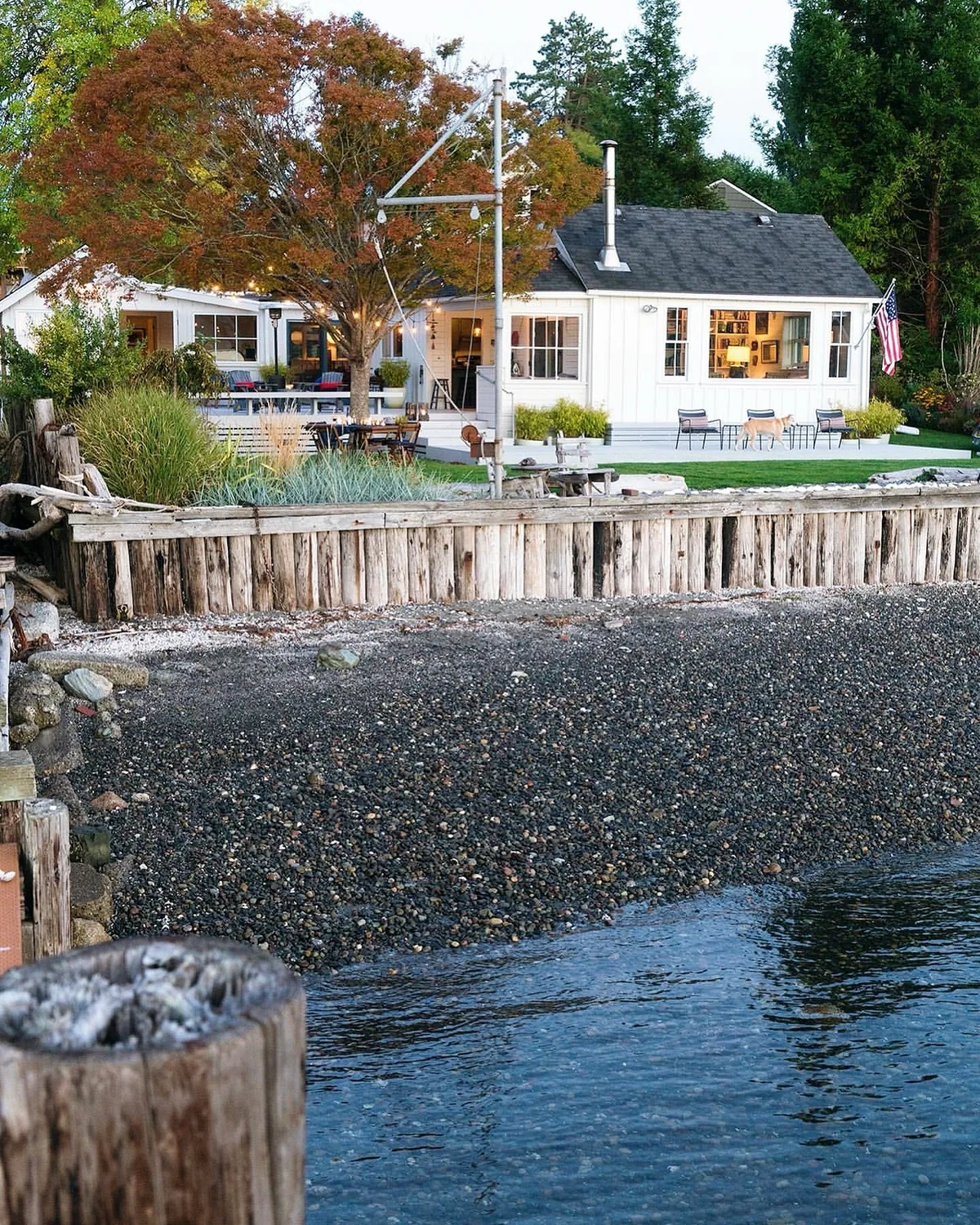
Paint the water door the welcoming color
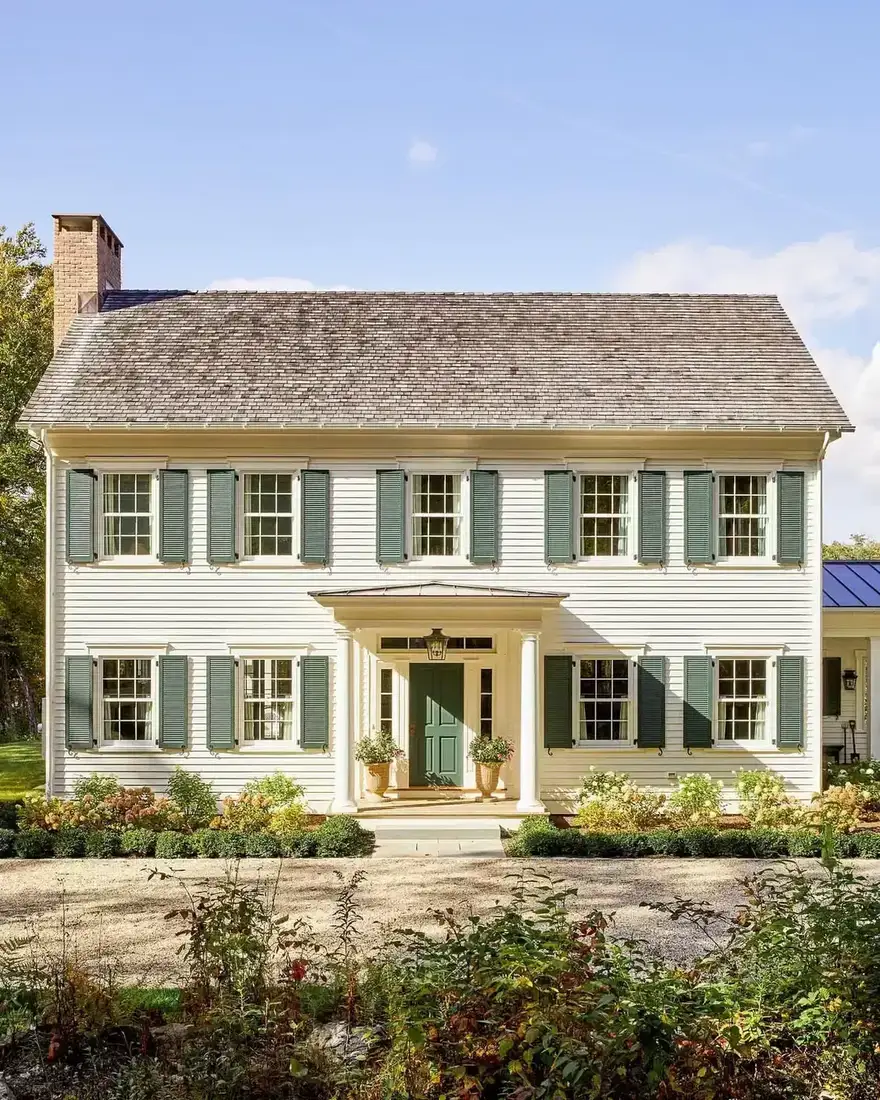
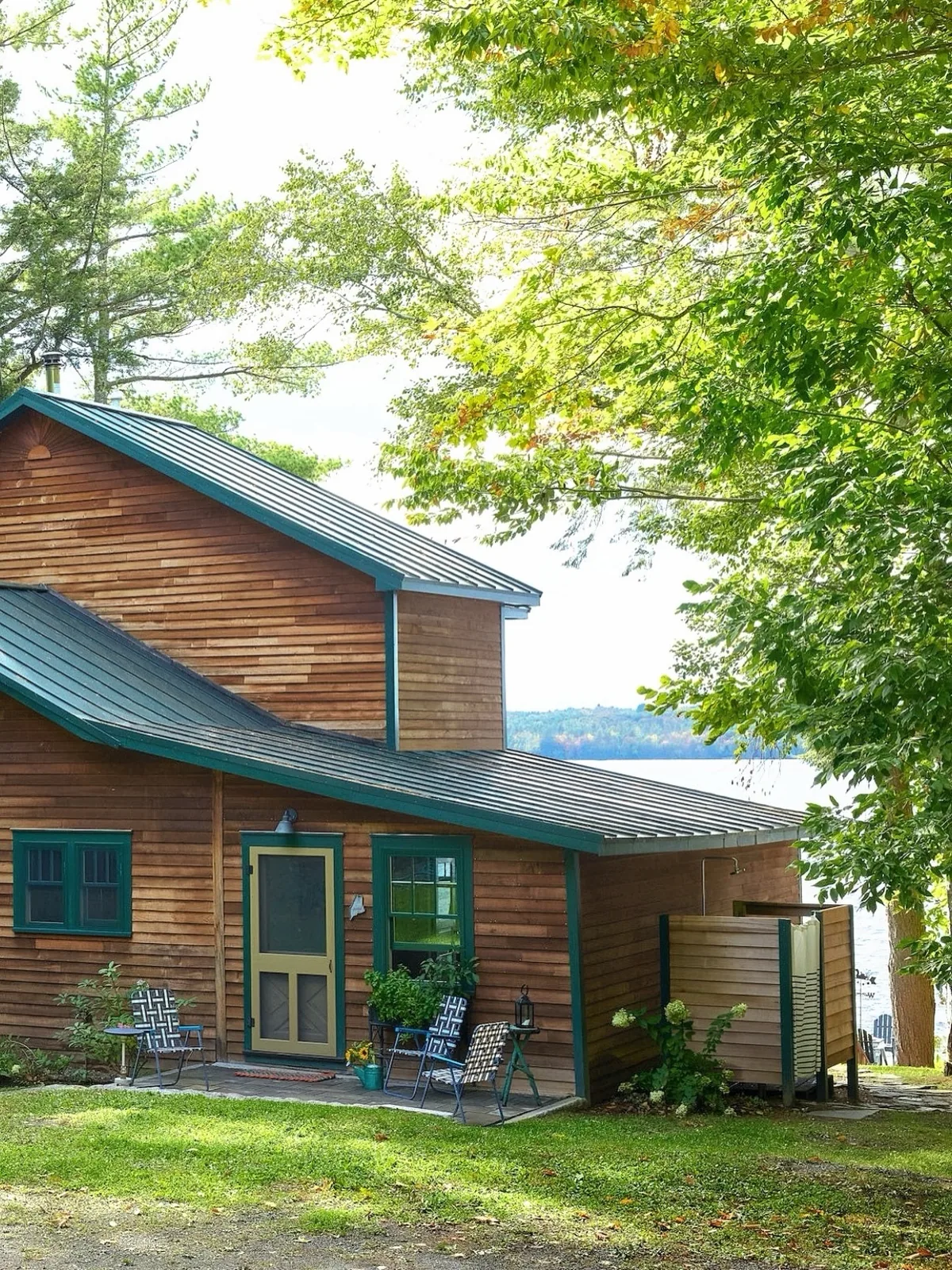
Your shore-facing door gets more daily use than your formal front, so you’ll dress it accordingly. A confident green, navy or teal on the lake-side door tells family and arriving boats exactly where to land. The street door can stay quiet while the working door speaks.
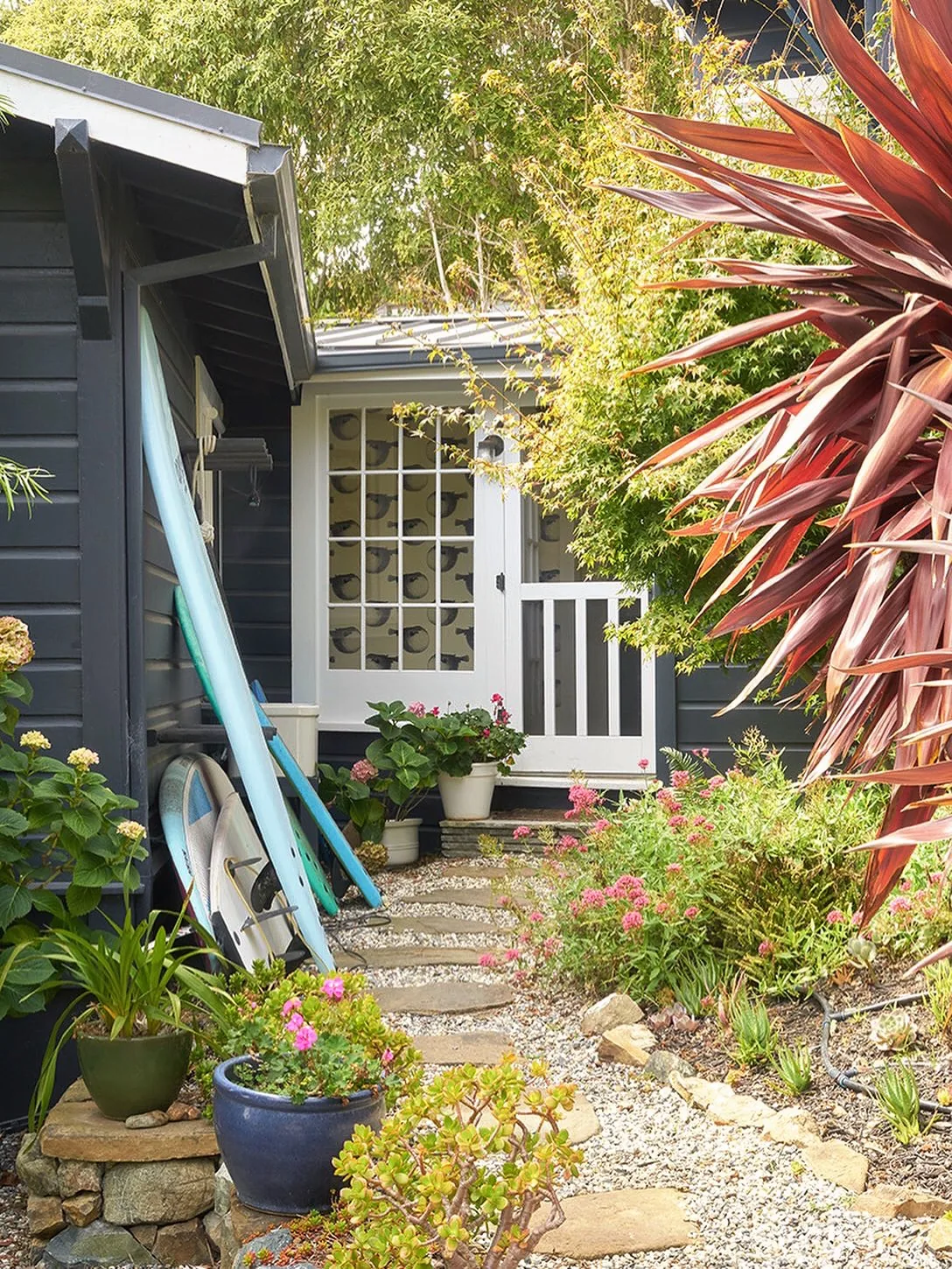
You’ll light it, shelter it with a small overhang and keep its hardware stainless against spray. A bench beside it holds towels and kicked-off shoes, which keeps sand out of your rooms. Design the door you actually use and the grand one you rarely open stops demanding equal money.
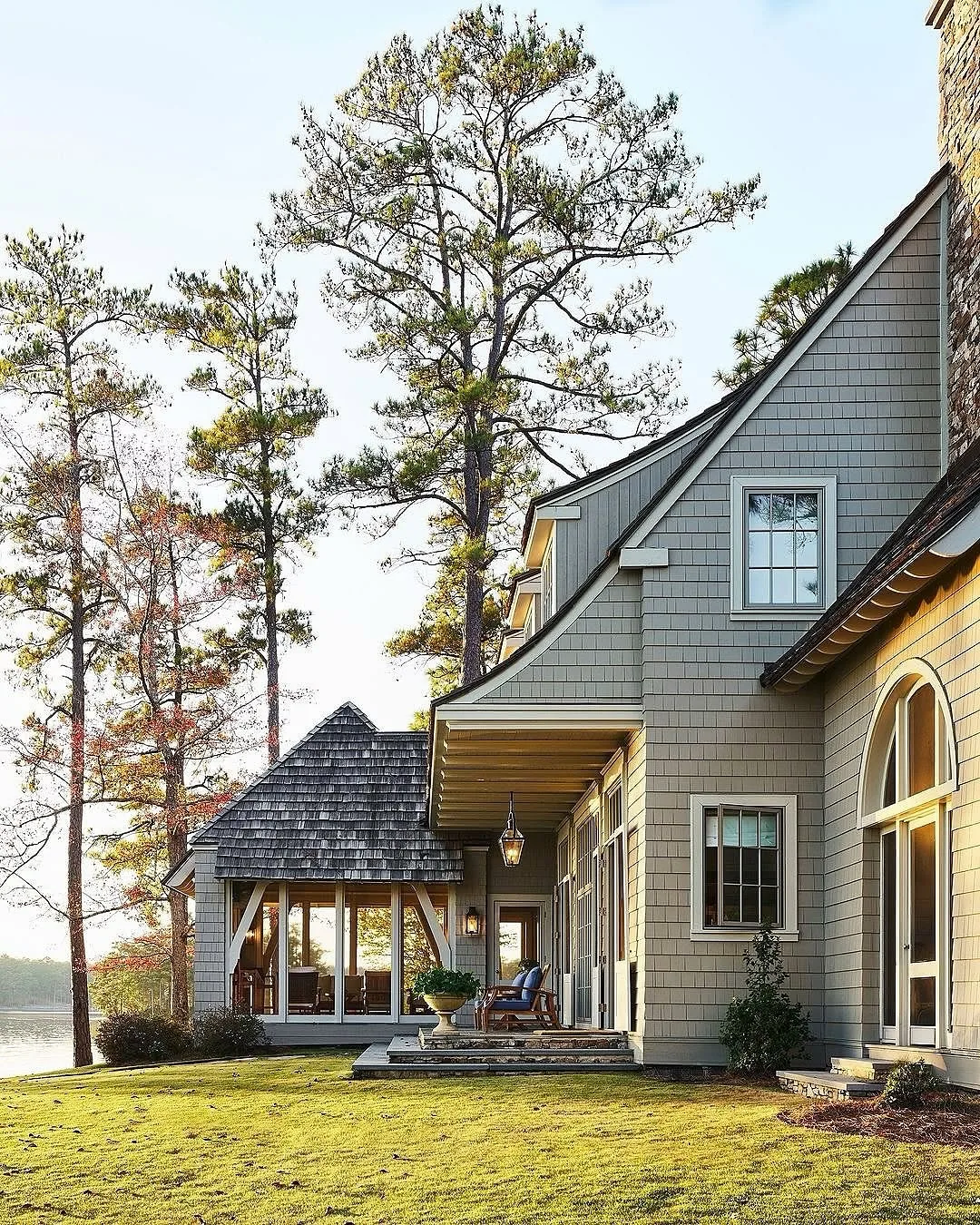
Shade, shelter and evening light
Waterfront weather swings harder: baking afternoons, buzzing dusks, glowing nights. You’ll build for all three.
Give baking walls on lake house & coastal exteriors a real porch roof
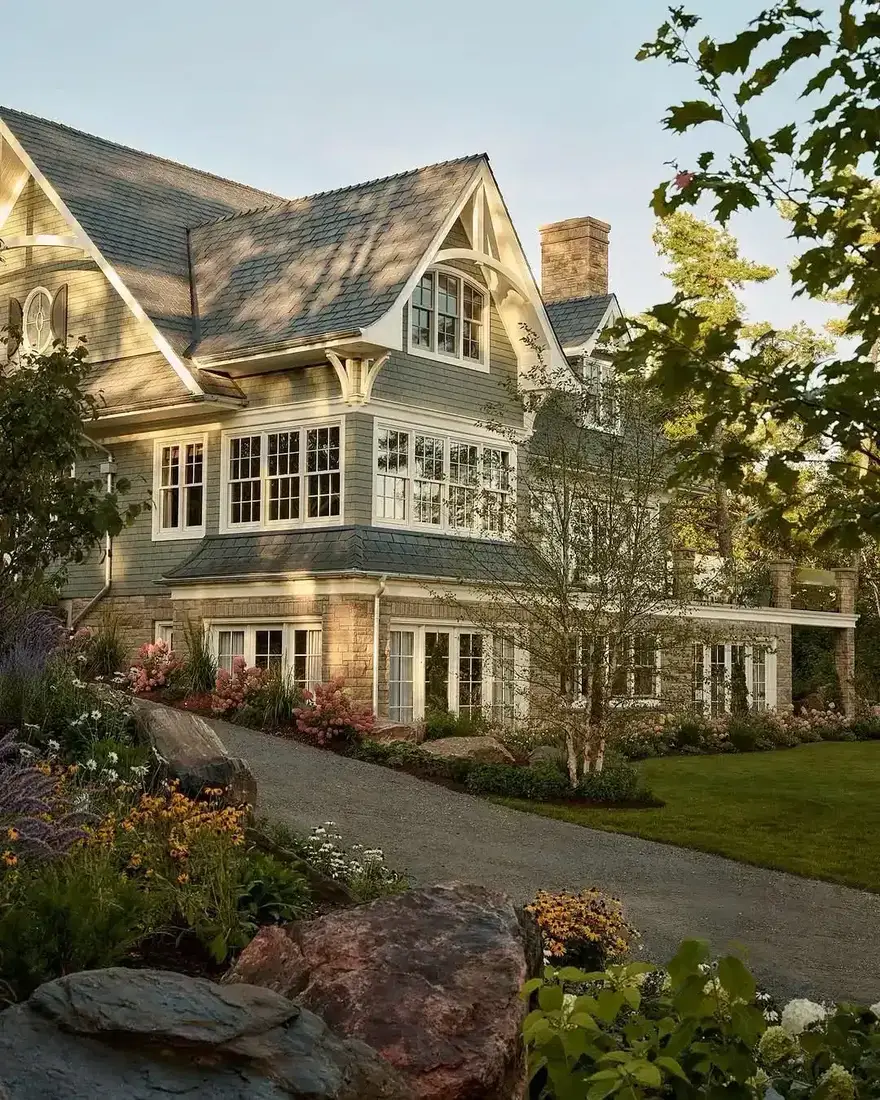
Low afternoon sun off the water cooks west-facing walls and the rooms behind them. You’ll shade those walls with a genuine porch roof rather than an awning that flaps and fades. Deep eaves and gallery porches, the lowcountry answer, cut cooling loads while giving you the best room in the house.
You’ll size the overhang to block high summer sun while admitting low winter light. That’s geometry, not guesswork: deeper on the south and west, slimmer where you want winter warmth. Your shaded wall weathers slower, your rooms stay calmer and your porch becomes the house’s climate machine. For the full shade-and-wall logic on pale houses, see our cedar shingle house exterior ideas. When that roofed porch wants enclosing, our screened and covered porch ideas decide orientation and water paths before furniture.
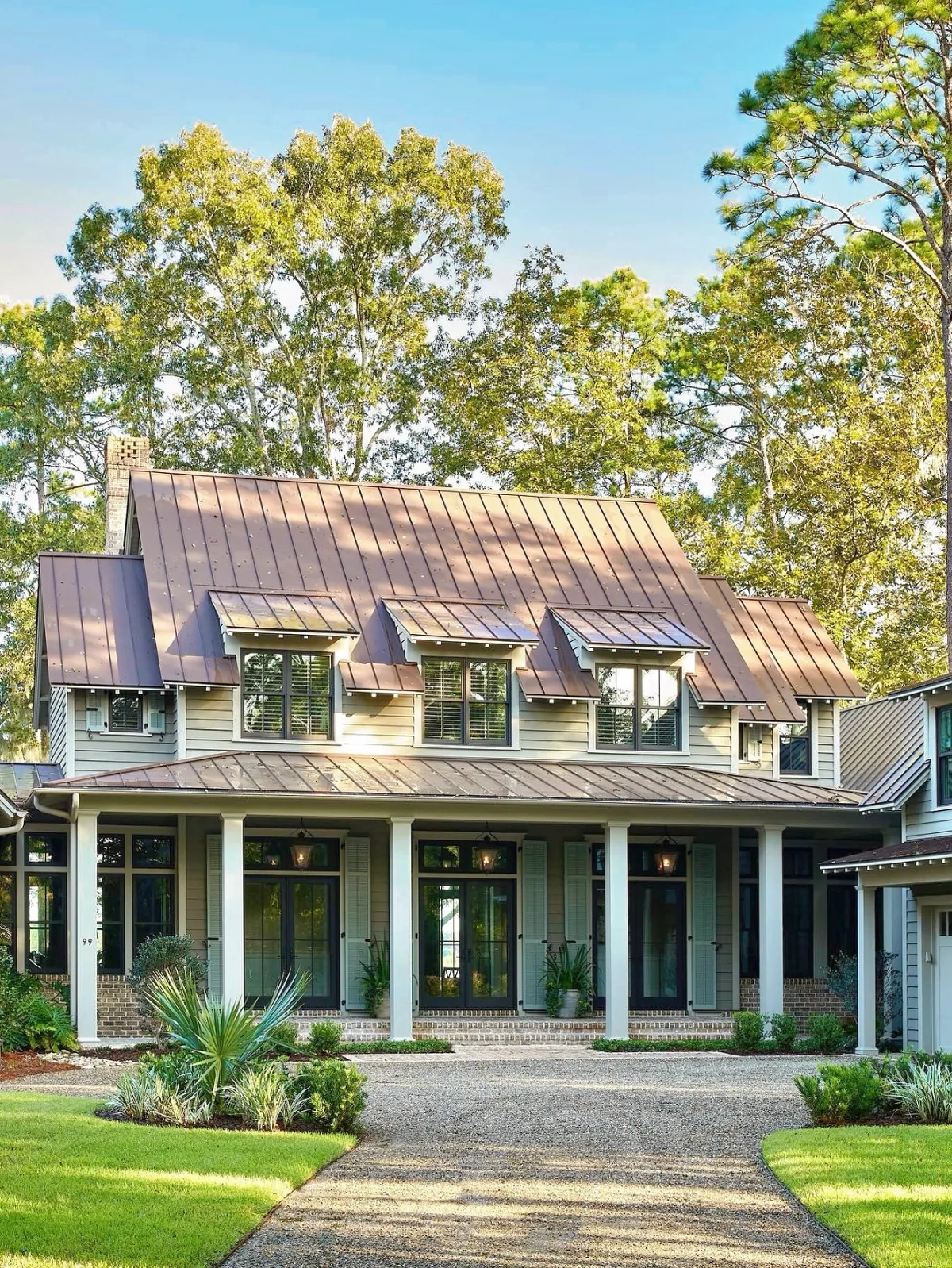
Cap one small roof in copper and watch it age
Copper flashing, a bay cap or a small porch roof gives your waterfront house a jewel that improves every year. You’ll watch it move from penny-bright through brown to soft green patina, marking time the way shingle silvering does. Salt air speeds the show along the coast.
Keep copper away from zinc-coated steel where runoff flows, since you’ll corrode the steel below. You’ll isolate the metals with proper flashing practice your roofer knows. One copper moment per house is plenty: a cap, a lantern set or a bay roof. Restraint lets it read as heritage rather than hobby.
Light evenings warm and low, never floodlit
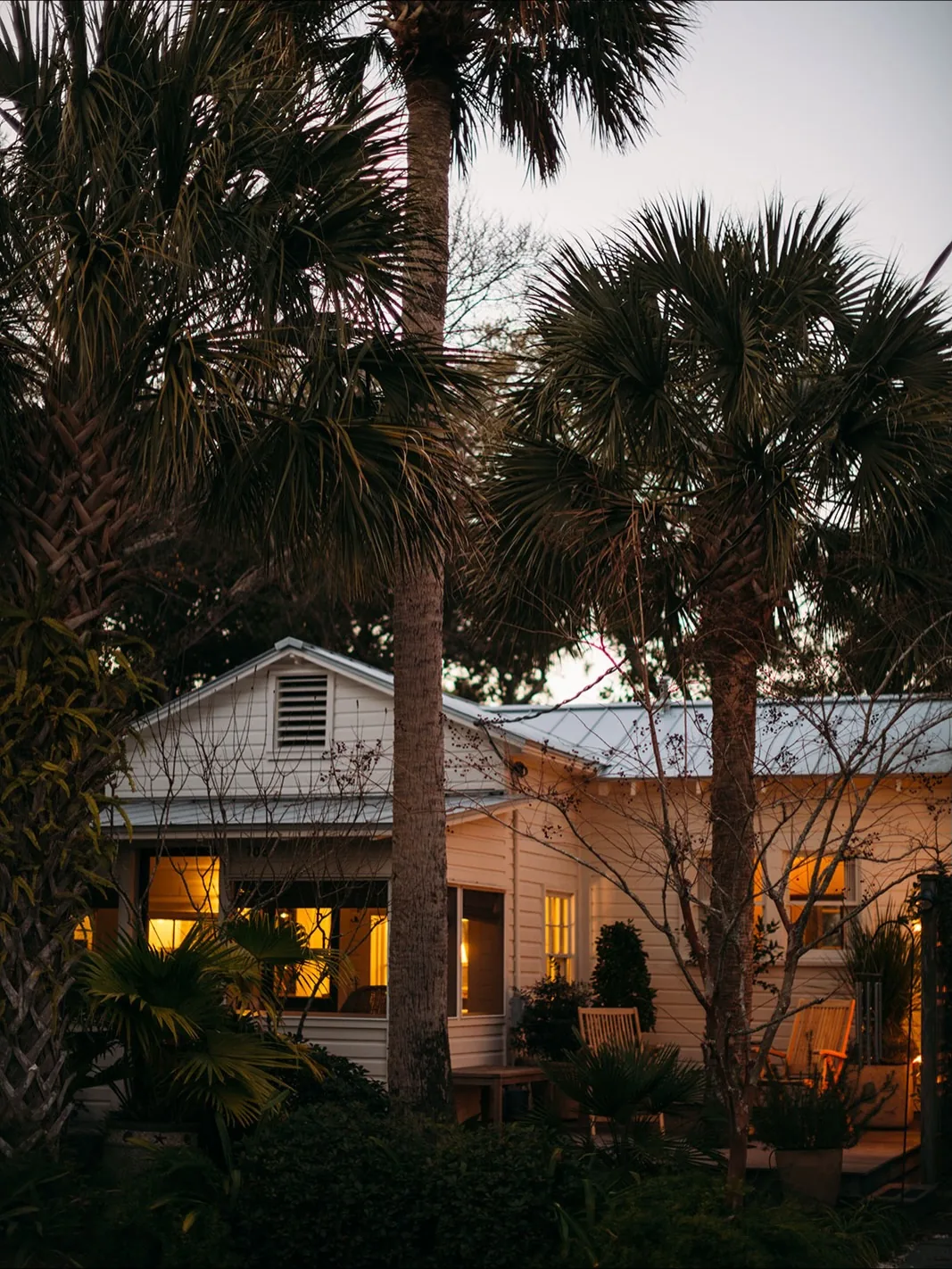
Dark water skies are half the property’s value, so you’ll never floodlight them away. Low warm path lights, lanterns at doors and one soft wash on your best tree give you safe footing and atmosphere while stars stay visible. You’ll put everything on timers so the shore goes properly dark after midnight.
Shield every bulb so you see light pools, never sources. You’ll aim fixtures down at paths and steps where feet need them. One glaring floodlight flattens your garden, blinds your dock and annoys neighbors across water who can’t escape it. Evening light should invite you out, not interrogate your yard.
Grounds that meet the water gracefully
Your land slopes, drains and freezes toward the lake. You’ll landscape with gravity and seasons, not against them.
Terrace the slope instead of fighting it
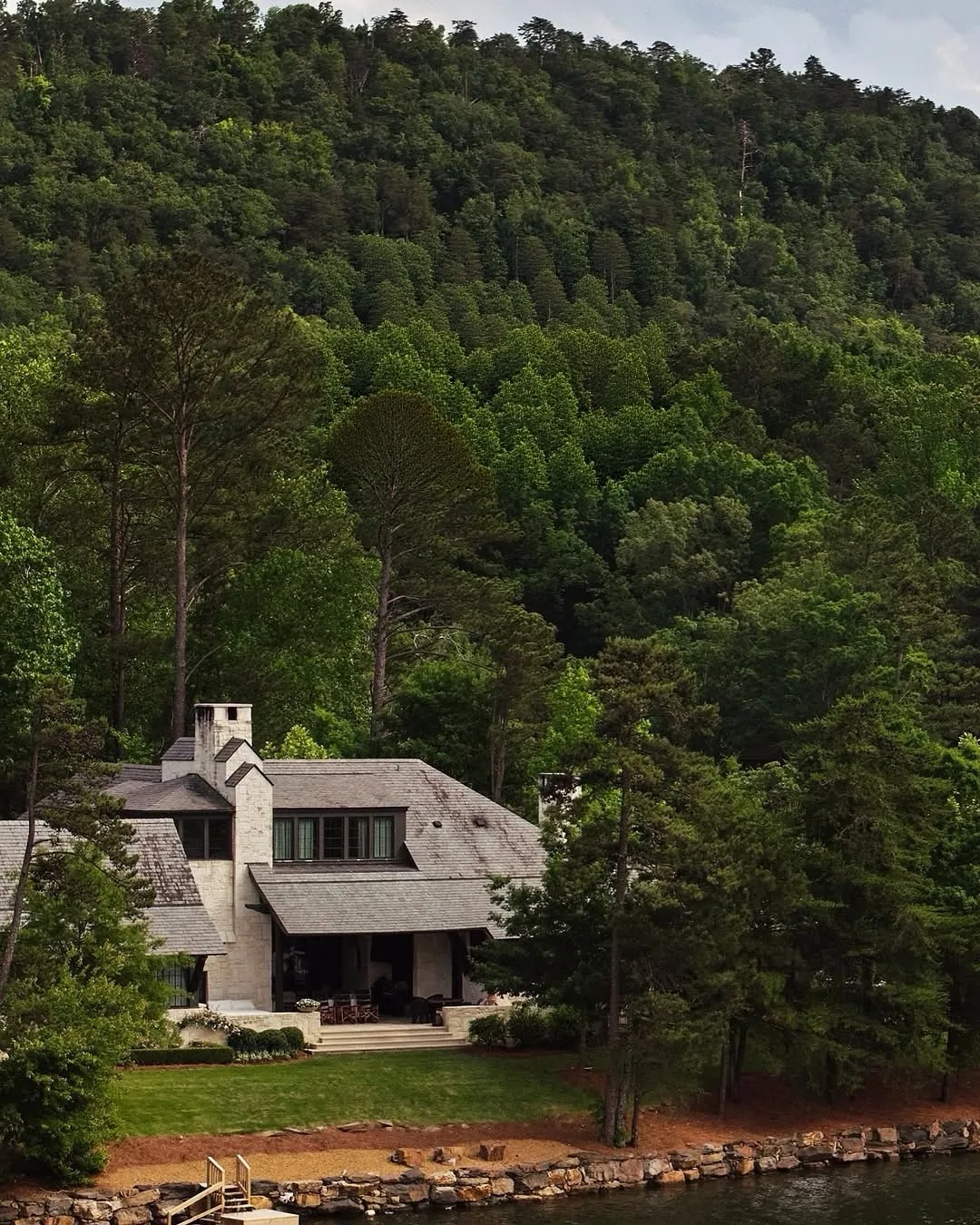
A lawn sliding toward the lake erodes, floods and mows miserably. You’ll terrace it into two or three level bands with stone walls, each one a usable room: dining terrace by the house, fire-pit terrace mid-slope, dock terrace at the water. Retaining walls become seating when you cap them wide.
You’ll plant each terrace edge with deep-rooted natives that hold your soil through storms. Stone steps link the levels on a straight, lit run. When the slope becomes architecture, you’ll gain three gardens where you had one problem. Waterfront plots reward terracing faster than any other improvement you’ll make.
Plant natives that forgive spray and neglect
Imported foundation shrubs sulk in shore wind and salt while natives thrive on exactly those conditions. You’ll mass grasses, bayberry, juniper and whatever your shoreline already grows, because the plants volunteering on your bank have passed the only trial that matters. They’ll need no irrigation once established.
You’ll keep views open by choosing low growers in sightlines and taller screens only where privacy truly matters. Frame the water like a photograph, never wall it off. For the wall-side planting clearances that keep siding dry behind your beds, browse the rest of our home exterior guides. Right plants, right places, weekends free.
Dress the porch for winter, don’t abandon it
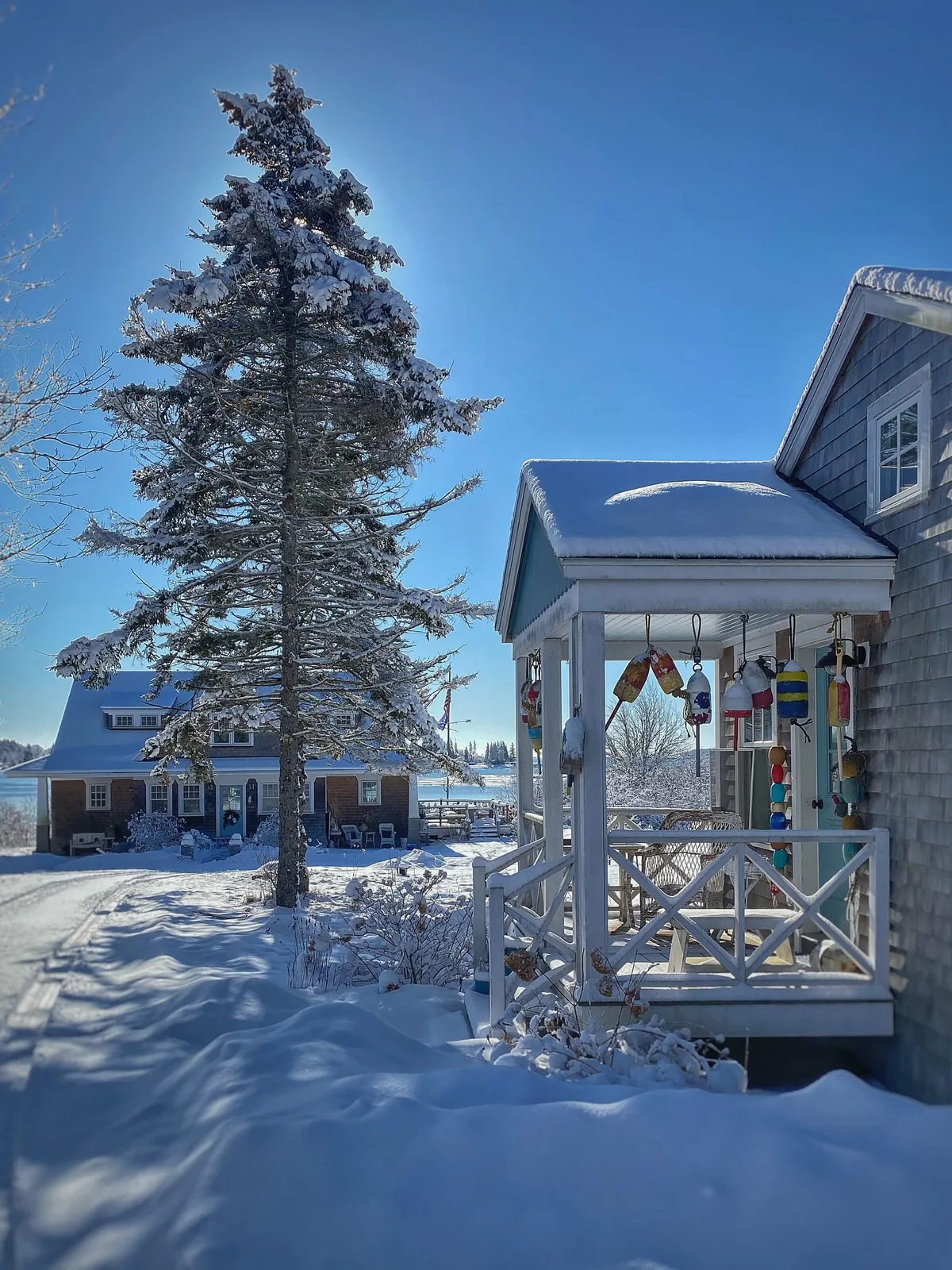
Waterfront houses earn their keep in December too, when you’ll have the shore to yourself. A pair of evergreen planters, a wreath on the water door and warm lanterns on timers keep your porch alive through the dark months. You’ll visit more often when the house welcomes you in winter light.
You’ll protect pipes, store cushions and shutter the outdoor kitchen, but leave the structure dressed. A decorated porch you glimpse from the road reminds you the lake house is waiting, not hibernating. Seasonal dressing costs little and pays back every grey weekend you almost stayed home.
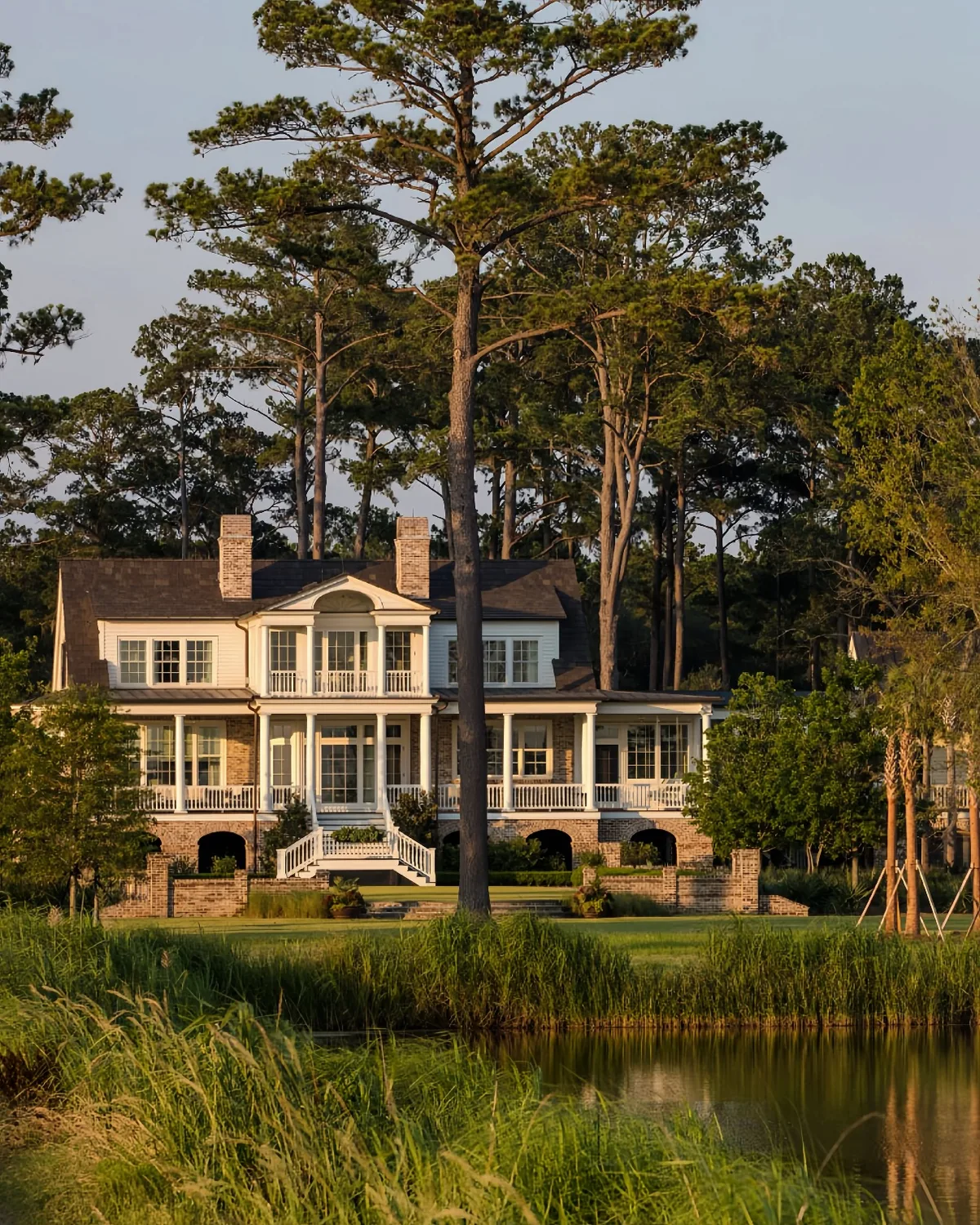
Paint lowcountry yellow when the marsh is your view
Marsh and moss country takes color that northern lakes can’t. You’ll paint confident yellow, pale green or soft blue that glows against cordgrass and live oaks instead of fighting them. The double porch shades your walls while the color carries across flat wetlands where white would dissolve.
You’ll keep trim warm white and shutters deep green so the composition stays southern, not seaside-souvenir. Test your color against the marsh in August haze, not just April clarity. When the landscape is horizontal to the horizon, your house earns its presence through color it commits to fully.
Street side versus water side at a glance
| Street side | Water side | |
|---|---|---|
| Use | Glanced at weekly | Lived on daily |
| Porch | Formal, shallow suits it | Deepest room belongs here |
| Rails | Traditional pickets fine | See-through from chair height |
| Door | Quiet and formal | Working door, confident color |
| Light | Standard entry lighting | Warm, low, timed, dark-sky friendly |
| Budget share | Spend less here | Spend most here |
The Waterfront Living Formula
If you strip all eleven ideas down to a plan, it reads like this:
- Dock inward. Budget and design from the water toward the road, never reverse.
- Deepest porch faces the view. Fit real furniture with room to circulate.
- Rails stay invisible sitting down. Test every option from chair height.
- Paths reach the shore lit. Every age, every evening, safely.
- Shade the bakers, screen the buzzers. Porches as climate machines.
- Natives, terraces, timers. Land with gravity and let darkness fall.
Get those six right and your house lives facing the water like it should. You’ll stop renovating the side nobody uses.
Frequently Asked Questions
Should my porch face the street or the water?
The water gets your deepest porch, always. That’s where you’ll drink coffee, host dinners and watch weather arrive. You’ll keep the street porch formal and shallow while the water side holds real furniture with circulation room. Design from the dock inward and the budget follows the life.
What railing is best for a lake view?
Whatever disappears from chair height. Slim cable, glass panels or widely spaced pickets keep your horizon whole, while chunky rails slice it. You’ll match colors to the house so both sides read as one. Rails decide where guests gather more than furniture does.
How do I light a waterfront yard?
Warm, low and timed. You’ll light paths, steps and doors with shielded fixtures aimed down, and leave the shoreline dark for stars. Put everything on timers so the property goes dark after midnight. One floodlight ruins the night for you and every neighbor across the water.
What plants survive at the water's edge?
The natives already volunteering on your bank. You’ll mass grasses and tough shrubs that forgive spray, wind and neglect with no irrigation once established. Keep sightlines low and screens only where privacy truly matters. Frame the water like a photograph.
How do I handle a steep slope to the lake?
You’ll terrace it into level bands with stone walls: dining by the house, fire pit mid-slope, dock terrace at the water. Cap walls wide for seating and link levels with one straight lit stair. Terracing turns one erosion problem into three garden rooms.
Can I use my lake house in winter?
Yes, and you’ll love the solitude. You’ll dress the porch with evergreens and lanterns on timers, protect pipes and store cushions, and keep the structure welcoming. A house that greets you in December gets visited all year.
This article may contain affiliate links. We may earn a commission at no extra cost to you.