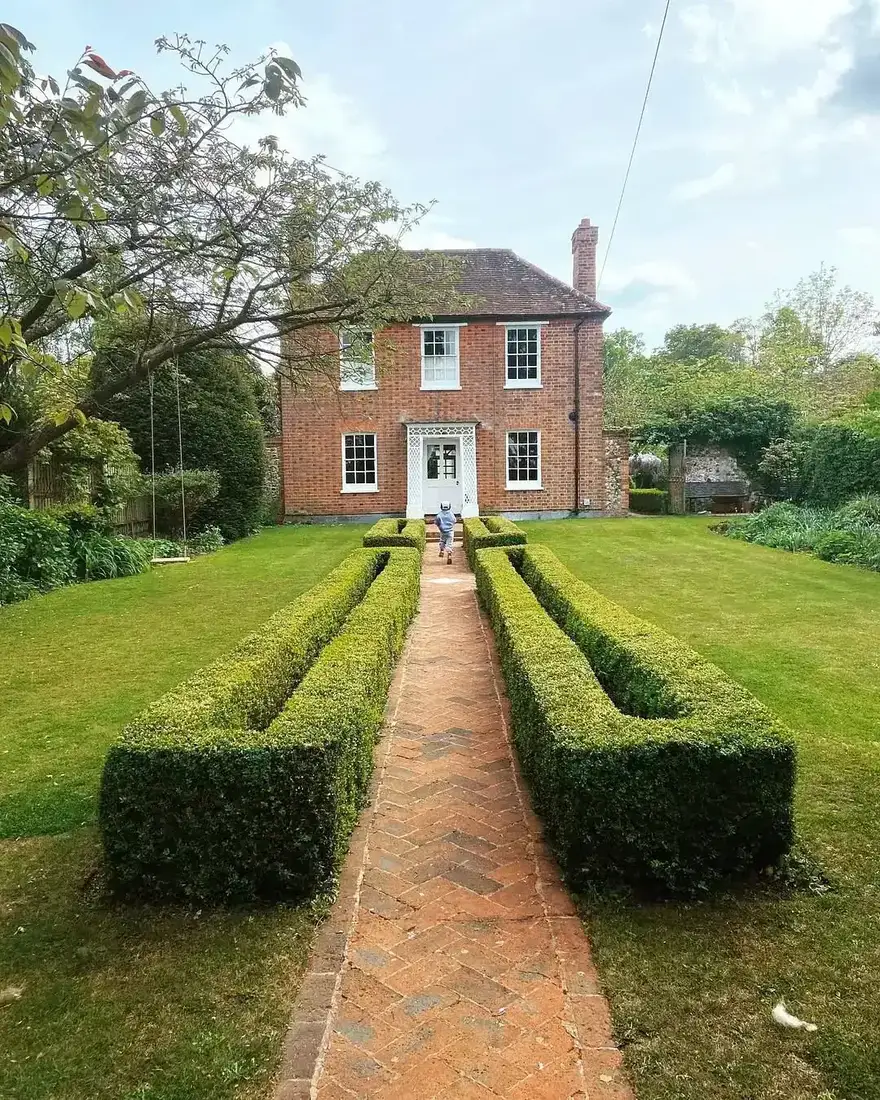
Should Your Shingles Silver or Go Dark for Good?

Add us as a preferred source to see more stories on Google.
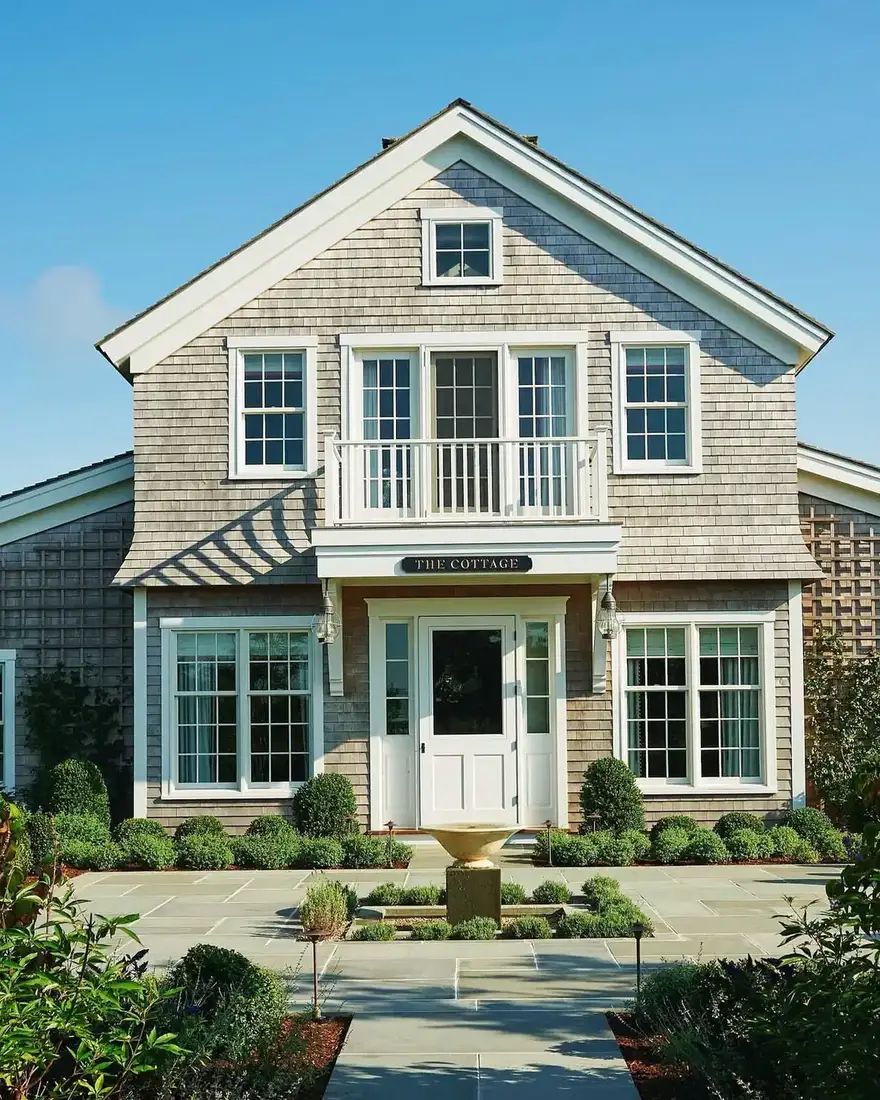
You love that charcoal cedar you keep saving.
You think you can try dark and go back to silver if you tire of it.
Bare cedar silvers on its own. Once a dark stain is on, you have signed up to restain every few years forever, because you can never get back to bare. Going dark is the one cedar decision you cannot reverse.
These eleven houses show you when dark earns its keep, and what your build must do to make it last.
The timeline you are trying to skip
Silver takes time, and dark offers to hide that time. These three weigh that trade.
Understand what silver does before you go dark
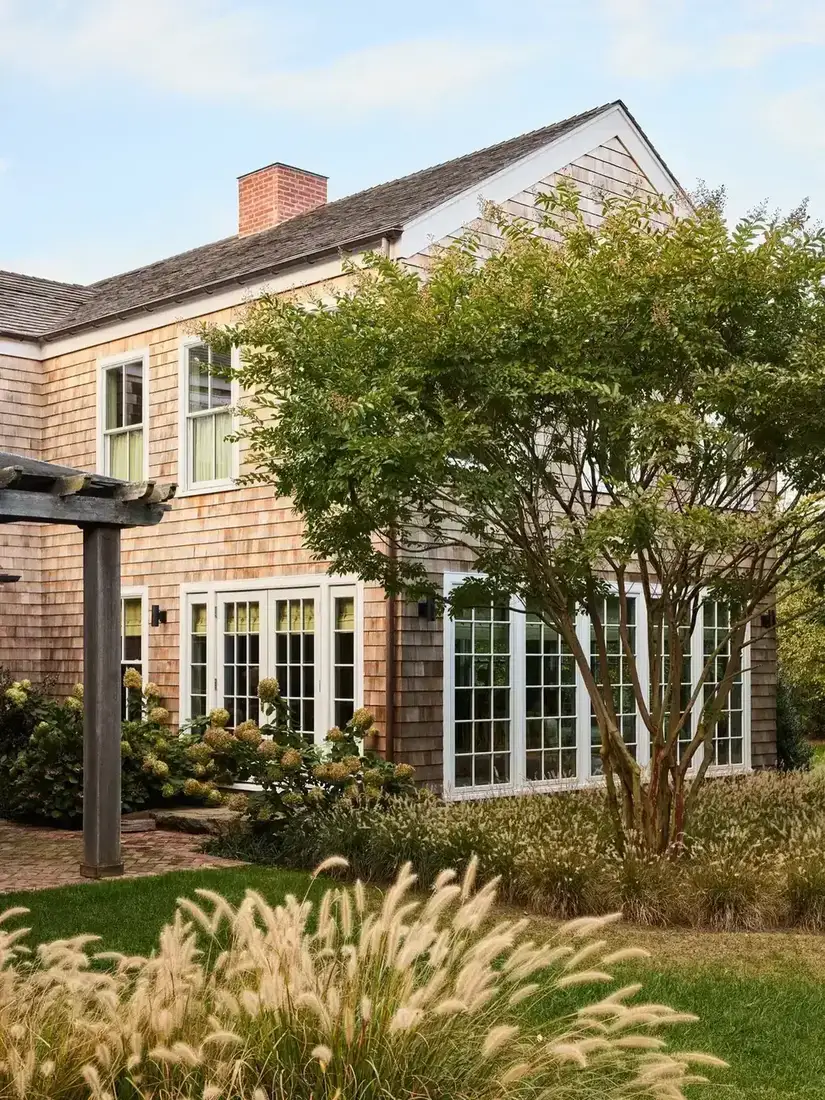
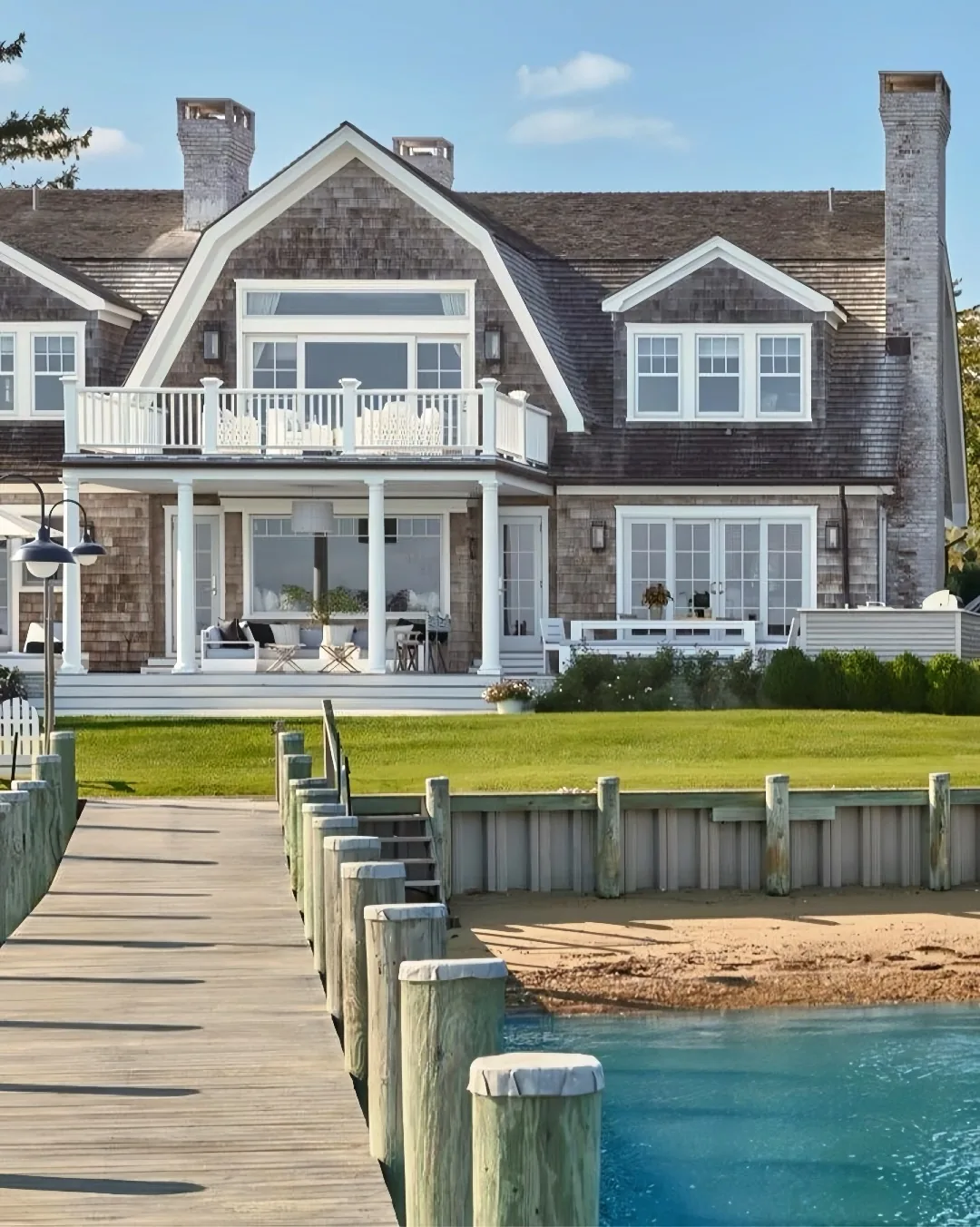
Step back from the cream shingle house set around its stone courtyard. That calm silver you admire is simply bare cedar left alone. It weathers to silver-grey in roughly two to five years, with sun and salt speeding the shift and shade slowing it. You get a house that lightens, not darkens, with no recoat cycle. If you go dark now because year one feels orange and streaky, you trade that free ageing for a maintenance promise. You should live through at least one full year of bare cedar before you decide. Many owners fall in love with the silver they almost covered.
Admit dark stain is a commitment, not a coat
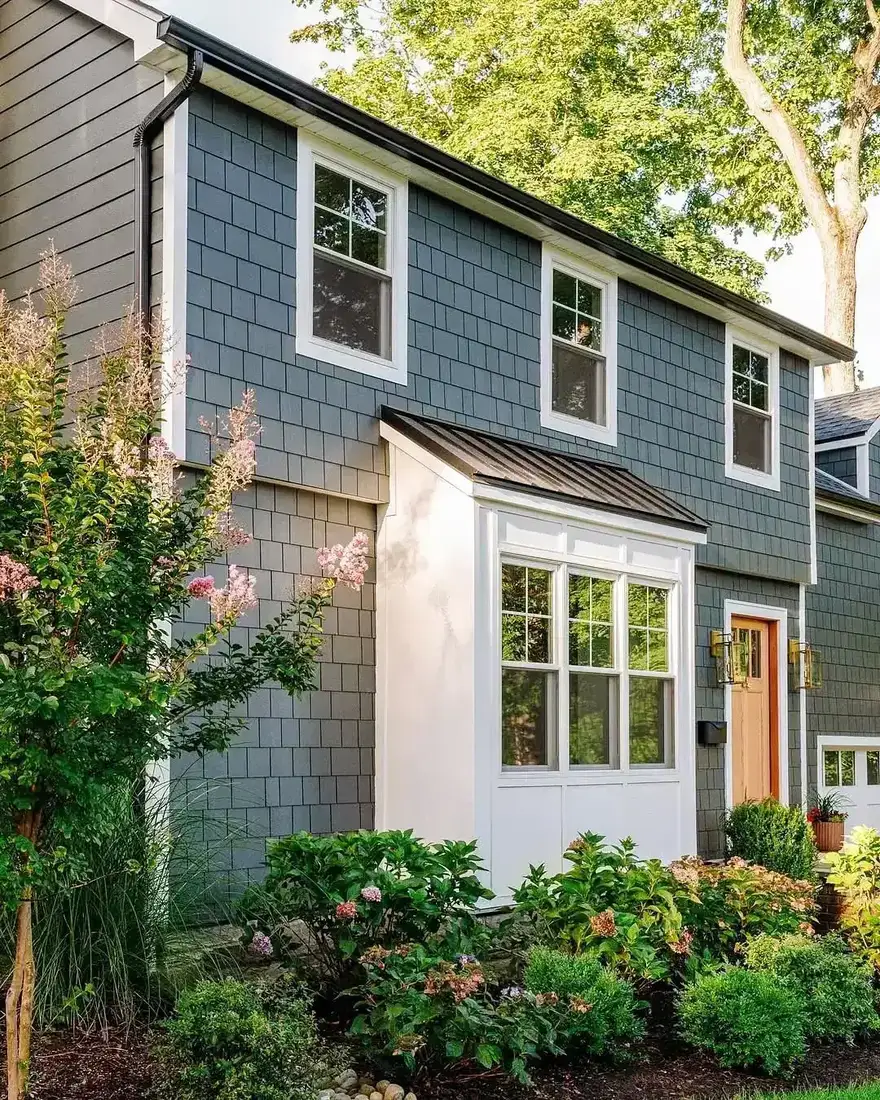
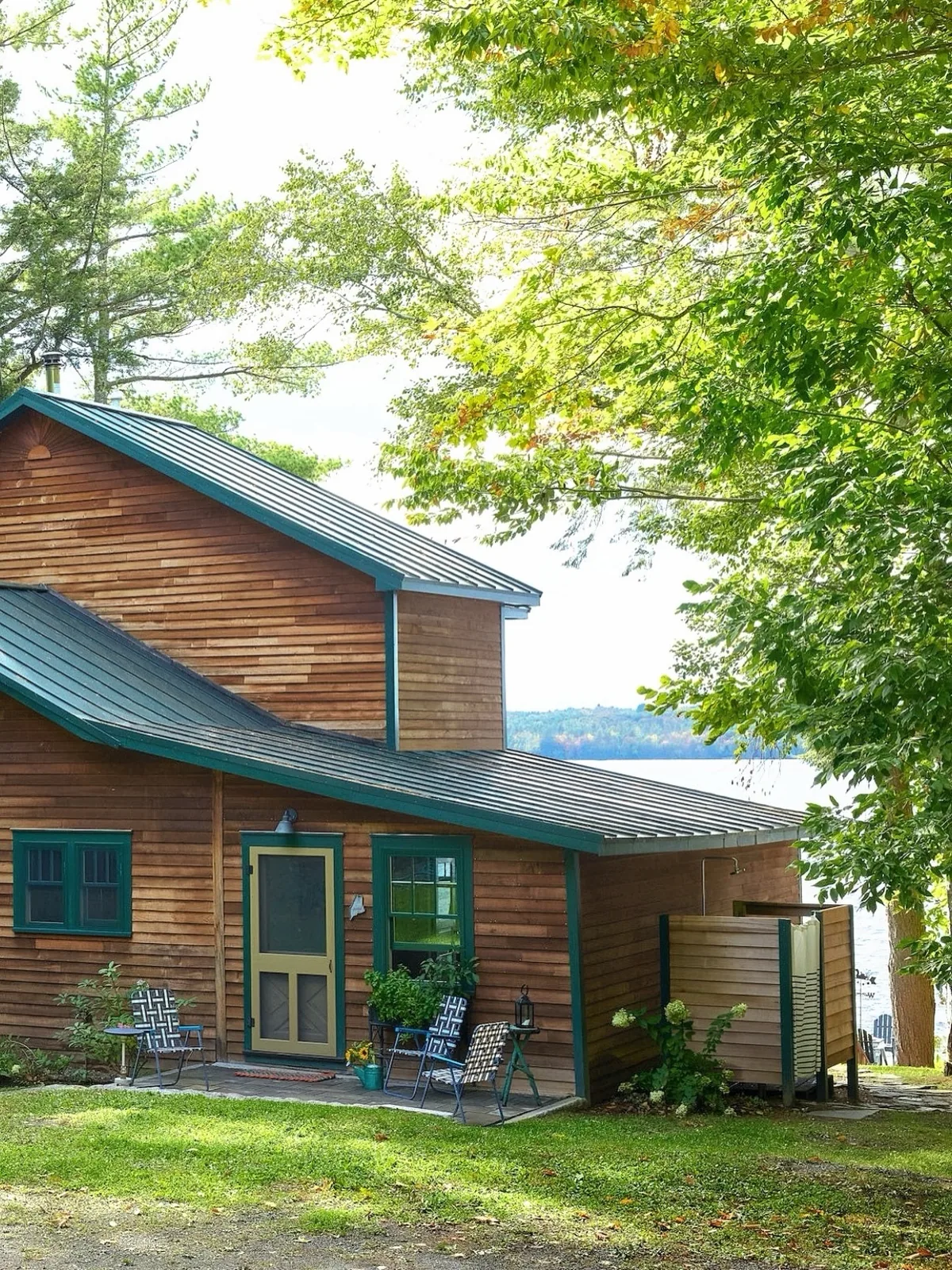
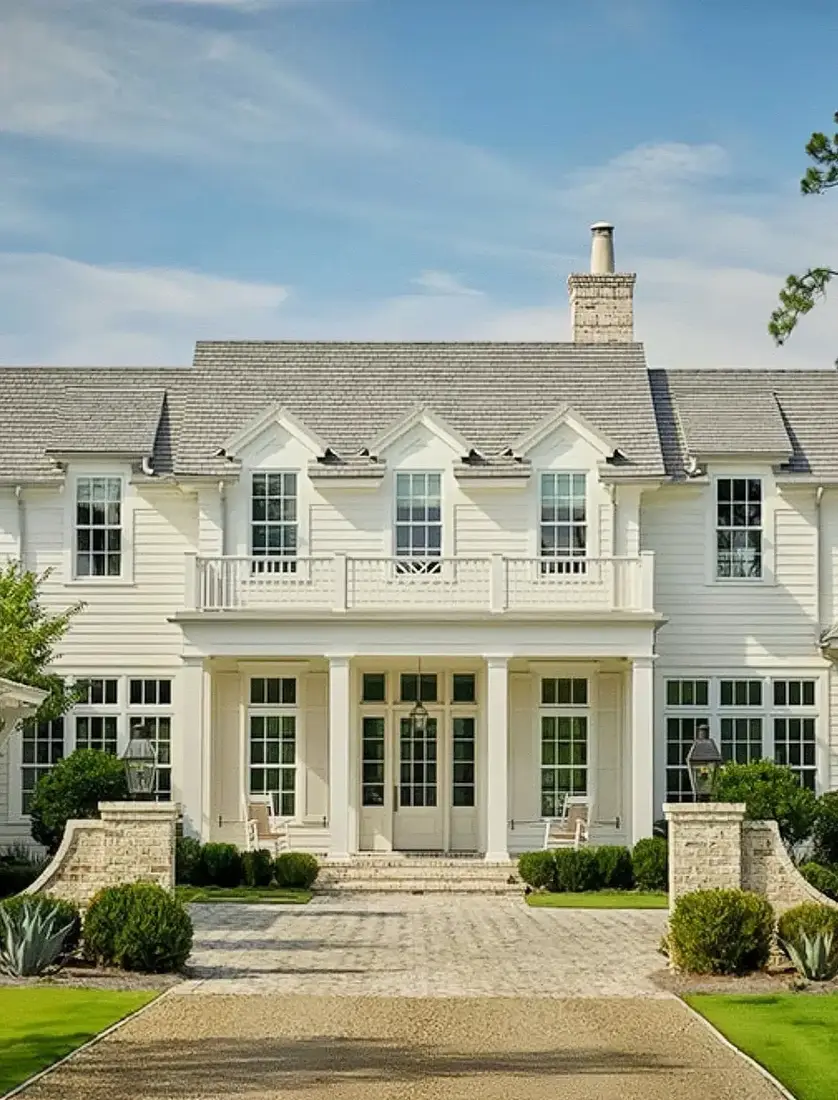
On that dark shingle cottage the cedar reads even and steady, but the colour is not age. It is from stain that sits on the surface. Solid and semi-solid dark stains coat rather than soak, so they need reapplying every few years as sun and rain wear the film. That is not a flaw, it is the nature of the finish. You should budget time and scaffold for that cycle before you buy the first tin. If your life fits bare silver better, you can still have depth. Choose warm white trim and let the cedar do the ageing for you without a recoat. Dark colors flatter small houses best of all, as our cottage exterior ideas guide shows — though everything you hang on a cottage has to shrink to fit.
Give a dark wall a light anchor
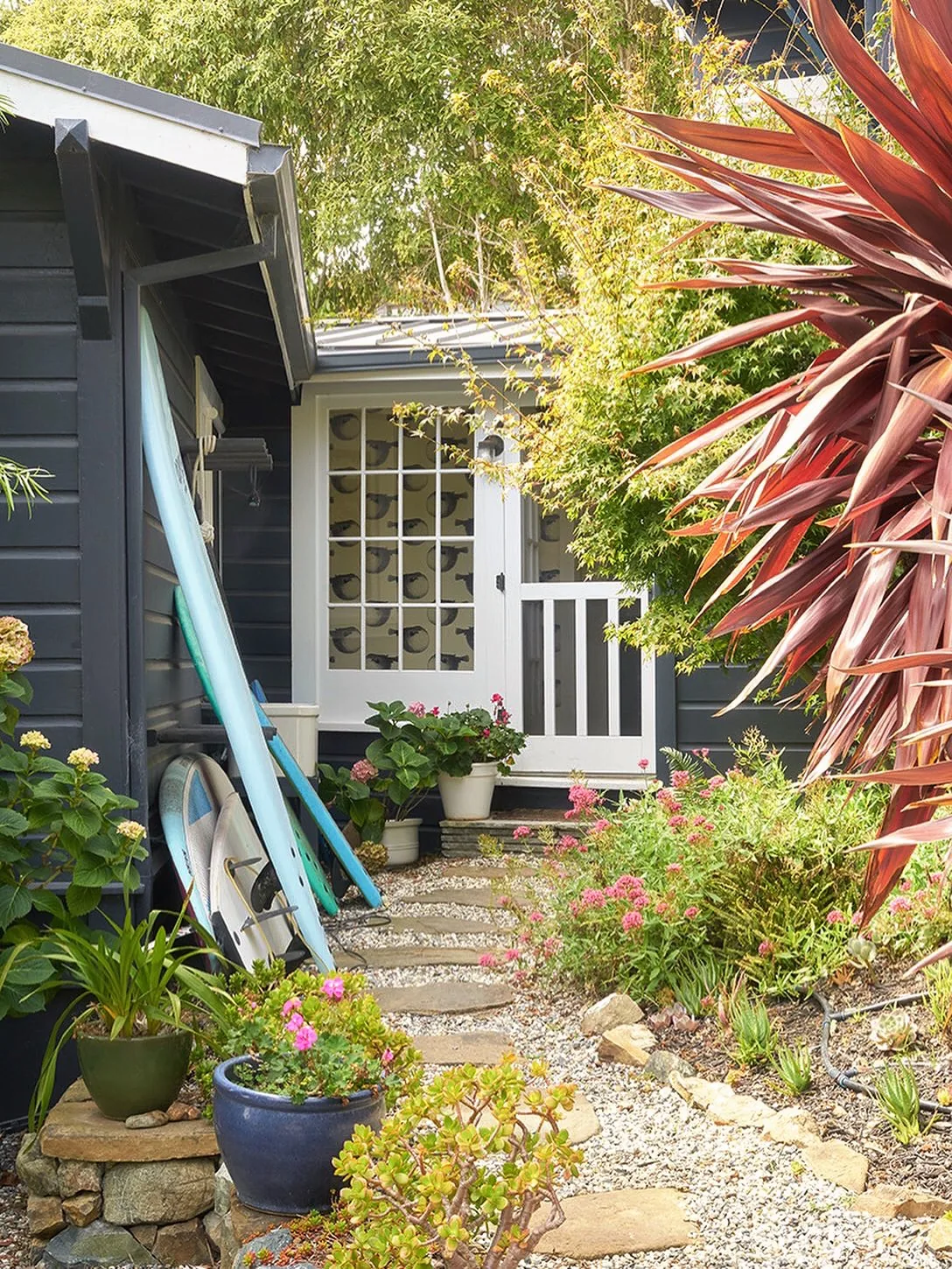
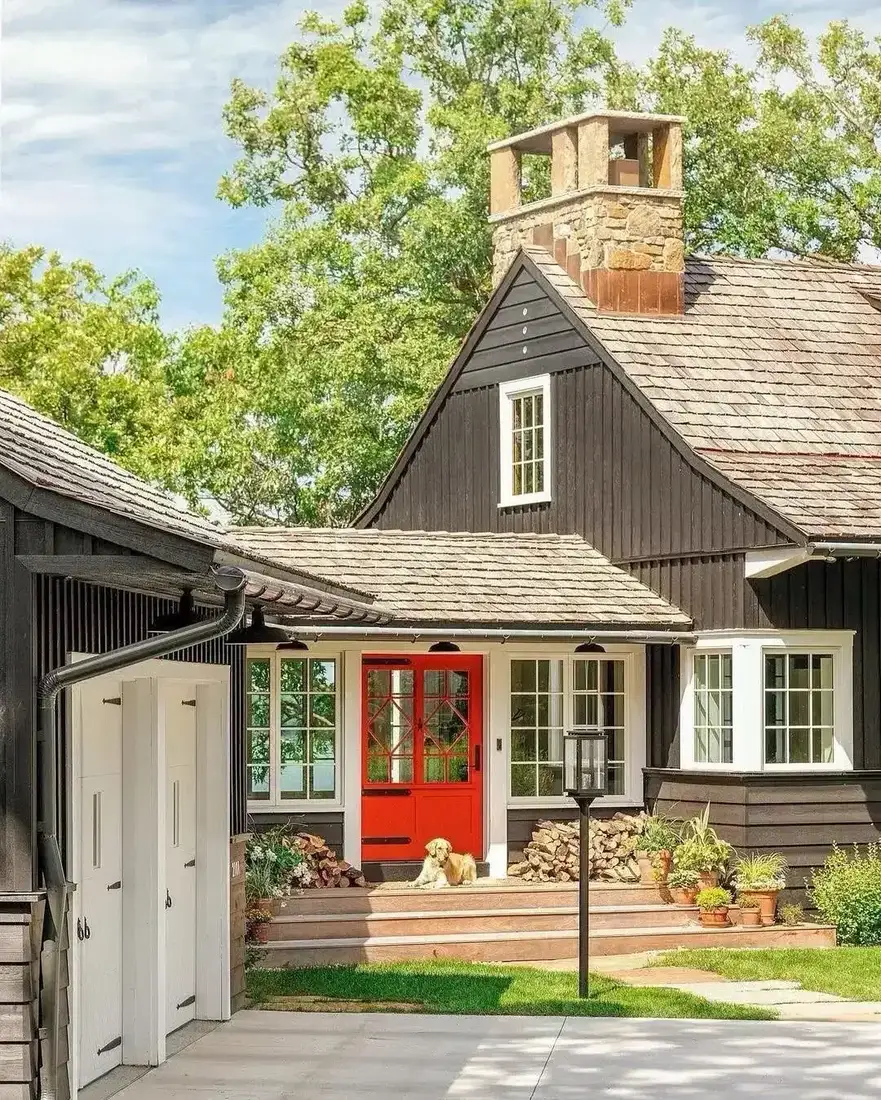
Notice the dark shingle cottage with the bright red door set in white trim. The red sings because the white frame gives the dark field something to hold onto. Dark walls need a light anchor or they read as a hole in the landscape. That anchor can be white trim, a pale door, or pale stone at the base. Without it, charcoal sits heavy and your windows vanish into shadow. You should plan that pale note before you pick the stain. When you sample the dark, hold a piece of white trim and a pale stone next to it in the same light. If the trio still feels airy, you have a house that will glow at dusk.
The build details dark makes non-negotiable
Dark makes small shortcuts visible faster. These three keep the wall honest.
Specify stainless nails from the start
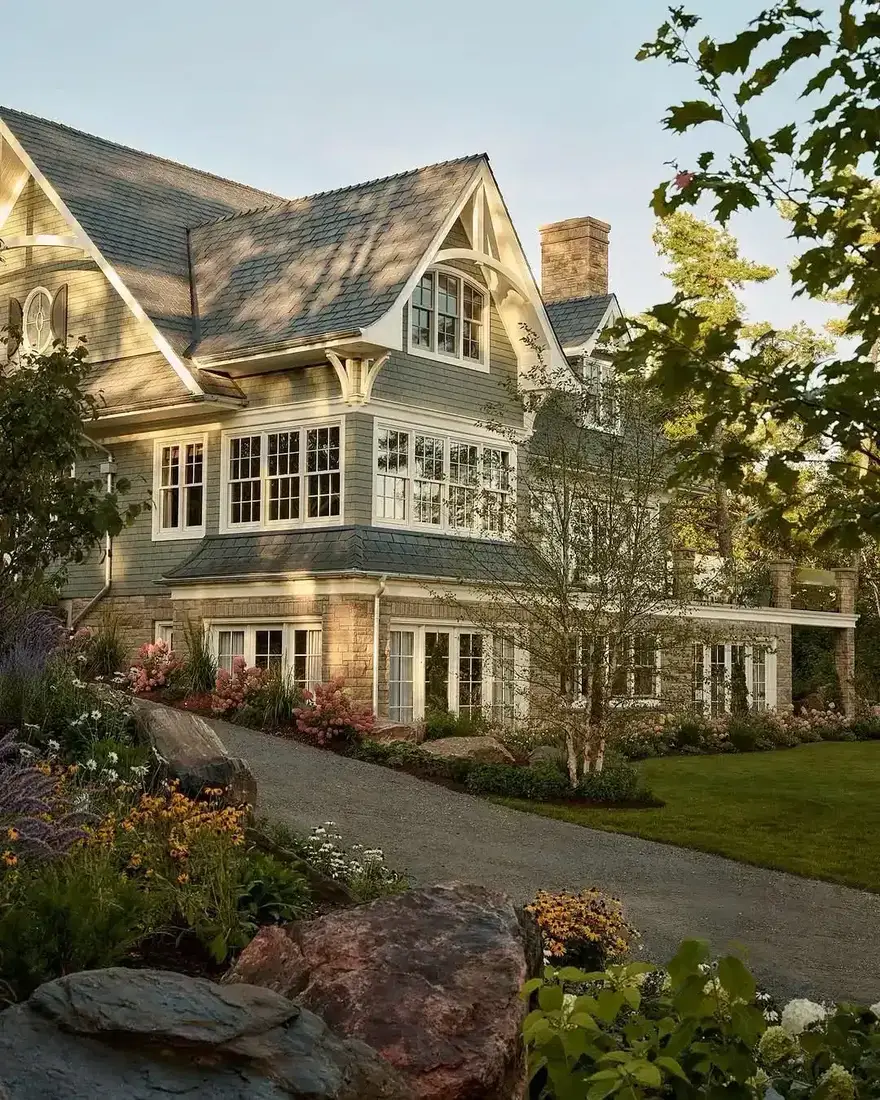
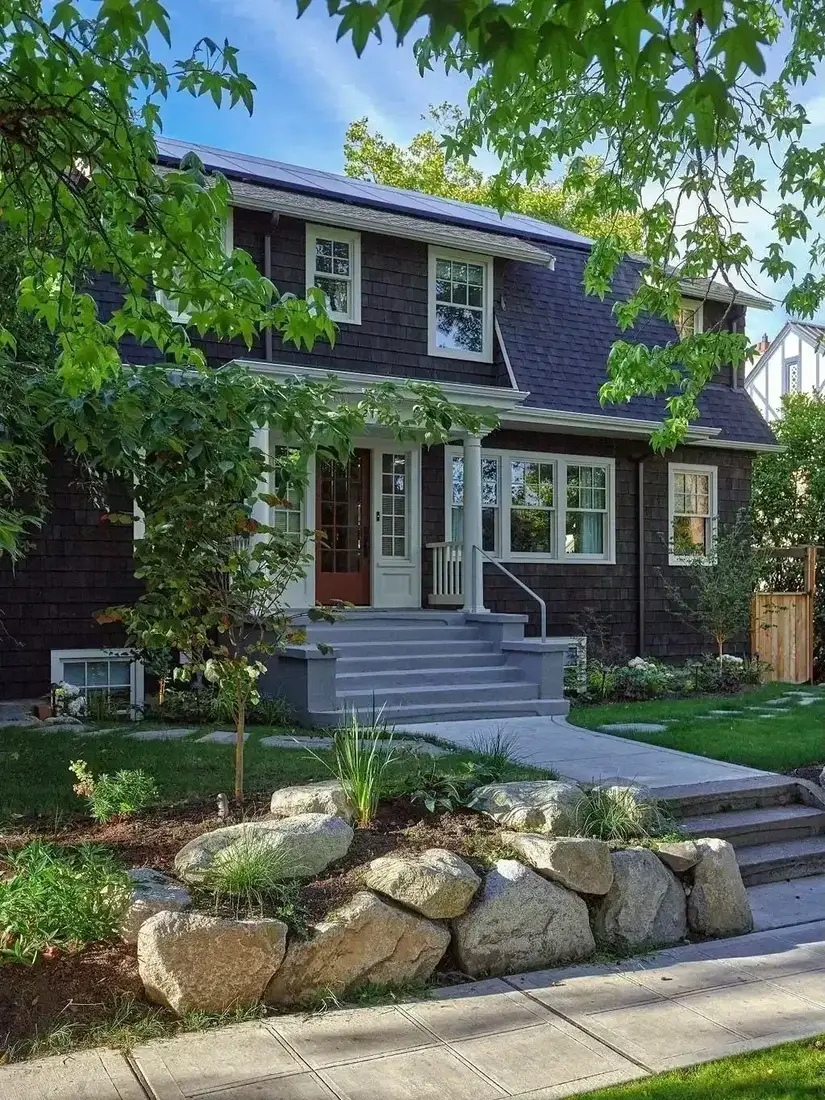
Study the house wrapped in boulders and low planting, where the dark cedar looks clean even near the ground. That clean comes from fixings you barely see. Cedar’s tannins corrode ordinary steel and even galvanised nails eventually bleed rust streaks down your stain. You must use stainless steel nails for both bare and dark cedar, but the mistake shows fastest on dark. Ask your carpenter to show you the box before the first course goes on. The small extra cost disappears, the brown tears do not. Planting that keeps a base dry is set out in our garden decor ideas.
Ventilate the wall more when you go darker
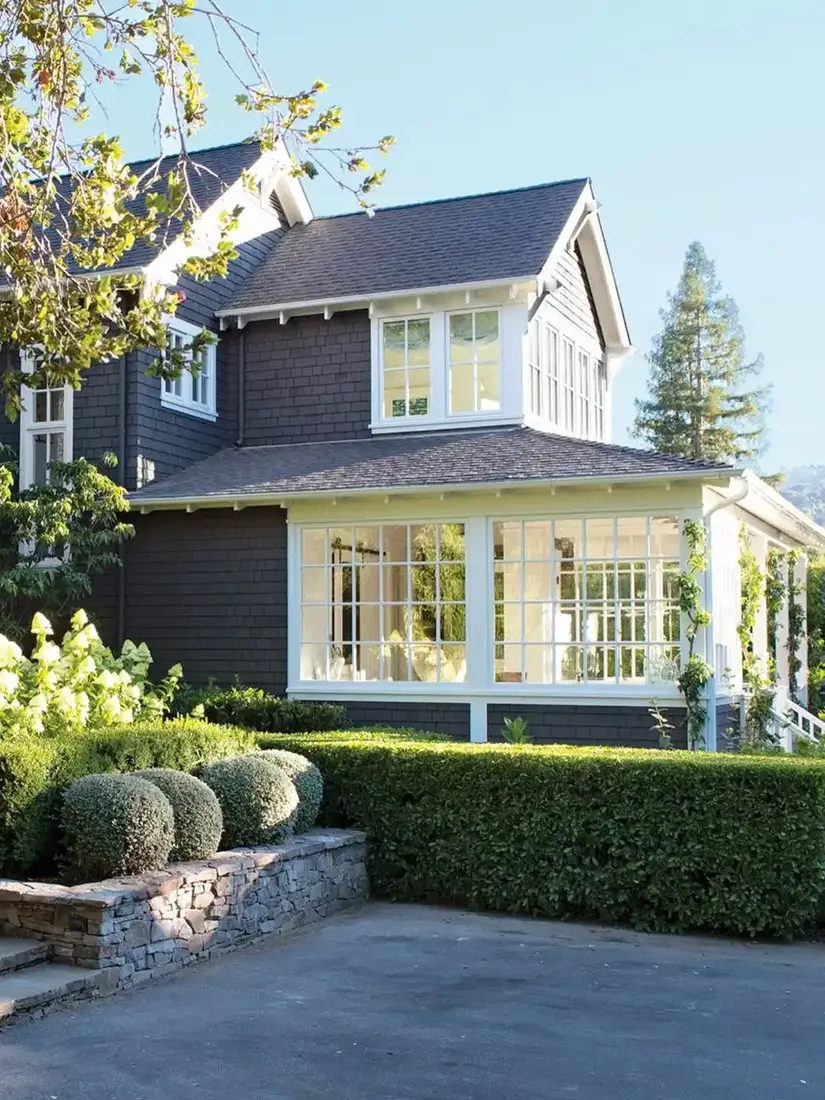
Consider the dark house with the white sunroom tucked beside clipped hedges. Its dark body stays settled because the wall can breathe. Dark surfaces run hotter in sun, so ventilation behind the cladding matters more, not less. Heat drives moisture, and a wall that cannot dry will cup and hold damp behind the stain. You want a ventilated gap behind the shingles, open at top and bottom so air can move and both faces can dry. When you look at a quote, check that the batten and gap are included, not an extra. Dark without air ages poorly, and you will see the wave in the courses long before you feel a draught.
Save dark cladding for a landscape that can carry it
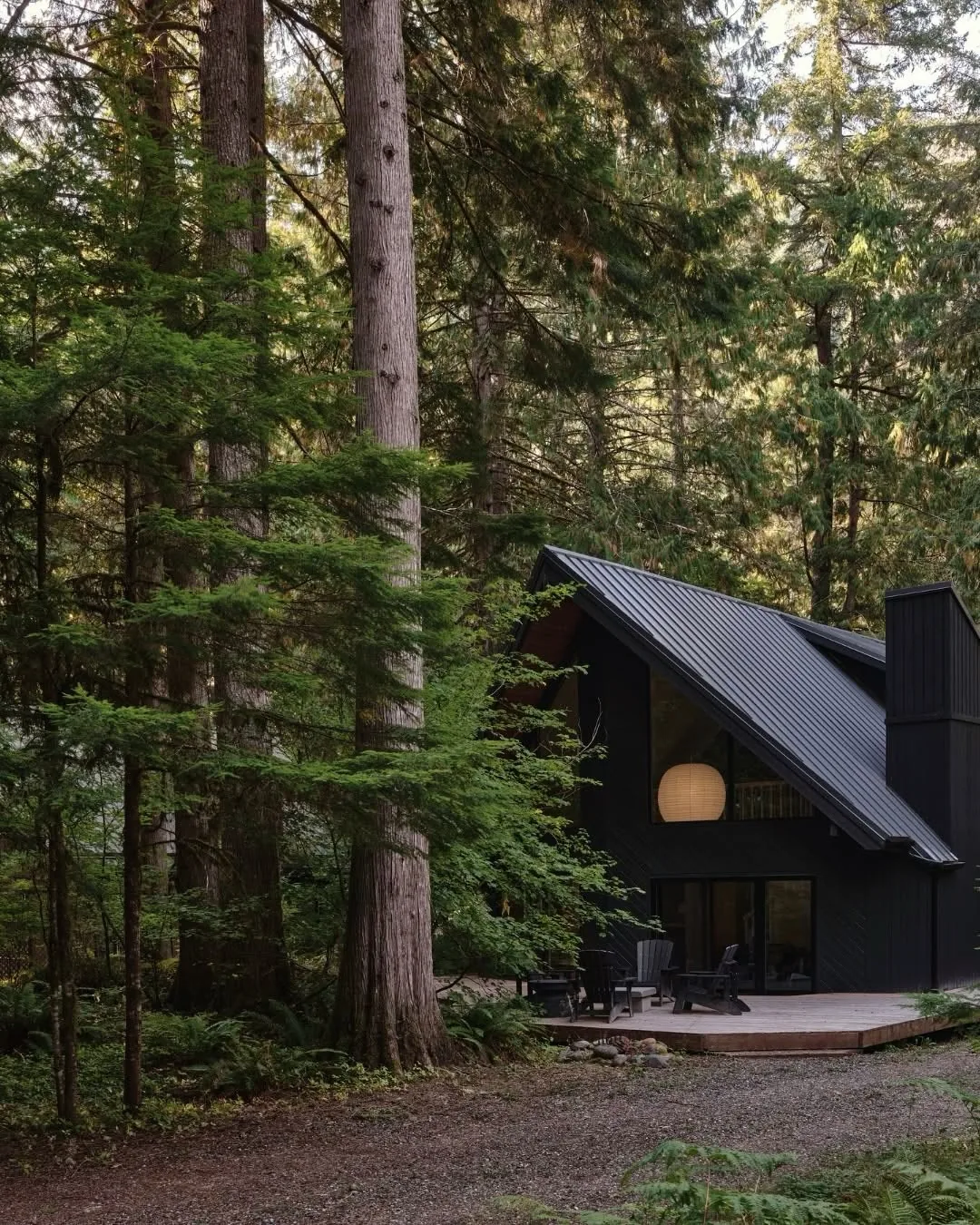
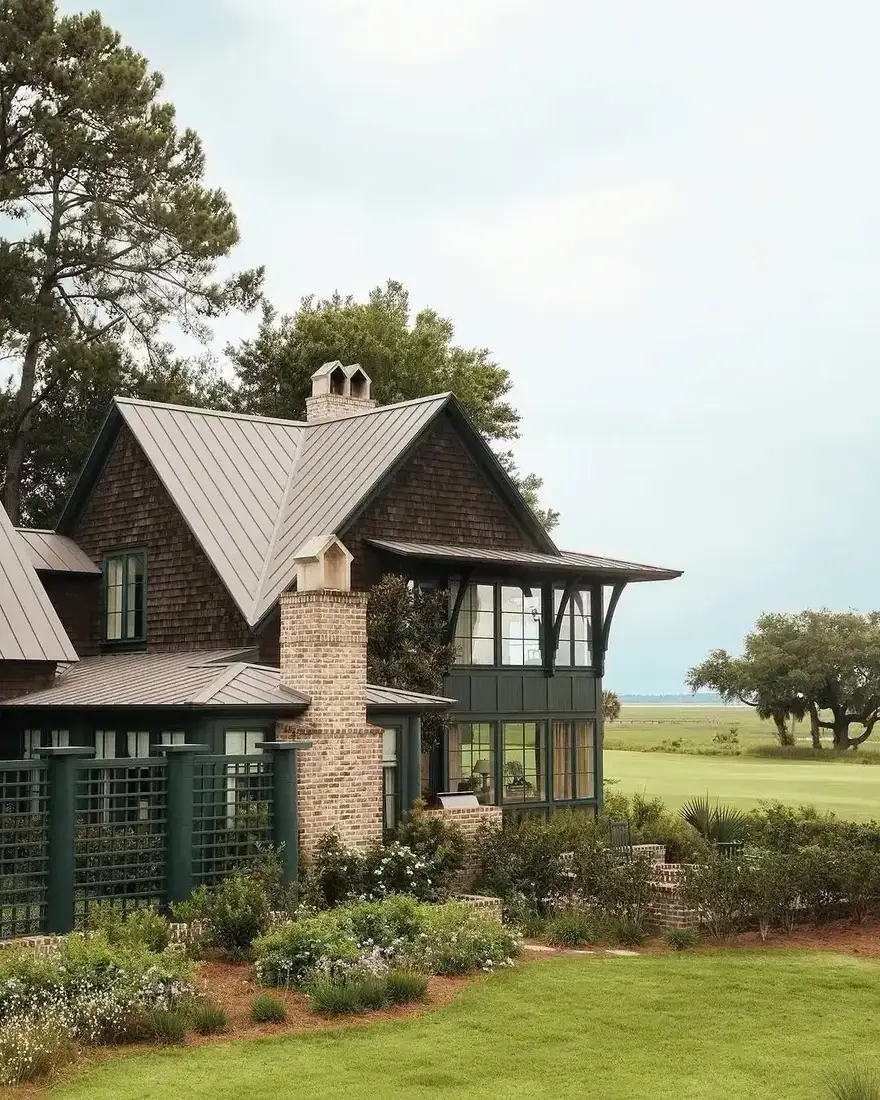
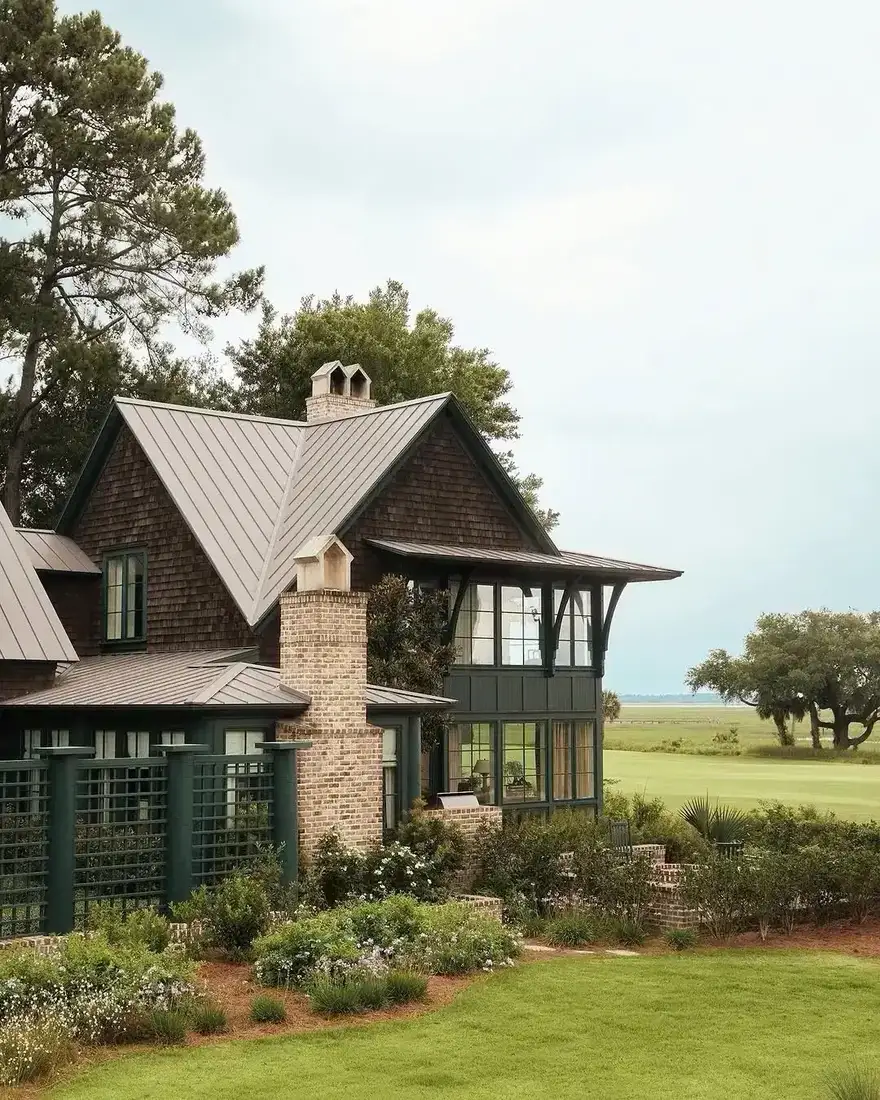
See the dark wood cottage tucked among trees where the grain still shows through the stain. The color feels right because the site is already shadowed and green. Dark cedar needs a setting that can absorb its weight. Surrounded by sky and pale lawn it can look imposed. Among trees, stone, or a darker roof it feels at home. You should photograph your plot at midday and at dusk before you choose. If the landscape reads bright and open, bare silver often sits calmer. If it reads sheltered and woody, dark earns its place and your light anchor still keeps it from sinking.
Making dark feel intentional, not heavy
The difference between handsome dark and heavy dark is often a pale horizontal at the foot or a simple window above.
Pale trim stops dark reading as a hole
Picture the carriage house where a long dark roof sits over a fieldstone wall. The stone at the base lifts the house. Without that pale foot, the whole mass would read as a dark block against the drive. You should always give your darkest shingle a pale base to stand on, whether it is stone, a light terrace, or a simple gravel band that reads as light at distance. Keep your window frames pale too. When you drive up, you want to read openings, not shadows. That pale line at the bottom is what keeps charcoal looking like a chosen colour, not a shadow that swallowed the house.
Add one light wing to lift a dark cottage
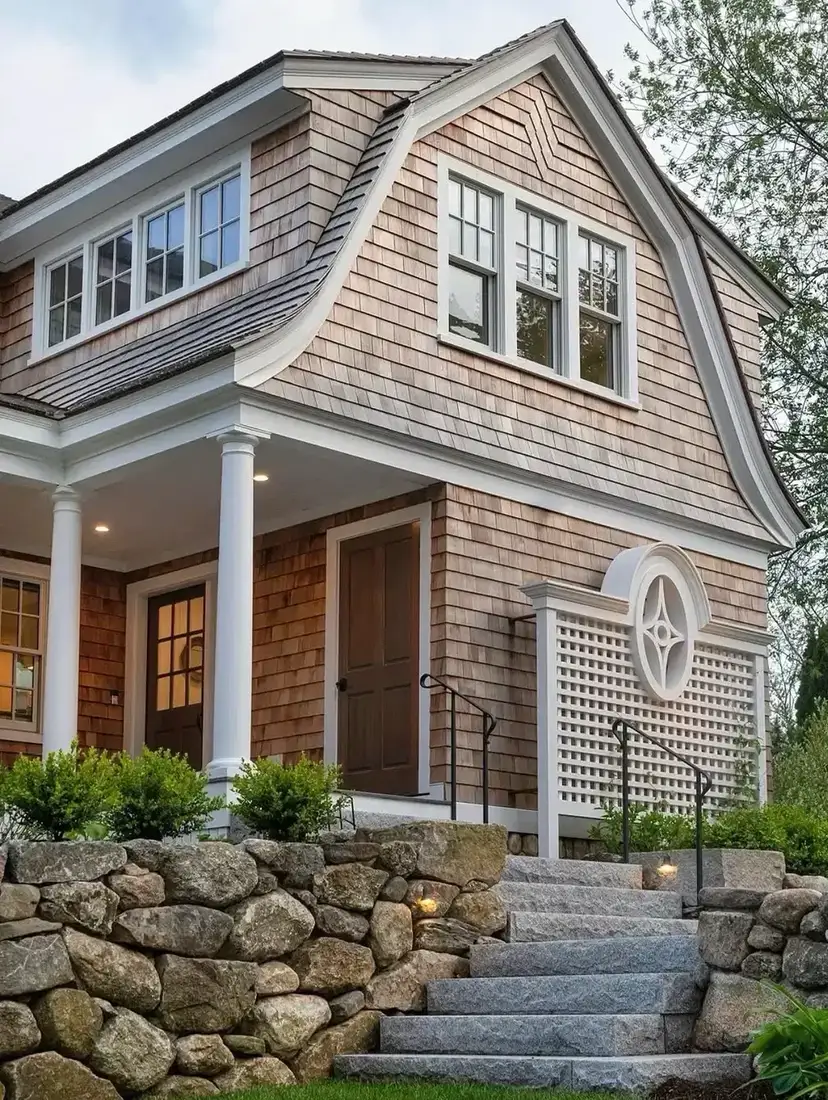
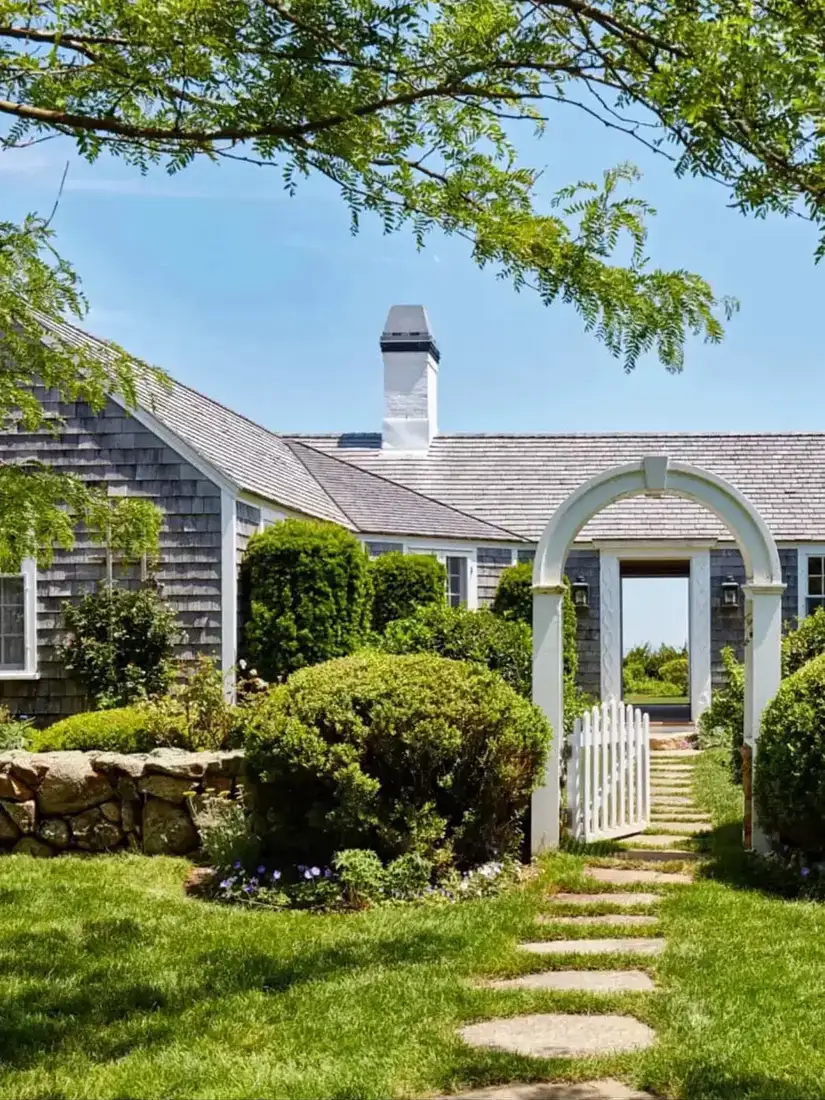
The white arbor gate at the grey cottage is not part of the house, yet it lifts the whole view. A small light structure near a dark cottage, a porch, an arbor, or a sunroom in pale trim, gives the dark field a place to breathe. You do not need to lighten the main house to make dark work. You need one pale companion that says the darkness is deliberate. Place that companion where you enter, so guests move from light to dark to light. That sequence makes the cedar feel like a jewel box rather than a wall that closed in.
Check stone, hedge and trim together before you commit
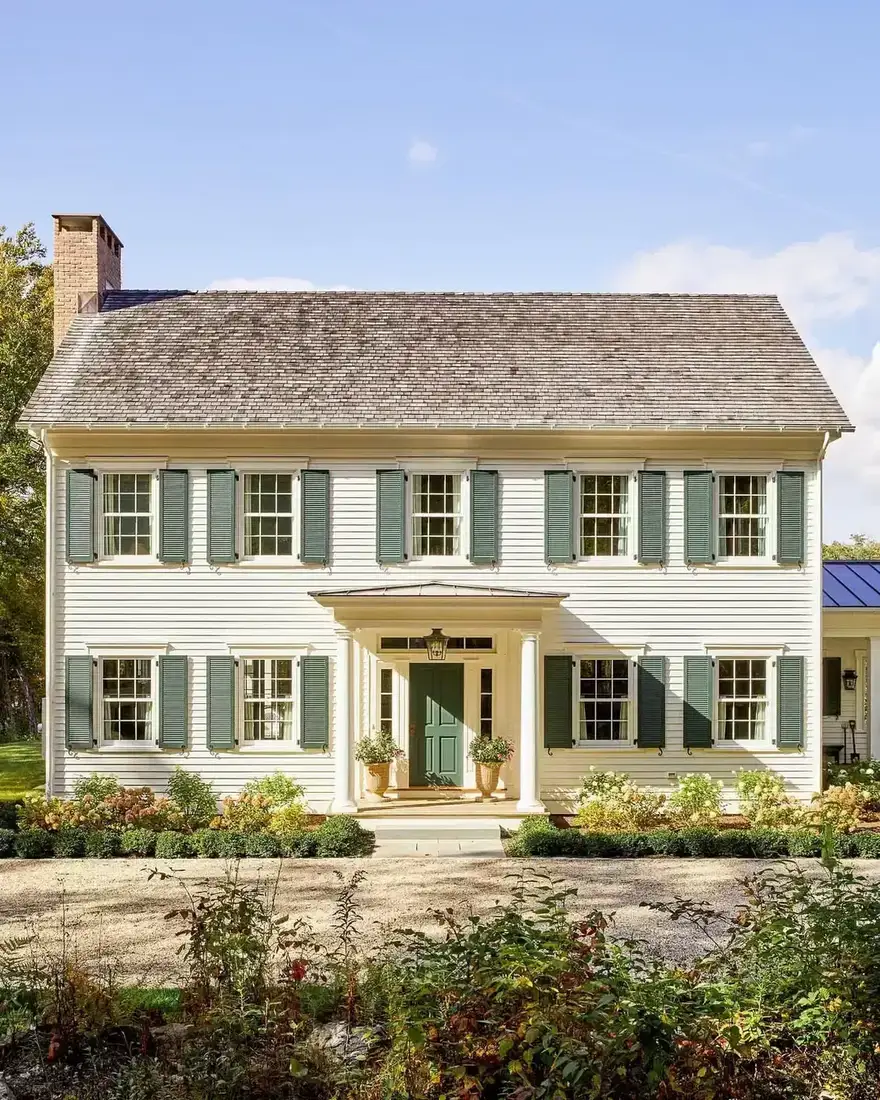
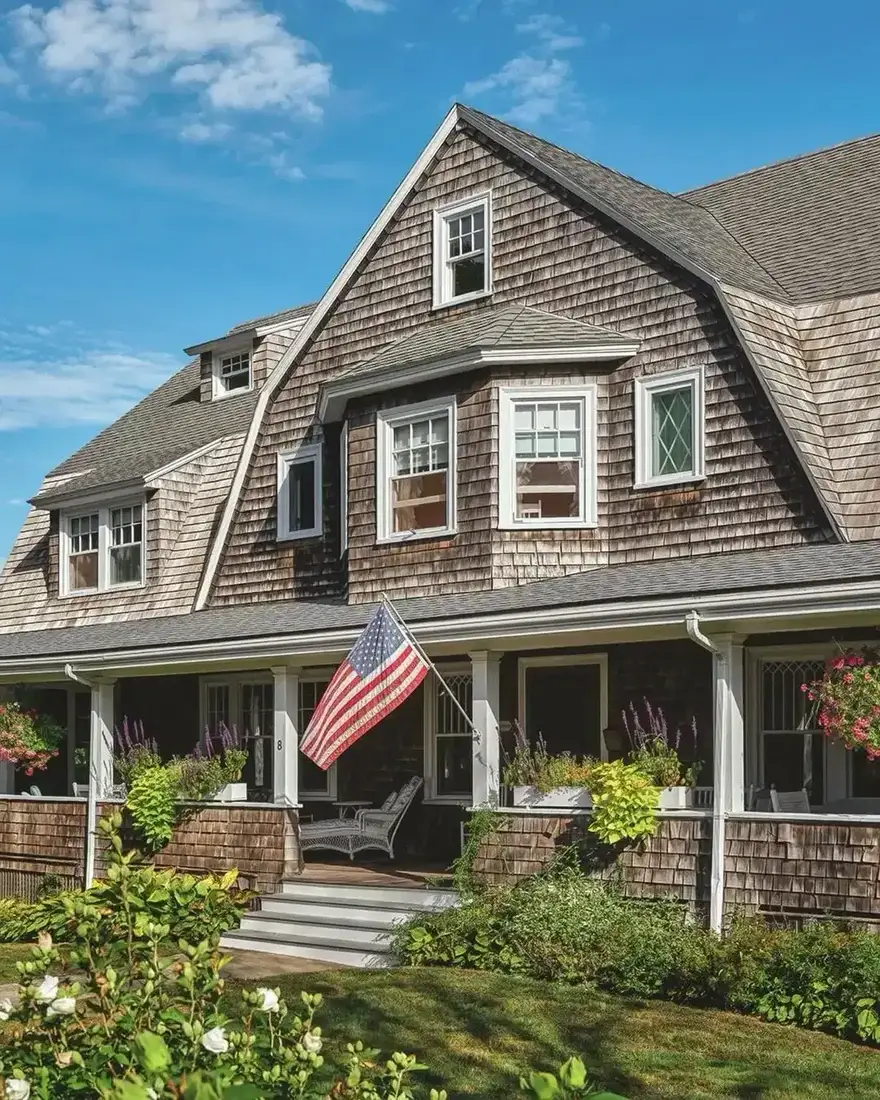
The gambrel with its flag against grey shingles edged in white holds together because every pale element matches. When you go dark, your stone, hedge, and trim must agree. A cool blue stone at the base will fight a warm white trim above. You should lay all three samples together on a table outdoors. If the stone, trim, and hedge read as one warm family or one cool family, you are safe. Mixing families makes dark look restless. Symmetry is less forgiving still on a colonial front, as our colonial house exterior ideas explains.
Living with the colour through seasons
Dark looks different in July and January. The last two help you choose with both in mind.
Test dark in winter light as well as summer
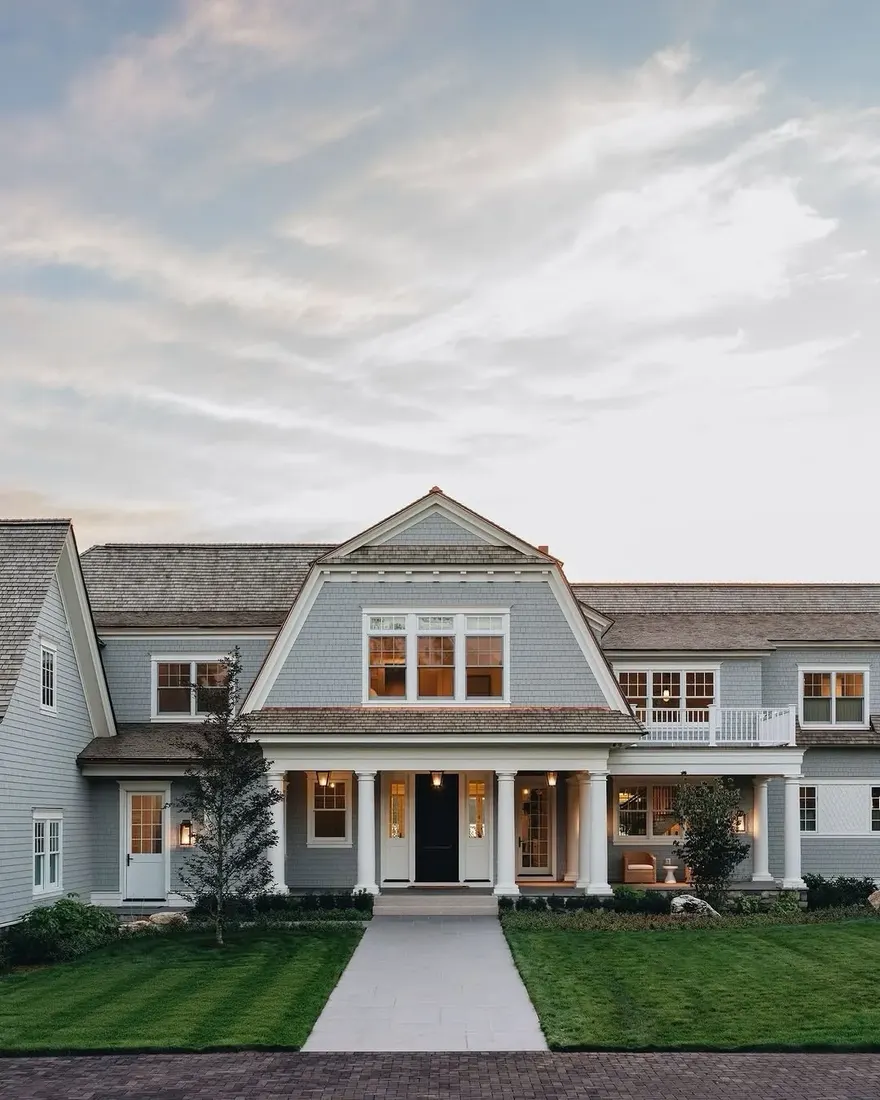
Consider the gambrel and the lawn path leading to its porch. In summer the dark reads rich, but in winter it can feel flatter. You should tape your large dark sample to the wall and leave it for a week that includes a grey day. Low sun rakes shingle texture and warms dark, overcast light cools it. When you still like the sample on a dull afternoon, you will like the house year round. Dark that only works in bright sun will feel heavier for the five months your garden is bare.
Decide on bare silver before you buy stain
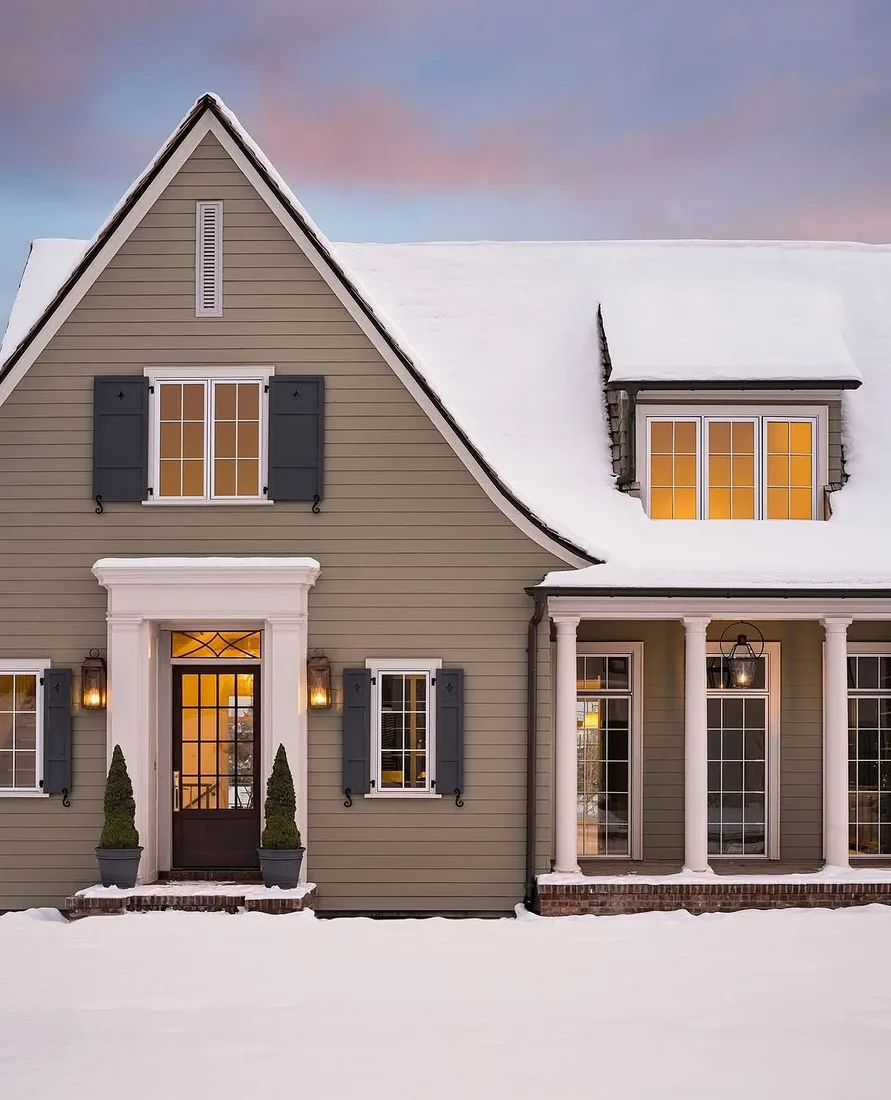
Finally, study the house glowing at night under snow. That silver feels luminous because it was never dark. You get to silver by waiting, and you get to dark by committing. You should decide which future you want to live with before you open the first tin, because you cannot wash dark back to bare. If you choose silver, walk away and let sun and salt do the work over the next few years. If you choose dark, arrange stainless nails, your light anchor, and a ventilated gap now. Either path can be beautiful. Only one can be undone, and it is not the dark one. Browse our home exterior guides before you pick your timeline.
Dark shingle and silver choices at a glance
| Choice | What you get | What it asks of you | Best when |
|---|---|---|---|
| Bare cedar left to silver | Free, reversible, two to five years to even | Patience through orange phase | You like texture over flat color |
| Semi-solid dark stain | Even dark from day one | Recoat cycle, cannot return to bare | Site can take the weight |
| White trim or pale door | Light anchor that stops dark reading as hole | Keep trim consistent | Dark feels heavy from the street |
| Pale stone at base | Lifts dark mass off the ground | Choose warm with warm, cool with cool | House sits low or flat |
| Stainless nails | No brown rust tears | Specify before first course | Every wall, but shows fastest on dark |
| Ventilated gap | Cooler, drier wall | Batten detail included in quote | Hot or sunny walls |
The Dark Shingle Formula
- Live with bare cedar a year before you decide. Silver arrives in roughly two to five years and it is free.
- Treat dark stain as a cycle. It sits on the surface and will need reapplying every few years.
- Give dark a light anchor. White trim, a pale door, or pale stone stops the wall reading as a hole.
- Use stainless nails only. Cedar tannins will rust ordinary nails and bleed on dark.
- Ventilate behind the shingle. Dark runs hotter, so air matters more, not less.
- Test your trio together. Stone, trim, and door should read as one warm or cool family before you buy.
Hold those six and your dark house will feel chosen, not coated. If you prefer to wait for silver, see our cedar shingle house exterior ideas for the timeline and care.
Frequently Asked Questions
How long does bare cedar take to look silver?
Roughly two to five years. Sun and salt speed it up, shade slows it down. Coastal and sunny walls turn fastest, sheltered north walls take longest, and that unevenness is normal at first.
Can I go back to bare cedar after dark stain?
Not really. Solid and semi-solid dark stains sit on the surface and cannot be washed back to bare wood without stripping the house. You would be signing up to restain going forward.
What makes a dark shingle house look heavy?
No light anchor. Dark walls need something pale to read against, usually white trim, a pale door, or a light stone base, and our guide shows exactly where that stone should stop. Without that, the house can look like a hole in the landscape.
What nails should I use on cedar shingles?
Stainless steel only. Cedar tannins corrode ordinary steel and even galvanised nails can eventually bleed rust streaks that show worst on dark stain.
Do dark shingles need more ventilation?
Yes. Dark surfaces run hotter in sun, so the gap behind the cladding needs to move air and let both faces of the shingle dry. A wall that cannot breathe will cup and hold damp.
How do I keep a dark house from feeling gloomy in winter?
Test your dark sample on a grey day as well as in sun. Dark that only feels rich in bright light can feel flat in winter. A warm pale trim and a light stone or gravel base help it glow even on dull days.
This article may contain affiliate links. We may earn a commission at no extra cost to you.