Beach Palettes Turn Grey Beside Dark Water

Add us as a preferred source to see more stories on Google.
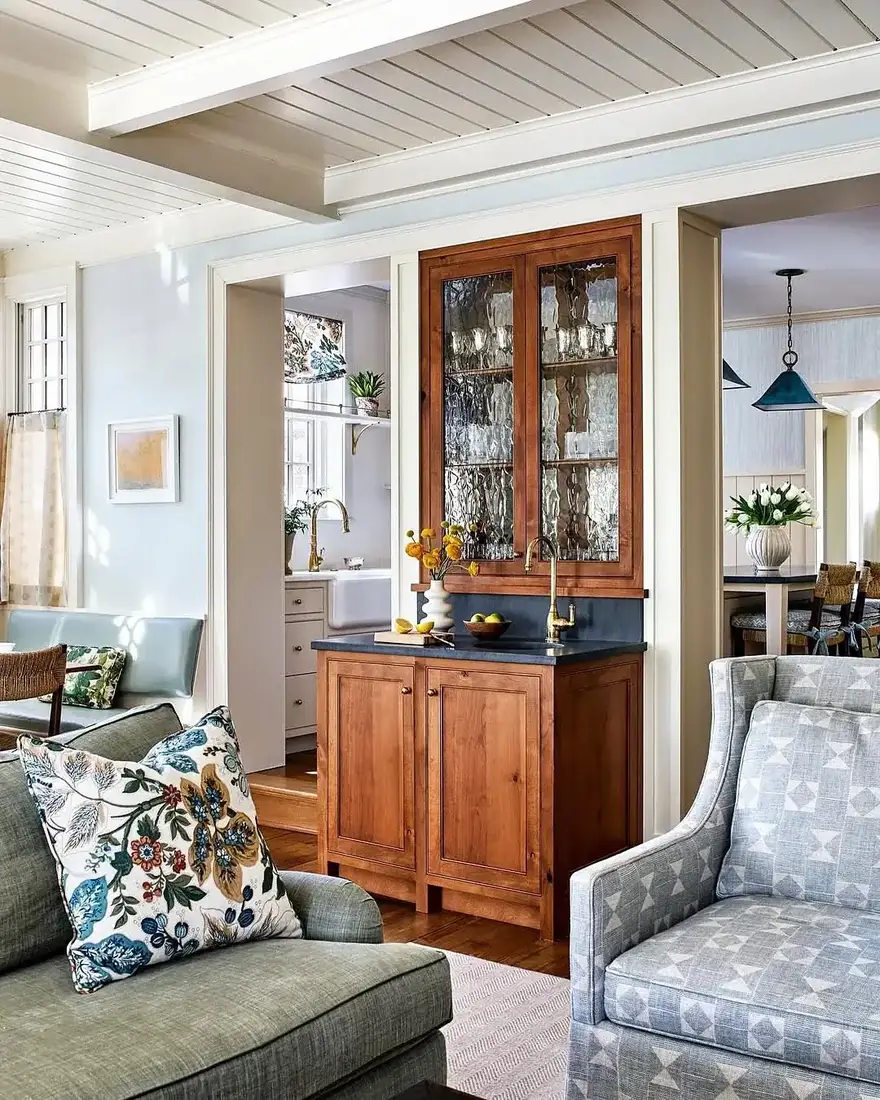
A lake house is not a beach house. Beach palettes are pale, sandy and bleached, built for bright sand and white light.
Lake rooms sit against dark water and evergreens, and the same driftwood scheme that works on the coast goes grey and cold beside a lake.
These ten rooms show you how to warm the palette for that greener, cooler light.
Light and colour that suit the lake, not the beach
Start by warming what the water cools.
Warm the palette to match the greener light
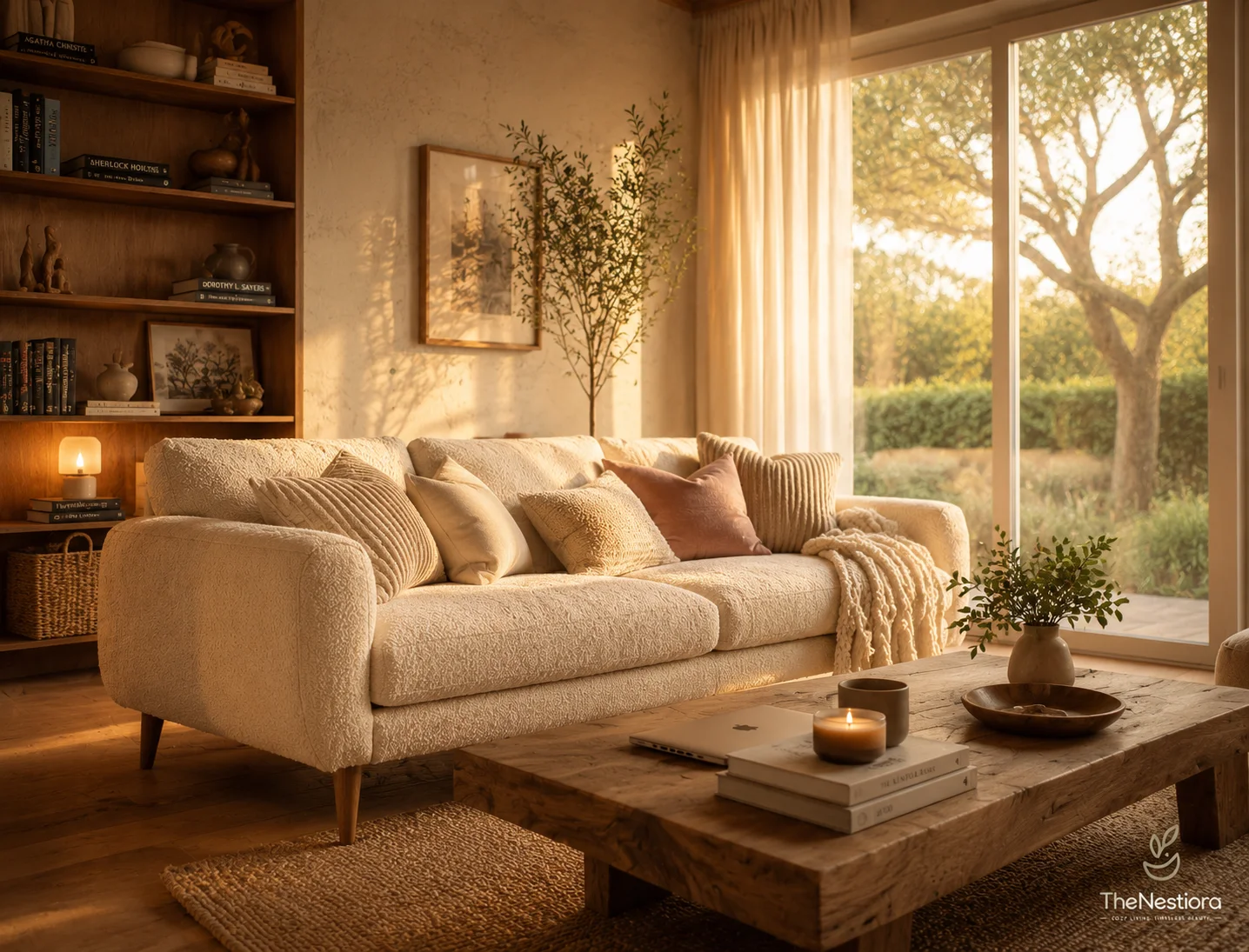
Lake light reflects trees, so it reads cooler and greener than coastal light that bounces off sand. That tint can make pale driftwood and sandy linens look flat. Warm the whole palette a touch, a deeper navy instead of pale sky, a honey oak instead of whitewashed pine, and the room feels settled. When you warm that one step for you, you keep the lake light from washing the room for you. You will notice the textiles look richer the moment you shift that one step warmer. For more on keeping a quiet base rich, see our neutral living room ideas.
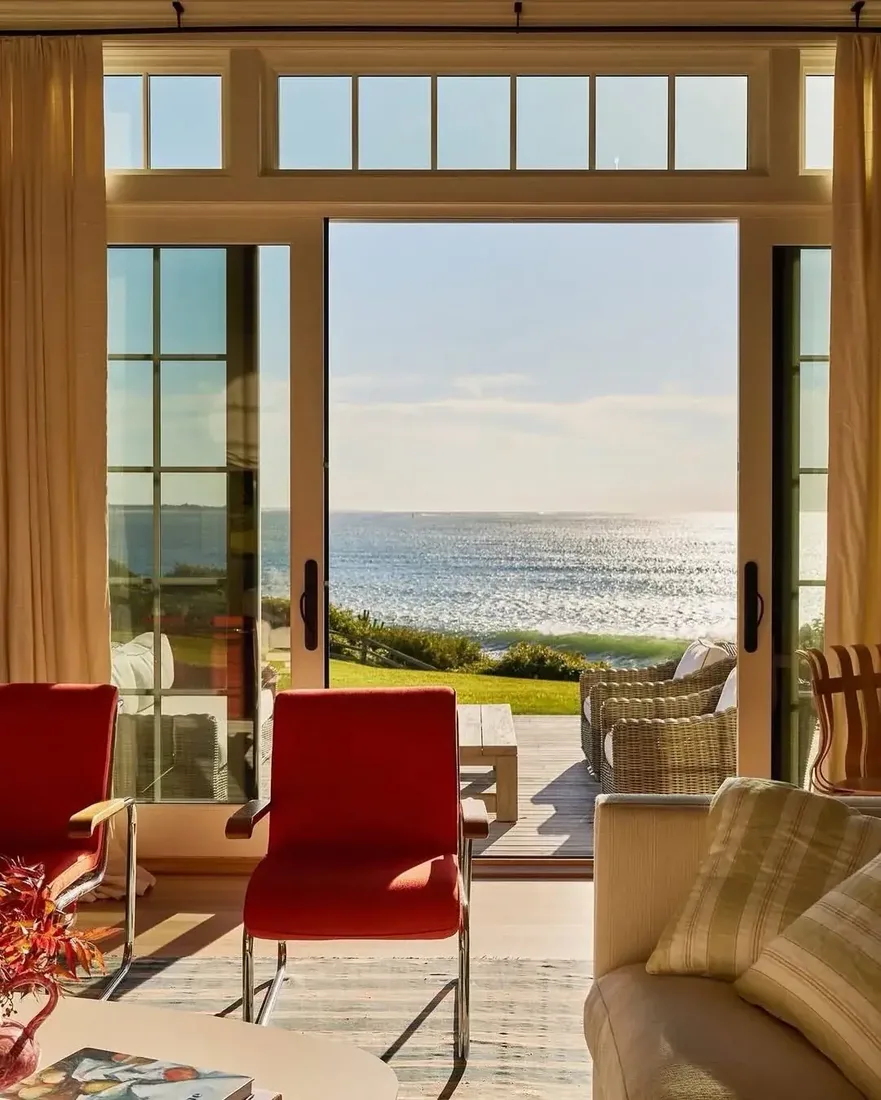
Choose deeper blues that hold against dark water
Pale blues wash out when the view outside is dark water and evergreen. Deeper blues and greens hold their shape against that depth. A saturated navy, forest or deep teal on a sofa or wall reads as intentional, while a pale chambray slips into the glass. Keep that deeper tone to one or two large pieces so the view stays the star, and let paler blues appear only in small accents. When you hold that discipline for you, you keep the room anchored and you let the lake do the rest for you. When you hold that discipline, you keep the room anchored and you let the lake do the rest for you. You will find the room feels anchored rather than bleached.
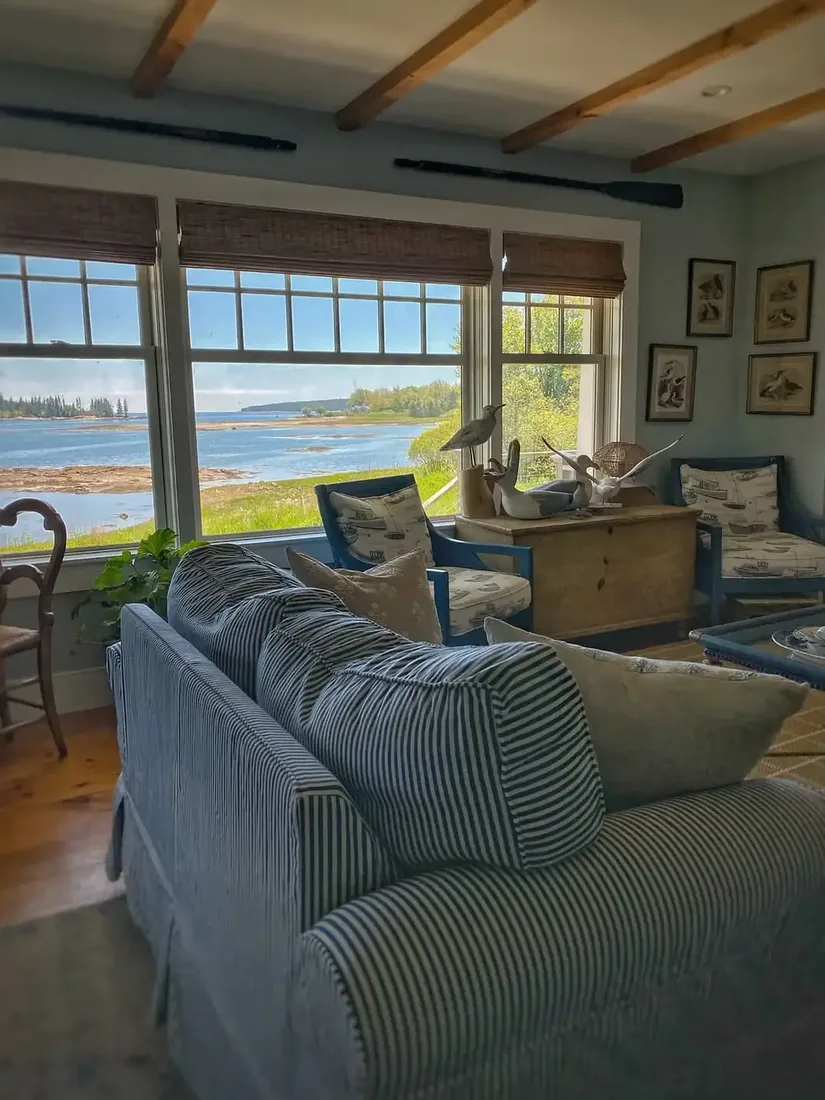
Let dark frames disappear against the view
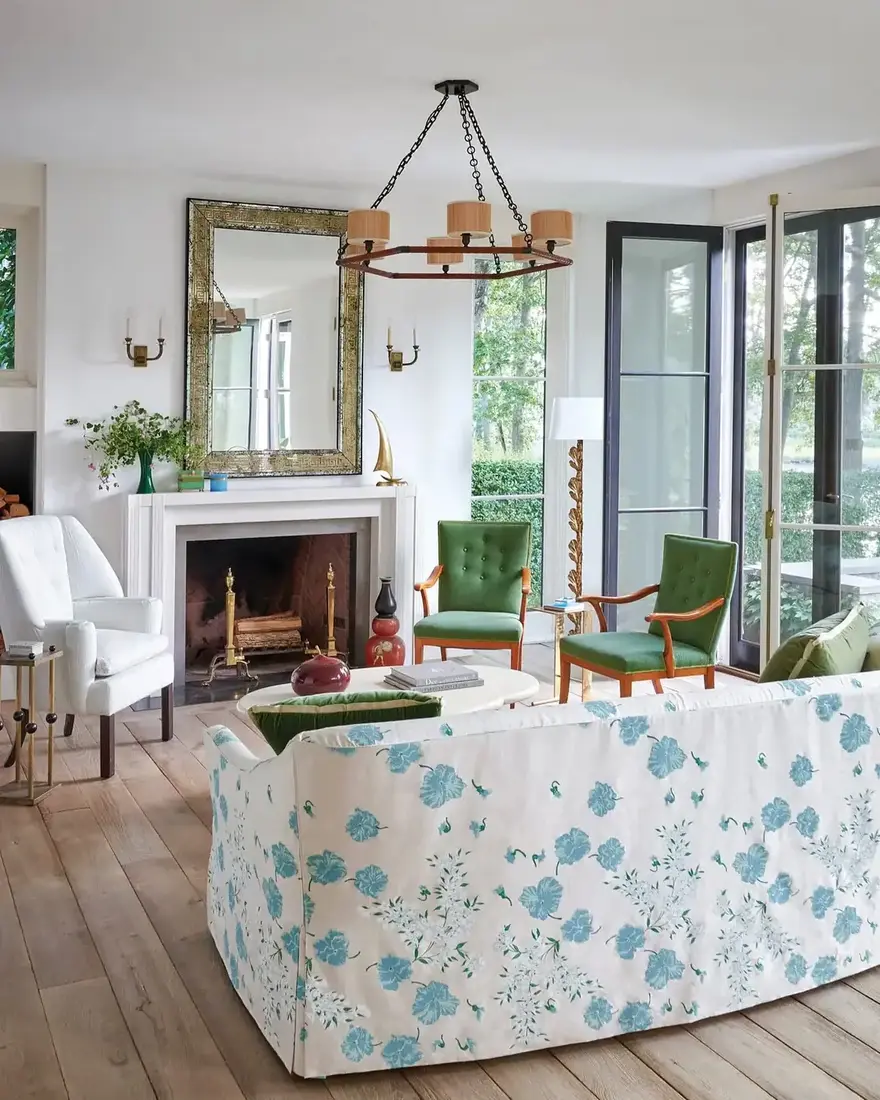
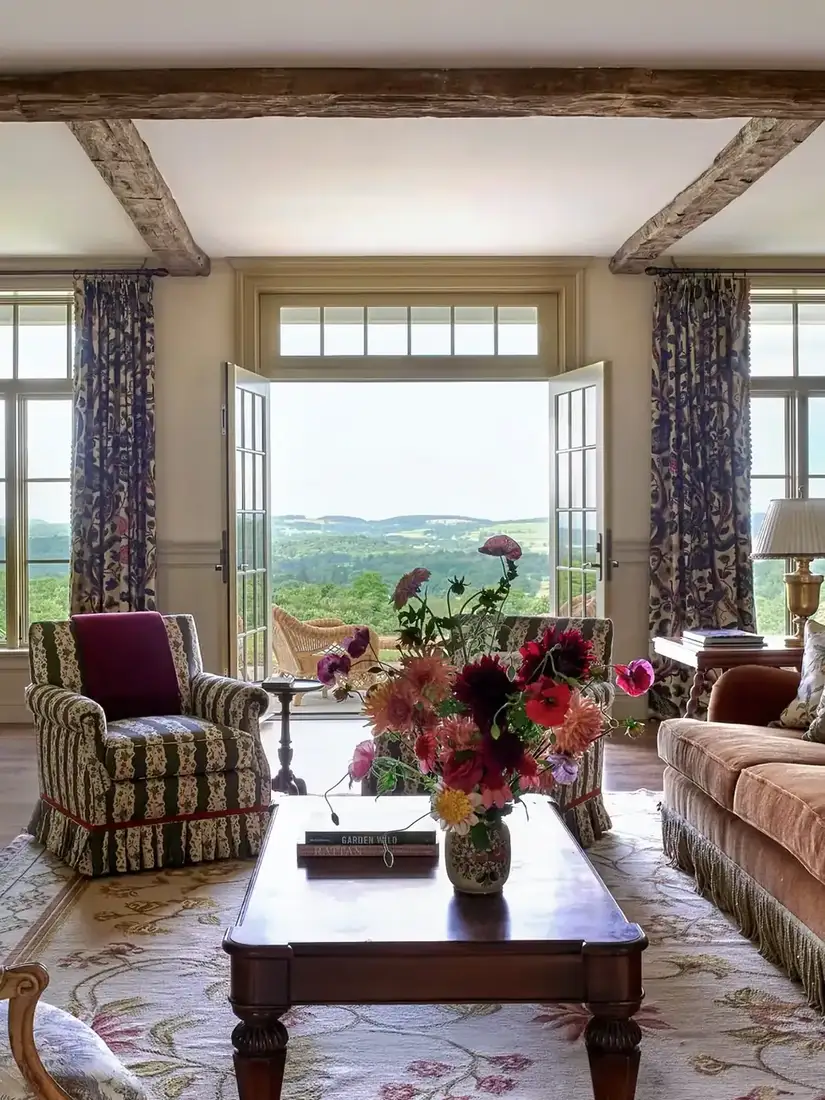
White window frames draw the eye to the frame itself, which is exactly what you do not want when the lake is the art. Black or dark frames recede and let the view read as a continuous plane. That quiet edge makes the room feel larger and the water feel closer. You keep the trim dark and you let the opening read as one calm line for you. Keep the trim around those frames dark as well, so the whole opening reads as a single dark line you can dress with linen curtains hung high. You keep that dark line for you and you let the view read as a continuous plane for you.
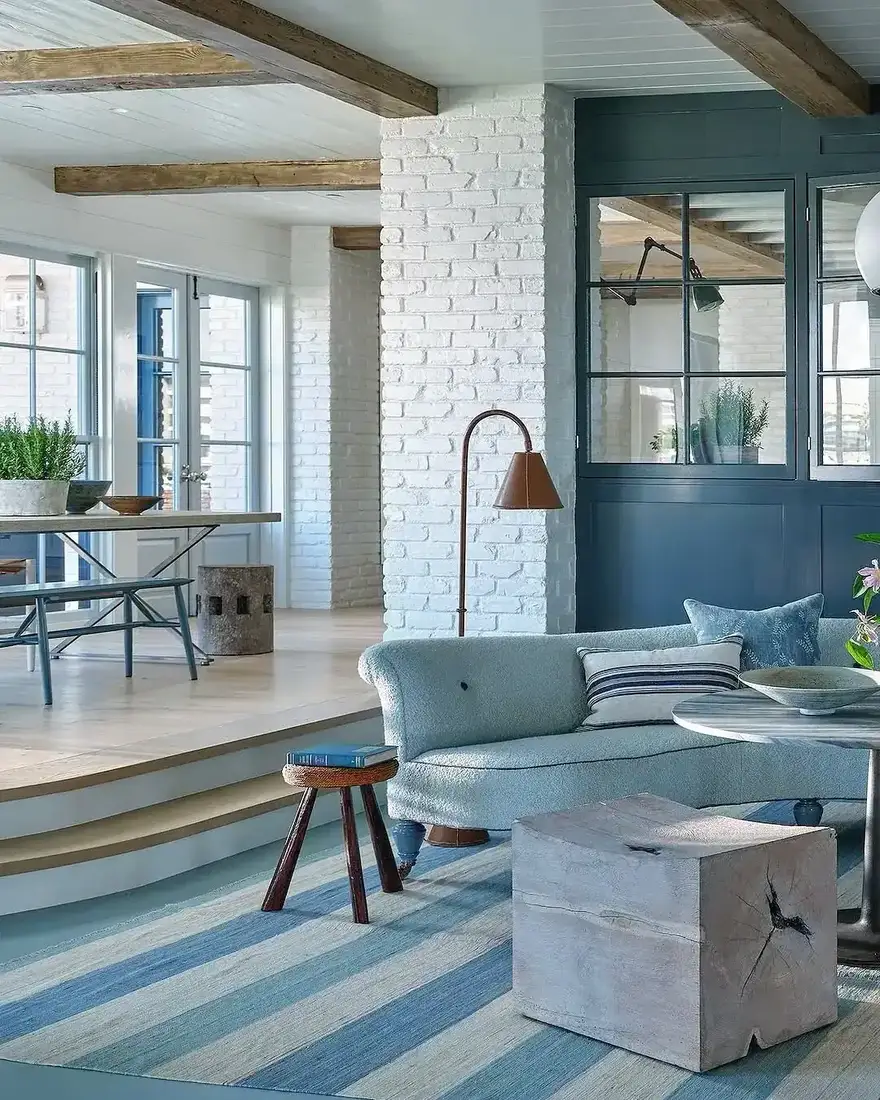
Furniture that lets the lake lead
What you place by the glass matters as much as the palette for you. When you keep that low line for you, you keep the view as the art you see first for you. You will feel the room gather around the view for you.
Keep furniture low along the glass wall
A tall sofa or high bookcase along the window wall blocks the lake and makes the room feel like it turned away from its best feature. Keep furniture low there, a low sofa, a low bench or a pair of low chairs, so the sill and the water stay visible. That low line lets you see the horizon from seated height, and the room feels gathered around the view. When you keep that line low, you keep the lake as the art you see first for you. For more on tying seating to a focal point, explore our living room fireplace ideas.
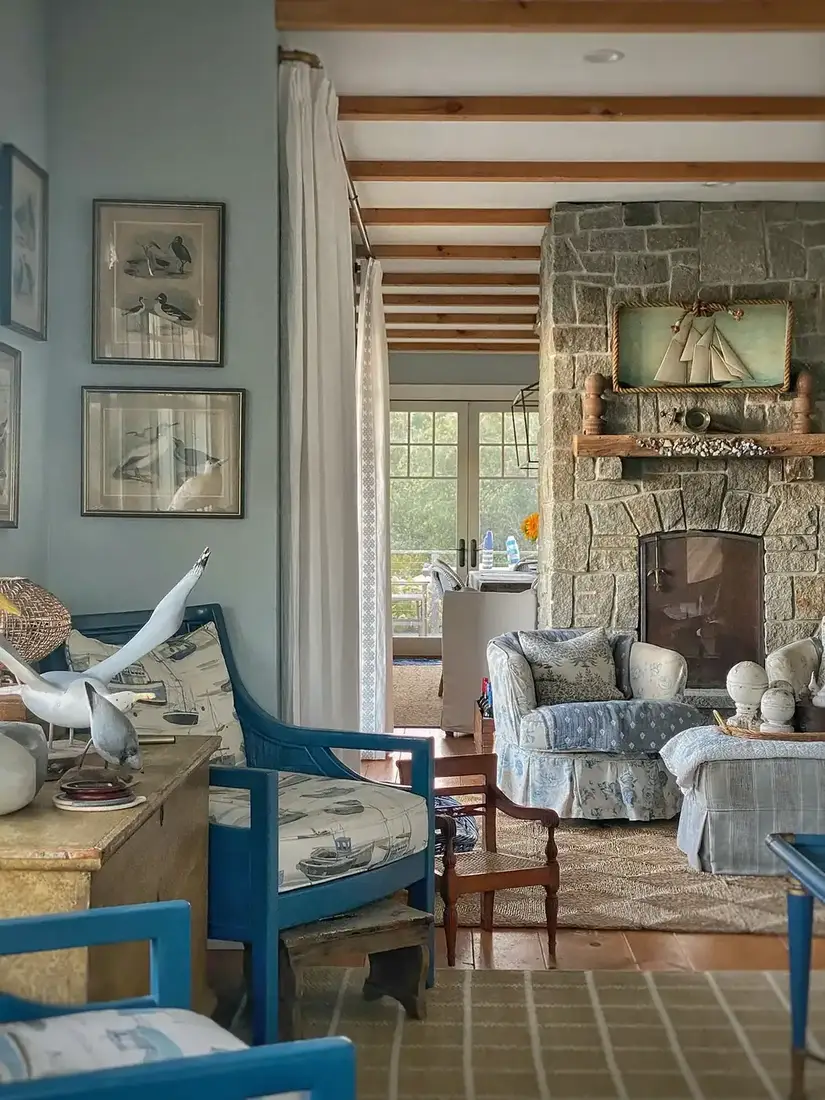
Layer wool, leather and heavy weaves for lake air
Lake air is cooler and the evenings come earlier among trees. Wool, leather and heavy weaves suit that climate, and they give the room weight that linen and rattan cannot. A wool throw over the arm, a leather bench, or a heavy linen with a napped hand all read as warm to the touch. Those textures make the deep blues you chose feel at home for you, and you will reach for them the moment the light fades for you. You keep that warmth for you and you let the lake air feel held for you.

Borrow warmth from timber, not from beach sand
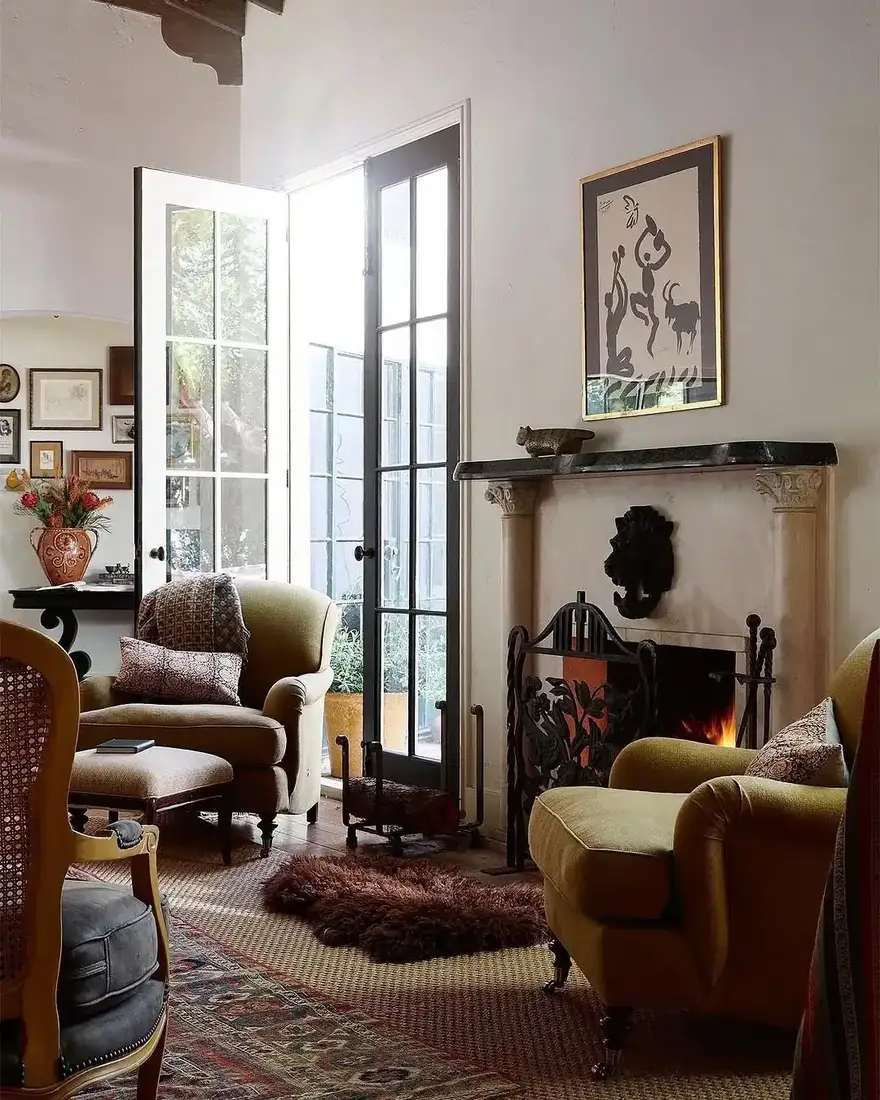
A beach house borrows warmth from sand, a lake house borrows it from timber. Warm oak, walnut or reclaimed wood near the glass echoes the trees outside and keeps the palette from going grey. Keep that timber low and broad for you, a coffee table, a mantel or window trim for you, rather than many small timber trinkets for you. You keep that single warm plane for you and you let the lake do the rest for you. That single warm plane does more than a dozen pale accessories scattered around.

The quiet that lets water be the pattern
The lake already gives you texture. You do not need to add more.
Keep pattern quiet so the view stays the pattern
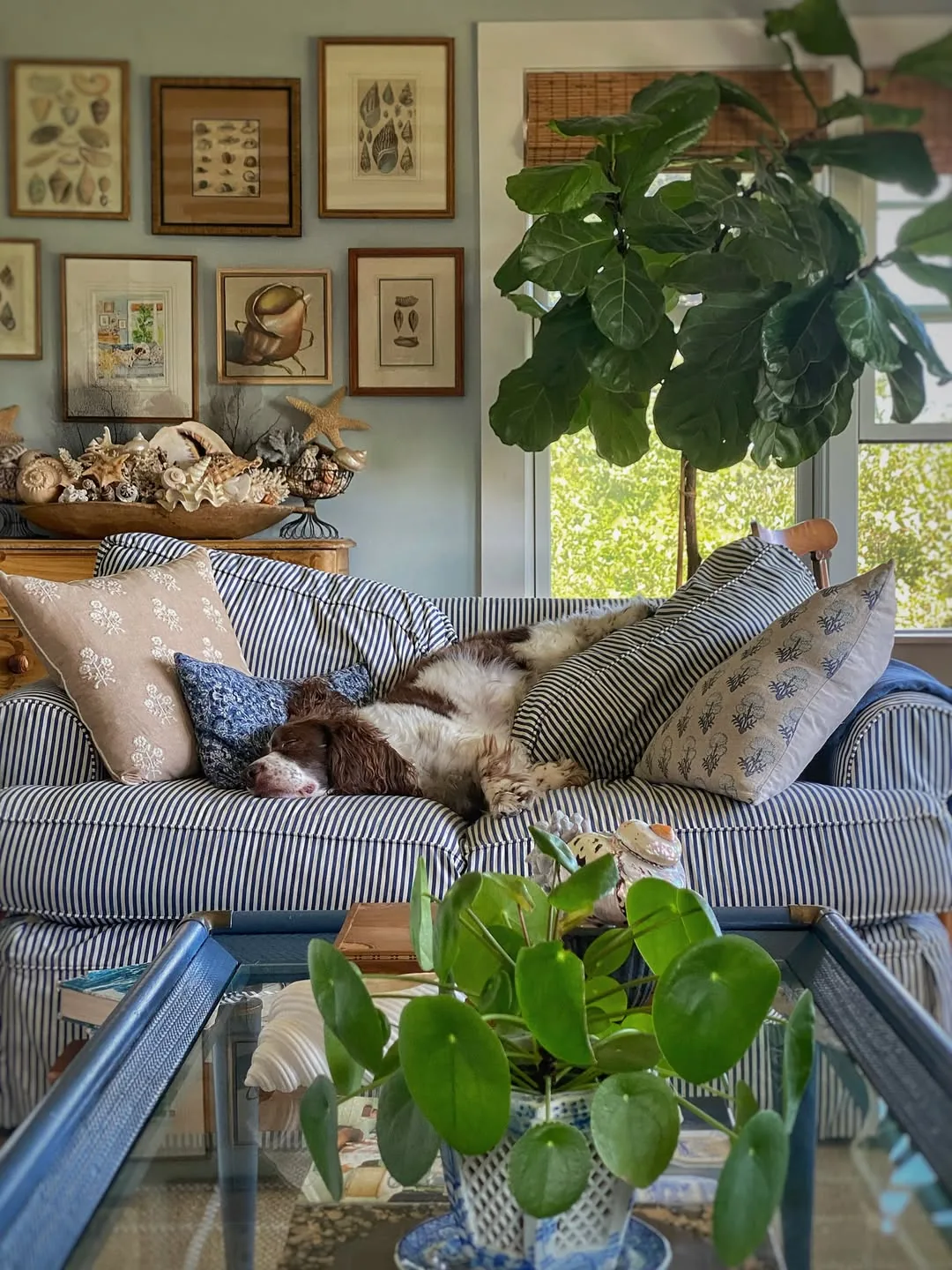
A busy floral or large geometric competes with ripples and evergreen texture you already have. Keep pattern quiet for you, a small stripe, a soft plaid or a solid with texture for you, and let the water be the movement for you. You keep that quiet for you and you let the view be the pattern for you. When you keep pattern calm, the view reads as the room’s textile, and you avoid the busy overlap that makes lake rooms feel restless.
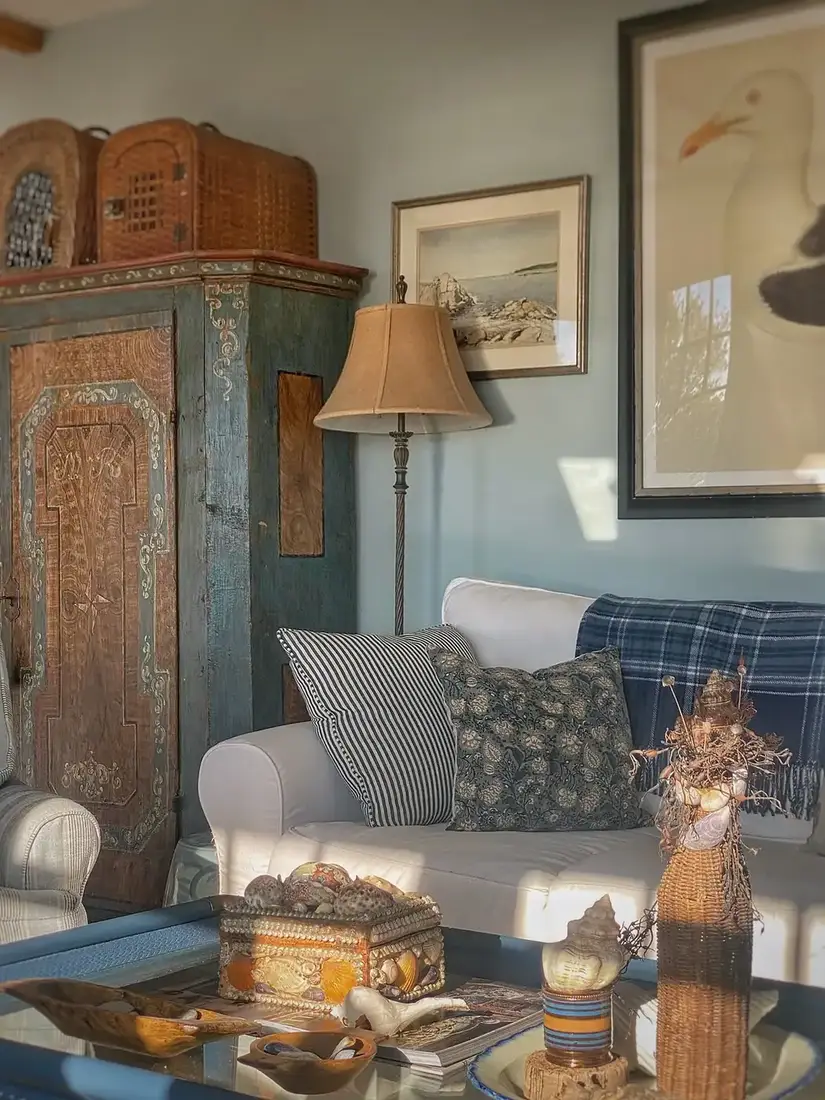
Add one soft plain sofa to rest the eye
Keep one plain surface in the room for you, usually the sofa for you, so you have somewhere to rest your eye for you. A solid linen or wool sofa in warm sand or putty gives you that pause, and the deeper blues around it can be richer. When that plain field sits opposite the glass wall, the whole room feels balanced, with texture on one side and calm on the other.
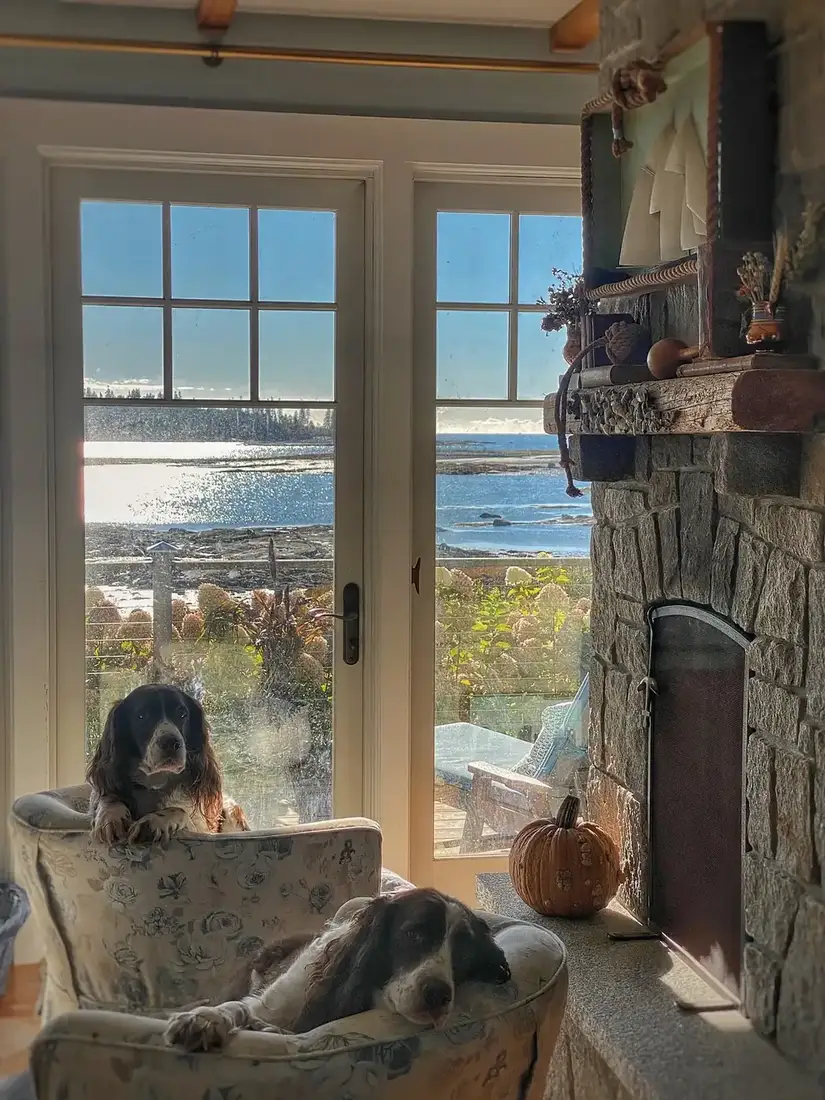
Light below the eye, not from the ceiling
Warm bulbs and lamps placed below eye level keep a lake room intimate after the sun drops behind trees. Overhead light flattens the view and the palette. A table lamp beside the sofa, a floor lamp near the window and a low glow on the mantel give you pools you can sit inside. That low light makes the deeper blues feel close and the wood feel warm.

Lake choices that hold by dark water
| Choice | How it reads by the lake | When you use it |
|---|---|---|
| Warm palette, deeper blue | Anchored, not washed | View is dark water and trees |
| Dark window frames | View expands, frame disappears | Lake is the focus |
| Low furniture by glass | View stays the art | Window wall is the feature |
| Wool, leather, heavy weaves | Warm to touch, lake-appropriate | Evenings are cool |
| Quiet pattern | View stays the pattern | Lake already gives texture |
The Lake House Living Room Formula
- Warm the palette for green light. Lake reflects trees, not sand.
- Choose deeper blues and greens. Pale washes out against dark water.
- Keep window frames dark. Black recedes, white draws the eye to the frame.
- Hold furniture low by the view. Let the water stay the focal point.
- Layer wool, leather and heavy weaves. Lake air suits weight linen cannot give.
- Keep one plain surface. A solid sofa gives the eye rest.
Hold those six and the lake stays the star without chilling the room.
Frequently Asked Questions
How is a lake house different from a beach house?
Lake light is cooler and greener because it reflects trees, not sand. Warm the palette to compensate, or the same pale beach scheme will read grey and cold.
Which blues work best by dark water?
Deeper blues and greens that hold against the view. Pale blues wash out when the water outside is dark.
Should window frames be white or dark by a lake view?
Dark, where you want the view to lead. Black or dark frames disappear against water, white frames draw the eye to the frame itself.
How should I arrange furniture by the window wall?
Keep it low. A low sofa or bench lets the sill and water stay visible, so the lake remains the focal point from seated height.
What fabrics suit a lake house?
Wool, leather and heavy weaves that feel warm in cooler air. Linen and rattan read coastal and can feel thin beside a lake.
How do I keep the view the pattern?
Keep interior pattern quiet. Let the water and evergreens be the movement and keep stripes or solids calm inside.
This article may contain affiliate links. We may earn a commission at no extra cost to you.