Your Rug Is Almost Certainly Too Small

Add us as a preferred source to see more stories on Google.
Measure your rug against your seating, not your floor. Most fail that test today.
Two mistakes own nearly every disappointing living room, and you’ll find both in yours within a minute. The rug floats under the coffee table touching nothing, and every pattern sits at the same timid scale.
Size up and scale apart and the room assembles itself. These living room rug & textile ideas fix the floor first, because everything you place afterward depends on it.
Size the rug to the seating
You’ll measure furniture groupings, never empty floor. Two ideas end the floating island forever.
Catch front legs or start your living room rug & textile ideas over
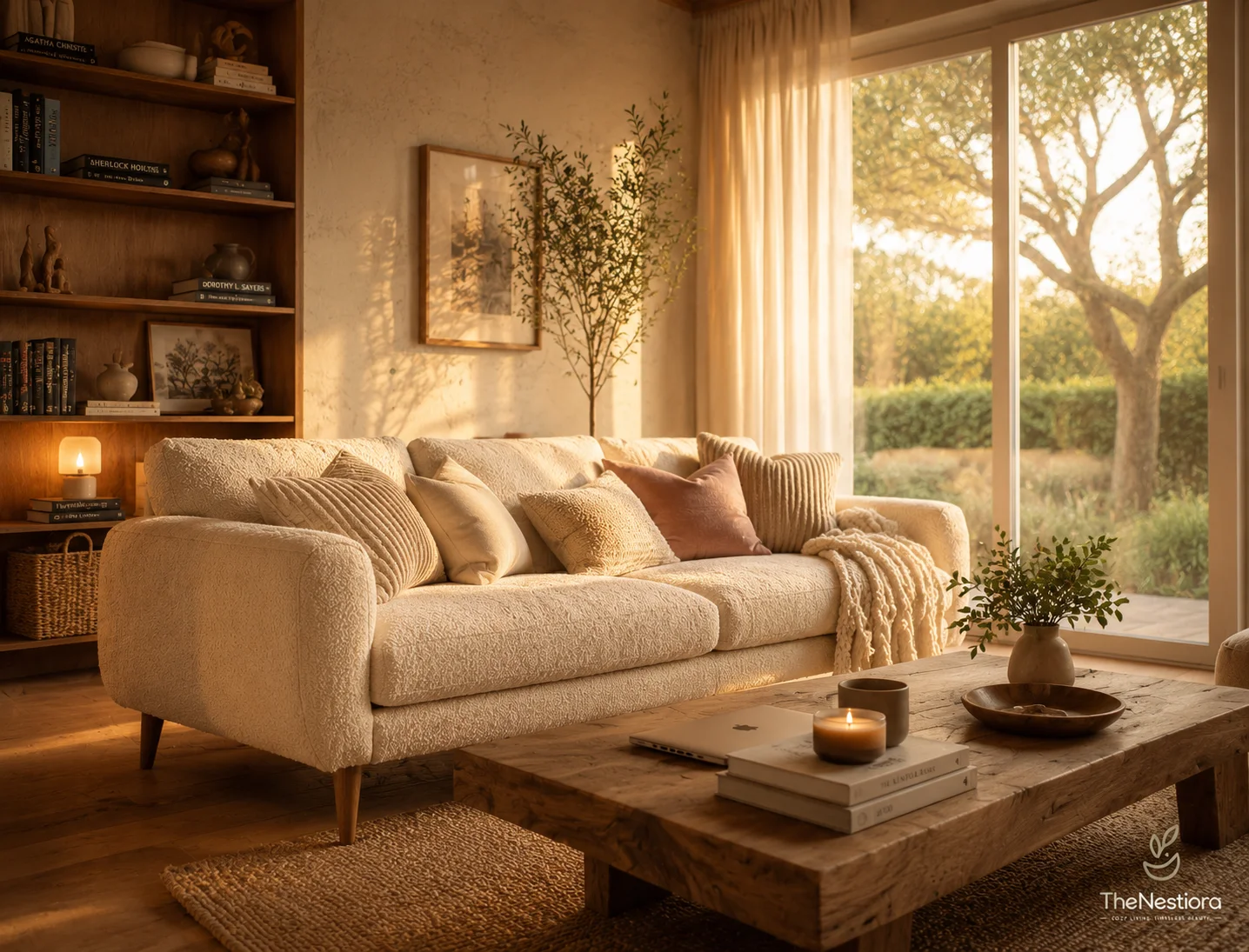
A rug that touches no furniture chops your room into stranded objects. You’ll size so the front legs of sofa and chairs all rest on pile, binding the group into one island. That single rule fixes more rooms than any color decision you’ll ever make.
You’ll tape the outline on your floor with painter’s tape and live with it a day. The taped size always looks bigger than expected, which is exactly why your current rug runs small. You’ll also check door swings, because a rug thick enough to stop a door announces itself daily. Low pile under doors, plush where feet land. When in doubt you’ll take the larger size. An oversized rug reads intentional. An undersized one reads apologetic, and you’ll notice it every single day.
Leave a border of bare floor showing
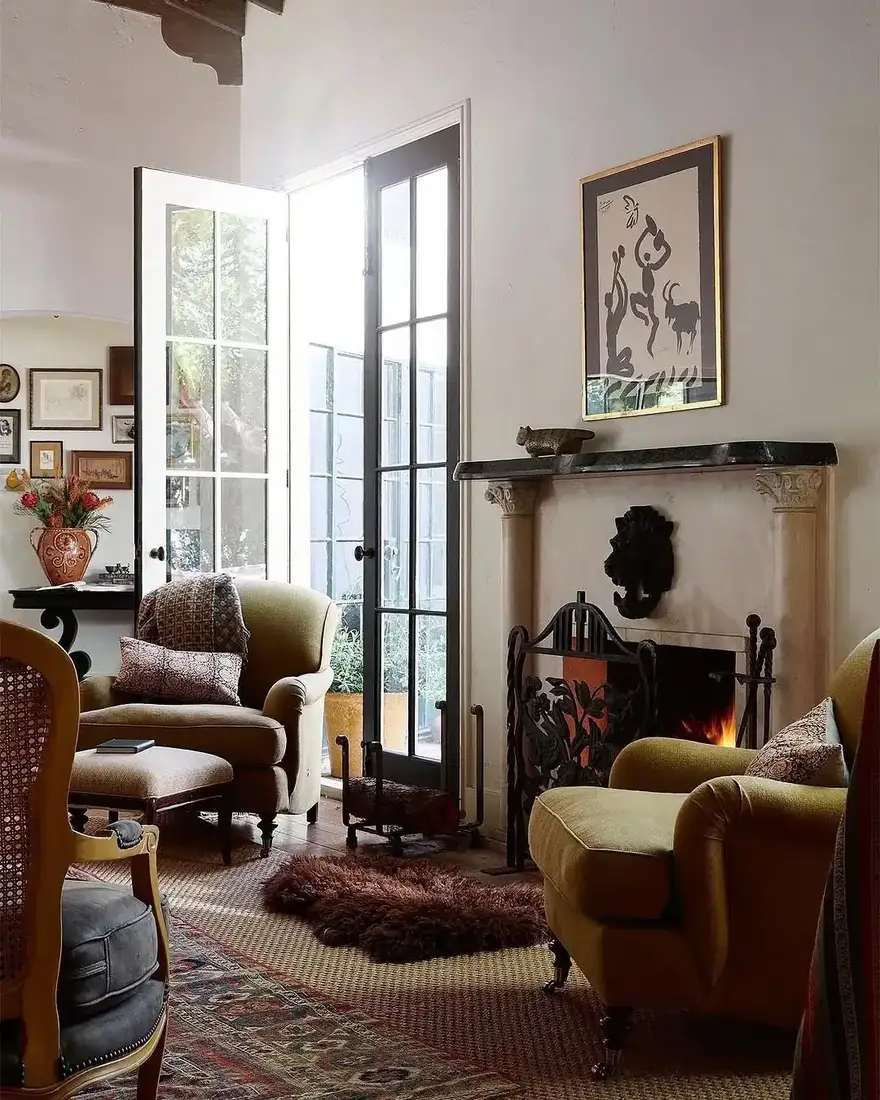
Wall-to-wall rug swallows rooms whole. You’ll leave a foot or more of bare floor between rug edge and walls so the rug reads as a placed decision rather than fitted carpet. That border frames the island and lets the floor material contribute its own texture.
You’ll shrink the border, not the rug, in small rooms. A narrower margin still beats a floating rug every time. For rooms where every inch negotiates, our small living room ideas guide fits rugs into tight plans without surrendering the rules. The rule bends for open plans, where your rug defines the seating zone against dining or kitchen space. Borders say deliberate. Edge-to-edge says you measured the room instead of the seating, which is the original mistake.
Oppose your pattern scales
One scale repeated reads flat. Two ideas set stripes, plaids and solids against each other properly.
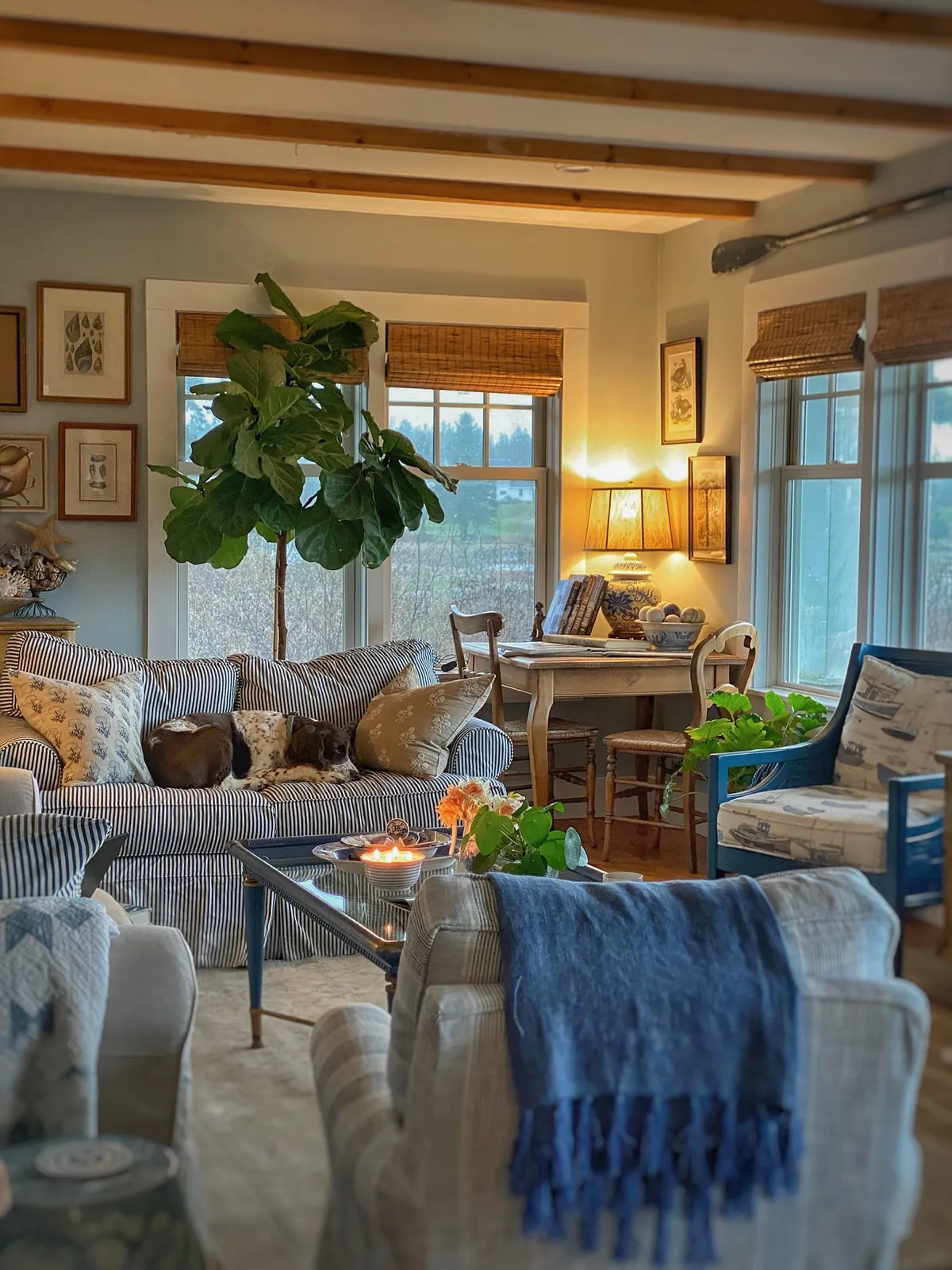
Let stripes be your neutral
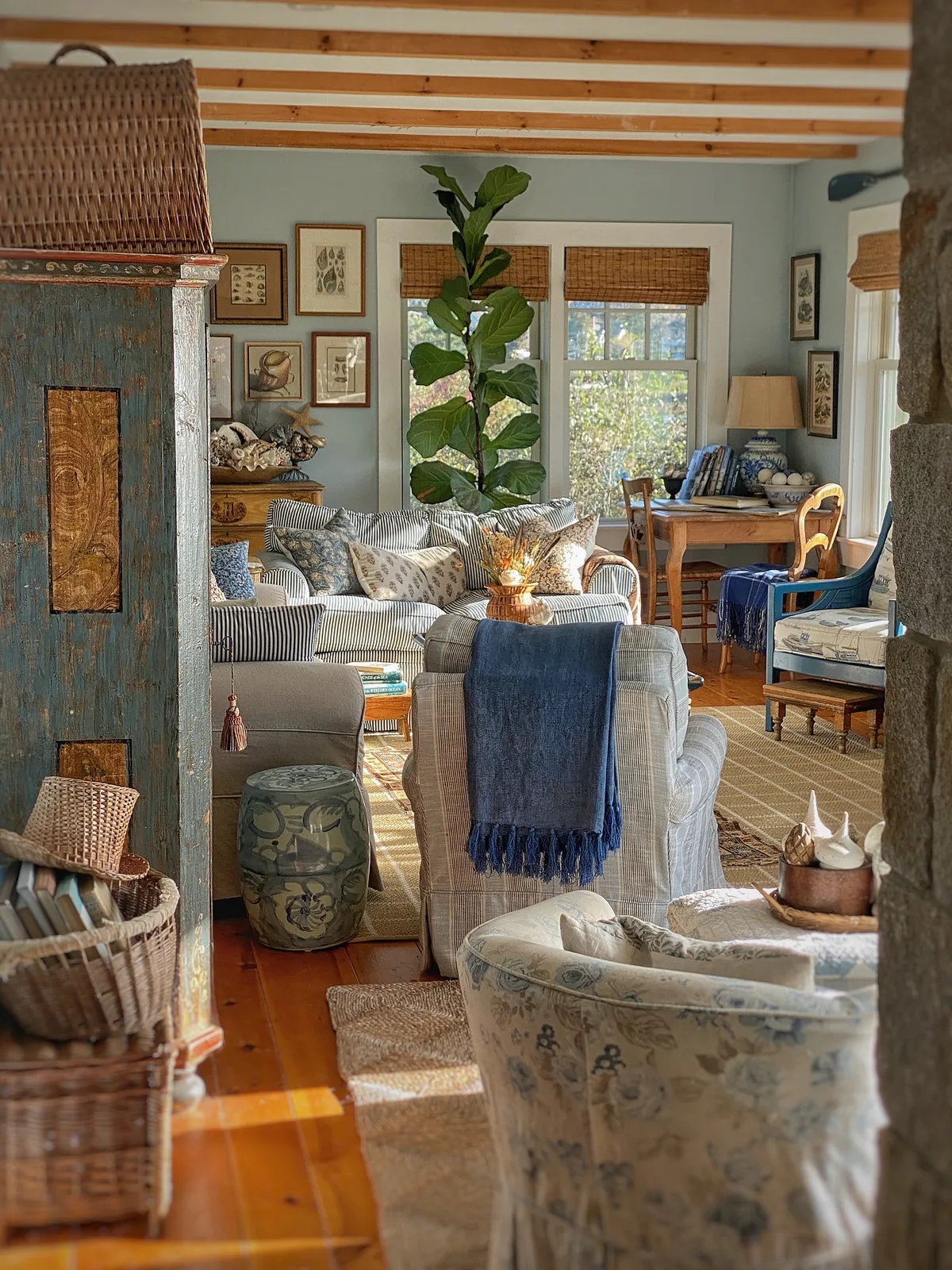
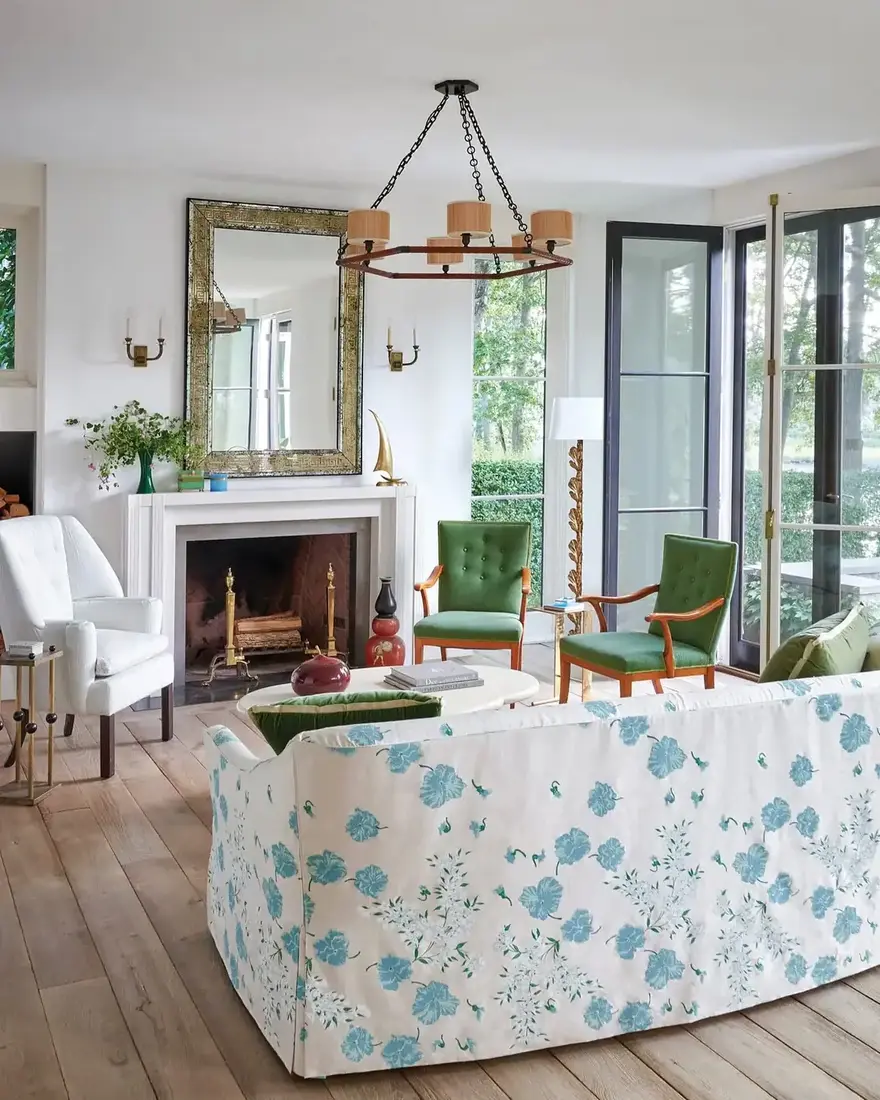
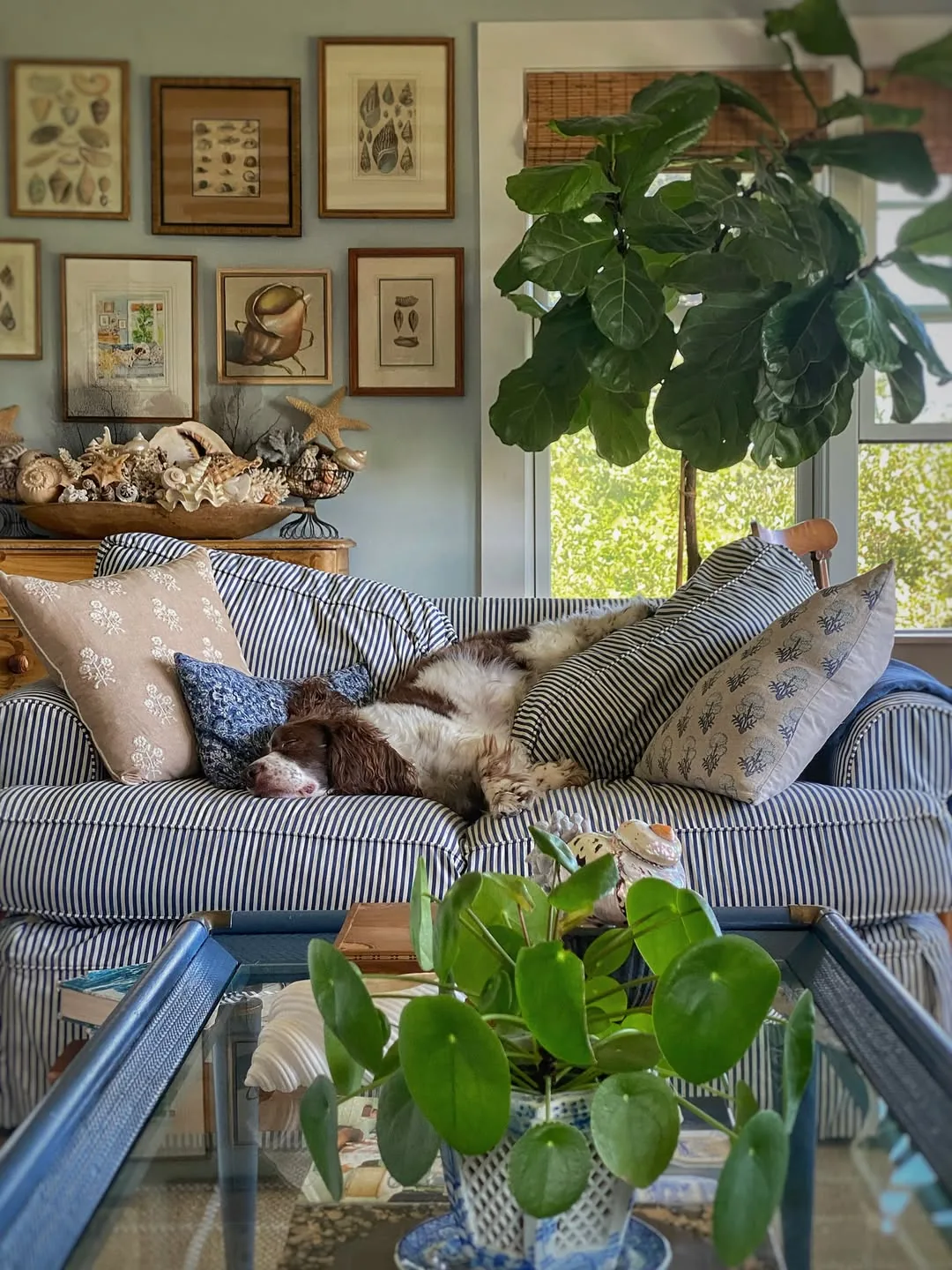
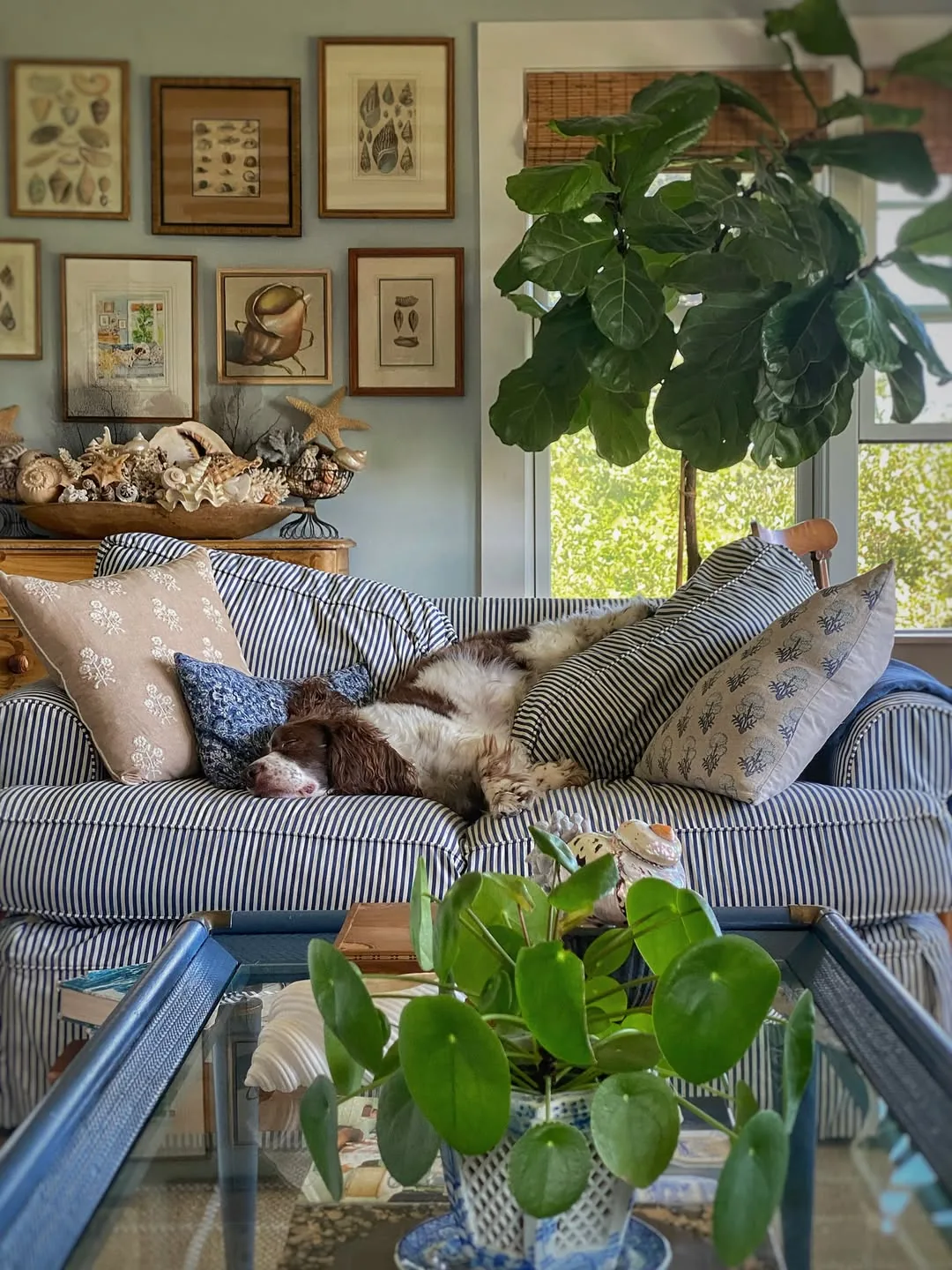
A blue and white stripe behaves like a solid from across the room and like a pattern up close. You’ll use it on the largest piece, the sofa, where it adds rhythm without shouting. Stripes at sofa scale read classic in a way bolder prints can’t sustain across that much yardage.
You’ll keep the stripe crisp and the palette tight: two colors, clean lines, no competing motif on the same piece. You’ll photograph the sofa in daylight before choosing companions, because stripes shift tone under different bulbs. What reads navy at noon can read black at night. Then you’ll spend your pattern budget elsewhere at a different scale. When the biggest surface stays disciplined, everything smaller gets permission to play. Restraint at scale is what makes stripes timeless.
Buy performance where paws land
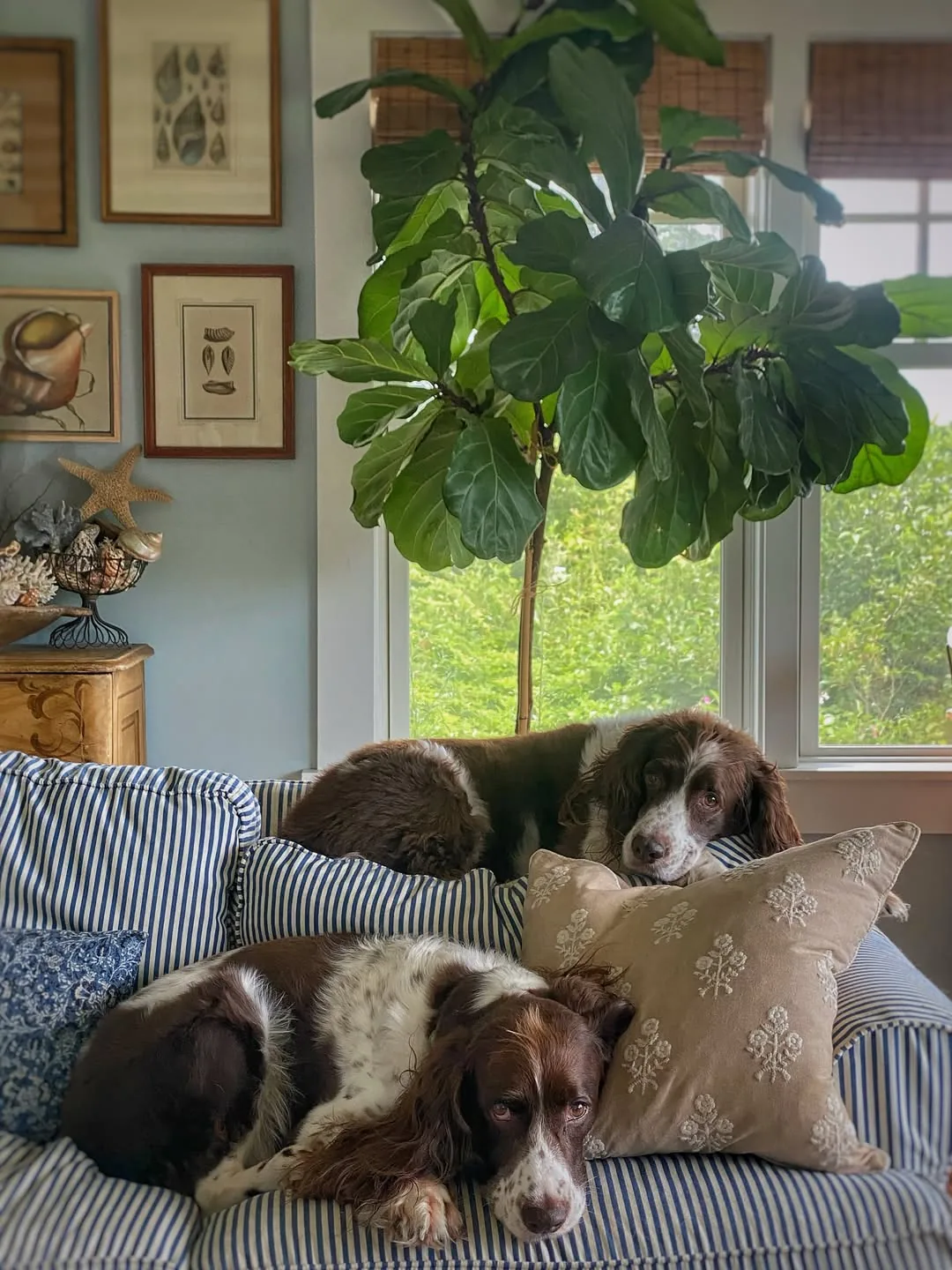
Dogs, kids and red wine vote on your fabrics daily. You’ll choose washable rugs and performance upholstery for everything below knee height, saving the precious textiles for cushions and throws that lift off. A striped sofa in a forgiving weave hides paw prints between washes the way solids never do.
You’ll check the care label before falling in love, not after the first accident. Machine washable, bleach-cleanable and tightly woven all beat luxurious and delicate where life happens. You’ll post the wash routine inside a cabinet door so the whole household follows it. Rugs last decades when cleaning stays routine and die young when stains sit. When the room survives Tuesday, you’ll enjoy Saturday in it instead of guarding it. Durability is a design feature, not a compromise.
Zone and layer for real rooms
Open plans and cold floors need textile strategy. Two ideas finish the job.
Zone open plans with textile borders
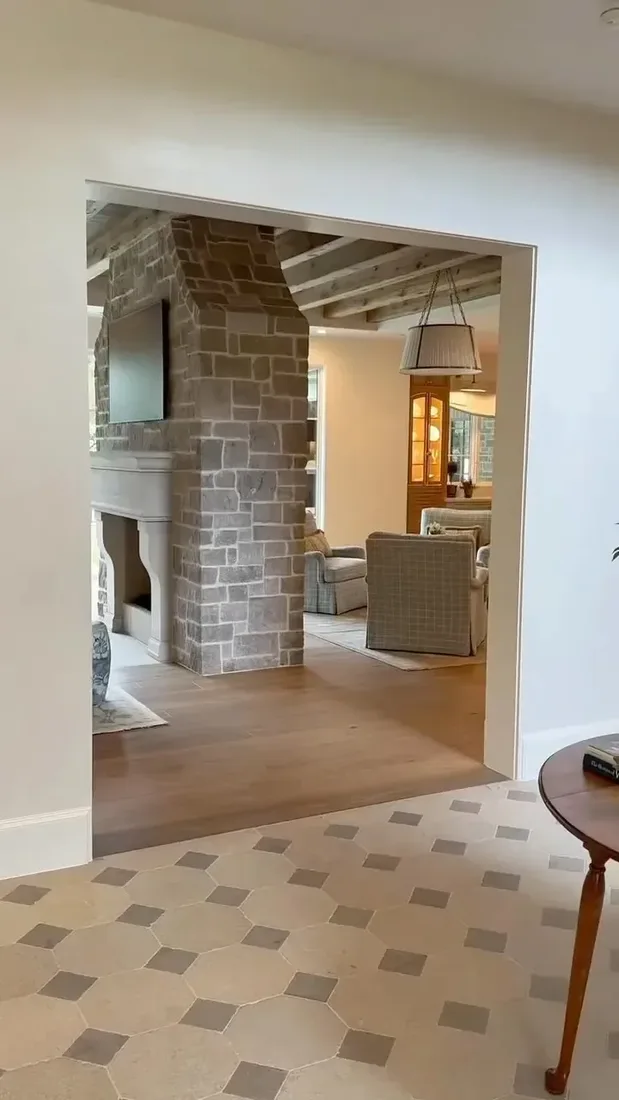
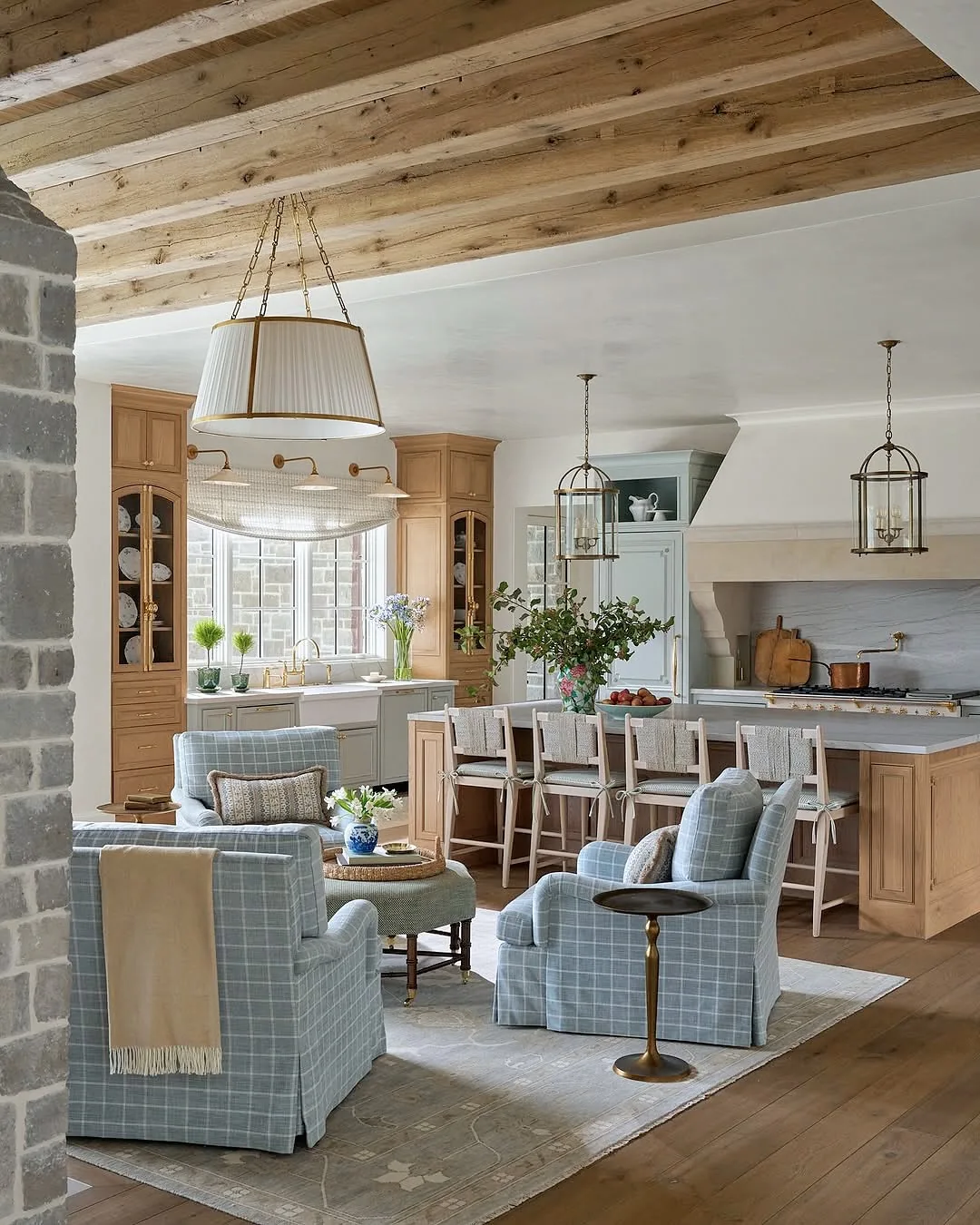
Open-plan rooms blur until textiles draw the lines. You’ll let the living rug end where the kitchen begins, change the pattern language at the boundary, and repeat one color across both zones so they relate without merging. The rug becomes the wall you chose not to build.
You’ll echo the dining or kitchen textiles once in the living zone, a cushion picking up the chair plaid, so the spaces converse. You’ll photograph the room to test the pairing, since cameras reveal clashes eyes forgive. If the photo jars, you’ll swap one piece before committing. Total separation reads as two flats sharing plumbing. For more on rooms that flow without dissolving, browse our living room ideas guides. Borders that breathe beat walls that divide.
Pair plaid chairs against quiet walls
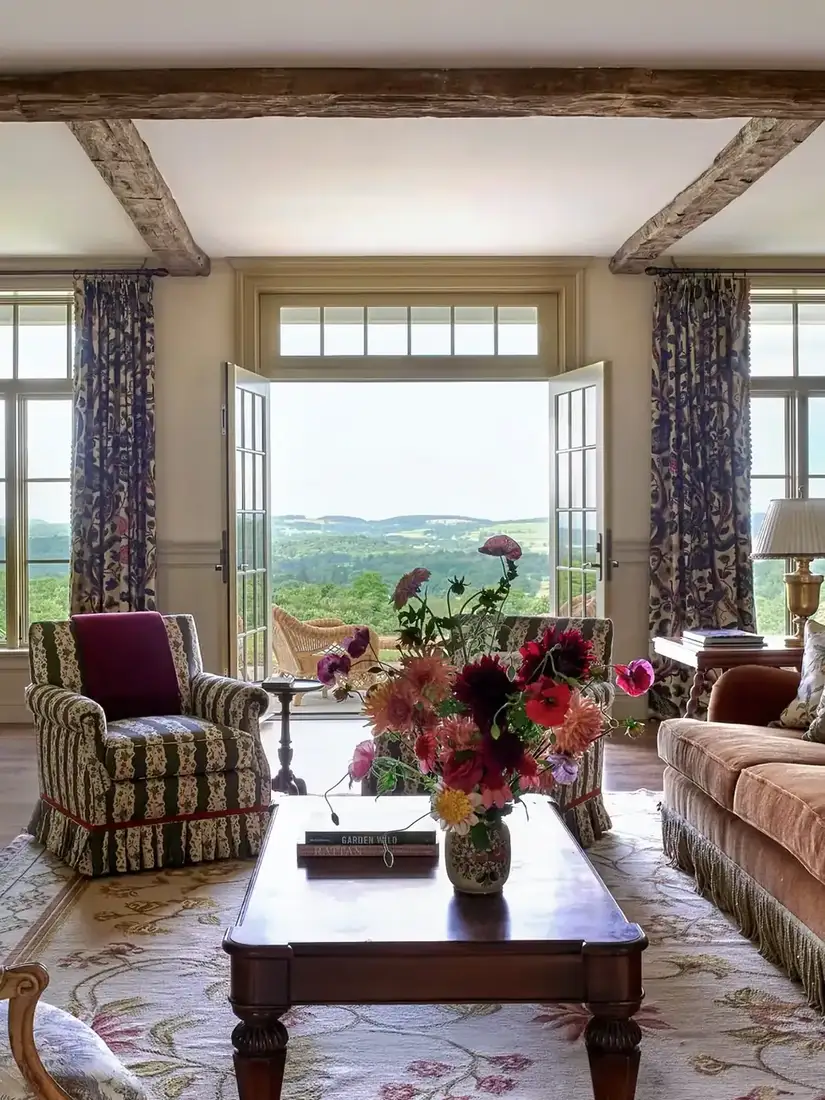
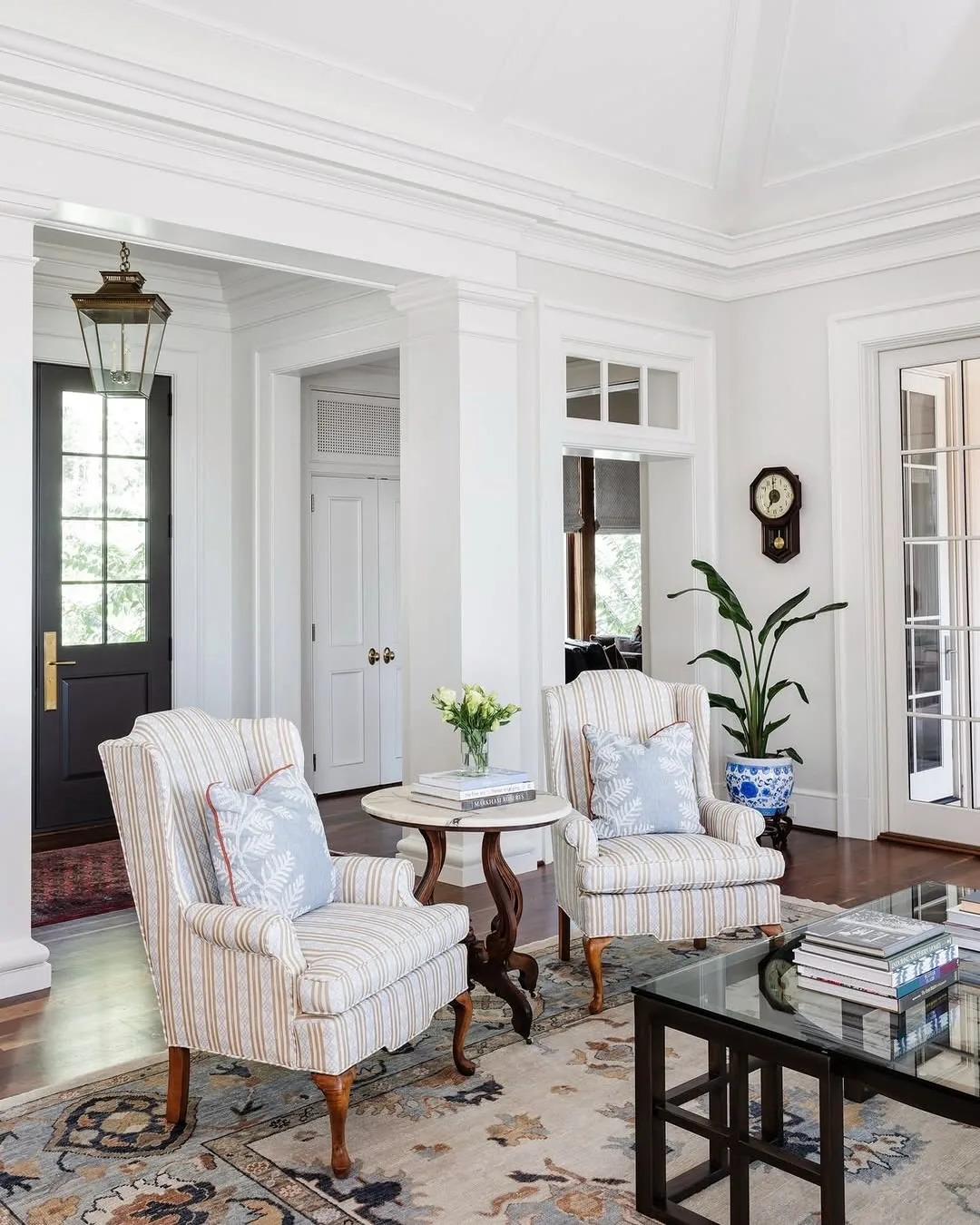
Plaid needs calm around it to read tailored instead of busy. You’ll set patterned chairs against plain walls and solid sofas, letting one scale of pattern own each sightline. Two plaids in one view argue. One plaid with quiet companions converses.
You’ll pull one color from the plaid into a solid cushion elsewhere, tying the chair to the room without repeating the pattern. That single echo is the difference between collected and scattered. When each pattern gets its own territory and one shared color, even bold checks settle into rooms you’ll keep for decades.
Floating versus anchored at a glance
| Floating rug | Anchored rug | |
|---|---|---|
| Legs | None touch pile | Front legs on minimum |
| Border | Rug to walls | Breathing floor frame |
| Patterns | One timid scale | Opposed large and small |
| Fabrics | Precious everywhere | Performance below knees |
| Open plan | Zones blur | Textiles draw lines |
| Verdict | Replan this | Live on this |
The Rug & Textile Formula
If you strip all six ideas down to a plan, it reads like this:
- Front legs on. Tape the outline, then buy one size up from instinct.
- Border of floor. A breathing frame beats wall-to-wall every time.
- Stripes as neutral. Biggest piece, tightest palette, calmest rhythm.
- Performance below knees. Washable where life lands hardest.
- Zone with textiles. Rugs draw the walls you skipped building.
- One pattern per sightline. Oppose scales, echo one color.
Get those six right and the floor carries the room. You’ll stop decorating around a rug mistake.
Frequently Asked Questions
What size rug do I need for my living room?
Big enough that front legs of every seat rest on pile, with a border of bare floor to the walls. You’ll tape the outline first, because taped sizes always read bigger than instinct. When torn, you’ll take the larger rug.
Should all furniture sit on the rug?
Front legs minimum, all legs where space and budget allow. You’ll bind the group into one island either way. Nothing touching pile is the arrangement to avoid, since it strands every piece on bare floor.
Can I mix stripes and plaid in one room?
You’ll mix them at opposing scales with quiet solids between. One pattern per sightline, one shared color echoing across. Same-scale patterns argue, while large against small converses.
What sofa fabric survives dogs?
Tightly woven performance fabrics and washable covers in mid-tone patterns that hide prints between washes. You’ll check care labels before falling in love. Stripes forgive paws far better than solids.
How do I zone an open plan living room?
You’ll end the living rug where the kitchen begins and change the pattern language at the line. Repeat one color across zones so they relate. Textiles draw the boundary so walls don’t have to.
Should I layer rugs?
You’ll layer only over a correctly sized base, with the top rug clearly smaller and different in texture. Layering never rescues a floating base rug. Fix the size first, then play on top.
This article may contain affiliate links. We may earn a commission at no extra cost to you.