Warm the Room Around Your Cool Stone

Add us as a preferred source to see more stories on Google.
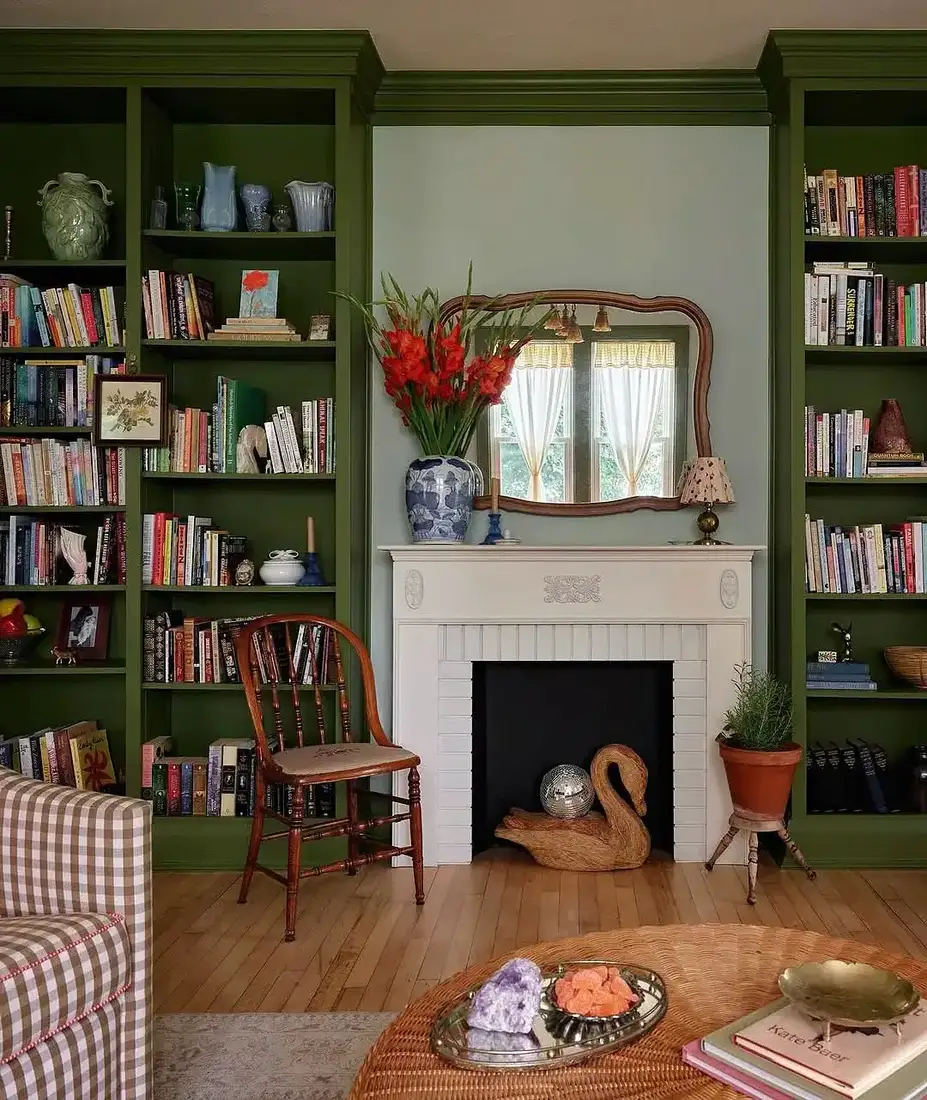
Stone reads cool, and most rooms built around a stone fireplace end up colder than the owner intended. The stone is not the problem. Everything chosen to sit next to it is.
When you pair cool stone with chrome and grey, you amplify that chill and you keep the room distant. When you pair it with warm linen, timber and brass, the same stone feels grounded and inviting for you.
These ten hearths show you how to warm the room without hiding the stone. For more on tying hearth and seating into one plan, browse our living room ideas and cozy living room ideas for low warm light that suits stone.
Warm what sits beside the stone
The fastest change is not the stone. It is the textiles and metals you place next to it.
Layer warm textiles against the cool face
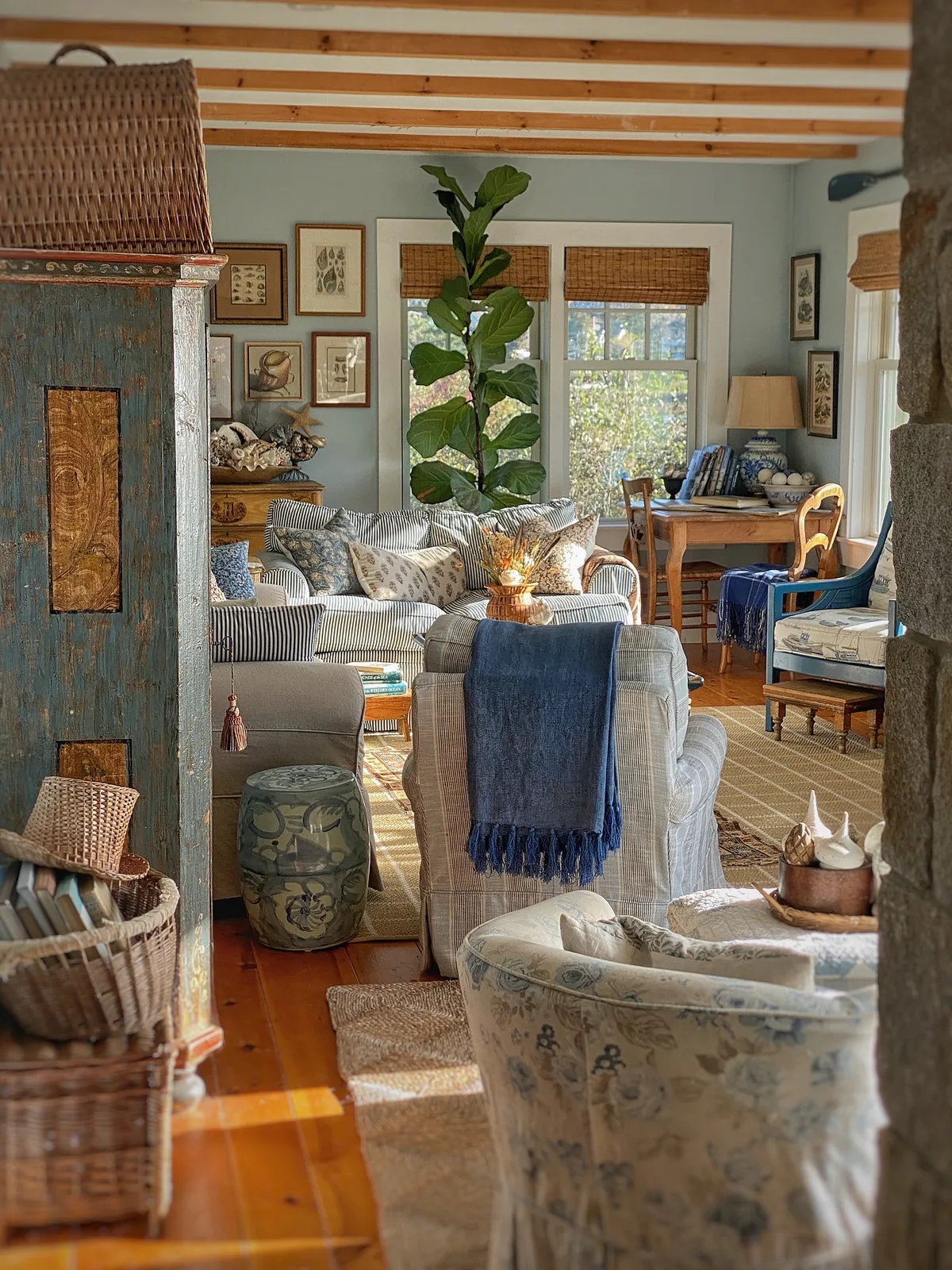
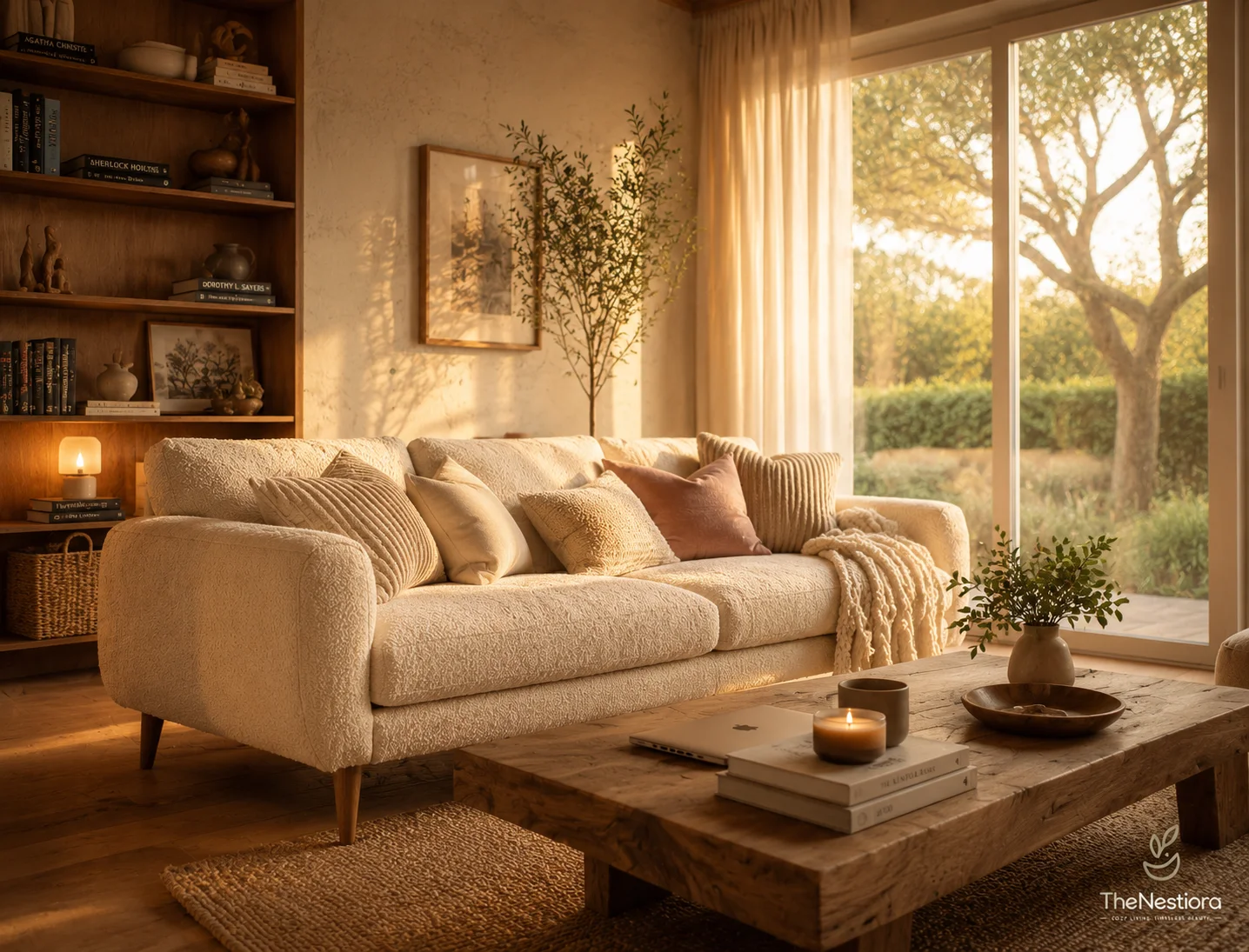
A stone surround can feel hard until you bring in softness that lives beside it. Drape a wool throw over the nearest chair, add linen cushions that pick up the mortar tone, and lay a jute rug that repeats the hearth’s warmth. Those textiles absorb the visual chill that stone throws off. Chrome and cool greys do the opposite; they bounce that coolness back into the room. When you choose brass or aged timber nearby, the stone reads as quiet strength rather than a cold block. You clock the room soften the moment the soft layer lands.
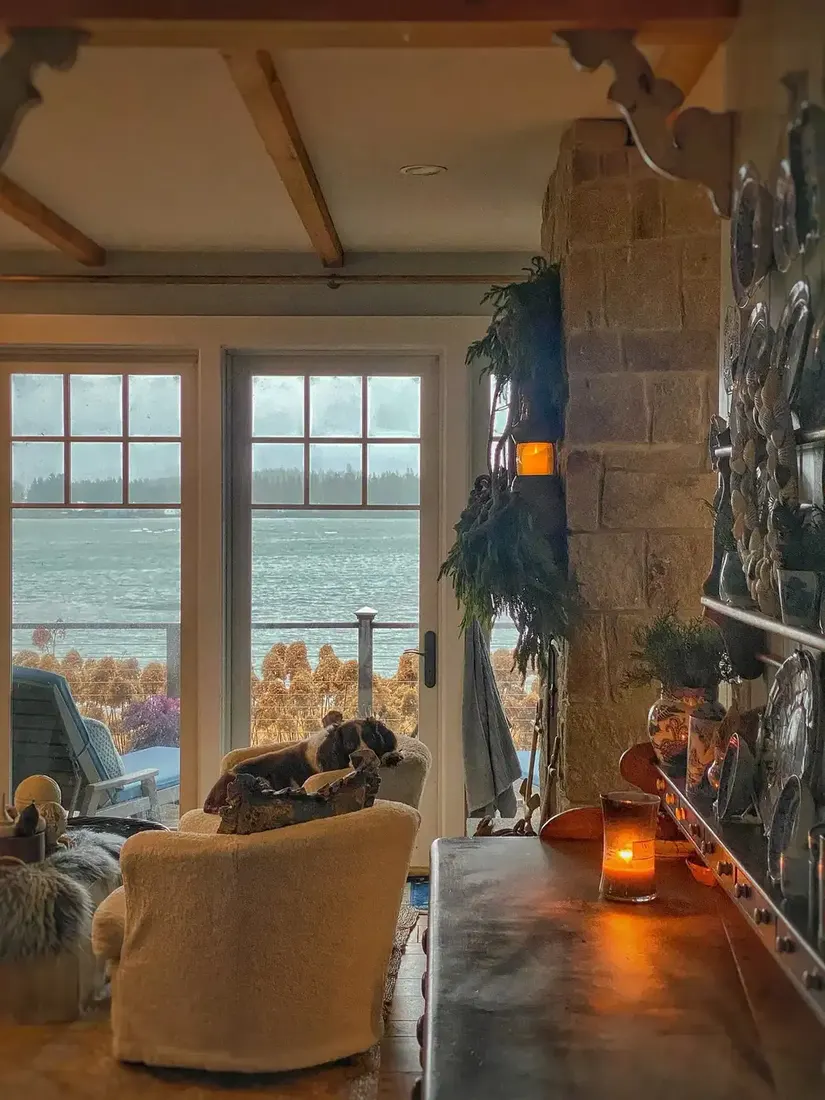
Choose timber and brass where you might reach for chrome
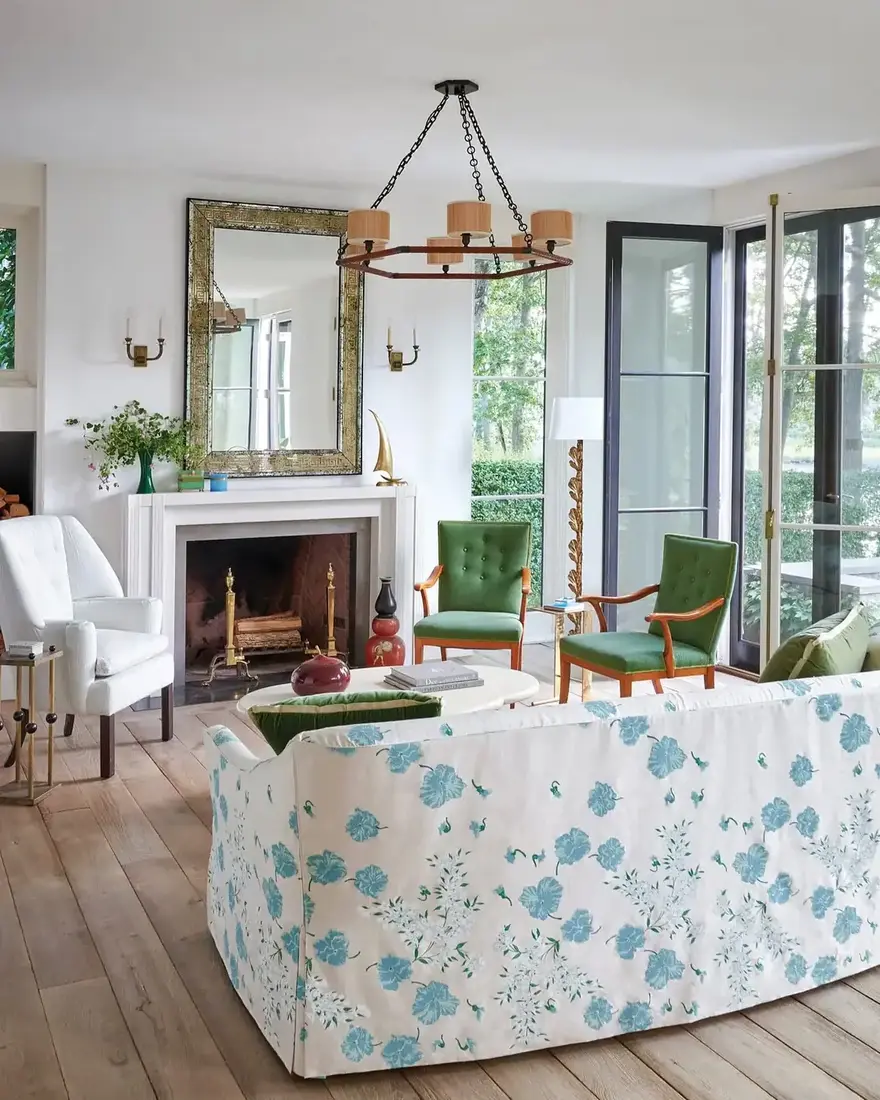
Metal and wood set the temperature around stone more than colour does. Brass candlesticks, a timber mantel or an oak side table introduce warmth that stone can lean against. Chrome, glass and cool grey keep the palette crisp and a little distant, which is exactly why stone rooms styled that way feel chilly. If your existing fireplace tools are chrome, swap them for brass or blackened steel and watch how the stone settles. You keep the stone honest and the room feels held.
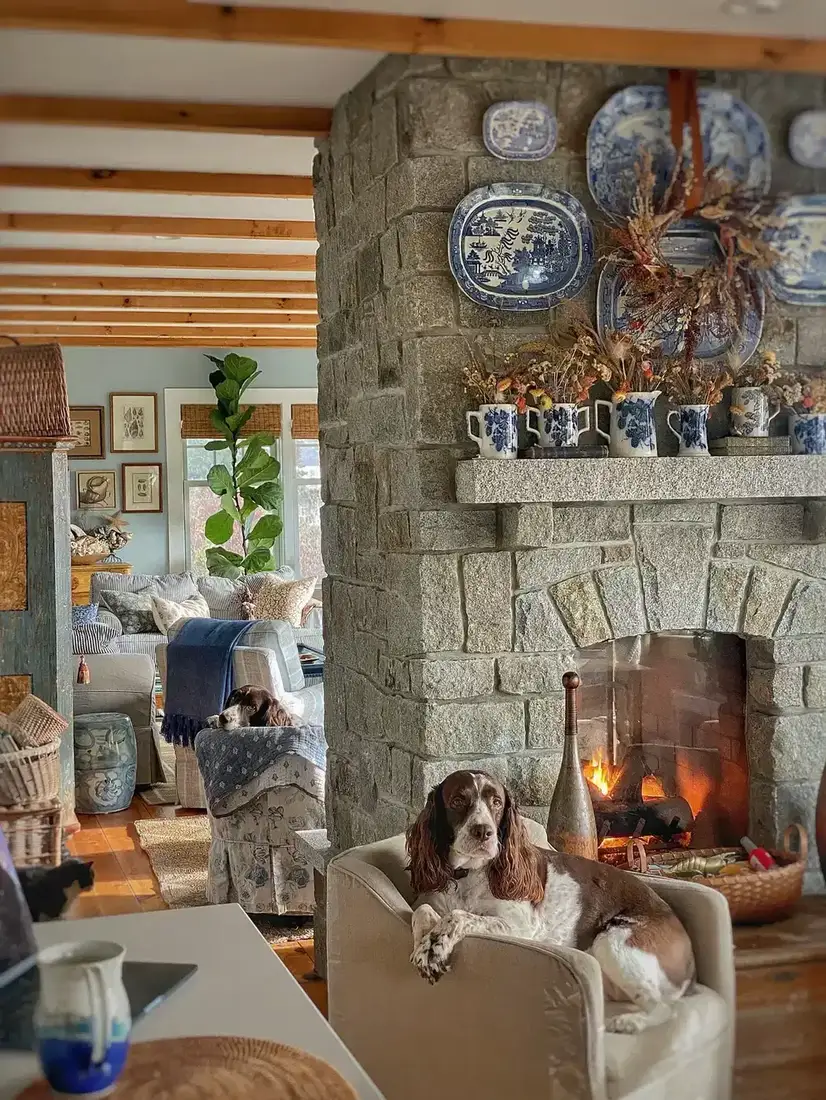
Let the age of the stone decide the rest
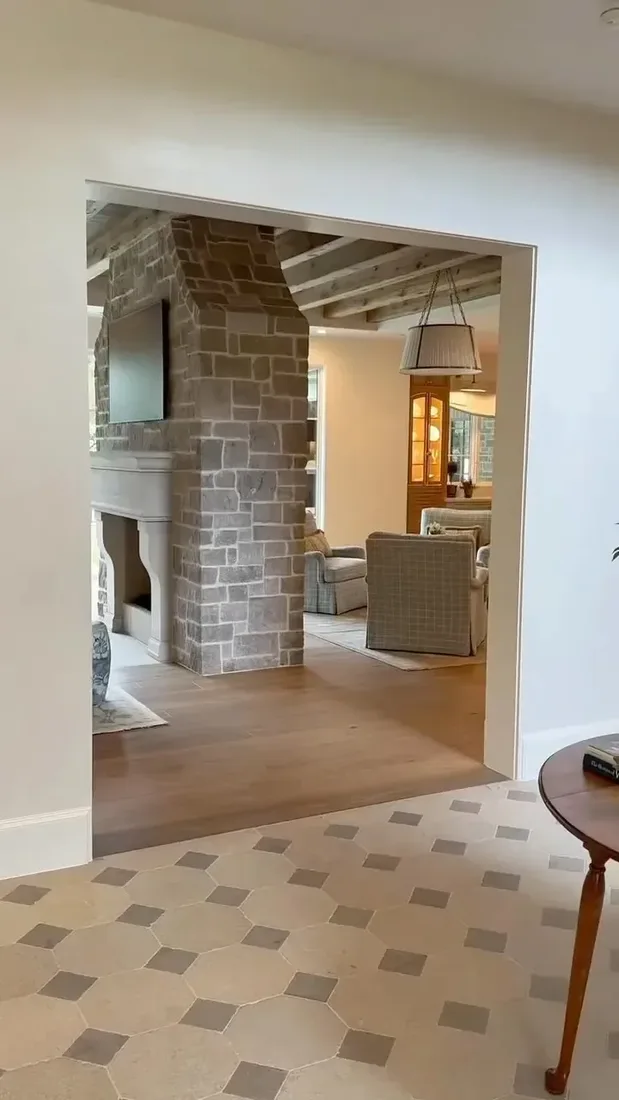
Reclaimed and rough-cut stone carries irregular marks, pits and tonal shifts that sawn or thin veneer cannot fake. That age makes the same sofa and rug read as period in one room and as new in another. If your stone is rough and hand-laid, keep the room’s other materials a little rough too, like unfinished timber or hand-thrown ceramics. If your stone is sawn and even, keep companions smoother. When you echo the stone’s age, the whole arrangement feels intentional. For the full traditional room around a stone hearth, see our traditional and formal living room ideas.
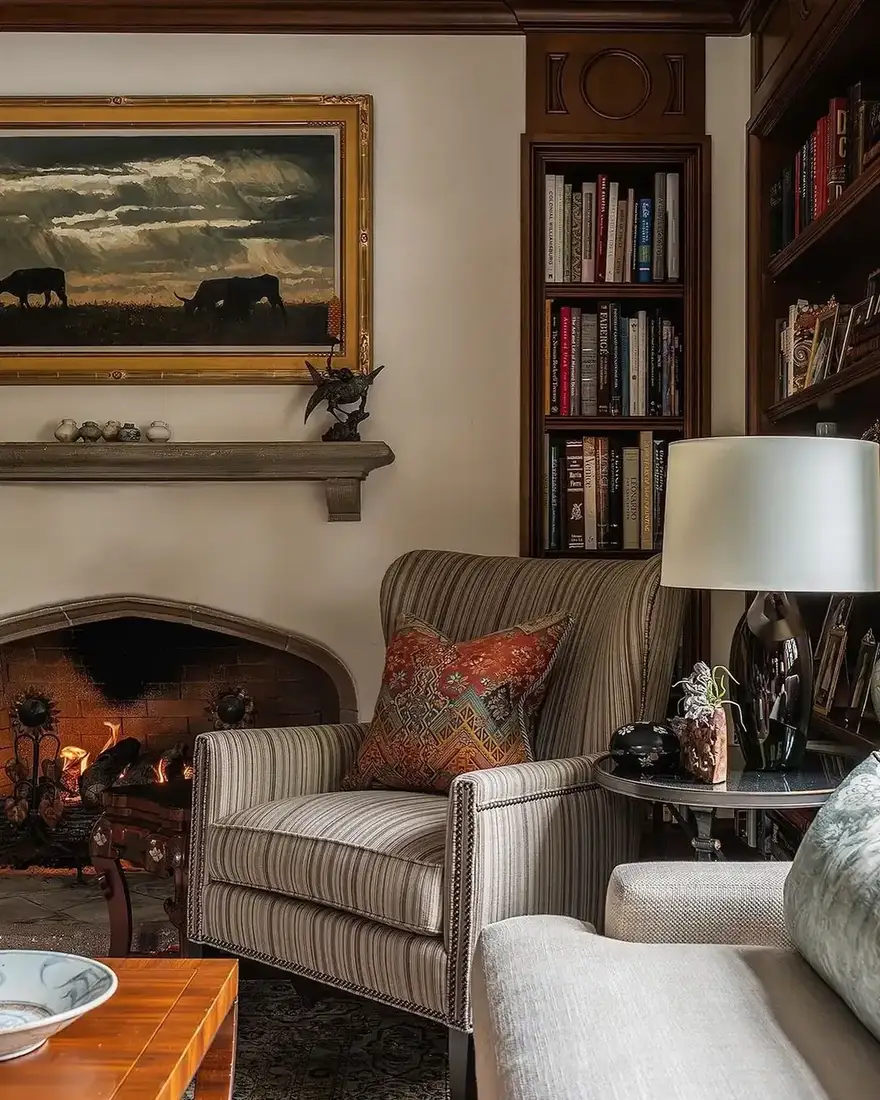
Keep the stone honest and the mantel quiet
Stone needs air to read. The mantel should give it that.
Keep the mantel sparse so the surround can breathe
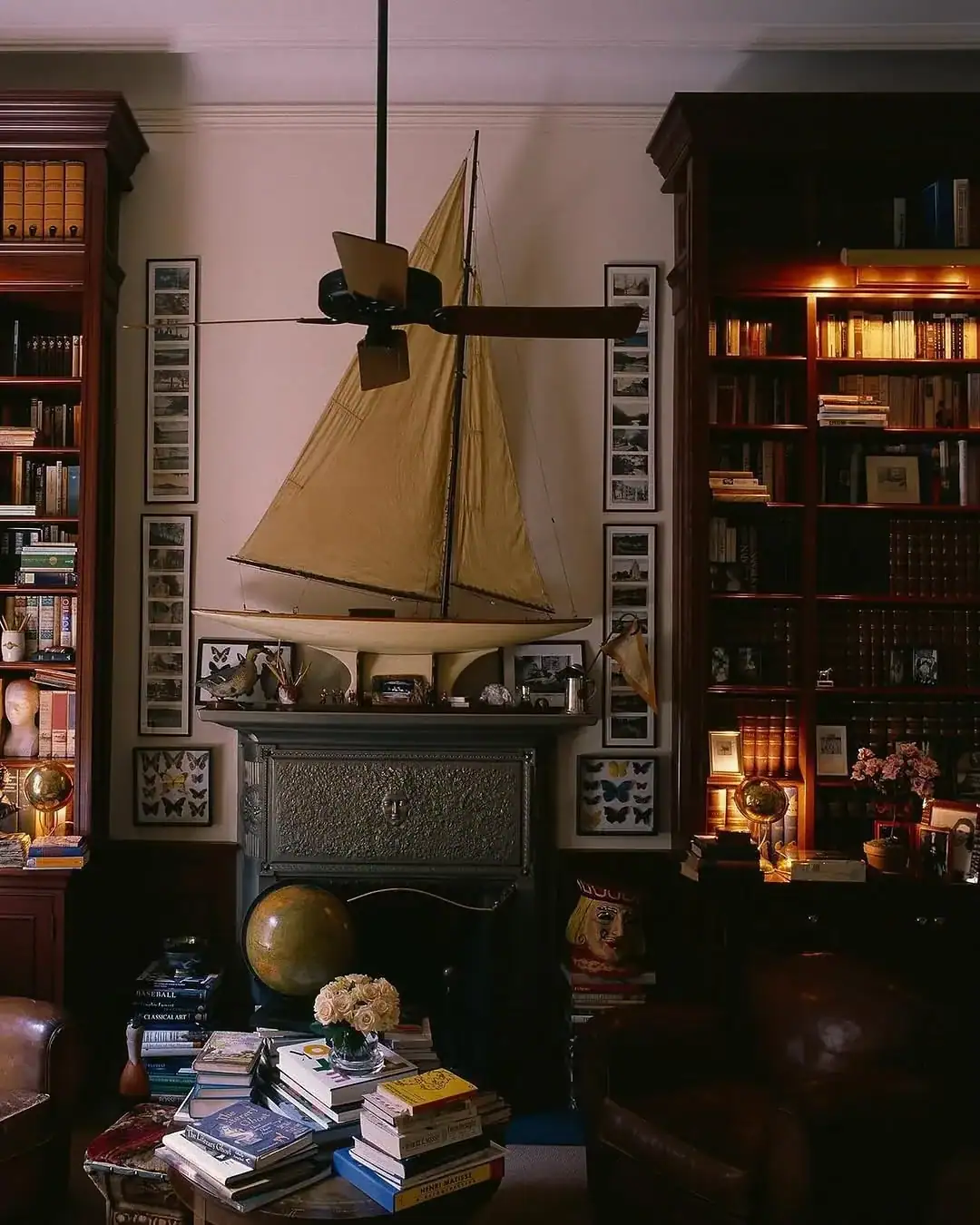
A stone surround already gives you texture, shadow and variation. Piling the mantel with many objects competes with that texture and makes the wall feel busy. Leave a clear stretch of mantel showing, with one tall form to one side and a low, quiet form to the other. That breathing room lets the stone be the pattern, and you keep the hearth as the focus. Step back to the doorway and you should be able to count what sits on the mantel without moving your head.
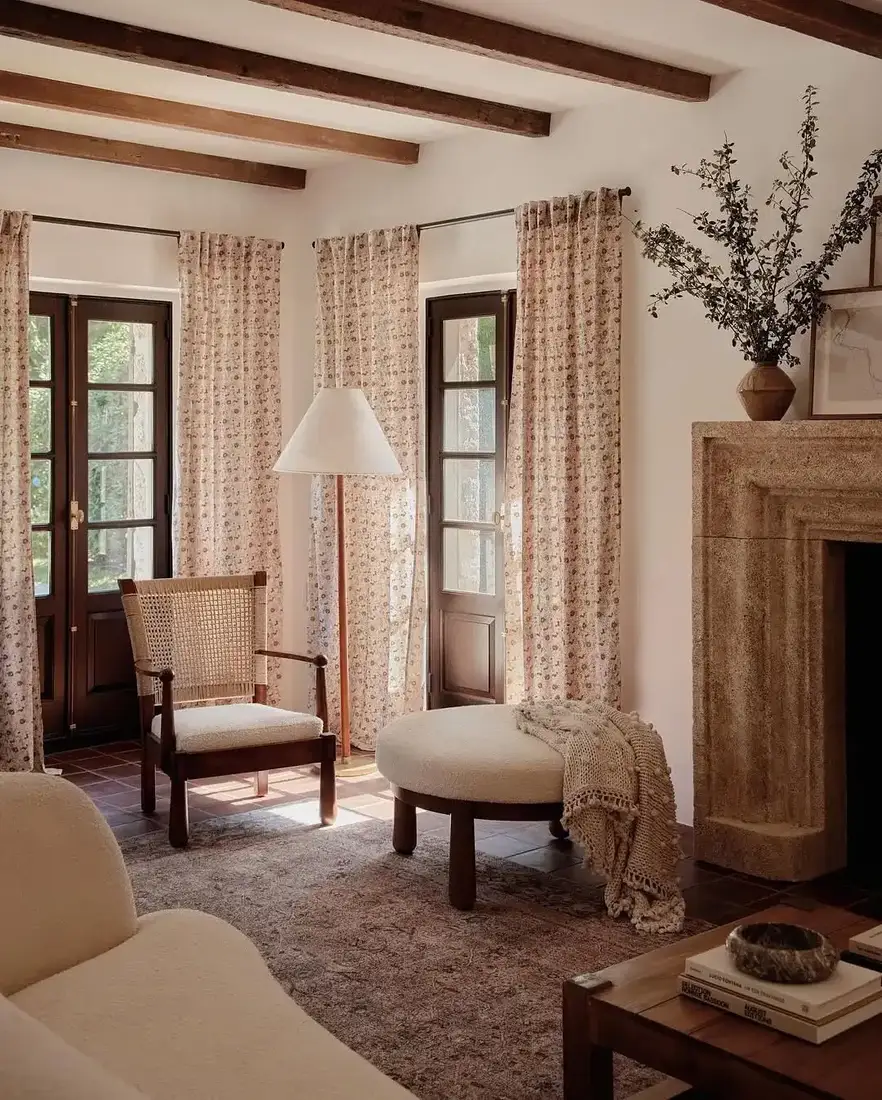
Skip the glossy sealer on interior stone
It is tempting to add shine to make stone look richer, but a glossy sealer on interior stone reads as plastic and it is hard to undo. The seal sits on the surface, catches light in the wrong way, and can trap moisture behind it. If your stone looks dusty, dust it and wash gently with water. When you want a little depth, a matte, breathable stone wax made for interior use will soften without that plastic sheen. You keep the stone looking like stone, which is why you chose it.
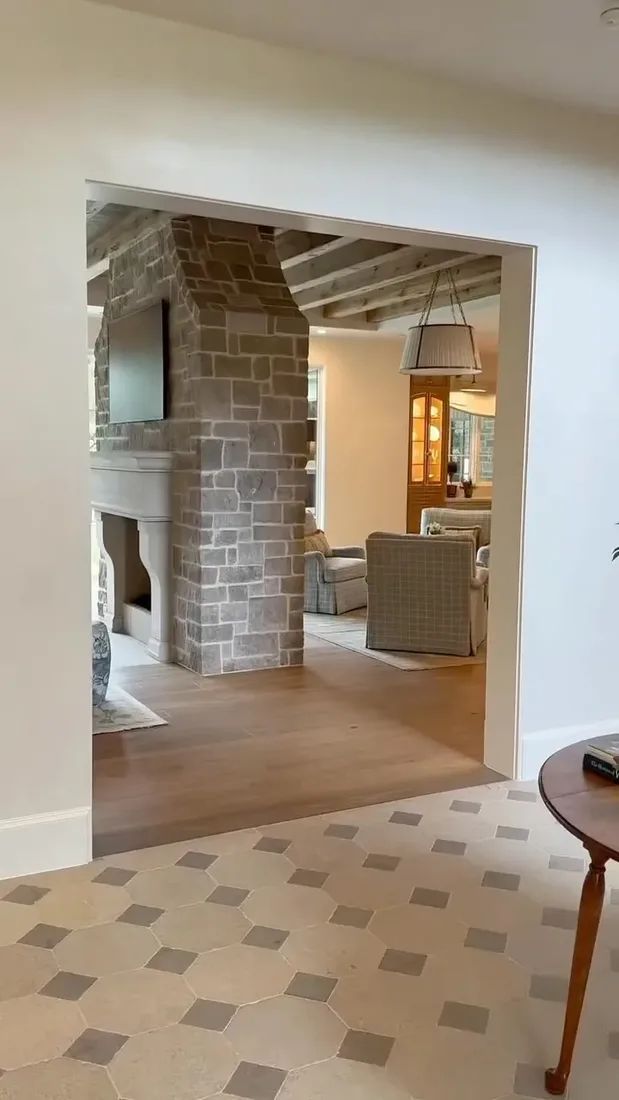
Give the hearth its own clear field
A stone hearth needs a little emptiness in front of it to feel like a place, not a wall. Pull the rug back so the stone has a border of floor showing, and keep the immediate hearth clear of baskets and furniture that block approach. That clear field frames the fire and gives you a spot to stand. You will notice guests gather there when the field is open, and the stone reads as an anchor you can approach.
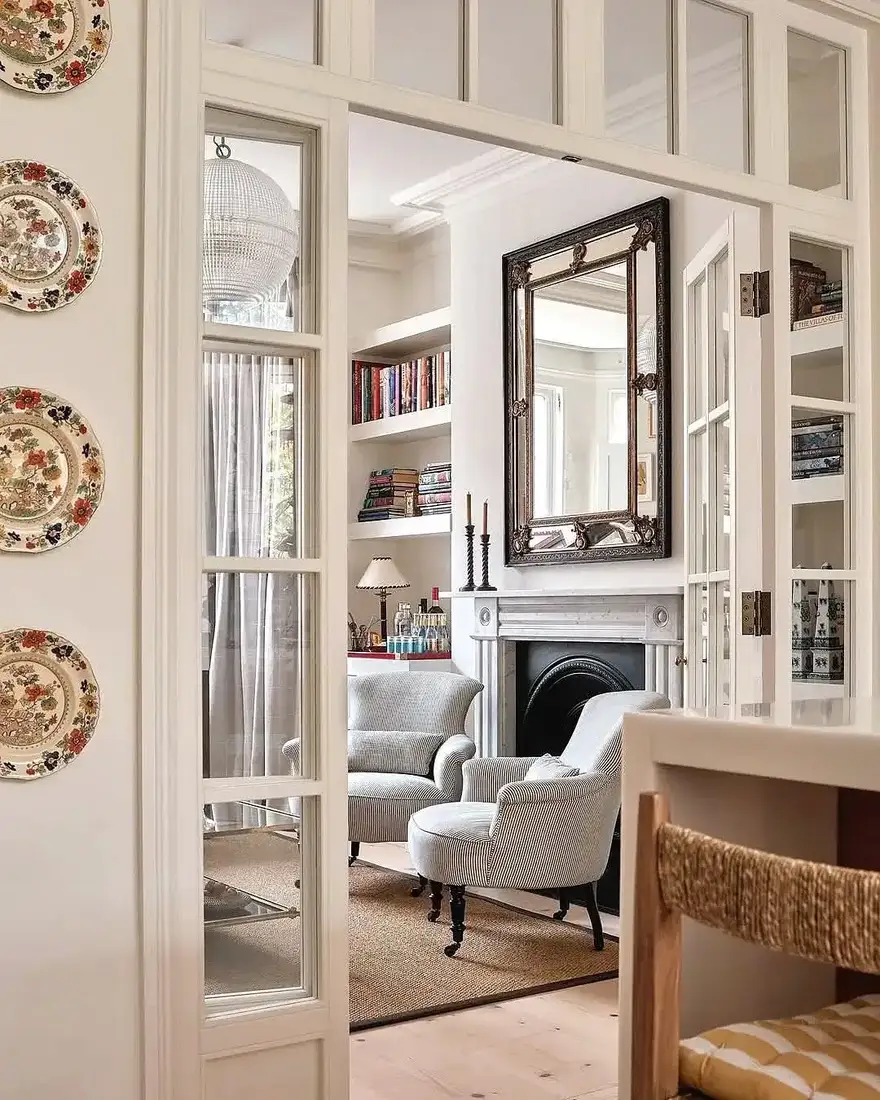
Light the stone so it glows, not glares
Colour temperature matters more beside stone than anywhere else.
Light the room warm and low around stone
Warm bulbs matter more in a stone room because stone amplifies whatever light you give it. Cool light makes it feel like a hall, warm light makes it feel like a hearth. Keep your bulbs at 2700K or below and place them low, table lamps beside the sofa, a floor lamp near the hearth, a picture light washing the mantel. That low, warm pool brings the stone to life after dark. When you switch one cool overhead for those warm pools, you feel the room soften immediately.
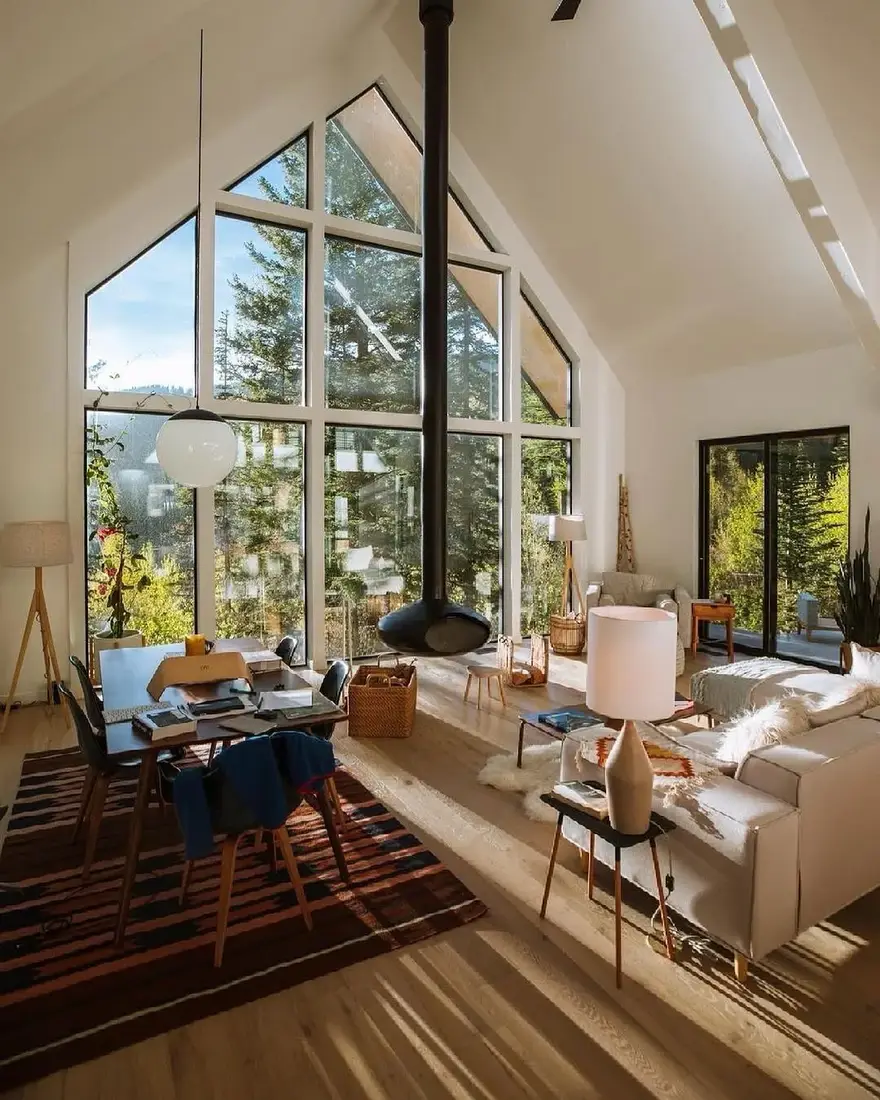
Pair rough stone with soft, plain seating
Rough stone wants a soft, plain companion to lean against. A neutral upholstered sofa in warm linen or boucle gives the eye a place to rest away from the stone’s texture. When you keep that sofa plain, with one throw and one cushion, the stone stays the texture and the seating stays the calm. The contrast is what keeps a rustic room elegant rather than themed, and you will see the stone look more refined because the sofa is quiet.
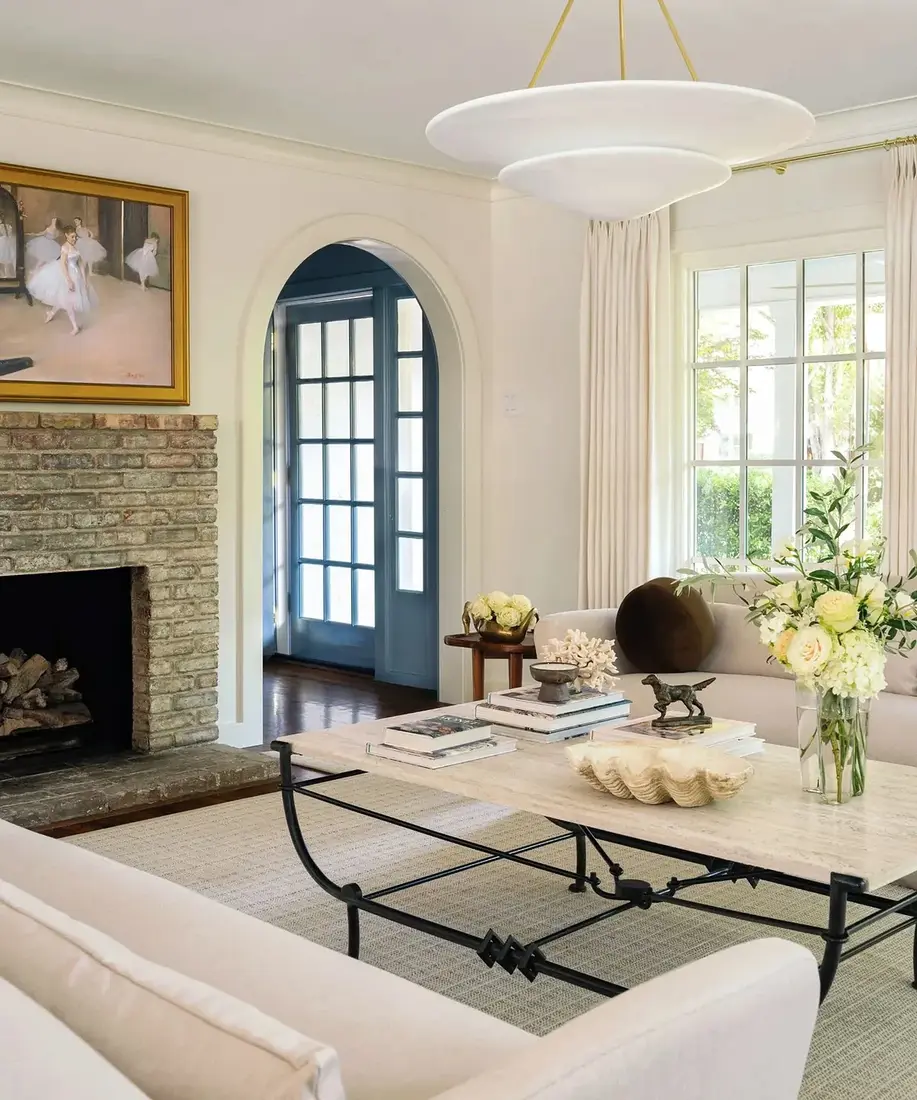
Let texture do the work, not extra colour
Stone already brings colour and pattern, even when it is pale. Let texture carry the room rather than adding more hues. Layer jute, wool, leather and timber in natural tones and keep the palette restrained. When you add texture instead of colour, the stone reads as part of a calm collection, not a single cold element you are trying to decorate around. You keep the room warm with touch, not with paint.
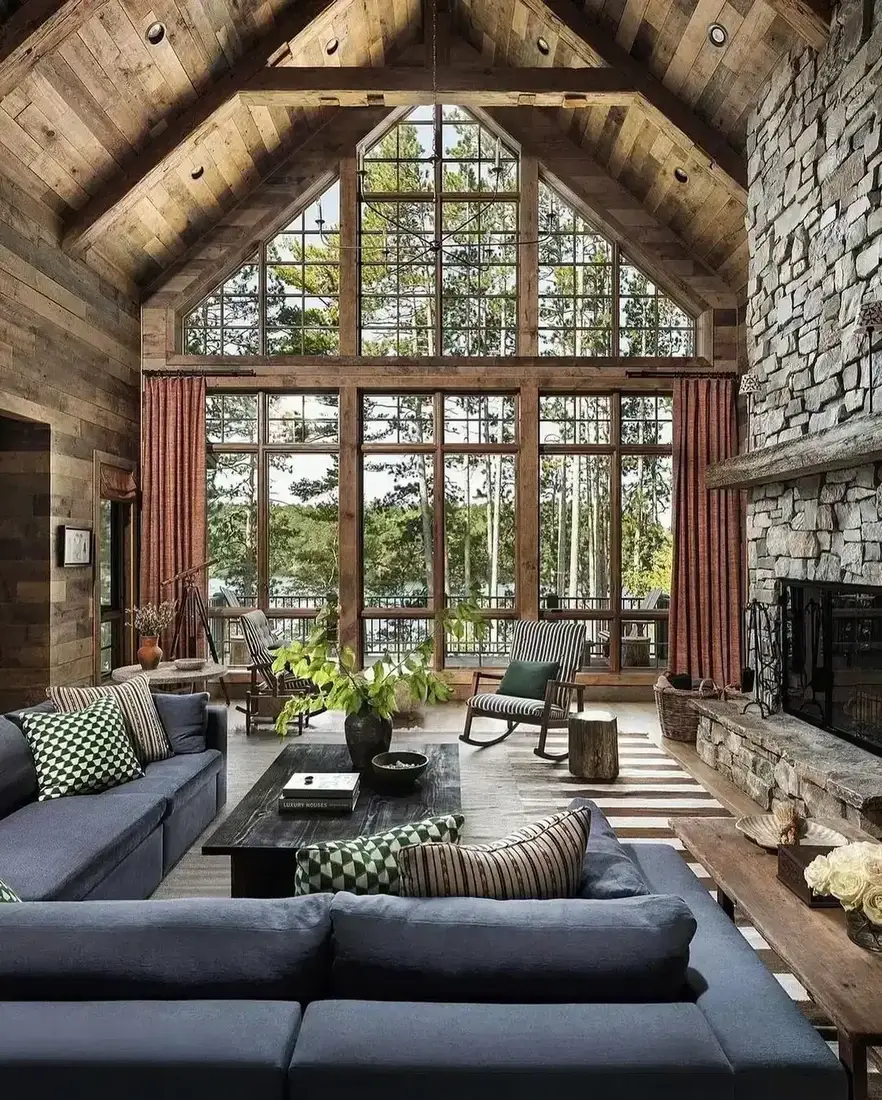
Keep the story simple so the stone stays the star
The most elegant stone rooms use one architectural element and keep everything around it simple. One stone hearth, not stone plus beams plus reclaimed wall, is enough. When you let that one element carry the room and keep the palette to natural tones with one soft plain sofa to lean against, the stone feels collected rather than applied. Genuine age reads in the irregular marks, and leather or timber nearby will age into it rather than fight it.
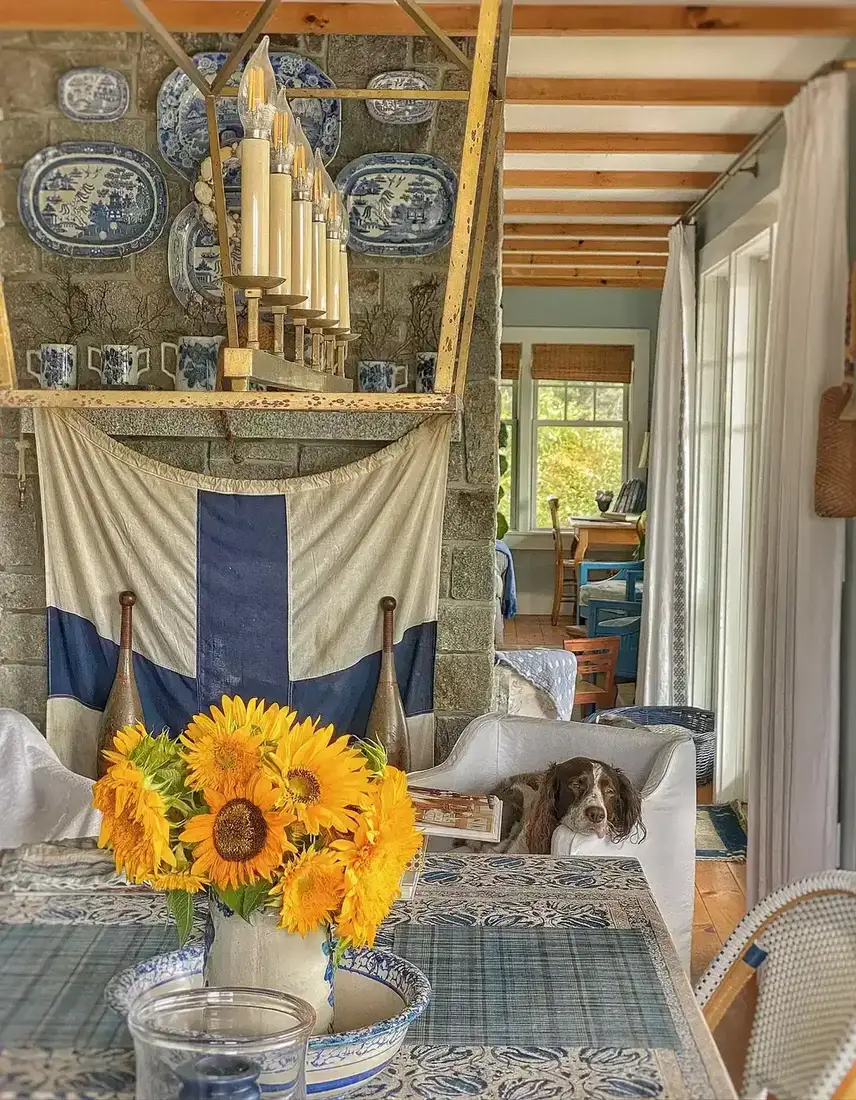
Stone choices that warm or chill
| Choice | How it reads | When you use it |
|---|---|---|
| Warm textiles, timber, brass | Softens stone, feels inviting | Stone feels cold or distant |
| Chrome and cool grey | Amplifies chill | Avoid beside stone |
| Rough, reclaimed stone | Older, collected | You want period warmth |
| Sawn or thin veneer | Newer, even | You want a cleaner, modern read |
| Glossy sealer | Plastic, hard to undo | Avoid inside |
| Sparse mantel and clear hearth | Stone breathes | Every stone surround |
The Stone Fireplace Formula
- Warm the neighbours. Layer wool, linen, timber and brass beside the cool stone.
- Match age to age. Rough stone with rougher companions, sawn stone with smoother ones.
- Skip the gloss. Never seal interior stone with a glossy sealer.
- Hold the mantel sparse. Let the surround have breathing room and a clear hearth.
- Light warm and low. Keep bulbs at 2700K or below and place light beside the stone.
- Keep texture over colour. Use natural tones and one soft plain sofa to lean against.
Hold those six and the stone stays the star without chilling the room.
Frequently Asked Questions
Why does my stone fireplace make the room feel cold?
Stone reads cool, so chrome and grey beside it amplify that chill. Warm textiles, timber and brass beside the same stone make the room feel grounded and inviting.
Does the age of the stone matter?
Yes. Reclaimed and rough-cut stone carries pits and tonal shifts that read as old. Sawn or thin veneer reads as new, so keep companions in the same register.
Should I seal my interior stone with a glossy sealer?
No. It reads plastic, catches light poorly and is hard to undo. Dust and wash gently, or use a matte, breathable wax made for interior stone.
How should I style the mantel on stone?
Keep it sparse so the surround can breathe. One tall form, one low form, and a clear stretch of stone showing lets the texture be the pattern.
What light works best with stone?
Warm bulbs at 2700K or below, placed low around the hearth. Warm light keeps stone from feeling like a hall after dark.
Can I mix stone with other rustic elements?
Use one architectural element to carry the room. When you add stone plus beams plus reclaimed timber, the palette tips into theme.
This article may contain affiliate links. We may earn a commission at no extra cost to you.