Which Green Does Your Garden Already Wear?

Add us as a preferred source to see more stories on Google.
Blue borrows from the sky. Black borrows from the trim. Green borrows from the ground, and that is where owners go wrong.
You choose green against your shutters, your siding and your paint chips, everything except the living things your door will stand beside for decades. Then your olive fights your lawn, your sage vanishes against your stone, and your forest turns your brick front into December.
These green front door ideas start from the garden and work inward. Match something growing and the door looks inevitable. Match the trim and it looks applied.
Borrow from the living
Green is the garden’s color on loan. Three ideas keep the loan honest.
Answer something growing within sight of the door
Stand at your threshold and name the greens you can actually see: your lawn, your boxwood, your ivy, the neighbor’s maple. Your door joins that family whether you planned it or not, so planned membership beats accidental clashing. A door green with no relative outside looks imported.
You will photograph the entry with the garden in frame and hold chips against the photo, not against the siding. The chip that sits comfortably among your real greens is the family member. Chances are it is earthier than the one you loved in the store. Gardens run muddy, and doors that admit it look rooted.
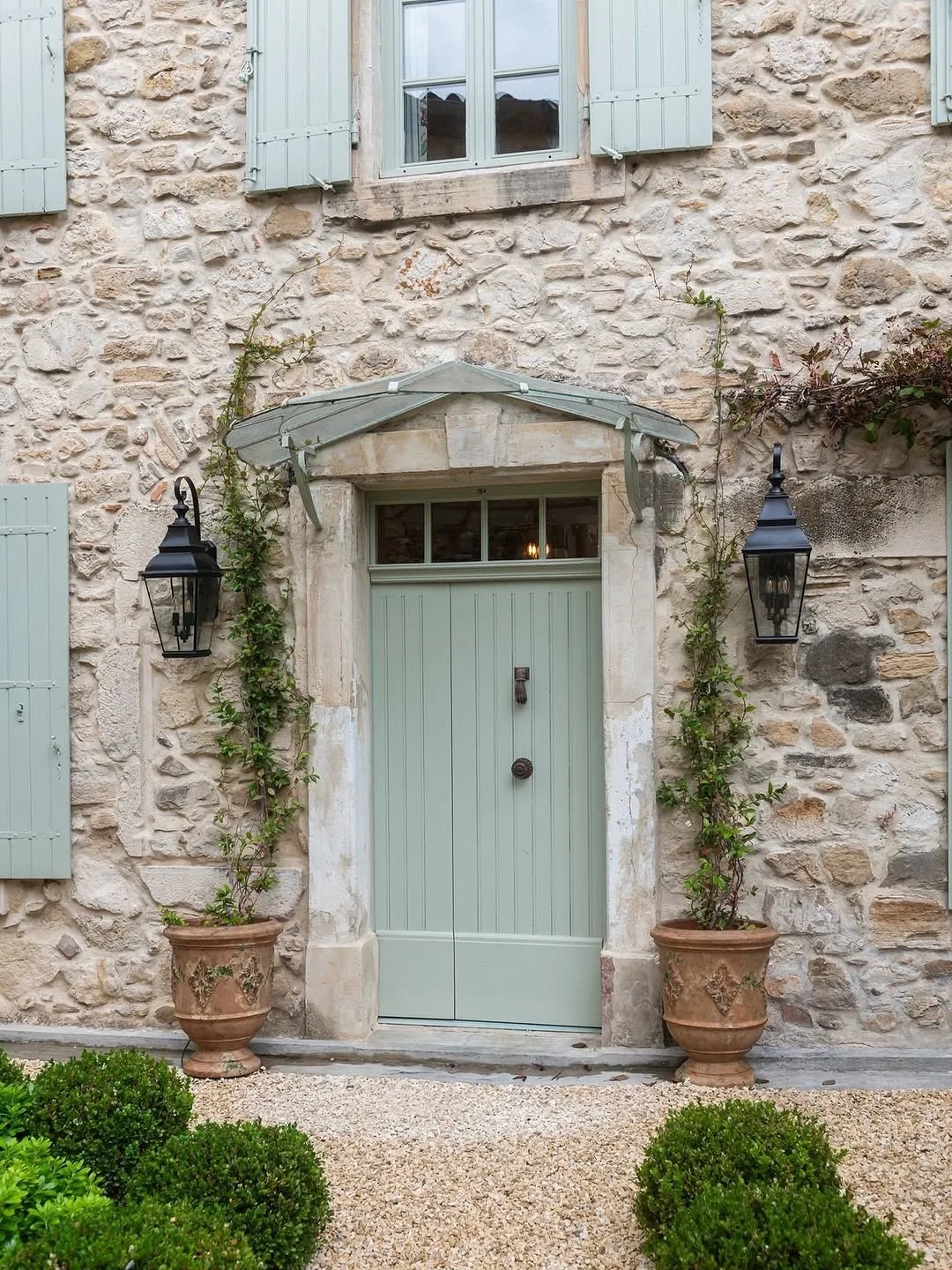
Let olive answer boxwood and bronze
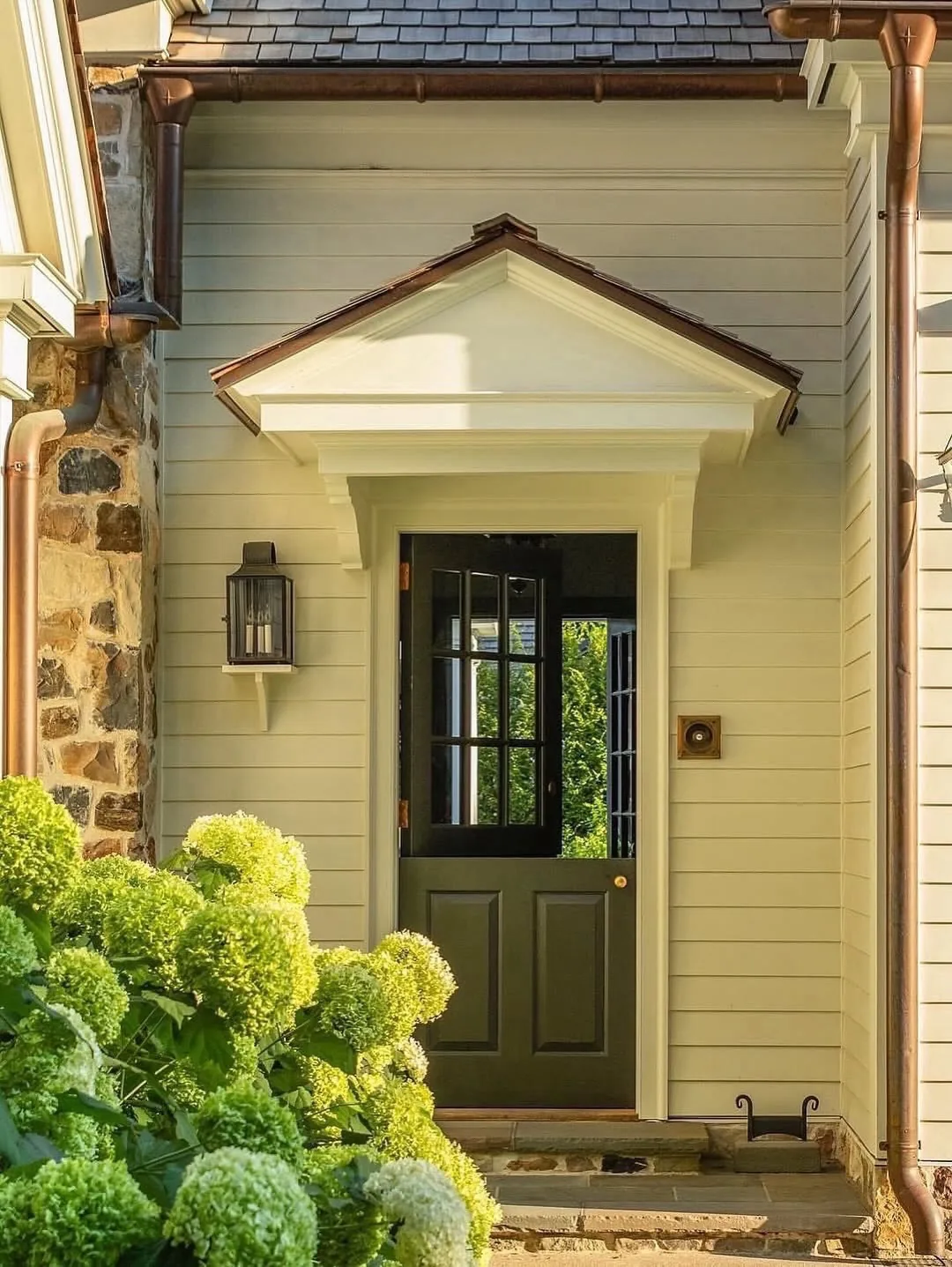
Olive is the most architectural green, gray enough for your formality and warm enough for your brick. It sits beautifully with your boxwood balls, bronze lanterns and tan stone, the whole muted entry palette. Where sage looks cottagey and forest looks bold, your olive looks considered.
You will give your olive cream or warm white trim rather than stark white, which can make it read muddy by contrast. Bronze and aged brass hardware complete your family. Your olive fails exactly once: beside your cool gray siding and chrome, where its warmth turns sallow. Keep it among warm company and it never shouts.
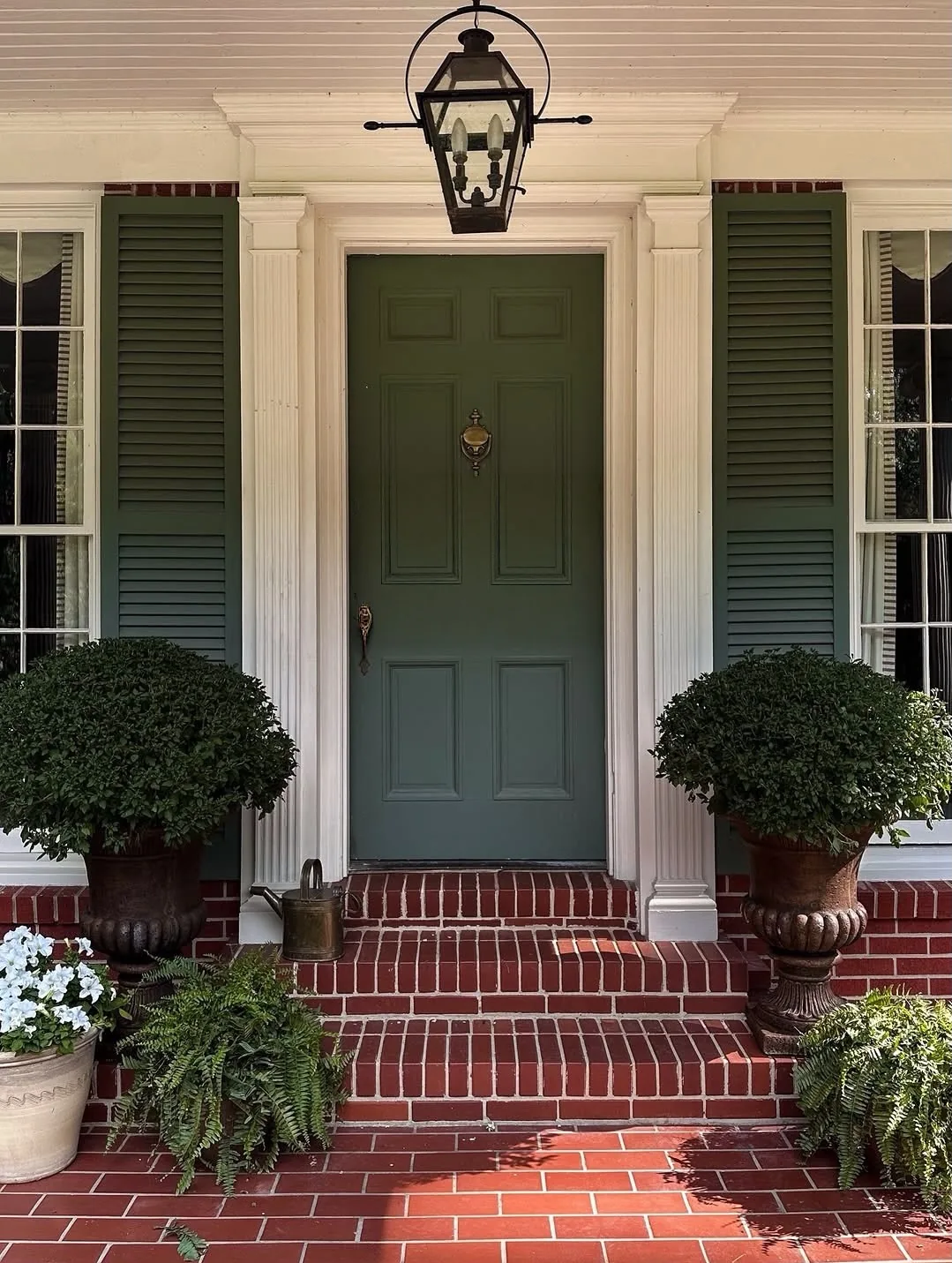
Spend sage where stone and shingle already whisper
Sage is quiet by design, and your quiet needs quiet company. Your weathered cedar shingle, fieldstone and pale gray siding all murmur in the same register, so your sage door among them reads as the finishing note. Put your sage against bright white and loud brick and it washes out from both sides.
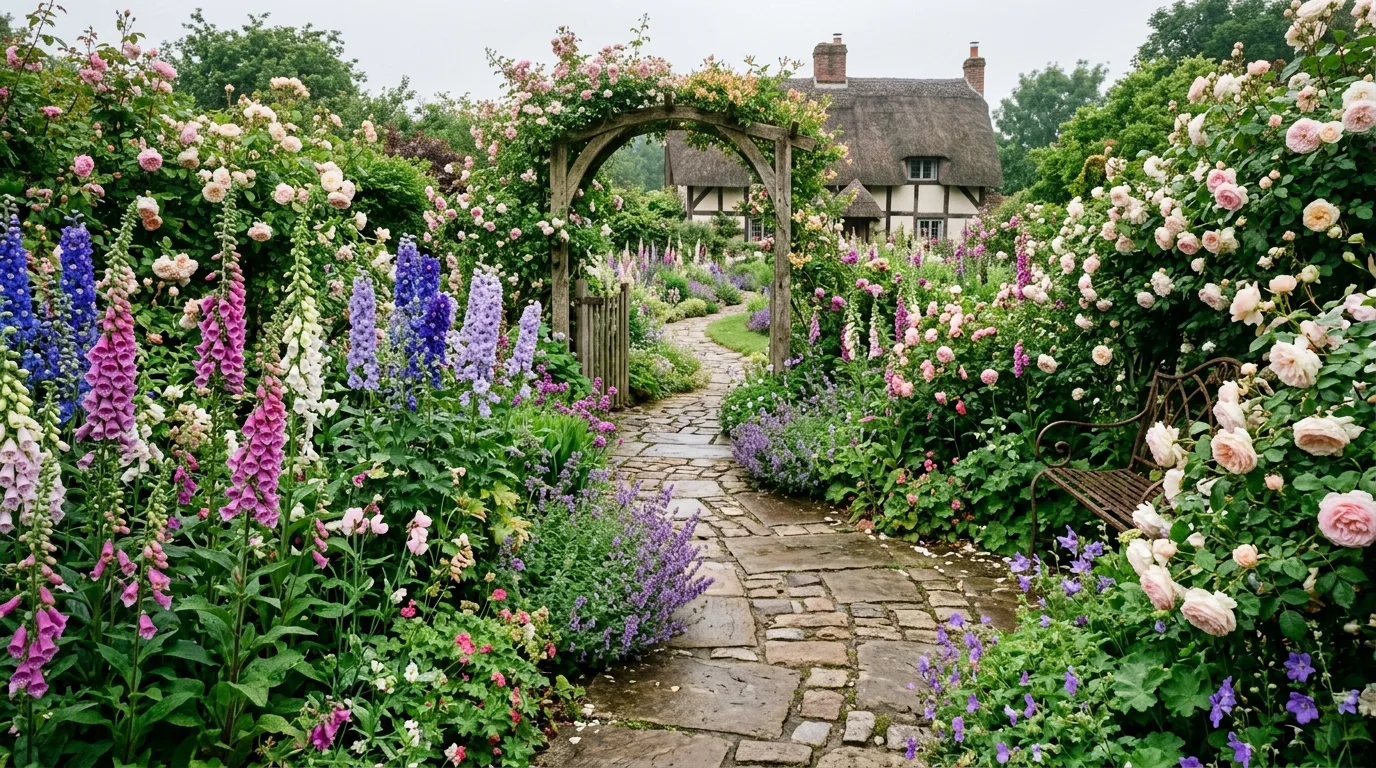
You will choose sage for cottages and shingle houses where understatement is the whole aesthetic. Pair it with brushed nickel or aged pewter rather than yellow brass, which can overpower its softness. For shingle fronts finding their palette, our cottage exterior ideas show sage sitting naturally among weathered textures. Soft with soft, always.
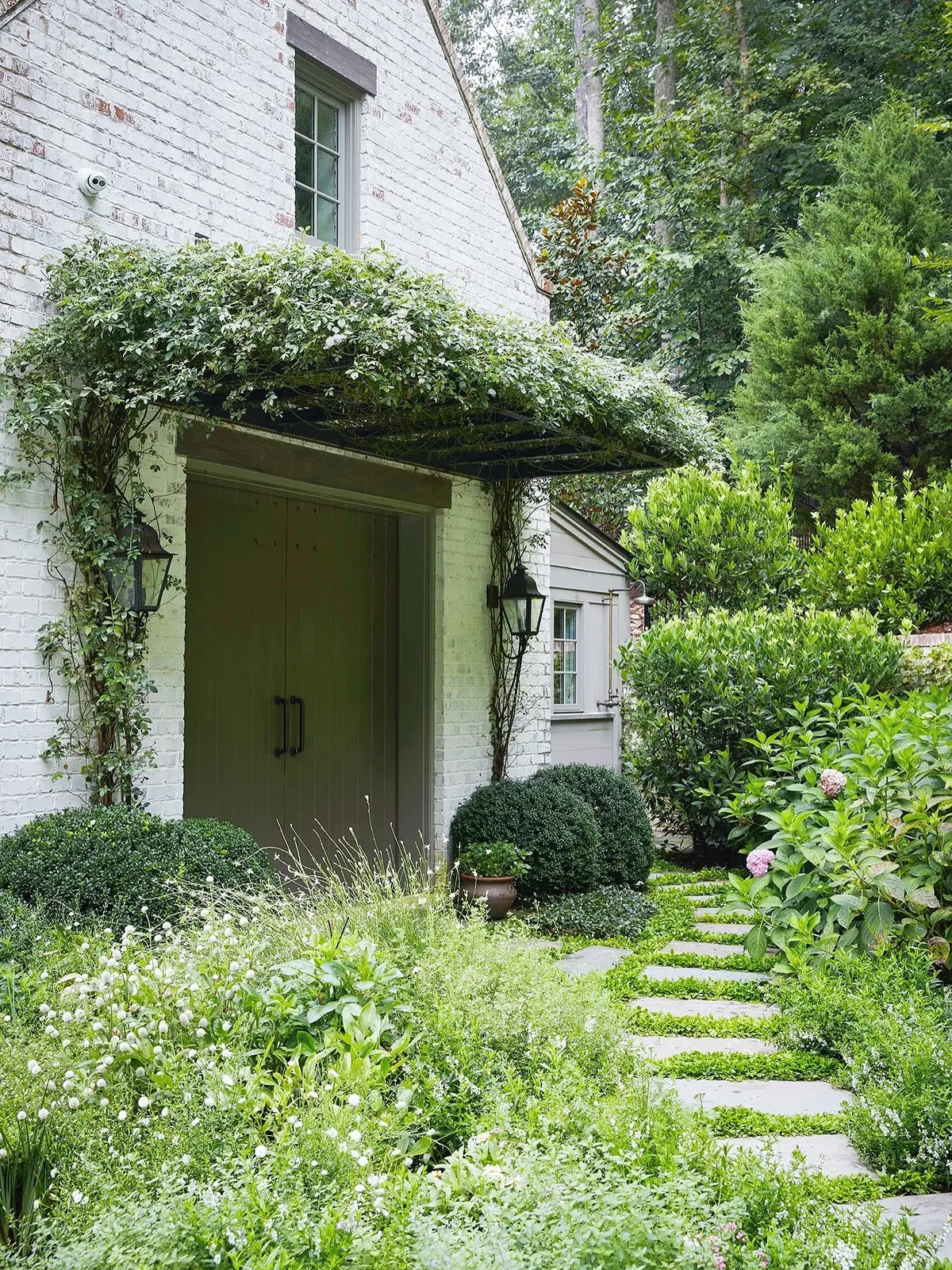
Place green by depth
Pale, mid and deep greens obey different rules. Three ideas sort them.
Give forest the white frame it demands
Deep forest green carries the most drama of any door color short of black, and drama needs a stage. Crisp white trim, bright sidelights and pale siding give forest the contrast that keeps it green instead of near-black. Without that frame it sinks into shadow and reads as a dark hole.
You will commit to the full contrast: white surround, generous lantern, pale house. Half measures produce a door that looks black on cloudy days and surprises you green in sun, which sounds charming and lives as indecision. Forest is a promise of boldness. The trim is how you keep it.
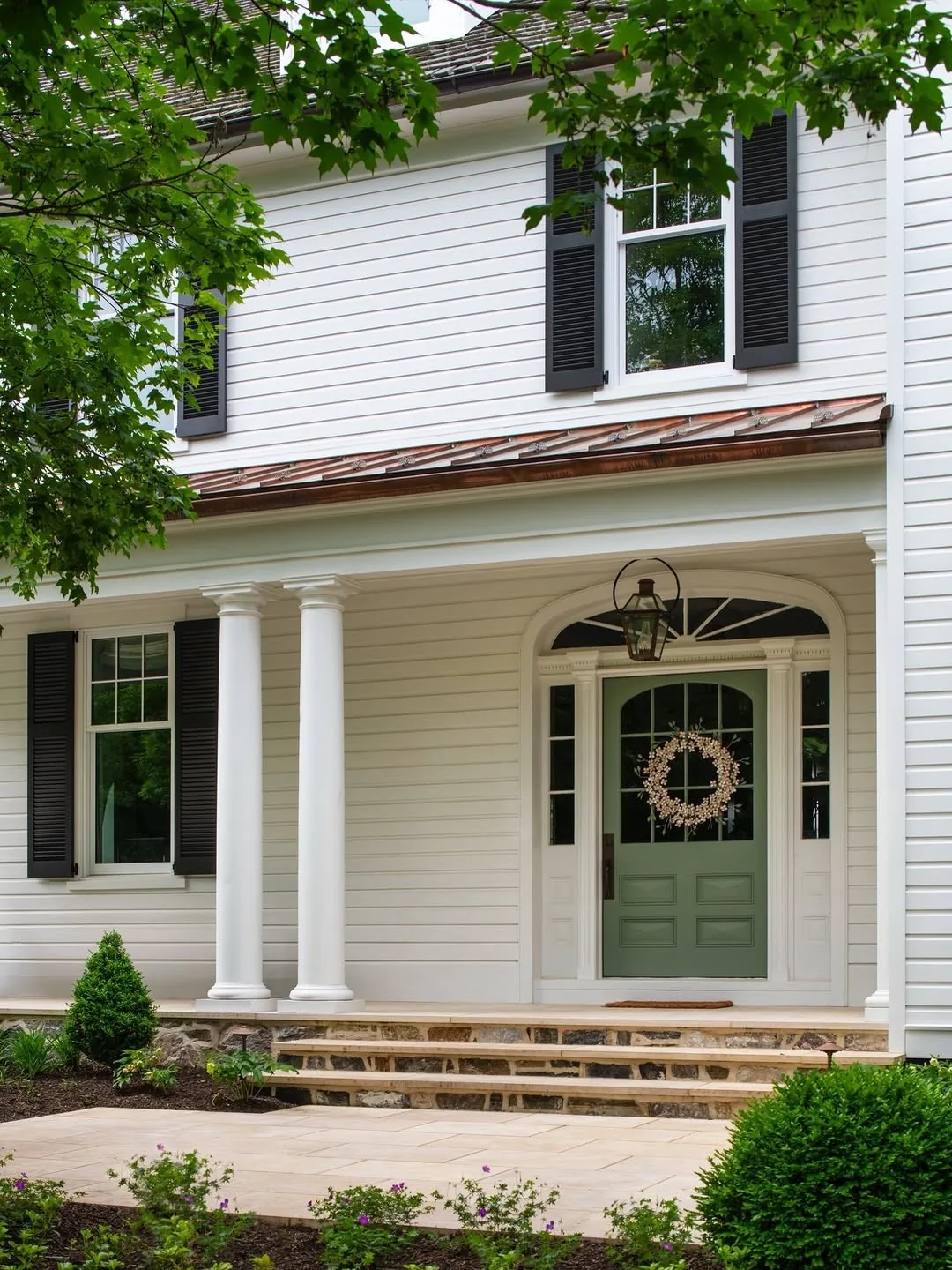
Keep mint small, shaded and deliberate
Mint and pale pistachio are the riskiest greens, one step from Easter egg on a full-size door in full sun. They succeed on small cottages, in shaded entries, and against white where their paleness reads fresh rather than washed. Scale and shade are the guardrails.
You will test your mint at full size before committing, because chips flatter pale colors cruelly. If your test board reads chalky or sweet, deepen one step toward sage and test again. One step deeper keeps your freshness and loses the nursery. Your pale green is a color that punishes optimism, so bring evidence.
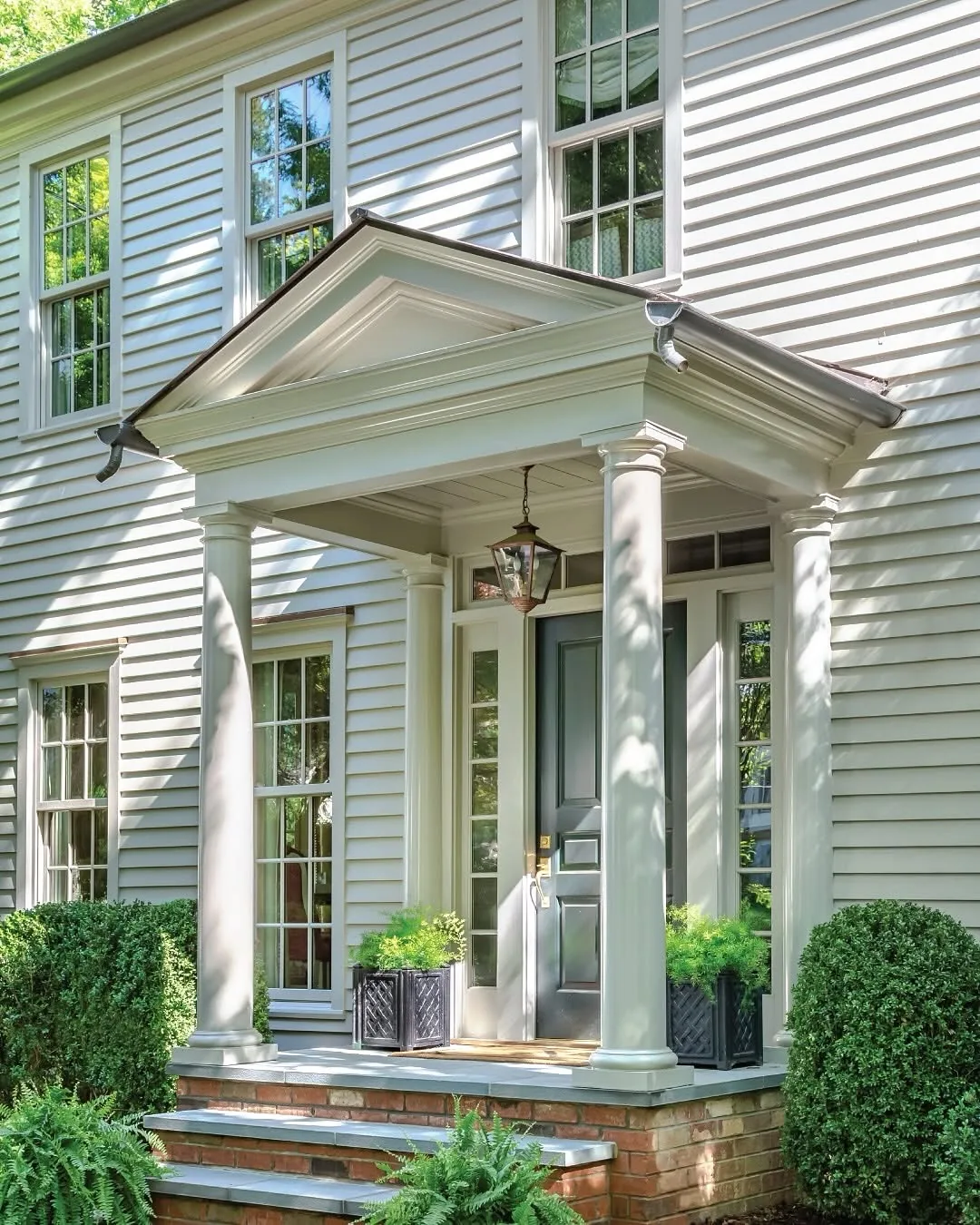
Separate green from red brick with white
Red brick plus green door is complementary on the wheel and Christmas on the house, unless you manage the meeting. The fix is separation: a band of white or cream trim between masonry and paint lets each color own its territory. Direct contact is what triggers the holiday reading.
You will also keep the green deep and muted against brick, never bright or yellow-leaning. Deep forest with white trim on red brick is a classic for a reason. Bright grass green on red brick is a lawn ornament. For entries where symmetry helps the separation, our colonial house exterior ideas show the trim bands doing exactly this work. Divide and both colors win.
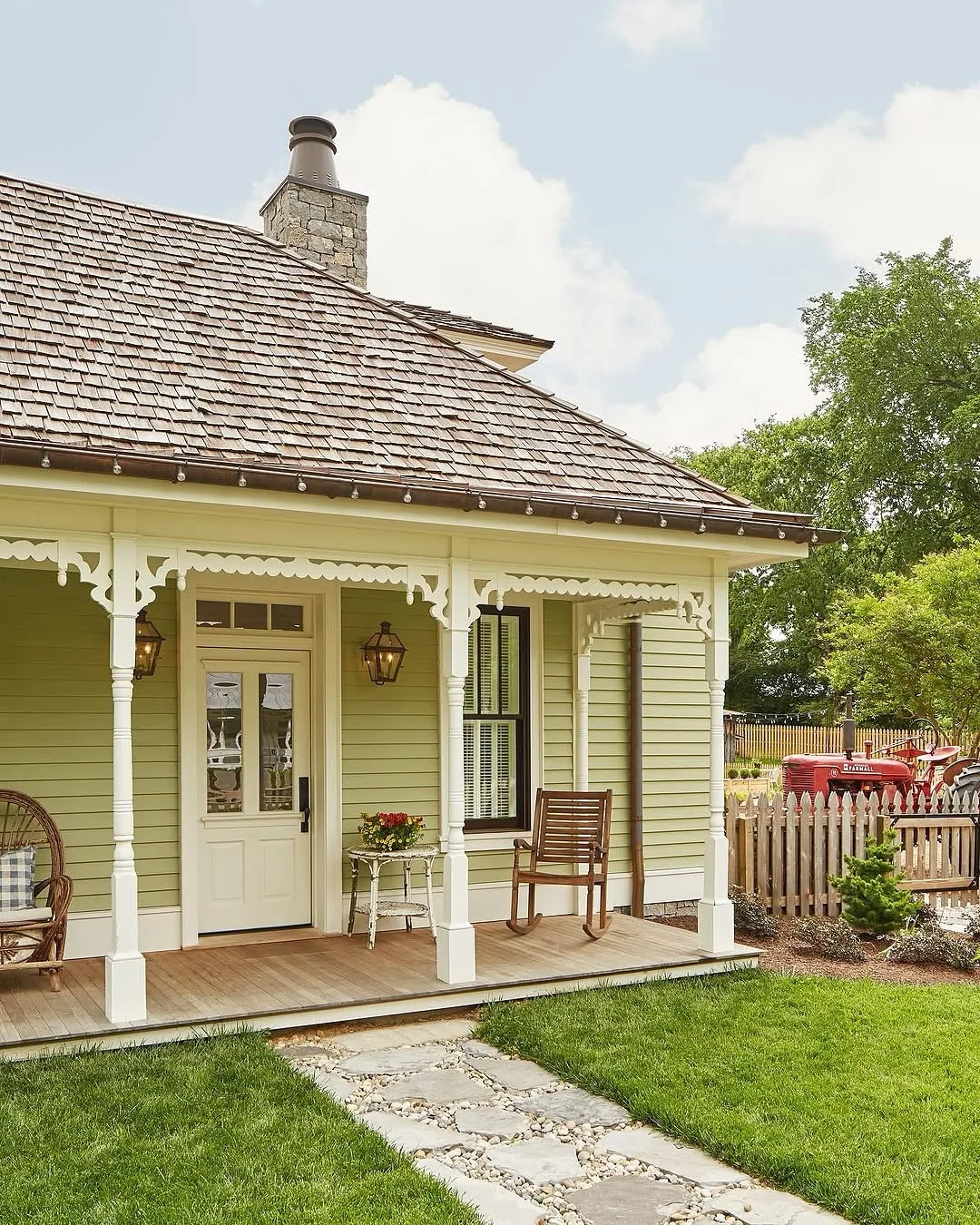
Finish and dress the green
The right metal and the right company. Four ideas complete the entry.
Test these green front door ideas against brass, not chrome
Green and yellow brass share warm roots, so aged brass, unlacquered brass and copper all deepen your green door beautifully. Chrome and polished nickel sit cool and separate, making your green look isolated rather than supported. Your metal is your door’s closest companion, so the relationship shows.
You will carry one warm metal through your handle, knocker, lantern and numbers. Copper deserves special mention beside your green: the pairing ages together, copper patina drifting toward your door’s own family. When your metal and paint agree, your entry feels collected over years rather than installed over a weekend.
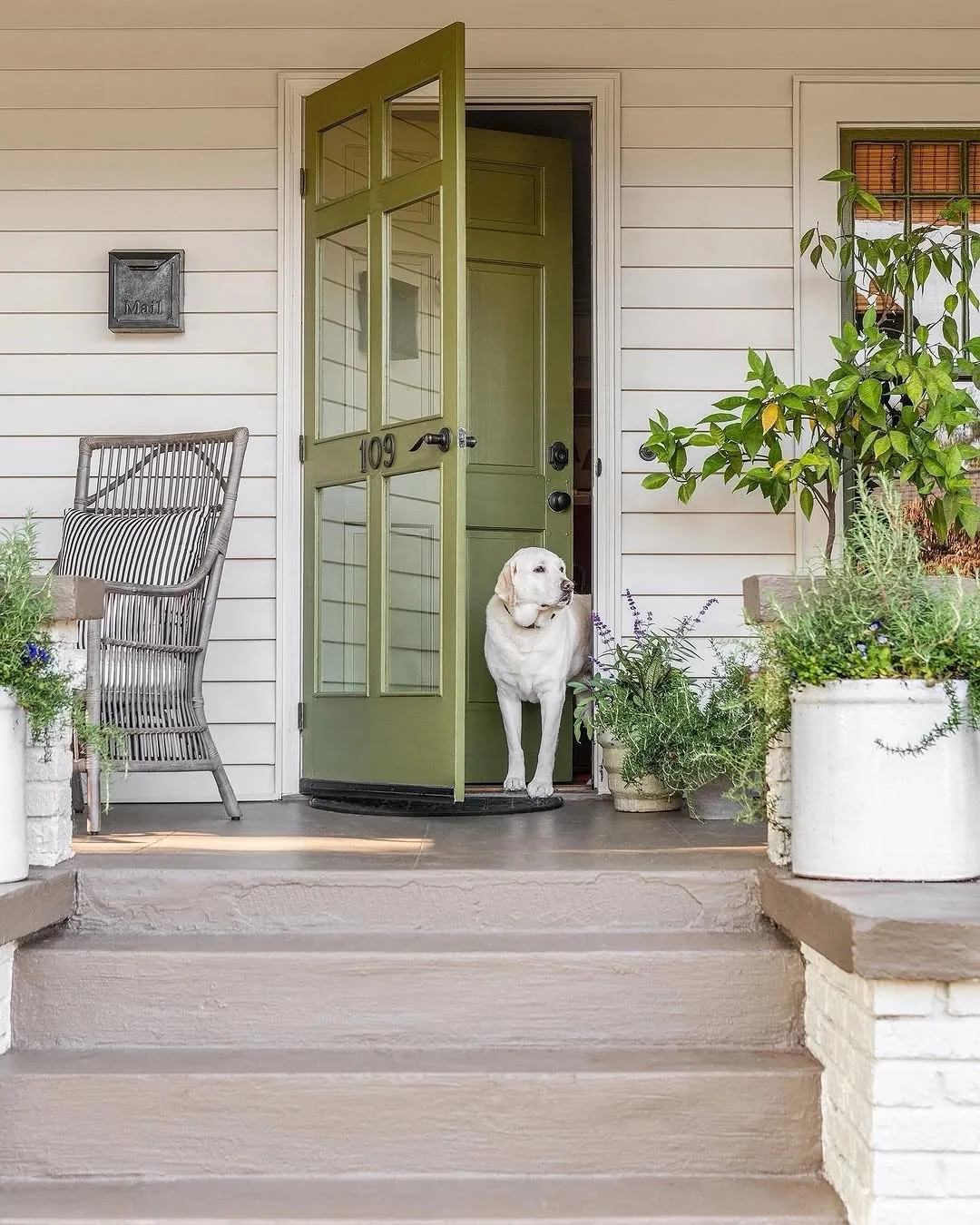
Decide whether green or black anchors the front
A green door plus black shutters plus a black roof asks the facade to serve two dark masters. Usually one should lead: either the green door is the single color moment against quiet darks, or black anchors and the green steps back toward sage. Two competing anchors split the street view down the middle.
You will demote one of them. If the shutters stay black, keep them narrow and let the door hold the color monopoly. If the door goes deep forest, soften shutters toward charcoal or body color. Facades with one clear lead look confident. Facades with two leads look like a committee met.
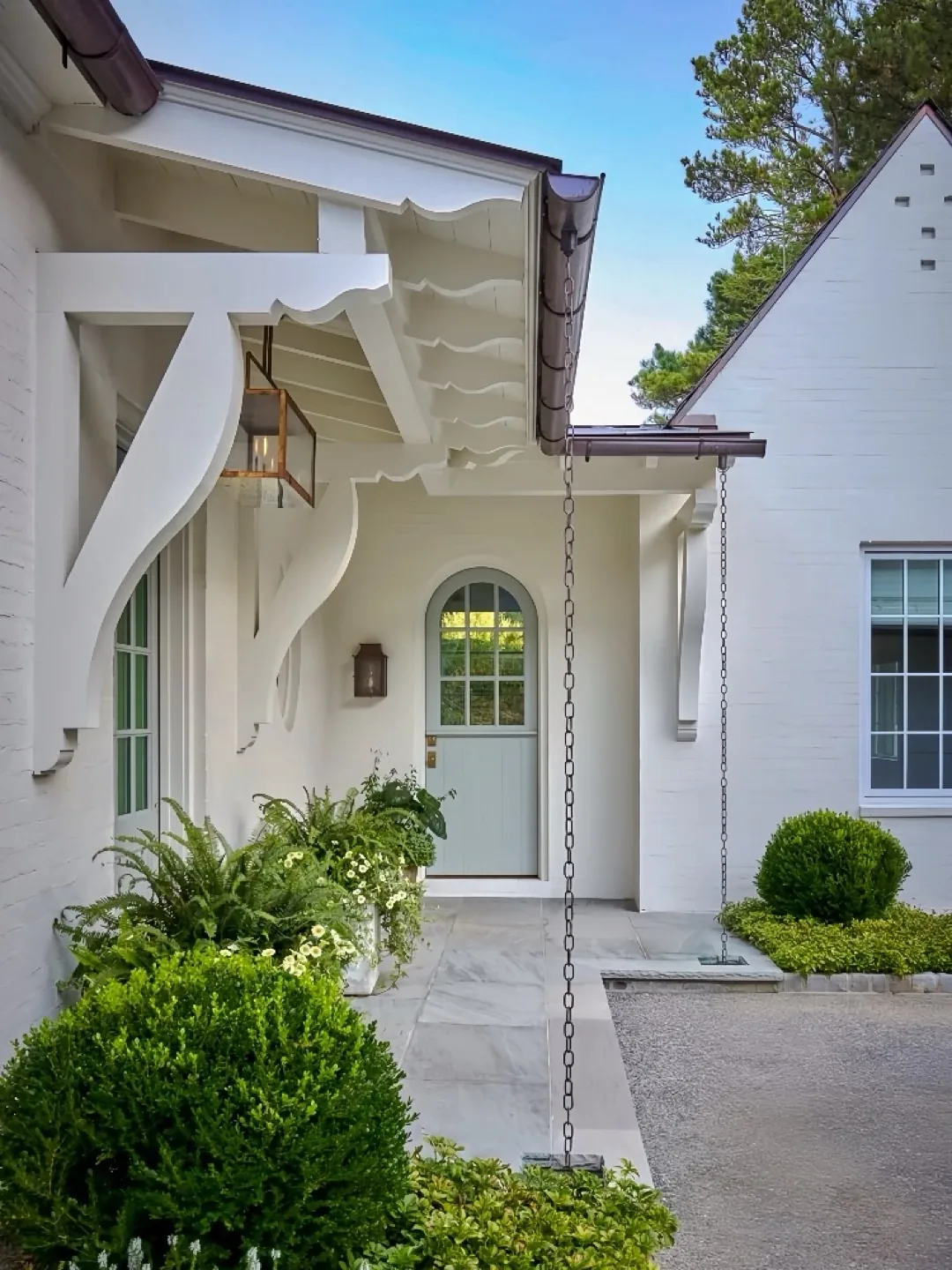
Plant the doorstep to confirm the choice
Flanking planters in greens that echo the door make the color look grown rather than painted. Boxwood for olive doors, ferns for sage, glossy laurel for forest: each confirms its partner. This is the cheapest color insurance at the threshold.
You will keep the confirmation tonal rather than matchy, sampling the door color into the planting the way you would sample a wall color into a rug. Exact-match green flowers pressed against a green door buzz unpleasantly. Neighbor greens, one step lighter or darker, hum. Let the garden second the motion instead of repeating it word for word.
Wash green gently and watch the south face
Greens chalk softly rather than dramatically, so fading creeps up as a general tiredness you cannot quite name. Southern exposures fade fastest, and yellow-leaning greens shift first. A spring wash often reveals the color was fine under the film all along.
You will wash with mild soap yearly and inspect the sunniest rails each fall for the first chalk. Touch up from the labeled jar before winter, because small sunburn becomes peeling by spring. Green is a forgiving color to maintain and an unforgiving one to ignore. An hour a year keeps the garden’s loan in good standing.
Green door decisions at a glance
| Green | Answers to | Succeeds with | Avoid |
|---|---|---|---|
| Olive | Boxwood, bronze, tan stone | Cream trim, aged brass | Cool gray siding with chrome |
| Sage | Weathered shingle, fieldstone | Soft company, pewter tones | Bright white plus loud brick together |
| Forest | Crisp white trim, pale siding | Full contrast, generous lantern | Deep shade with no light, or a second dark anchor |
| Mint | Small cottages, shaded entries | Full-size test, white frame | Full sun on a grand facade |
The Green Door Formula
Six rules root the color properly:
- Answer something growing. The door joins the visible garden family, planned or not.
- Match depth to company. Sage with soft textures, olive with warm formality, forest with bright contrast.
- Band white between green and brick. Separation ends the Christmas reading before it starts.
- Finish in warm metal. Brass and copper deepen green, chrome isolates it.
- Crown one anchor. Green door or black accents lead, the other supports.
- Wash yearly, watch the sun. Film dulls green so gradually you will blame the paint.
Do those and the door looks grown on the house rather than applied to it. For the planting that confirms the choice, our cottage exterior ideas carry the garden side of the conversation.
Frequently Asked Questions
What does a green front door mean?
Tradition reads it as welcome and prosperity, but your buyers respond to the shade, not the symbolism. Earthy olives and sages photograph as tasteful on your house, while bright greens polarize your street. Choose for your garden, not for folklore.
Does a green door suit a red brick house?
Yes with separation and depth. A white trim band between brick and paint prevents the Christmas reading, and deep muted greens behave far better than bright ones. Test the finalist against your actual mortar.
What hardware suits a green front door?
Warm metals: aged brass, unlacquered brass and copper. They share green’s warm roots and deepen it. Chrome and polished nickel sit apart from green and make the door look isolated.
Is sage green too pale for a front door?
It can be on large facades in full sun, where it washes out. Sage succeeds on cottages, in shade, and against muted siding. Test at full size, and deepen one step if the board reads chalky.
Which green suits a white house?
Nearly all of them, which is white’s gift. Forest gives drama, olive gives warmth, sage gives calm. Match the green’s temperature to the white, creamy whites taking warmer greens.
Will a green door date quickly?
Earthy greens have centuries of precedent on doors and age gracefully. The ones that date are the bright fashion greens matched to nothing outside. Borrowed-from-the-garden green never looks trendy because gardens never do.
This article may contain affiliate links. We may earn a commission at no extra cost to you.