White Stucco Shows Everything, Forgives Nothing

Add us as a preferred source to see more stories on Google.

You chose the white first. The texture will overrule you.
Here’s the thing. White stucco is the highest-maintenance white you can put on a house, and it shows every crack, streak and shortcut you’ll ever paint over it.
Chances are the stucco & Spanish style home exteriors you saved look sun-softened and simple. Nobody pinned the annual washing, the splash-back staining or the way smooth walls telegraph every flaw. You’ll plan for all three here.
Texture first, color second
Your chip is lying to you. It shows color on a flat card, and your wall is anything but flat.
Read your texture before you read your chip
Hold your white chip against rough lace stucco and it reads two shades darker than the same chip on a smooth wall. That’s your texture’s micro-shadows voting, and they vote on every square meter you’ll ever paint. Heavy dash and lace finishes swallow light and forgive dirt in the same bargain.
So choose texture first, then take your top three whites out to a finished wall in that exact texture. You’ll watch noon sun flatten one, evening gold warm another and shade turn the third grey. The winner surprises most people. Trust the wall you see, not the card you loved indoors.
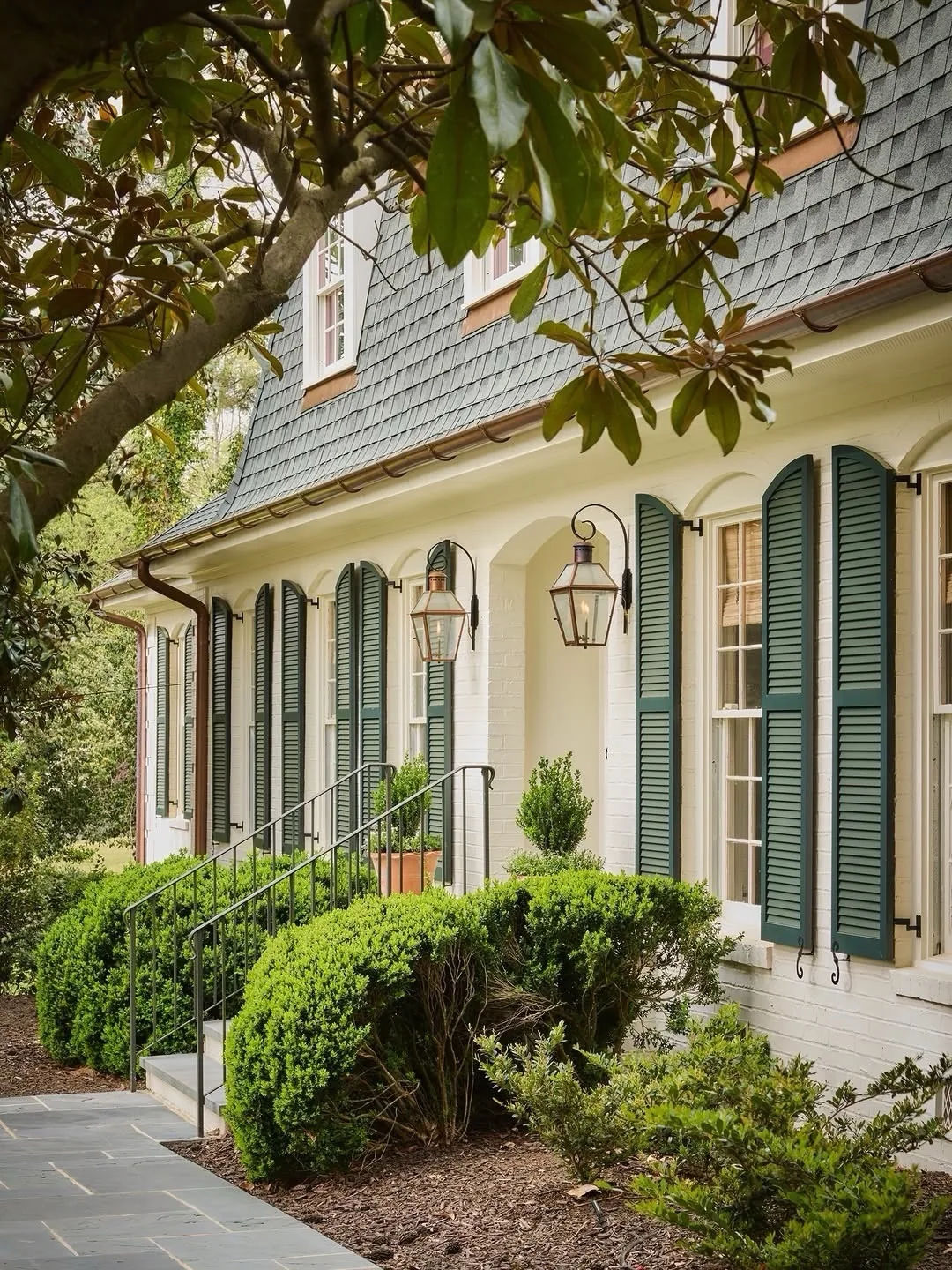
Favor creamy white over brilliant white
Brilliant white on full sun stucco doesn’t read crisp, it glares. You’ll squint at your own house at midday while your neighbors do the same from across the street. Creamy whites with a drop of warmth in them absorb the blast and give back that soft expensive glow you’re actually after.
Test on the sunniest wall you own, because sun pushes every color lighter and brighter than the swatch suggests. A white that looks almost beige on the sample board becomes perfect white in July sun. Paint a board at least a meter square, live with it three days and judge it at noon. You’ll thank yourself every bright afternoon.

Tint the wall itself, don’t just paint it
Paint sits on stucco like a skin, and skins peel. Integral color mixed through the finish coat can’t peel because the color goes all the way through, and it weathers into soft mottling that reads as age rather than failure. You’ll pay more at application and far less across the decades.
If you must paint existing stucco, use a breathable masonry coating and never a standard exterior latex that seals vapor inside your walls. Trapped moisture blisters paint and feeds exactly the cracking you painted to hide. Ask your supplier for the permeability rating in writing. A wall that breathes stays beautiful, and a sealed one bills you later.
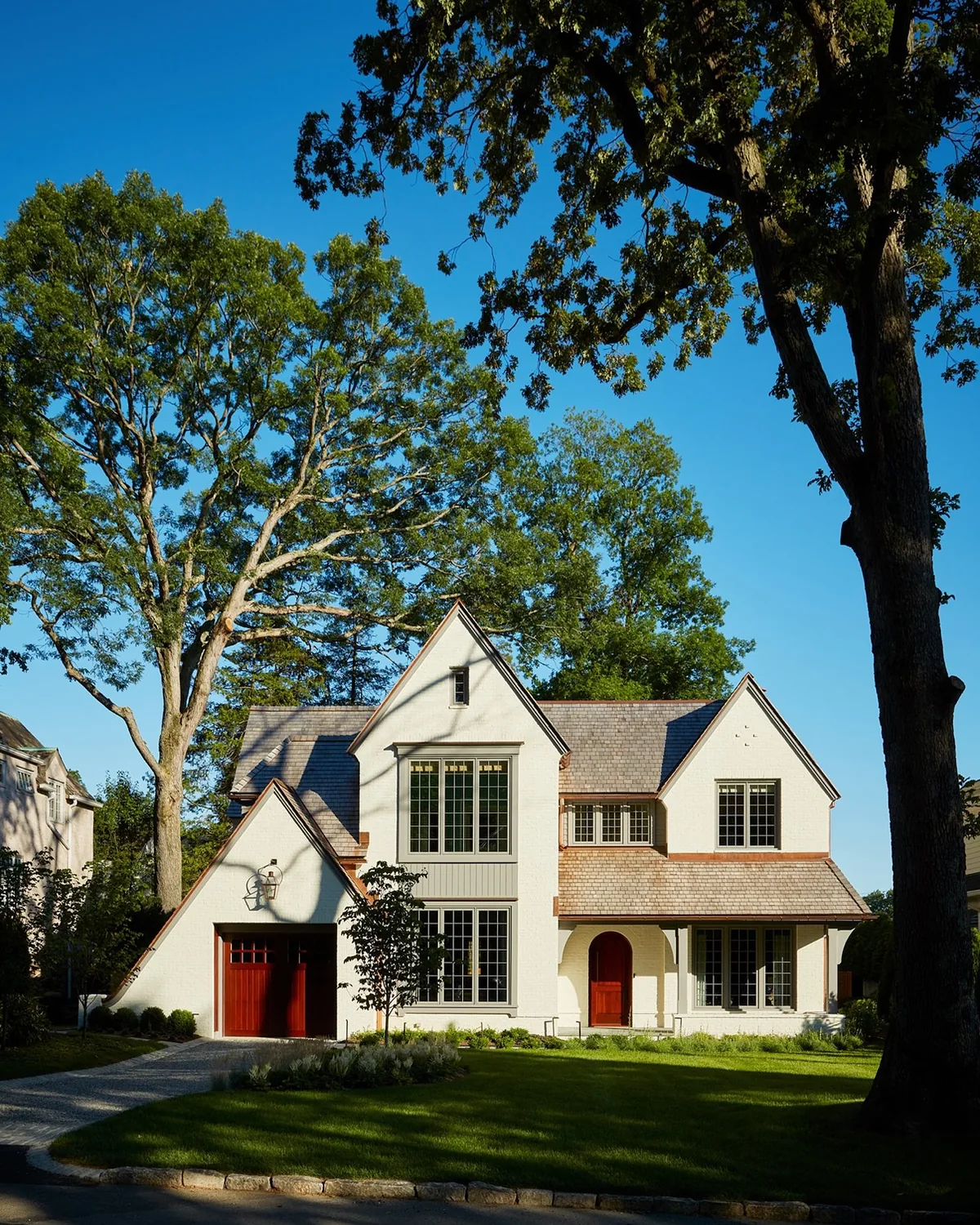
Let your roof pick your stucco
Your roof covers the decision from above, so read it first. Warm clay tile wants creamy, golden stucco with yellow or red hiding inside. Cool grey or blue-based whites fight terracotta and make both materials look dirty. A dark metal or bronze roof takes a slightly crisper white, and our modern farmhouse metal roof exteriors guide shows that pairing working over pale walls.
Bring a roof tile to the paint store, not a photo of one. You’ll hold it against sample boards in daylight and watch wrong undertones reveal themselves in seconds. The roof you already own is the fixed vote, so let it chair the meeting and choose everything else around it.
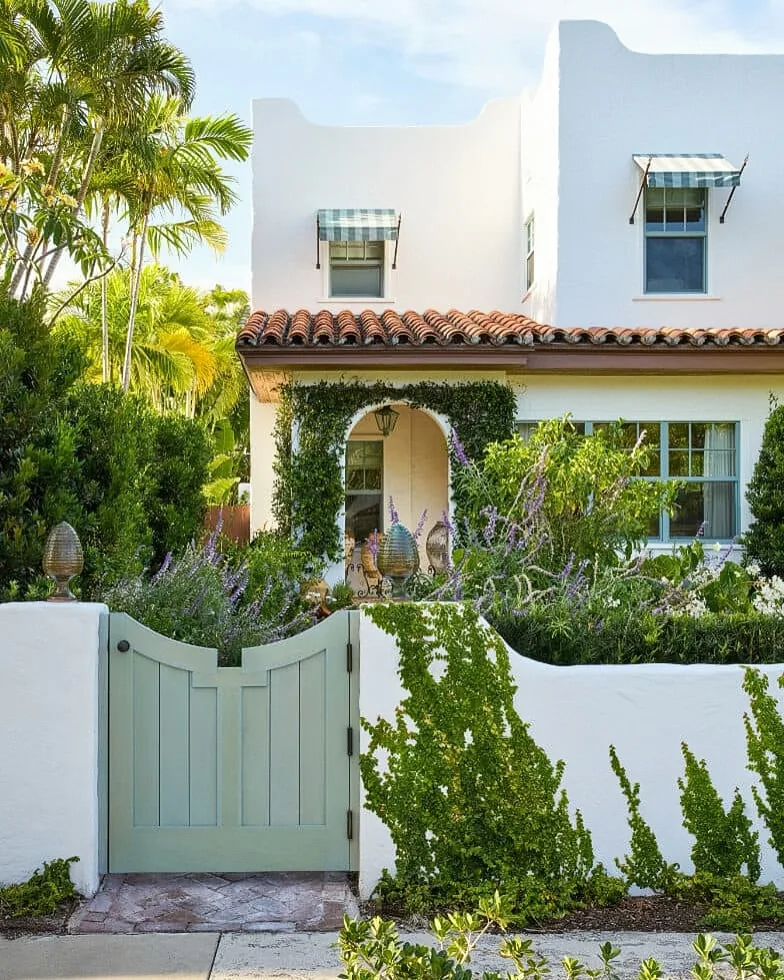
Openings with old-world manners
Spanish style speaks through arches, wood and iron. Each one needs restraint, because two of anything here becomes a theme.
Echo one arch, never a collection
A single generous arch over your entry or your porch gives you the whole Mediterranean feeling in one gesture. Three different arch shapes across the front give you a restaurant. Pick your best opening, make it confident and leave the remaining windows honestly rectangular with simple trim.
You’ll know the arch is right when the wall around it stays plain. Ornament needs quiet neighbors or it all shouts at once. If your house already wears several arch styles from past remodels, square the weakest ones back rather than adding a fourth. Subtraction renovates Spanish houses faster than addition ever does.
Warm the white with one wood door
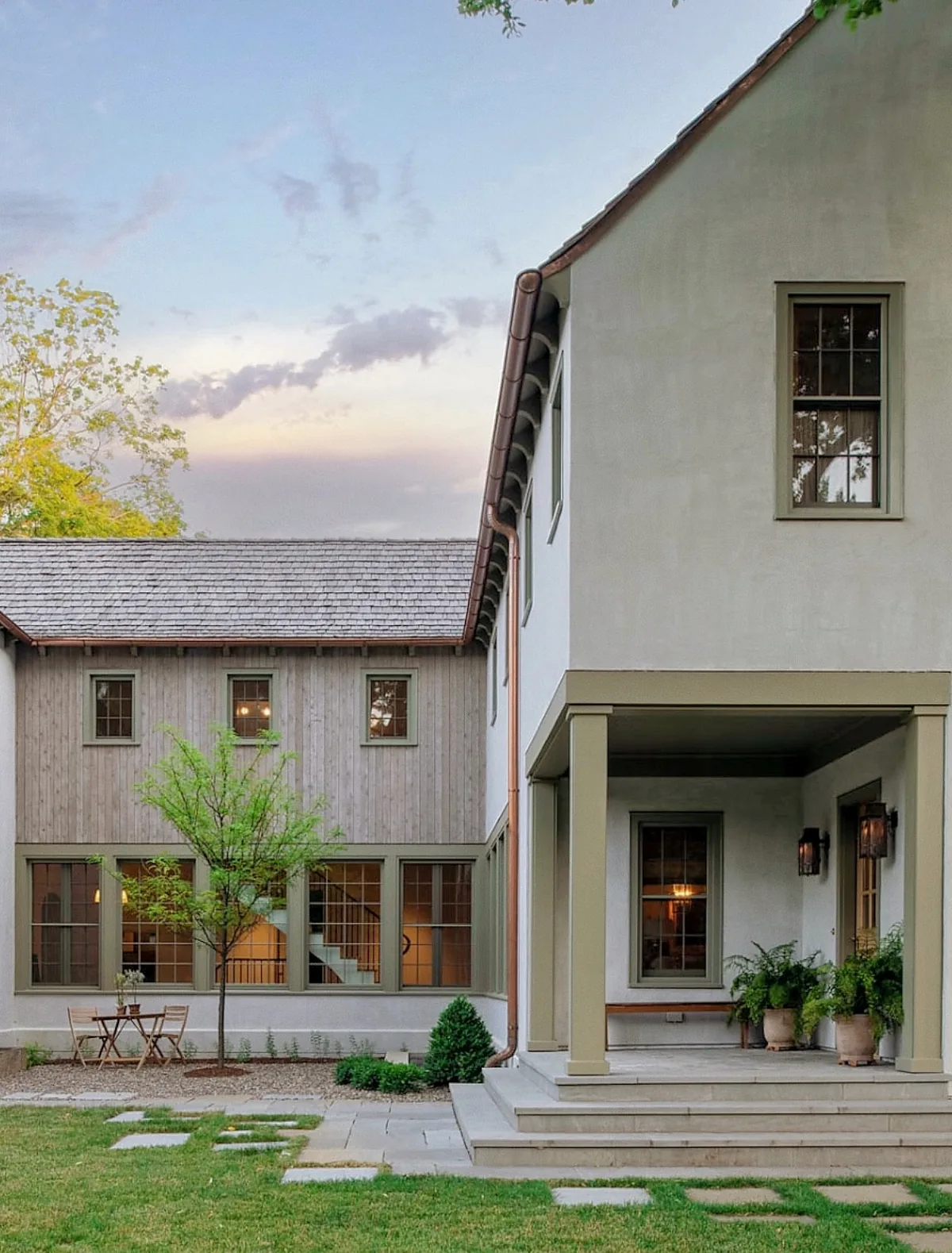
All-white stucco with white trim and pale paving drifts toward glare no matter how creamy your white is. A single natural wood door fixes the temperature of the whole front. Cedar, white oak or walnut all work, and each one deepens beautifully while your stucco stays put.
Keep the wood’s tone out of the red family, which dates fast against modern whites. You’ll want a honey or walnut stain that echoes your beams or your gate, so the door feels related rather than random. Oil it on schedule and it outlasts every painted alternative. One warm note tunes the entire composition.

Spend on iron where hands touch it
Wrought iron earns its keep on rails, lanterns and gates your hands and eyes meet daily. Slim dark rails recede against white stucco and sharpen the whole facade, while lanterns by the door throw the warm light your cool walls need after dark. You’ll touch this metalwork for decades, so buy it once.
Keep iron off the walls everywhere else. Decorative wall-mounted scrolls trap moisture behind them and bleed rust down your white stucco within a season or two. Every rust streak on white reads like a wound from the curb. Mount iron where air moves around it, keep it painted, and it serves you for generations.

Size shutters like they work
Louvered shutters suit stucco the way board shutters suit farmhouses, but only when they’re sized to their windows. Each shutter should cover half its opening, hung with a breathing gap off the wall so moisture never sits behind the boards. You’ll get real shade, real depth and a facade that reads honest.
Screwed-flat undersized shutters do the opposite on stucco. They cast no shadow, shade nothing and telegraph shortcuts across your whole front. If your windows are too wide or too few for proper pairs, skip shutters entirely and spend the money on your door and lanterns. Bare stucco with good lighting beats decorated stucco with fake hardware.
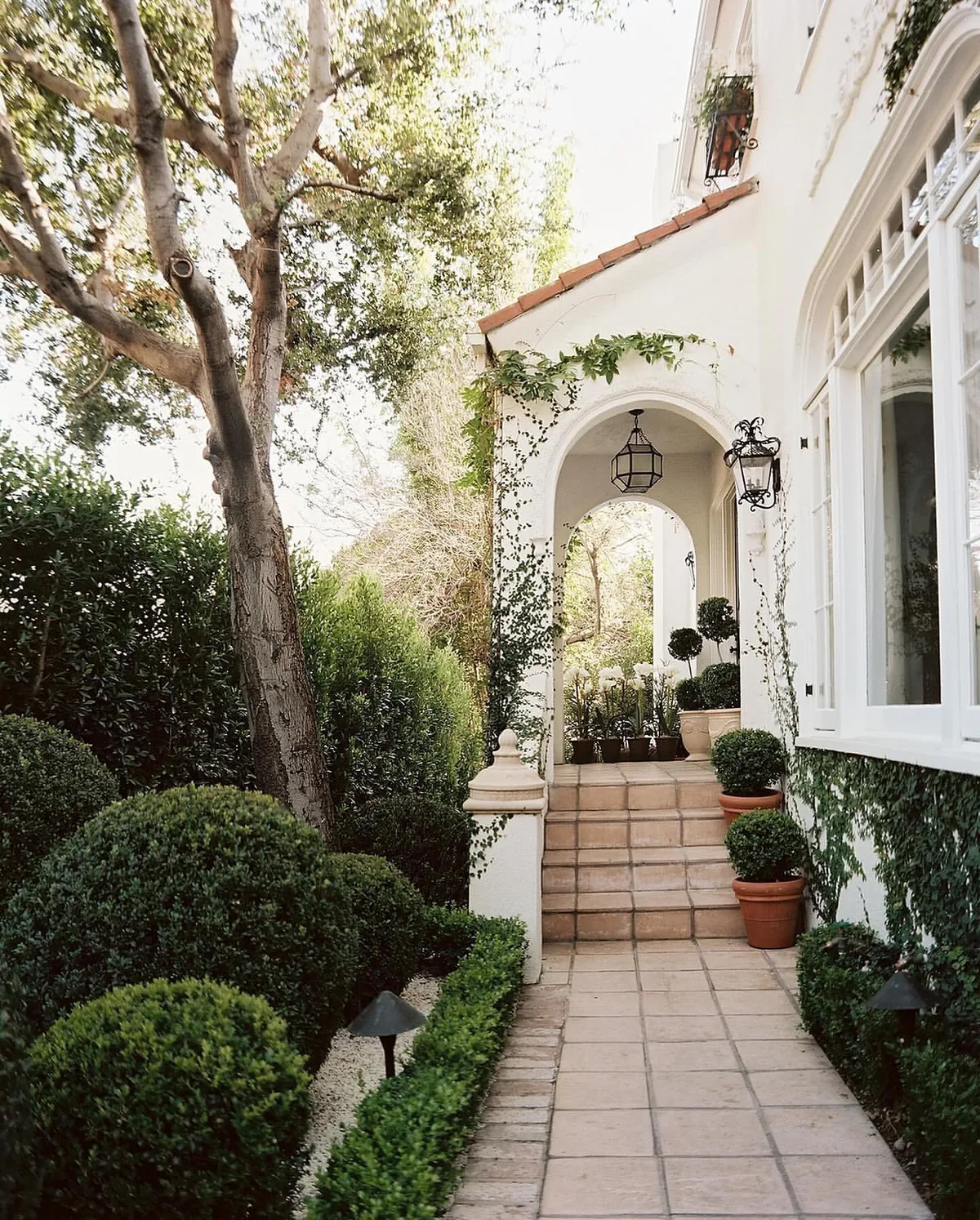
Rooms without roofs
Spanish houses live outdoors half the year. Your courtyard, arcade and gate deserve the same design attention as your walls.
Give your stucco & Spanish style home exteriors a courtyard that holds you
Walls, a gate and planting make a courtyard, but only intention makes it a room you’ll use. You’ll need shade for midday, a hard surface that drains between storms and one focal point like a fountain or an olive in a pot. Without those three, your courtyard becomes a pretty passage you cross, never a place you sit.
Pave generously and plant tightly around the edges so the middle stays open for chairs and lingering. Gravel with stone bands drains fast and crunches pleasantly underfoot, which you’ll appreciate after every summer downpour. Light it low and warm for evenings. A courtyard that holds you after dark doubles your house for half the year.

Shade one arcade and sit under it
A covered loggia or arcade along one wall gives you the deepest shade on your plot exactly where your hottest rooms need it. You’ll eat, read and wait out August afternoons under a roof that also shields your stucco from driving sun and rain. That’s two jobs for the price of one structure.
Keep the arcade’s arches in the same family as your entry arch, or you’ll collect shapes again. Simple columns or square piers suit cottages better than ornate orders, and a timber beam ceiling warms the shade overhead. Furnish it before you furnish any other outdoor spot. You’ll live under it more than anywhere else you own.

Plant lavender and gravel, not thirsty lawns
Stucco houses want planting that matches their climate story. Lavender, rosemary, olive and ornamental grasses sip water, shrug off reflected heat from your white walls and perfume the air around your courtyard. You’ll water a fraction of what a lawn demands and look better doing it.
Ring your beds with gravel so splash-back never stains your lowest stucco, and keep every plant off the wall itself. Vines on stucco trap moisture, root into hairline cracks and hide the damage until it’s structural. Let your oaks and moss dress the trees overhead while your walls stand clean and breathing below.
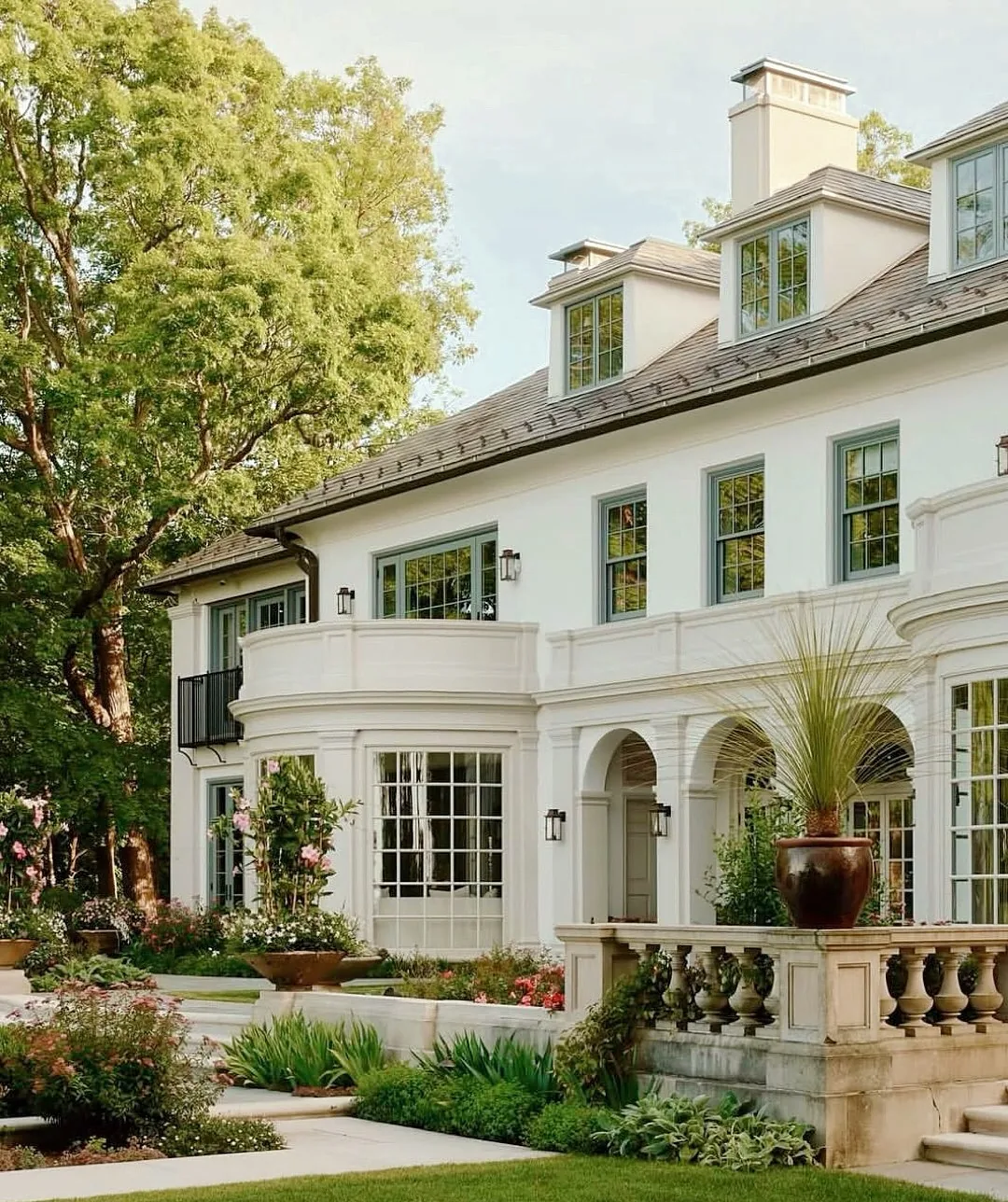
Make the gate promise what the house keeps
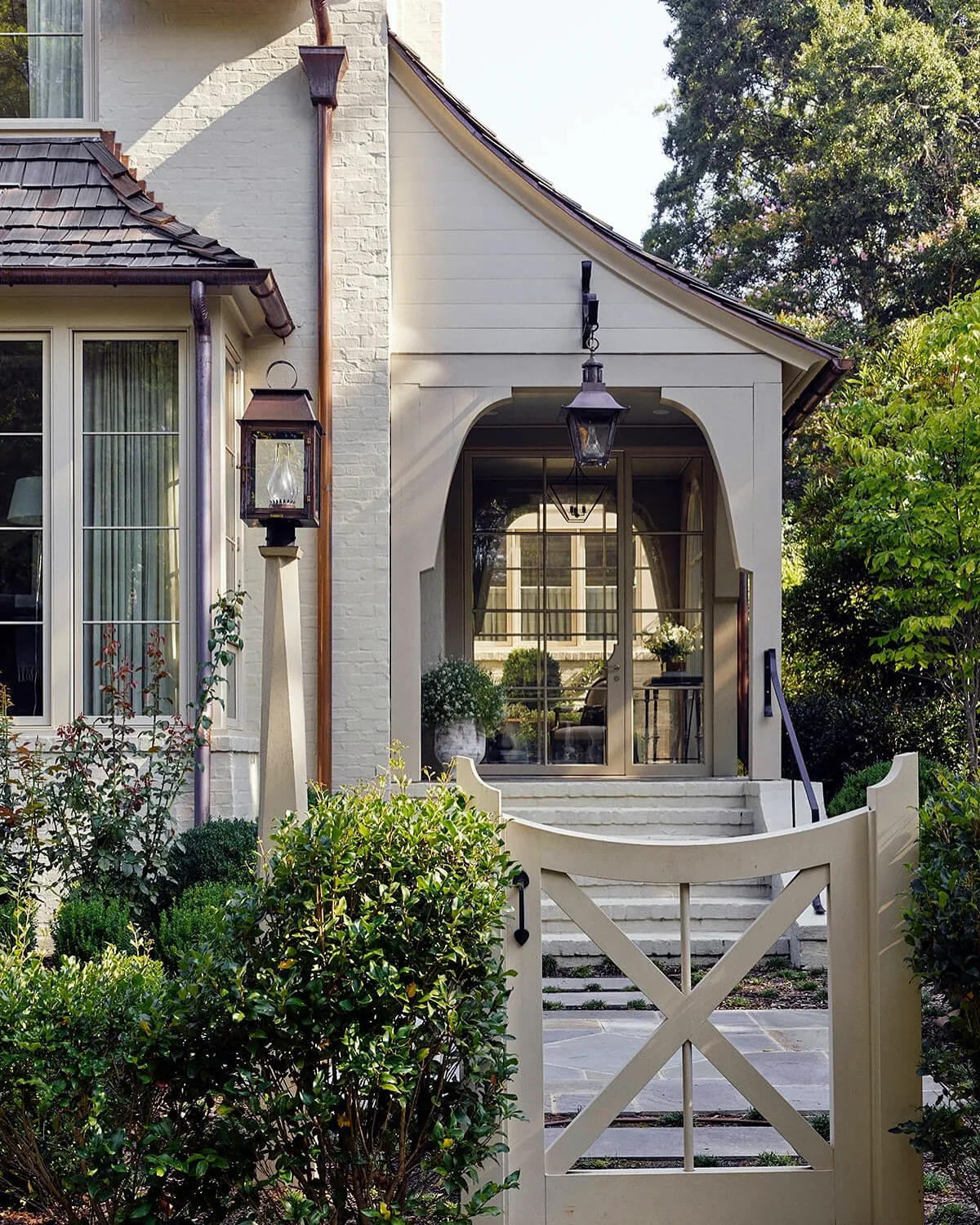
Your gate is the handshake before the conversation. A solid timber or iron gate between stucco pillars tells visitors the courtyard beyond is private and considered. You’ll set expectations here that your house must then meet, so build the gate to the same standard as your front door.
Keep the pillars’ stucco texture identical to your walls or they’ll read as an afterthought in different light. Cap them with tile or stone so rain sheets off instead of streaking down. Hang the gate to swing without sagging and latch it with hardware that feels weighty. Visitors decide in five seconds, and you’ll never get a second first impression.
The maintenance contract
White stucco asks for scheduled care the way a pool does. Sign knowingly and it stays beautiful for decades.
Wash gently and often, never blast rarely
Dirt, algae and mildew show on white stucco within a season, so you’ll wash yearly whether you planned to or not. A soft wash with low pressure and mild detergent lifts the grey without stripping the finish cream off your cement. High-pressure blasting does the opposite, exposing aggregate and ruining the soft look permanently.
Work top-down on an overcast day so walls dry slowly and evenly. You’ll spot hairline cracks as you wash, which is the point: washing doubles as your inspection round. For the full seasonal routine on pale exteriors, browse the rest of our home exterior guides and put the wash on your calendar like servicing a boiler.
Hold the ground off your walls
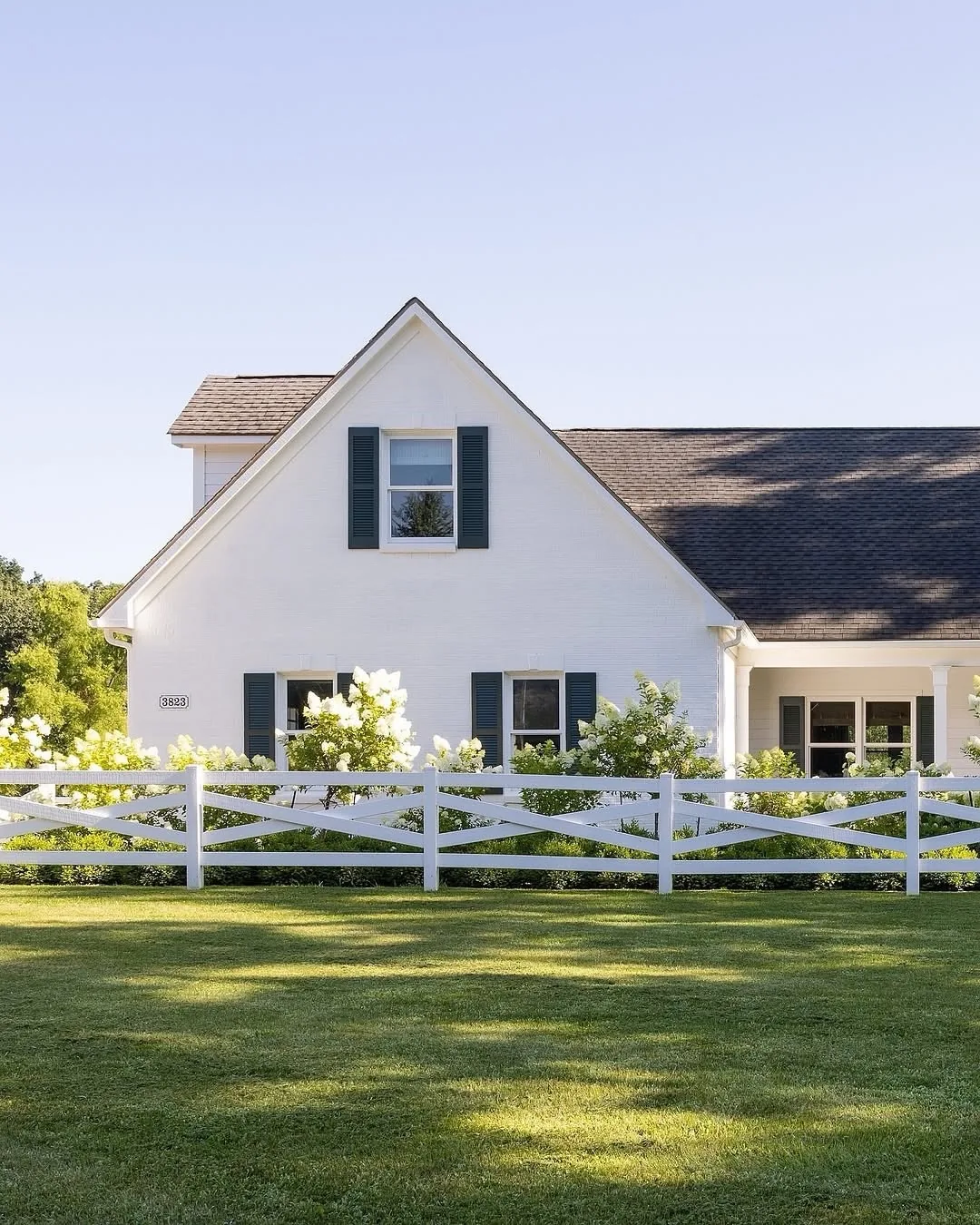
Splash-back stains white stucco from the bottom up exactly where guests look first. Rain hits bare soil, rebounds onto your lowest stucco and leaves a tide mark no washing fully removes. You’ll prevent it with clearance: keep soil well below your weep screed and lay gravel or mulch bands that absorb the bounce.
Check the gap each spring because beds creep upward as you top up mulch. Keep sprinklers aimed away from walls too, since daily misting greens stucco faster than any rainstorm. These dull clearances decide whether your white reads crisp or tired, and no paint rescues a wall that lives wet.
Respect hairline cracks, fear the growing ones
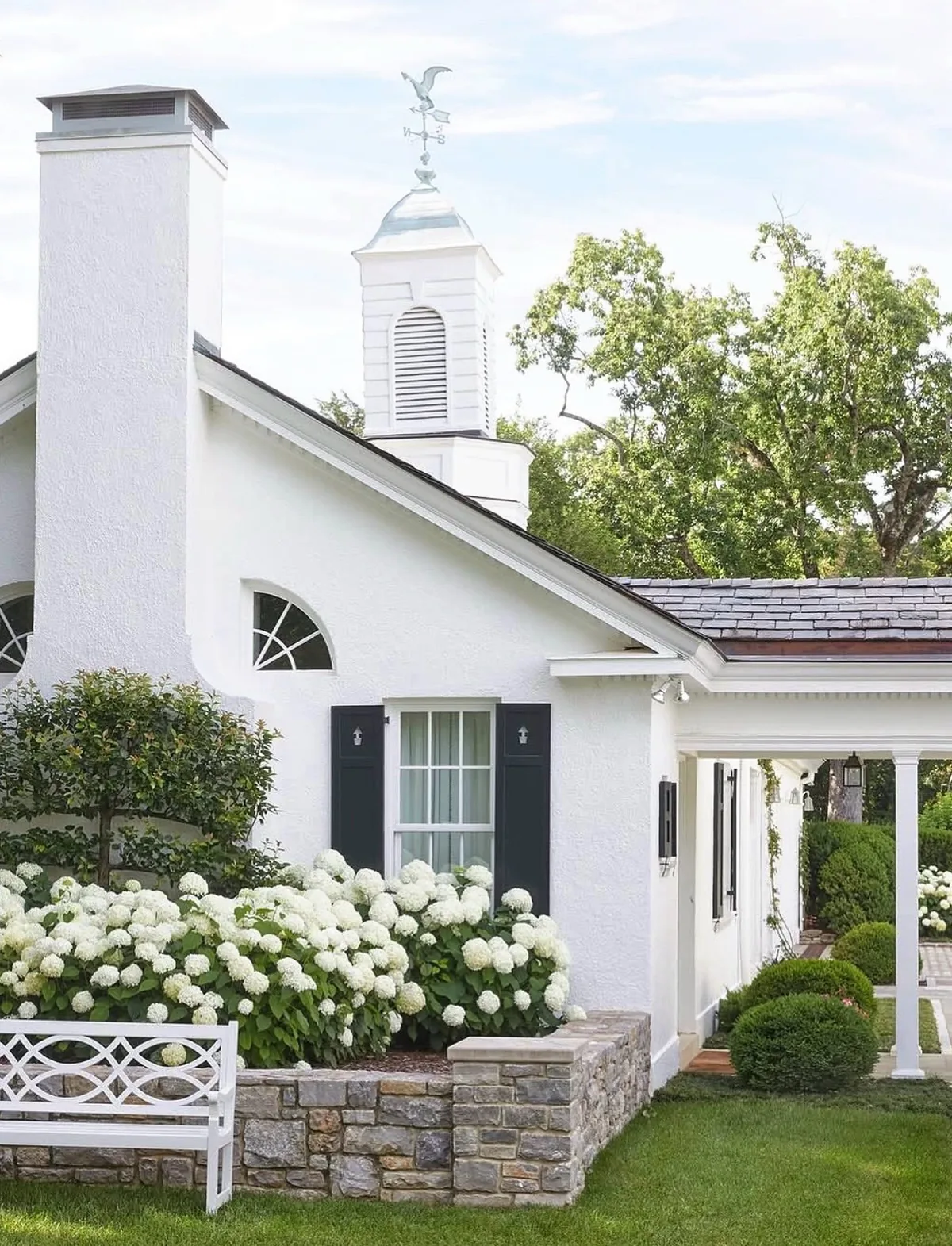
Hairline cracks come with the material as stucco cures and moves with the seasons. You’ll see them, you’ll monitor them, and most will never matter beyond cosmetics. Seal the stable ones with a fine stucco caulk during your wash round and move on.
Growing cracks tell a different story. Wide, stair-stepping or bulging cracks mean movement or water behind your walls, and paint hides them just long enough to get expensive. Photograph any suspect crack with a coin beside it for scale, then compare yearly. If it grows, call a stucco specialist before you call a painter. You’ll save thousands by diagnosing before decorating.
Smooth versus textured stucco at a glance
| Smooth Santa Barbara | Lace and dash texture | |
|---|---|---|
| Light | Brightest, truest color | Reads darker through shadow |
| Flaws | Shows every crack and wave | Hides flaws and dirt |
| Dirt | Wipes clean easily | Traps dust in texture |
| Cracks | Hairlines show immediately | Hairlines hide longer |
| Maintenance | Washes quick, inspects easy | Washes slower, needs care |
| Verdict | Pick for calm modern walls | Pick for forgiving cottage walls |
The Stucco & Spanish Formula
If you strip all fifteen ideas down to a plan, it reads like this:
- Texture before color. Sample whites on your actual finish, in sun and shade.
- Creamy white, never brilliant. Let the sun do the brightening for you.
- One arch to rule the front. Echo it in the arcade, nowhere else.
- Wood door, iron where hands touch. Warmth at the entry, discipline everywhere else.
- Gravel at the base, wash on the calendar. White stays white by schedule, not luck.
- Cracks monitored, not painted over. Photograph suspects yearly and call specialists early.
Get those six right and your stucco glows instead of glaring. You’ll own the villa look instead of renting its upkeep.
Frequently Asked Questions
Is white stucco hard to maintain?
Yes, it’s the highest-maintenance white you can put on a house. White shows dirt, algae and streaks within a season, so plan on a gentle soft wash every year or two. Gravel beds at the base prevent splash-back staining, and textured finishes hide dirt far better than smooth ones.
Should I paint my stucco or use integral color?
Integral color mixed through the finish coat can’t peel and weathers into soft mottling, so choose it for new work. If you paint existing stucco, use a breathable masonry coating so vapor escapes instead of blistering your paint. Never seal stucco with standard exterior latex.
What white goes with a terracotta tile roof?
A creamy white with yellow or red hiding inside. Cool blue-based whites fight terracotta and make both materials look dirty. Bring a roof tile to the paint store and judge sample boards against it in daylight before you commit.
Can I pressure wash stucco?
No, not with real pressure. High-pressure blasting strips the finish cream off cement, exposes aggregate and can drive water into cracks. Soft wash with low pressure and mild detergent, work top-down on an overcast day, and treat the wash as your yearly inspection round.
How do I stop cracks in stucco?
You don’t stop hairlines, you manage them. Seal stable hairline cracks with fine stucco caulk during your wash round. Photograph wider or growing cracks with a coin for scale and compare yearly, and call a stucco specialist before you call a painter.
What plants suit a Spanish style house?
Lavender, rosemary, olive and ornamental grasses suit the climate story and sip water beside hot reflective walls. Ring beds with gravel to stop splash-back staining and keep every plant off the wall itself. Vines root into hairline cracks and hide damage until it turns structural.
This article may contain affiliate links. We may earn a commission at no extra cost to you.