Is Your Garden Fighting Your Stonework?

Add us as a preferred source to see more stories on Google.
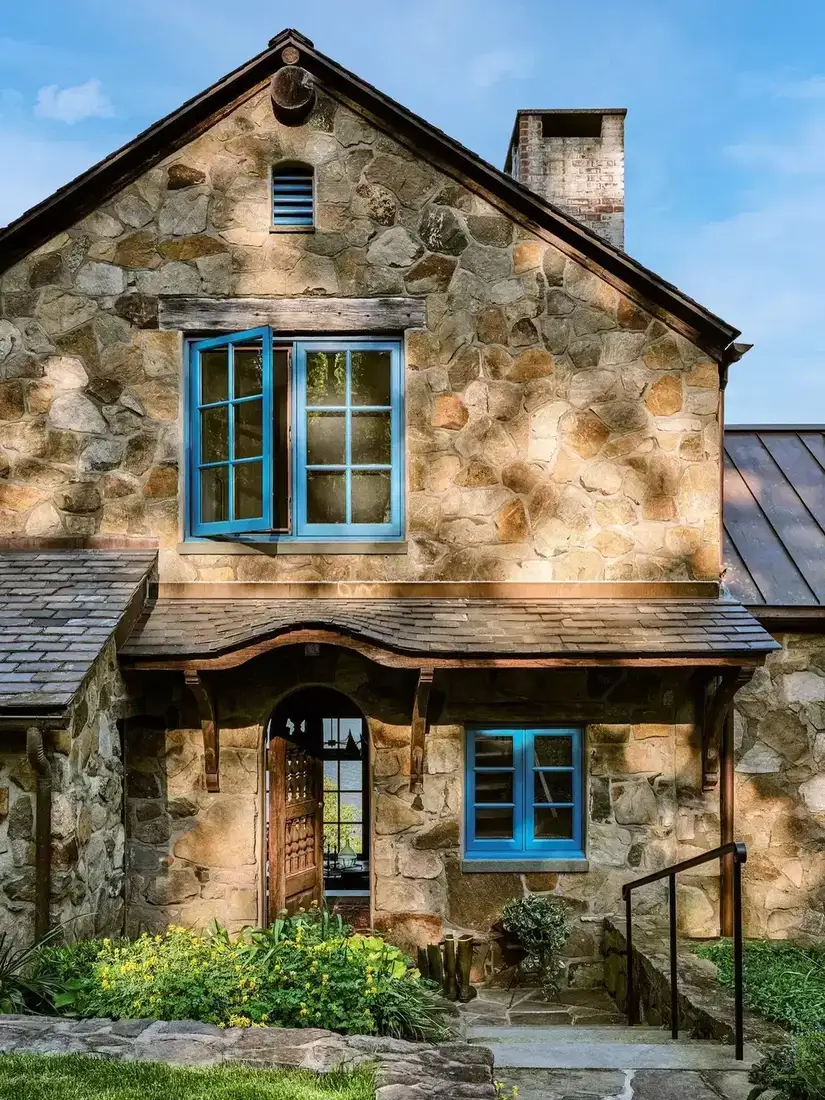
Your stone farmhouse looks handsome up close and fussy from the street.
You added flowerbeds to soften it and now everything competes.
Stone is visually busy on its own. The planting beside it has to read calm, or the whole front looks noisy. The fix is not another stone choice, it is a simpler garden.
These eleven stone fronts show you how to calm the wall with evergreen structure, correct mortar, gravel at the foot, and vines that do not wreck the joints.
Calm the planting so the wall can lead
Stone does not need help. It needs a quiet frame. These three show you how to give it one.
Calm the stone with evergreen structure
Start where the turquoise shutters meet the limestone. The house feels settled because the foreground is clipped yew and lawn, not a mixed perennial bed fighting the stone for attention. Your eye loves one busy texture at a time. When you give stone a simple evergreen frame, the wall looks intentional. When you surround it with many flower colors, both lose. You should edit your bed to one green shape first, then decide if you need any color at all. If you are replanting, choose boxwood, yew, or hornbeam and repeat one form. That repetition is what makes a busy wall read as calm from the kerb.
Choose vines that cling without rooting into joints
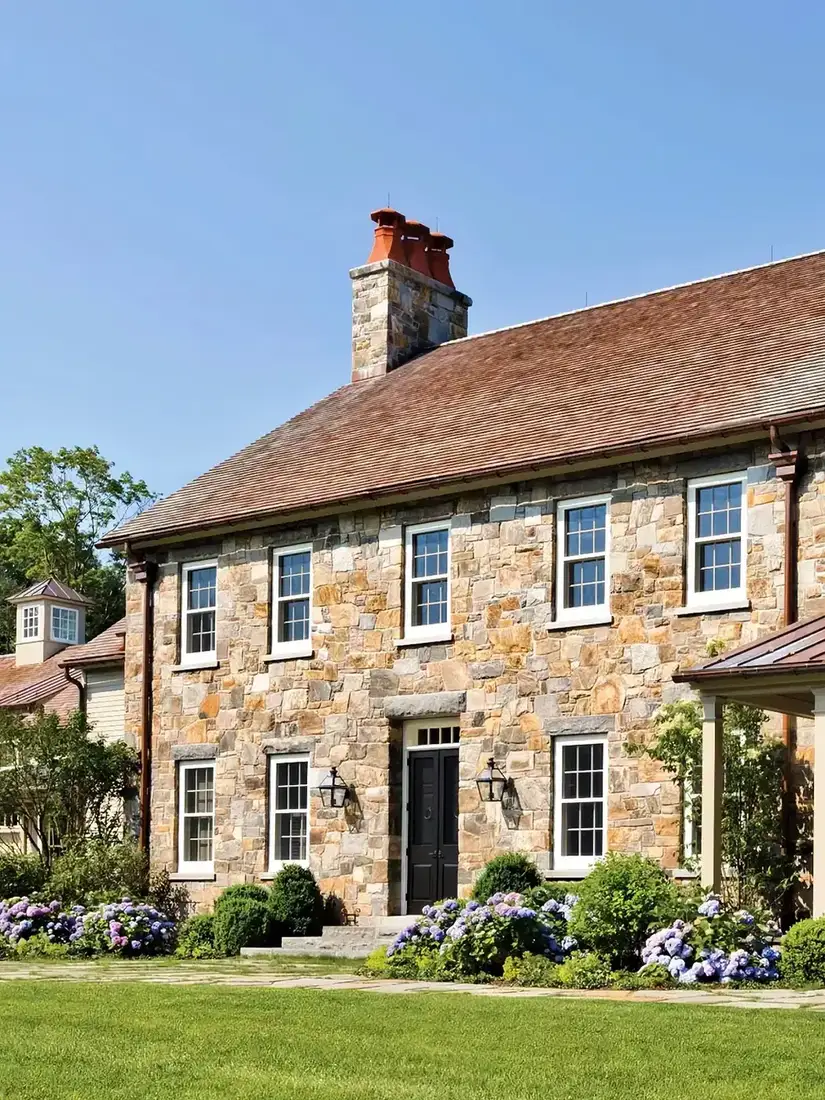
Hydrangeas are easy to love, but many owners want a vine on a stone farmhouse. You can have one, but you must pick the right habit. Boston ivy and Virginia creeper climb with adhesive pads that sit on the surface and are usually safe to remove. English ivy is different. It sends roots into mortar joints and pries them open as it thickens, especially where soft lime mortar remains. You should check what is already growing before it grows into the wall. If you inherit English ivy, cut at the base and let it die back before you pull, so you do not yank mortar with it. Then retrain on a frame set off the wall.
Leave a gravel strip so the wall can drain
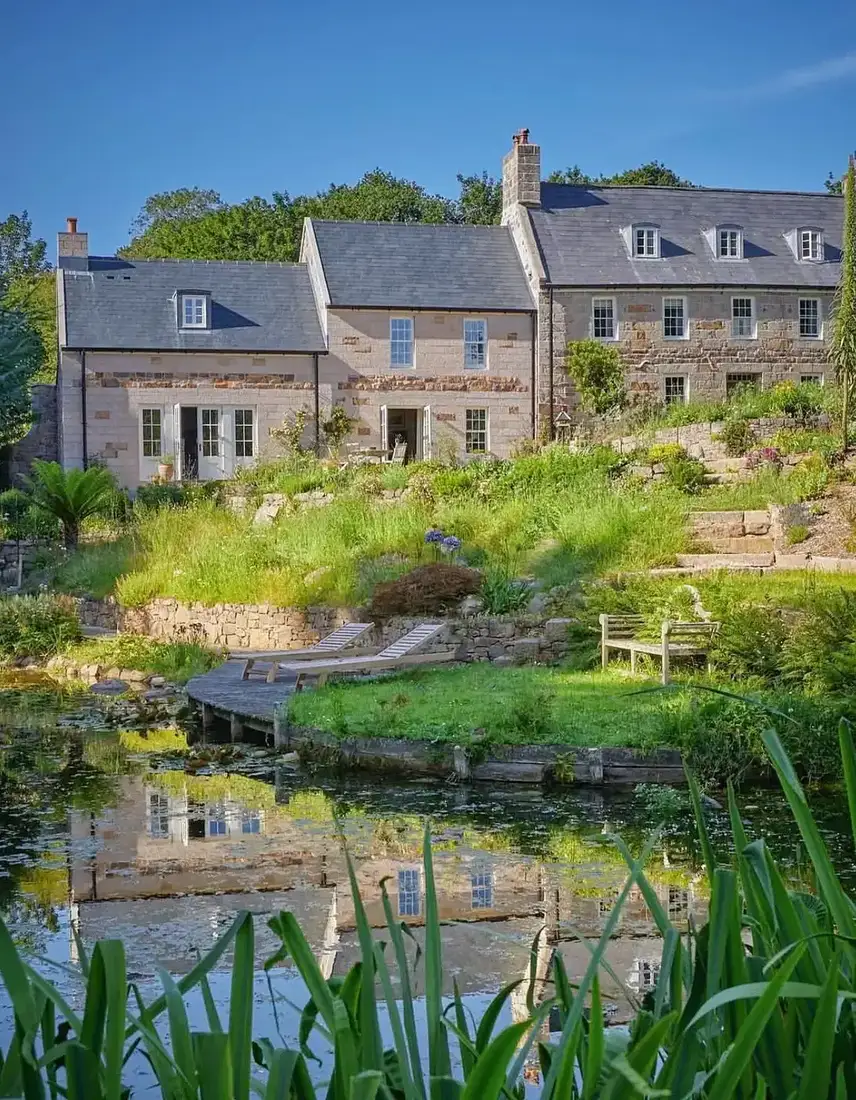
On the French cottage with the slate roof, the bottom course stays clean for one reason: nothing is planted against it. Gravel at the base lets rain splash and drain away quickly. Soil or tarmac hard against the wall holds moisture against the face and pushes damp into the core, which stains the lowest stones and can darken the rooms inside. You need that breathable strip even if you love a lush bed. Hold your mulch and soil back, keep a narrow gravel band at the foot, and let your lawn or beds start beyond it. Your wall will dry between showers instead of staying damp for days. Where the stone itself is only a base course under siding rather than a full wall, our stone base house exterior ideas show exactly where to stop it. For broader curb appeal planting that frames rather than competes, browse our home exterior guides.
Mortar, color and what never to blast
Pointing changes the wall more than stone choice ever will. These three show you how to choose it and how not to clean it.
Decide whether you want stones or a mass
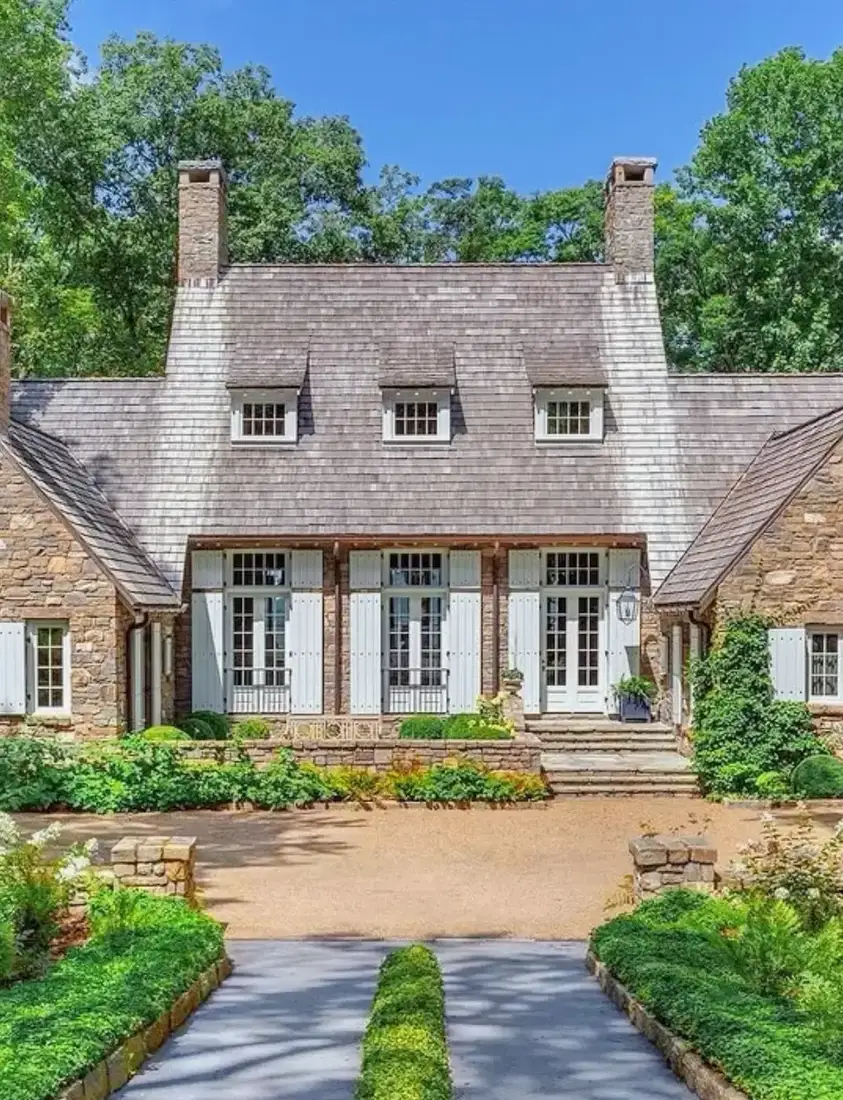
Study the Georgian stone front where climbing vines sit on a frame held off the wall. The stone pattern you see is really a mortar decision. Pale mortar outlines each stone so you read individual pieces, which feels lively and handmade. Dark mortar merges those edges into a quieter mass, which feels more formal and heavier. Neither is right for every house, but you must choose on purpose. You should hold mortar samples against your stone in overcast light and step back across the street. Pale will feel brighter and more rustic, dark will feel calmer and more modern. Match the choice to the mood your garden already sets.
Leave the weathered skin alone
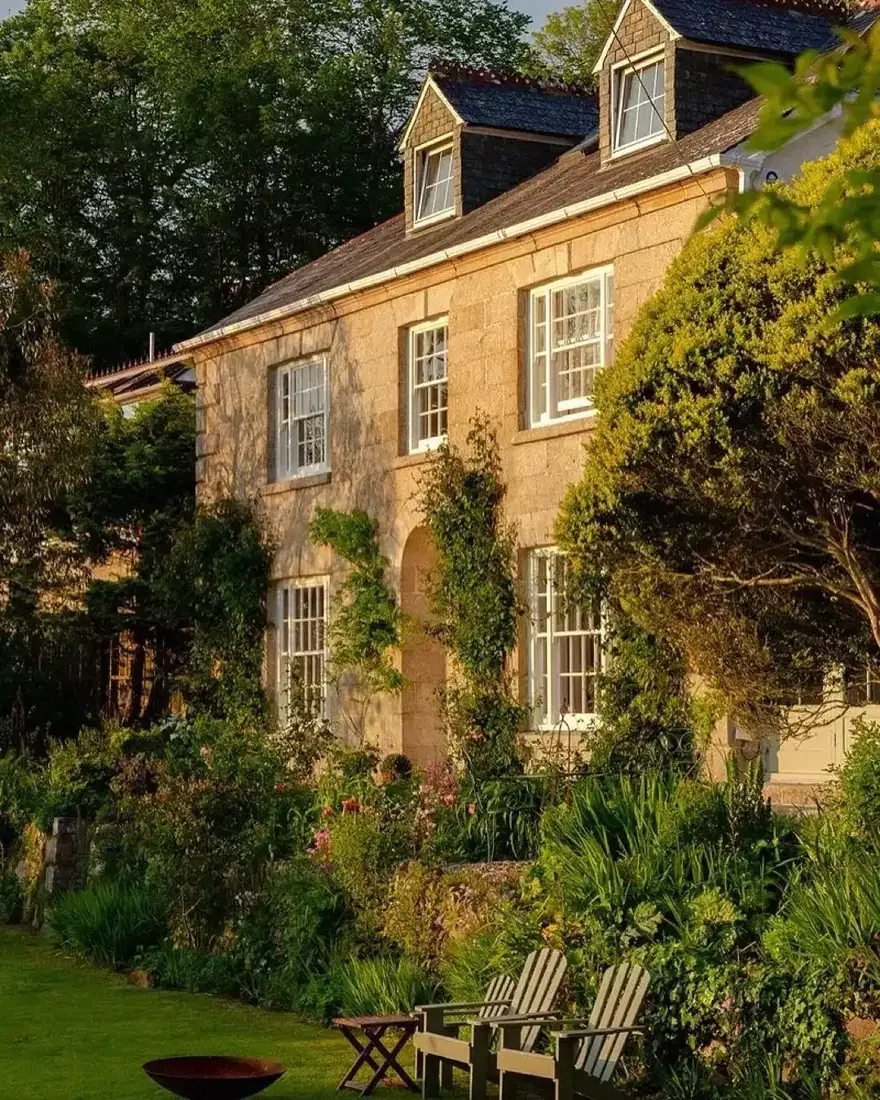
Consider the house with the boxwood walk and the dark steel gate. Its stone looks settled because no one tried to blast it clean. Never sandblast or pressure wash old stone. The weathered outer skin that formed over decades is what keeps rain out. Strip it away and the softer stone underneath absorbs water far faster, which means more staining, more frost damage, and a wall that never looks settled again. You can wash gently with a soft brush and plain water when you need to, but you should accept the patina. That variation is not dirt, it is the protection your stone built for itself.
Pull planting forward so stone can breathe
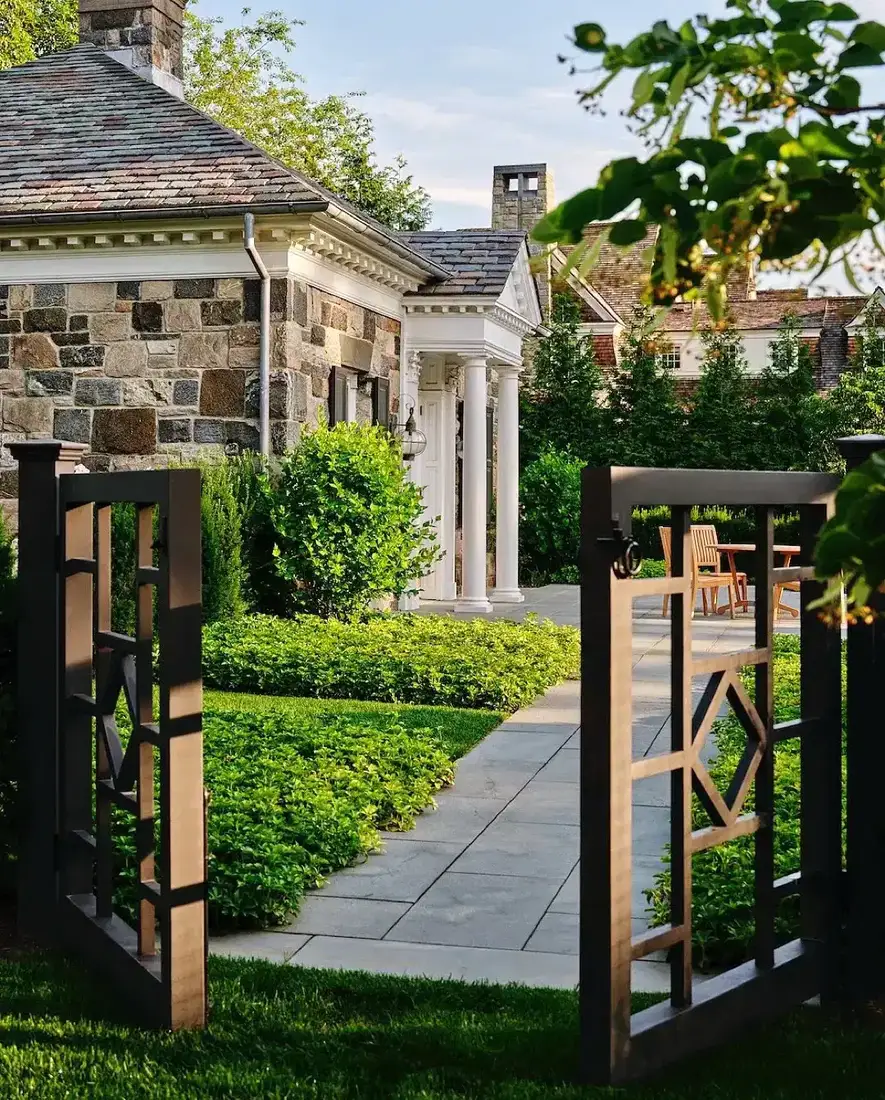
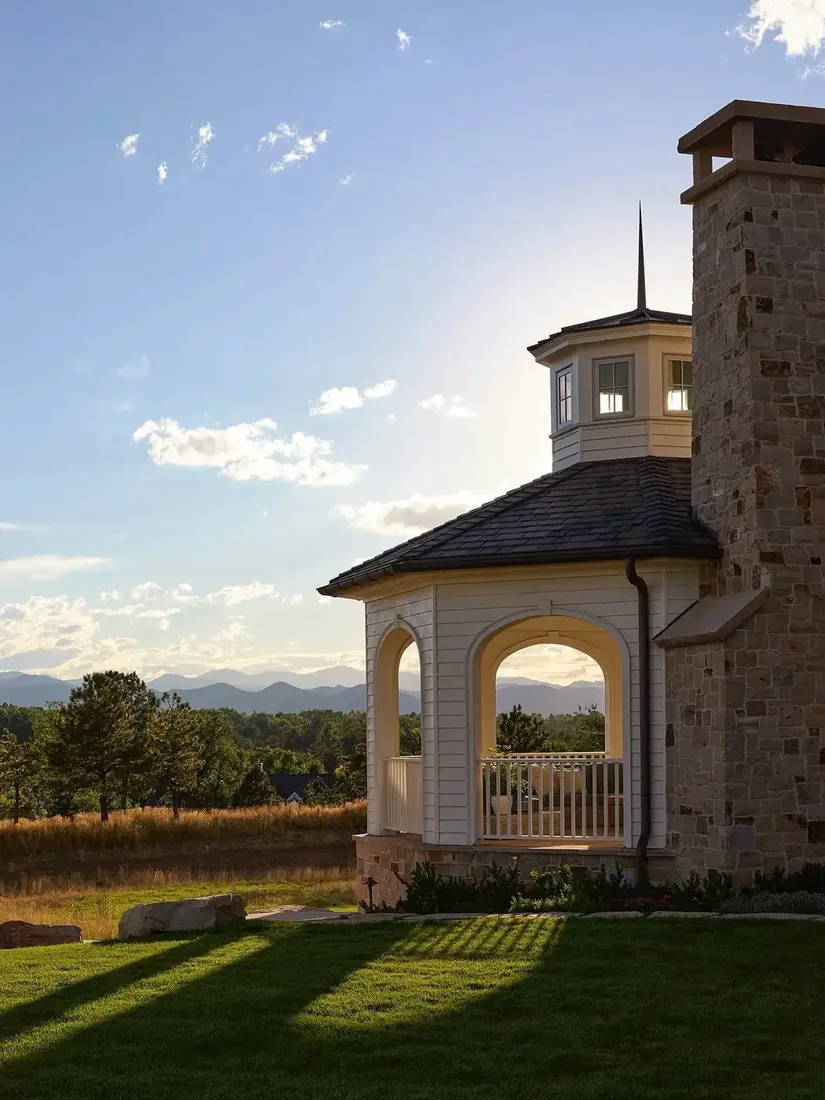
The cupola and turret house is a good reminder that air matters more than color. Even good stone stays damp if you trap it. Shrubs pressed hard against the wall, mulch piled high, and soil built up over the bottom course all keep the base wet. You want space between foliage and face so wind can dry the wall after rain. That space also lets you inspect pointing and catch early cracks before they widen. If you love lushness, let it be lush a step out, not against the stone. Your house will thank you with fewer green stains and less flaking on the mortar line you just paid to repoint.
Modern details that still respect old stone
These three prove you can add steel, terracotta, and black windows without fighting the wall.
Pick a plain roof so stone stays the texture
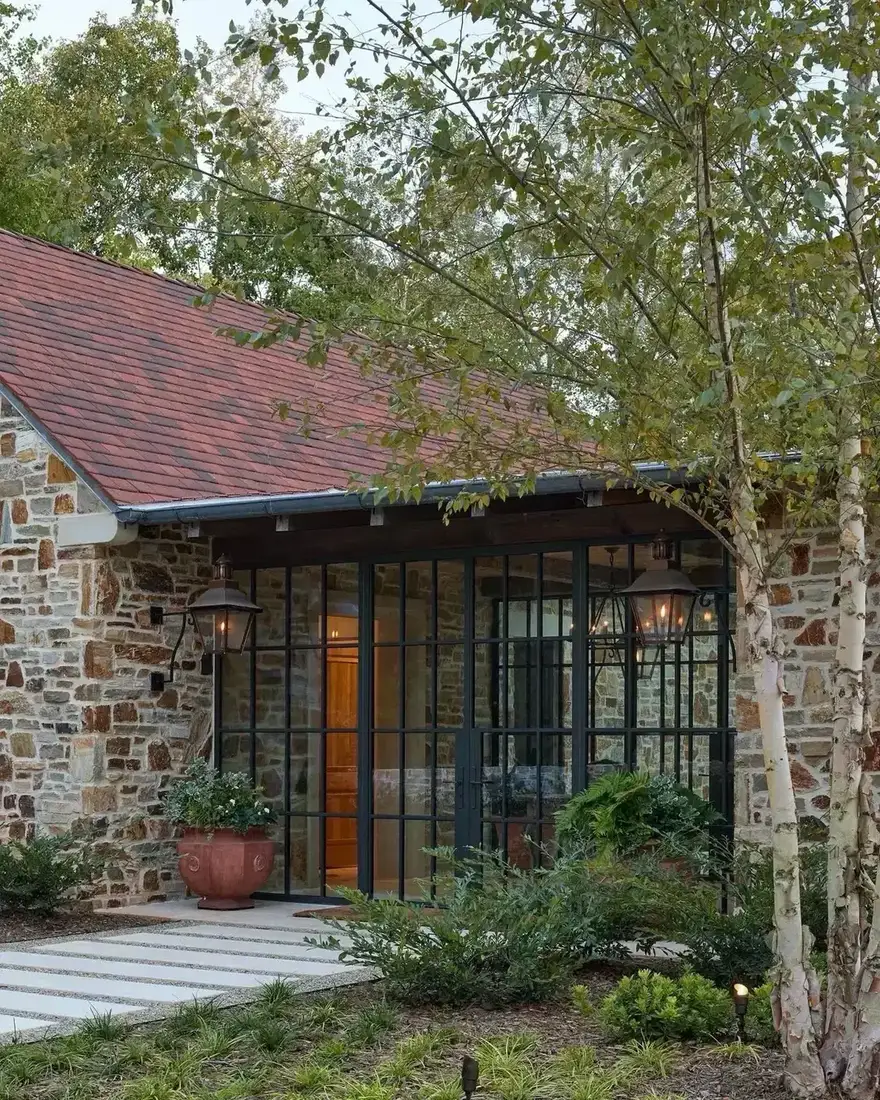
The limestone house under terracotta gets away with a warm clay roof because the roof is plain, so your eye stays on the stone. When your wall is busy, your roof must be calm. Terracotta suits warm limestone, soft grey slate suits cooler stone, but both work because they stay plain. You should test roof samples against your stone on a grey day. If the roof tries to be the feature, the stone loses. If the roof recedes, you can keep even a large stone house from feeling heavy, and you avoid the mistake of buying a busy roof to fix a busy wall.
Borrow your shutter color from the garden
Notice the manor under Spanish moss where lawn and live oaks frame the stone. The shutters do not introduce a new color, they borrow the green you already see in the trees. That is why the front feels quiet. A stone farmhouse rarely needs a bold shutter. You should pull your shutter tone from the evergreen structure you just planted, a muted sage or soft grey green, and keep the finish matte. Gloss picks up sky and shouts. When your shutter and your hedge sing the same note, your stone looks like it grew with the landscape rather than landed on it.

Echo the stone warmth at the ground
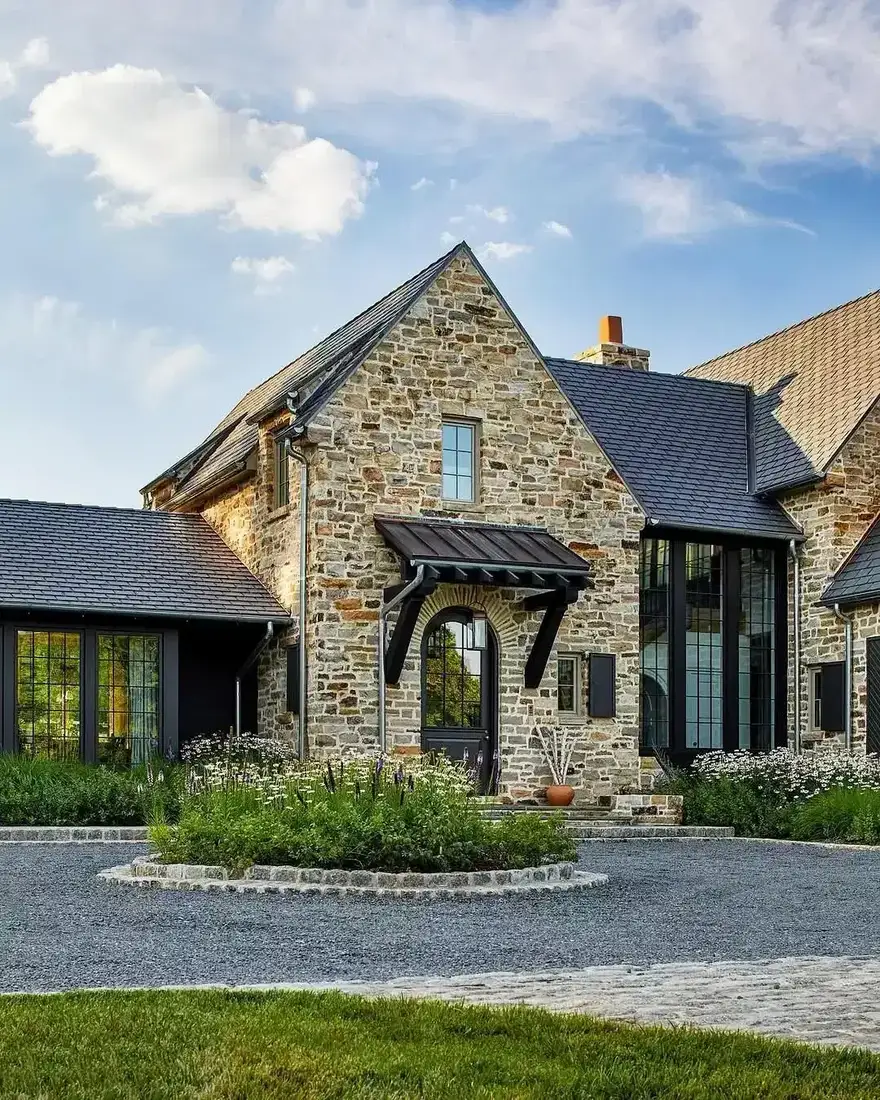
See the modern farmhouse with its black windows and pale gravel forecourt. The gravel is warm, not blue, so it echoes the limestone without copying it. That subtle harmony is what makes the stone feel at home on a crisp modern facade. Tarmac or a cold blue stone at the foot would chill the stone and make it look grey. You can get this right by scooping a handful of your wall stone and holding it next to the gravel in the merchant’s yard. When they sit as cousins, not twins, you have the pair. The black window frames then read as shadow gaps that let the stone be texture and the glass be void. Slim black window lines do the same job on timber, which our cedar shingle house exterior ideas covers.
Formal frames and Mediterranean planting that finish it
Two climates, two answers, and both calm the same busy wall.
Give a tall wall a horizontal hedge to rest the eye
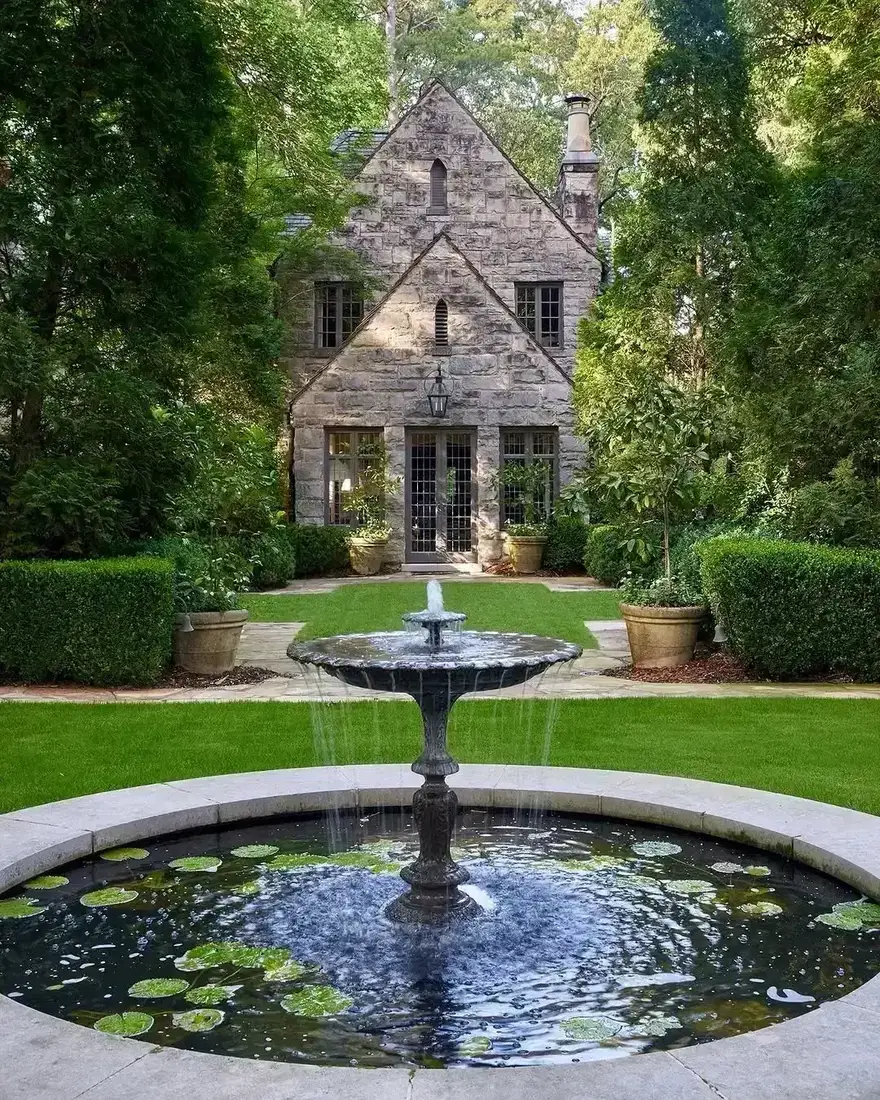
The Tudor with its small fountain is a lesson in geometry. Stone is vertical and busy, so you give your eye a horizontal to rest on. The clipped box hedge, the level coping, and the still water all draw a calm line across the front. Without that line, a tall stone house feels like it is leaning toward you. You should keep formal hedging low and level, and hold it slightly away from the face so the stone can dry. That gap also gives you room to step in with shears without scraping the wall. For edges and pots that suit an older wall, see our garden decor ideas.
Light the stone warm after dark
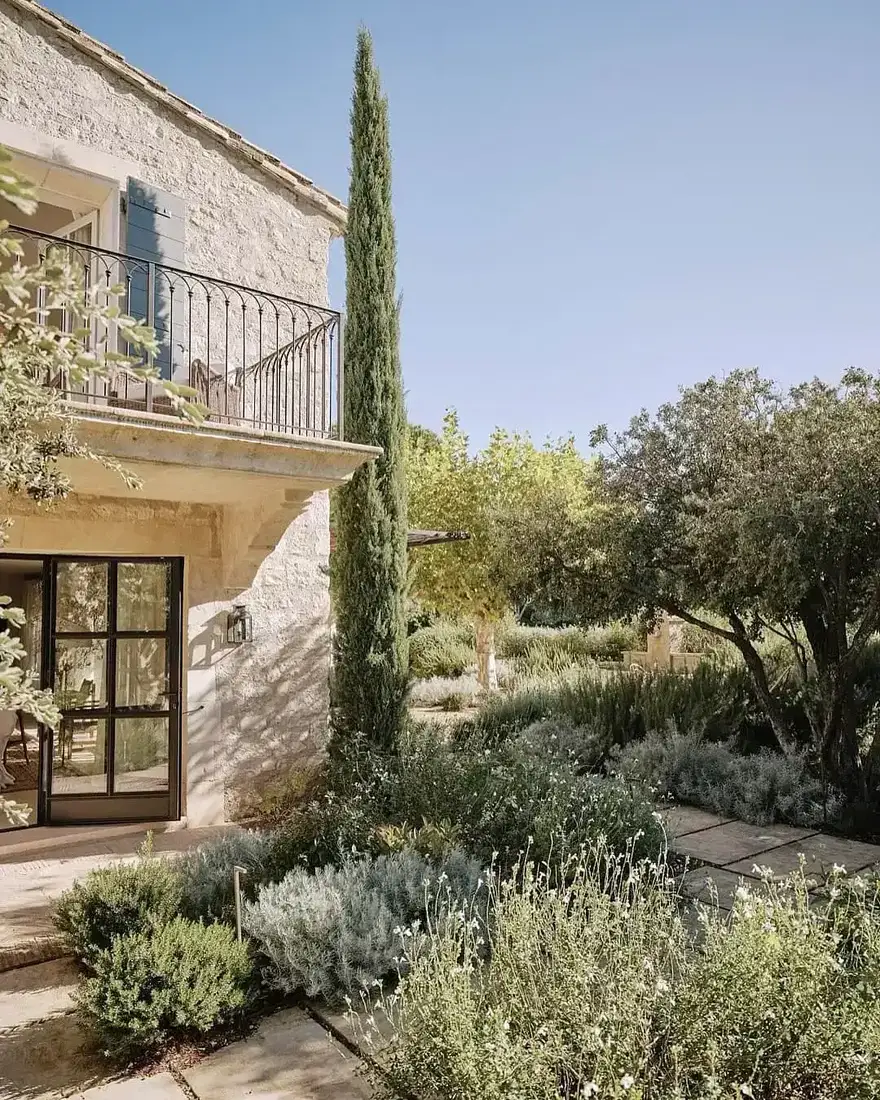
The villa set among cypress, lavender and olives keeps its stone elegant because the light around it stays warm. Even after you fix planting and mortar, a cool blue flood will make limestone look clinical at night. You want a warm wash that lets the stone keep its honey. Plant cypress well clear of the wall so roots and shade do not keep the face damp, and keep lavender trimmed after flower so it holds a soft mound that repeats nowhere else. When you stand on the terrace at dusk, the stone should feel like the warmest plane in view, with the planting cooler around it. For waterfront evenings specifically, our lake house and coastal exteriors guide keeps every bulb warm, low and timed.
Stone, mortar and garden choices at a glance
| Choice | What it does to stone | Use it when | Watch for |
|---|---|---|---|
| Evergreen structure | Makes busy stone read calm | Any stone farmhouse | Mixed flowerbed hard against wall |
| Boston ivy or Virginia creeper | Clings with pads, usually safe | You want green on stone | English ivy that roots into joints |
| Gravel at base | Lets splash drain and dry | Every stone wall | Soil or tarmac touching the face |
| Pale mortar | Each stone reads separately | Rustic, lively wall | Bright white that glares |
| Dark mortar | Merges stones into a mass | Formal, quiet house | Charcoal that flattens texture |
| Gentle wash only | Keeps weathered skin intact | Any old stone | Sandblasting or pressure washing |
The Stone Farmhouse Formula
- Simplify the planting first. Evergreen structure calms stone, flower color competes with it.
- Use vines that cling, not those that root. Boston ivy or Virginia creeper over English ivy on lime mortar.
- Keep gravel at the foot. Let water splash, drain, and dry rather than sit against the wall.
- Match mortar on purpose. Pale to show each stone, dark to merge them into a calm mass.
- Never blast old stone. The patina is protection, not dirt.
- Borrow shutter and gravel tones from the garden. Quiet echoes make stone look like it belongs.
Do those six and your stone stops competing with its garden and starts leading it. Tying house, roof and garden into one front runs through all our home exterior guides.
Frequently Asked Questions
What planting suits a stone farmhouse best?
Clipped evergreen structure such as boxwood, yew, or hornbeam. It reads calm beside busy stone, holds shape through winter, and gives you a simple green frame that lets the stone be the texture.
Can I grow ivy on my stone house?
You can, but choose the habit. Boston ivy and Virginia creeper use adhesive pads and are usually safe. English ivy roots into mortar joints and opens them, especially in soft lime mortar, so avoid it on old walls.
Should I have soil or gravel against my stone wall?
Gravel. A narrow gravel band at the base lets rain splash and drain and lets the wall dry. Soil or tarmac hard against the face holds damp against your lowest stones and can push moisture inside.
Does mortar color really change the wall?
Yes, more than most expect. Pale mortar outlines each stone so you read individual pieces. Dark mortar softens those lines and makes the wall read as one mass. Hold samples against your stone in daylight before you decide.
Can I pressure wash my stone house?
No. Pressure washing and sandblasting strip the weathered outer skin that keeps water out. Once it is gone the softer stone underneath soaks water far faster. Use a soft brush and plain water instead.
What shutters work with limestone?
Pull the tone from your garden greens, a muted sage or soft grey green with a matte finish. When shutters echo the hedge, the house reads as one palette and the stone stays the star.
This article may contain affiliate links. We may earn a commission at no extra cost to you.