The Wrong Mortar Will Eat Your Stone Cottage

Add us as a preferred source to see more stories on Google.
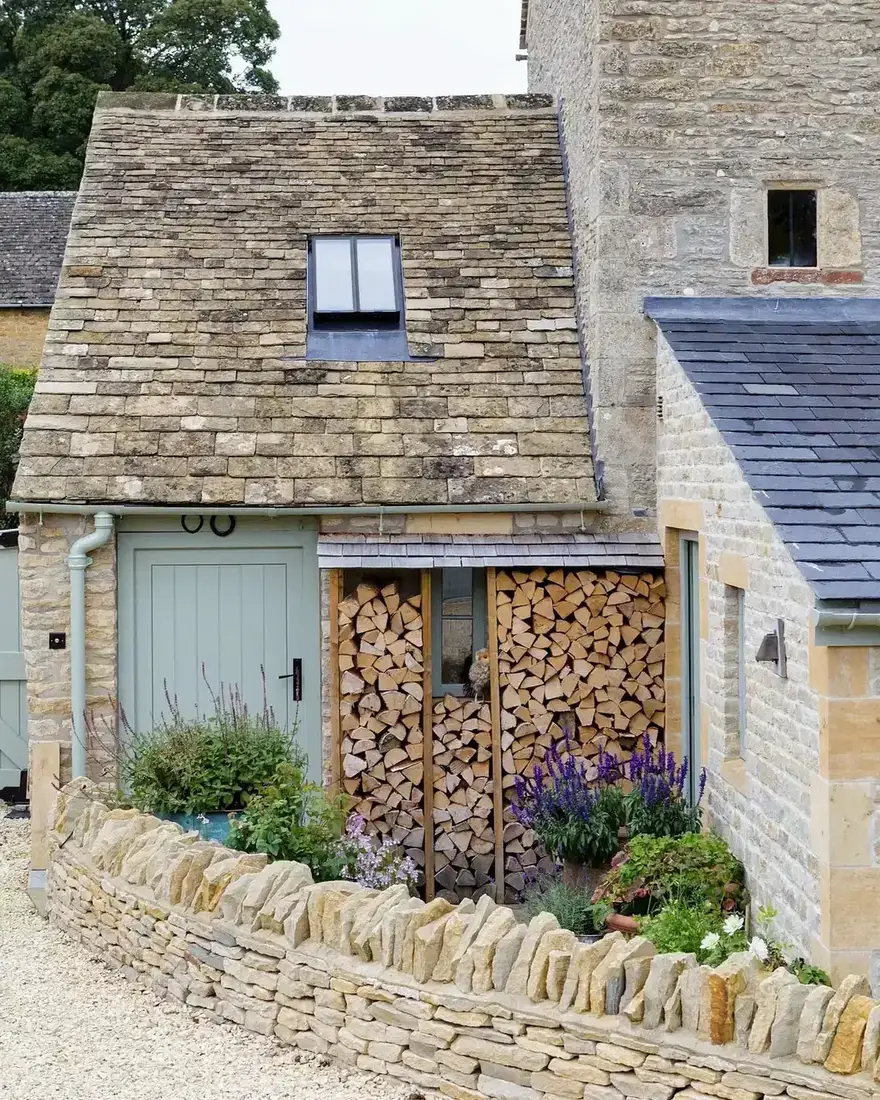
You didn’t pick your stone. It came with the house, and it’s staying.
You chose the area, the layout, maybe the roof, but the stone was already decided. Now you’re trying to make everything around it feel intentional.
Here’s the thing. You never choose the stone, so every real decision is about everything around it. Your job isn’t to fight the wall. Your job is to let it lead. You’ll thank yourself when you stop fighting the stone and let it boss your palette.
The wall was decided before you arrived
This is the unsexy part that saves you the most money. Sort it before you buy paint.
Begin with the mortar, not the paint
The joints between your stones are about 15 to 20 percent of the wall surface, so they read as a colour in their own right. If your house went up before about 1930, you need lime mortar, not cement. Cement is harder than old stone, so water that gets in cannot leave through the joint. It leaves through the stone face instead and the face flakes off. That is called spalling and you cannot glue it back.
Ask your builder what they plan to use and do not accept a shrug. The same rule governs a brick house exterior and it is the most expensive detail to get wrong. If you only do one thing, fix the mortar.
Keep the joints back, never proud
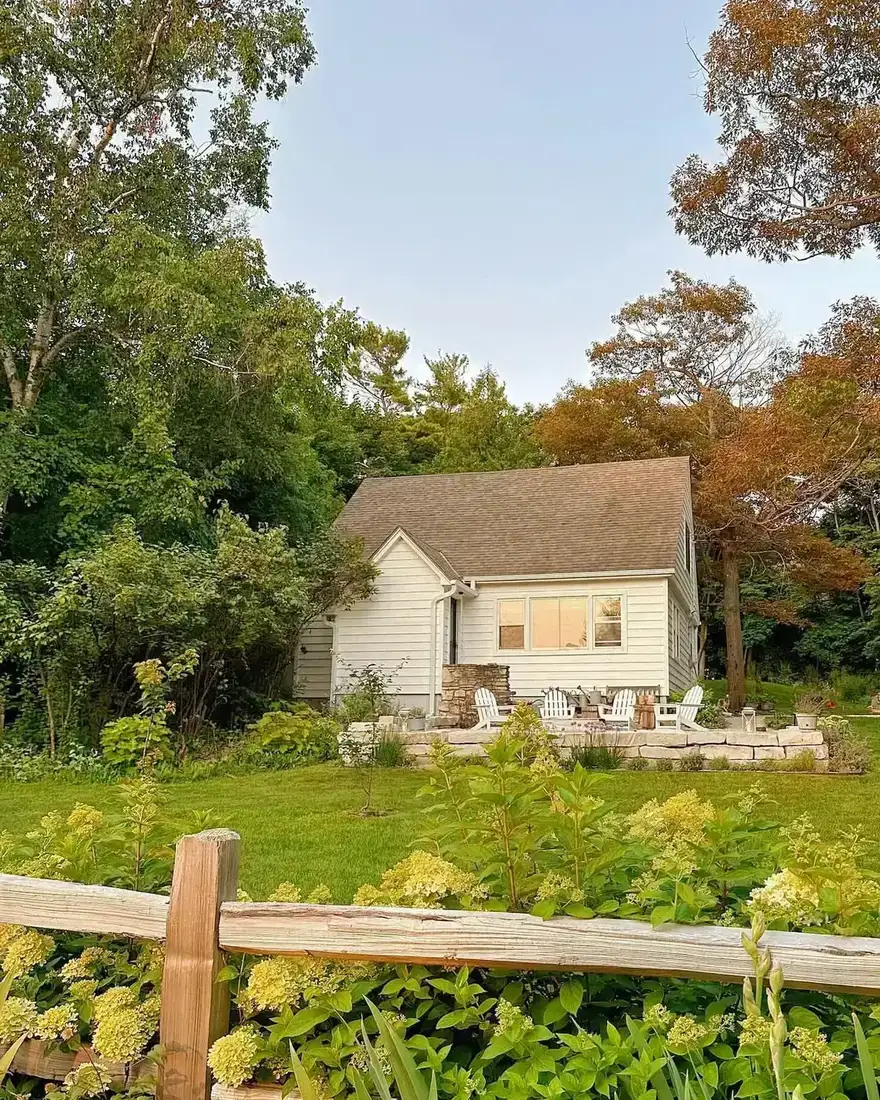
You’ve probably seen this repair. A raised ribbon of grey mortar sitting proud of the stone with sharp edges, as if someone iced the wall. That is ribbon pointing and it looks wrong on every traditional cottage. It makes the mortar the star and your stone reads like it was pushed through a slot.
A good joint sits 3 to 5 mm back from the stone face so the stone leads and the mortar recedes. The wall then reads as one surface and sheds water cleanly. It costs nothing extra to point it this way and the difference from the pavement is huge. Worth knowing: any quote that promises to blast the wall back to fresh stone should go straight in the bin.
Learn to love the patina, do not blast it off
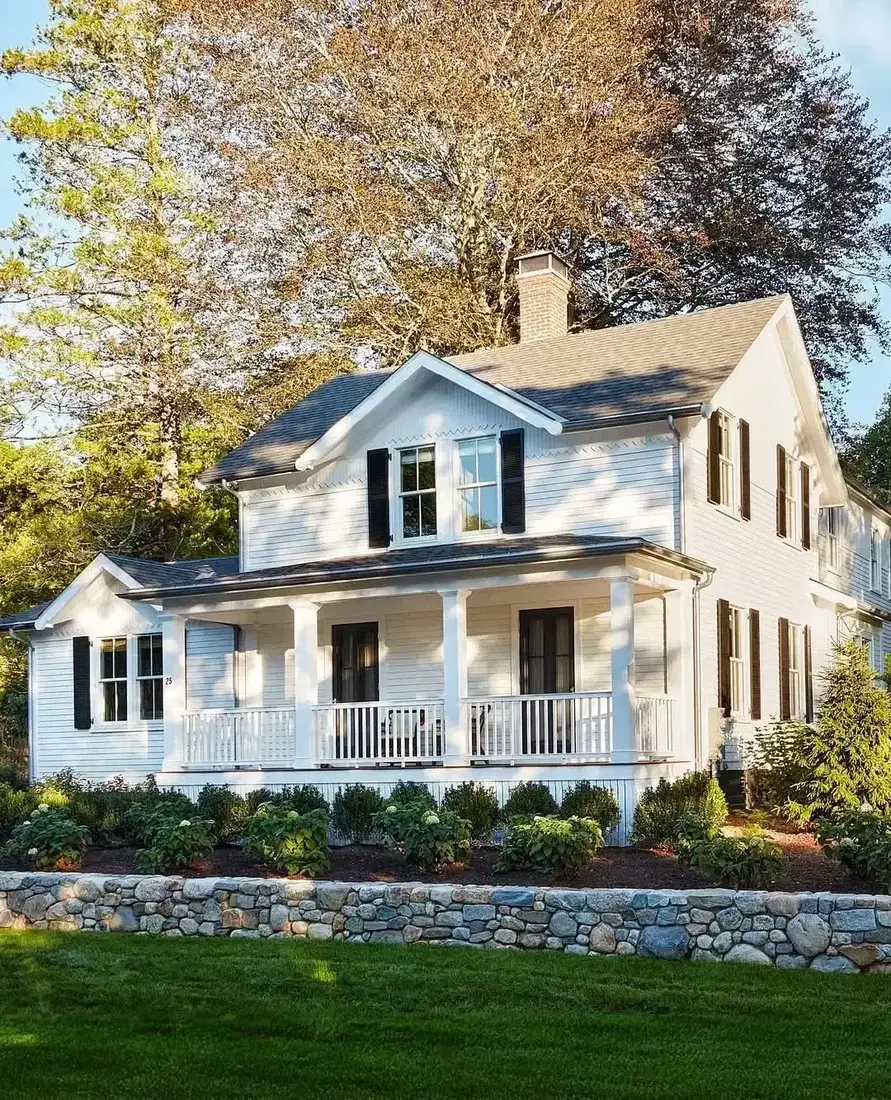
Never pressure wash old stone and never sandblast it. The weathered outer skin that took a hundred years to form is what keeps water out. Strip it off and the softer stone underneath soaks up water far faster. You have made the house wetter forever to remove some lichen.
Start with a soft brush and plain water. Give it a season before you judge. Chances are your wall does not need cleaning at all. If you do wash it, work top down with a garden hose at low pressure and a mild oxygen bleach, then rinse well. A word of warning: the green on a shaded wall is not rot. It is algae and it lifts easily without a machine.
Colour that lets the stone lead
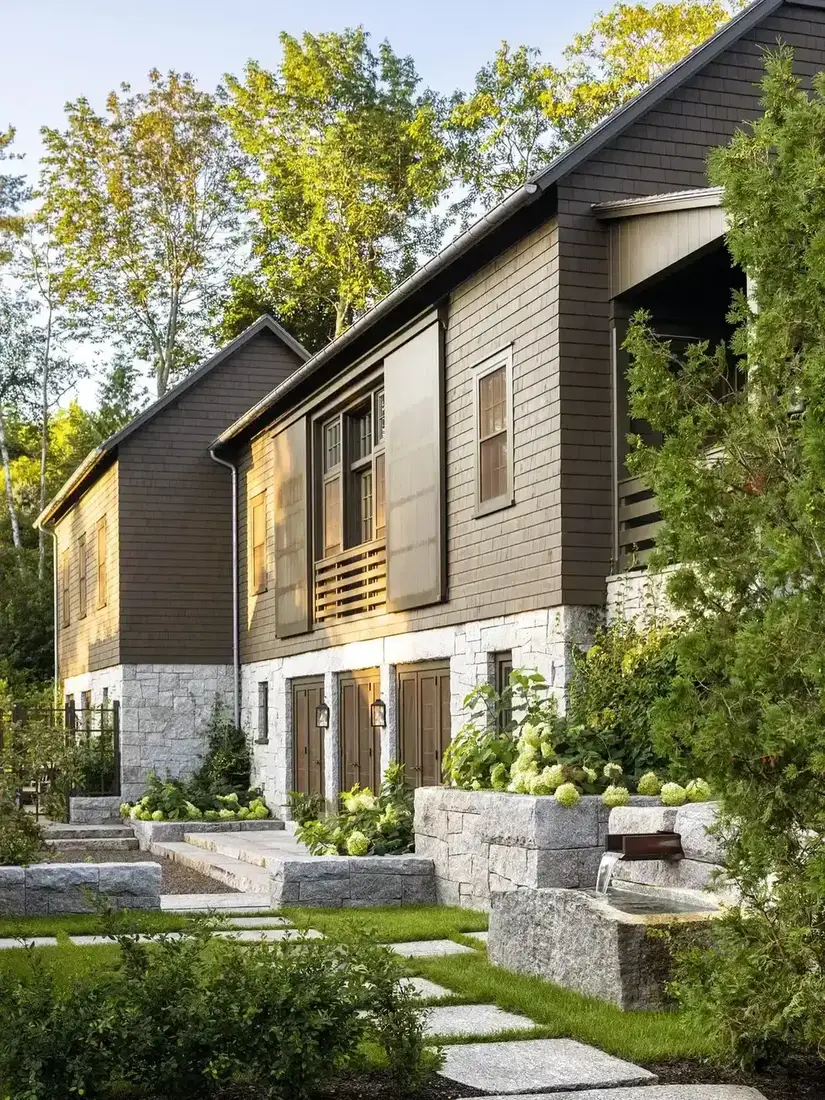
Stone is already a neutral. Cool grey, soft buff or warm honey. Read yours first, then pick everything else to sit beside it.
Use black frames when you want the wall to do the talking
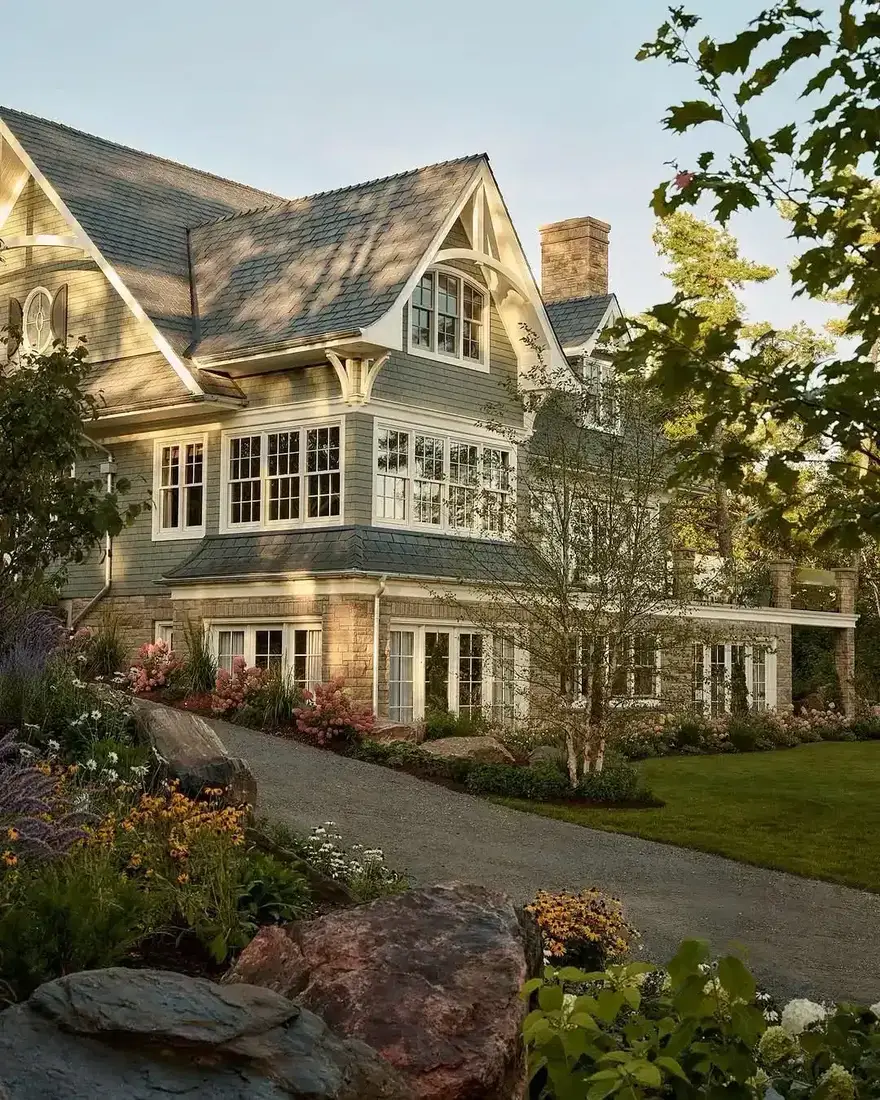
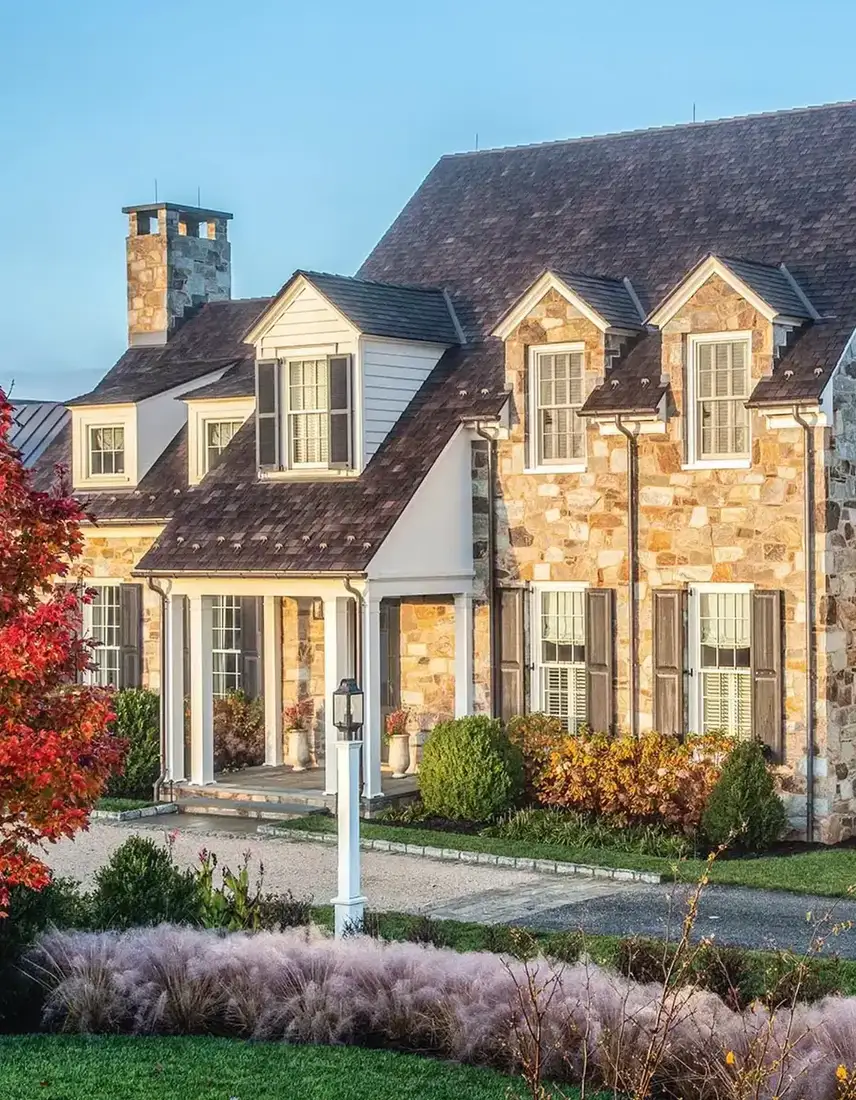
Black window frames sound bold but they are quiet against stone. Black reads as a shadow line, so your eye skips the frame and lands on the wall itself. On grey fieldstone with a slate roof, black is close to foolproof. It also ties your gutters, downpipes and ironwork together so the whole front calms down.
Try it with a sample board before you commit to the door as well. Paint the board and hold it against your stone on a dull day, not a bright one. Dull light is how you will see your house most of the year. The good news is this test costs you a small pot and an afternoon.
Choose off-white, not brilliant white
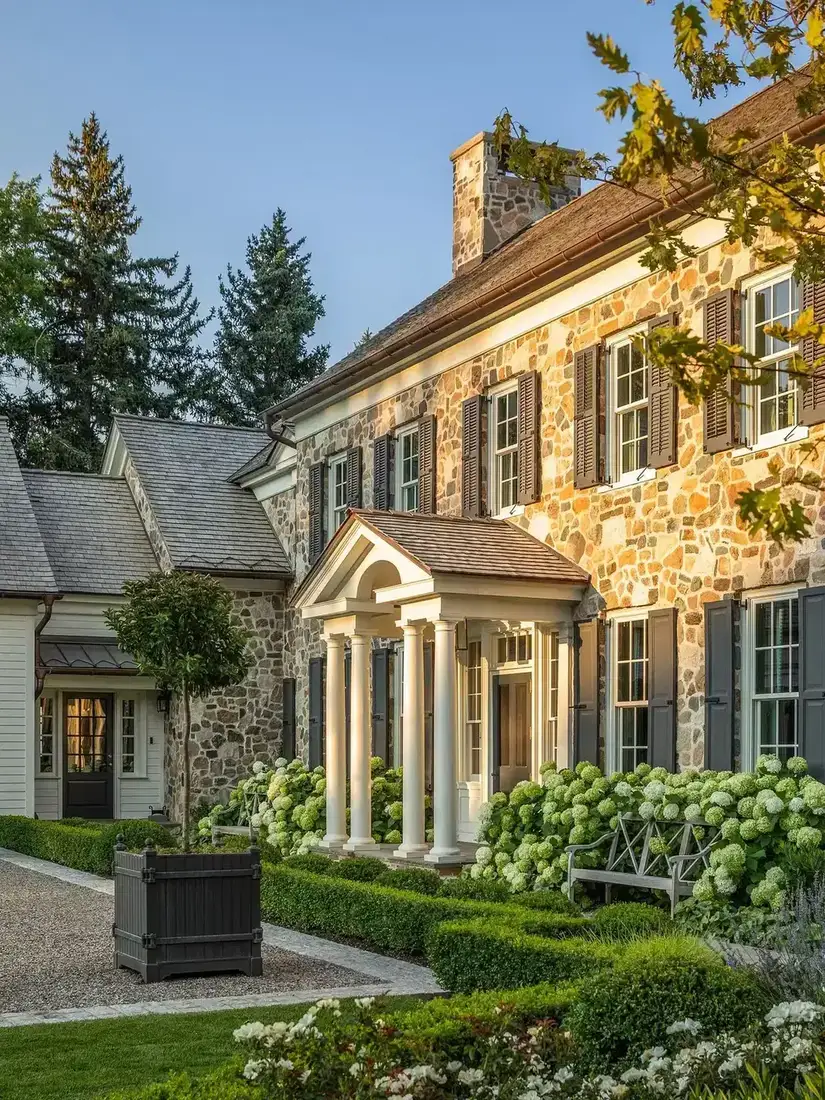
Brilliant white against grey stone looks harsh. Your stone is warm and slightly uneven, and pure white is flat and cold, so the frames end up looking plastic. A softer off-white with a touch of cream or stone dust in it sits far better.
Here is your easy test. Hold a sheet of plain printer paper against the wall. If your paint sample looks creamy or slightly dusty next to the paper, you are in the right area. If it looks brighter than the paper, it is too stark. And that is fine, you just need one shade down. On honey limestone, go warmer again. Nine times out of ten the warmer white wins outside.

Let a deep muted green be your one strong colour
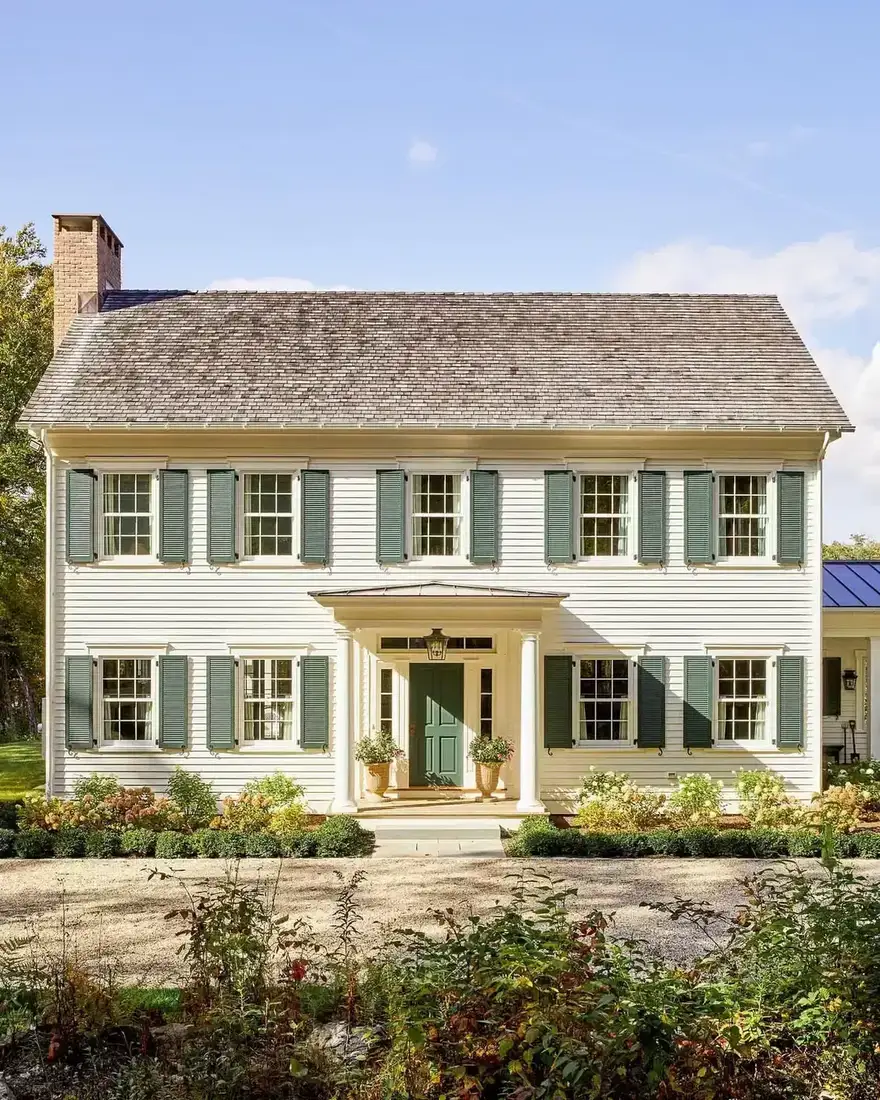
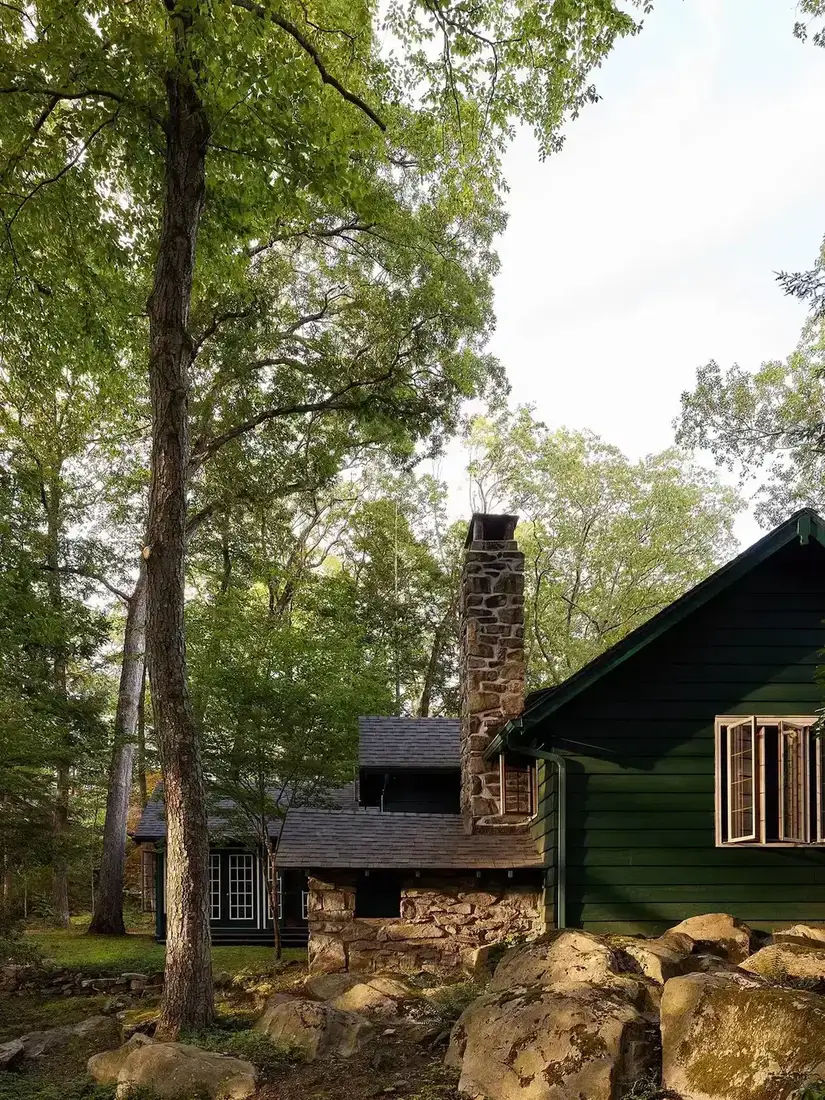
Deep green is the sleeper hit on stone and you can use it with confidence. Cool grey, buff and honey all take it because it borrows from your planting, so house and garden read as one thing. Use it on the front door, or on the door and shutters if you have them. For doors, porches and planting scaled to small houses generally, see our cottage exterior ideas.
Keep it dark and slightly grey rather than bright. Bright green pings. A deep, muddy green settles. If your roof is warm terracotta or orange clay tile, test the green outside next to the tiles before you buy the tin. Some greens turn sour against orange and you want to know that before it is on the door. You’ll live with that door colour for years.
Roofs, frames and the ground at your feet
Your roof is the biggest single surface after the wall. It sets whether your house reads warm or cool.
Match the roof to your stone’s temperature
Cool grey stone wants a grey roof and slate is the obvious answer. That pairing is why so many stone cottages look effortless. Warm honey stone can carry a warmer roof, terracotta or a soft clay tone, without a clash.
Trouble starts when you mix them without meaning to. Cool grey stone under an orange concrete tile always looks slightly off and most people cannot say why. You probably cannot replace a roof on a whim and that is fine. Just let the roof you have choose your other colours. Warm roof means warm off-white trim and a warm door. Cool roof means black frames and that deep green. Which is a shame, because a mixed roof is hard to repaint your way out of.
Go slim on the frames, not just dark
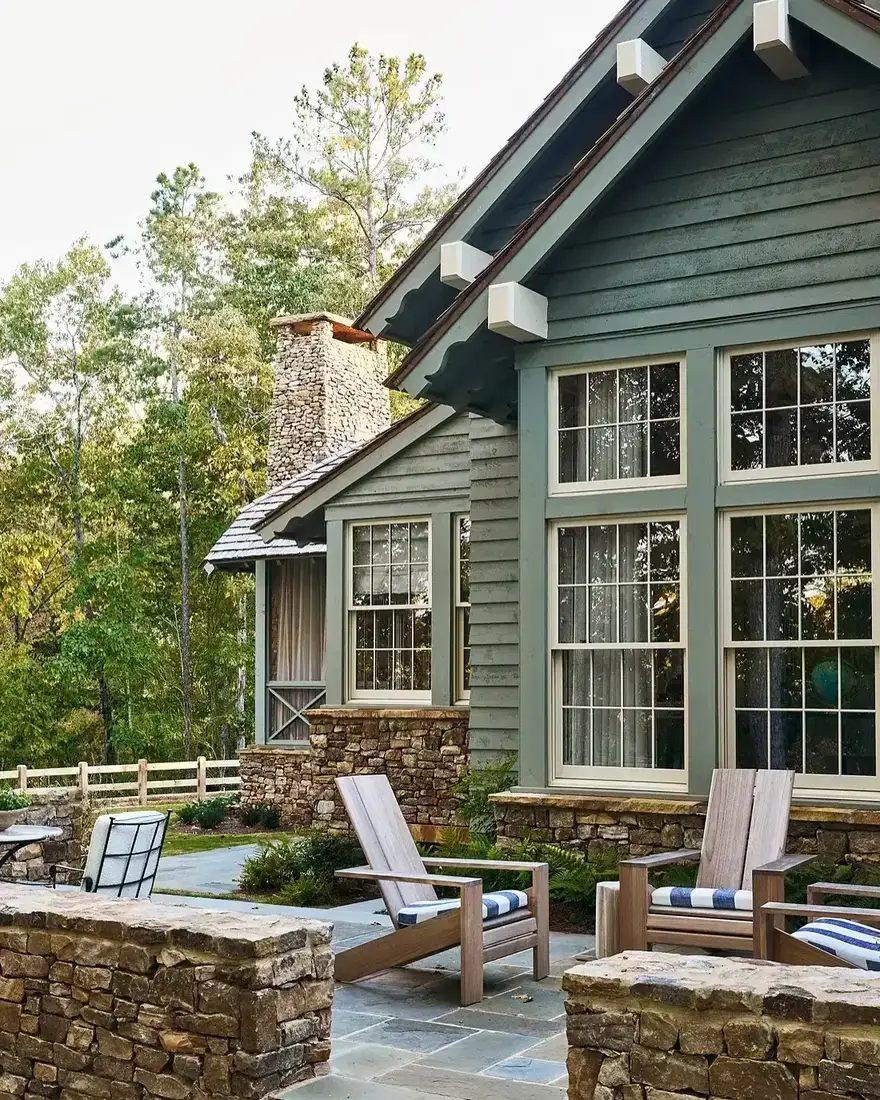
Colour is half the job. The other half is how thick the frame looks. Chunky plastic frames make an old stone wall look cheap at any colour. Slim frames let more glass show, and more glass means more dark contrast with the stone. Steel and steel look windows are the extreme version of this and they are stunning on stone.
If new windows are not happening this year, you can still get some of the effect. Paint your frames dark so the bulk reads as shadow. Clean the glass properly and take down net curtains if you can. Depth is what makes stone sing and dark glass gives you depth for free. Your stone will thank you for the extra shadow.
Put steel where the eye expects timber
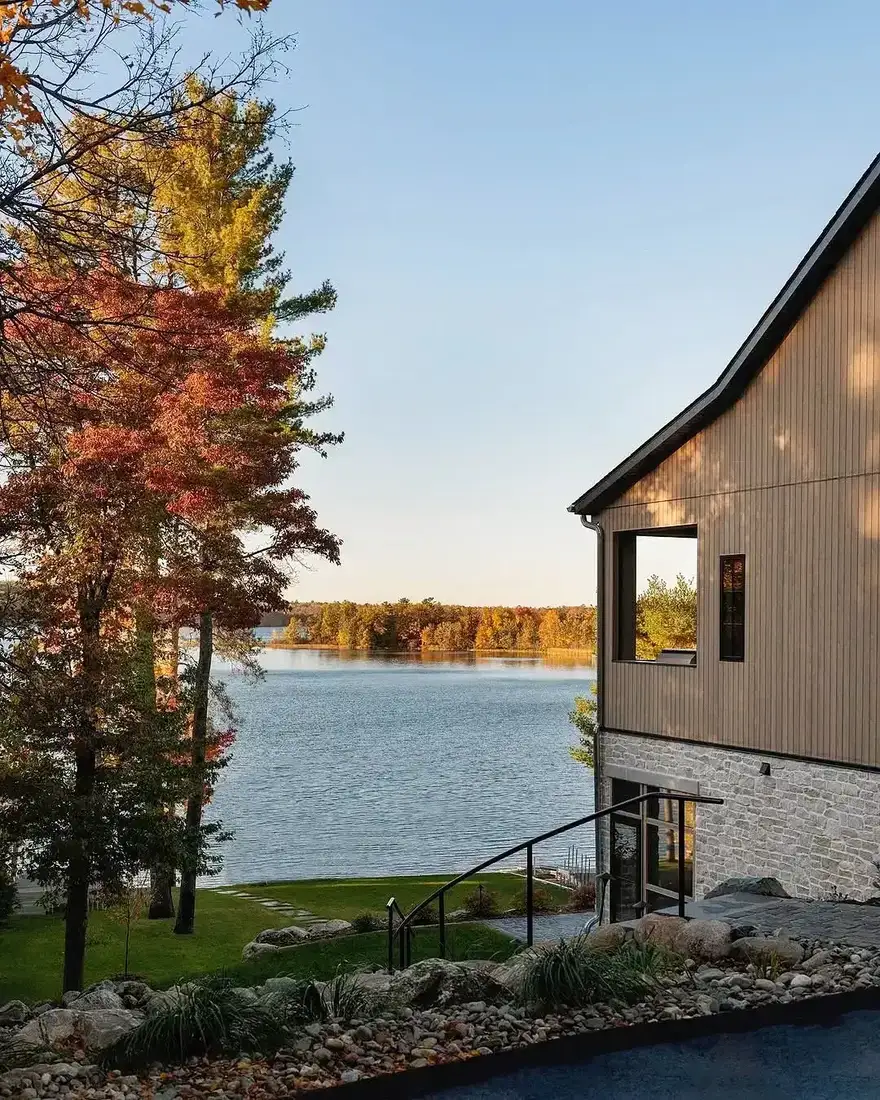
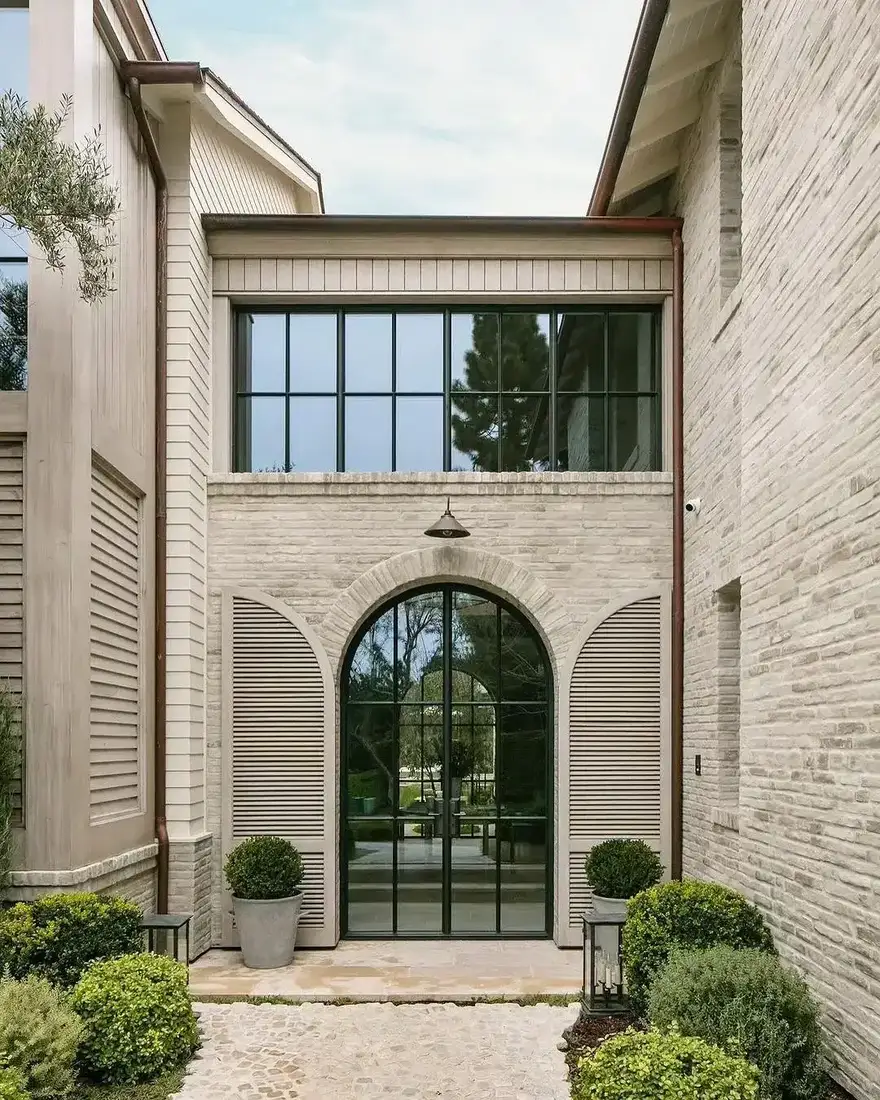
A limestone courtyard with tall arched steel doors is the most modern way to handle stone without fighting it. The slim black lines keep the stone as the texture and the glass as the void. You get height, light and a clear geometry that calms a busy wall.
Chances are you are not adding a full height arch this year. You can still borrow the idea. Replace a heavy timber side door with a slim dark frame, or paint your existing French doors in a soft black like Railings. Keep the glazing bars thin if you have them. The thinner the line, the more your stone gets to be the hero. For more on choosing that dark line, see our brick house exterior ideas where the same shadow rule applies.
The planting that finishes it
A stone wall is already busy. Lots of shapes, lots of tones. Your planting should calm it, not compete with it.
Use gravel at the base, not tarmac or soil
The ground right in front of your wall matters more than you think. Gravel is loose, pale and slightly rough so it echoes the stone. Tarmac is flat, black and dead, and it swallows the light at the bottom of the wall. Soil and mulch hold moisture against the lowest courses and wick it up into the stone.
Keep a clear strip at least 150 mm deep in front of the wall and cover it with a warm-toned gravel, not a cold blue chipping. Rake it tidy and keep it clear. It also stops rain splashing soil back up the wall and it drains, so your lowest stones stay drier. Have a look at your base after a wet week and you will see the difference.
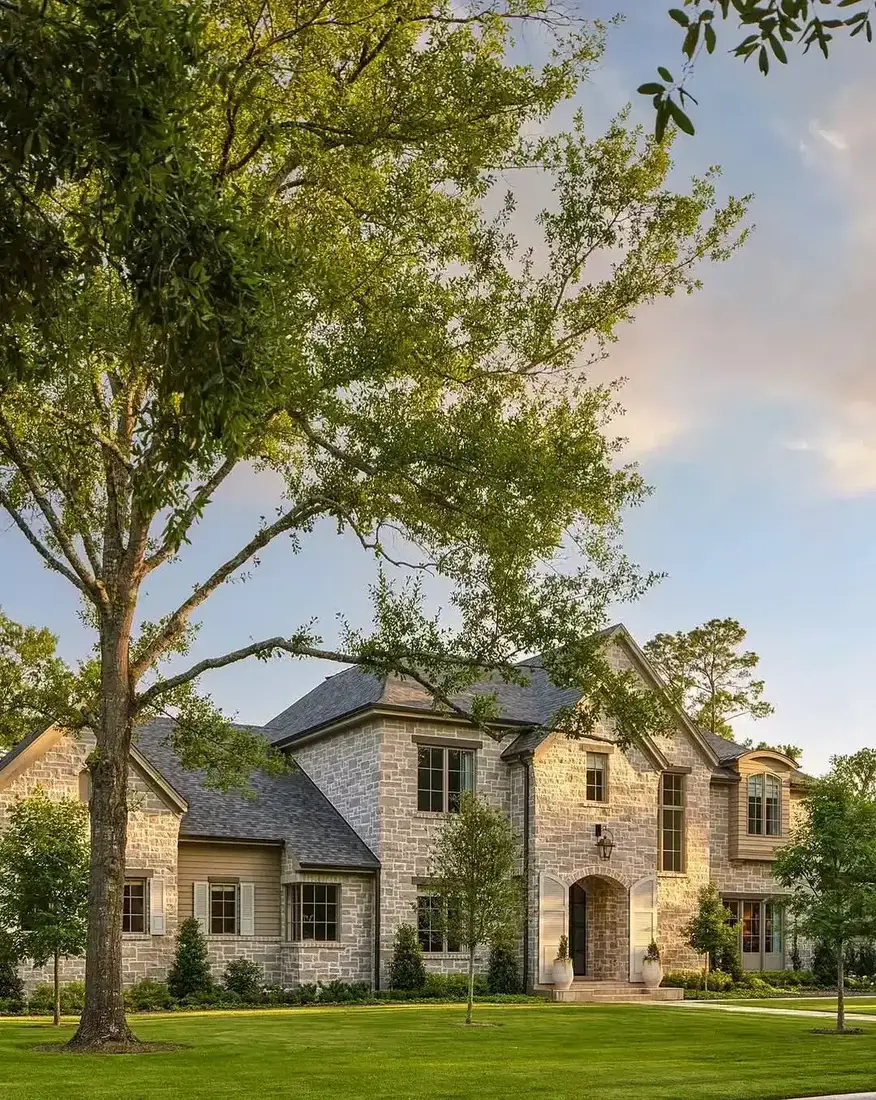
Plant evergreen structure and leave the wall a gap to breathe
Against a busy stone wall, clipped evergreens beat a mixed flower border every time. Boxwood balls, yew blocks, hornbeam, a standard bay. Simple shapes in one colour hold their form all winter when your front is most exposed. They give your eye somewhere quiet to rest.
Do not push them hard against the stone. Leave at least 300 to 450 mm of gravel or paving between the bed and the wall so air can move and you can get a ladder to it. Dense shrubs and ivy hold water against the stone and make repointing miserable later. If you want height near the house, use a pot you can move. The pieces between the planting matter too, and our garden decor ideas will help you choose what suits an older wall. For the full front garden picture, browse our home exterior guides.
Mortar and stone care at a glance
| Choice | What it does to old stone | Use it when |
|---|---|---|
| Lime mortar | Softer than stone, water leaves through joint | Any house built before about 1930 |
| Cement mortar | Harder than stone, pushes water through face and causes spalling | Modern stone only, never old walls |
| Recessed joint, 3 to 5 mm back | Stone reads first, mortar recedes, sheds water | Almost every traditional wall |
| Ribbon pointing, proud band | Looks wrong, traps water on face | Never |
| Soft brush and water | Removes surface dirt, keeps weathered skin | First and usually only choice |
| Pressure washing | Strips outer skin, stone soaks faster | Avoid on anything old |
| Warm gravel at base, 150 mm clear | Drains and echoes stone | Every stone house |
| Soil or mulch against wall | Holds moisture, wicks up into stone | Avoid |
The Stone House Exterior Formula
If you strip all eleven ideas down to a plan, it is short:
- Fix the pointing first, with lime mortar on anything pre-1930. It is 15 to 20 percent of your wall and the cheapest big win.
- Keep joints slightly back from the stone face, never proud. Let the stone lead.
- Clean with the gentlest method that works, or leave the patina alone. Never blast.
- Read your stone’s temperature, then match the roof and frames to it. Cool with cool, warm with warm.
- Choose black or a soft off-white for frames, and one deep muted colour for the door. That is your whole palette.
- Plant evergreen structure, keep gravel at the base, and leave the wall a gap to breathe. At least 300 mm of air.
Get those six right and you will spend less than you feared. You will also keep the wall dry for the next hundred years.
Frequently Asked Questions
Can I paint my stone house exterior?
You should not. Paint seals the stone face and traps water inside the wall. That water then pushes back out, blowing the paint and damping the rooms inside. Stripping paint from stone is slow, costly and often damages the face. Change the frames, the roofline or the planting instead. If you hate the colour of your stone, it is usually the cement pointing or the plastic windows you dislike, not the stone itself.
What mortar should I use on an old stone house?
Use lime mortar on any house built before about 1930. Lime is softer than the stone so water escapes through the joint. Cement is harder than old stone, which forces water out through the stone face and makes it flake off. That damage is called spalling and you cannot undo it. Ask your builder before the first trowel hits the wall.
How much difference does repointing make?
More than most people expect. The mortar joints are roughly 15 to 20 percent of the visible wall surface. Change the colour, texture and depth of that 15 to 20 percent and the whole wall reads differently, even though every stone is exactly where it was.
Should I pressure wash my stone walls?
No. Pressure washing and sandblasting strip the weathered outer skin that protects old stone. Once that skin is gone the stone soaks up water much faster. Start with a soft brush and plain water and use the gentlest method that works.
What colour windows look best on a stone house?
Black works on almost any stone because it reads as a shadow line and lets the wall lead. A soft off-white with a touch of cream also works well. Avoid brilliant white on grey stone as it looks harsh and a little plastic next to the warm, uneven surface.
Can I plant climbers directly on my stone walls?
It is risky on old walls. Ivy and dense climbers hold moisture against the stone, keep it damp and make repointing difficult later. If you love the look, grow the climber on a frame or trellis held at least 50 mm off the wall so air can move behind it.
This article may contain affiliate links. We may earn a commission at no extra cost to you.