Why Does Your White House Read Cold From the Road?

Add us as a preferred source to see more stories on Google.
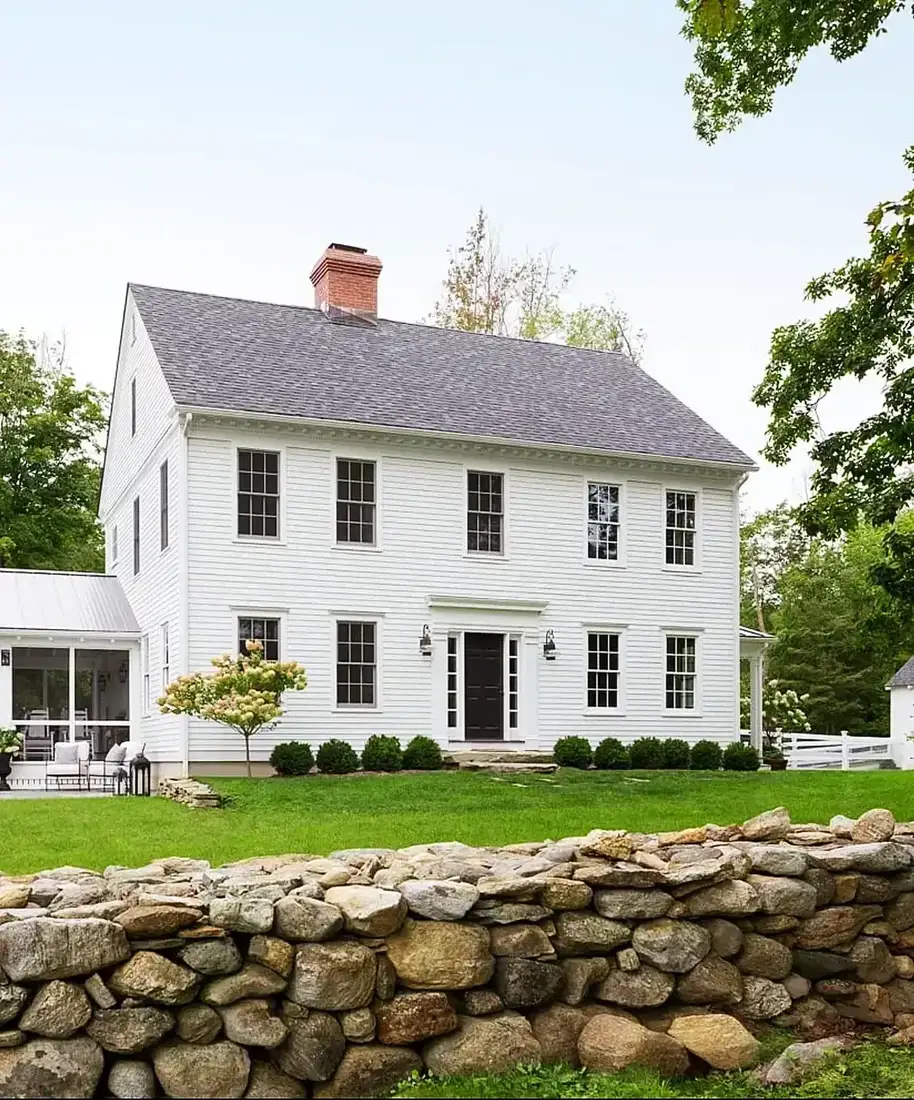
You painted your house white and it came out cold.
Not wrong, exactly. Just clinical, a bit blue in the shade, nothing like the farmhouse you pinned six months ago.
Here is what happened. You treated white as one colour and picked whichever one looked cleanest on a small card indoors. The houses you saved were almost all warm whites under dark roofs. Yours is a cool white, and no amount of planting or new lighting will warm it up.
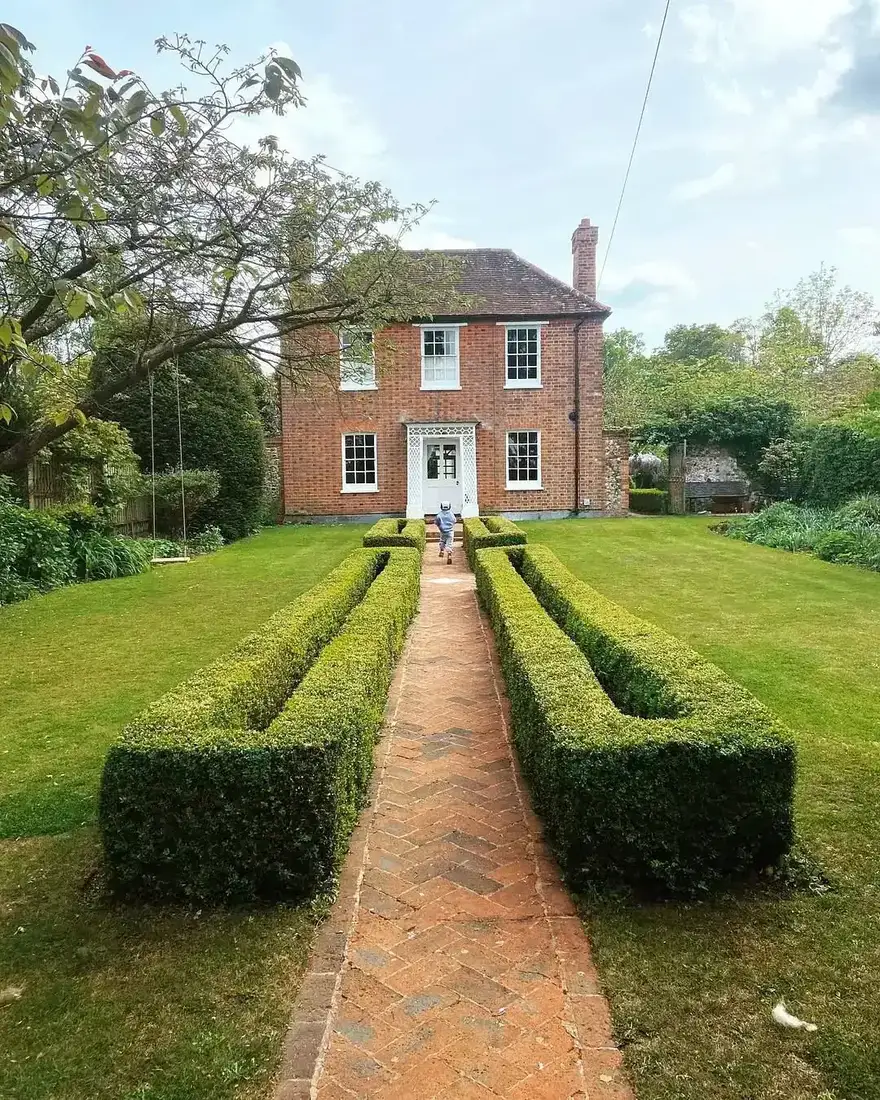
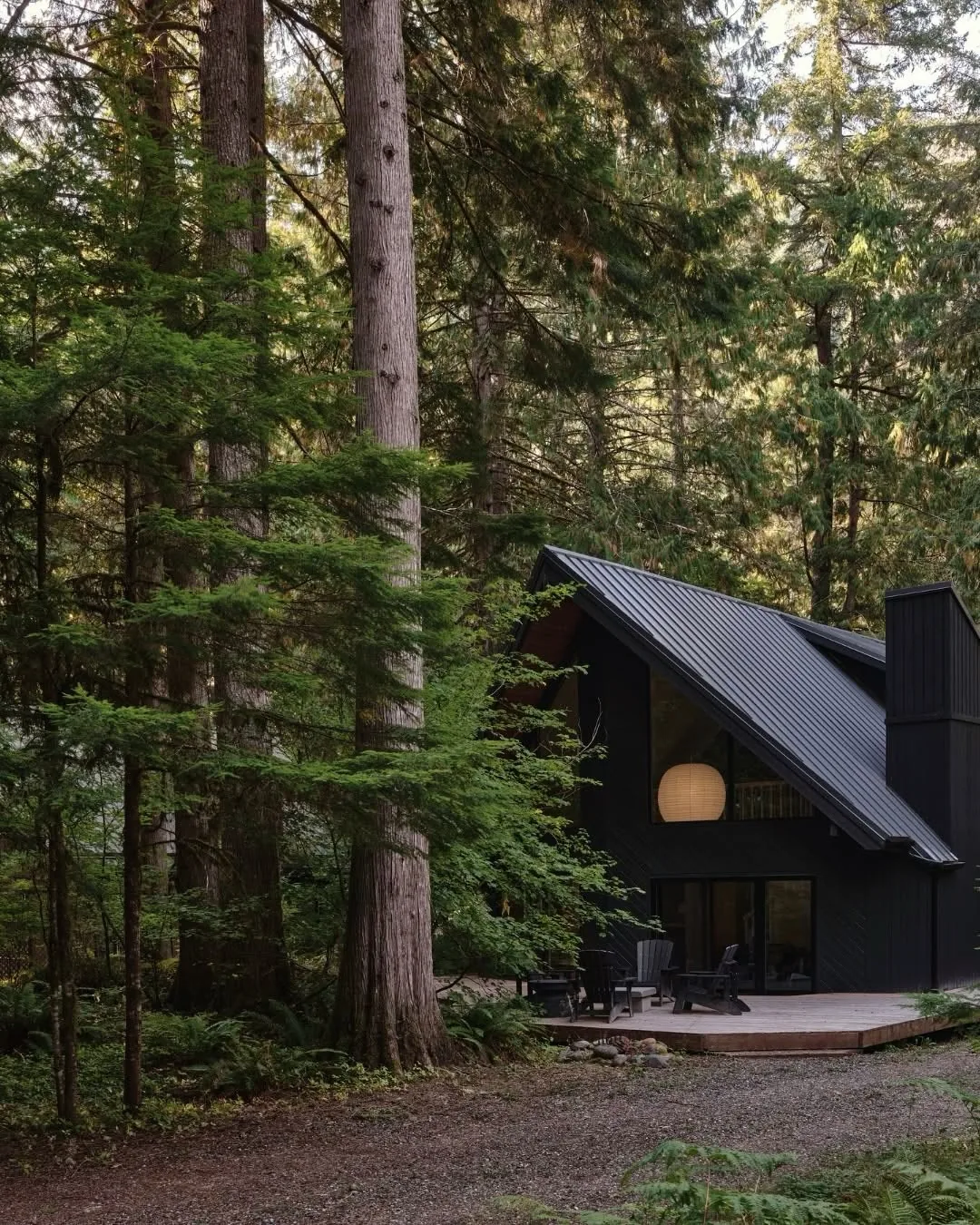
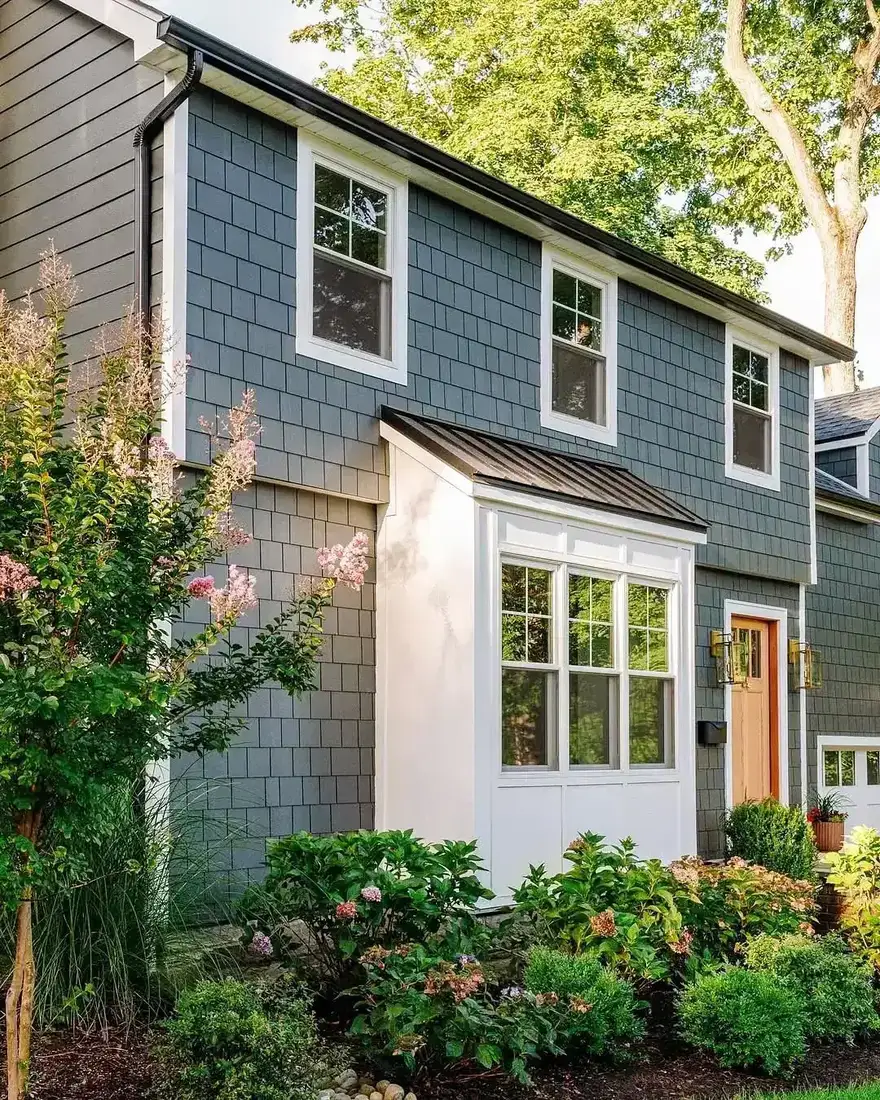
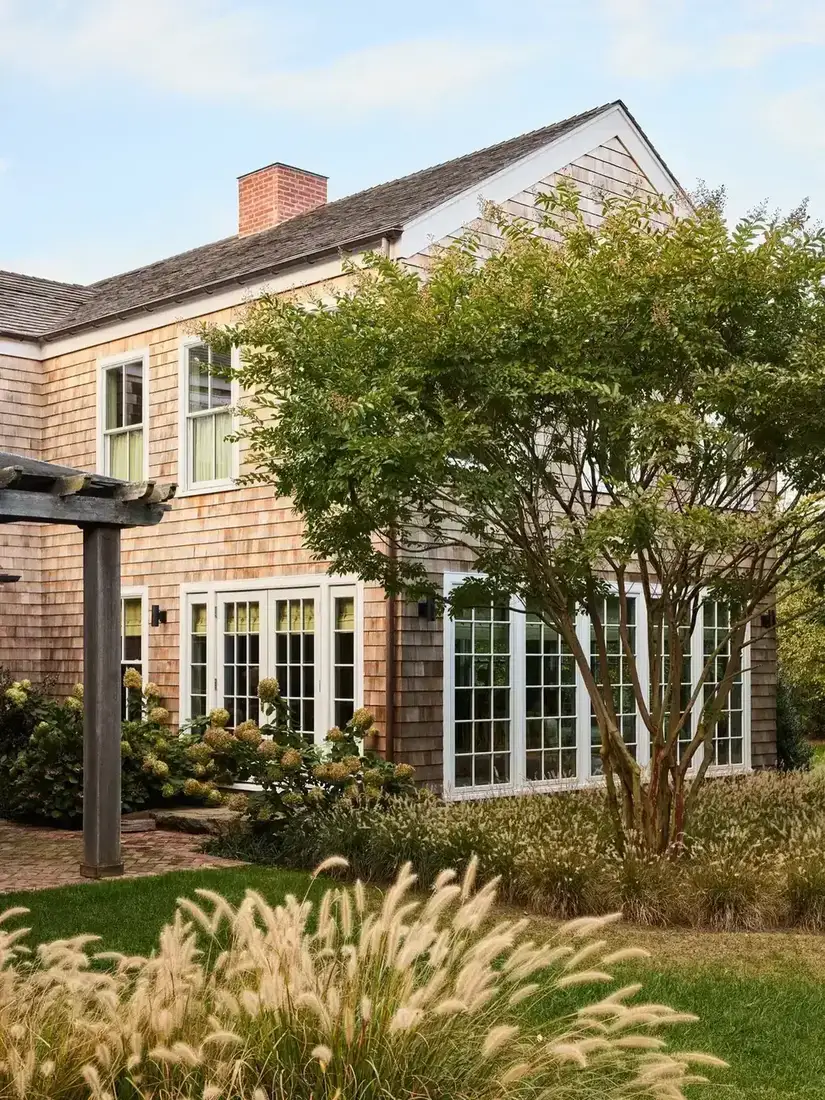
These eleven farmhouse fronts show you how to tell the two apart before the paint goes on.
Choosing the white
Everything here happens before a single tin is opened. This is the part that is nearly free and decides the result.
Judge the white against paper, not against other whites
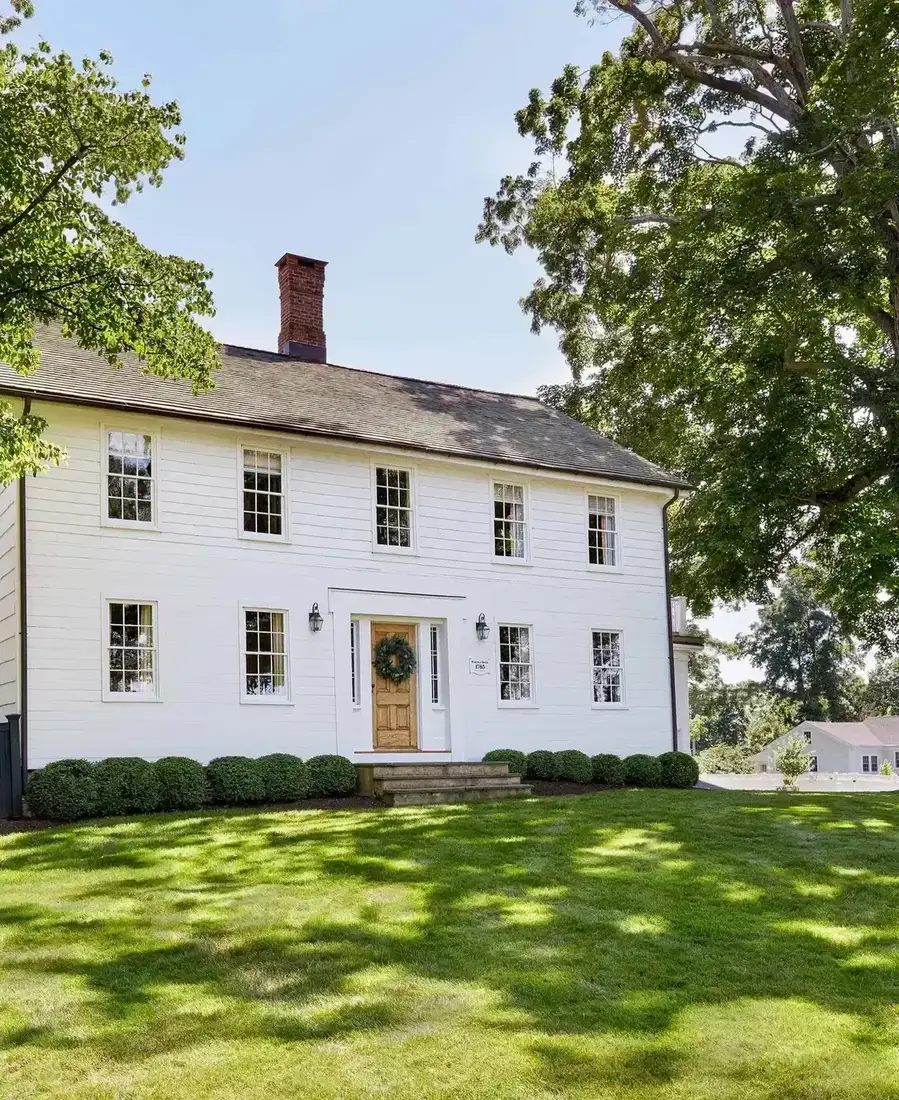
A rack of white chips at the paint shop is useless, because they only look warm or cool relative to each other. Take one home instead and lay it on a sheet of printer paper. Printer paper is a fixed reference, close to neutral, and it will tell you instantly which way your chip leans. Creamy or slightly dusty beside the paper, and you are holding a warm white. Cleaner and brighter than the paper, and you are holding a cool one. This test costs you nothing and it is the single most useful thing you can do before choosing.
Understand what LRV is telling you
Most chips carry a light reflectance value, a number from 0 to 100 that says how much light the colour bounces back. Exterior whites generally sit between 80 and 90, and that band is where you want to be. Go above 90 on a large wall in full sun and you get glare, the kind that makes people squint and flattens every bit of texture on your siding. So use the number as a guardrail rather than a target. It will not tell you whether a white is warm or cool, but it will stop you buying something that fights the sun on your south elevation.
Paint a big sample and visit it three times
A brushout the size of a postcard tells you almost nothing, because white shifts hard with the light falling on it. Paint a generous patch directly onto the wall you are going to paint, on more than one elevation if you can, and then leave it. Come back in the morning, again in flat midday light, and again in the last hour before dusk. Most white regrets are made by people who looked once, in one light, and signed off. Twenty minutes spread across a day is a small price for a decision you live with for a decade.
What the white sits under and against
A white wall is only half the picture. What surrounds it decides whether it reads warm or bleak.
Let the roof do the contrast work
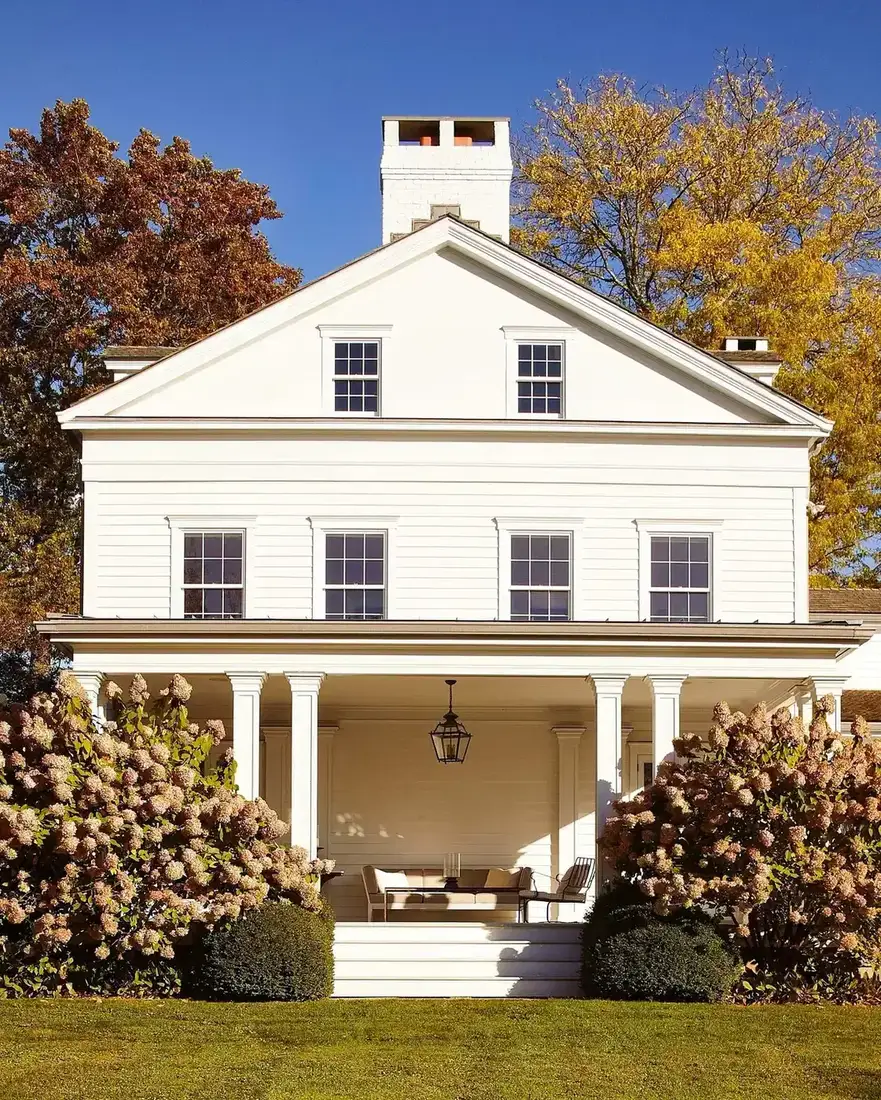
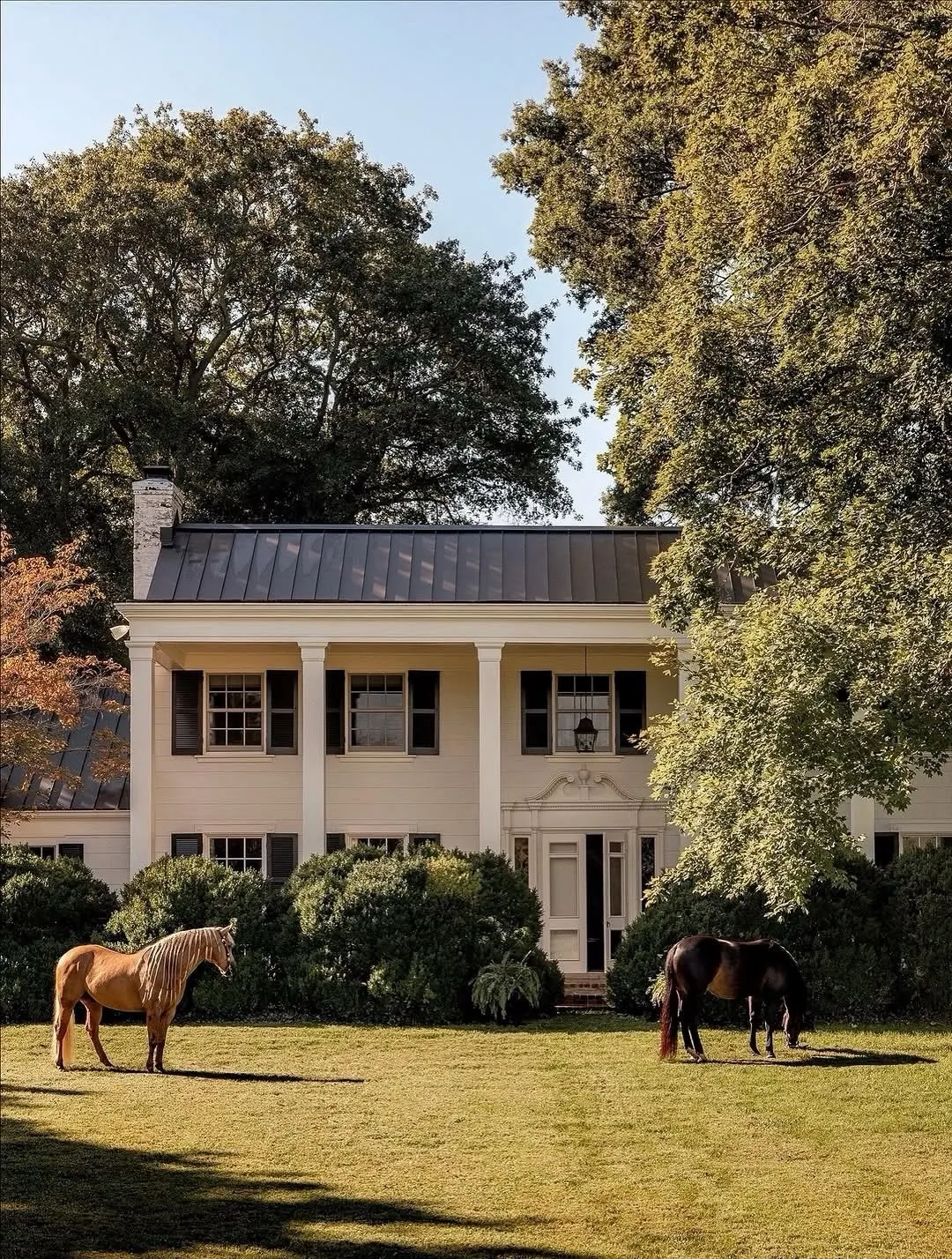
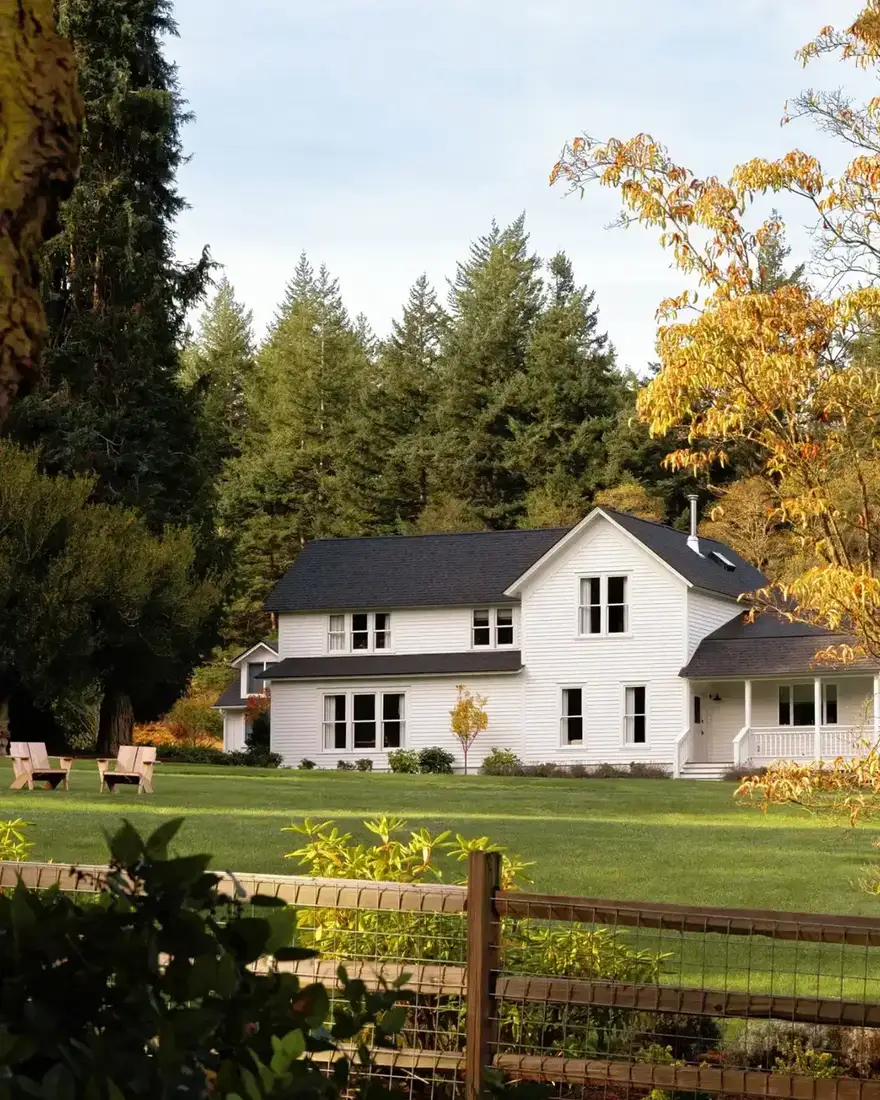
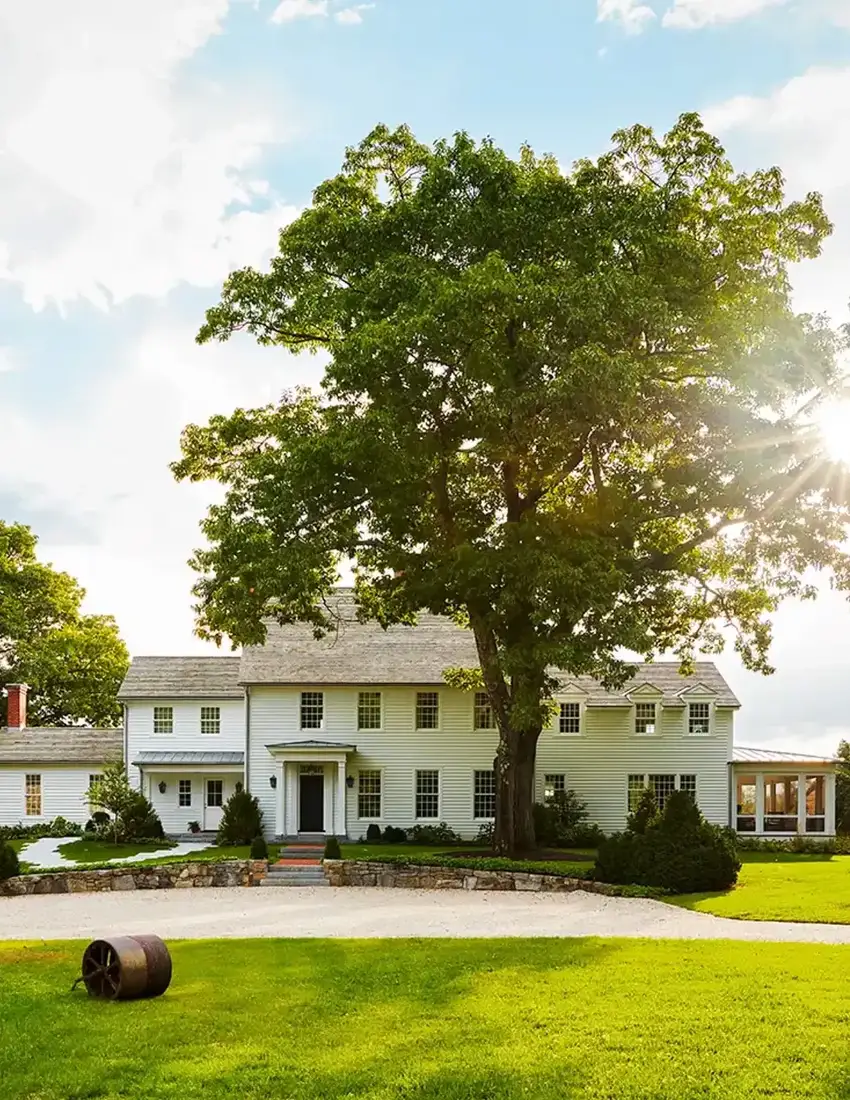
Look at the farmhouse across the meadow with its dark roof and post and rail fence. The white walls are calm rather than stark, and the roof is why. A dark roof gives a pale house a lid, a boundary that stops the white from floating. Pair the same warm white with a pale grey or weathered roof and the house loses its edges and reads washed out. So if your roof is already dark, you have won half of this. If it is pale and due for replacement, that is where your money buys the biggest visible change.
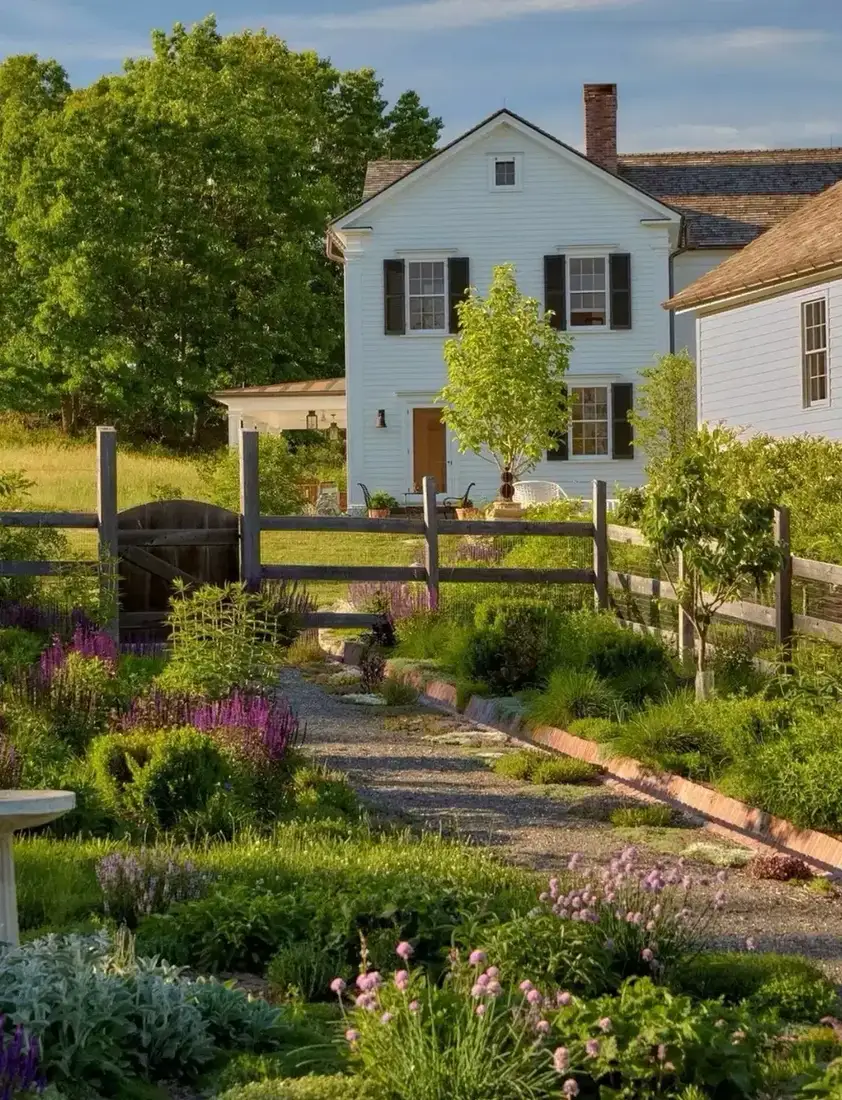
Warm the white if the roof is timber
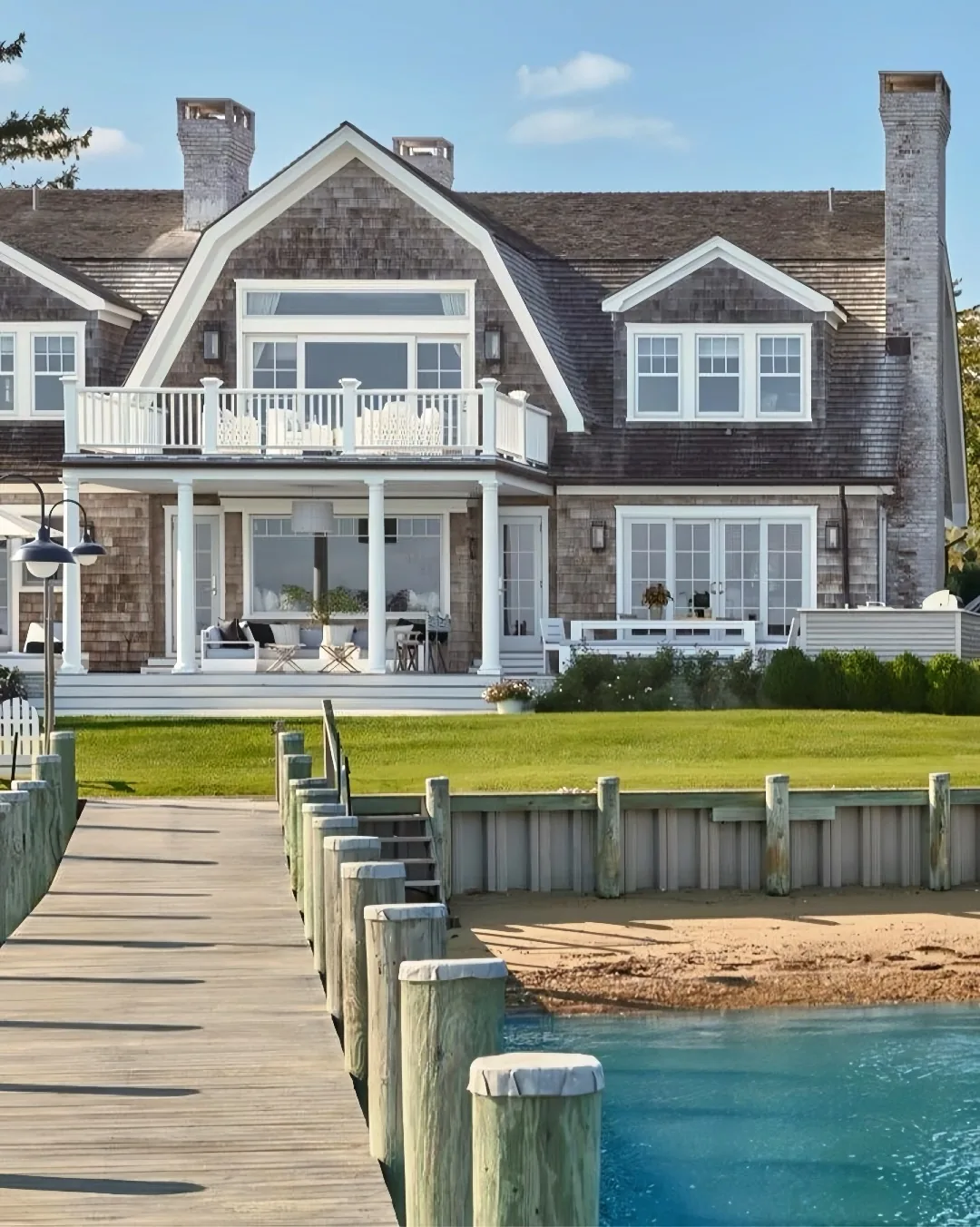
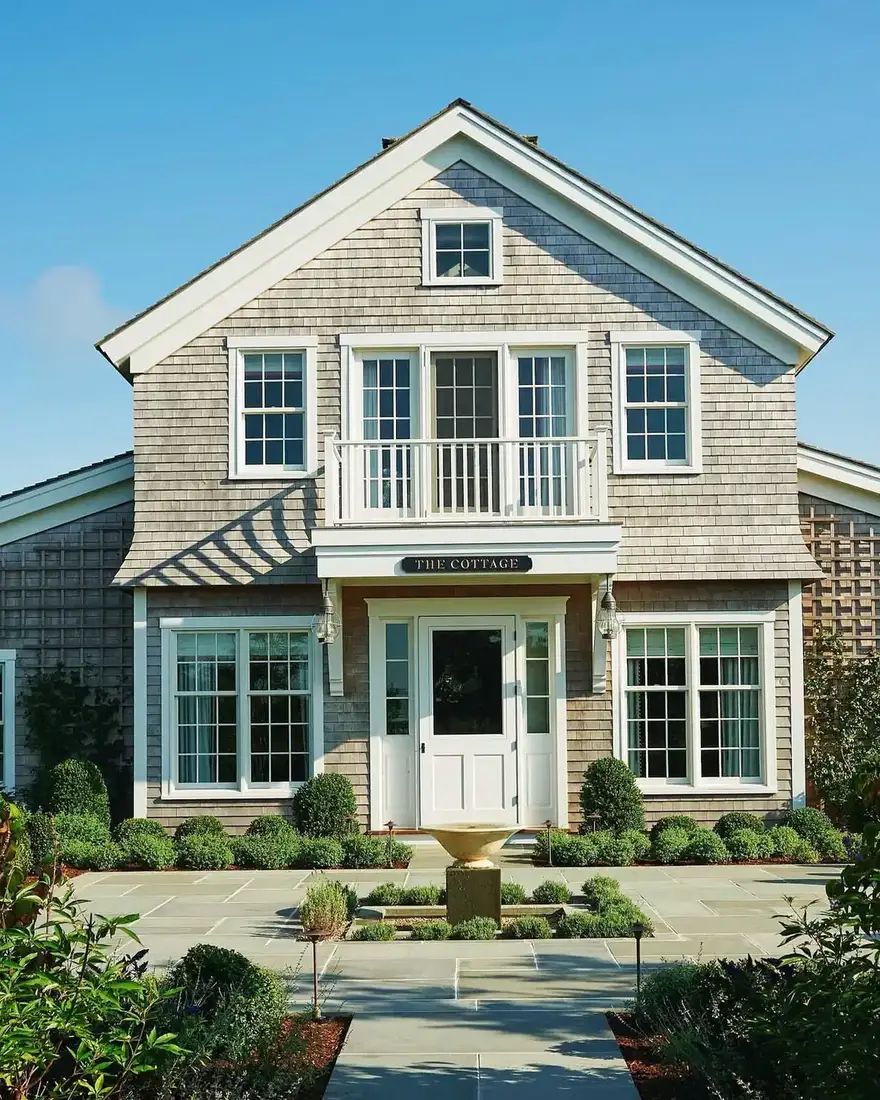
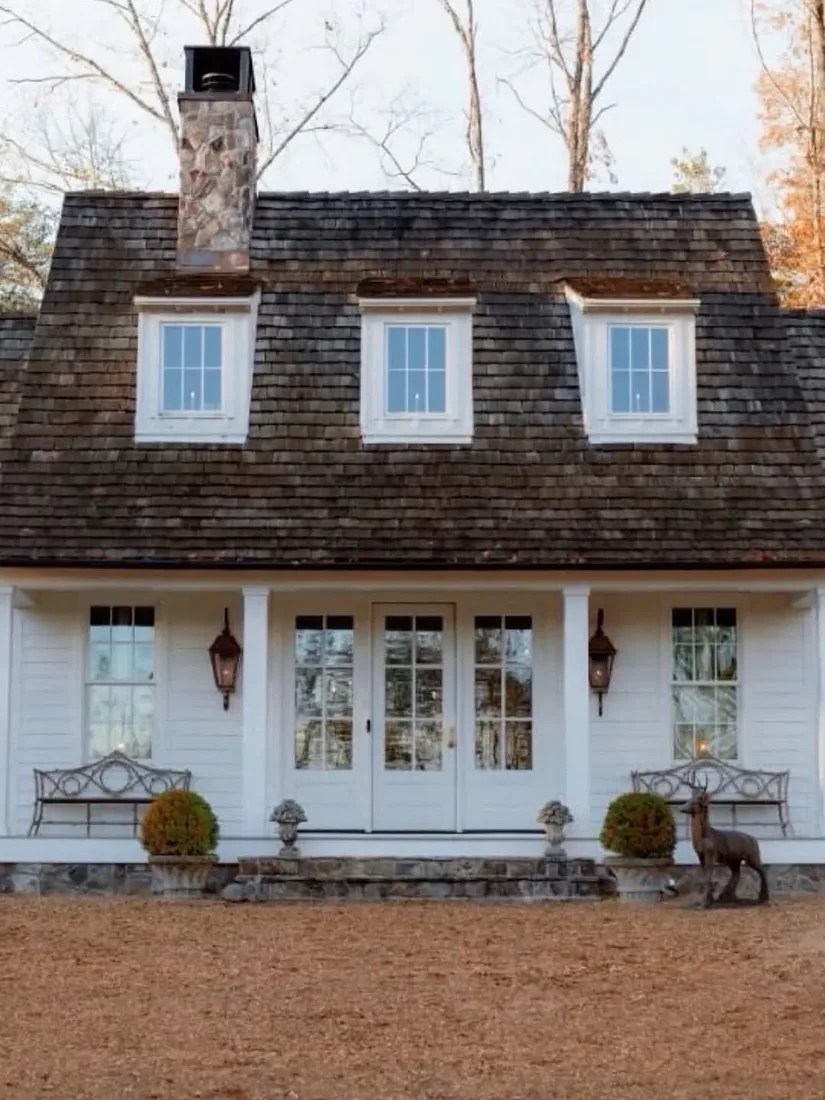
Cedar roofing and warm white belong together, and the reason is temperature rather than style. Cedar ages through honey to a soft grey with warmth still in it, so a cool white beside it will always look slightly blue and slightly wrong. Notice the flagstone walk on the house with the cedar roof: stone, timber and wall are all sitting in the same warm family. So take your white sample outside and hold it against the roof material itself, not against a photograph. If your roof is warm, your white must be too.
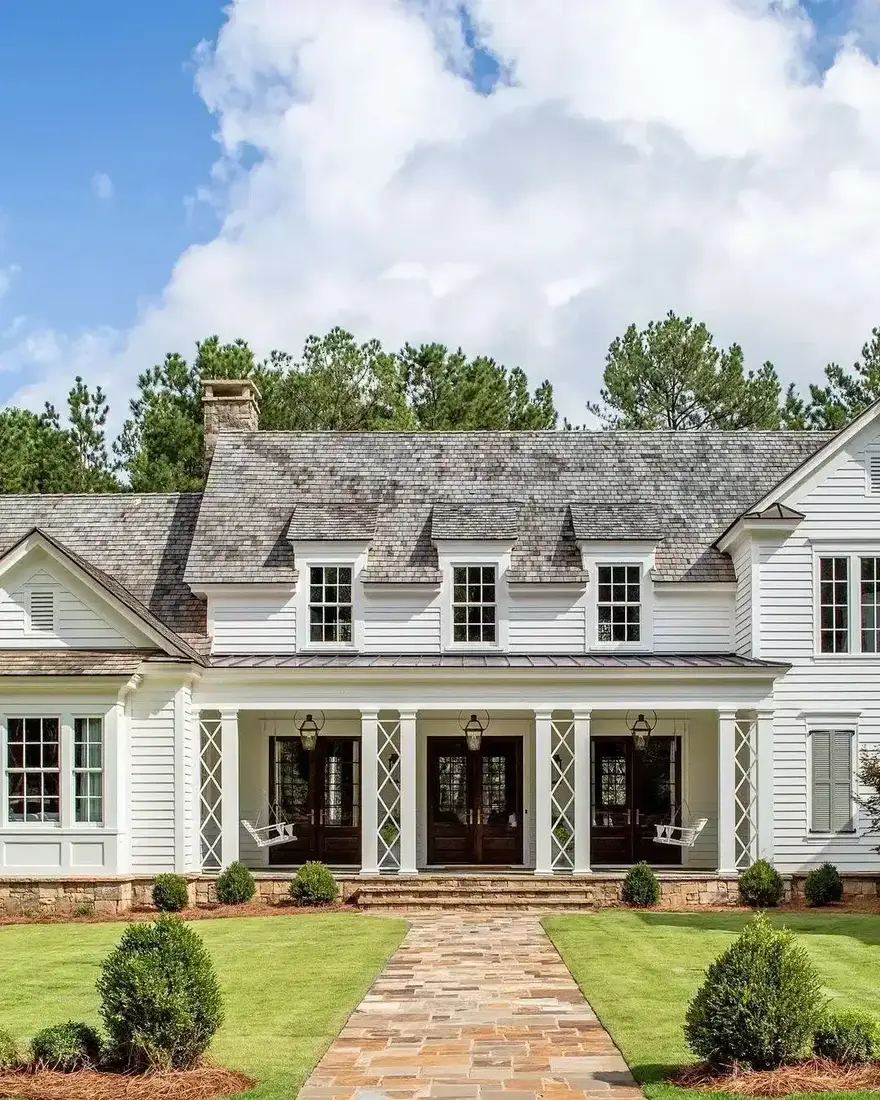
Break a long white wall with one vertical event
A wide white front with nothing interrupting it goes flat, however good the paint is. On the hillside house it is the cupola that saves the elevation, giving your eye somewhere to land above the roofline. A chimney does the same job, so does a dormer, so does a single well-placed tree. You are not adding decoration, you are adding a stop. Before you spend on planting the whole frontage, look for the one vertical you could strengthen. It will do more for the house than a border ever will.
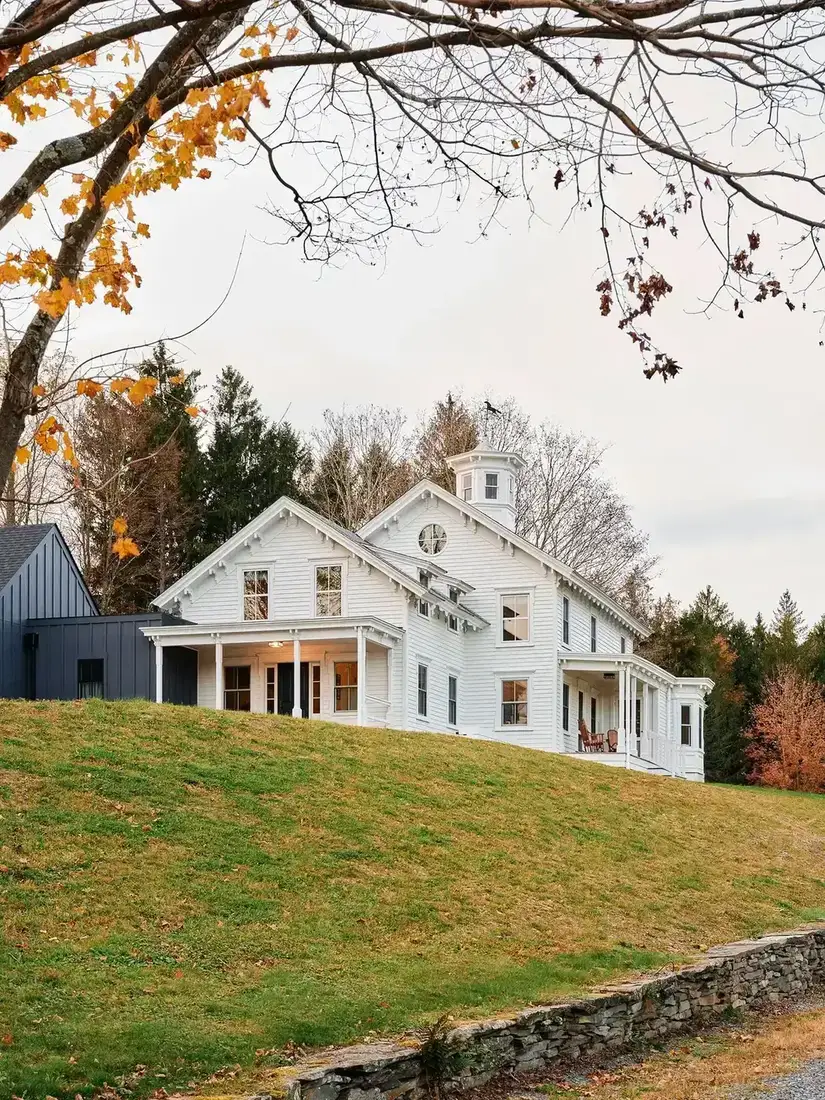
Put your strongest colour at the door
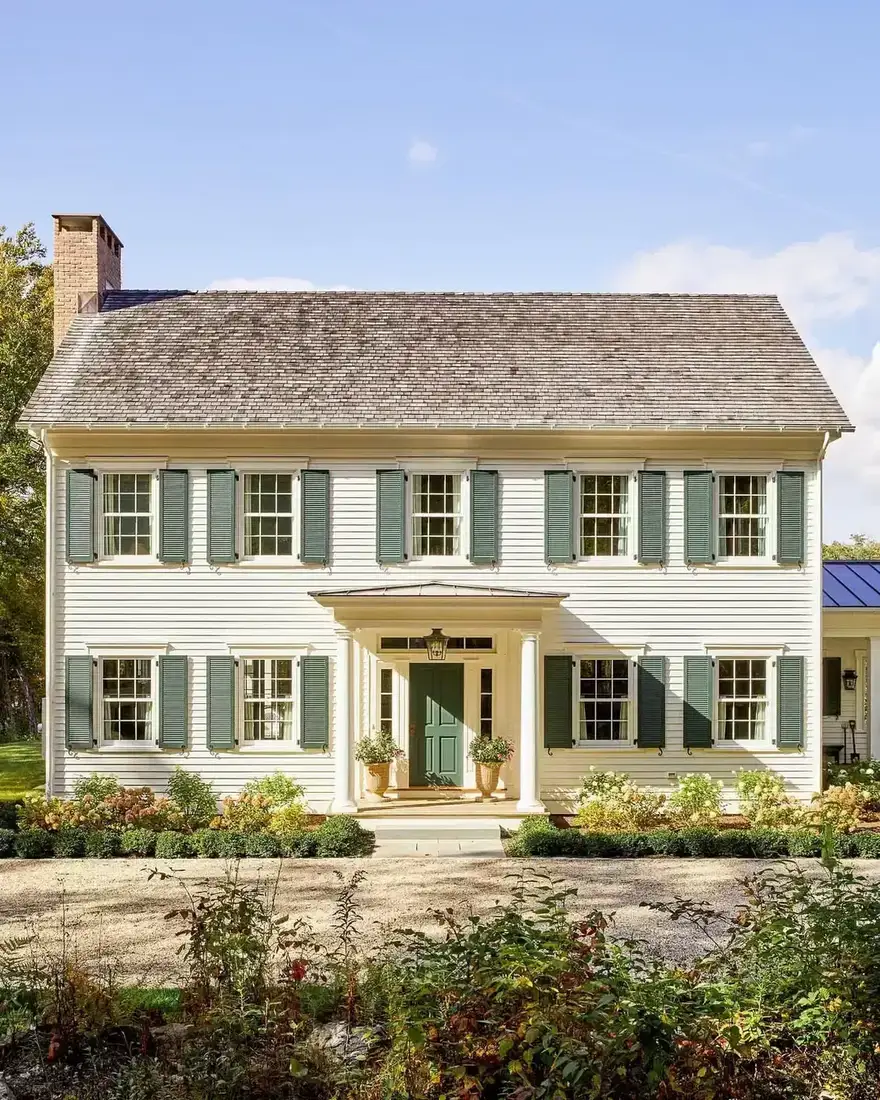
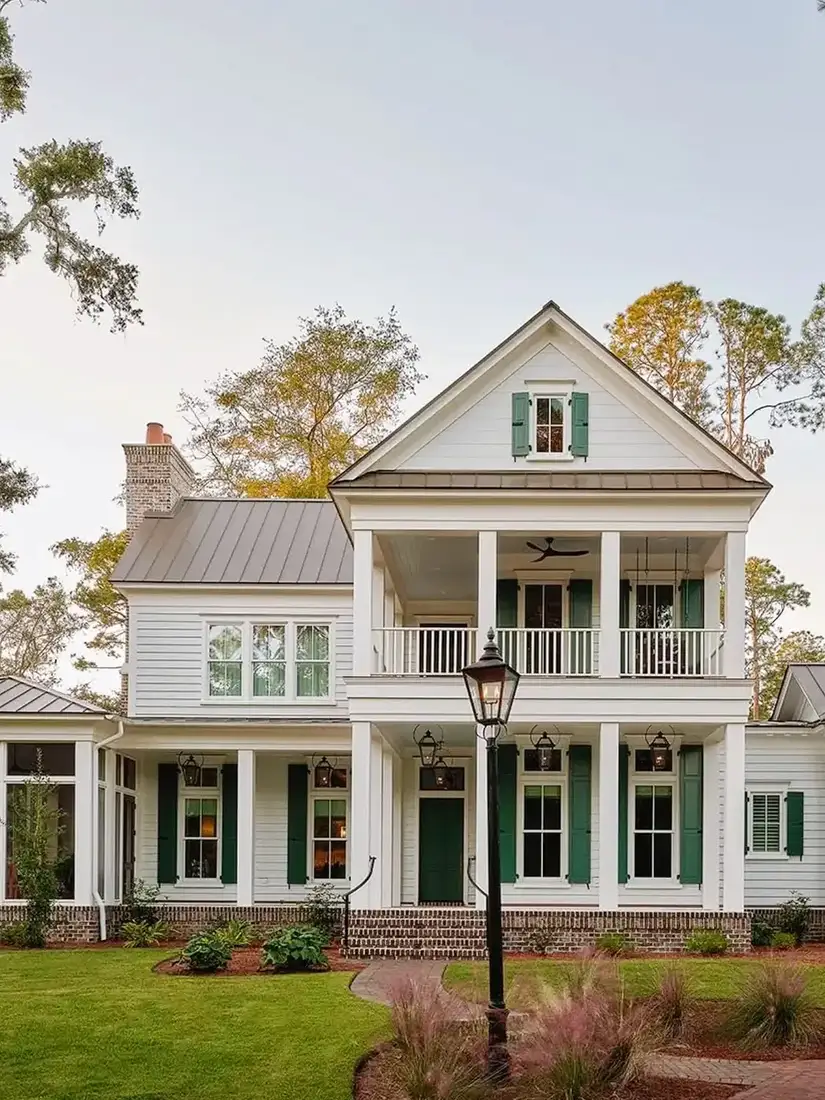
Deep green on an entry porch does something no wall colour can. It marks the way in, and it gives the eye a rest from all that pale. On a white house the door area is where a saturated colour is safe, because it is small and it is meant to be found. So if you are nervous about colour, spend it there. A dark green, a near black or a deep blue at the entrance reads confident on a white farmhouse, where the same colour across a whole wall would read heavy. For sorting navy from dusty mid-tones against your white, our blue front door ideas test undertone and orientation first.
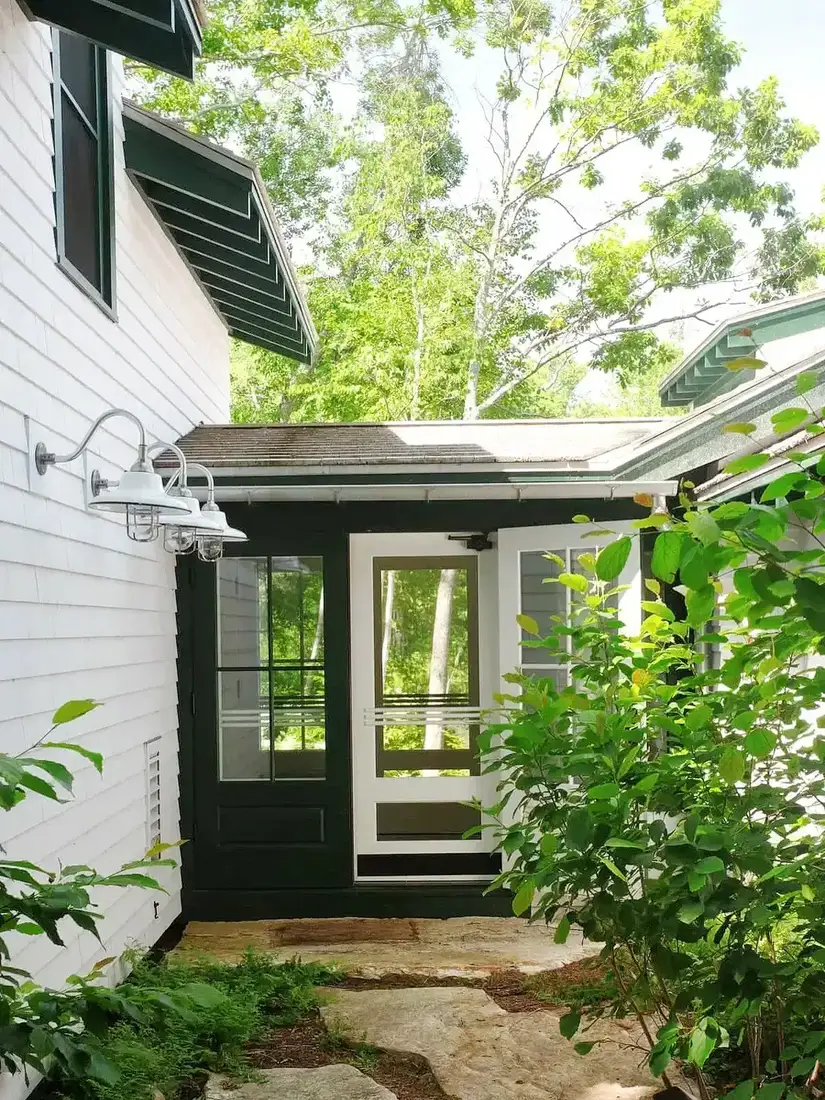
Repeat your shutter colour somewhere else
Green shutters on a double porch work because the colour appears more than once. One isolated colour on a white house looks like an afterthought. The same colour picked up on the door, a bench, a planter or the porch ceiling reads as a decision. So when you choose your shutter colour, choose it knowing you will use it twice more. Two or three appearances is enough. Any more and the house starts to look themed rather than considered. For sizing and hanging that keep any shutter color honest, see our black shutters house exteriors.
Living with a white house
White is not a finish you apply and forget. Here is what it asks of you.
Expect algae on the shaded side and plan for it
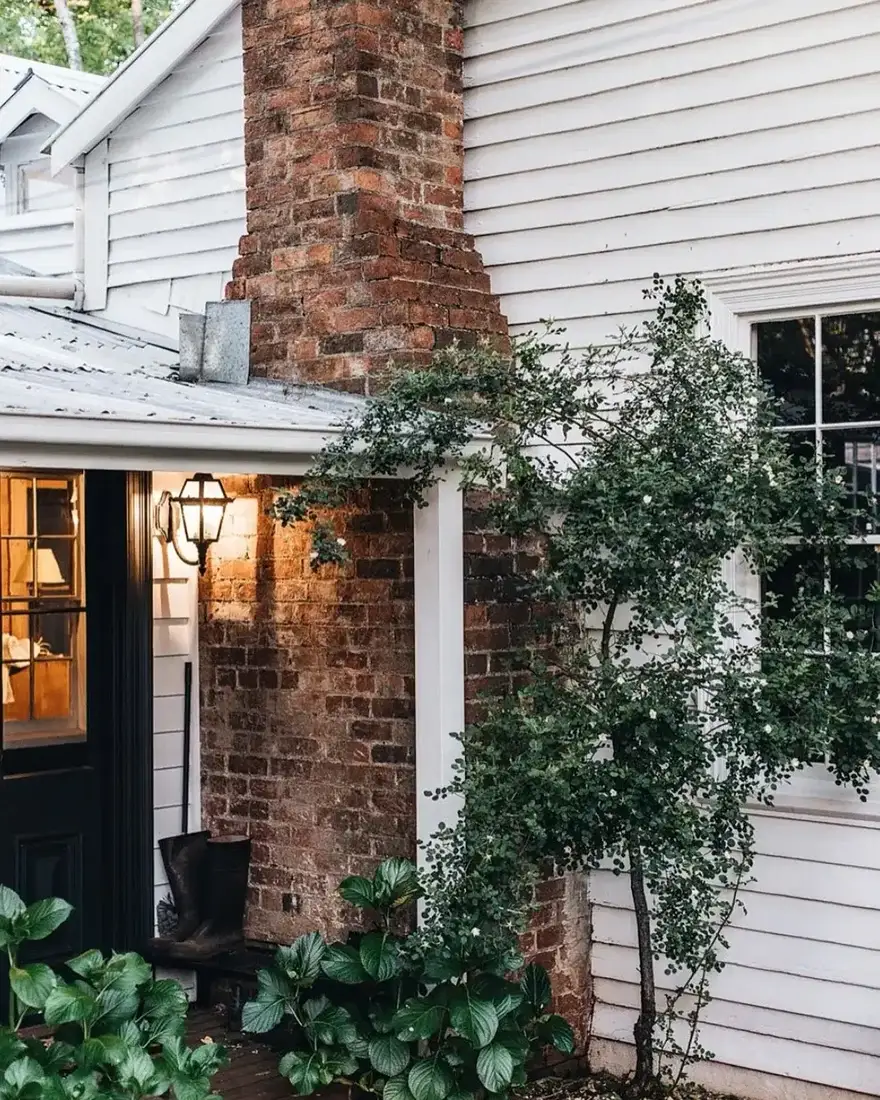
White shows everything, and on north-facing or tree-shaded walls what it shows is green algae. This is normal, it is not damp inside, and it is not a paint failure. What it needs is a soft wash every year or two, gently, with low pressure. Blast it with a jet wash and you will drive water into the joints and lift the paint. So put the wash in your calendar rather than waiting until the wall embarrasses you, and it stays a twenty-minute job instead of a repaint.
Pull the planting back off the wall
Shrubs growing tight against white siding keep that strip permanently damp, and damp is what algae and rot both want. Pulling the beds back gives air a path along the base of the wall and lets you actually see the bottom of the house, which is where problems announce themselves first. It also looks better. A visible base line, whether gravel, paving or clipped lawn, gives the white somewhere to stop. Our colonial house exterior ideas go further into planting that supports a facade rather than swallowing it.
Warm white or cool white at a glance
| Warm white | Cool white | |
|---|---|---|
| Leans toward | Yellow, cream, greige | Blue or grey |
| Beside printer paper | Creamy or dusty | Cleaner and brighter |
| Outdoors it reads | Settled, farmhouse | Clinical, modern |
| Works with | Cedar roof, stone, brick, timber | Grey slate, steel, glass |
| Risk | Can go sallow if too yellow | Goes blue in shade |
| Best roof pairing | Dark roof, warm timber | Dark roof, never pale |
The Warm White Formula
- Test against printer paper first. Creamy means warm, brighter means cool, and that decides everything after it.
- Stay in the LRV 80 to 90 band. Above 90 a big sunlit wall will glare.
- Sample large, on the wall, three times of day. One look in one light is how bad whites get chosen.
- Make sure something dark caps the house. A dark roof is what stops white floating.
- Match the white to the roof material’s temperature. Cedar wants warm. Slate can take cooler.
- Budget a soft wash every year or two. White is a finish with a maintenance habit attached.
Follow that order and your house will look like the ones you saved, because the ones you saved were doing exactly this. More on getting a pale facade to read properly runs through our home exterior guides.
Frequently Asked Questions
How do I tell if a white paint is warm or cool?
Hold the chip against a sheet of printer paper. If it looks creamy or slightly dusty next to the paper it is warm. If it looks cleaner and brighter it is cool.
What LRV should an exterior white be?
Most exterior whites sit between 80 and 90 on the 0 to 100 scale. Above 90 a large wall in full sun tends to glare and loses the texture in the siding.
Why does my white house look grey or blue?
You have most likely used a cool white, which leans blue or grey and shows it strongly outdoors, particularly on shaded elevations and under an overcast sky.
Does a white farmhouse need a dark roof?
It needs something dark to cap it. A dark roof is the easiest version, and it stops a pale house from looking like it has no edges. Dark shutters or a dark door help, but the roof does the most work.
How often should I wash a white exterior?
A soft wash every year or two, using low pressure. High pressure drives water into the joints and lifts paint, which turns a cleaning job into a repainting one.
Why does algae keep coming back on one wall?
That wall is shaded and stays damp longer. Pull planting back to let air move along the base, and accept a gentle wash on that elevation more often than the sunny ones.
This article may contain affiliate links. We may earn a commission at no extra cost to you.