White Farmhouse Porches: the Shadow Does the Work

Add us as a preferred source to see more stories on Google.
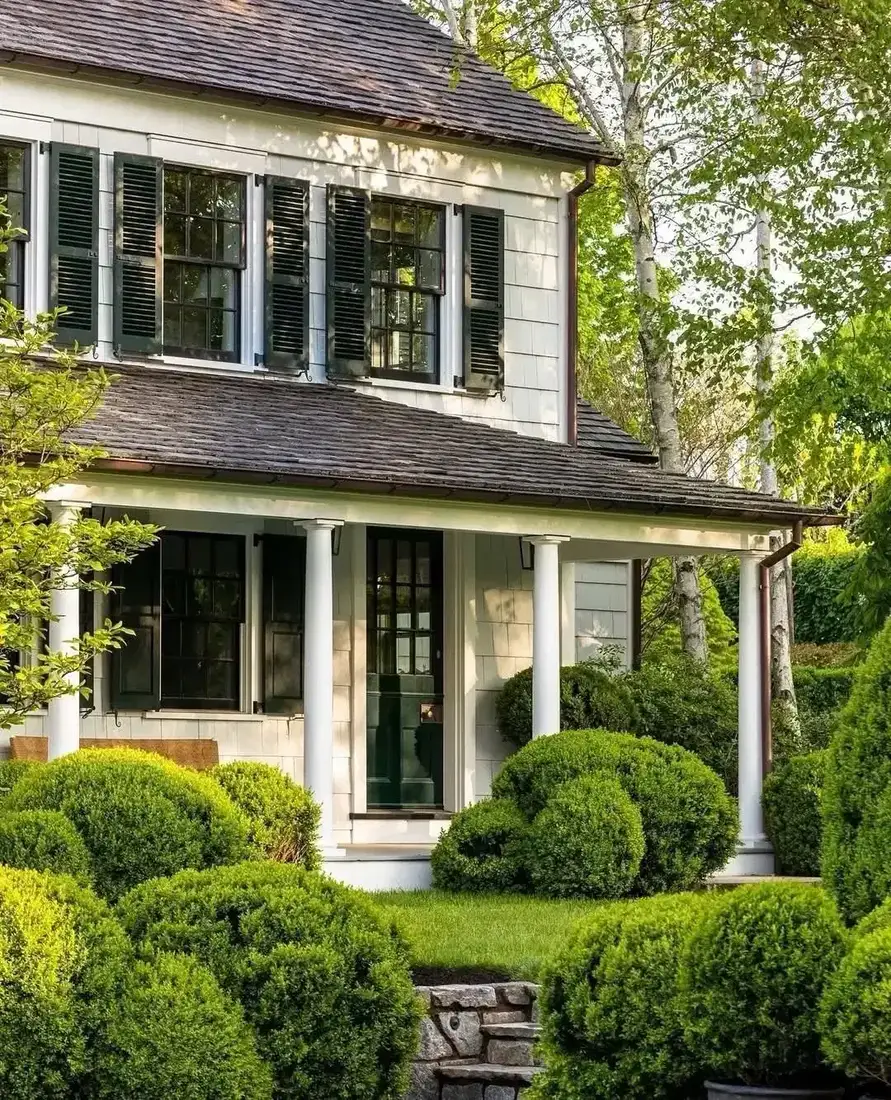
A long white wall is boring. It stays boring however carefully you chose the white.
What rescues it is shadow, and on most farmhouses you only have one thing making shadow: the porch.
A covered porch carves a deep dark band straight across the front of your house, and you get that band free. That band is the contrast, the depth and the sense of shelter all at once, and you would have to pay a designer a great deal to invent it any other way.
These eleven fronts show you how to get the most out of the shadow you already have.
Making the shadow work
You already have the porch. Most of what follows costs very little and changes what people see from the street.
Look up before you spend anything
Stand at the end of your drive and look at your own house the way a stranger would. What you are looking for is the dark band under the porch roof, and how deep it reads. If it is a thin grey line, the porch is shallow or the roof is high, and every fix from here works with that. If it is a strong black slot, you are in luck and your job is simply not to fill it in. This one minute of looking will tell you more than an afternoon of scrolling for ideas.
Paint the ceiling and stop treating it as leftover
The porch ceiling is the largest surface nobody thinks about, and left as bare white it reads unfinished. Pale blue is the traditional choice and it still works for you, because it lifts the space and reads soft against a dark band. Grey and warm off-white do the same job with less nostalgia. All three bounce light down onto your front door, which is exactly where you want light in the evening. So take the ceiling seriously. It is a small area, one tin, and it is the difference between a porch that looks designed and one that looks built. If you are weighing blue for the door itself rather than the ceiling, our blue front door ideas sort undertone and orientation before you buy the sample pot.
Give the front one dark anchor and mean it
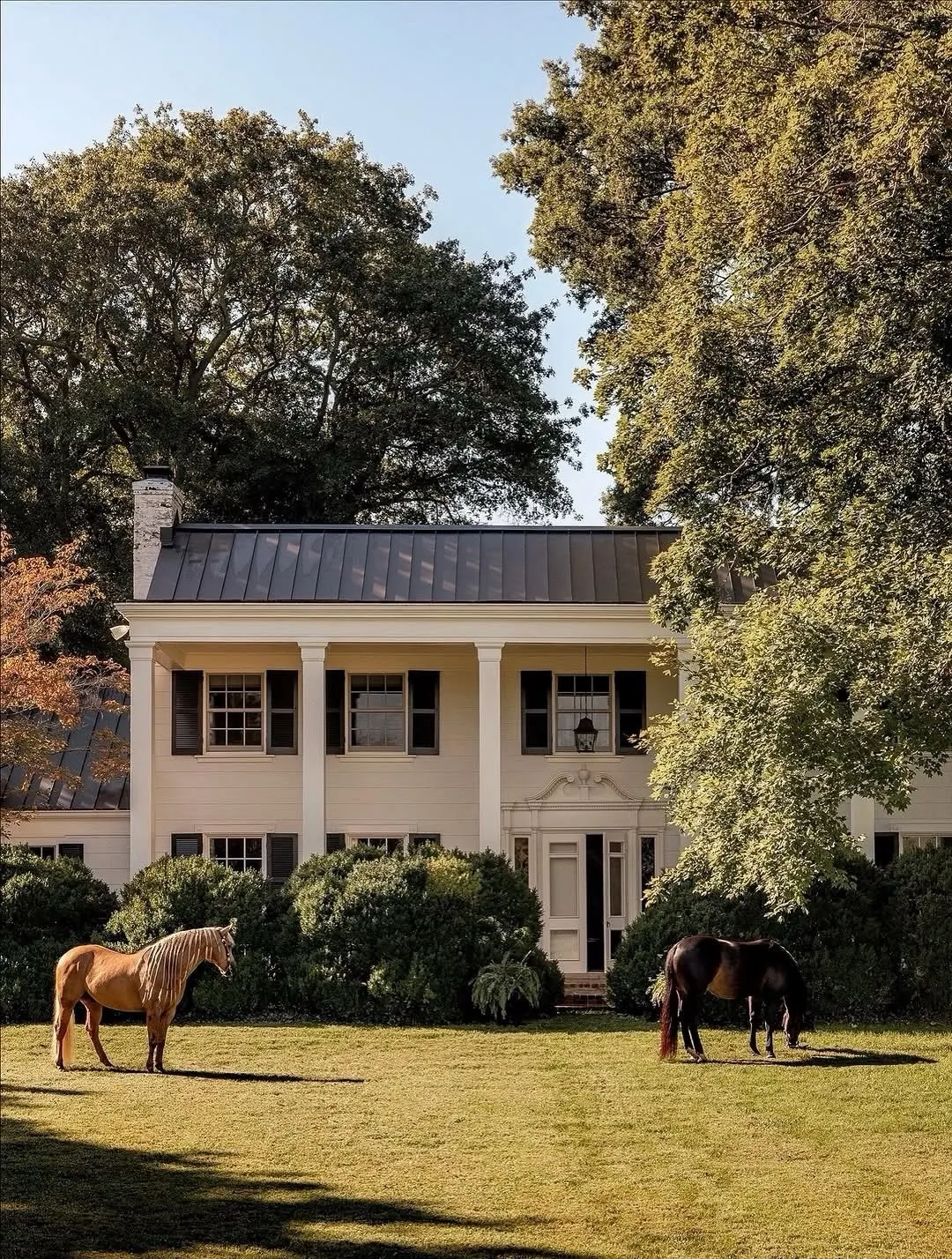
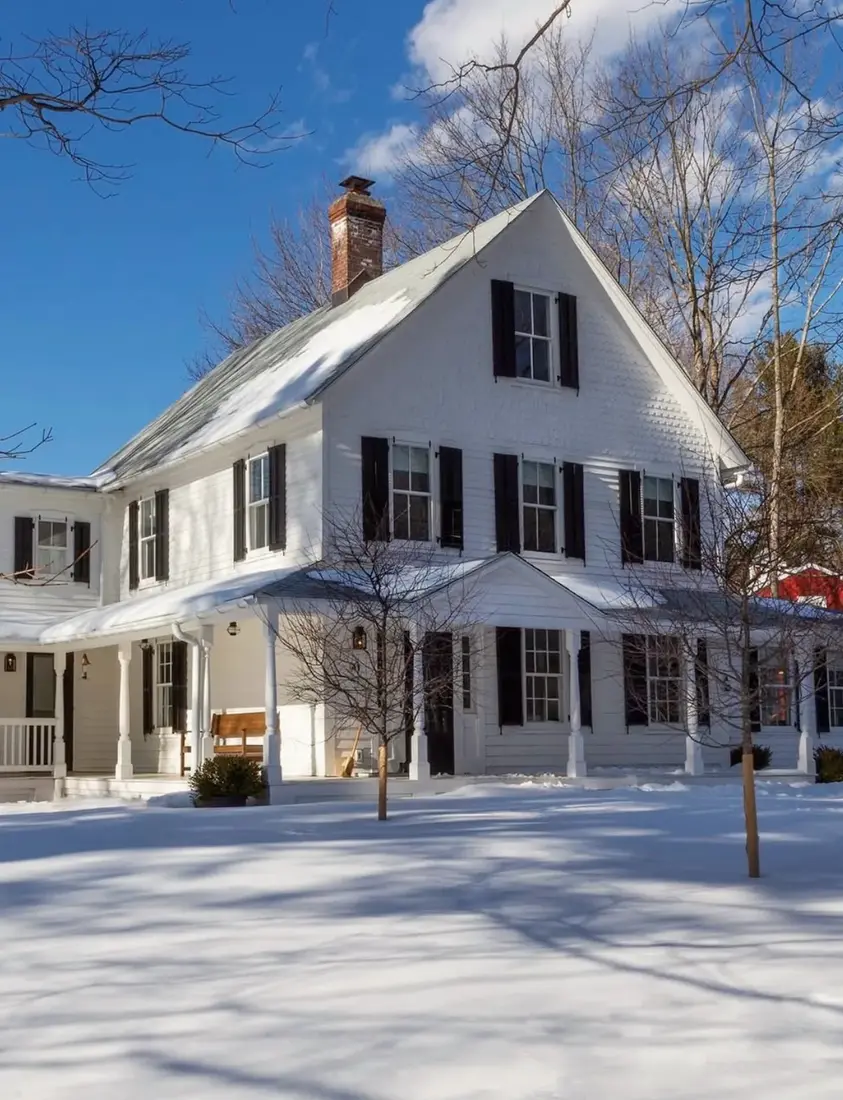
Every white house needs something dark holding it down. Black window frames will do it, so will shutters, a dark roof, or a properly dark front door. What does not work is spreading soft greys around your front and hoping they add up. Look at the covered porch with the dark roof and panelled door: two dark things, both deliberate, and the white reads crisp rather than washed out. So pick your anchor, commit to it, and let it be genuinely dark. Half-hearted contrast is the most common reason a white farmhouse looks unfinished. A dark door is the cheapest anchor of all, and our black front door ideas cover sheen, matching blacks and lantern light.
Let a metal roof carry the porch line further
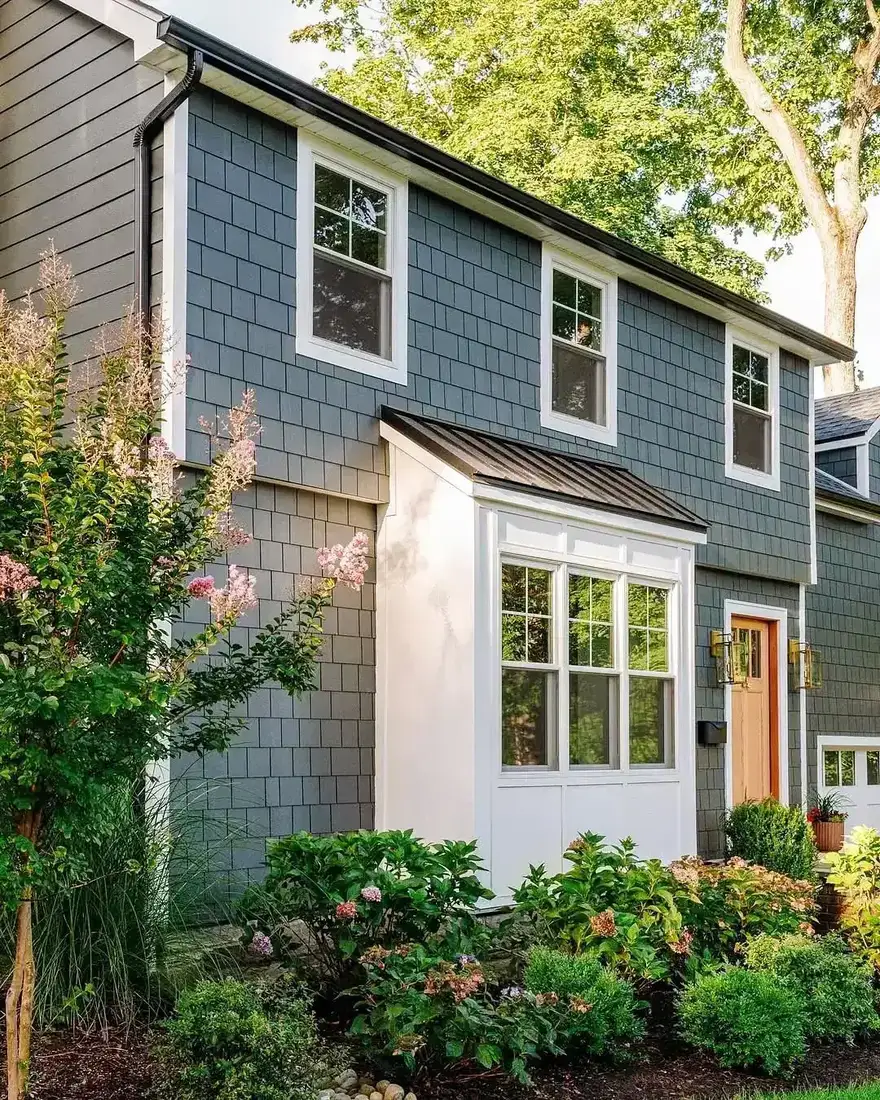
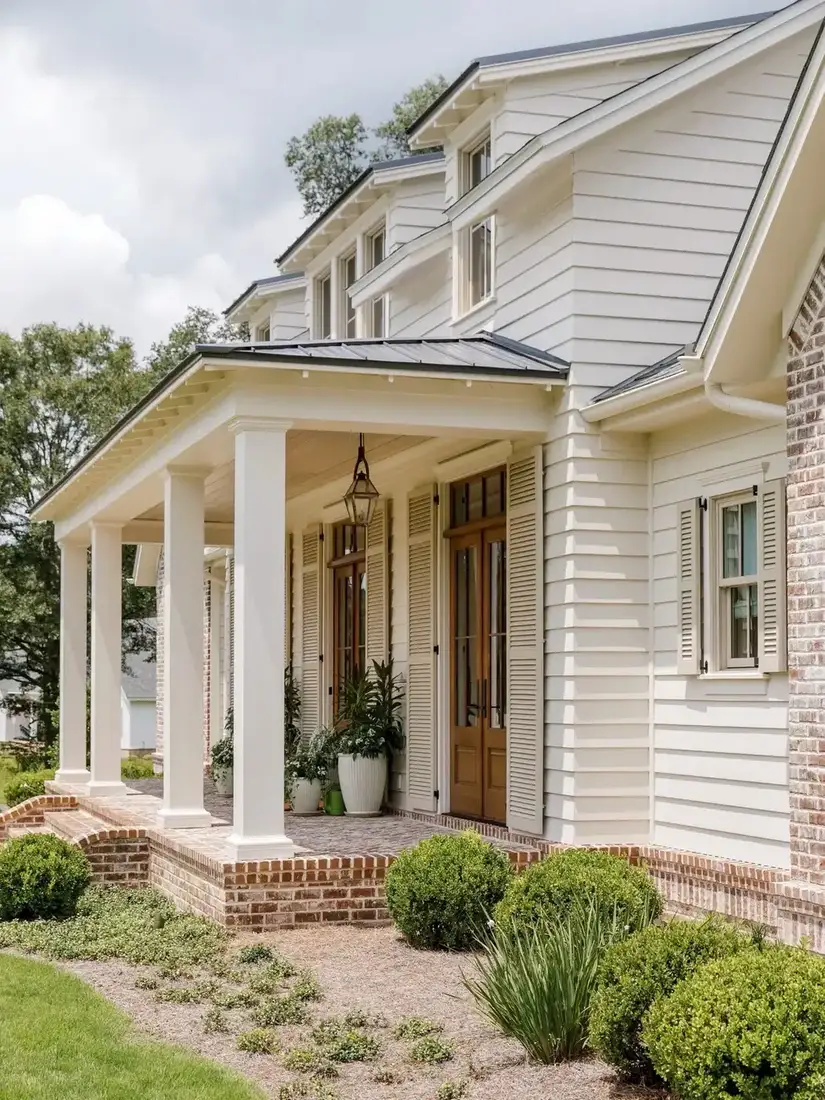
Standing seam has vertical ribs that catch light along their whole length, so a metal porch roof reads as a clean band rather than a texture. On a white house that crispness is useful, because it gives the shadow a sharp top edge. If your porch roof is due for replacement and your main roof is already metal, matching them will tie your front together in one move. What you want to avoid is three different roof materials on one elevation, which reads as repairs rather than as a house.
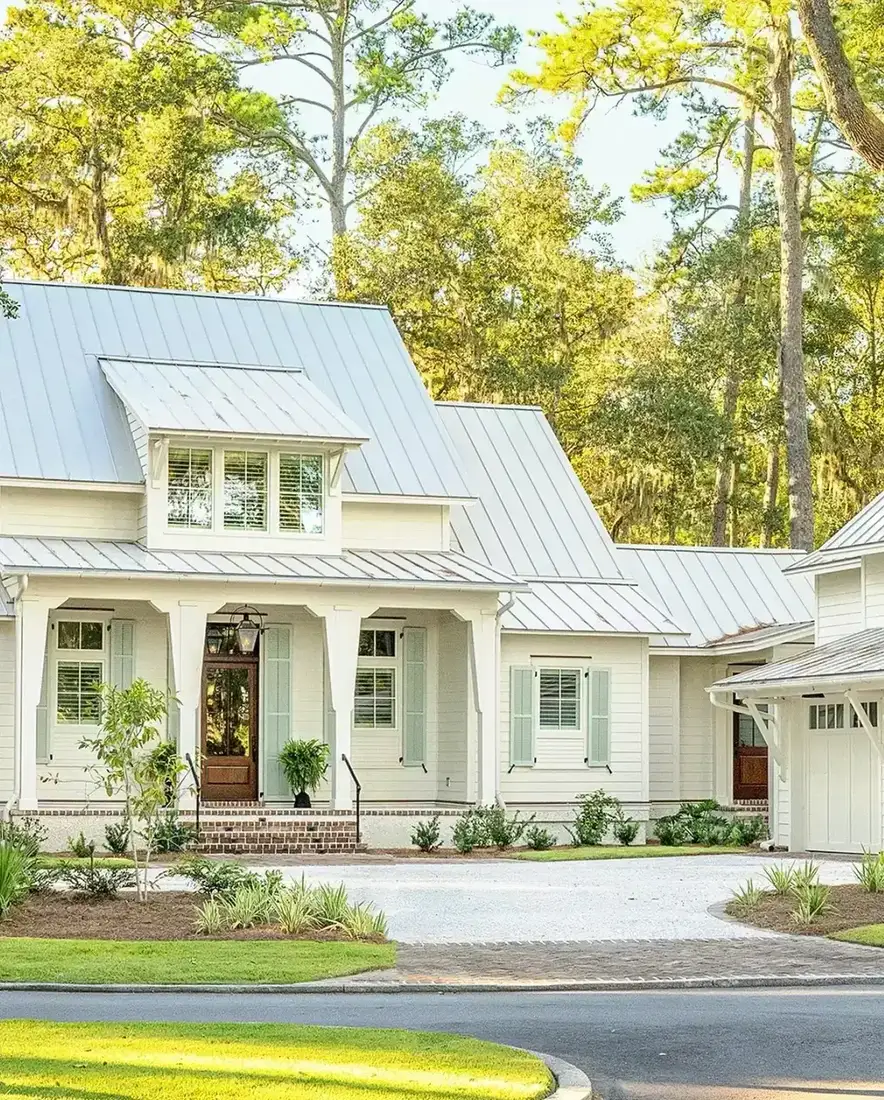
The door, the metal and the light
Inside the shadow band, small things read loudly. This is where a porch stops being a structure and starts being a welcome.
Use timber at the door for warmth you cannot paint
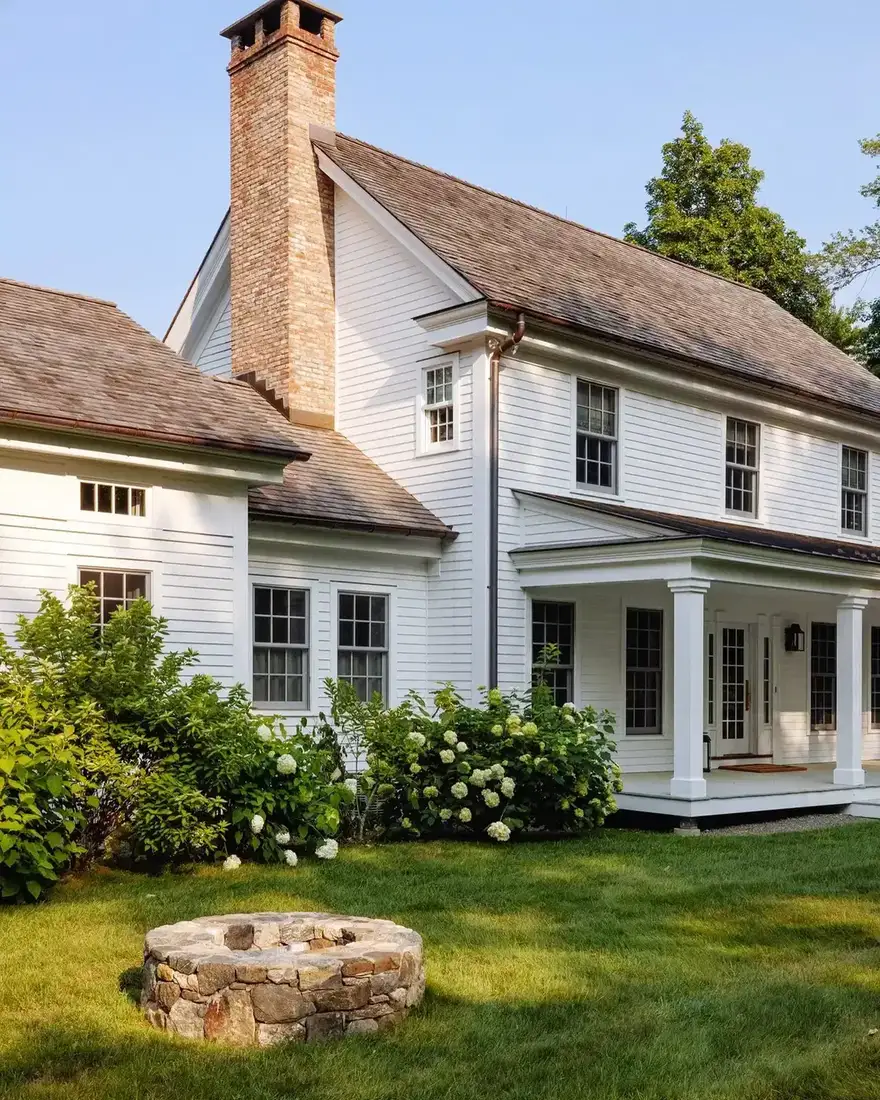
A wood front door inside a white frame does something paint cannot. It brings grain and depth into the one spot where your visitors stand still and look. Notice how the door on the white farmhouse with pale trim holds the eye without shouting. Timber also ages in a way that suits a farmhouse, picking up character rather than looking tired. So if you are choosing between a painted colour and a good timber door, and your house is already busy with white, the timber will usually be the calmer answer.
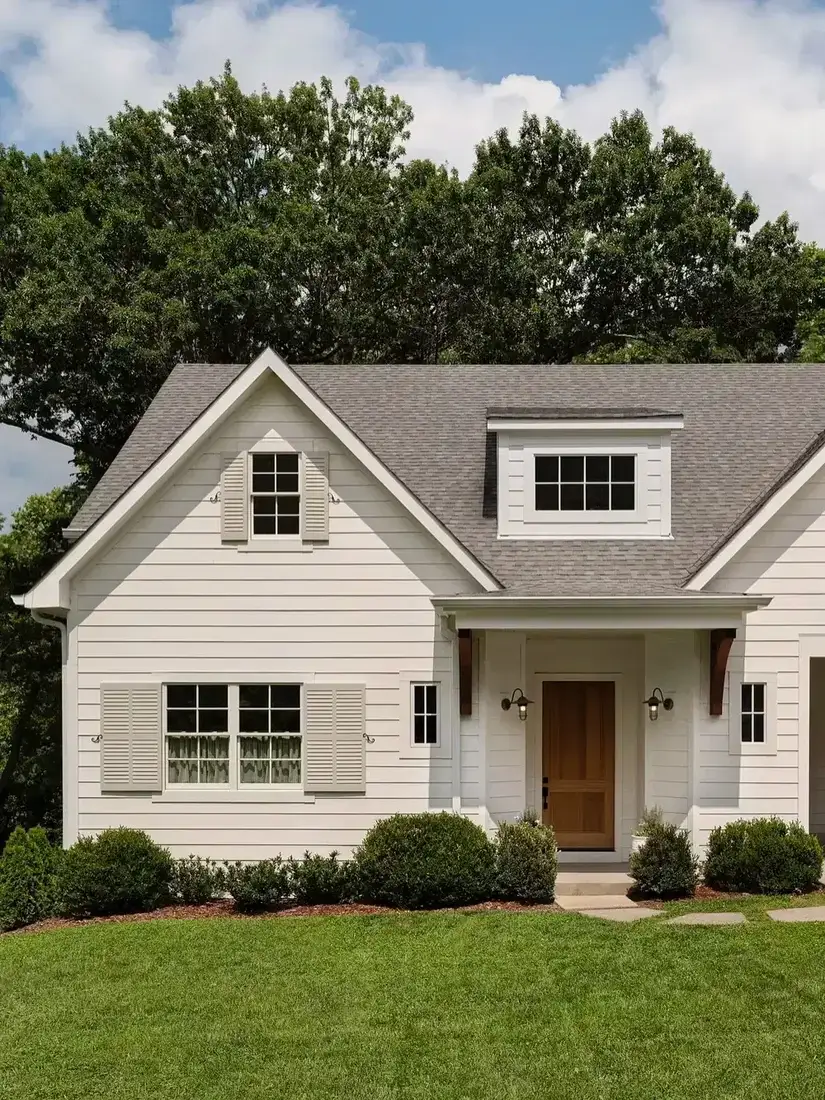
Swap chrome for warm metal everywhere you can
Chrome and polished nickel are cool metals, and beside a warm white they always look slightly out of place. Aged brass, copper and oiled bronze sit in the same family as the wall and read settled instead of shiny. This applies to your porch lanterns, your house numbers, your door handle and your letter plate. You are looking at a small collection of items, and replacing them costs far less than most exterior jobs. Get all of them warm rather than half of them, because a single chrome piece in a warm set is what your eye finds first.
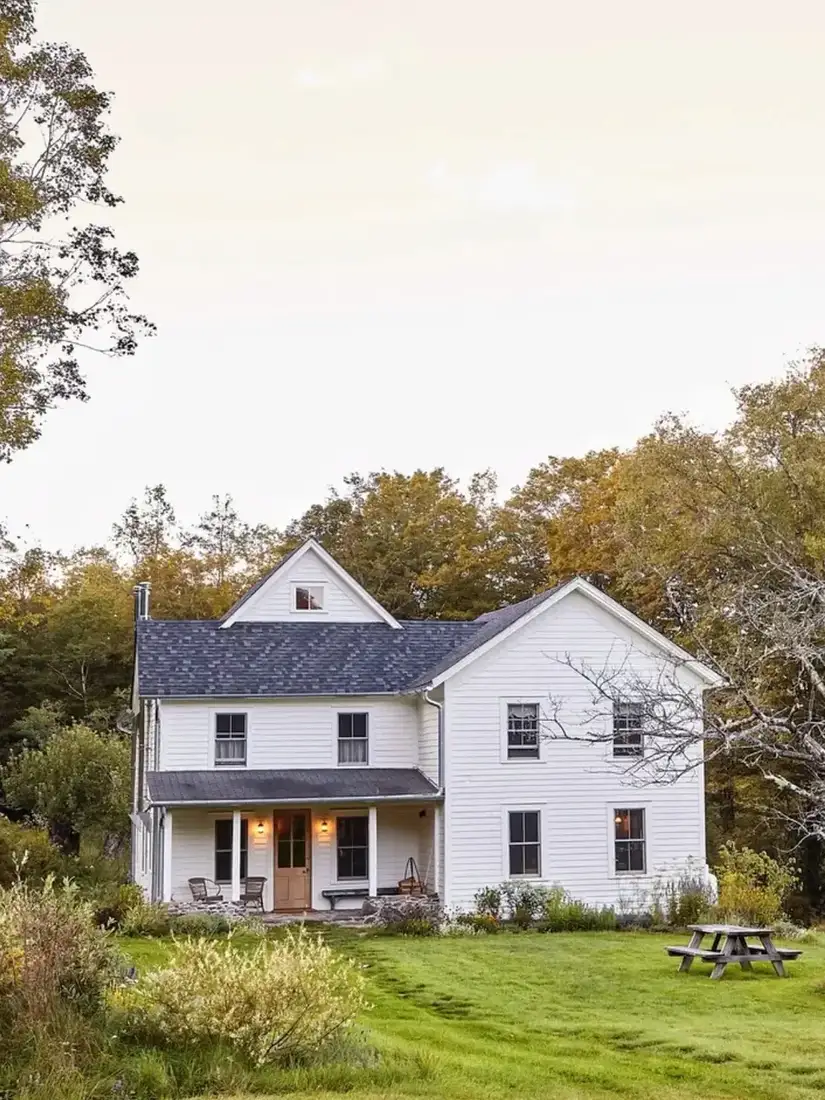
Try colour on the porch roof rather than the walls
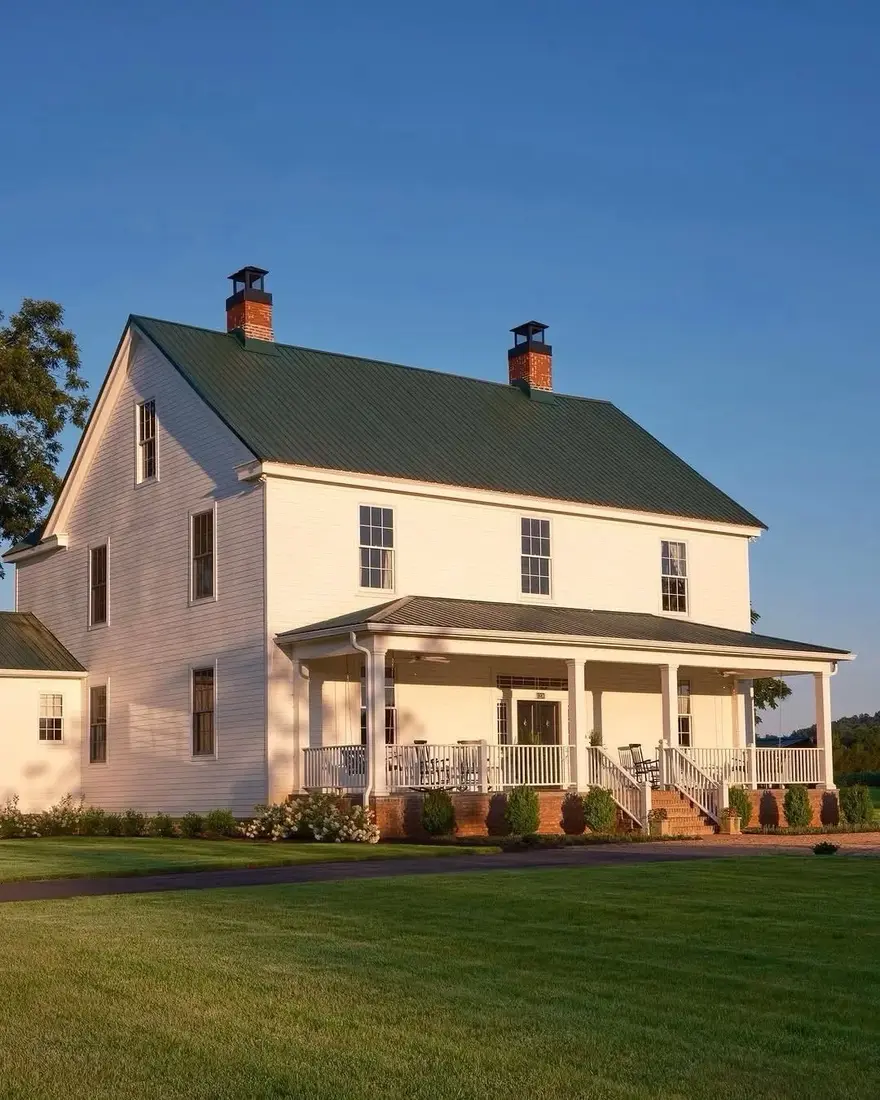
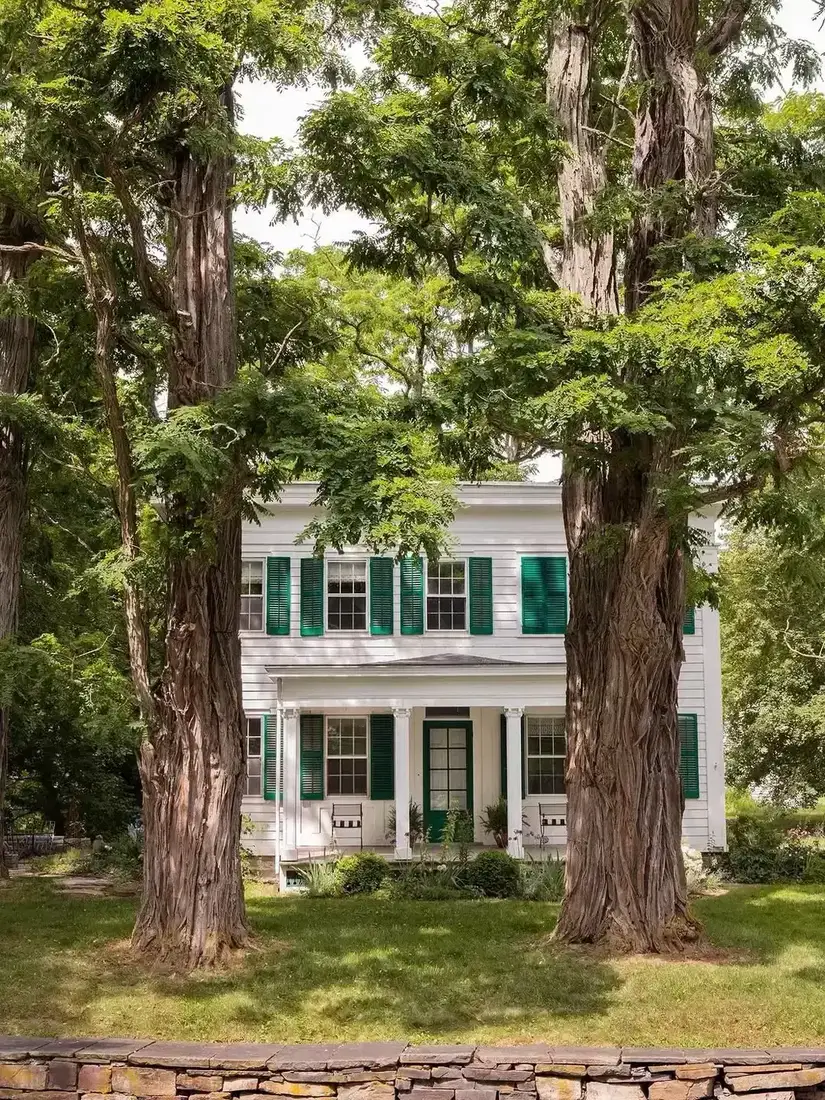
Green metal over a white porch works because the colour is held in one shape and framed by white on every side. That is a much safer place for colour than a wall, where the same green would take over the house. If you want your farmhouse to have some personality without a repaint, the porch roof is the place to spend it. Muted greens, deep blue greys and near blacks all suit your white walls. Bright, clean colours tend to look temporary outdoors, however good they look on a sample.
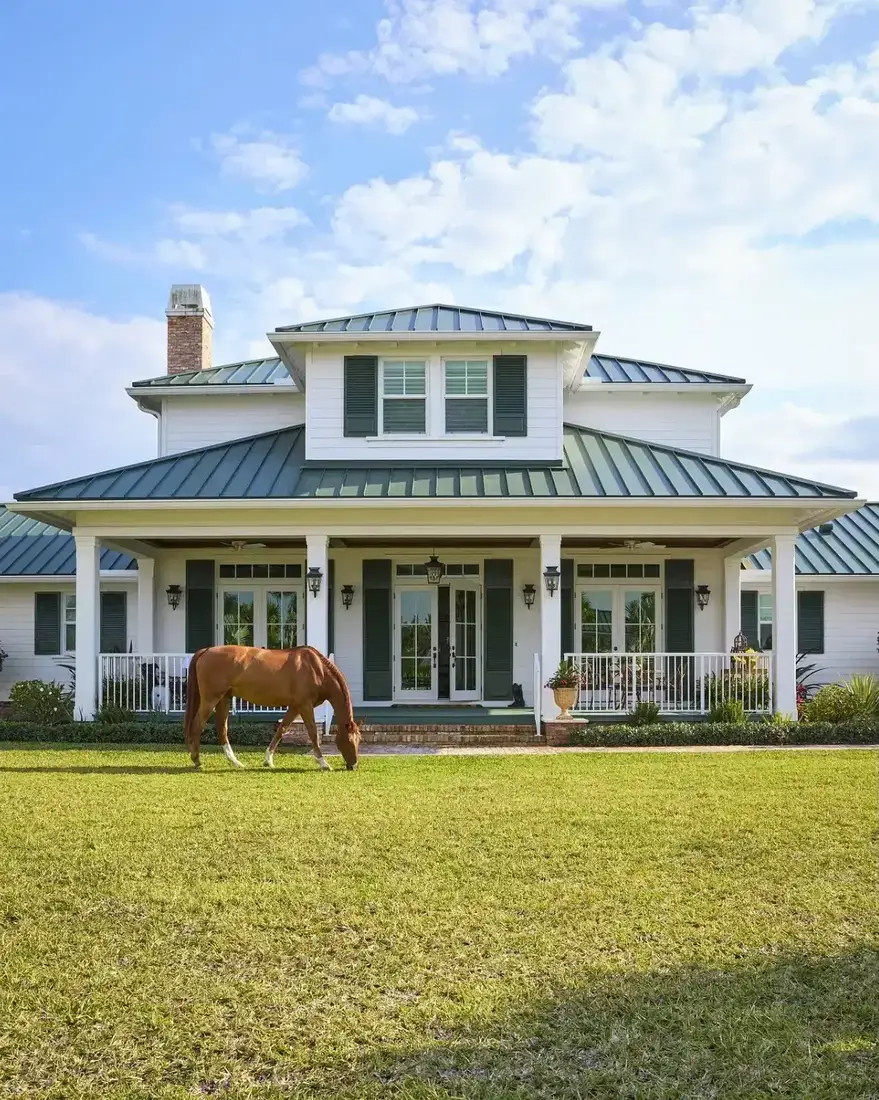
Borrow shade from the trees you already have
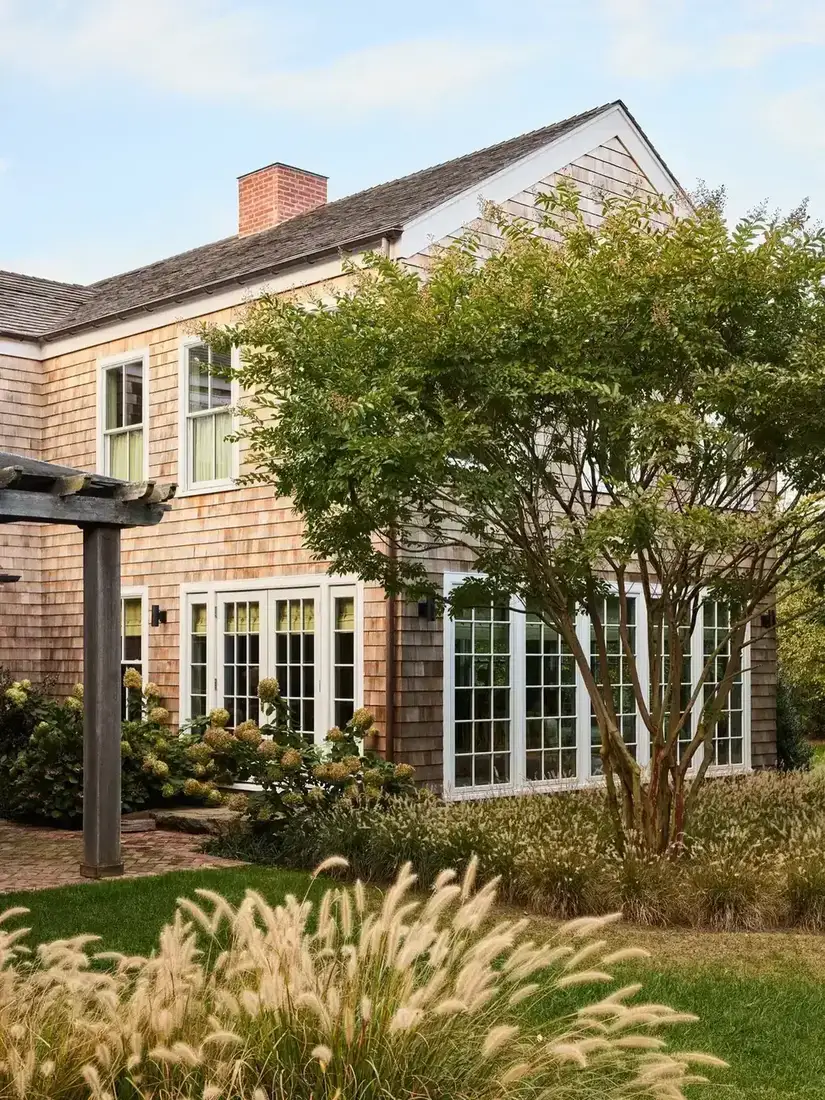
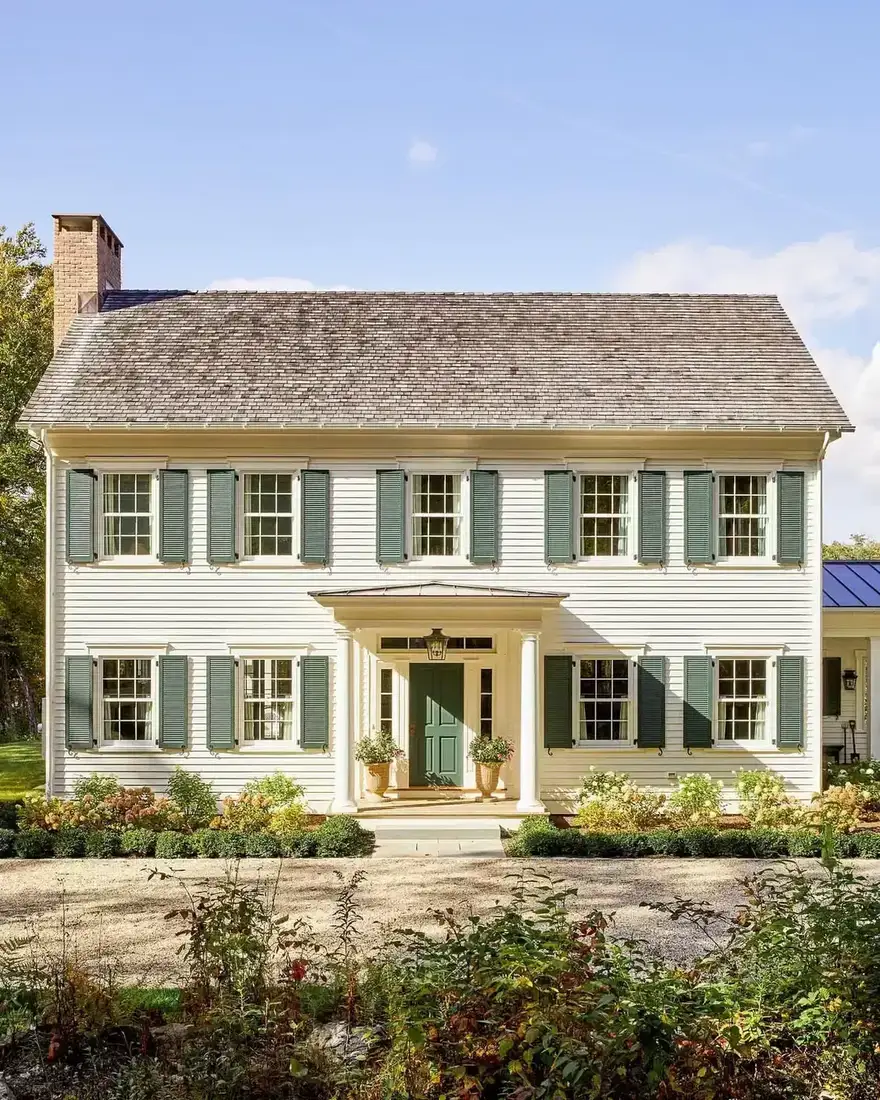
Mature trees over a white house do the same thing the porch does, on a bigger scale. They break your wall into light and dark, they move through the day, and they stop your front reading as one flat plane. The house with green shutters under big trees would look far plainer on an open plot. So before you plan new planting along the base of the wall, look up. Keeping and lifting the crown of an existing tree usually beats anything you can plant at ground level, and it happens immediately.
What sits in the shadow
The last three are about not undoing the work the porch does for you.
Lower your porch furniture
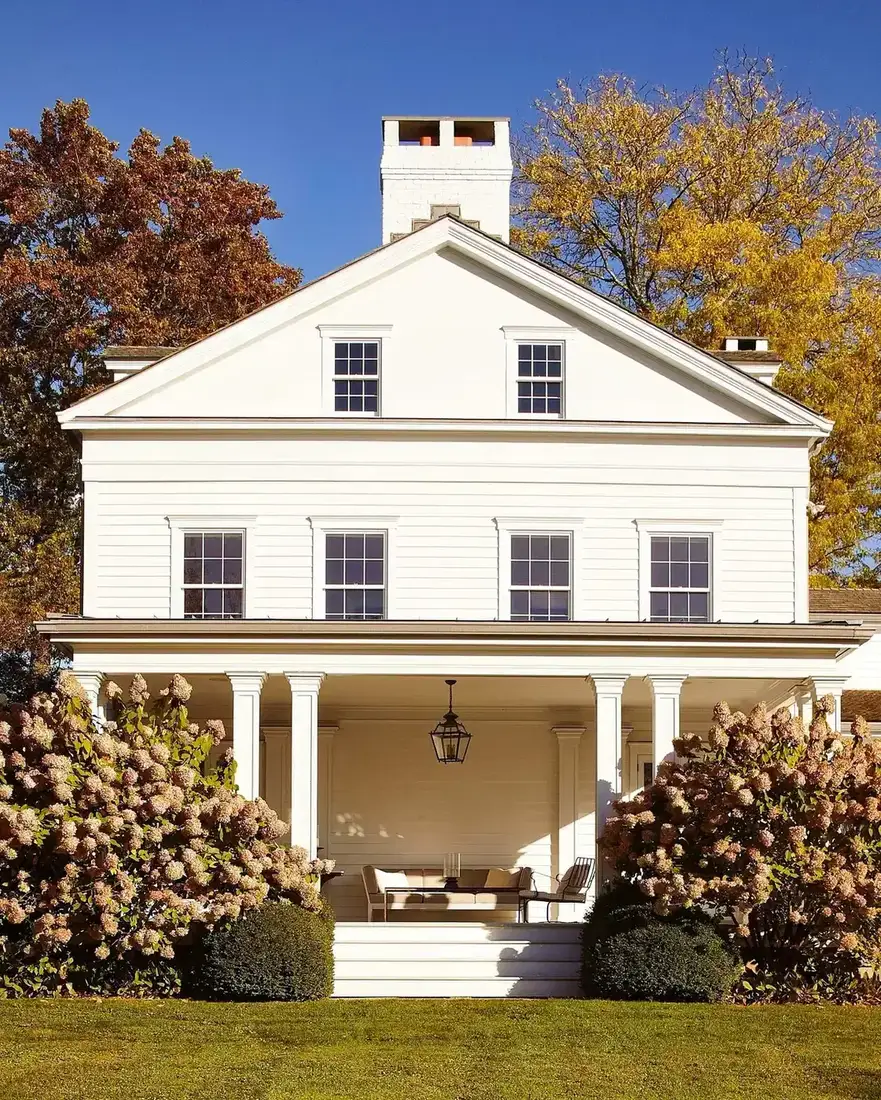
This is the one people get wrong most often. A tall-backed bench, a big parasol or a row of upright chairs sits straight across the shadow band and fills it in, so from the road your porch stops reading as depth and starts reading as clutter. Low seating keeps that dark slot visible above your heads. So when you choose, look at the back height before the fabric. Your porch will feel more generous, not less, because the eye still reads all the way into it. For swing arcs, clearances and materials that survive weather, our porch rocking chair and seating ideas measure the airspace before you buy the chairs.
Frame the door with planting, do not bury it
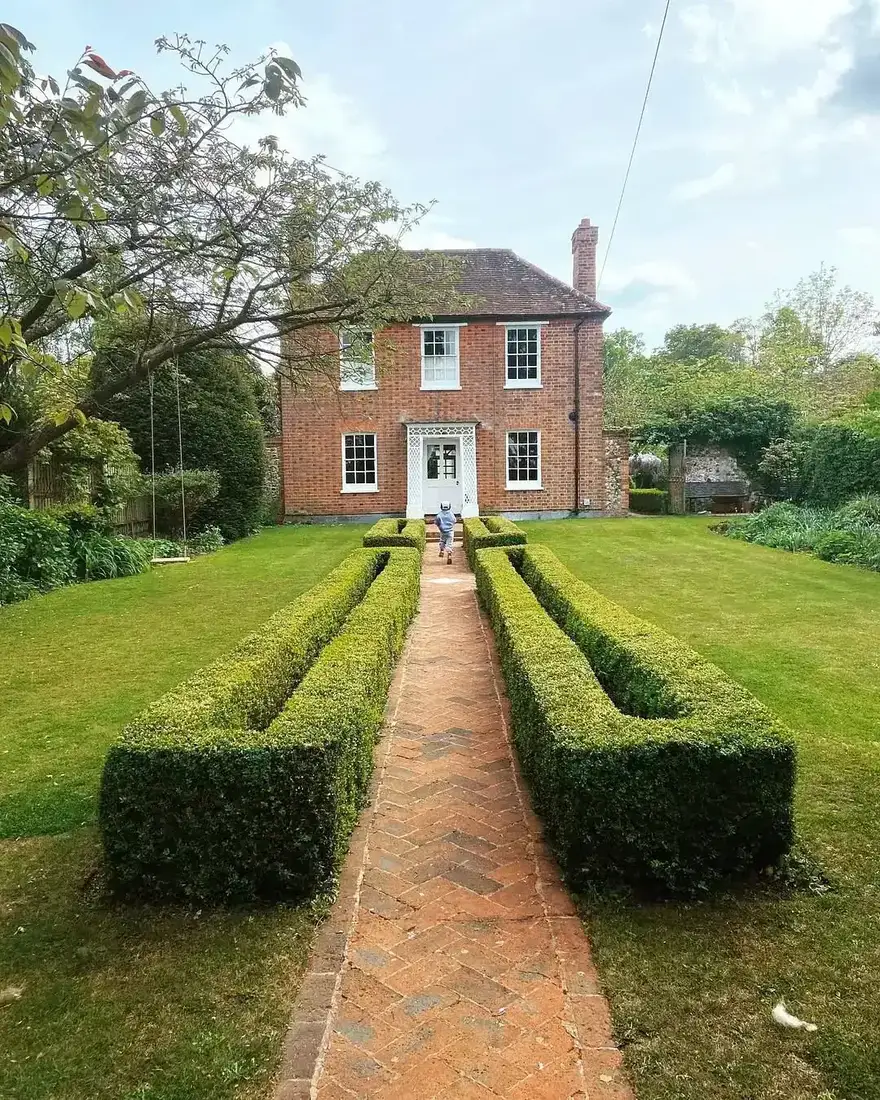
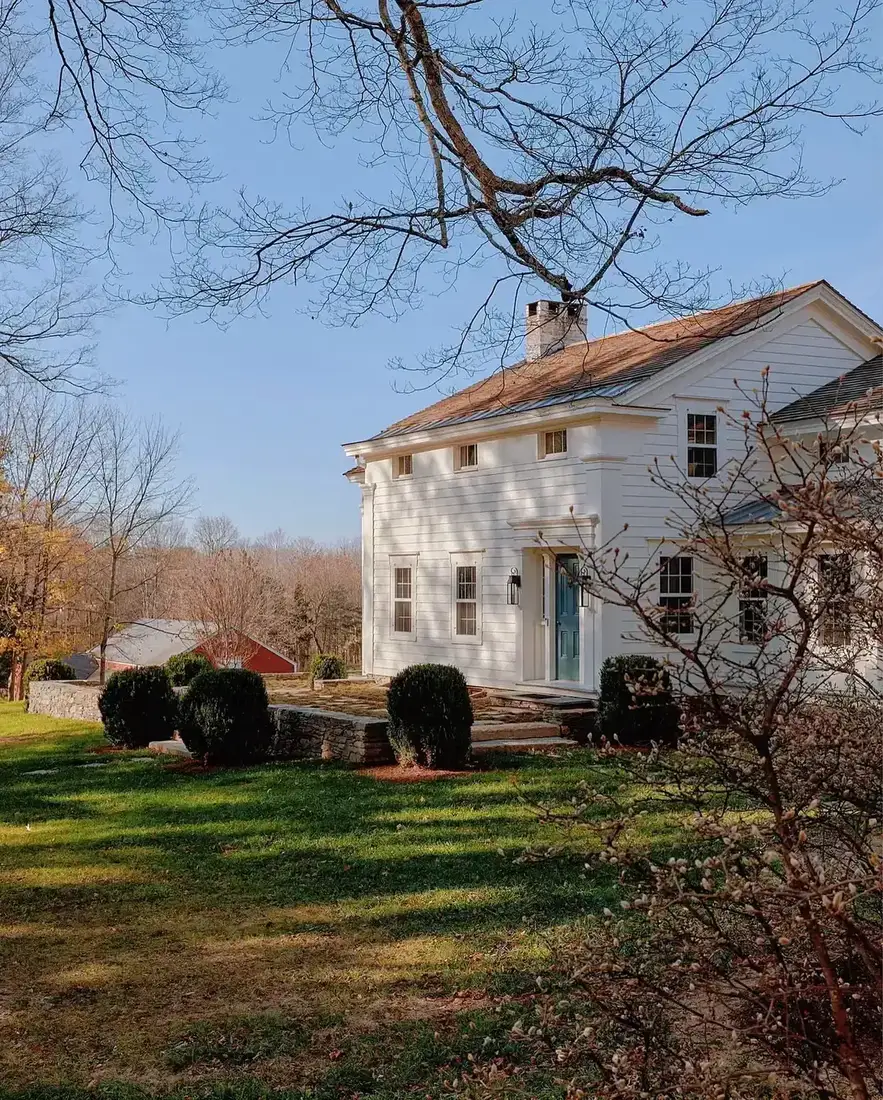
Clipped boxwood either side of an entrance works because it points at the door rather than hiding it. Planting that grows across the porch opening does the opposite, and it also traps damp against the boards. Symmetry helps here, particularly on a farmhouse front that is already balanced. Use two of something, low enough for you to see over, on either side of your steps. For the wider rules on planting a symmetrical front, our colonial house exterior ideas cover it properly.
Porch decisions at a glance
| Decision | What it does | Do this | Avoid |
|---|---|---|---|
| Covered porch depth | Creates the facade’s only strong shadow | Keep the slot open and visible | Filling it with tall furniture |
| Porch ceiling colour | Bounces light onto the door | Pale blue, soft grey, warm off-white | Leaving it flat builder’s white |
| The dark anchor | Stops white floating | One committed dark element | Several soft greys |
| Metal finish | Sets the temperature | Aged brass, copper, oiled bronze | Chrome and polished nickel |
| Colour placement | Adds character safely | Porch roof or front door | A whole coloured wall |
| Planting at the entry | Points at the door | Low, paired, set back | Shrubs across the opening |
The Porch Shadow Formula
- Find your shadow band from the kerb. Everything else is judged against how deep it reads.
- Paint the ceiling. One tin, and the porch stops looking unfinished.
- Commit to one dark anchor. Frames, shutters, roof or door, but genuinely dark.
- Go warm on every metal. Brass, copper and bronze belong with warm white. Chrome does not.
- Spend colour on the roof or the door. Framed by white, colour behaves. Loose on a wall, it takes over.
- Sit low and plant low. Nothing should block the slot your porch worked so hard to make.
Do those six and the wall stops being the problem, because you have stopped asking the wall to be interesting. Choosing the white itself is a separate job, and our white farmhouse curb appeal ideas walk through it. For the working-porch side of the same house, honest materials, real seating and three signals maximum, our farmhouse front porch ideas continue where the shadow leaves off.
Frequently Asked Questions
Why does my white farmhouse look flat from the road?
Almost always because there is no strong shadow across the front. A covered porch is the usual source of that shadow, and if yours is shallow or filled with furniture the facade reads as one pale plane.
What colour should I paint a porch ceiling?
Pale blue, soft grey or a warm off-white. All three read as a deliberate choice and bounce light down onto the front door, which matters most in the evening.
Does a white house need black windows?
It needs one dark anchor, and black window frames are one good option. Shutters, a dark roof or a dark front door do the same job. What fails is spreading mid greys around instead of committing to one dark element.
What metal finish suits a white farmhouse?
Warm metals. Aged brass, copper and oiled bronze sit with a warm white, while chrome and polished nickel read cool and slightly out of place beside it.
Can I use a bright colour on a farmhouse porch?
Better on the porch roof or the front door than on a wall, because white framing on all sides keeps the colour contained. Muted shades tend to hold up outdoors better than clean bright ones.
What porch furniture works best on a small porch?
Low-backed seating. Tall furniture sits across the shadow line and closes the porch off visually, which makes a small porch look smaller rather than fuller.
This article may contain affiliate links. We may earn a commission at no extra cost to you.